(ENG) Beyond the Bright Lights: A Walker's Guide to the Five Hidden Histories of Osaka's Naniwa Ward
From a mythical lion swallowing evil to a small cafe quietly enduring for nearly a century to a working-class community, the true, soul of Osaka.

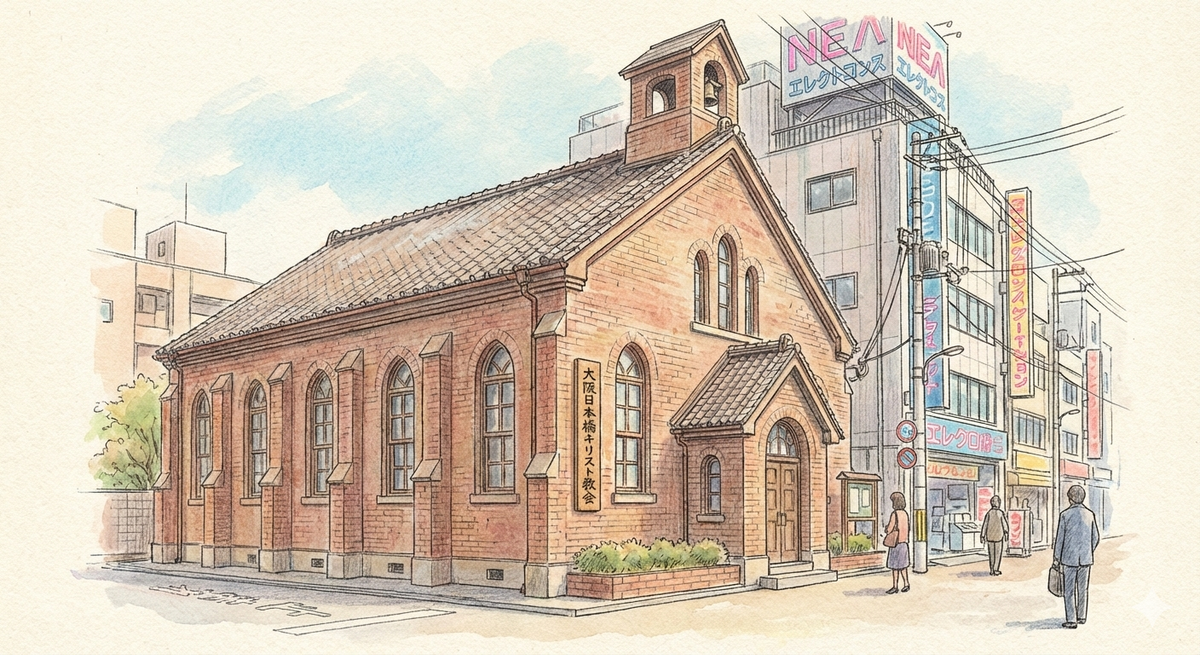
難波八阪神社Namba Yasaka Shrine > 大阪日本橋キリスト教会 the Osaka Nippombashi Christ Church > 喫茶タマイチ Kissaten Tamaichi >
Listen to the historical stories told in detail (For subscribers only)
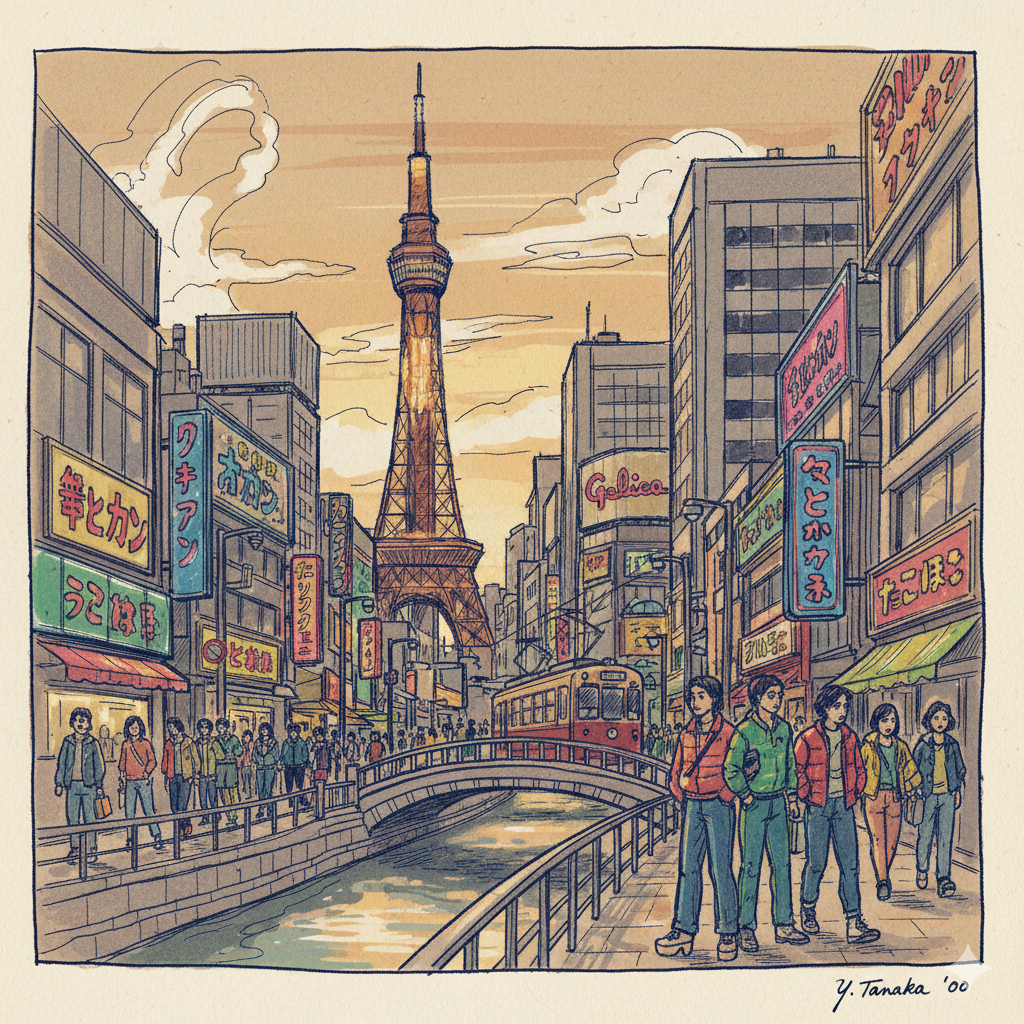
Mention Osaka, and the mind immediately conjures images of Minami's neon-drenched streets, the Glico Running Man, and the city’s boisterous kuidaore (“eat ‘til you drop”) culture in Dotonbori. But just steps away from this dazzling sensory overload lies Naniwa Ward, the city's hidden heart. While geographically central, it acts as a cultural container, holding layers of history that are often overlooked in the rush for takoyaki and brand-name shopping. It is here, in the quiet alleys and unassuming storefronts, that the true, multi-layered story of Osaka can be experienced not through a bus window, but on foot. This guide walks you through five distinct historical layers of Naniwa, revealing a city far deeper and more resonant than the one found in standard guidebooks.
The Mythical Guardian: Swallowing Evil at Namba Yasaka Shrine
To understand Osaka, one must first appreciate how its ancient myths are not dusty relics but active forces shaping its modern commercial and spiritual life. Nowhere is this more apparent than at Namba Yasaka Shrine, a site that trades quiet subtlety for a breathtaking, almost primal power.
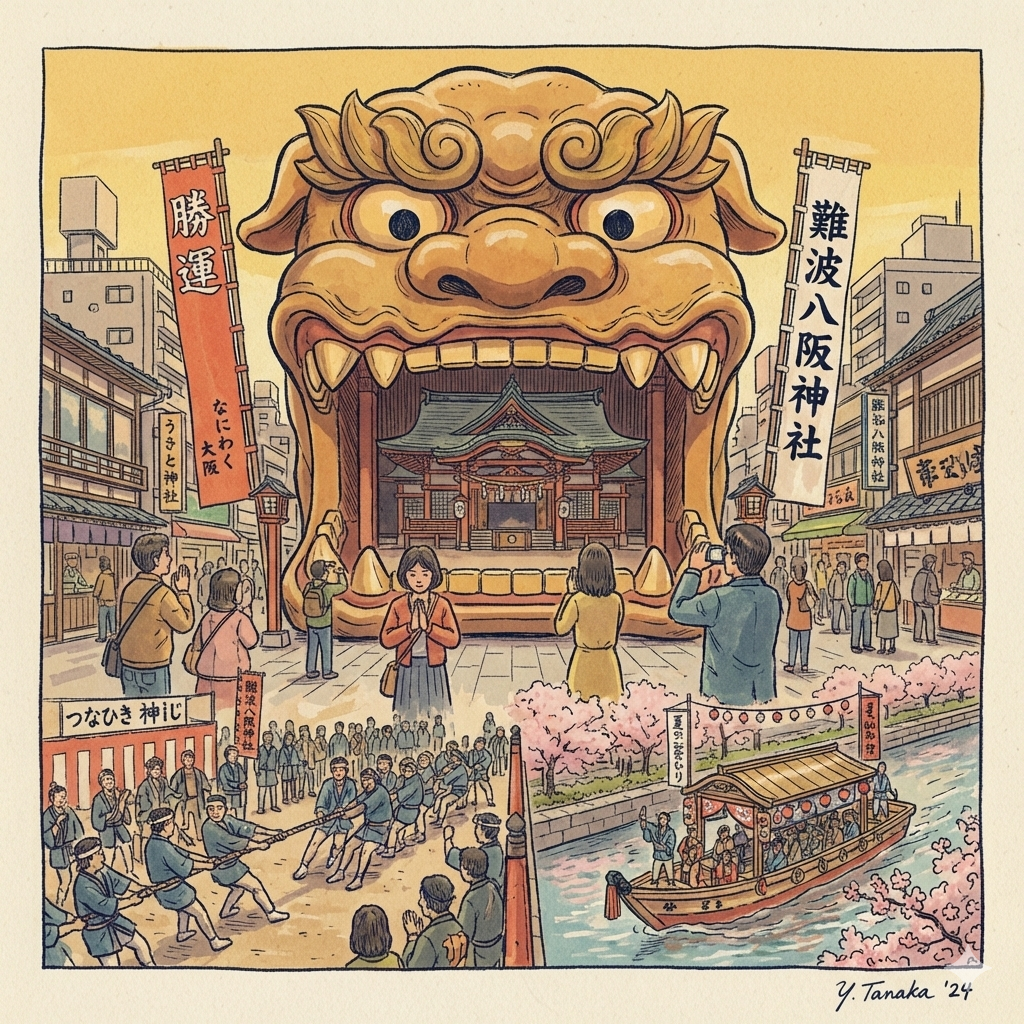
The first encounter with the shrine is a genuine shock: a colossal lion's head, 12 meters tall, frozen in a silent roar. This is the Shishiden (Lion's Head Hall), and its gaping mouth is the entrance to the main sanctuary. The symbolism is potent and direct. The lion is believed to swallow evil spirits and bring victory, a function that has transformed it into a premier pawāsupotto (power spot) for locals seeking success. Its primary deities are the powerful god Susanoo-no-Mikoto, famous for conquering the eight-headed serpent Yamata no Orochi, and his consort Kushiinadahime-no-Mikoto, reinforcing the shrine's core theme of victory over adversity.
While the lion's head draws the crowds, it is the less-visible traditions that anchor the shrine to its community. Annual festivals like the Tsunahiki Shinji—a ceremonial tug-of-war held to predict the year's harvest—and the Funatogyo, a boat procession for the gods that reflects the area’s history as a vital waterway hub, reveal deep, enduring roots.
To treat the Shishiden as a mere photo opportunity is to miss its true function as a mirror of the Osakan soul. That such a spectacular structure was built on prime real estate is a testament to the city’s ultimate pursuit of victory and its devotion to pragmatic deities. The shrine perfectly merges ancient myth with modern ambition, demonstrating how, in Osaka, the spiritual and the commercial are intertwined in a powerful, confident pursuit of success.
From this potent display of spiritual energy, our walk takes us to a place where history is preserved not in grand gestures, but in quiet, everyday moments.
The Preserved Past: Finding Showa-Era Serenity in a Shinsekai Cafe
Shinsekai, or "New World," stands as Osaka's most poignant monument to failed ambition, a district where the ghost of a Western-inspired utopia has given way to a cherished, living museum of a bygone Japan. Born in the Meiji era, it was a grand project meant to channel the modern energy of Paris and New York, complete with the iconic Tsutenkaku Tower and a sprawling amusement park, Luna Park. That glittering vision faded, but in its place, a neighborhood treasured for its nostalgic shomin (common people) culture emerged.
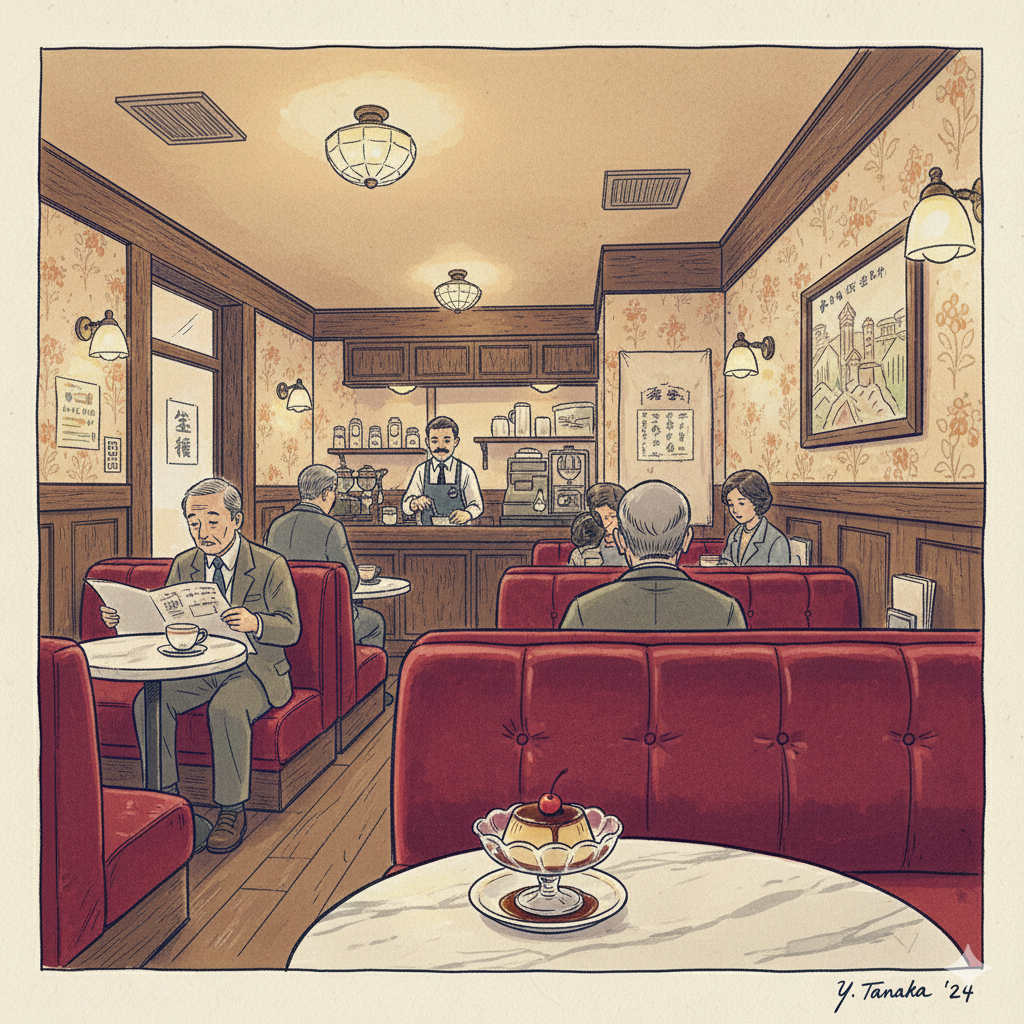
Tucked away from the bustling串カツ (kushikatsu) restaurants is Kissaten Tamaichi, a living artifact. Founded in 1928, it is the area's oldest "pure-style" coffeehouse, a quiet, non-smoking refuge from the noise outside. Stepping inside feels like entering a time capsule, a "healing space" that has intentionally resisted the relentless pace of the modern city. The cafe’s signature offering is its homemade pudding. Its "slightly firm, simple, and unchanging sweetness" is more than just a dessert; it is a tangible connection to the unpretentious values of the Showa period (1926-1989). Its status as a local icon was cemented by its inclusion in the "Osaka Subway Pudding Tour," a testament to its authentic nostalgic appeal.
The experience at Tamaichi perfectly captures the irony of Shinsekai: a district named "New World" whose greatest appeal now lies in its profound oldness. A visit here is an invitation to slow down and appreciate the subtle texture and atmosphere of a bygone era, a chance not just to observe history, but to sit within it, to taste it, and to feel its gentle, restorative rhythm.
From this preserved sensory experience, we shift our focus to an intellectual history that has been almost entirely erased from the landscape, surviving only as a whisper.
The Poet's Echo: Discovering a Lost Literary Soul
Osaka's identity is overwhelmingly defined by commerce; its historical moniker, "The Nation's Kitchen," conjures images of rice merchants and bustling markets, not poets and scholars. Yet, to uncover the city's hidden artistic heritage is to gain a far more complete understanding of its cultural DNA.
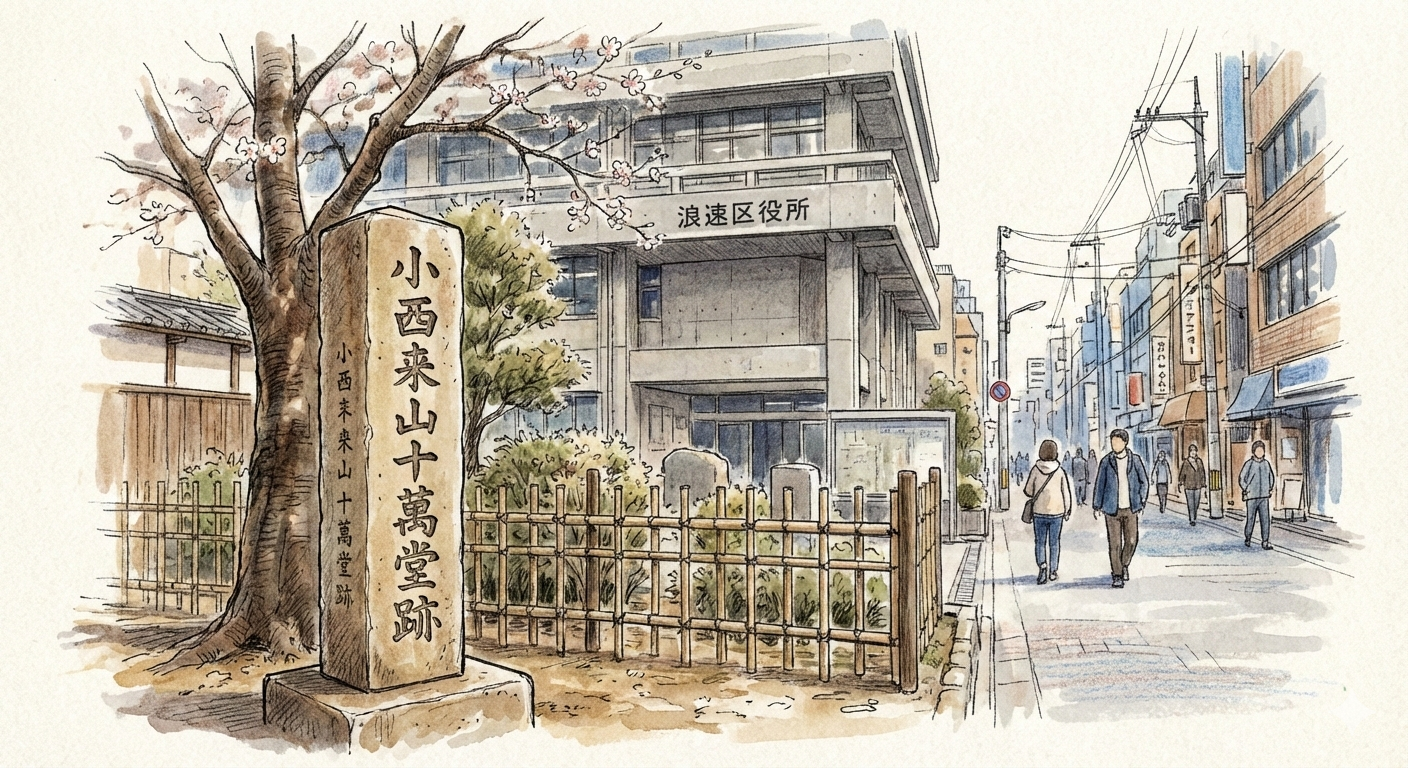
During the Edo period, Naniwa Ward was more than just a commercial hinterland. It was home to Konishi Raizan, a prominent poet of haikai—a collaborative and witty form of linked verse that thrived among the common people, turning everyday observations into sharp, insightful poetry. He established a renowned literary salon here named "Jūmandō," a hub for intellectual pursuits proving that even in the heart of mercantile Osaka, the life of the mind flourished.
Today, this rich literary history has been reduced to a single, humble marker: the "Konishi Raizan Jūmandō-ato," a discreet stone monument standing quietly near the modern Naniwa Ward Office. It is easily missed, unadorned and unassuming, making its discovery a personal and meaningful act. There are no crowds, no souvenir stands—only a silent testament to a forgotten past, waiting for a curious observer.
Finding this monument is a journey of search and discovery. This single stone challenges the traveler to dismantle the city's commercial facade and listen for the quieter, more profound intellectual currents that have always flowed beneath the surface. It offers a rare opportunity for a private dialogue with Osaka's past, transforming one's perception of Naniwa from merely "bustling" to unexpectedly "profound."
This quiet moment with a single poet's legacy now leads us to the living, collective history of a community forged by industry and resilience.
The Working Heart: Finding Human Warmth in Haginouchaya
To truly grasp the essence of Osaka, one must look beyond its grand monuments and into the neighborhoods built by and for its working people. In the district of Haginouchaya, history is not found in pristine artifacts but in the grit, warmth, and resilience of everyday life.
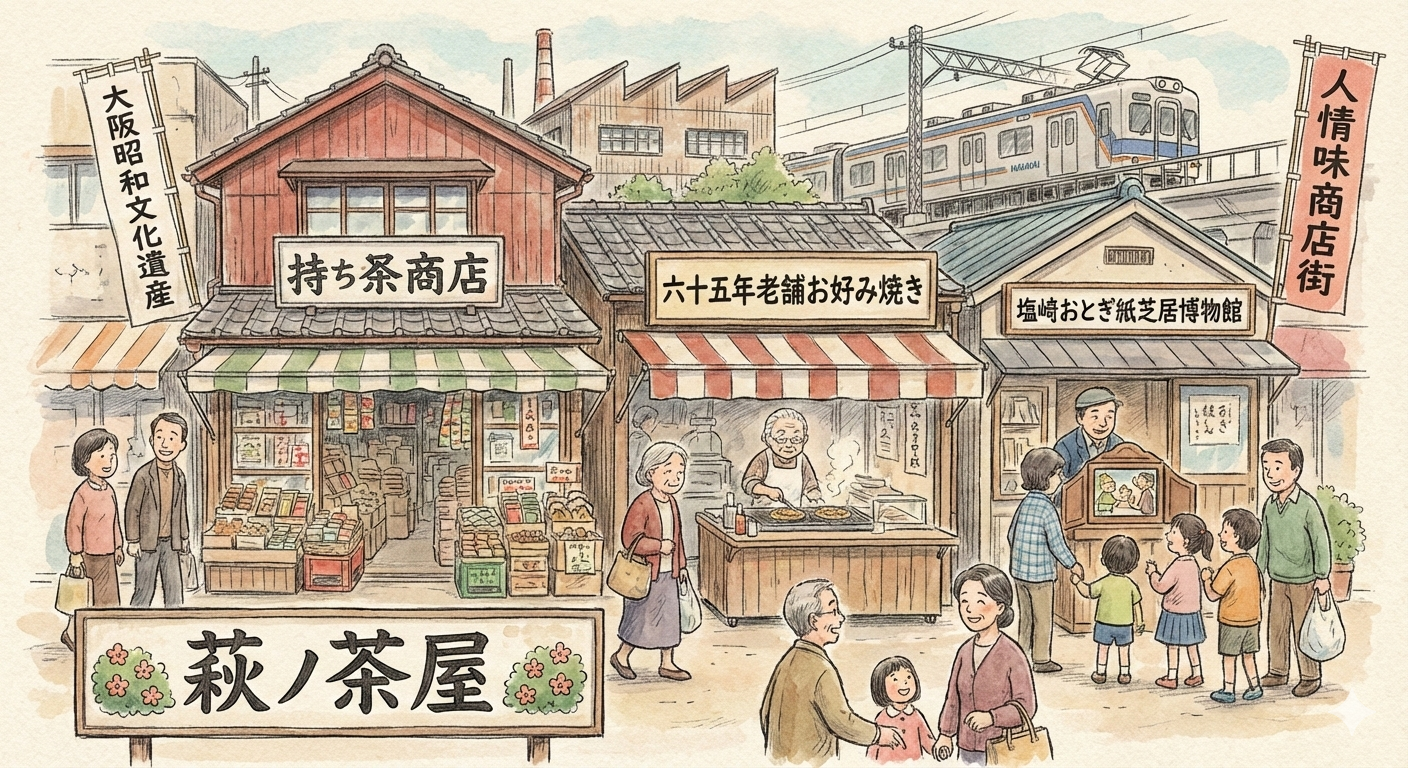
The name "Haginouchaya" itself evokes a pastoral past, likely originating from the beautiful hagi (bush clover) flowers that once bloomed near a local shrine. But the neighborhood's modern identity was forged in 1909 with the construction of the massive Dai-Nippon Spinning Co. factory. This industrial boom, coupled with new rail lines, was the catalyst for the local shōtengai (shopping arcades), which sprang up as a functional community to serve the factory workers and their families.
Today, these shopping arcades are a living "Showa cultural heritage" site. Here you can find a traditional dagashi-ya (candy shop) that opened before the war, an okonomiyaki restaurant operating for over 65 years, and countless multi-generational family shops. These are emblems of the neighborhood's enduring ninjō (human warmth) and toughness. Tangible links to this heritage remain, such as the unique Shiozaki Otoki Kamishibai Museum, which preserves the culture of traditional paper-play storytelling.
A walk through Haginouchaya's arcades is not a simple nostalgic trip; it is an act of tribute to Osaka's working-class history. The human warmth a traveler feels today is a direct, living remnant of the social fabric created by the industrial boom of the Meiji era. This is the "Horticultural Downtown Human-Interest Story," an uncurated experience of authentic local life where one can witness the tenacious spirit of a community that has sustained itself for over a century.
From the human-scale history of the industrial age, our final stop takes us to the grand, faith-inspired architecture that marked Osaka's leap into modernity.
The Modernist Faith: A Western Architect's Vision in Brick
During the Meiji and Taisho periods, Osaka was a fervent laboratory for modern architecture, eagerly fusing Western styles with its own urban identity. Grand structures like the Nankai Building and the former Matsuzakaya department store stand as monuments to this ambition. But modernity also arrived in quieter, more contemplative forms.
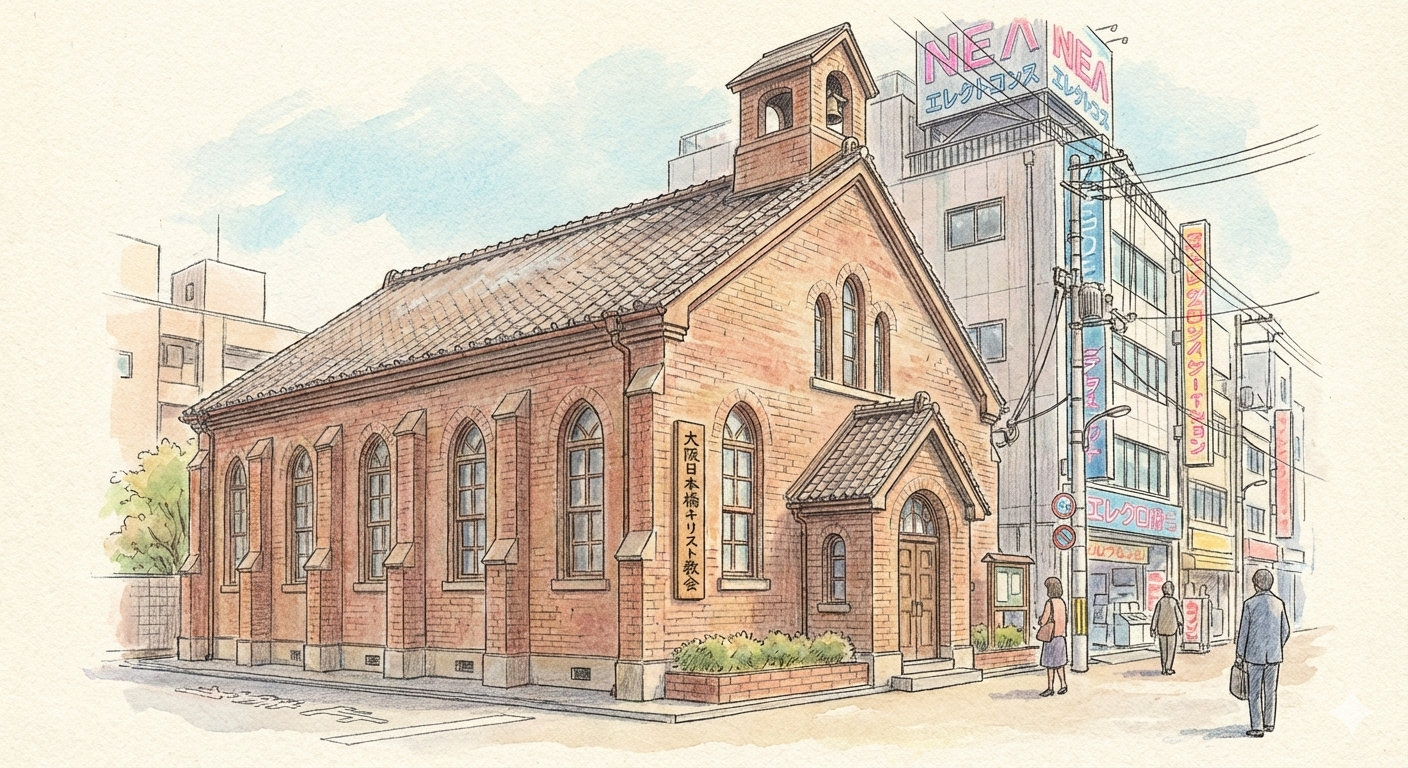
Amidst the sensory overload of the Nippombashi electronics district stands the Osaka Nippombashi Christ Church. This elegant brick building is a product of the Taisho era (1912-1926) and belongs to the "Vories architectural lineage." William Merrell Vories was an American architect who brought a humane and functional Western style to Japan, designing hundreds of buildings that emphasized harmony over grandeur. While direct documentation on this specific church's history is scarce, its lineage marks it as a vital piece of the city's architectural story.
The church presents a stark and beautiful contrast to its environment. Its quiet, ordered brick facade is a pocket of serenity amidst the chaotic energy of one of Osaka's busiest commercial zones, a physical representation of a modernity based on faith and community. Its enduring presence proves that Naniwa was not only a hub for commerce but also a crucial entry point for Western ideas, culture, and spirituality. For the thoughtful observer, this building is a key to understanding the "modern metropolis" layer of Osaka's history, offering a quiet, reflective perspective on the city's complex modernization.
Now, let us draw these five disparate threads together to see the complete tapestry of Naniwa's history.
Naniwa, The City in a Hundred Layers
Our walk through Naniwa has revealed five distinct worlds existing within the same few city blocks: a world of myth, of Showa-era nostalgia, of forgotten literature, of working-class industry, and of modernist architecture. This journey confirms Naniwa Ward’s true identity as a "cultural container," a place that holds multiple eras in a delicate, living balance. It proves that the deepest understanding of a city comes not from a checklist of famous sights, but from layered observation on foot, paying attention to the stories that hide in plain sight.
The resilience woven through these histories—from a mythical lion swallowing evil to a small cafe quietly enduring for nearly a century to a working-class community that has sustained itself for generations—is the true, hidden soul of Osaka. It is a spirit of pragmatic strength, quiet endurance, and profound warmth, waiting to be discovered by those willing to look just beyond the bright lights.
Continue Your Journey
For more stories that uncover the hidden layers of Japan's great cities, consider subscribing to our weekly dispatch. The search for history is a journey without end.
Reference Materials
- 大阪心斎橋・なんば(ミナミ)のおすすめ観光スポット26選!地元ライターが厳選して紹介, accessed October 12, 2025
- 通天閣・新世界 ディープなエリアでご利益満載プチアクティブ ..., accessed October 12, 2025
- ユニークすぎる!大阪のパワースポット「難波八阪神社」をご紹介 ..., accessed October 12, 2025
- 「小西来山十萬堂(こにしらいざんじゅうまんどう)跡」の碑 - 大阪市, accessed October 12, 2025
- 大阪・なんば周辺で息づく大正~昭和の〈近代建築〉を訪ねて ..., accessed October 12, 2025
- 花園下町人情ストーリー, accessed October 12, 2025
 Lawrence
 Lawrence