(ENG) Fanling's Forgotten Codes: 5 Secrets of Survival, Power, and Faith in Old Hong Kong
These five stories—of moats disguised as fishponds, of imperial claims hidden in wood carvings, of faith replacing bloodlines—paint a picture of a Hong Kong far more complex and resilient than its modern skyline suggests.

粉嶺圍 (護城 河遺跡) Fanling Wai (Moat Remains) > > 崇謙堂 (崇謙 堂村)Chung Him Tong (Chung Him Tong Village)
Listen attentively to the historical stories told in detail
When I think of Fanling, the first thing that comes to mind is eating braised pork knuckle at Luen Wo Hui, or perhaps I think of Wo Hop Shek in Fanling.
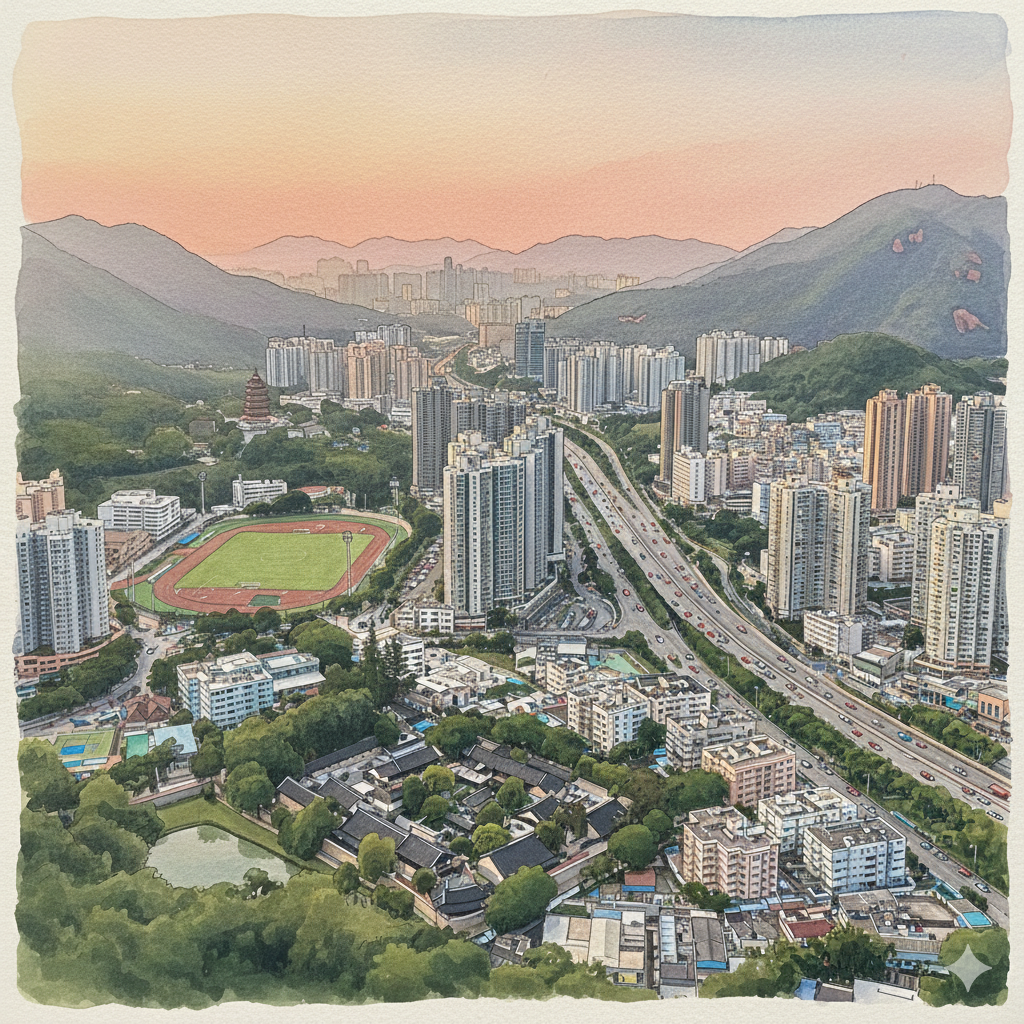
When we think of Hong Kong, we conjure images of a gleaming forest of skyscrapers, a relentless engine of global finance. It's a city that seems to live perpetually in the future. But just beyond the urban core, tucked away in the gentle hills of the New Territories, lies a different story—one etched not in glass and steel, but in stone, wood, and water. This is the world of Fanling, an ancient landscape where the deep history of clans, conflict, and survival still whispers from the walls of ancestral halls and the banks of forgotten moats.
This older Hong Kong was a frontier, a place of constant struggle where powerful clans fought for land, resources, and identity. To survive, they developed an incredible ingenuity, embedding codes of power, belief, and defense into the very fabric of their communities. These are the true "hidden gems"—not just landmarks to be photographed, but stories of resilience encoded in architectural details that are easily overlooked.
Join us as we uncover five of these forgotten codes. From a fishpond that was secretly a fortress to an ancestral tablet that made a silent claim to imperial blood, these stories rewrite the history of Hong Kong, revealing the profound complexity and enduring spirit of a world that existed long before the skyscrapers touched the sky.
The Moat in Disguise: A Clan's Clever Defense
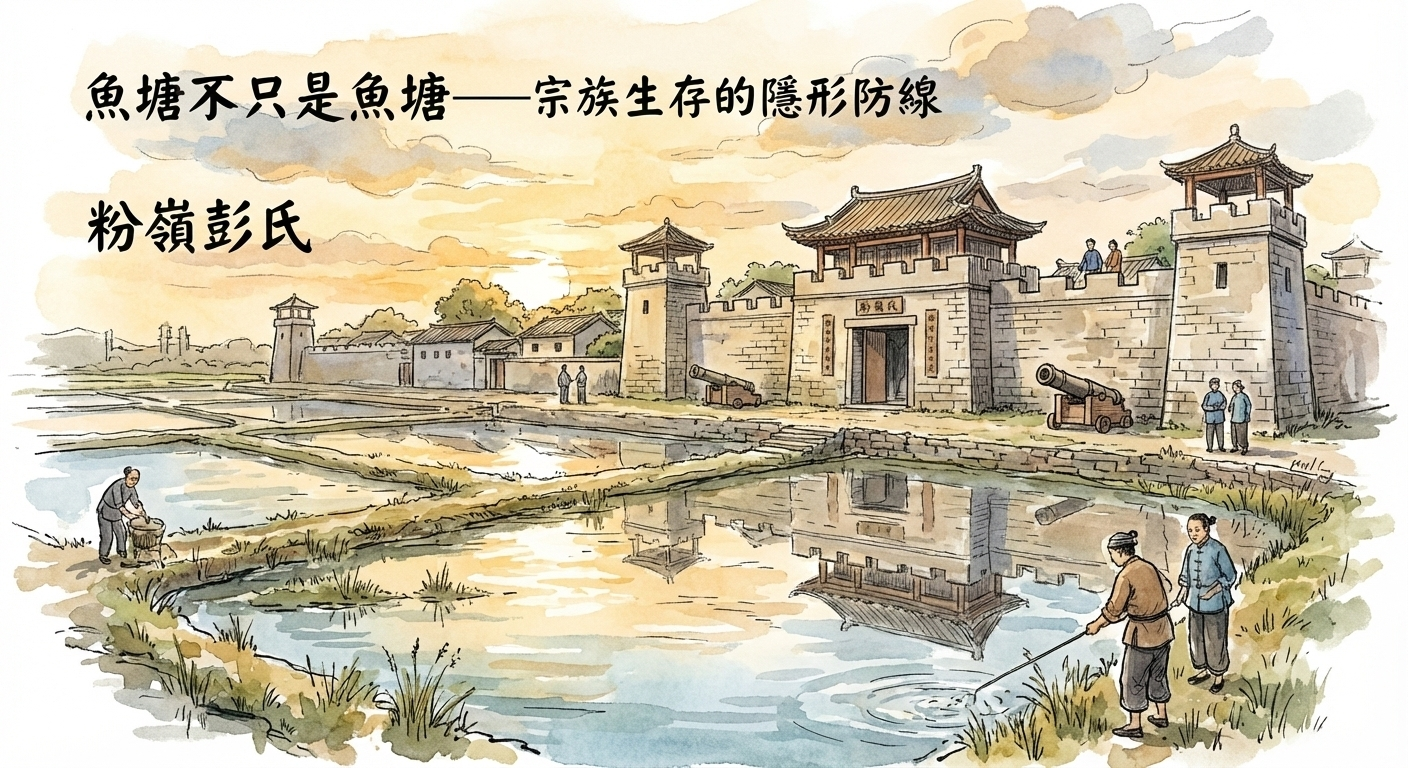
For over 700 years, the Pang Clan has called Fanling home. After a long migration from mainland China, they established their final settlement at Fanling Wai during the Ming Wanli era (1573-1620). This was an age of rampant piracy and banditry, and survival depended on more than just high walls. The Pangs understood this, building a complete defensive system: a fortified village, cannons aimed at key approaches, and a series of large fishponds surrounding their settlement.
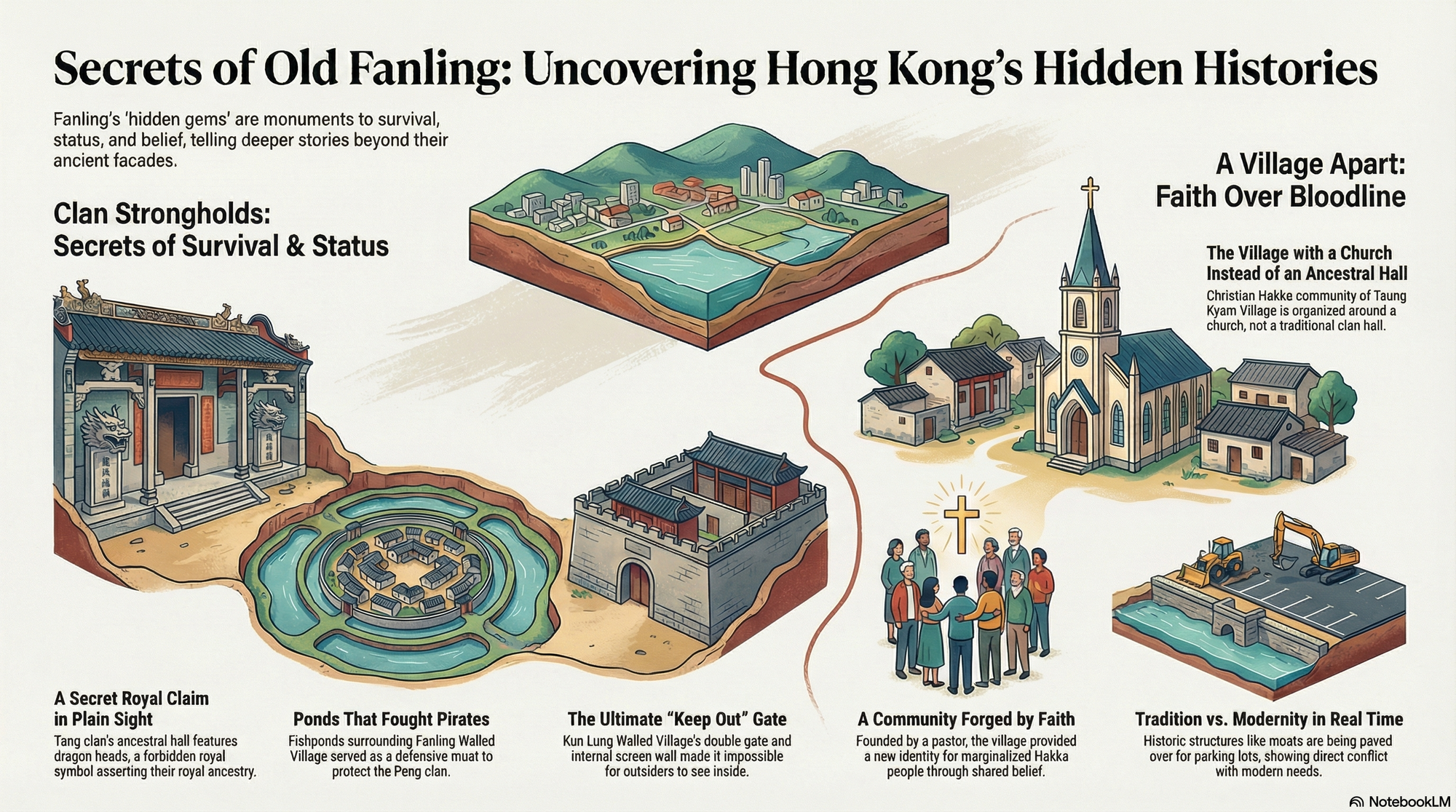
To a casual observer, the fishponds look like a simple feature of rural life—a source of food or perhaps a nod to good feng shui. But this is where the hidden code lies. The ponds’ primary, unspoken function was as a defensive moat. This ingenious water barrier was a clan’s cleverest defense, an obstacle that would slow down any invading force and make the walled village a much harder target.
This dual-purpose design reveals a profound survival wisdom. By blending strategic military thinking with economic necessity, the Pangs created a landscape where every element served a purpose. The placid water of the fishpond was, in reality, the silent guardian of the clan.
The Dragon's Whisper: A Secret Royal Claim in an Ancestral Hall
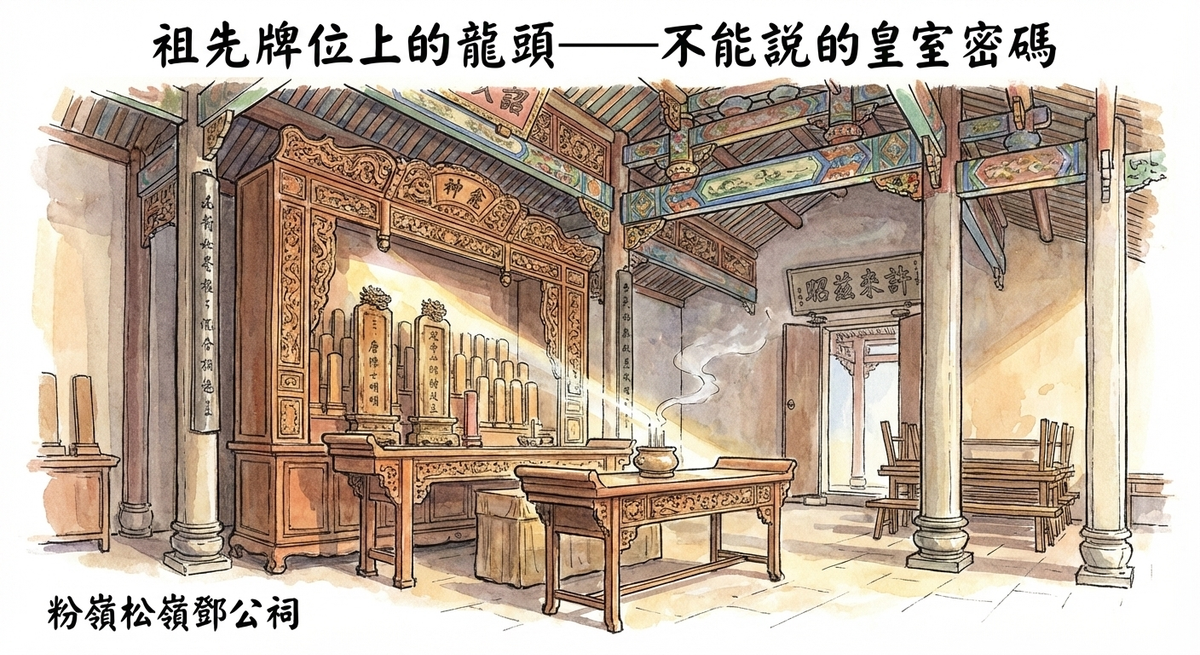
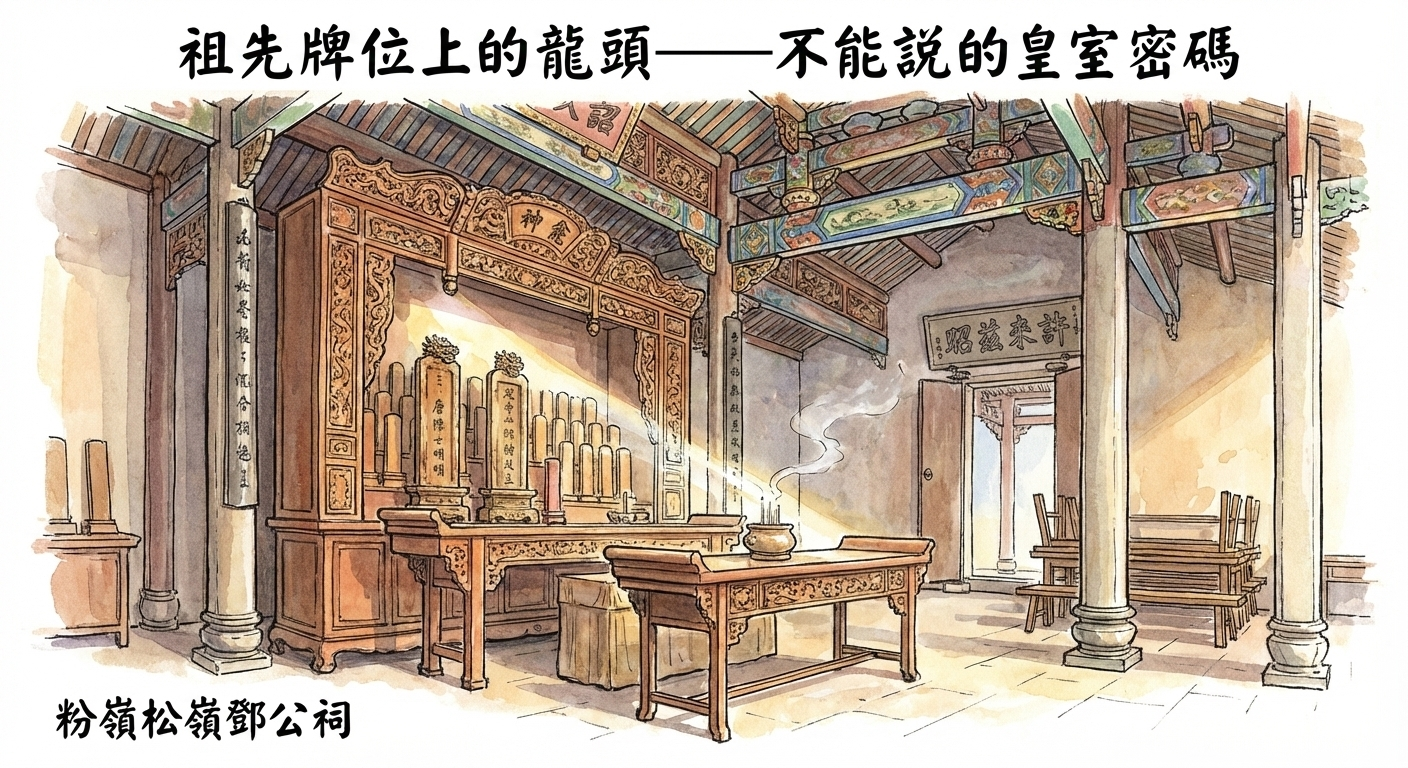
The Tang Chung Ling Ancestral Hall, built around 1525 to commemorate the founding ancestor Tang Songling, is the most magnificent and important hall of the powerful Tang Clan. Its central purpose is to venerate the clan's founders, but in the main hall, two figures are given special prominence: the second-generation ancestor, Tang Tsz-ming, and his wife, Lady Chiu. The reason for her importance is the source of the clan’s greatest pride—Lady Chiu was a descendant of a Song Dynasty emperor.
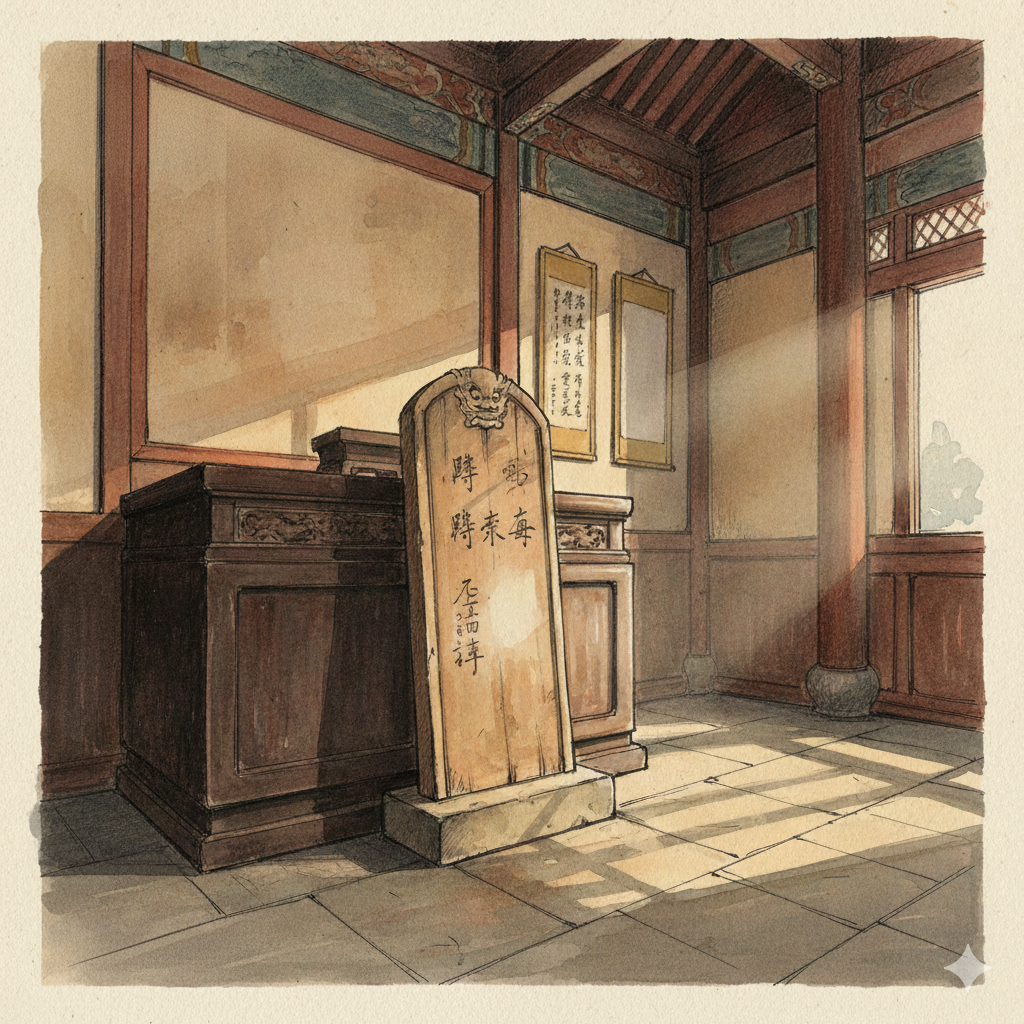
This connection to royalty was a potent symbol of status. Amidst rows of ancestral tablets lies a stunning secret. The spirit tablets for Lady Chiu and her husband are unique: they are carved with dragon heads. In imperial China, the dragon was the exclusive symbol of the emperor. By carving it onto their ancestors' tablets, the Tang Clan was making a bold and permanent declaration of their royal lineage—a political statement in wood that set them far above their rivals. The four characters inscribed above the hall's entrance capture this spirit:
昭茲來許
This phrase, from the ancient Book of Odes, means "to glorify the virtues of our ancestors for posterity." The clan fulfilled this mission not just symbolically, but practically. In the 1940s and 1950s, this sacred hall was also used as a school, demonstrating that the clan’s power was a living force that shaped the future through education, ensuring its legacy endured.
The Unbreachable Gate: A Masterclass in Paranoia and Protection
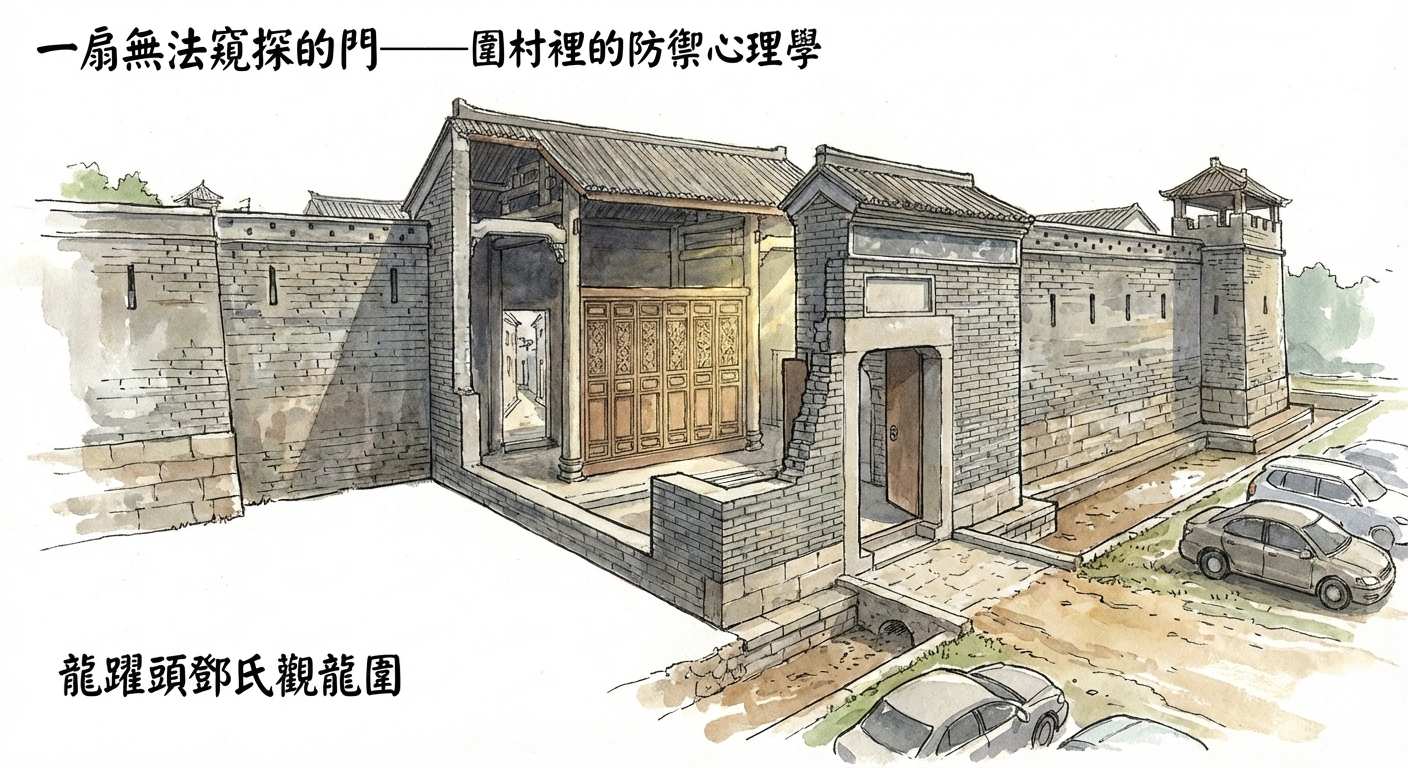
Kun Lung Wai stands as the best-preserved walled village of the Tang Clan. Fortified in 1744, its design is a masterclass in defensive architecture. Its formidable nature is announced by the stone lintel above the entrance, which bears the inscription "覲龍乾隆甲子歲" (Kun Lung, Qianlong Jiazi year). High stone walls are pierced with gun holes, and watchtowers stand guard at each corner.
But the true genius of its design is hidden in the entrance. The gatehouse is not a single structure, but two gatehouses built back-to-back, secured with interlocking iron gates. An attacker who breached the first gate would find themselves trapped in a small, enclosed space, vulnerable to defenders above, before even facing the second.
Just inside this formidable entrance lies another secret: a screen wall known as a "dong chung" (擋中). This simple structure served as a brilliant privacy screen, physically blocking the line of sight to prevent spies from mapping the village’s layout. It also functioned as a feng shui device, believed to deflect evil spirits. Today, in a powerful symbol of modern change, the ancient stone path leading to the gate sits beside a car park where the protective moat once lay—a victory of convenience over centuries of defensive caution.
The Village with a Church, Not a Clan Hall
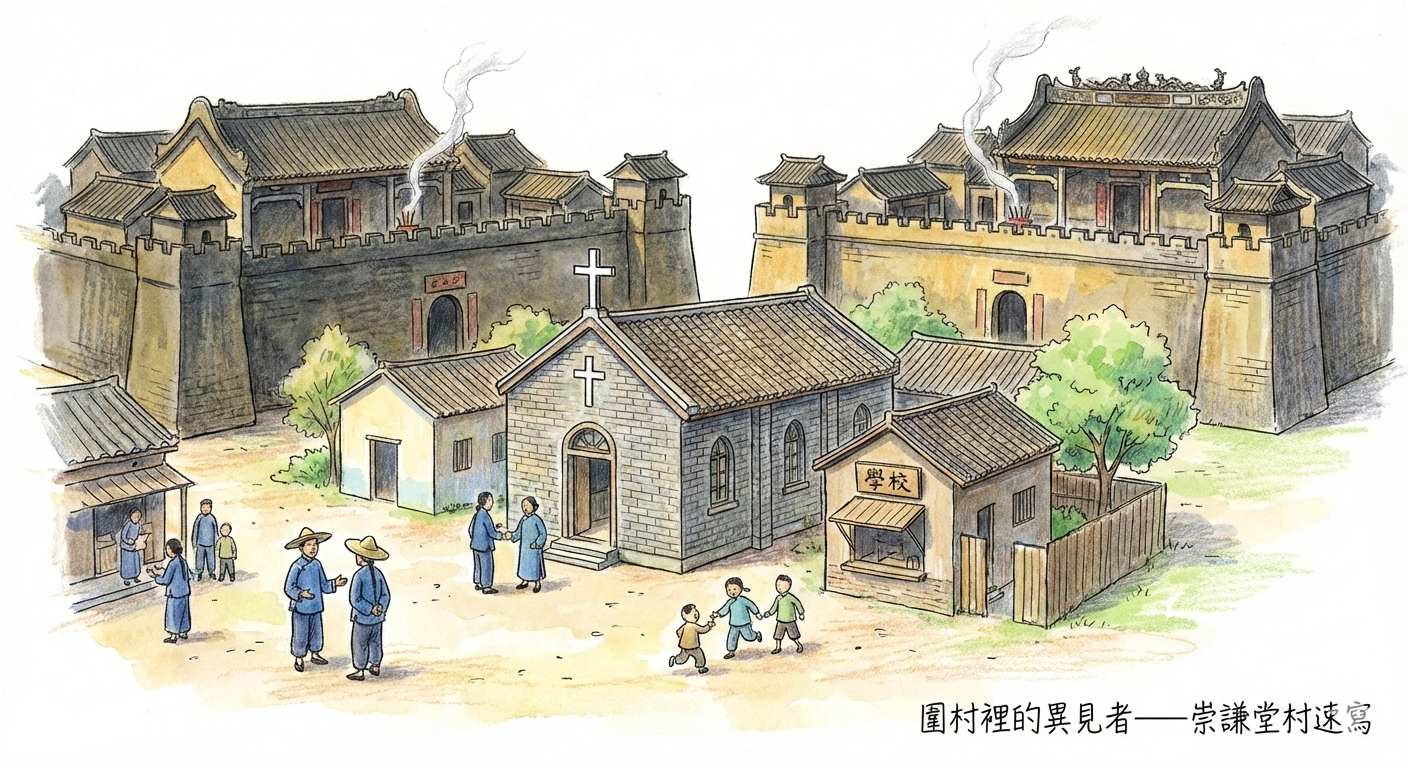
In the traditional landscape of Fanling, the ancestral hall was the absolute center of life. It was the seat of power, the court of justice, and the sacred space where clan identity was forged. Yet, one village exists as a radical exception.
In 1905, a group of Hakka Christians from the Basel Mission (巴色會), led by retired pastor Ling Kai-lin, founded the Tsung Kyam Church. They faced hostility and obstruction from the powerful, established clans surrounding them. Undeterred, they built not only a church but a school, roads, and a cemetery, forming the new community of Tsung Kyam Tong Village.
The profound secret of this village is its very structure: it is a community with a church but no ancestral hall. This isn't just an architectural difference; it represents a complete ideological replacement. Here, Christian faith and a shared value system replaced the bonds of bloodline and ancestor worship as the community's foundation. For the Hakka, a marginalized group in the clan-dominated society, this was a radical act of social empowerment—creating a new kind of clan, one united by faith rather than blood.
The Moral Paragon: A Hero's Conflicting Legend
Returning to the Tang Chung Ling Ancestral Hall, we find another tablet honoring not a founder, but a "village worthy" named Tang Sze-mang from the Ming Longqing era. His story is one of incredible moral courage. During that age of rampant piracy, his father (or perhaps his master) was kidnapped and held for ransom. Unable to pay, Tang Sze-mang went to the pirates' lair and offered himself as a replacement. After his elder was freed, Tang Sze-mang committed suicide by drowning.
His sacrifice was so profound that he was enshrined in the ancestral hall. But here lies the hidden gem: the details of his story change depending on who is telling it. Official imperial records, like the Xin'an County Gazetteer, state that he died saving his father, a perfect illustration of filial piety (孝)—a universal value central to the government's moral code. The Tang clan elders, however, have long insisted that he died saving his master, a testament to loyalty (忠) to the clan structure.
This conflict isn't a historical error; it’s a window into a subtle competition of values. His story became a powerful moral lesson, but its meaning was shaped to serve the agenda of either the imperial state or the local clan. His heroic act is undeniable, but the ultimate lesson we are meant to learn from it remains a beautifully contested mystery.
The Echoes of the Past in a Changing City
These five stories—of moats disguised as fishponds, of imperial claims hidden in wood carvings, of faith replacing bloodlines—paint a picture of a Hong Kong far more complex and resilient than its modern skyline suggests. They reveal a landscape of ingenuity and identity forged centuries before the colonial era, where survival depended on reading the subtle codes embedded in the world around you.
Today, this world is under immense pressure. Fanling is at the heart of the massive Kwu Tung North/Fanling North New Development Area, backed by a government compensation package of around HK$14.3 billion. Moats have become car parks, and ancestral lands are being irrevocably transformed. The conflict between preserving the past and building the future is no longer a historical tale; it is the defining reality of modern Fanling.
As Hong Kong continues to build its future, these stories force us to ask a crucial question: Which of our own "hidden gems"—our modern stories of resilience, identity, and community—are we at risk of paving over, and who will be left to tell their tale?
 Lawrence
 Lawrence