(ENG) Miyakojima Ward, Osaka: Water and Steel
Miyakojima Ward: water and steel. Water, the source of life, the threat of destruction, and the deep current of memory. Steel, the technology that tames floods, the machinery that forges an economy, the elegant structures that connect a city, and the shrapnel that scars it.

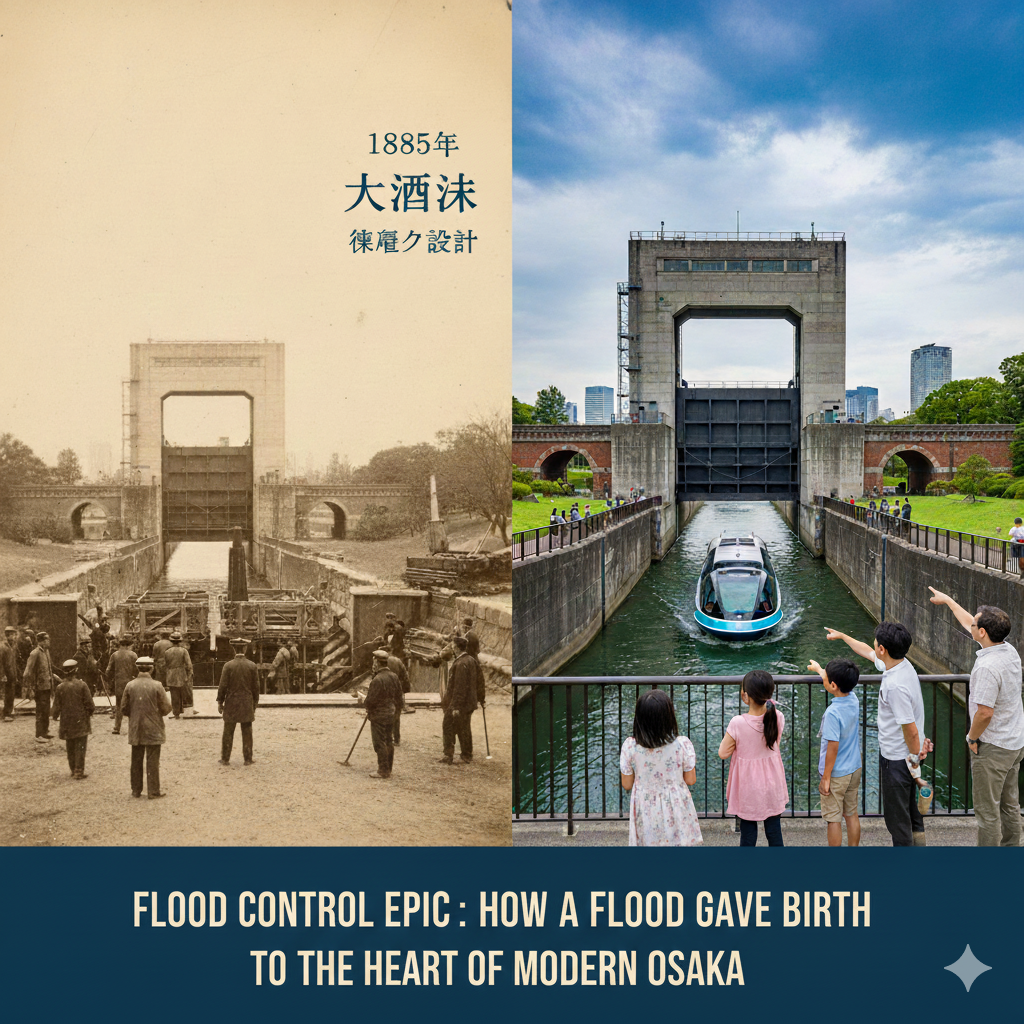
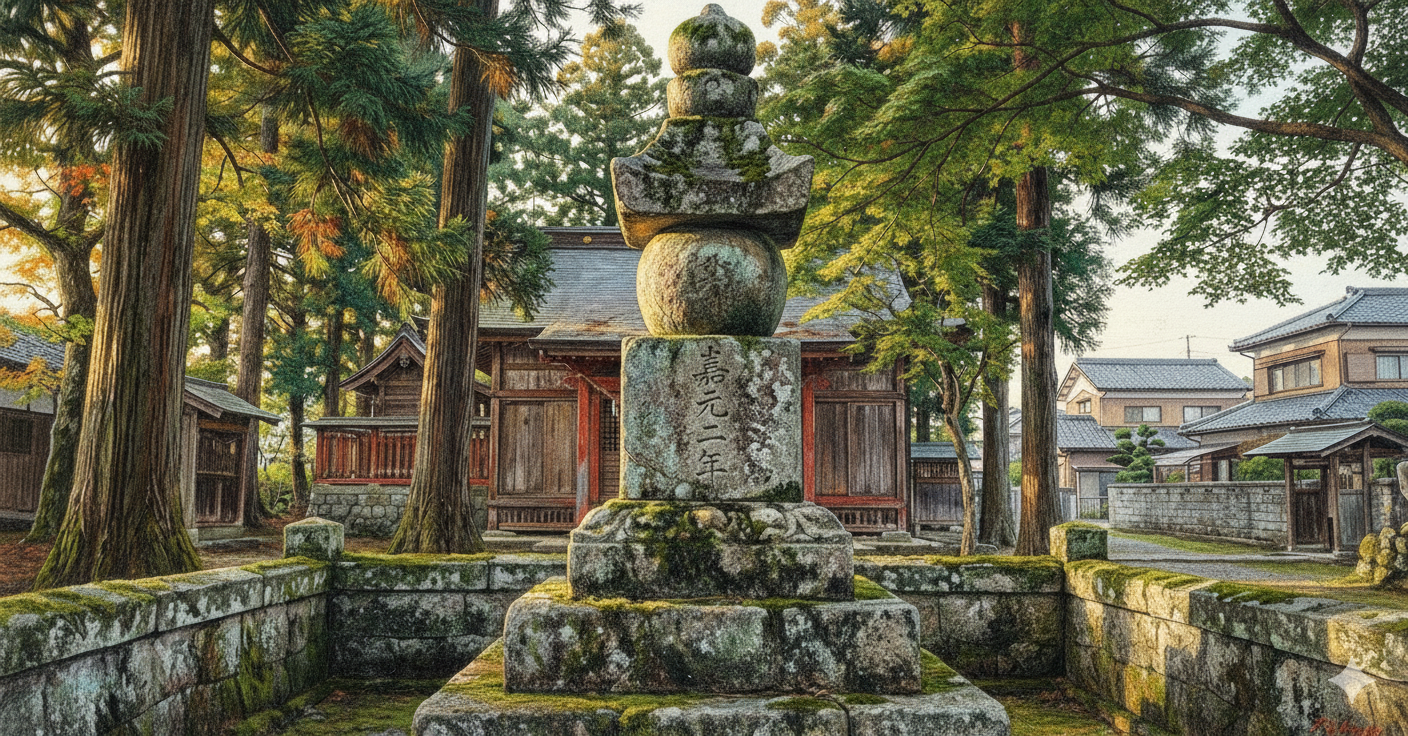
毛馬閘門 Kema Lock Gate > 都島神社三重寶篋印塔 Miyakojima Shrine Three-story Hokyointo Pagoda
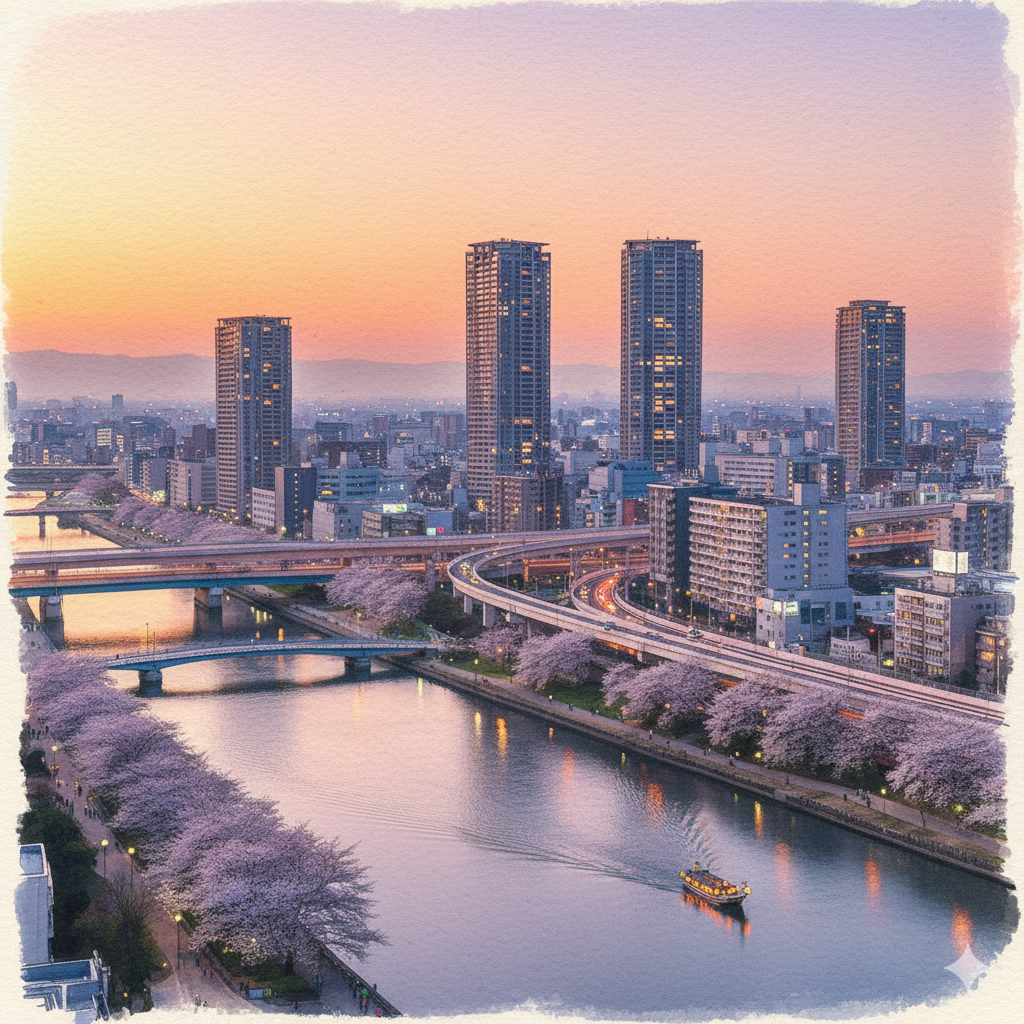
Listen attentively to the historical stories told in detail
The City Beyond the Castle
When we think of Osaka, we picture a dazzling metropolis of neon-drenched streets, world-class cuisine, and the formidable silhouette of its famous castle. But the true character of any great city is rarely found in its most prominent landmarks. It lies hidden in the quiet currents of its lesser-known districts, where the stories of its resilience and ingenuity are etched into the landscape. In Osaka, that place is Miyakojima Ward, a district defined not by a fortress, but by the powerful convergence of rivers that have shaped its destiny for over a millennium.
Nestled at the confluence of the Yodo and Ōkawa rivers, Miyakojima holds the key to understanding Osaka’s very soul. It is a place where the forces of nature and human will have clashed and collaborated, leaving behind a legacy of triumphs, tragedies, and profound memories. To walk its streets is to discover a city built not just on commerce, but on the enduring power of water, steel, and spirit. Here are five profound stories that reveal the hidden heart of Osaka and offer a deeper, more intimate connection to this incredible city.
The Taming of the River God: How a Dutch Engineer Saved Osaka
For a city known as Japan’s "Water Capital," mastering the very element that gave it life has always been a matter of survival. The devastating Yodo River flood of 1885 was a brutal reminder of this reality, a catastrophe that threatened the commercial heart of the nation and served as a powerful catalyst for Japan's leap into the modern age.
The crisis prompted the Meiji government to look beyond its borders for a solution, embracing international expertise to secure Osaka's future. The resulting Kema Lock Gate project, completed in Meiji 43 (1910), was a monumental undertaking led by Dutch engineer Johannes de Rijke, whose vision marked the dawning of modern civil engineering in Japan. The challenge was immense: the newly forged Yodo River flowed a full meter higher than the old river. De Rijke’s ingenious solution was a lock gate system—a chamber sealed by two gates that could meticulously raise or lower the water level, allowing ships to pass safely between the two powerful currents.
The Kema Lock Gate was more than a feat of engineering; it was a physical symbol of Japan's will to transition from traditional methods to Western technology, securing its future as a commercial powerhouse.
Today, visitors can witness this legacy firsthand, where the original Meiji-era gate stands as a silent monument beside its modern, functioning successor. For a truly unique experience, the hidden gem is to take an Aqua Liner water bus to pass through the functioning lock gate and feel the precise control of water that de Rijke pioneered over a century ago. This journey through steel and water is a testament to the ingenuity that tamed a river god, but it is only the beginning of Miyakojima’s story, which stretches back into a much deeper, more sacred past.
An Emperor's Decree: The Millennia-Old Guardian in a Quiet Neighborhood
In the life of a city, spiritual anchors are as vital as infrastructure. Tucked away in a quiet residential corner, Miyakojima Shrine is not a grand monument but a powerful testament to a deep, continuous cultural heritage that long predates the city’s modern identity. Its origins trace back to the late Heian period and a moment of imperial intervention.
According to legend, Emperor Go-Shirakawa was visiting the nearby Boonji Temple when he observed the local villages and issued a royal decree (chokurei): the gods who watched over this land must be properly enshrined. Moved by this imperial command, the villagers came together to build the shrine, establishing it as a sacred guardian at the edge of the capital.
The shrine’s greatest treasure is a stunningly rare three-storied stone hōkyōintō, a type of stupa. While most stupas of this kind are single-storied, this magnificent structure is not only architecturally unique but also carries an inscription dating it with incredible precision: "Ka-gen 2," or the year 1304.
This stone tower, carved six centuries before the modern lock gates were built, stands as silent proof of Miyakojima's profound time-depth and its status as a repository of rare medieval art.
For travelers seeking a tangible connection to Japan's past, the true hidden gem is locating and contemplating this Kansai region's oldest-class stone stupa. To stand before this artifact is to connect with the Kamakura period, feeling the silent weight of centuries of faith that has endured long after the emperors departed and the industrial age dawned.
The Global Machine: How a Hong Kong Mint Forged Japan's New Money
The Meiji Restoration was a revolution that required not just new laws, but new money. The urgent task of creating a stable, modern currency was as crucial as any political reform, and the story of the Japan Mint—a landmark inseparable from Miyakojima's story, though technically located in the adjacent Kita Ward—reveals the pragmatic genius that fueled the nation’s transformation.
In 1868, with the new government in need of a modern mint, a decisive and practical decision was made: Japan purchased a complete set of coining equipment from the recently closed British Hong Kong Mint for the considerable sum of 60,000 ryō. This transaction highlights an early example of the global flow of technology, where one empire's surplus became another's foundation.
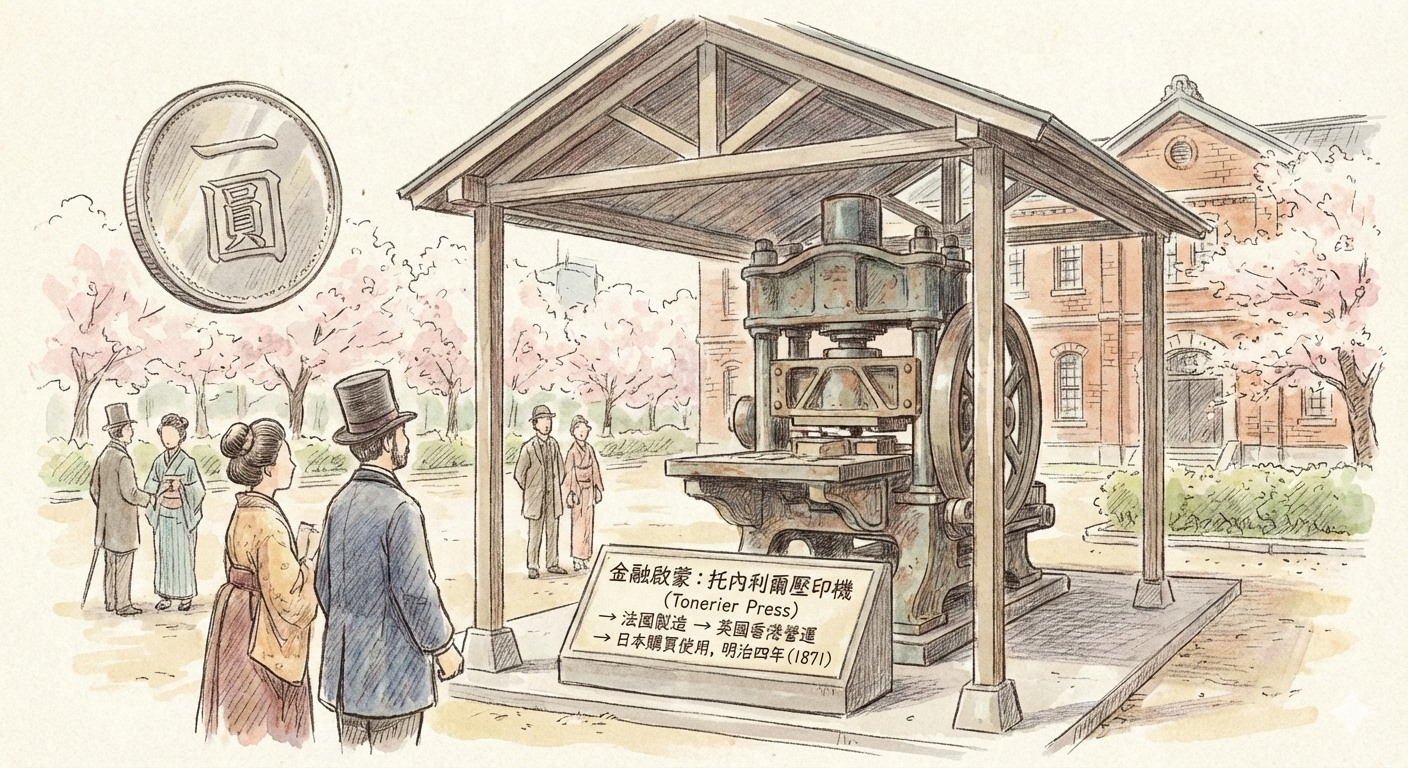
The star of this acquisition was a French-made Tonerier press. This machine's journey—from a workshop in France, to a mint in British Hong Kong, and finally to Osaka—is a perfect illustration of a 19th-century global supply chain. Upon its arrival, the Tonerier press was put to work minting Japan's very first modern gold, silver, and copper coins. It was the physical "switch" that turned the feudal ryō into the modern yen, single-handedly forging the currency of a new era.
The hidden gem for any visitor is the historic Tonerier press, still preserved and displayed outdoors near the Mint Museum. This remarkable artifact offers a rare, tangible link to the birth of Japan's modern economy. But this new industrial might would soon be turned toward conflict, and the same steel that built a new economy would tragically be used to tear the city apart.
A Citizen's Memory: The Unspoken Weight of the Kyobashi Station Memorial
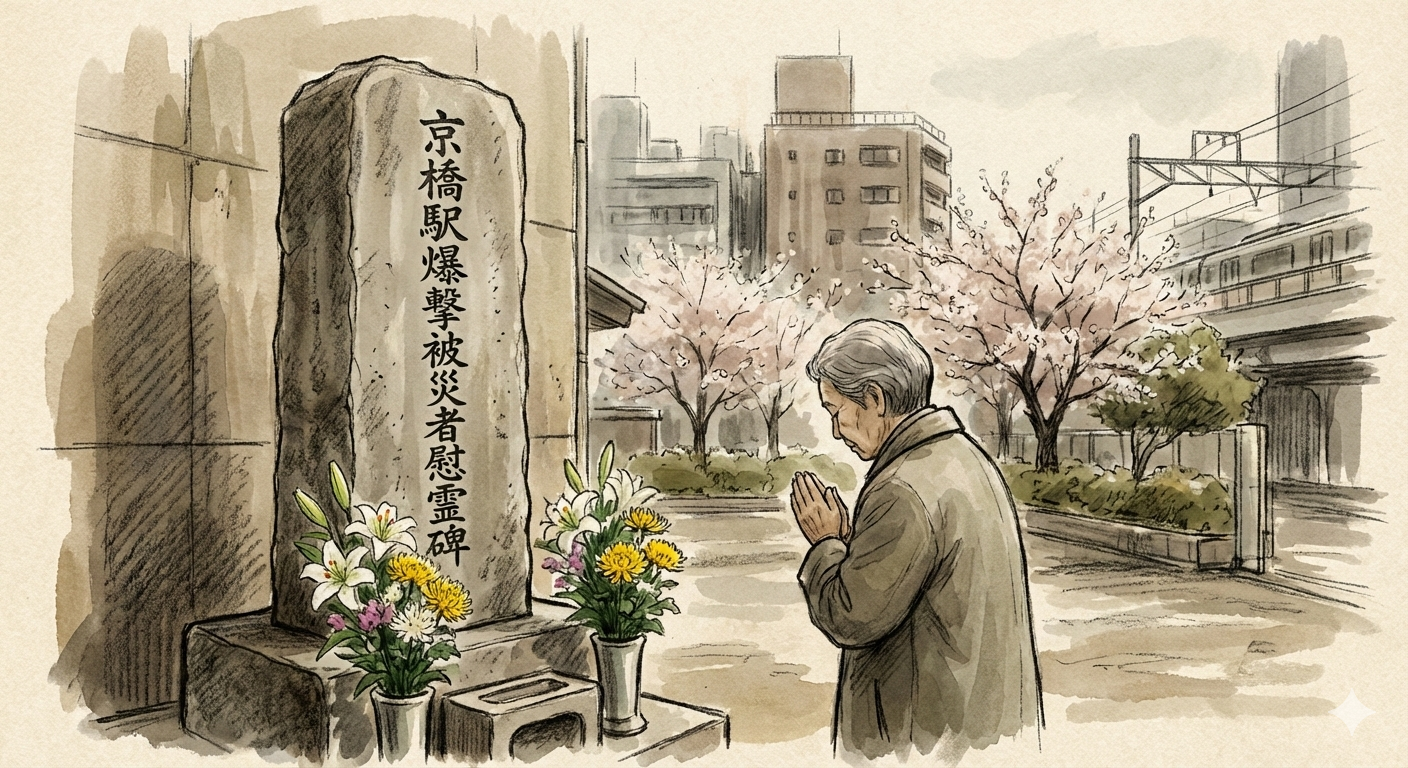
A city’s history is written in both triumph and tragedy, and its character is often best revealed in how it chooses to remember its deepest traumas. During the devastating Osaka air raids of 1945, the Katamachi district of Miyakojima Ward became a scene of horrific civilian loss at Kyobashi Station, a moment of profound pain that is still woven into the fabric of the community.
In the aftermath of the war, a memorial was erected to honor the victims. But its origin is what makes it so profoundly significant. This monument was not a state-sponsored project but was erected through the personal funds and conviction of a single citizen who witnessed the horror. This quiet act of individual conscience ensures that the memory of what happened remains pure, unfiltered by official narratives or political agendas.
This monument is not a story of the state, but of personal conscience. It stands as a powerful testament to an individual's loyalty to the victims and a city's capacity to remember its history from the ground up.
The true hidden gem here is not just a place, but an act of reflection. Visiting the Kyobashi Station Air Raid Victims Memorial Monument is an invitation to contemplate peace, memory, and the human cost of conflict. The continued presence of fresh flowers serves as a powerful reminder that this is not a forgotten history but a living memory, quietly tended by the people of Osaka. This living memory forms the moral foundation upon which Osaka rebuilt, eventually expressing its renewed confidence in the elegant, forward-looking structures that span its rivers.
The Poetry of Steel: The Bridge That Embodied an Era's Confidence
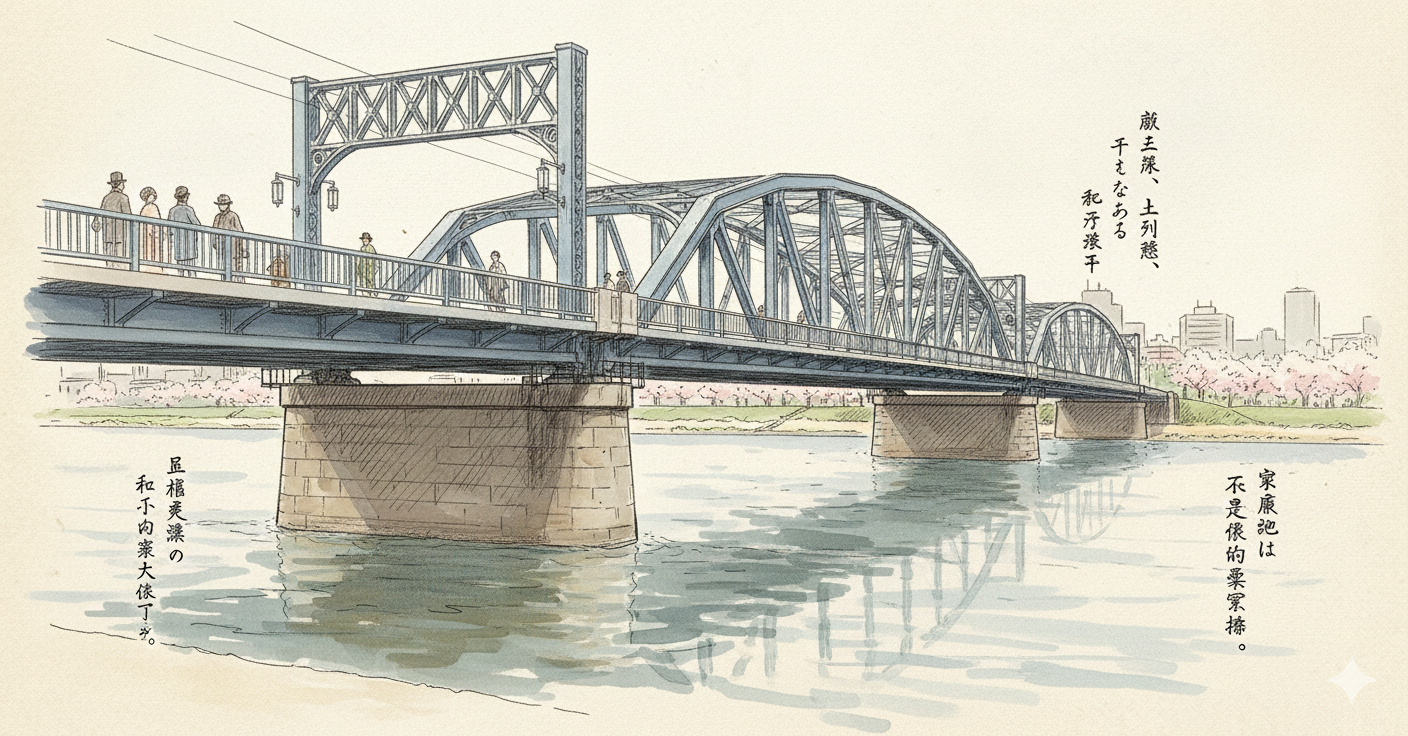
Bridges are more than just infrastructure; they are bold statements of a city’s ambition, confidence, and aesthetic values. Along the Ōkawa River, the Tenmabashi Bridge stands as a key character in the architectural story of Miyakojima and pre-war Osaka. Completed in 1935, it was celebrated as one of Japan's three great pre-war Gerber bridges.
The elegant Gerber beam structure was a marvel of modern engineering, and the Tenmabashi Bridge represented the pinnacle of Showa-era design, where structural beauty and powerful function merged seamlessly. It was a symbol of Osaka's forward-looking confidence and a direct continuation of the engineering legacy that began decades earlier with the Kema Lock Gate. Here, the dialogue between "steel and water" evolved from one of control to one of artistry, with the bridge’s graceful lines spanning the river like a poem written in steel.
The recommended hidden gem experience is to take an architectural walk along the Ōkawa River to admire the elegant Gerber beam structure of the Tenmabashi Bridge. From this vantage point, you can also appreciate views of the nearby Sakuranomiya Bridge, each structure contributing to the unique visual rhythm of Japan's Water Capital.
The Symphony of Water and Steel
The stories of Miyakojima Ward are woven together by the twin threads of water and steel. Water is the eternal constant—the source of life, the threat of destruction, and the deep current of memory. Steel is the symbol of human will—the technology that tames floods, the machinery that forges an economy, the elegant structures that connect a city, and the shrapnel that scars it.
Together, these hidden narratives—from an ancient stupa standing in quiet defiance of time to a citizen’s memorial that insists on remembering—reveal the true character of Osaka's resilience. It is a resilience rooted not in grand pronouncements, but in pragmatic solutions, deep respect for history, and the profound power of individual conscience. These are the stories that give a city its soul. As cities around the world race toward the future, what essential stories must they preserve to remember who they truly are?
Work cited
- 大川は新淀川から分流し、中之島で南北に分かれ、北が堂島川, accessed October 12, 2025
- 都島神社で出会う三重塔 – 関西最古級のロマンさんぽ【大阪市 ..., accessed October 12, 2025
- 屋外 - 造幣局, accessed October 12, 2025
- 都島区 戦後70年記念事業 - 大阪市, accessed October 12, 2025
- 大阪大空襲 京橋駅爆撃被災者慰霊碑 クチコミ・アクセス・周辺情報 - フォートラベル, accessed October 12, 2025
 Lawrence
 Lawrence