(ENG) Osaka's Secret Soul: Five Stories Written on the Ancient Ground of Tennoji
Tennoji's true magic lies in these overlapping layers of time, where a single plot of land can be a sanctuary, a warning, and a graveyard.

和宗總本山 大阪天王寺 Waseda Souhonzan Temple, Tennoji, Osaka
Beyond the Neon Glow
Picture Osaka, and your mind likely conjures images of glittering neon, bustling crowds at Dotonbori, and a relentless modern energy. But tucked away from the main thoroughfares, in the historic district of Tennoji, lies a city of whispers and shadows. Here, built upon the ancient Uemachi Plateau, the city's deepest and oldest stories are hidden in plain sight—in quiet temple gardens, unassuming neighborhood shrines, and even the very contours of the land itself. These are not just footnotes of the past; they are the living memories that shaped the metropolis we see today.
Listen to the historical stories told in detail (For subscribers only)
This journey will unearth five surprising stories that reveal a side of Osaka you've never imagined. We will step through the gates of a spiritual time capsule, decipher a sacred map of forgotten dangers, chase the ghosts of lost springs, send a prayer into the modern age, and walk the final, tragic footsteps of one of Japan's greatest samurai heroes. This is the story of a city shaped by ancient faith, epic battles, and the very ground it’s built upon.
The Time Capsule: Where an Ancient Paradise Meets a Modern Metropolis
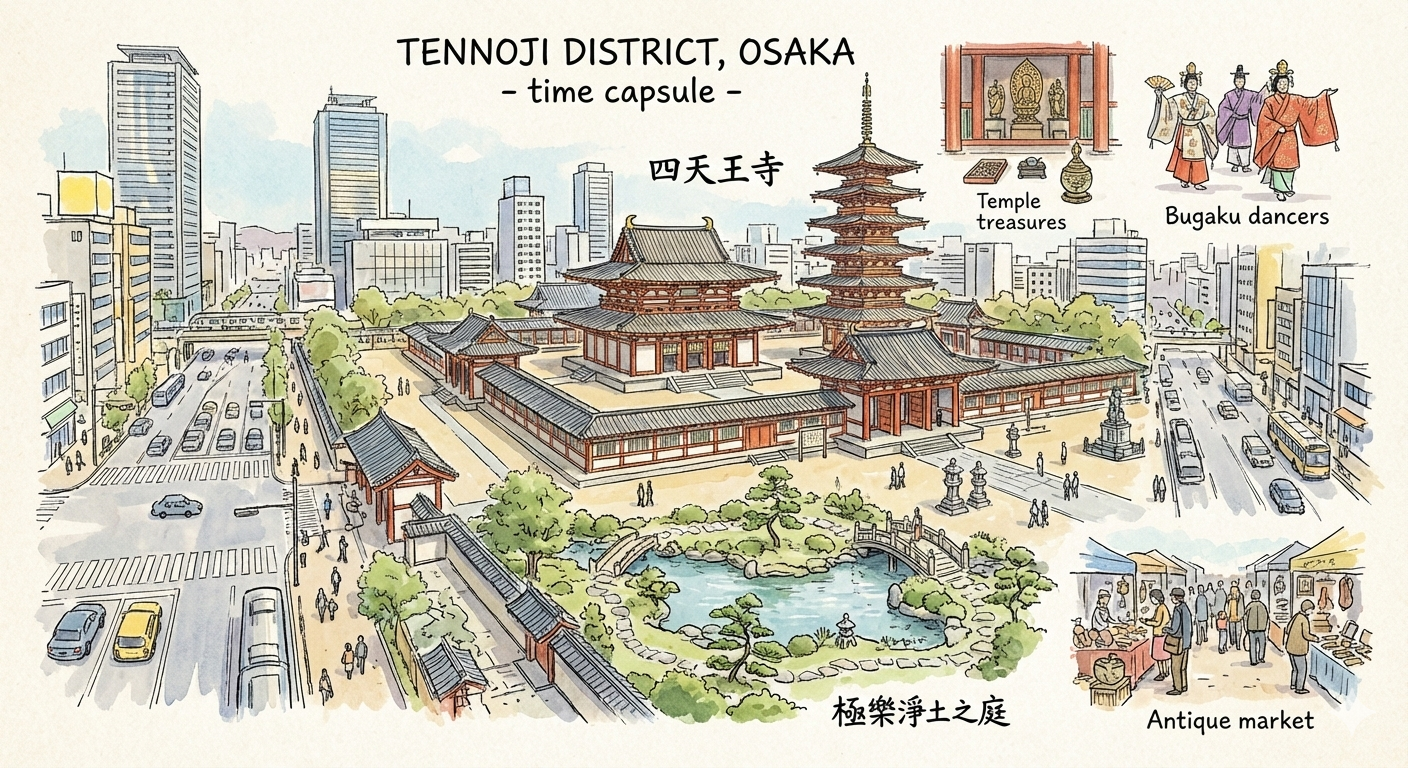
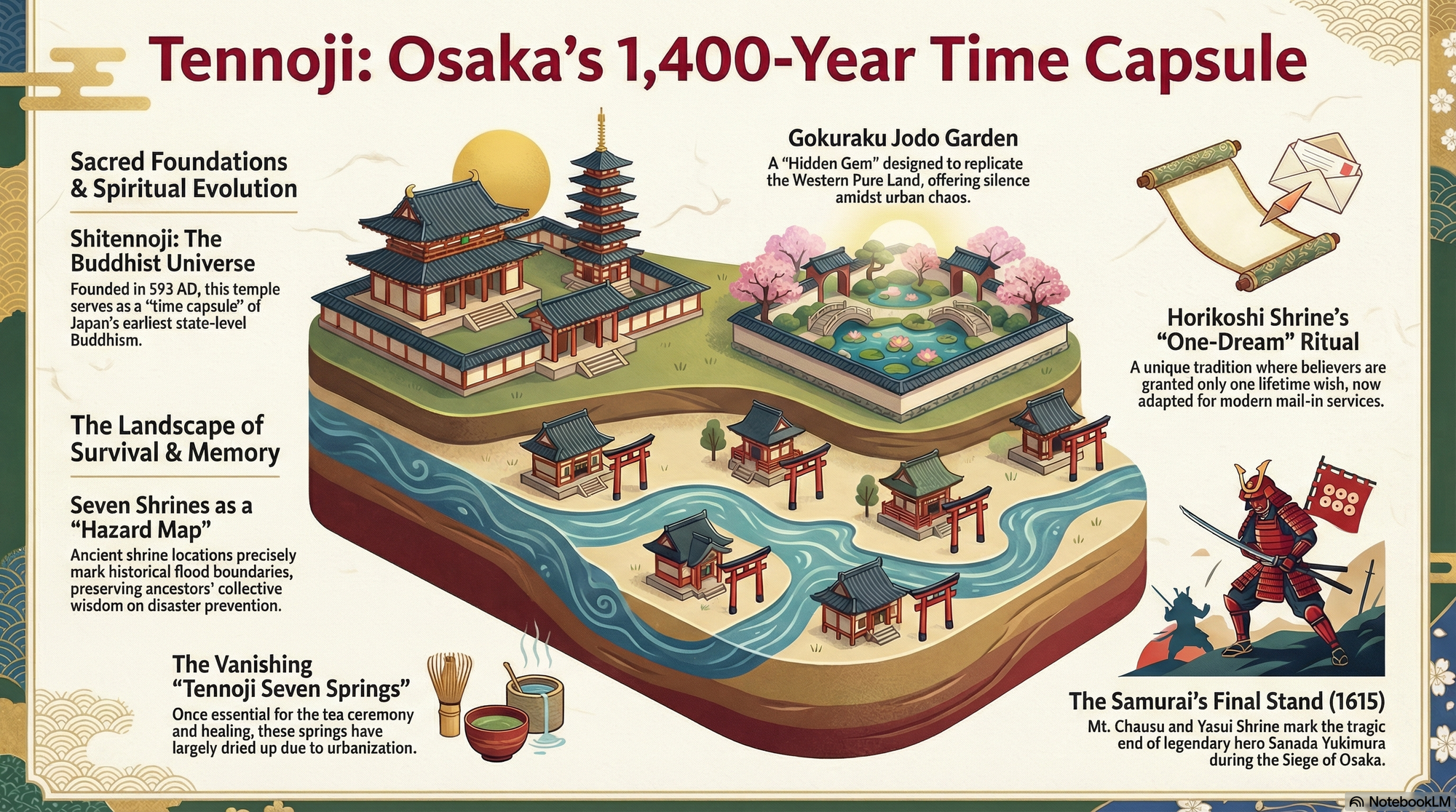
For over 1,400 years, Shitennoji Temple has been more than just a place of worship; it has been Osaka’s cultural and spiritual anchor. As Japan's oldest officially administered temple, founded by the legendary Prince Shotoku in the 6th century, it stands as a profound link to the very dawn of Japanese Buddhism. Yet its true power lies in the tension between its ancient origins and the relentless frequency of the modern city that has grown up around its walls.
The most startling expression of this contrast is found within the temple grounds, in a hidden gem known as The Garden of Paradise (Gokuraku Jodo no Niwa). This meticulously designed landscape is a physical recreation of the Buddhist Pure Land, an earthly paradise intended to transport the visitor far from worldly concerns. To step inside is to enter what has been described as a "world unconnected to the hustle and bustle," an experience made all the more profound by the faint sounds of city traffic just beyond its walls. It is a sanctuary where the ancient ideal of serenity directly confronts the reality of the modern metropolis.
This dual nature defines the temple’s cultural life. On one hand, Shitennoji preserves the high courtly tradition of the Seirei-e Bugaku grand ceremony, a performance of sacred dance so significant it has been designated an Important Intangible Folk Cultural Property. On the other, on the 21st and 22nd of each month, the temple grounds transform into a lively market, where antique dealers and flea market vendors cater to the city's shomin, or common people. This seamless blend of elite art and popular culture is the key to the temple's enduring vitality. It is a place that belongs to everyone.
Shitennoji is a "time capsule" where visitors can simultaneously experience the cosmology of the Asuka period, the courtly dance culture, and the market life passed down from the Edo period.
This sacred ground acts as a spiritual sanctuary, but its very existence is tied to the physical land it was built upon—a plateau whose geography dictated the fortunes of all who lived there.
The Sacred Map: How Ancient Shrines Reveal Osaka's Forgotten Dangers
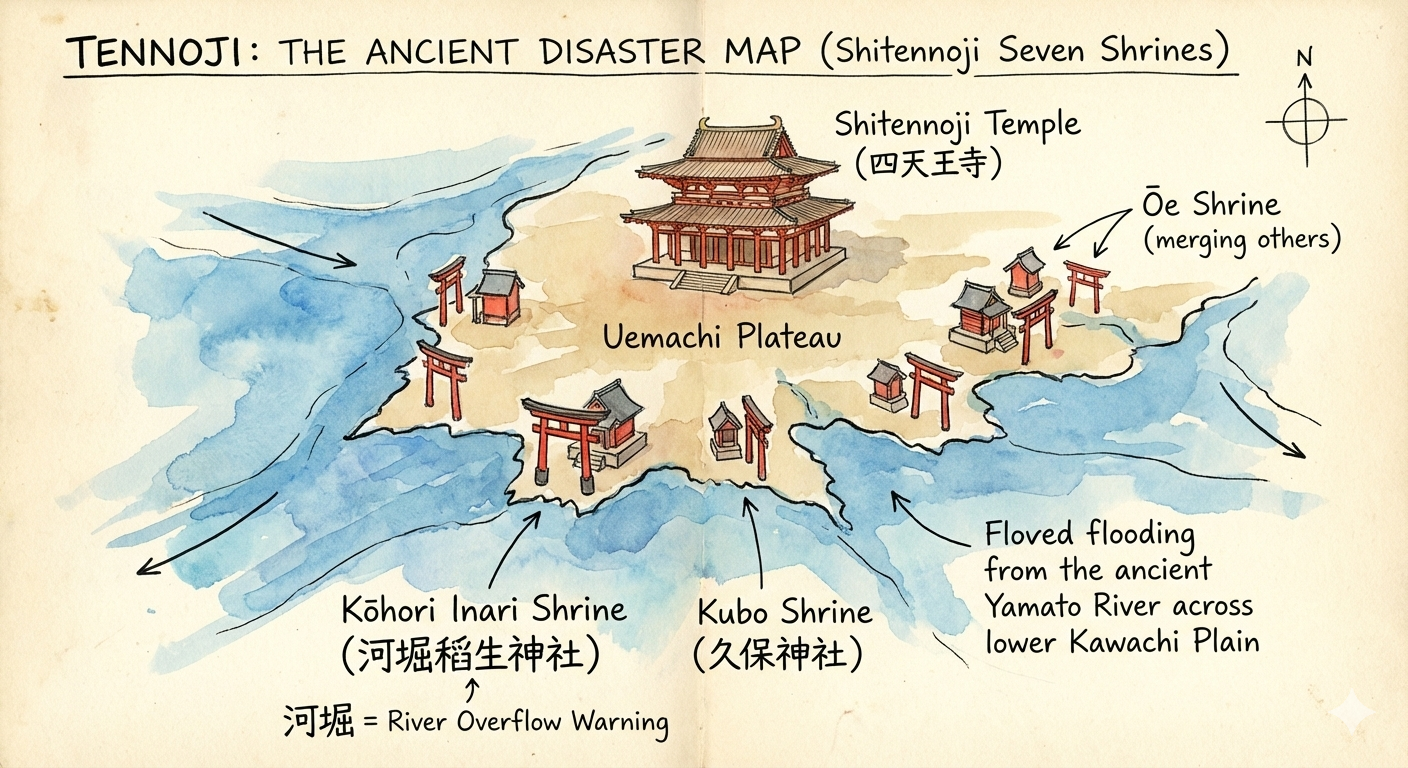
Scattered around the main temple complex are the "Shitennoji Shichinomiya," or the Seven Shrines of Shitennoji. To the casual visitor, they appear to be humble places of local worship, guardian deities for the surrounding neighborhoods. But their true significance is far more profound. They are a testament to the wisdom of ancient city planners and a living record of Osaka’s long and dangerous relationship with water.
The surprising truth is that the seven shrines are not randomly placed; together, they form a "disaster hazard map drawn on the ground." Their locations, particularly those of Kubo Shrine and Kawahori Inari Shrine, precisely mark the historical floodplains of the ancient Yamato River. For centuries, before modern engineering tamed the landscape, this area was prone to catastrophic flooding. The shrines were built as a physical and spiritual bulwark against this constant threat.
This placement reveals the "collective wisdom" of a people managing a harsh natural environment. The shrines were not built merely to pray for protection; they were erected to physically demarcate dangerous, flood-prone areas. By deifying the uncontrollable power of the river, ancient Osakans were able to spiritually manage an existential risk, creating sacred boundaries that warned future generations. The land’s history is embedded in its very name; the district of "Kōhori" (河堀) literally translates to "river overflow," a permanent linguistic marker of its perilous past.
From the dangers of an overabundance of water, our story now turns to the preciousness of pure, life-giving springs that once defined the culture of this very same plateau.
The Ghost Wells: Chasing the Lost Water That Fueled a Culture
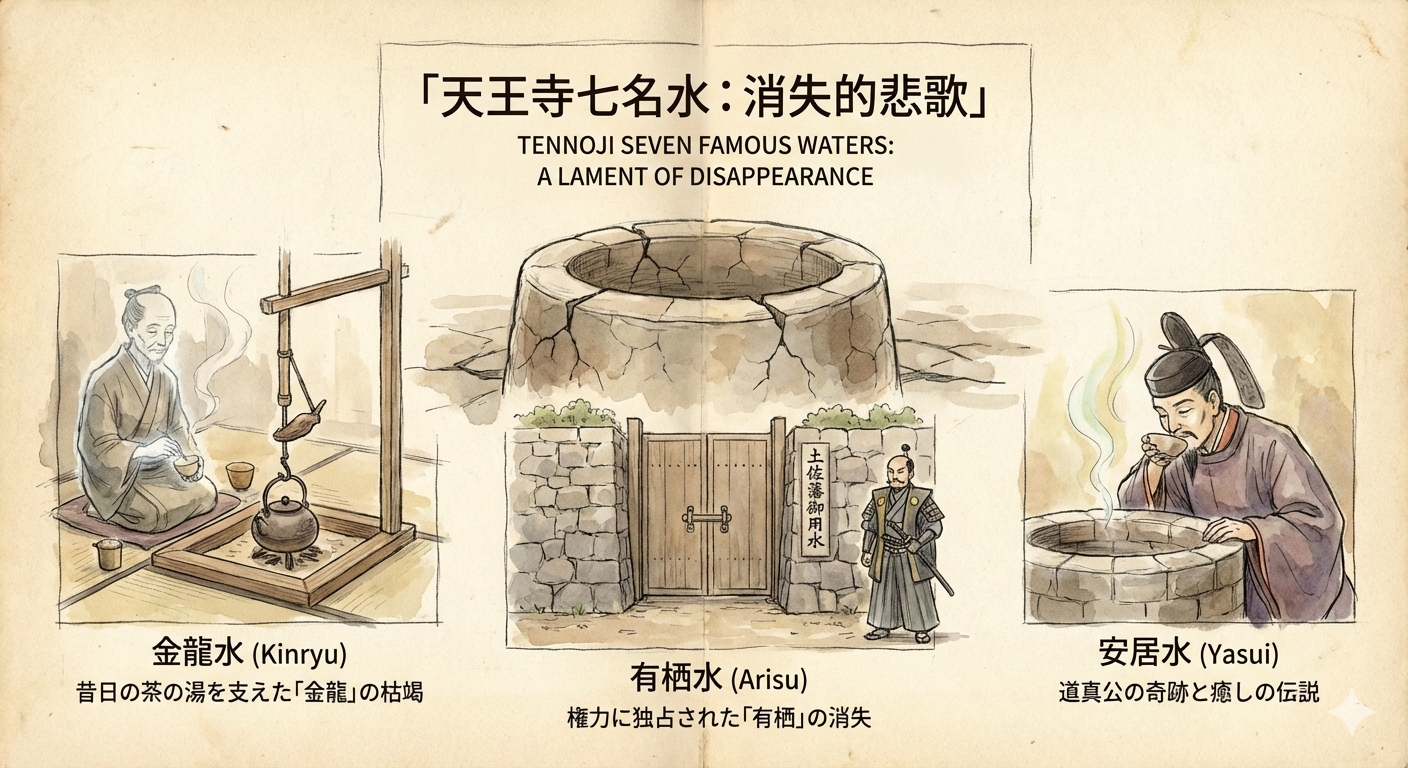
On the high ground of the Uemachi Plateau, fresh water was once a scarce and precious resource. The "Seven Famous Waters of Tennoji" were the lifeblood of the district, crucial not just for survival but for the flourishing of high culture, from healing arts to the tea ceremony. Today, they exist mostly as ghosts, their stories whispering of a time when water was a symbol of both purity and power.
The tale of Arisu Water (also known as Tosa Shimizu) is a drama of control and prestige. The water from this spring was of such exceptional quality that the powerful Tosa clan bought the surrounding land, enclosed it with a wall, and declared it for their exclusive use, posting a sign that read "Tosa Clan Official Water." This act transformed a natural resource into a guarded symbol of feudal authority, demonstrating that in a thirsty land, control over water was control itself.
Meanwhile, Kinryu Water, located within Taisyouji Temple, illustrates the link between natural resources and high culture. It was known for two things: a legendary ability to cure eye ailments and, more significantly, for being "extremely suitable for the tea ceremony." For the cultural tastemakers of the Edo period, the quality of water was paramount, and Kinryu Water sustained a golden age of arts in the district. Its eventual drying up is symbolic of more than just a changing water table; it marks the fading of an era that depended on such pristine natural gifts.
Today, the Seven Waters have almost all vanished. Some, like Masui Water, are marked only by an empty well frame. Others, like the once-prized Arisu Water, have faded so deeply into the urban landscape that its commemorative stone is now lost to all but the most determined seekers, its exact location no longer certain. Their disappearance is not a natural fading; it is a direct consequence of a modern city's thirst, a silent indictment of the environmental costs paid for urbanization, written in dry earth where lifeblood once flowed.
The physical loss of these natural resources stands in stark contrast to the enduring power of human faith, which finds new ways to flow even when the ancient wells run dry.
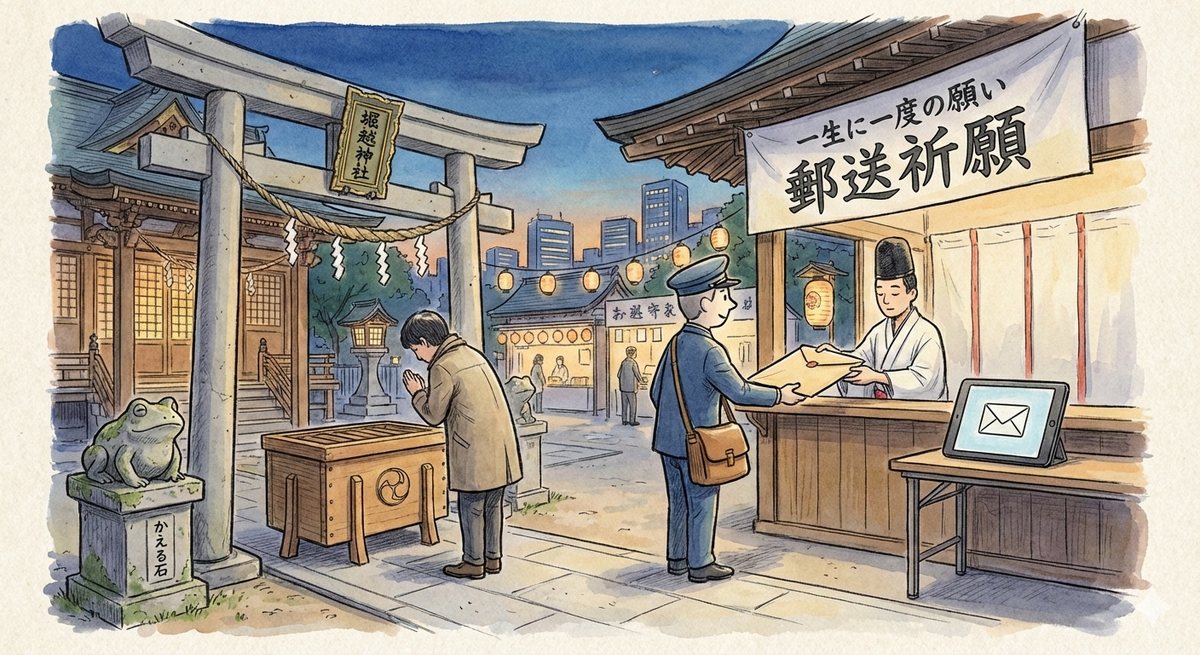
The Modern Prayer: A Once-in-a-Lifetime Wish, Delivered to Your Door
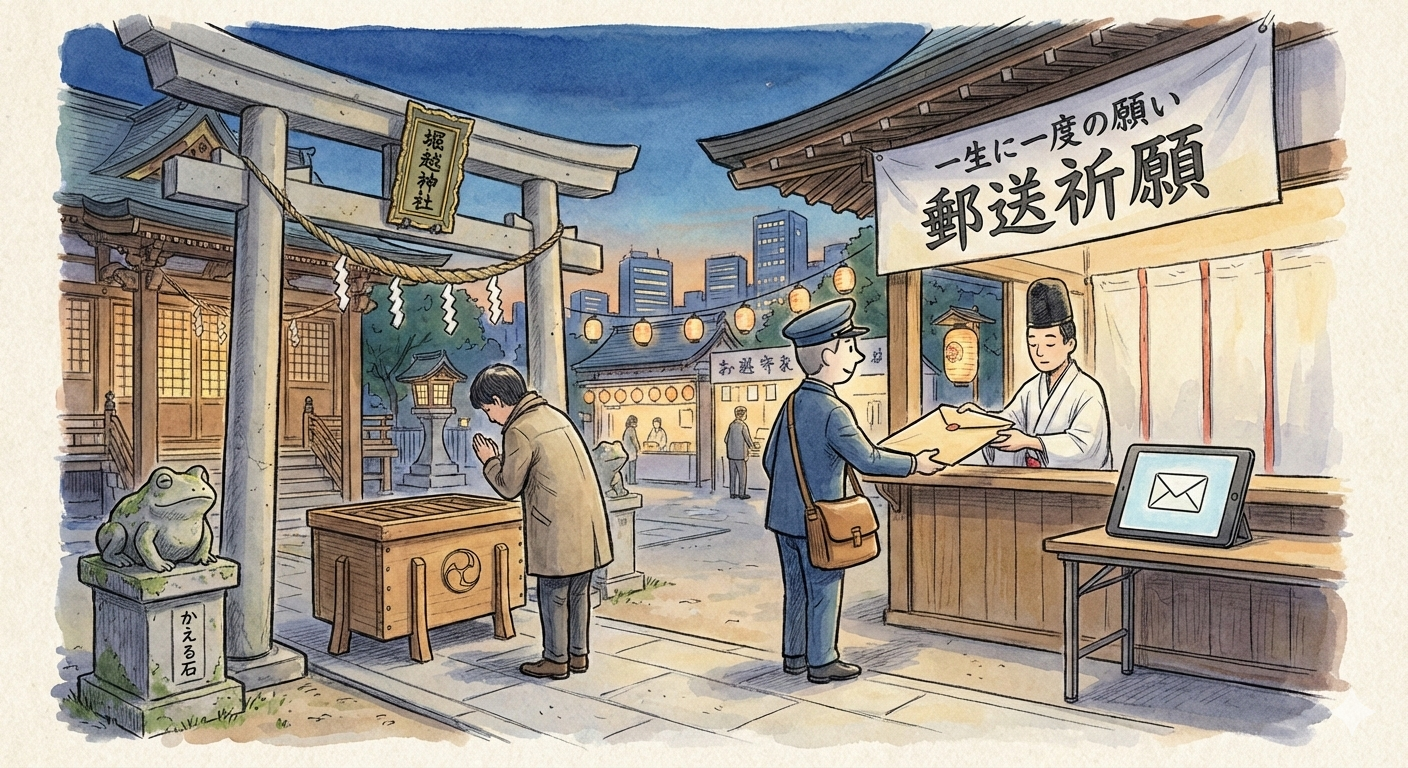
Among Osaka’s many sacred sites, Horikoshi Shrine stands out as a unique spiritual "power spot." Its fame rests not on grand architecture or ancient relics, but on a single, powerful premise that forces supplicants to focus on what truly matters most in their lives.
The shrine’s core offering is the "hitoyume kigan"—the "once-in-a-lifetime wish." The belief is that the shrine’s deity will grant one, and only one, deeply held prayer for each person in their lifetime. This high-stakes concept elevates the act of prayer from a routine request to a profound, life-altering appeal. It demands introspection, clarity, and a deep consideration of one’s ultimate desire.
But here is the truly surprising twist: this ancient, deeply personal ritual has embraced the 21st century. For those unable to visit in person, the shrine offers its services by mail. A believer anywhere in the world can request a prayer kit, write down their once-in-a-lifetime wish, and mail it back. A priest will then perform the blessing and mail the consecrated charm back to them. This brilliant adaptation of tradition is a powerful example of how ancient faith can thrive in the modern world by embracing contemporary logistics to meet spiritual needs across any distance.
Within the shrine, a more whimsical counterpart awaits. Tucked away near the entrance is the "Kaeru Ishi" (Frog Rock). In Japanese, the word "kaeru" is a pun, meaning both "frog" and "to return." Visitors gently stroke the stone in the hope that something—or someone—they have lost will come back to them.
From the deeply personal and spiritual nature of a single wish, our final story shifts to the grand, tragic stage of history, where heroes and armies clashed for the soul of a nation.
The Hero's Final Footsteps: Walking the Battlefield of Japan's Last Samurai
The Uemachi Plateau was not just a cradle of faith; it was the decisive stage for the final, bloody act of Japan’s Warring States period. During the Siege of Osaka (1614-1615), the unassuming parks and quiet temple grounds of Tennoji became the epicenter of a conflict that unified a nation under the Tokugawa shogunate. To walk here is to walk on a battlefield.
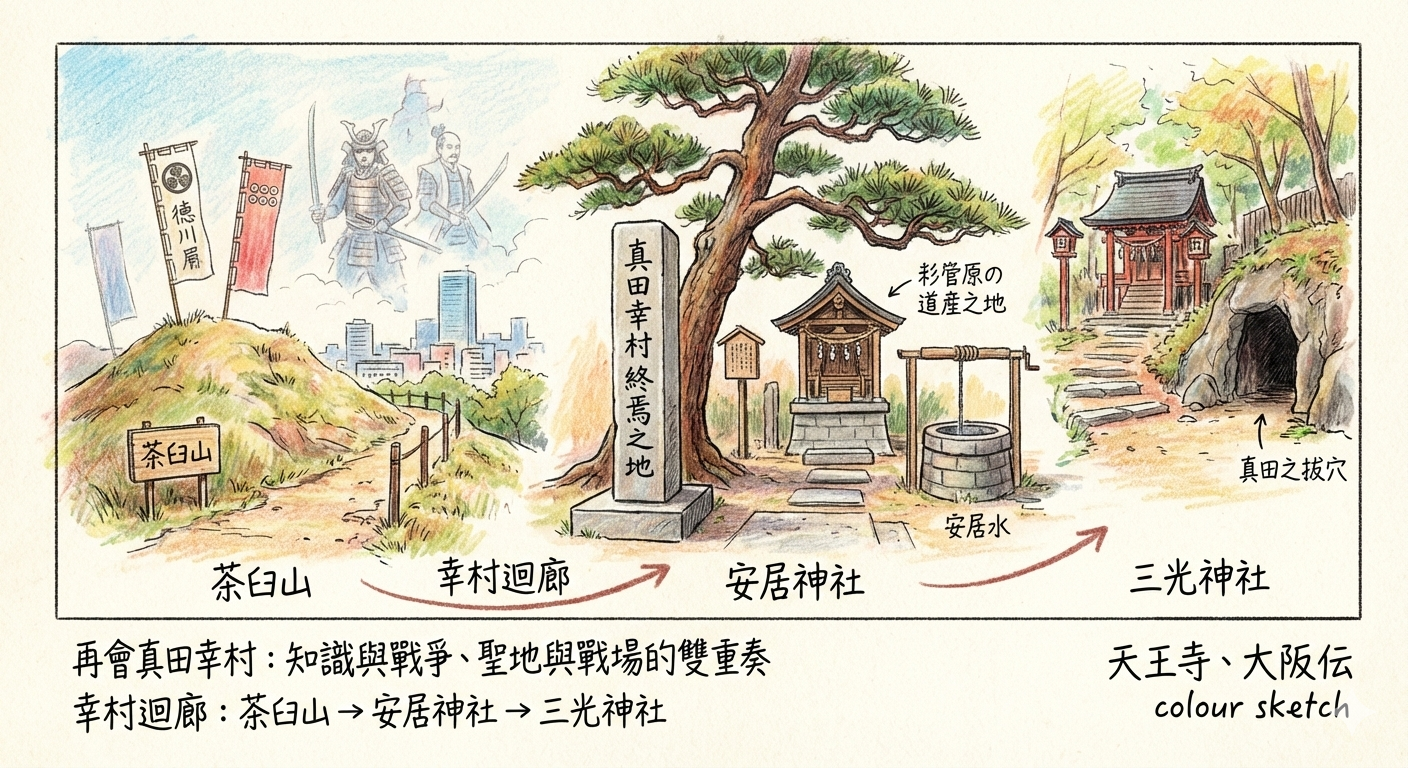
At its strategic heart is Chausuyama, a small hill rising just 26 meters within Tennoji Park. In the flat Osaka plains, this modest mound offered a priceless command position. Stand on its peak today, and you are not in a park; you are at the nerve center of a nation's violent birth. During the first stage of the siege, this was the headquarters for the great shogun-to-be, Tokugawa Ieyasu. In the final, decisive battle, it became the command post for his legendary adversary, Sanada Yukimura, who occupied the very ground where you stand to stare down fate.
The story’s emotional climax, however, is at the nearby Yasui Shrine. It was from Chausuyama that Sanada Yukimura launched his final, hopeless charge against the overwhelming Tokugawa forces. His valiant assault threw the enemy into chaos but ultimately failed. Exhausted and severely wounded, Yukimura retreated to the grounds of Yasui Shrine, where he was found resting under a pine tree and killed. Today, a stone monument, the "Site of Sanada Yukimura's Death in Battle," marks the very spot where one of Japan's most celebrated samurai heroes met his end.
The shrine itself embodies a powerful historical irony. It is a place that venerates both Sugawara no Michizane, the gentle god of learning, and the tragic memory of a warrior's violent death. This fusion of "sanctuary and battlefield" creates a uniquely poignant atmosphere, where a prayer for knowledge is whispered in the same space that witnessed the end of an era.
The layers of history—of faith, war, and daily life—are written directly onto the landscape of Tennoji, waiting to be read.
The City as a Storybook
Our journey through Tennoji has revealed five narratives hidden just beneath Osaka's modern surface: a spiritual time capsule preserving centuries of culture, an ancient disaster map disguised as a network of shrines, the ghostly memory of water that once fueled a city's art, a sacred wish that travels by mail, and a hero's final battlefield now nestled in a city park.
Tennoji's true magic lies in these overlapping layers of time, where a single plot of land can be a sanctuary, a warning, and a graveyard all at once. It reminds us that every city is a storybook, filled with tales of triumph, tragedy, and adaptation. The only question is whether we choose to turn the page.
What secret histories are waiting to be discovered just beneath the surface of the streets you walk every day?
 Lawrence
 Lawrence