(ENG) Taisho Ward: Five Hidden Stories That Reveal the True Soul of Osaka
As Taisho Ward reveals, it lives in the quiet dignity of a free ferry, the artistic echo in an industrial ruin, the enduring song of a migrant culture, and the lively roar of a local market. These five stories, hidden within a single ward, resolve the paradox of its identity.

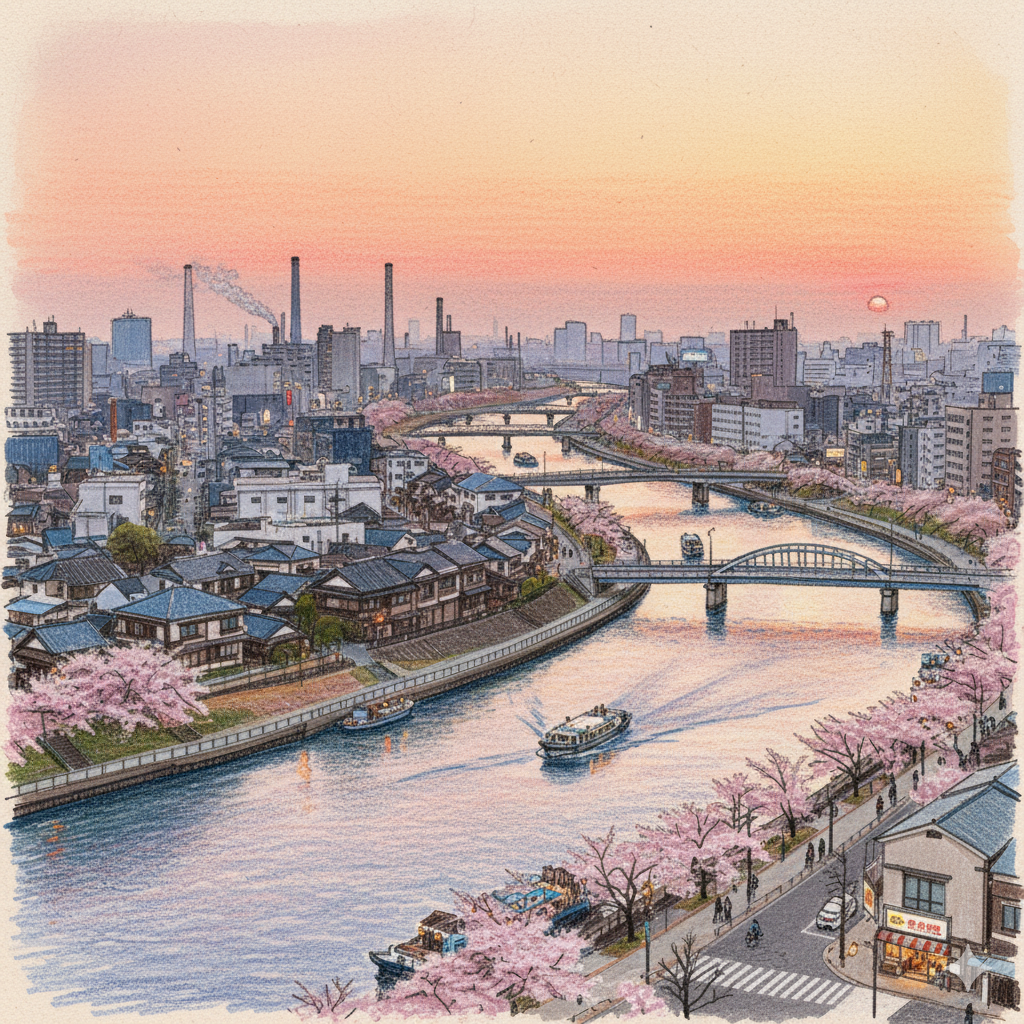
新木津川大橋 Shin-Kizugawa Ohashi > 千本松大橋 Chihonmatsu Ohashi
Listen attentively to the historical stories told in detail
When we picture Osaka, our minds often conjure the electric dreamscape of Dotonbori—a river of neon, the Glico Running Man, and streets thrumming with insatiable energy. But beyond this dazzling facade lies a different city, one with a soul forged not in light but in water, steel, and tireless human spirit. This is the Osaka of Taisho Ward, a perfect case study in human geography, where physical landscape has profoundly shaped social identity.
Geographically an island shaped by rivers, Taisho Ward embodies a central paradox of Japanese history: for decades, it was the nation’s industrial core, powering its modernization, yet it remained a social and geographic periphery. To understand this place is to understand Osaka itself. Here, in the quiet currents of its canals and the proud bones of its abandoned shipyards, are five surprising stories that reveal the city’s true character.
The Ferryman's Philosophy: Why Osaka's Most Poetic Commute is Free
Taisho Ward’s unique geography is both its defining feature and its greatest challenge. Surrounded by the Kizu and Shirinashi rivers, it exists as a man-made island, a delta landscape that fueled its industrial might but also isolated its communities. In an age of soaring bridges and subterranean trains, the ward’s solution to this isolation is a living relic, a quiet testament to a different era’s social contract: a fleet of humble public ferries that carry passengers for free.
Takeaway 1: A Humble Commute as a Living Museum
The free public ferry system isn't a modern tourist gimmick; it's a historical necessity born from the golden age of shipbuilding. To accommodate the massive vessels being constructed along the riverbanks, the waterways had to be kept clear of low bridges. Ferries became the essential lifeline connecting the factories of Taisho with the residential districts of neighboring wards. The fact that the service remains free to this day is a profound civic promise, an unbroken link to the working-class communities that built this city. Each short crossing is a journey in a time capsule, a gentle rebellion against the frantic pace of the modern city. It’s a physical reminder that some connections are too fundamental to carry a price tag.
Hidden Gem: Experience the "Water Capital" in its Purest Form
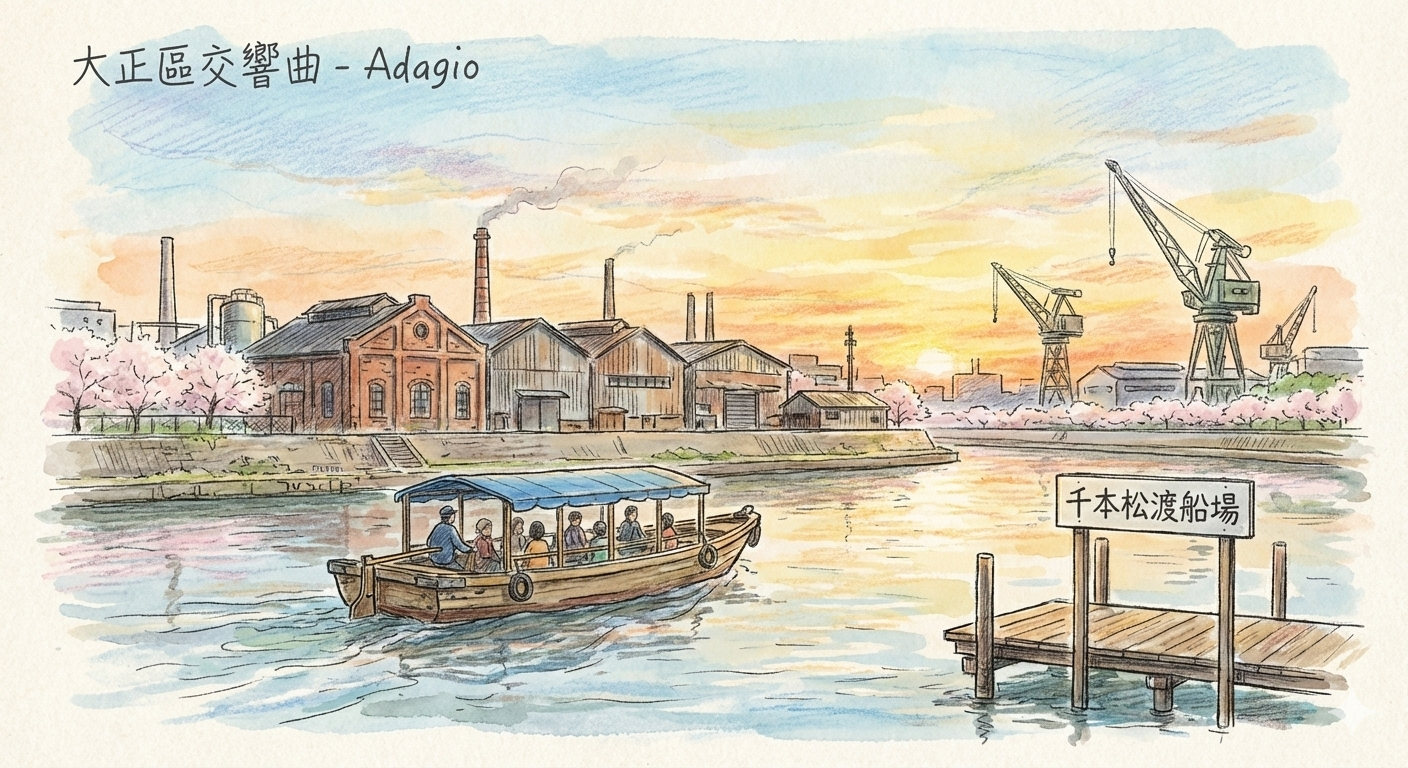
To feel the pulse of "Water Capital Osaka," seek out the Chihonmatsu Ferry (千本松渡船場), which connects Taisho to the Nishinari ward. Operating tirelessly from 6:00 AM to 9:30 PM, this is no quaint novelty but a vital, living artery. The journey is a short, slow cruise that offers a rare, ground-level perspective of the city's industrial waterfront. As the little boat chugs across the river, the clamor of the metropolis fades, replaced by the rhythmic lapping of water against the hull. This is not a slick tourist cruise but an authentic slice of daily life, imbued with a retro, nostalgic feeling that is increasingly rare. While the ferries represent a humble, human-scale connection to the past, another nearby site reveals the monumental scale of the industry they once served.
The Shipyard's Ghost: Where Industrial Bones Become an Artistic Heartbeat
On the banks of the Kizu River stands a monument to Osaka's industrial might: the former site of the Namura Shipbuilding company. For decades, this was a titan of heavy industry, a place where steel plates were bent and welded into ocean-going giants. But the very river that gave it life ultimately sealed its fate. As ships grew larger, the waterway became too narrow, and in 1988 the factory fell silent, leaving behind a colossal ghost. This ending, however, was merely the prelude to one of the city's most remarkable transformations.
Takeaway 2: The Beautiful Afterlife of an Industrial Giant
Today, the former shipyard has been reborn as the "Creative Center OSAKA" (CCO), a hub for art, music, and culture. But this is more than mere regeneration; it is a profound lesson in harnessing the "potential of ruins." Instead of sanitizing its past, the CCO embraces its post-industrial decay as an aesthetic and cultural asset. Designated a "Modernization Industrial Heritage" site in 2007, a place once defined by the deafening roar of machinery now hosts art festivals and concerts, its raw, skeletal beauty providing a dramatic backdrop for creative expression.
"A heritage group that tells the story of the growth of the modern shipbuilding industry, comparable to that of various European and American nations."
Hidden Gem: Walk Through Skeletons of Steel and Halls of Blueprints
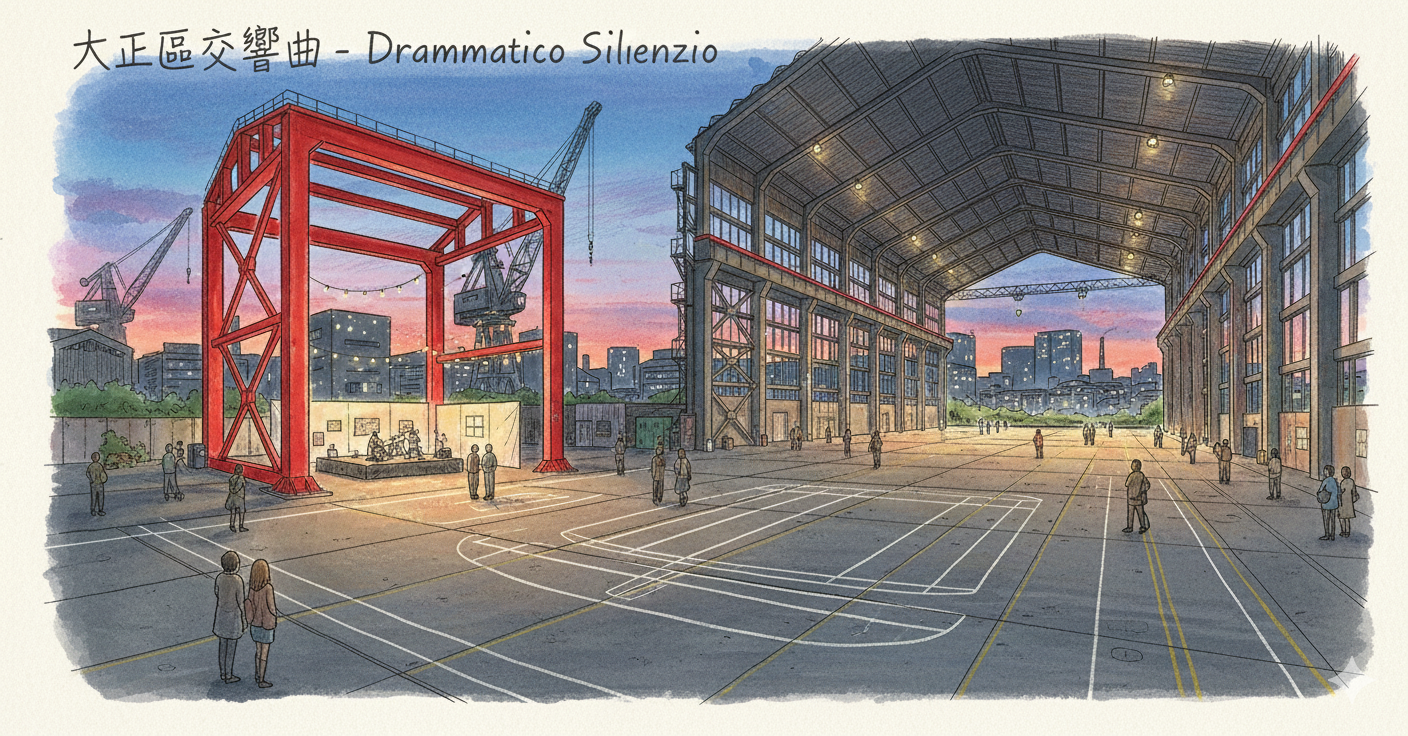
A visit to the CCO is a visceral experience. The most striking feature is the "Red Frame," the massive steel skeleton of an old factory. Stripped of its walls and painted a vibrant crimson, it stands as a powerful sculpture—a dialogue between the industrial past and the artistic present. Inside the main building, you can find the awe-inspiring pillar-less drawing room. This vast hall is where naval architects once drafted enormous, full-scale ship blueprints directly onto the floor. If you look closely, you can still see the faint scars and markings left by their tools—the ghosts of industrial precision etched into the ground. The labor that once animated these halls came from all over Japan, and the story of those people is the next layer of Taisho’s soul.
The Southern Song: Finding Japan's Tropical Soul in an Industrial District
The industrial boom of the Taisho era (1912–1926) created an insatiable demand for labor. This call was answered by people from across the country, but no group left a more indelible mark on the ward than the migrants from Japan’s southernmost islands, Okinawa. Seeking work in the shipyards and ports, they arrived carrying little more than their belongings and their resilient, vibrant culture.
Takeaway 3: A Cultural Island Within a Geographic One
In the Hirao district of southern Taisho, these migrants and their descendants built "Little Okinawa," a community that is far more than a simple ethnic enclave. It is a powerful story of cultural perseverance. Drawn by economic necessity, they created a home away from home, establishing shops, restaurants, and social networks that preserved their unique traditions. The surprise of finding the distinct sights, sounds, and flavors of Japan's tropical south thriving in the heart of industrial Osaka is profound. This cultural island has not only survived but has become a defining characteristic of the entire ward.
Hidden Gem: Hear the Music and Taste the Traditions
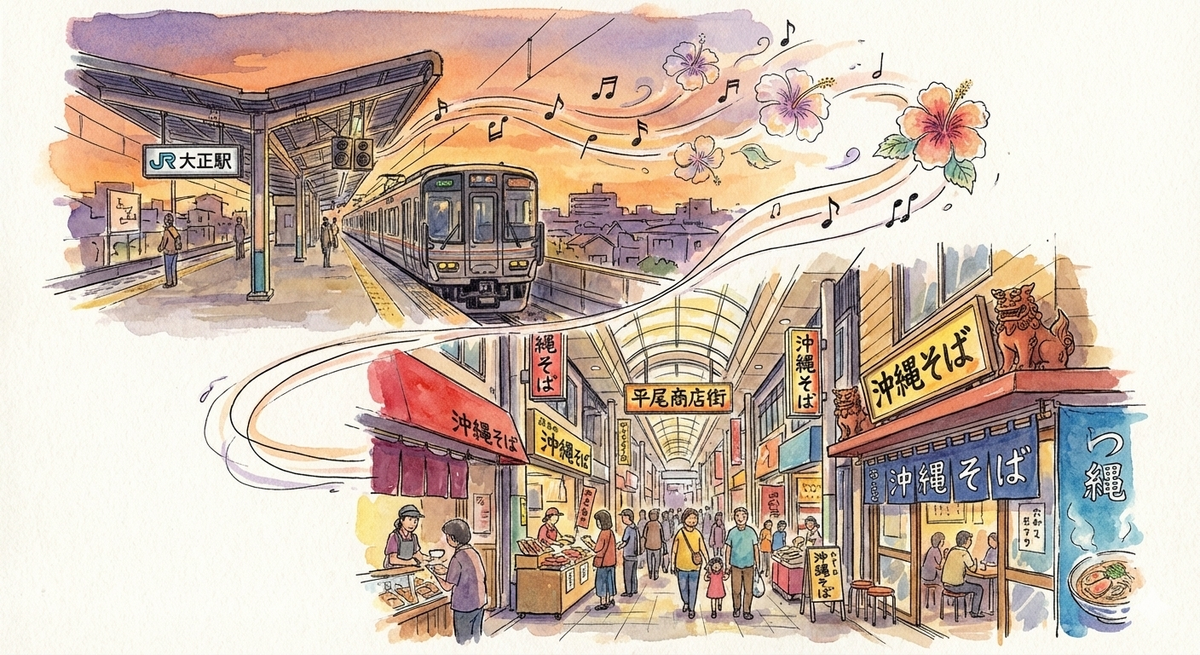
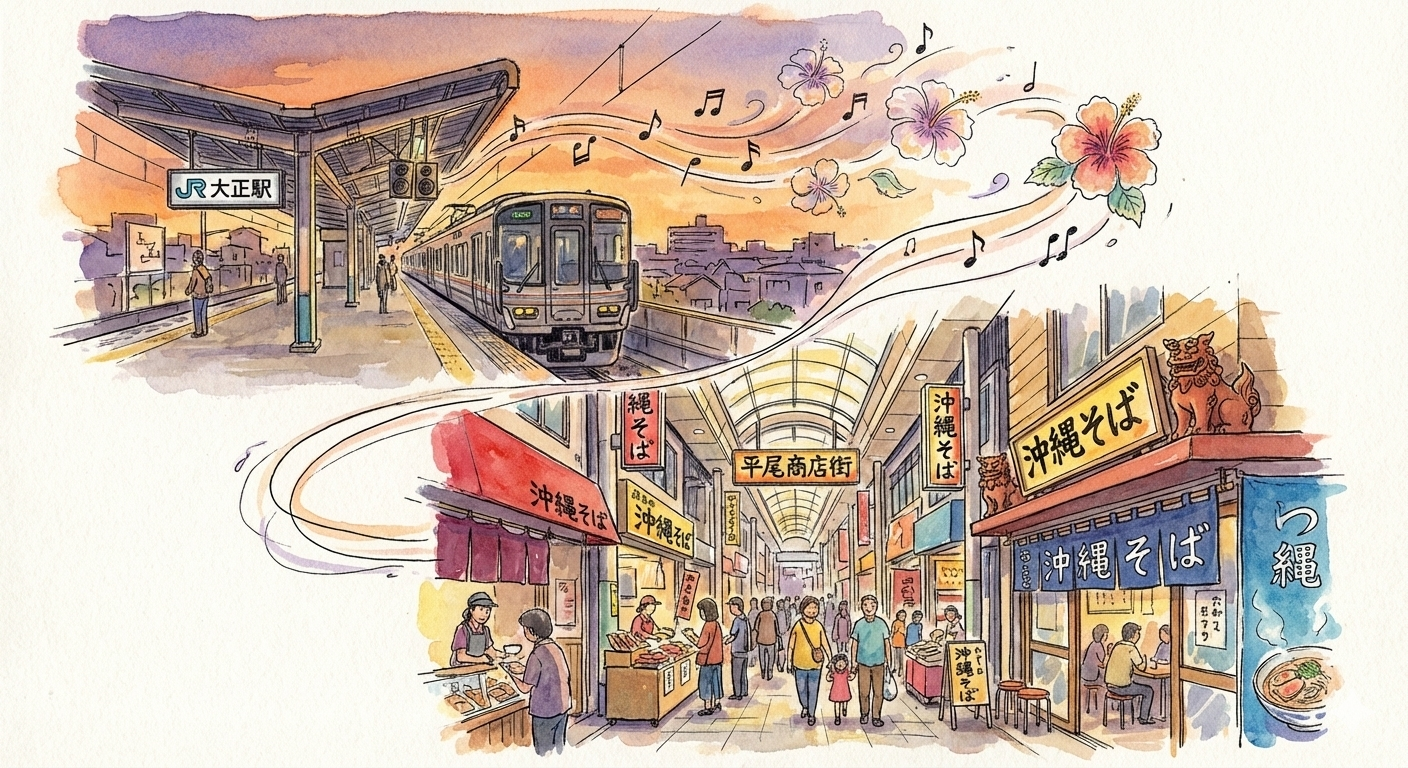
To experience this unique cultural fusion, head to the Hirao Shopping Street (平尾商店街). Here, the air is filled with the scent of authentic Okinawan food, and the shops sell products rarely found elsewhere in Kansai. But the most significant cultural landmark is auditory. Listen closely when a train arrives at the JR Taisho Station. The melody that plays is the famous Okinawan folk song "Tinsagu nu Hana" (てぃんさぐぬ花). This is no mere gesture; it represents the community’s culture achieving official recognition at the public level. Broadcast to thousands daily, it is a powerful, symbolic integration of a once-peripheral migrant culture into the city's official identity.
The Concrete Conquerors: Osaka's Ambitious Bridges to the Future
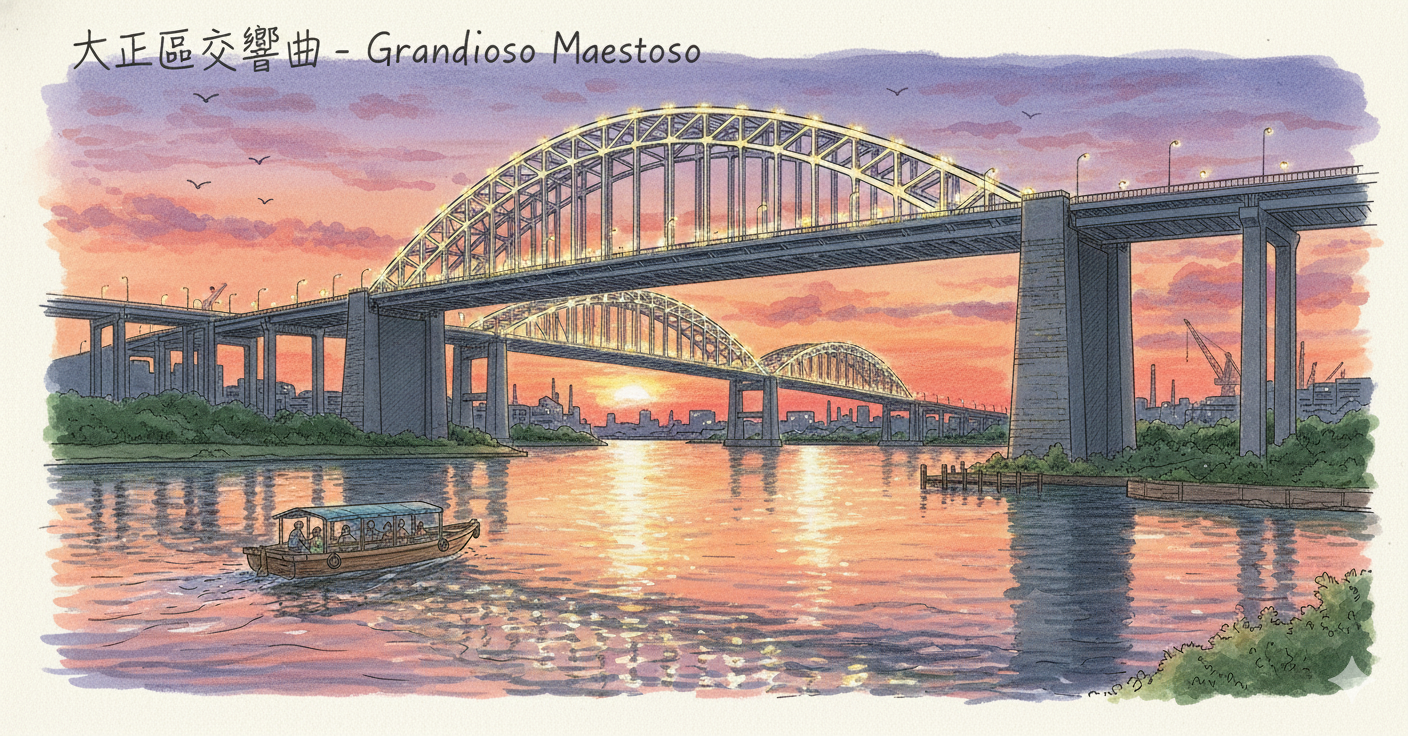
Taisho Ward’s delta geography, a silty landscape carved by rivers, presented an immense engineering challenge. As massive land reclamation projects expanded the port throughout the 20th century, the need to connect this industrial island to the metropolis became critical. Osaka's response was a series of bold statements of intent: massive, soaring bridges that sought to tame nature and conquer distance.
Takeaway 4: A Tale of Two Connections
The philosophy behind these giant bridges is the polar opposite of the humble ferries. Structures like the magnificent Shin-Kizugawa Ohashi (新木津川大橋) and the looping Chihonmatsu Ohashi (千本松大橋) are symbols of power, capital, and modern logistics. They were designed not for quiet commutes but for the relentless flow of cargo and commerce. That these two opposing modes of transport—the free, slow-moving ferry and the towering, high-speed bridge—coexist in the same ward tells a complex and fascinating story about Osaka's identity. The city’s character is woven from both the resilience of its shomin (common people) and its grand industrial ambitions.
Hidden Gem: Witness an Epic of Urban Engineering
For a breathtaking spectacle, find a vantage point along the waterfront in areas like Tsurumachi. From here, you can appreciate the magnificent bridge system in its entirety. Their towering structures, set against the stark industrial landscape, create a powerful "urban engineering aesthetic." It is a scene of raw, functional beauty—a testament to human ingenuity and the will to reshape the world. Yet beneath these cold, hard structures beats the warm, vibrant lifeblood of the communities that have always lived and worked in their shadow.
The Market's Roar: The Unfiltered, Beating Heart of Working-Class Osaka
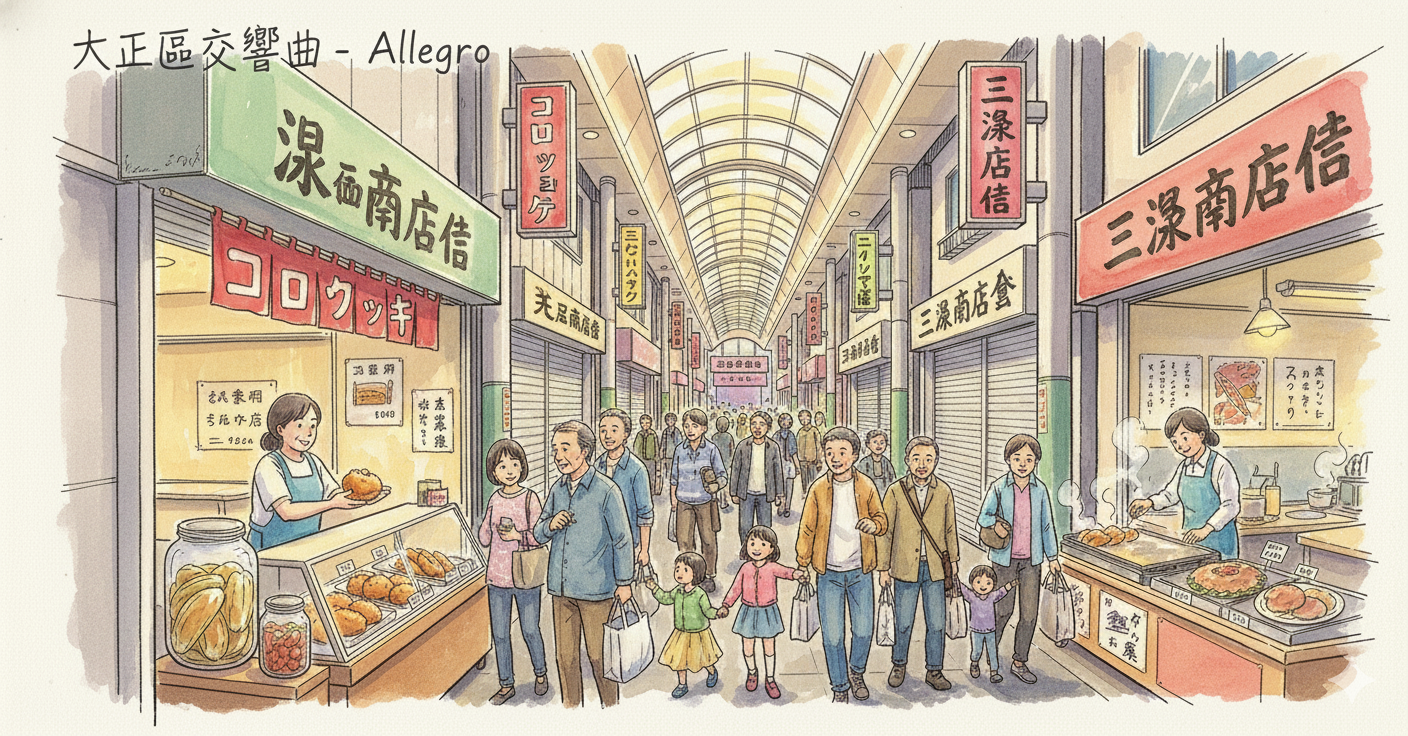
Behind the giant factories, shipyards, and bridges, a dense network of residential shitamachi (downtown, working-class) communities flourished. For the thousands of workers and their families who settled here, the true centers of daily life were not the industrial plants but the vibrant local markets, or shotengai. These covered shopping arcades were—and still are—the beating heart of the ward.
Takeaway 5: Beyond Industry, A Fierce Community Spirit
The local shopping arcades are the antithesis of the cold, functional stereotype of an industrial zone. They represent the enduring life force of the people who built Taisho Ward. More than just places of commerce, these are crucial hubs where social capital is built and maintained. The trust, networks, and mutual support that form the true backbone of a working-class community are forged here daily. Far from the polished, tourist-oriented districts, these markets offer a glimpse into the unfiltered soul of the city.
Hidden Gem: Find the "Real Osaka" in a Labyrinth of Local Shops
To find this authentic Osaka, step away from the major hubs and wander into the Izuno (泉尾) and Sansen (三泉) shopping arcades. The atmosphere is a symphony of daily life: the chorus of vendors calling out their daily specials, the savory smell of local delicacies, and the warm, welcoming spirit of a community that knows its neighbors. This is where the human-scale story of Taisho Ward unfolds. It is a direct connection to the generations of families whose lives, struggles, and joys are woven into the very fabric of these streets.
The Soul in the Seams
The true soul of Osaka resides in the seams. As Taisho Ward reveals, it lives in the quiet dignity of a free ferry, the artistic echo in an industrial ruin, the enduring song of a migrant culture, and the lively roar of a local market.
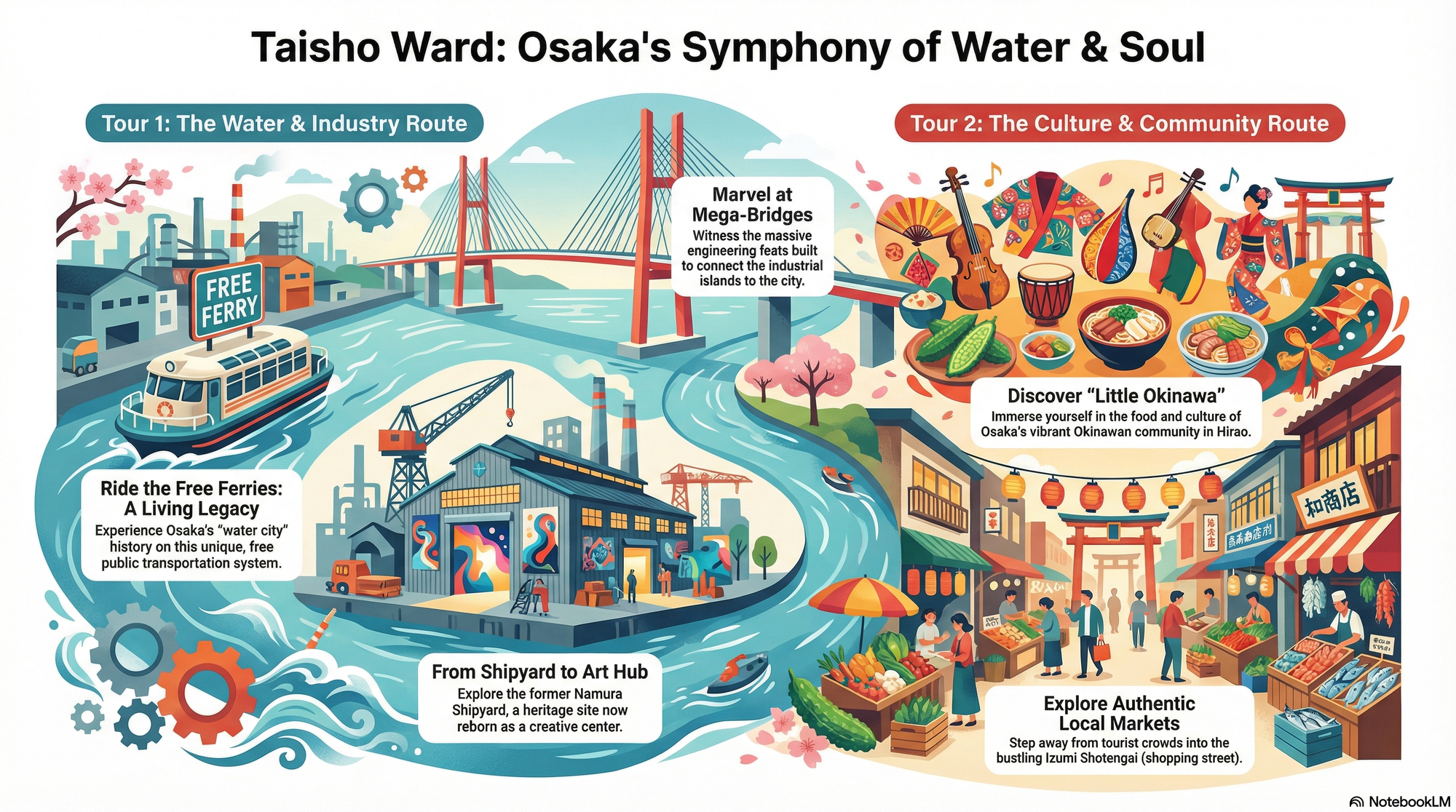
These five stories, hidden within a single ward, resolve the paradox of its identity. They show how a place can be both a core and a periphery, its isolation nurturing the very resilience and cultural richness that its industry demanded. Taisho Ward forces us to ask a vital question: What do we lose when a city's historical 'core' is forgotten, simply because it existed on the 'periphery'?
 Lawrence
 Lawrence