(ENG) The Living Palimpsest: The 200-Year Evolution of Osaka’s Kuromon Market
Trace the historical evolution of Osaka's Kuromon Market. From the ruins of Enmyo-ji Temple to the fugu rebellion, explore the resilience of "Naniwa's Kitchen."


How did the 1912 Namba fire reshape the market's layout?
The fugu fish was banned in the past?
How has tourism changed the market's identity and local prices?
 Lawrence
THE KITCHEN OF THE UNDERWORLD AND THE ELITE
Kuromon Market is often reduced to the colorful moniker "Osaka’s Kitchen," yet to the urban historian, it represents a far more complex phenomenon: a resilient urban organism. For over two centuries, this 580-meter corridor has functioned not merely as a food stop, but as an observation window into Naniwa’s commercial ethics. It is a space where history is not merely recorded but etched into the very grid of the city, having survived the catastrophic fires of the Meiji era and the absolute erasure of the 1945 air raids. Historically, Kuromon operated as a dual-natured entity—part "kitchen of the underworld" where banned delicacies were traded through technical discretion, and part pantry for the elite Ryotei of the Minami district. To understand the modern market’s survival, one must first confront the "ghost" of the gate that gave it its name.

Listen to the historical stories told in detail (For subscribers only)
THE GHOST OF ENMYO-JI: FROM SACRED BOUNDARY TO SECULAR BRAND
In the spatial logic of Edo-period Japan, religious boundaries frequently birthed commercial hubs. Sacred precincts offered a form of protected public space that naturally invited the flow of goods. The origins of Kuromon are inextricably tied to Enmyo-ji Temple, where, during the Bunsei era (1818–1831), fishmongers began gathering spontaneously on the temple's western flank. However, a scholarly tension exists regarding these beginnings; while the "Enmyo-ji origin" is the dominant brand, urban historians like Professor Masahiro Kato suggest a more complex, spontaneous development rooted in the nearby Naguracho district, highlighting the market as a self-organizing social entity rather than a simple religious appendage.
Regardless of its exact genesis, the market became defined by the temple’s striking "Black Gate" (Kuromon). This gate served as the primary visual coordinate for the area's sprawling commerce until the Great Namba Fire of 1912.
"The temple’s 'Black Gate' was not just a religious symbol; it was the core visual coordinate for the area's sprawling commerce."
The fire of 1912 acted as the definitive pivot point. While the physical gate vanished and the temple was relocated to Higashisumiyoshi-ku, the "Kuromon" brand became immortal. This transition marked a shift in power from "sacred" protection to an independent, secular commercial identity. But this transition from sacred boundary to secular brand was not merely a matter of naming; it also set the stage for the market to become a sanctuary for the city's most contentious and forbidden culinary arts.

THE FUGU REBELLION: CRAFT VS. THE CROWN
For centuries, the consumption of pufferfish (fugu) in Japan was a clandestine act. Following mass poisonings during the 16th-century campaigns of Toyotomi Hideyoshi, a strict ban was imposed. In 1882, the Meiji government’s Ishiki-kai-i regulations reinforced this prohibition with criminal penalties. In Kuromon, however, the fishmongers staged a rebellion not through protest, but through metiki—a high-level professional expertise that acted as a technical fortress against official interference.
By the mid-Showa period (1940s–50s), despite the earlier intervention of Prime Minister Ito Hirobumi in 1888 which began the legalization process, Kuromon had established a near-monopoly, handling 60% to 80% of Japan’s fugu trade. This era proved that the market’s professional mastery could effectively override official prohibition, solidifying Kuromon’s reputation as the guardian of Osaka’s culinary soul. This defiance of the crown was made possible not just by craft, but by the literal pavement beneath the traveler’s feet, which had been radically reimagined by disaster.

URBAN ALCHEMY: THE 1912 FIRE AND THE MODERN GRID
Urban disasters often serve as violent catalysts for modernization. The 1912 Namba Fire razed over 5,000 homes, providing a blank slate for the city to integrate the insulated market into a modern transit network. The reconstruction saw the opening of Sennichimae-dori, a wide thoroughfare that connected the market to new tram lines and the nascent entertainment district of Rakutenchi—a massive Taisho-era complex for leisure and consumption.
For the modern wanderer, the "checkerboard" layout they navigate today is a direct result of this 100-year-old catastrophe. The fire allowed the market to transition from a natural settlement into a "Certified Market" (Kounin Ichiba) in 1912, granting it a level of institutional legitimacy it previously lacked. Yet, while the 1912 fire forged a new macro-grid of transit and entertainment, the market’s true resilience remained anchored in the micro-scale of its human networks—the intimate, technical rituals between supplier and chef.

THE ITAMAE’S PANTRY: THE SYMBIOSIS OF MINAMI AND KUROMON
The longevity of Kuromon is rooted in a professional B2B relationship known as Kaidashi (buying-in). For generations, the market has functioned as the secret pantry for the high-end Ryotei of the Minami district. This is a "Master-to-Master" trust network where elite chefs (Itamae) engage in a technical dialogue with merchants.
A prime example is the customization of "Dashi" materials. Dry goods specialists would tailor the specific ratio of Kombu (kelp) and Katsuobushi (bonito flakes) to match the distinct water chemistry and palate of a particular restaurant. This symbiotic relationship is why Kuromon survived the rise of supermarkets; a chain could offer lower prices, but it could never replicate the bespoke, specialized supply chain required by Osaka’s culinary elite. This professional trade remained the market's backbone, even as the city faced its darkest hour in 1945.

RESILIENCE IN THE RUBBLE: FROM THE 1945 ASHES TO GLOBAL SPECTACLE
The air raids of March 1945 reduced Kuromon to charcoal, but the "Kuromon Nakama" (merchant collective) rebuilt the space almost immediately. Leveraging their deep procurement networks, they transitioned from a war-torn "black market" to the commercial powerhouse of the post-war recovery. However, the 21st century has brought a different kind of transformation: urban commodification.
The shift from the "Itamae's Kitchen" to a "Global Window" has introduced the Tabe-aruki (ready-to-eat) culture. While this has brought international fame, it introduces a gentrification risk—the erasure of local utility as prices rise and traditional shops cater to tourists over residents. Balancing this global spectacle with its foundational professional dignity is the market’s current existential challenge.

THE HIDDEN GEMS OF THE BLACK GATE
To truly experience these historical layers, one must visit the establishments that have acted as the market's anchors across three centuries. Kuromon Minami (established 1875) remains a pinnacle of the market's fugu expertise, a living link to the era of "forbidden" delicacies. Nearby, Iseya (established 1897) continues to offer traditional pickles (tsukemono) using fermentation methods that predate the modern grid. To witness the post-war recovery in a single bite, one should seek out New Dalny (1948), an eatery whose Osaka-style curry became a symbol of the resilience and庶民 (commoner) spirit of the 1940s. These shops are not just businesses; they are the surviving fragments of a 200-year-old timeline.
TRAVEL FRAMING: WALKING THE KUROMON-SUJI
The 580-meter arcade is best experienced as a historical corridor. Direct your attention to the "Portal Effect"—the stark contrast where the narrow, claustrophobic pre-modern market alleys intersect with the brutalist, expansive modern thoroughfare of Sennichimae-dori. This intersection marks the boundary between the pre-1912 "sacred" territory of the temple and the modern, grid-based city. As you walk, look past the wagyu skewers for the professional chefs who still engage in the early morning ritual of Kaidashi, maintaining a link to the market's original purpose.
A PHILOSOPHICAL REFLECTION ON THE LAYERED CITY
Kuromon Market is a dynamic laboratory of Osaka’s resilience. Its history teaches us that a city is not merely a collection of highlights, but a palimpsest of memories and responses to catastrophe. From its origins as a sacred morning market to its role as a global culinary stage, Kuromon has adapted without losing its essential commercial ethics. However, its evolution poses a vital question: In our rush to globalize, do we risk erasing the very local utility that makes these spaces authentic? Understanding Kuromon requires this layered observation—the ability to see the ghost of a black gate beneath a neon sign.
To dive deeper into the stories that shape our urban world, subscribe to our Historical Travel stories.
PLANNING YOUR PILGRIMAGE
- How to get there: Take the Osaka Metro to Nippombashi Station (Sennichimae or Sakaisuji Lines). Use Exit 10 for the most direct market access.
- Recommended nearby stays: Focus on the Namba or Shinsaibashi areas to remain within walking distance of the market and the historic Minami dining district.
- Recommended Historical Tours: Prioritize "Deep-Osaka" or "Urban Planning" walking tours that specifically address the 1912 Namba Fire and the development of the Sennichimae district.
Further reading
- Kuromon Market: A Culinary Journey Through Osaka's Heart – HungryOsaka, accessed March 4, 2026,
- A Complete Guide to Enjoying History and Gourmet Delights at Osaka's Kuromon Ichiba Market - Bespoke Discovery, accessed March 4, 2026,
- まち、商店街、風景: 黒門市場の歴史と由来 - CANPAN BLOG, accessed March 4, 2026,
- 014 圓明寺(えんみょうじ) - 大阪市, accessed March 4, 2026,
- 【大阪】“大阪の台所”として知られる観光名所・黒門市場のリアルな ..., accessed March 4, 2026,
- 黒門市場 | 観光スポット・体験 | OSAKA-INFO, accessed March 4, 2026,
- 黒門市場 - accessed March 4, 2026,
- 日本橋駅周辺ってどんな街?【治安はどうなの?】街ぶらしてみた ..., accessed March 4, 2026,
- The History of Kuromon Market - 黒門市場, accessed March 4, 2026,
- たてもとの歴史 | 大阪天然とらふぐ たてもと, accessed March 4, 2026,
- ふぐは江戸時代に食べる事が禁止だった?その全貌をご紹介 | 大和屋本店 うまいもん便, accessed March 4, 2026,
- 江戸時代、ふぐは食べることが禁止されていた!ふぐの歴史と大阪で愛されている理由, accessed March 4, 2026,
- 下関とふぐの歴史|禁忌から文化への昇華, accessed March 4, 2026,
- 違式詿違条例から違警罪を経て 警察犯処罰令に至る経緯, accessed March 4, 2026,
- ふく食の禁止と解禁の歴史 - ふぐの本場下関 – ふくふくぱくぱく, accessed March 4, 2026,
- ふくを知る - 下関ふく百花 関とら本店, accessed March 4, 2026,
- 「天下の台所」を体現する黒門市場 : SHUN GATE : 日本の食文化を ..., accessed March 4, 2026,
- 市場の歴史 - 黒門市場, accessed March 4, 2026,
- 【とらふぐ通販】とらふぐ専門店 大阪 黒門市場 西川鮮魚店 | Nishikawa Fish Store | 大阪府大阪市中央区日本橋2-3-4 ふぐお取り寄せ・通販・持ち帰り・テイクアウト, accessed March 4, 2026,
- とらふぐ専門店 黒門市場 西川鮮魚店 | ええやん!大阪商店街 特設サイト, accessed March 4, 2026,
- 常設展:展示更新情報:南の大火と千日前 - 大阪歴史博物館, accessed March 4, 2026,
- 世界遺産の文楽と日本一の黒門市場, accessed March 4, 2026,
- 今井と道頓堀の200年「芝居とジャズと、 宵待柳」, accessed March 4, 2026,
- 黒門市場商店街振興組合 - 食育大事典, accessed March 4, 2026,
- A Study on Preferences and Behavioral Patterns of Chinese Tourists in Kansai Region, Japan, accessed March 4, 2026,
- 2018年-2019年/企画・制作・発行黒門市場商店街振興組合- EXPLORER MAP - KUROMON MARKET OFFICIAL GUIDE, accessed March 4, 2026,
- 大阪市公文書館 - 見どころ、交通 & 周辺情報 - The KANSAI Guide, accessed March 4, 2026
 Lawrence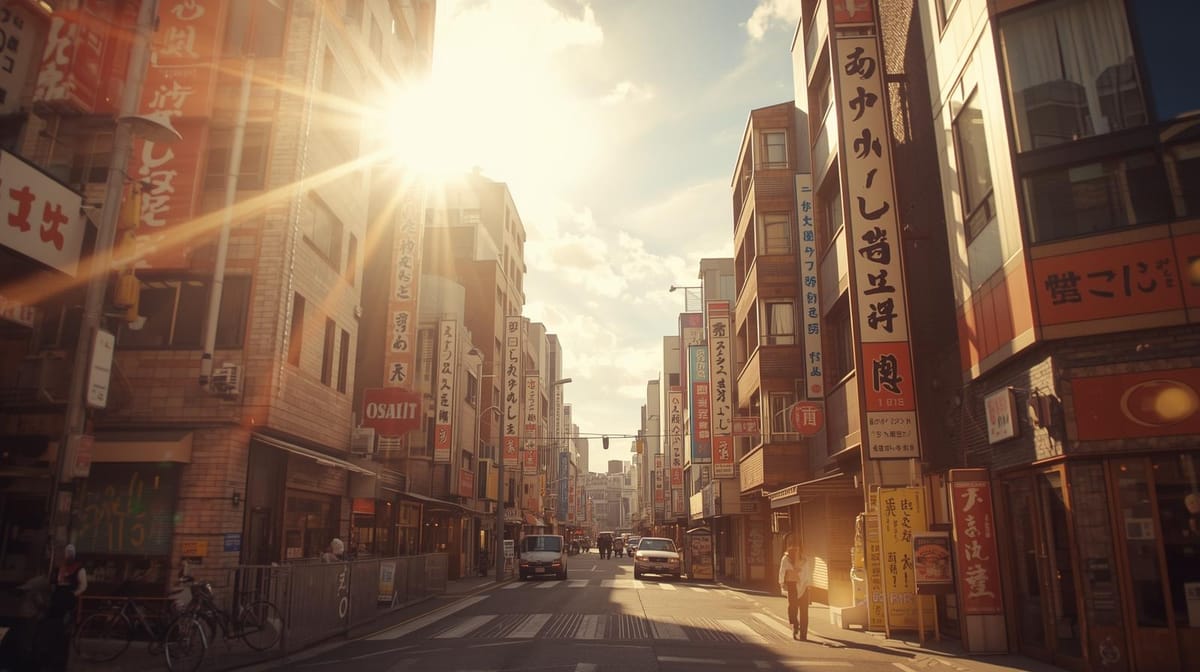
 Lawrence
 Lawrence