(ENG) The River's Secret Current: Five Hidden Histories of Osaka's Northern Gateway, Yodogawa Ward
The story of Yodogawa Ward is not found in grand, static monuments but in its relentless, dynamic adaptation to the currents of change. From a ferry crossing whose ghost tells a story of economic sacrifice, to an engineered river that accidentally birthed an ecosystem, to a shopping street.

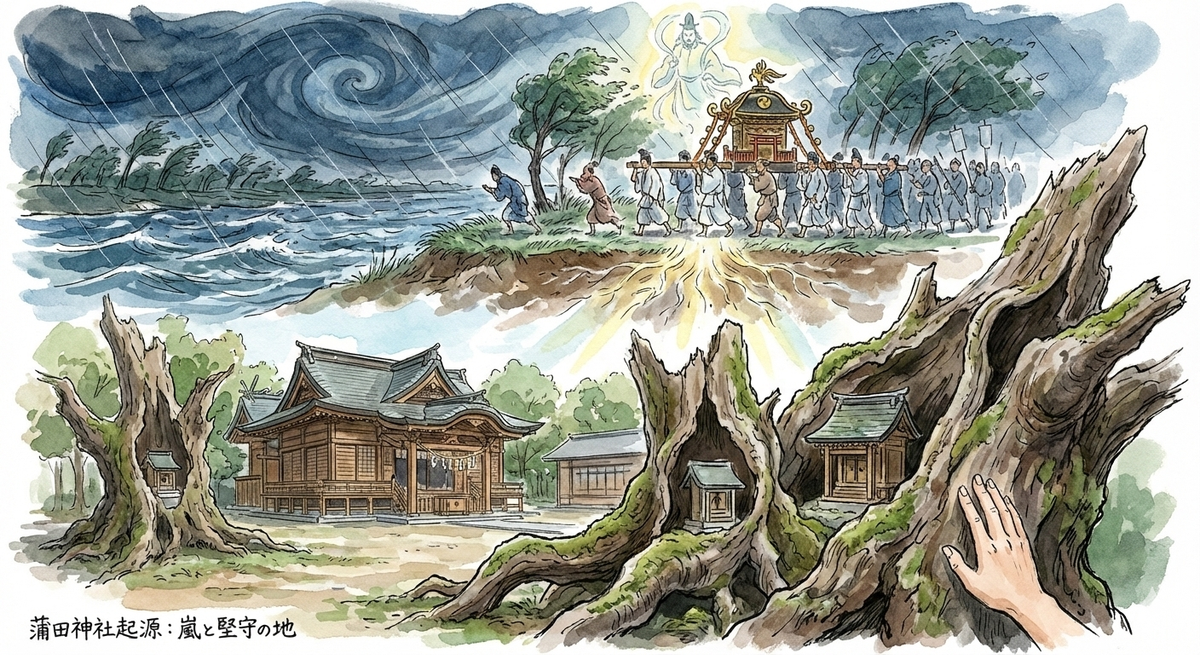
神崎渡口 Kanzaki Riverbank > 十三本町商店街 Jūsō Honmachi 2-chōme Arcade
Listen attentively to the historical stories told in detail
Beneath the neon pulse and ceaseless momentum of modern Osaka, it’s easy to believe the city’s story is one of perpetual forward motion. We lose ourselves in its dazzling commercial heartlands, marvel at its soaring towers, and navigate its immaculate subways. But beneath this contemporary flow, another, older current runs deep—a river of forgotten histories, divine interventions, and human sacrifice that carved the landscape long before the first train ever arrived.
What if the true character of a city isn’t found in its monuments, but in the subtle transformations hiding in plain sight? Join us as we drift into the northern gateway of Yodogawa Ward, uncovering five surprising tales that redefine this district not as a mere transit hub, but as a living archive of gods, commerce, and profound, unrelenting change.
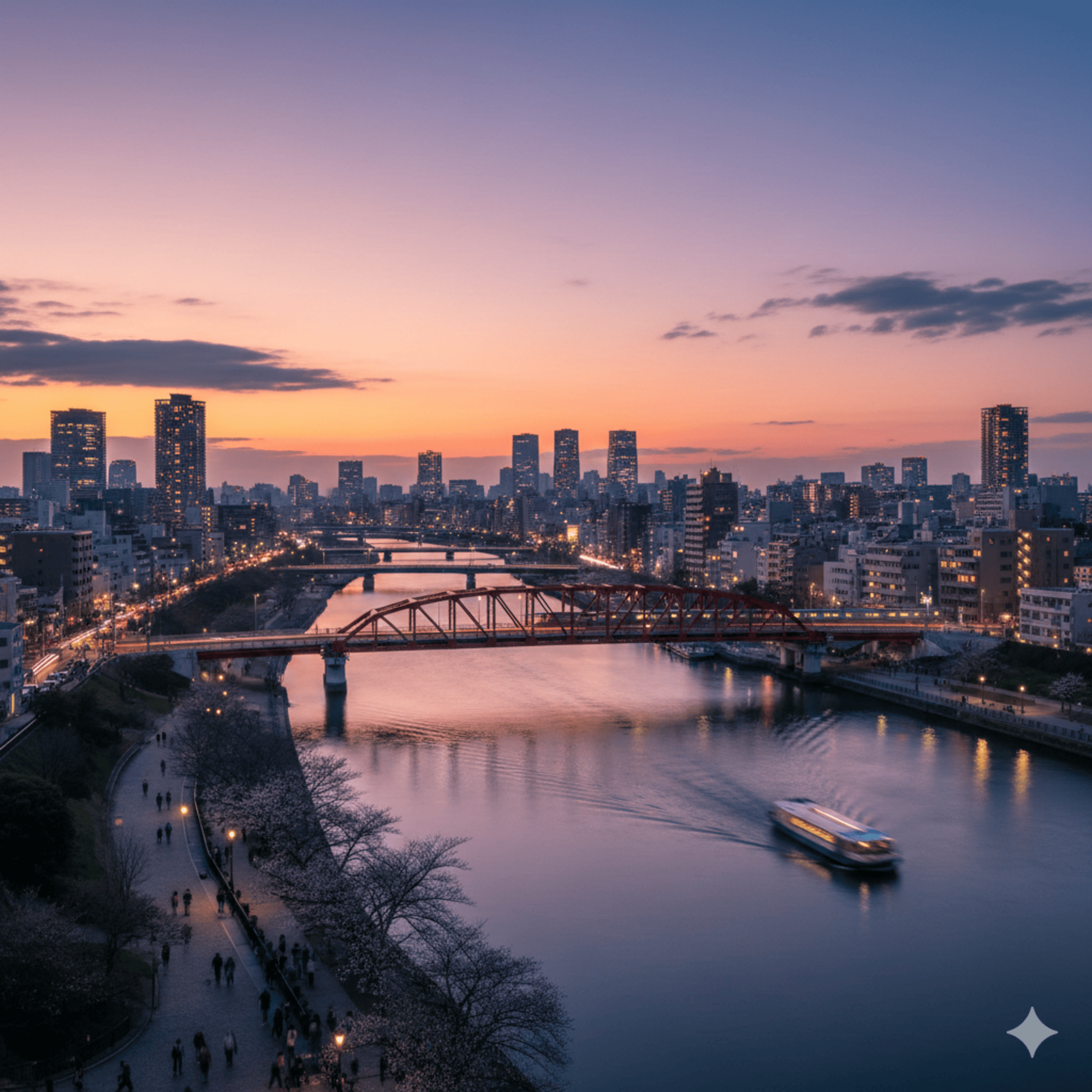
The Ghost Ferry of Kanzaki Crossing: A Tale of Imperial Duty and Local Decline
In an era before steel bridges and bullet trains, rivers were the great arteries of Japan, and a ferry crossing was a place of immense power. It was a source of prosperity, a strategic choke point, and for the community tasked with its upkeep, a crushing burden. Here at the Kanzaki River, the historical throat for travelers entering Settsu Province on the vital Saigoku Kaidō highway, the silence is haunted by the echoes of a bustling past—a time when, as one account notes, "travelers never ceased day or night."
This prosperity, however, carried a devastating cost. The local villages were saddled with the heavy, unpaid duty of "public use" crossings for officials and were required to maintain "support boats" to handle peak traffic. This paradox—a vital national artery that slowly bled its local custodians dry—is a timeless story of how grand infrastructure projects often extract a heavy price from the communities they are meant to serve. The strain became unbearable, especially after the catastrophic Great Famine of 1732, and what was once a hub of movement slowly withered into a "lonely village."
This decline is etched into the ledgers of history. In 1808, the famed cartographer Ino Tadataka passed through and noted the village's "lonely appearance" in his survey diary. The very thing that made the crossing important was what sealed its fate.
Today's Hidden Gem: The Quiet Historical Markers Along the Kanzaki Riverbank The treasure here is not a grand monument but a serene vantage point for contemplation. Standing on the riverbank, where only discreet signposts mark the past, you can feel the immense weight of that sacrifice. It’s a place to reflect on the relentless force of technological change that rendered the ferry obsolete and to honor the ghost of a community that gave everything for a flow of traffic that ultimately passed it by. From this tale of human movement, we turn to the unpredictable arrival of the divine.
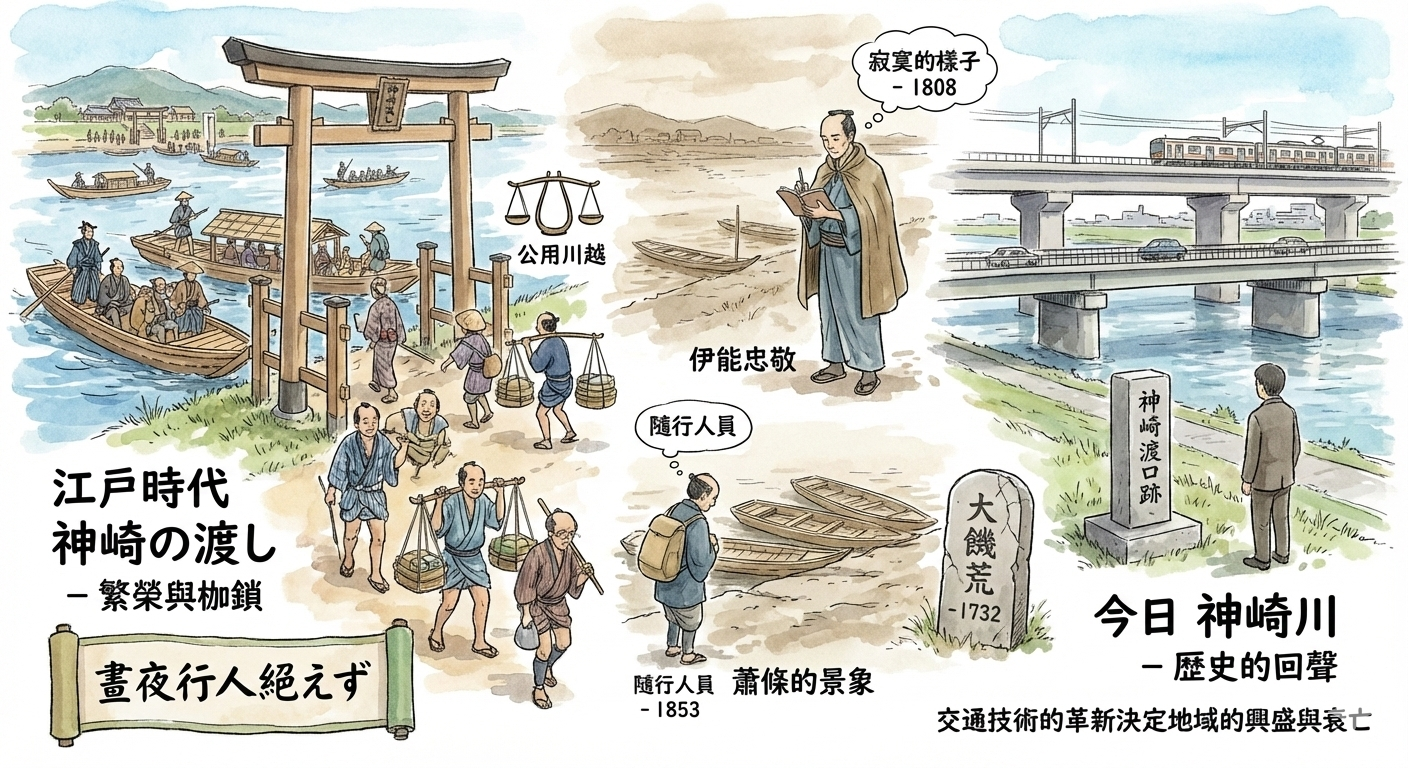
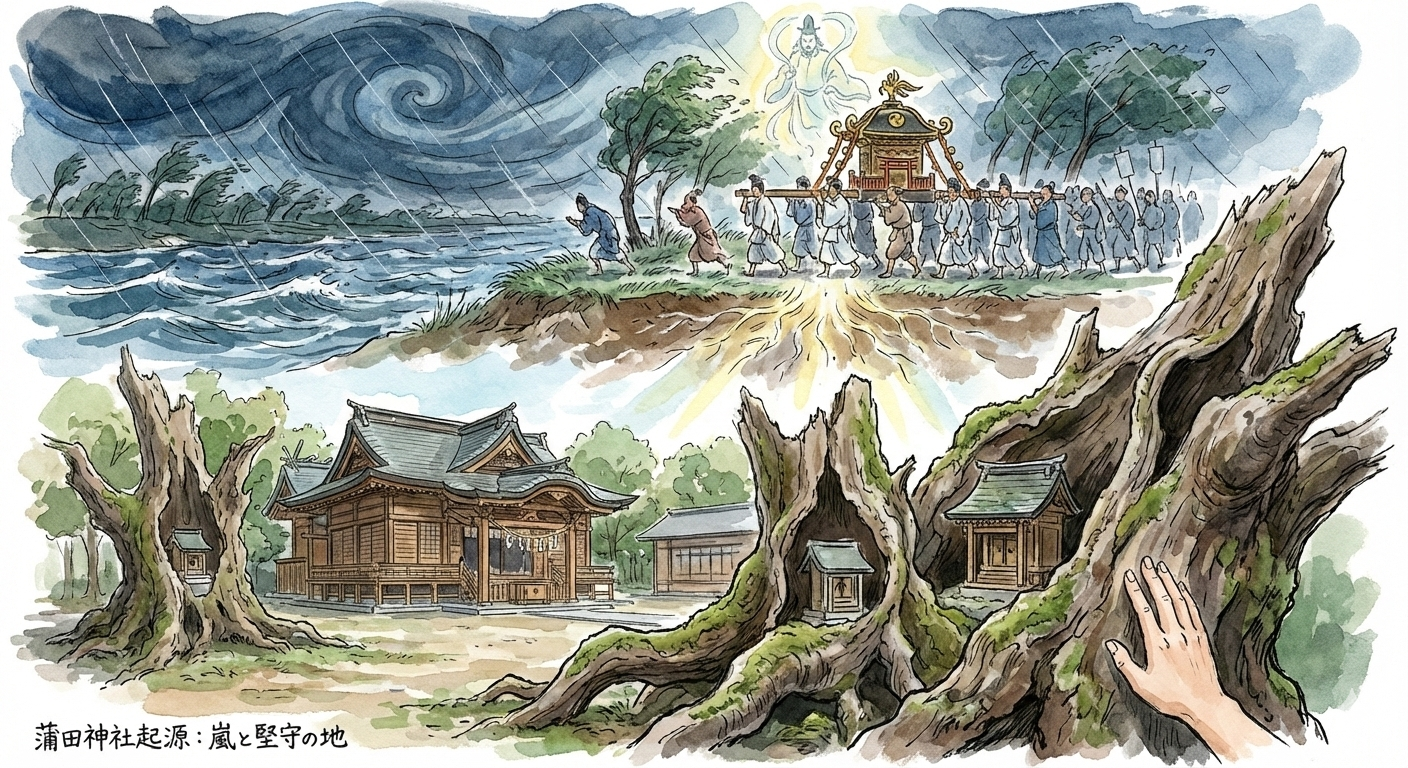
The Stranded God of Kamata Shrine: When a Typhoon Rewrote a Sacred Itinerary
In Japan's spiritual geography, the act of bunrei (分霊)—enshrining a divided portion of a deity's spirit in a new location—is a sacred, carefully planned journey. But sometimes, nature has other plans, and a divine itinerary is violently rewritten, forging an unexpected and eternal bond.
The founding legend of Kamata Shrine is pure drama. During the tumultuous Muromachi period, a deity from Kyoto's prestigious Kamigamo Shrine, known as 「室の明神」 (Muro no Myojin), was being transported south to a new home. As the procession passed through what is now Yodogawa, a furious typhoon erupted from the heavens. The god was forced to take refuge on this very spot. When the storm passed, the deity remained, its "forced stop" becoming a powerful, unplanned promise of protection for the local people. The shrine was known by this name, Muro no Myojin, for centuries, only officially becoming Kamata Shrine in the Meiji era.
This legend beautifully frames Yodogawa's identity as a "geographical buffer zone" at Osaka's entrance—a place where even divine beings must bow to the raw power of nature. The deity’s unplanned settlement is a dramatic affirmation of rootedness, a promise of eternal protection born directly from chaos.
Today's Hidden Gem: The Ancient Camphor Stumps of Kamata Shrine Within the shrine’s tranquil grounds, the true witnesses to this history are not texts, but the massive, weathered stumps of ancient camphor trees (Kusunoki daikabu). These are not dead relics; they are living monuments. Bearing silent witness to centuries of storms and prayers, some now cradling smaller shrines, they embody the resilience of the stranded god and the deep-rootedness of faith. While this god was forced into stillness, the ward's main river was being relentlessly engineered for motion.
The River's Accidental Oasis: How Yesterday's Commerce Built Today's Sanctuaries
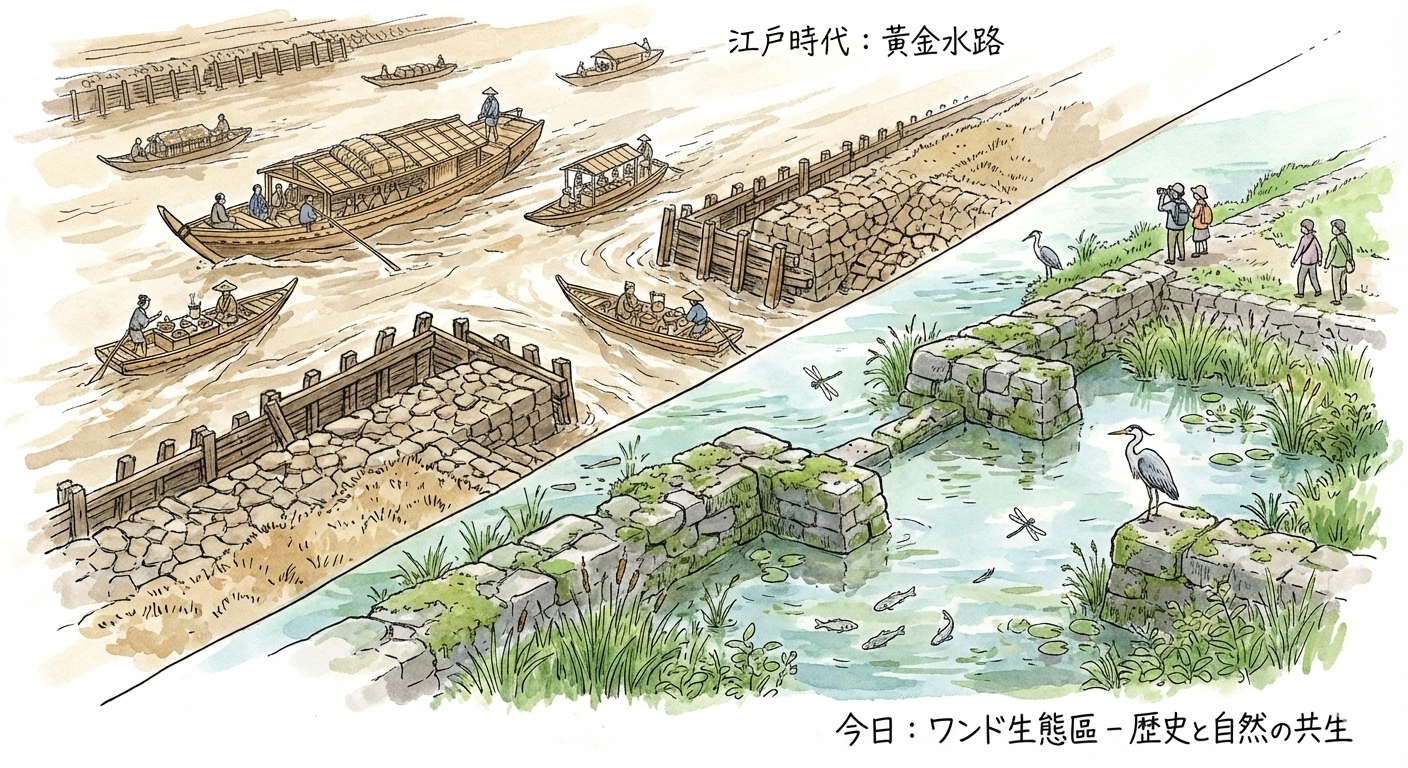
The Yodogawa River was once the thrumming economic lifeblood of the Kansai region. During its golden age, its waters were a bustling highway for cargo ships like the famous "Jūsō-sekibune," while nimble food boats known as 「くらわんか船」 (kurawanka-bune) zipped between them, selling meals to hungry travelers. This was no pristine wilderness; it was a heavily engineered environment, meticulously managed for commercial efficiency. To stabilize the shipping channels, a series of structures called "groynes" (水制工, suiseikō) were built—their purpose purely, unapologetically commercial.
Then came the railways. As Japan modernized, the age of river transport faded with astonishing speed, and traffic plummeted to just 1/20th of its peak. The groynes, once essential tools of commerce, lost their purpose. But here, the river began to reclaim its own story. These man-made walls, built to tame the current, began to inadvertently create calm, protected backwaters. In nature’s quiet correction to human ambition, these biodiverse pockets, known as "Wando," became accidental sanctuaries.
This story is a powerful testament to an unintentional reconciliation between human engineering and nature, a profound irony where infrastructure built for profit became a cornerstone of ecological preservation in the heart of a metropolis.
Today's Hidden Gem: The Wando Ecological Zones on the Yodogawa Riverbank These tranquil Wando areas are now vital habitats for freshwater fish, insects, and birds. To walk their banks is to witness the remnants of history becoming the foundation for ecological recovery. Here, you can see the legacy of commerce transformed into a thriving ecosystem, a quiet but powerful narrative of how function can be translated into new life. From the engineered landscape of the river, we move to the organic, chaotic life of the city streets.
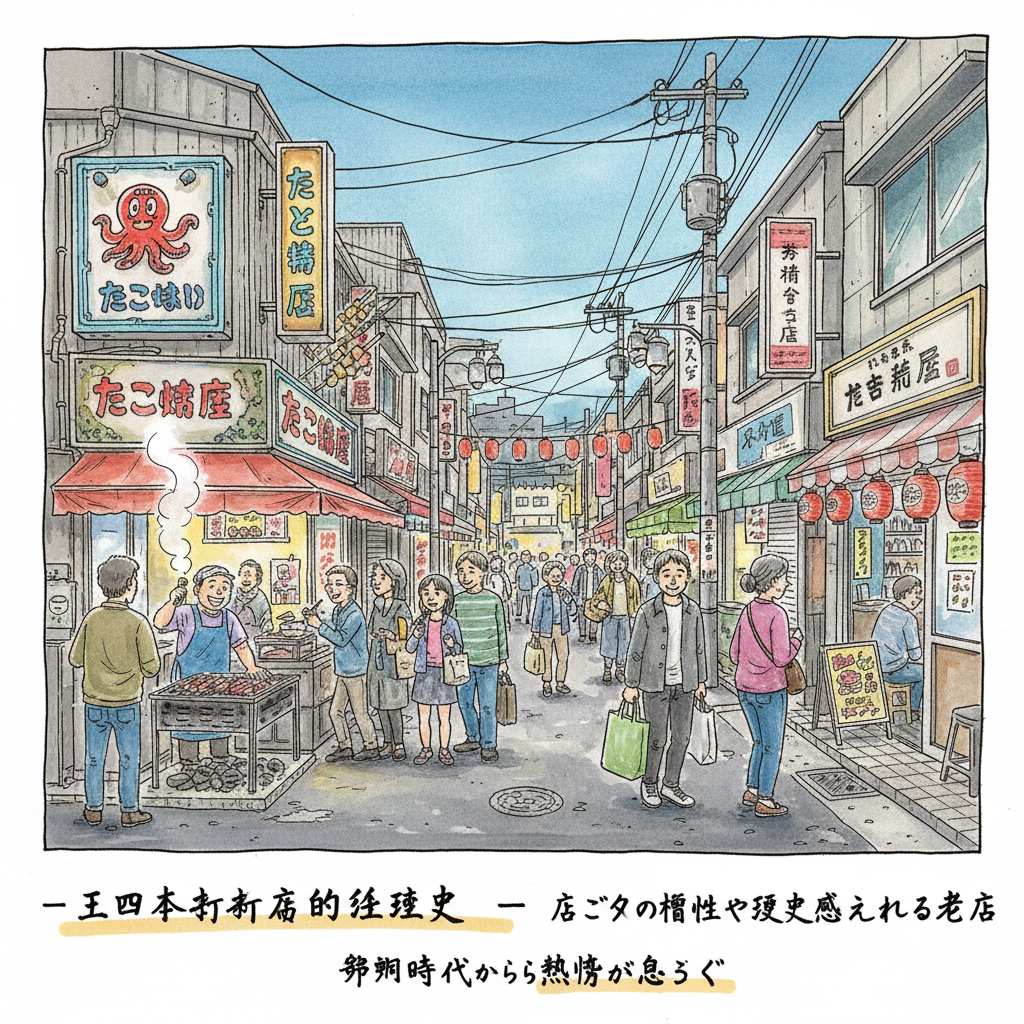
The Unbreakable Spirit of Jūsō: A Shopping Street That Time Couldn't Tame
What makes a shopping street feel truly alive? In an age of sterile, master-planned commercial zones, some urban spaces possess a vibrant, chaotic, and deeply human character that cannot be replicated. The shopping district around Jūsō station is one such place—a living fossil of Osaka's commoner commercial culture.
Step into the Jūsō Honmachi 2-chōme (十三本町二丁目) arcade and you step into a place where "the old and new are mixed," a sensory collage of sizzling takoyaki, Showa-era signage, and the warm chatter that spills from family-run shops. This is not a theme park; it is a working marketplace that breathes with the "individuality and history of each shop." Its continued vibrancy is an act of resistance against standardization, embodying the tenacious, self-sustaining spirit of Osaka's shomin (庶民), its everyday people.
This area is significant because it represents a form of urban resilience rooted in community, not corporate planning. It is a testament to the enduring power of small businesses to create a commercial landscape rich with personality, history, and a uniquely Osakan warmth.
Today's Hidden Gem: Nostalgic Corners of the Jūsō Honmachi 2-chōme Arcade The real treasures here are not just things to buy, but moments to experience. Find a traditional sweets shop with its wooden storefront, or a tiny eatery where the owner knows every customer. These are immersive historical scenes. To linger on these corners is to feel the tangible energy of a bygone era that simply refuses to fade away. This slow, layered evolution stands in stark contrast to the sudden, dramatic reinvention of another part of the ward.
The Bullet Train's Shadow: Where Speed and Stillness Collide
Every city is a dialogue between motion and stillness. But rarely is that conversation as dramatic as in the Mikuni district, where one historical reality was instantly and irrevocably superimposed upon another.
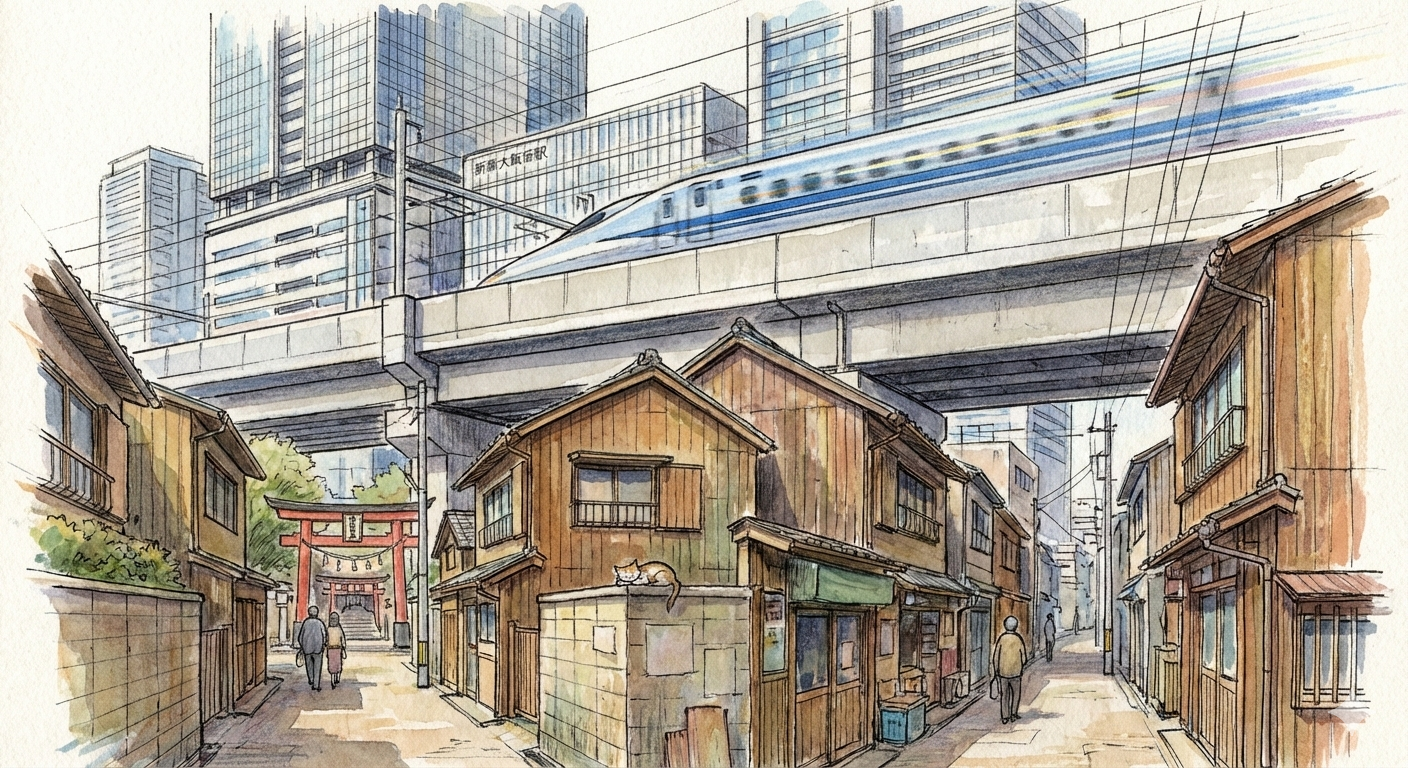
For most of its history, the Higashi-Mikuni area was a place of 「田園牧歌」 (pastoral scenery)—an idyllic landscape of fields and farmhouses. Then, in 1964, this quiet world was shattered. The construction of the Tōkaidō Shinkansen and the opening of the massive Shin-Osaka Station redefined the area overnight. The nation's ambition, forged in steel and velocity, descended upon this tranquil gateway, transforming it into a national nexus of high-speed travel and reordering the very sense of time and space for its residents.
The impact was absolute. A new reality of speed and modernity was laid directly over an ancient landscape of stillness and tradition. It is the story of how a place's entire identity can be rewritten in a single, thunderous moment.
Today's Hidden Gem: The Experience of Contrast The most powerful hidden gem here is not a place, but a deliberate act of pilgrimage. First, walk the surviving old-fashioned alleys and residential textures around Kamata Shrine in Higashi-Mikuni 2-chōme, feeling the quiet, human scale of the old world. Then, ascend to an observation deck at Shin-Osaka Station. Witness the immense, breathtaking scale of the Shinkansen network below—silver serpents gliding silently into the distance. This rapid spatial shift allows you to physically feel the collision of two different eras, to stand at the very seam where Japan’s past and future meet.
History in Motion
The story of Yodogawa Ward is not found in grand, static monuments but in its relentless, dynamic adaptation to the currents of change. From a ferry crossing whose ghost tells a story of economic sacrifice, to an engineered river that accidentally birthed an ecosystem, to a shopping street that thrives on its own resilient spirit, these narratives reveal the profound adaptability of the land and its people.
Yodogawa teaches us that history is not always about preservation; it is often about transformation. It is about how a community absorbs, redirects, and reinvents the powerful forces of nature, commerce, and technology that flow through it. As we walk the streets of our own cities, perhaps we can ask ourselves: what forgotten stories of flow and change lie just beneath the surface, waiting to be rediscovered?
Works Cited
- 「淀川舟運の歴史」 [History of Yodogawa River Transport].
- 「神崎の渡し - apedia」 [Kanzaki Crossing - Apedia].
- 「蒲田神社」 [Kamata Shrine].
- 「十三駅周辺のおすすめ商店街!地元住民に愛され続ける商店街を歩いてみよう - 十三の賃貸物件」 [Recommended Shopping Streets Around Jūsō Station! Let's Walk Through a Shopping Street Loved by Locals - Jūsō Rental Properties].
 Lawrence
 Lawrence