(ENG) Uncovering the Forgotten Soul of Tokyo, Shakujii in Five Tales
Shakujii stories is a rich tapestry woven from mythic origins, feudal tragedy, folk beliefs, institutional power, and the quiet lives of people.

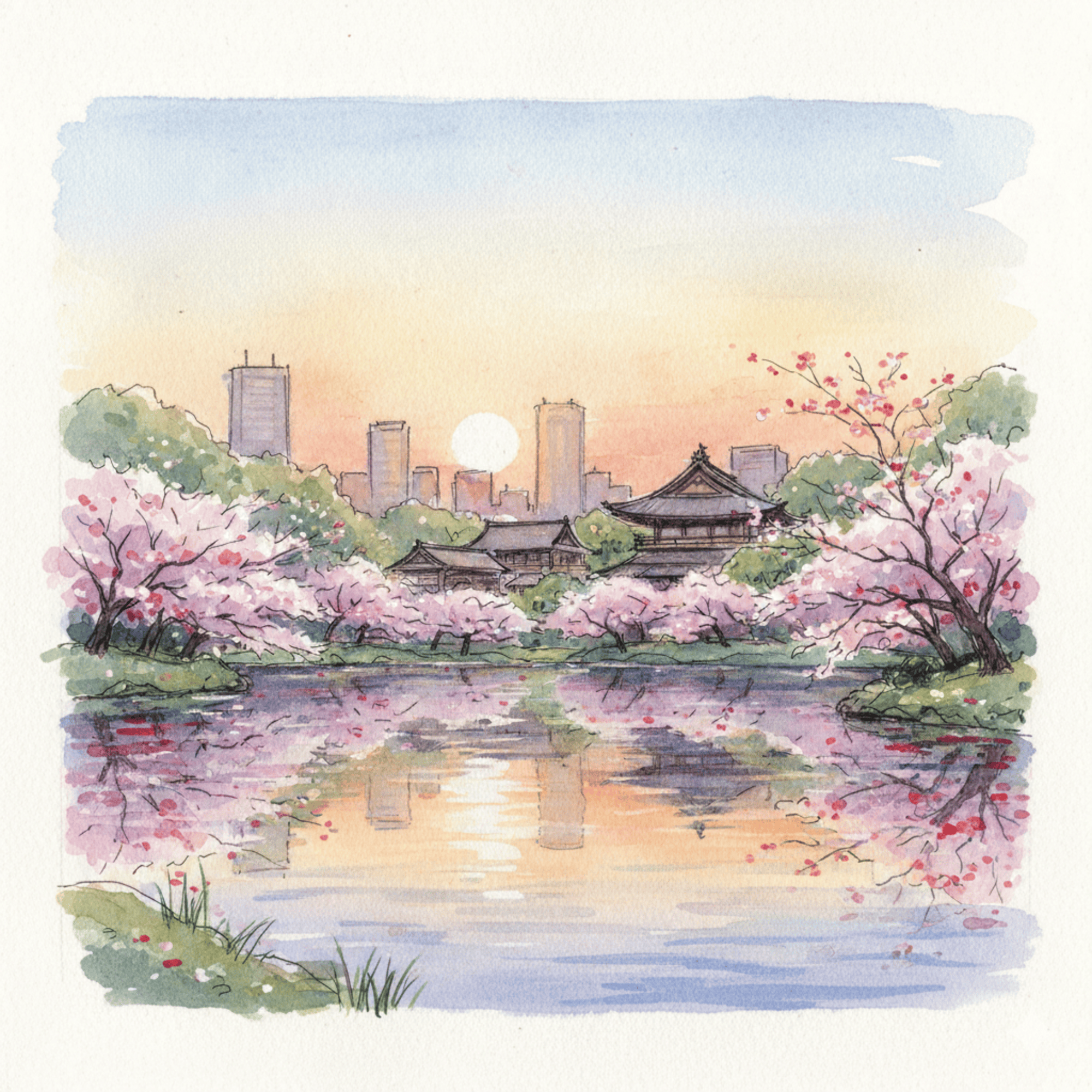
三寶寺池 Sanpō-ji Pond > 石神之井戶 The Well of the Stone God
Tokyo is the city you think you know. It’s a dazzling metropolis of soaring skyscrapers, vibrant crosswalks, and cutting-edge technology—a relentless vision of the future. But this modernity is a thin, shimmering veneer stretched over deep, ancient layers of history. Beneath the hum of the Yamanote Line and the glow of Shinjuku’s screens lie forgotten stories, whispered myths, and the ghosts of a city long past.
Listen to the historical stories told in detail (For subscribers only)
To find this hidden Tokyo, we journey away from the center to the Shakujii area of Nerima Ward. Here, in a place that feels like a quiet residential suburb, the past is not just history; it is a living presence. Shakujii is a microcosm of the city’s layered soul, where legends whisper from tranquil ponds and deities sleep in the shadows of parking lots.
This is an exploration of five surprising tales that reveal the true character of this corner of the city. It is a journey through time, uncovering the stories that modern Tokyo was built upon, one hidden gem at a time. Our search begins, as all stories of place must, with the mystery of a name.
The Well of a Sleeping God
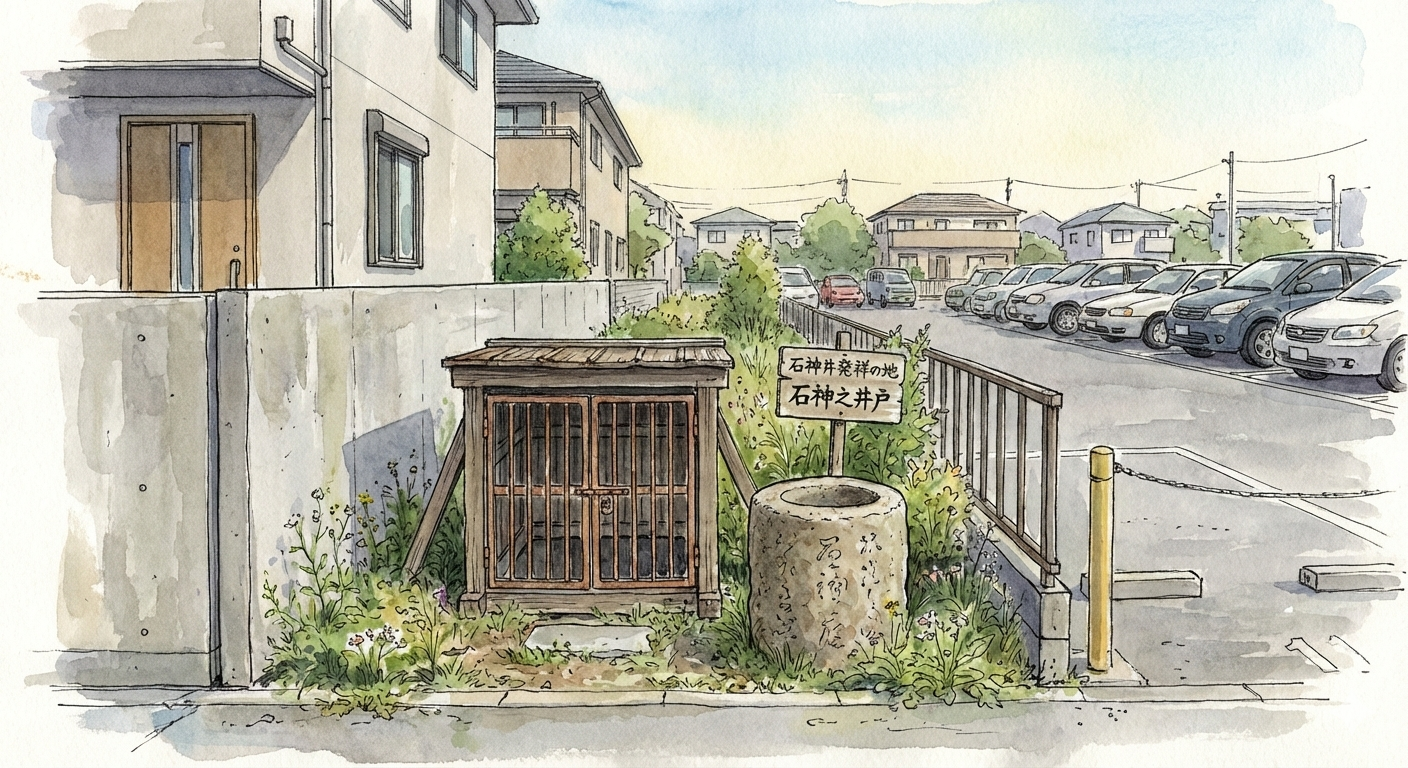
To understand a place, one must first understand its name. The name "Shakujii" (石神井) is a doorway into the deepest layer of the area’s history, leading not to a grand monument, but to a humble, sacred well. Local history records that the name originates from the "Well of the Stone God," the very spot from which a local deity, the Ishigami-sama, is said to have emerged. To find the origin of Shakujii is to find this spiritual source.
Today, this profound piece of history is the ultimate hidden gem. The Well of the Stone God (石神之井戸) is not located in a pristine park or temple complex. Instead, it is tucked away on a private path, squeezed between a modern home and a concrete parking lot. The gate above it is locked, and with no official sign or explanation, it is rendered almost invisible, a secret even from many of its neighbors. This physical marginalization powerfully illustrates how urban development can encroach upon and obscure sacred spaces.
The well’s survival is not the result of government preservation, but a testament to the quiet dedication of local residents. Families with historic ties to the site, like the Toyota clan (豊田一族), have maintained it for generations, supported by advocates for local cultural property like Mr. Hayashi Isamu (林勇氏). This grassroots, community-driven act of guardianship stands in stark contrast to the management of major tourist sites, showcasing a deep, personal commitment to preserving local identity.
Adding to the mystery, a "mysterious stone-rod-like object" rests on the well's grounds. Carved with indecipherable characters, some speculate it could be a relic of ancient, even prehistoric, nature worship dating back to the Jōmon or Yayoi periods. This tantalizing possibility dramatically extends the timeline of Shakujii's history from the medieval era to the dawn of civilization in Japan.
The well is not just a source of water, but the source of an entire district's identity—a sacred origin story hidden in plain sight.
From this quiet tale of sacred origins, the land of Shakujii would soon become the stage for a far more dramatic story of human conflict and tragic loss.
A Princess's Ghost in the Park
We now pivot from quiet myth to the violent, passionate world of Japan’s Warring States (Sengoku) period. The history of Shakujii reaches a dramatic crescendo in the late 15th century with a power struggle that would define the region. The story revolves around the local warlord Toshima Yasutsune, lord of Shakujii Castle, and his fateful conflict with the brilliant strategist Ota Dokan. Following a decisive defeat at the Battle of Egota-Numabukurohara, Ota Dokan’s forces laid siege to Shakujii Castle, sealing the fate of the Toshima clan.
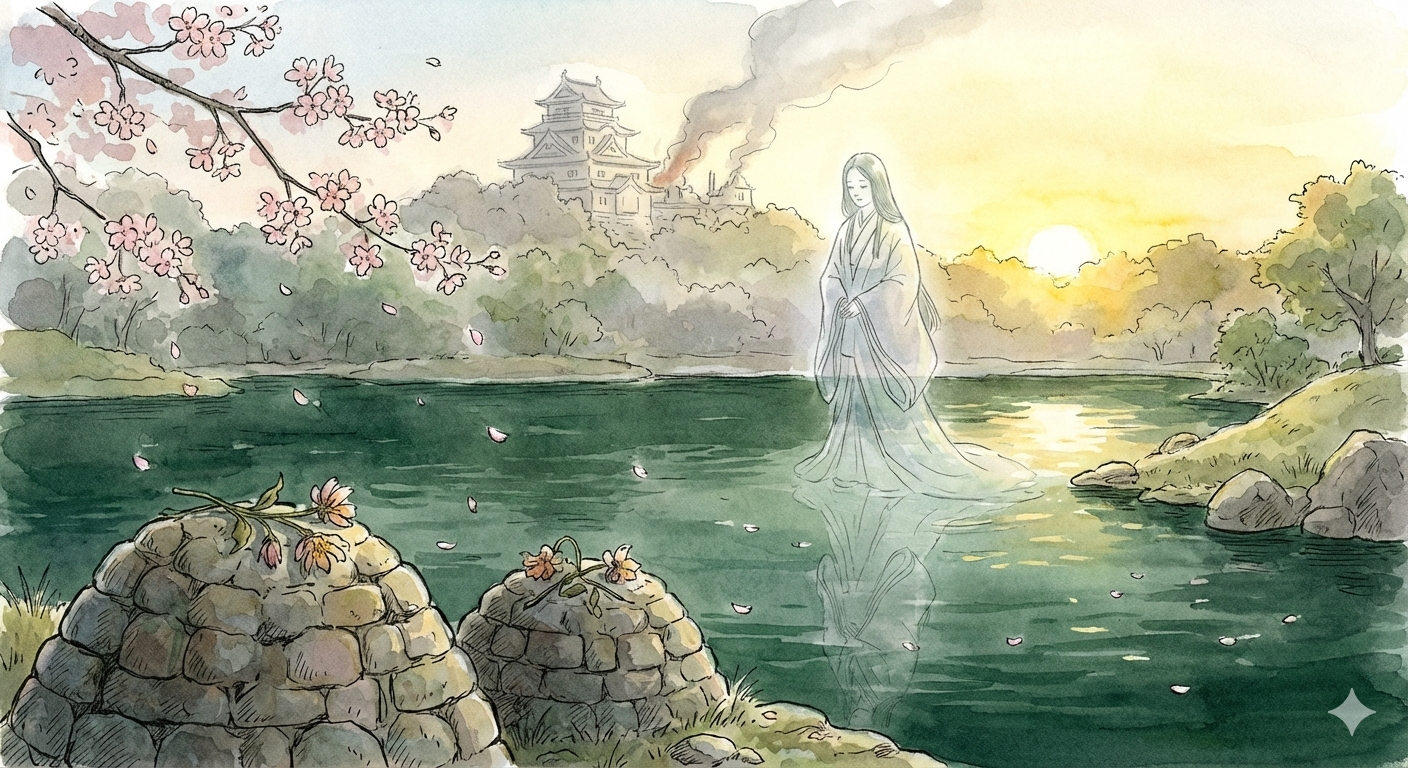
It is from this moment of desperation that the area’s most enduring legend was born: the tragic tale of Princess Teruhime. The daughter of Lord Yasutsune, Princess Teruhime, faced with the castle's fall and the ruin of her family, chose to take her own life by throwing herself into the deep waters of Sanpō-ji Pond. This heartbreaking story permanently entwines a personal tragedy with the physical landscape, imbuing the source of the Shakujii River with a timeless, romantic, and sorrowful character.
This epic of the Warring States period is anchored in the modern landscape of Shakujii Park. Visitors today can stand on the tranquil shores of Sanpō-ji Pond and pay their respects at the physical markers of this legend: the Princess Mound (姫塚) and the Lord's Mound (殿塚). These memorials transform the park from a simple green space into a tangible connection to a dramatic past.
While the historical accuracy of Princess Teruhime's story is debated by scholars, its cultural power is undeniable. She has become one of Nerima Ward's most important cultural symbols, turning a historic ruin into a site of romantic beauty with a tragic, "Romeo and Juliet" aesthetic. The legend’s vitality continues today, even finding its way into modern popular culture like the manga Tokyo Bicycle Girl. The very water that once served as the castle's defense became the final, silent resting place for its princess, forever marking the river with a story of love and loss.
A River's Two Faces: Serpent's Wrath, Goddess's Grace
Every community with a river has a tense, intimate relationship with it. The Shakujii River was the lifeblood of the region, but in an age before modern flood control, it was also a constant threat. This deep respect for and fear of the natural world gave rise to a fascinating system of local folk beliefs that reveal the spiritual duality of the river.
On one hand, there was the "Great Serpent." In local folklore, this powerful creature, often associated with the ruins of nearby Nerima Castle, was the personification of the river’s destructive power—a symbol of the devastating floods and unpredictable wrath of nature that the community feared.
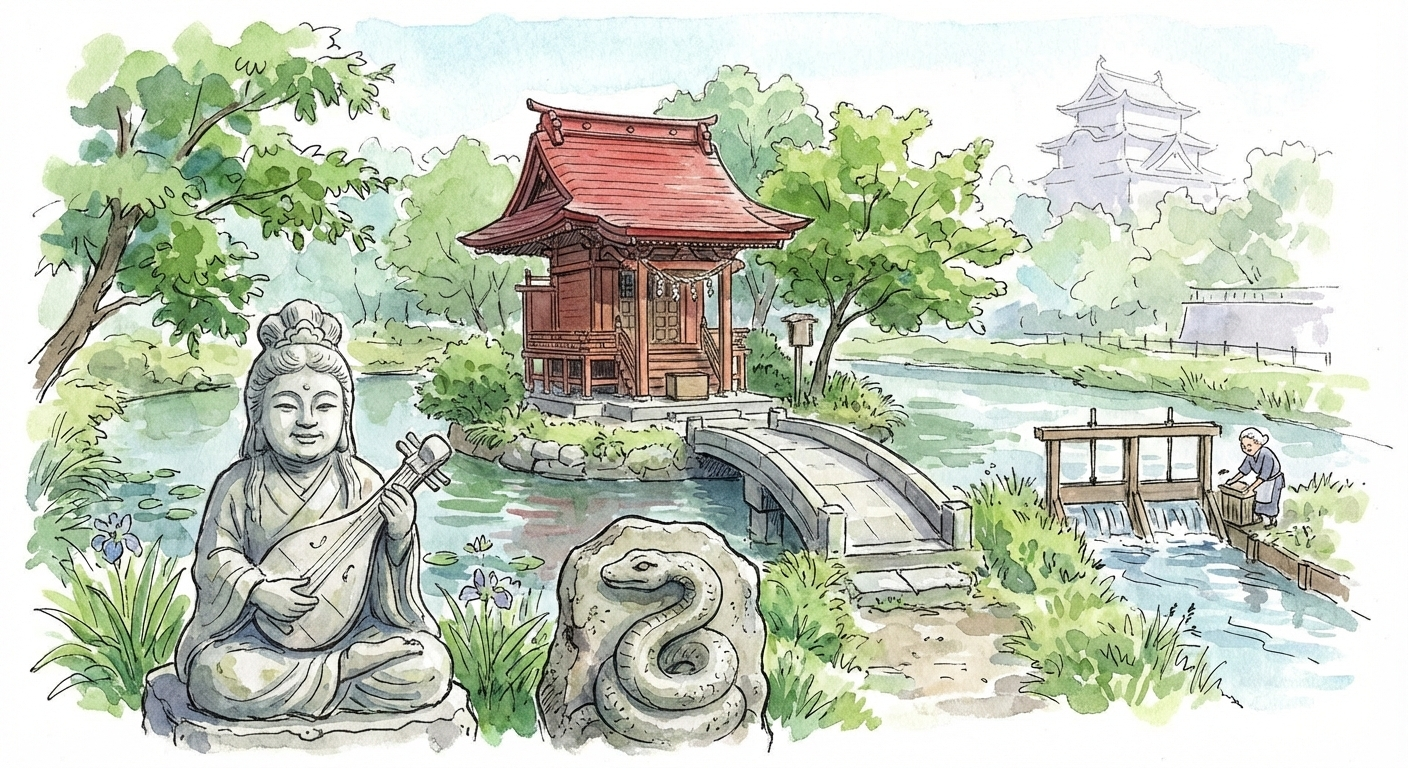
But fear was not the only force at play. To create balance, the local faith system introduced a host of protective figures. There were tales of benevolent white and black snakes who brought good fortune, and of a local deity known as the "weir-granny" (堰ばあさん), likely a deified figure connected to the vital management of the river's dams. The most prominent protector, however, was the goddess Benzaiten. Originally a Hindu river goddess, Benzaiten was adopted into Buddhism as a deity of water, fortune, and the arts. Her presence offered a spiritual counterweight to the serpent's threat, providing a source of hope. A testament to this enduring belief still stands today: the Kame-ga-ike Benzaiten Shrine (龜が池弁財天).
This relationship represents a classic "dual structure" of water faith. It created a complete spiritual circuit for the community, balancing fear of disaster (the serpent) with hope for protection and prosperity (the goddess and other guardians). By acknowledging both the river’s capacity for destruction and its potential for grace, the people of old Shakujii created a holistic way to live in harmony with the powerful forces of nature. From these organic, localized beliefs, a new and far more organized power would soon arrive to reshape the spiritual landscape.
The Making of a Sacred Mountain in the East
If Shakujii Castle was the region's military center during the Warring States period, then Chōmei-ji Temple became its undisputed religious heart during the peaceful Edo period that followed. This was not just another local temple; it was the result of a deliberate and highly ambitious strategy to establish a major religious institution with the full backing of the state.
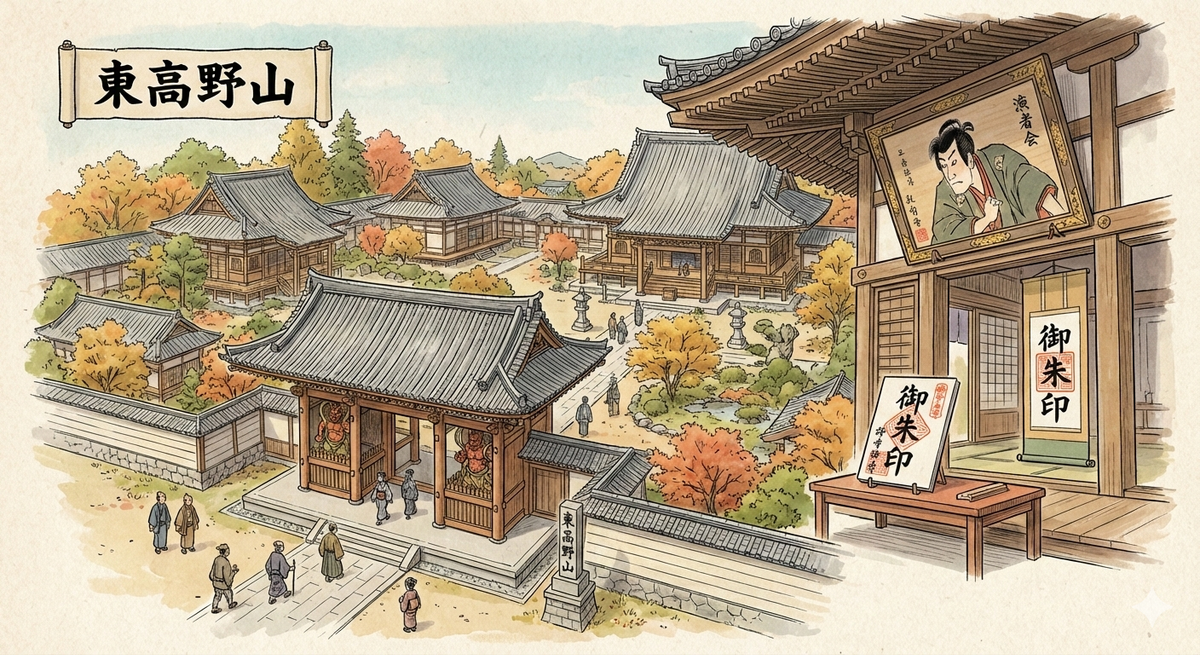
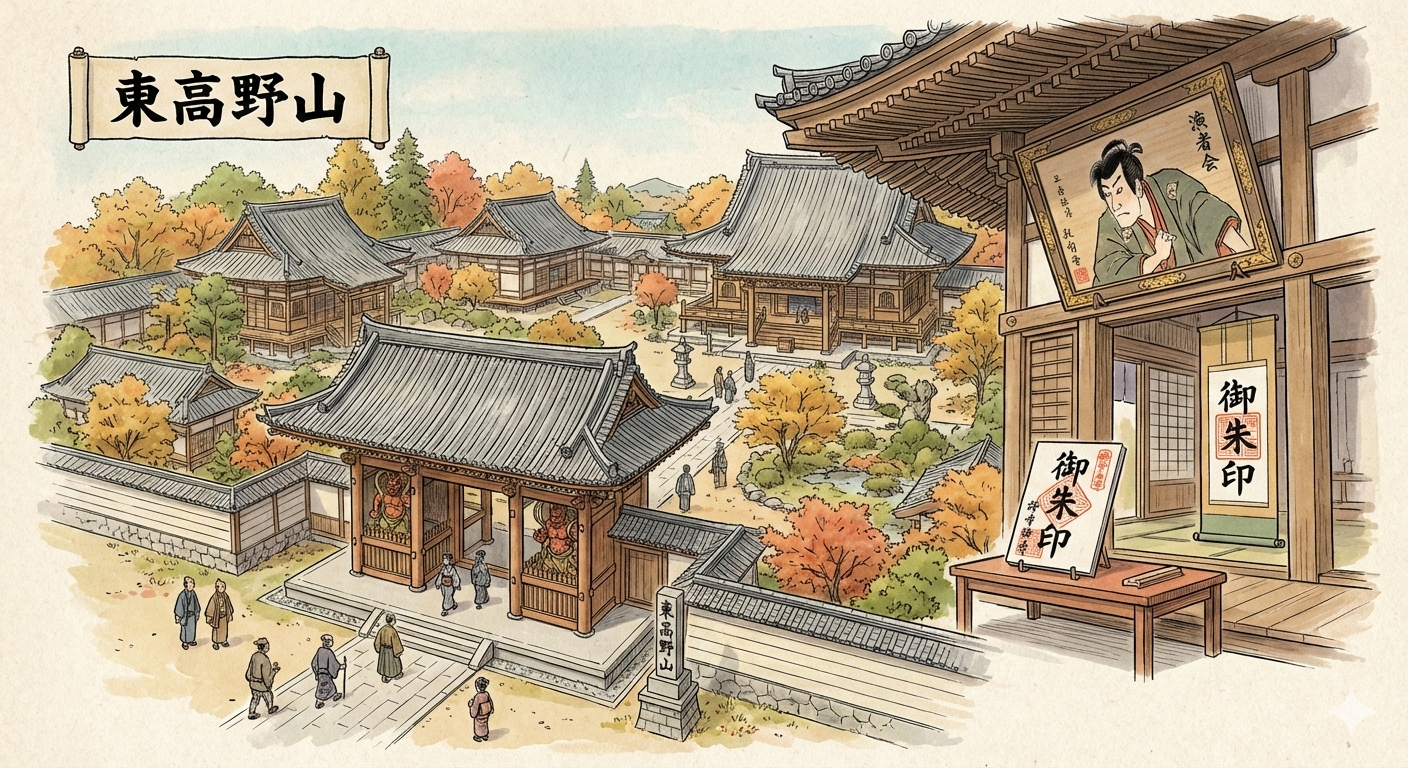
Founded in the early 17th century by Masujima Shigeaki, a member of the defeated Go-Hōjō clan, the temple was conceived with a grand vision: to become the "East Kōyasan" (Higashi-Kōyasan). This was a brilliant "religious branding" strategy. Mount Kōya is the sacred headquarters of Shingon Buddhism, a major pilgrimage destination located far to the southwest. By modeling itself after this revered site, Chōmei-ji aimed to capture the devotion—and the donations—of the countless pilgrims in the Kanto region who could not make the arduous journey to the original.
The strategy was a resounding success. The temple gained the official endorsement of the Edo shogunate, which granted it a fief of 9 koku and 5 to under its official "vermilion seal" (御朱印). This state support transformed Chōmei-ji Temple (長命寺) into a major religious hub for the entire region.
The temple's vast grounds and numerous cultural treasures are a testament to its historical importance. Artifacts like its imposing 17th-century Niō Gate and a designated cultural asset—an "Actor Picture" (Yakusha-e) ema painting from 1814—illustrate its deep history and connection to popular Edo-period culture. The rise of this grand institution reveals a clear power shift: with the military authority of the Toshima clan long vanquished, a state-backed religious authority rose to fill the cultural power vacuum in a newly pacified Japan.
History Scrawled in Stone by the Roadside
The truest history of a place is often told not in grand castles or powerful temples, but in the small, weathered artifacts left behind by ordinary people. To find this micro-history, we must step off the main path and onto the old roads of Shakujii village, where the daily lives of generations are scrawled in stone.
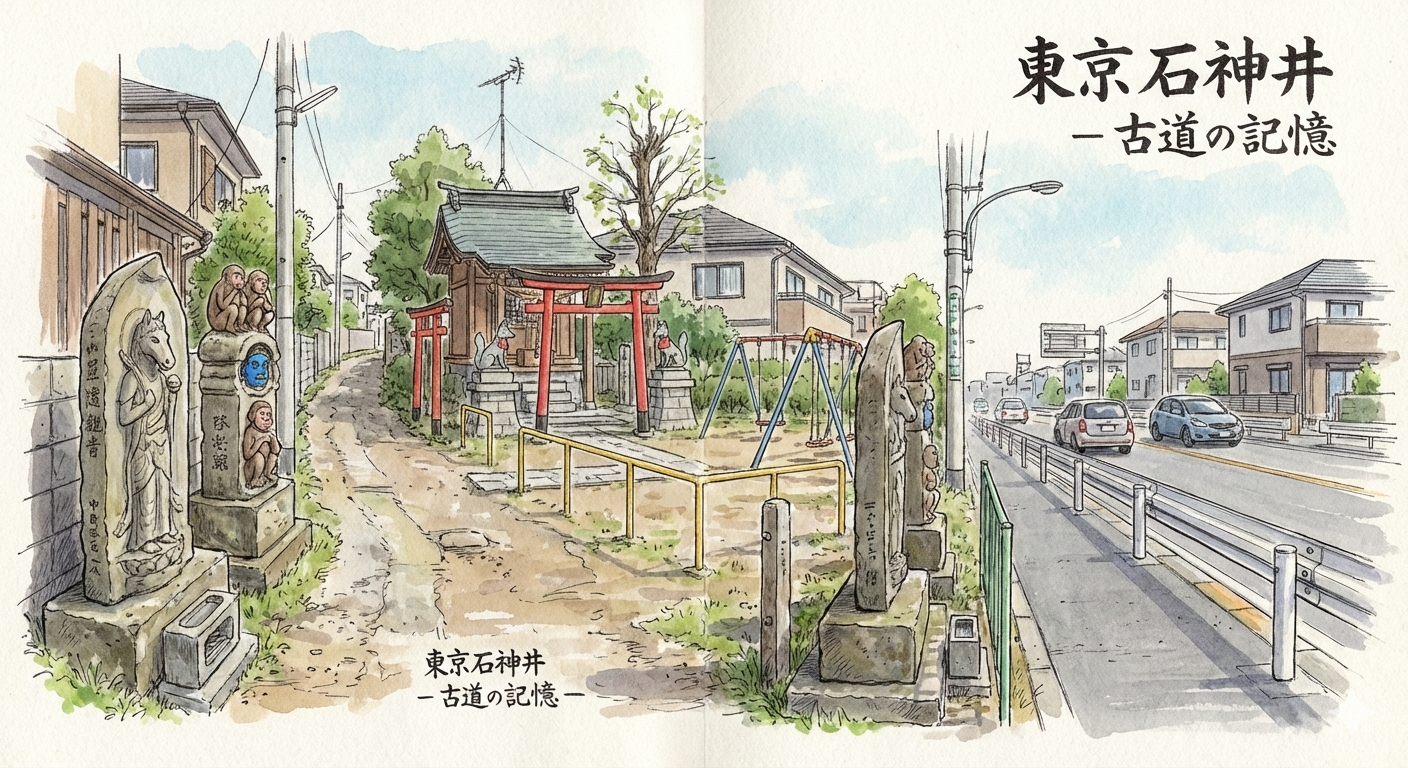
Scattered along these ancient routes is a network of stone monuments that function as a social and economic map of the past. The prevalence of Batō Kannon stele—depicting a horse-headed deity who protects travelers and animals—reveals the village's economic reliance on horse transport for agriculture and trade. Nearby, weathered Kōshin towers stand as physical evidence of a popular Taoist-derived folk belief that involved all-night vigils to prevent celestial spies from reporting on one's sins, reflecting the communal rituals that held the village together.
These fragments of shomin (common people) history are represented by hidden gems like the network of ancient roadside stone monuments and the charming Kokwan Inari Shrine (小關稻荷), a small shrine to the god of harvests, now nestled quietly within a small park named the Kokwan Inari Playground.
What makes these artifacts so powerful today is the stark visual contrast they present. Seeing an ancient stone marker, carved centuries ago, standing silently beside the modern Shin-Ōme Kaidō highway or surrounded by residential homes is to witness a temporal collision. These are hard fragments of history embedded in the soft tissue of contemporary life. When pieced together, these small, humble markers tell a rich and detailed story of daily work, faith, and community in old Shakujii.
Your City Has a Story to Tell
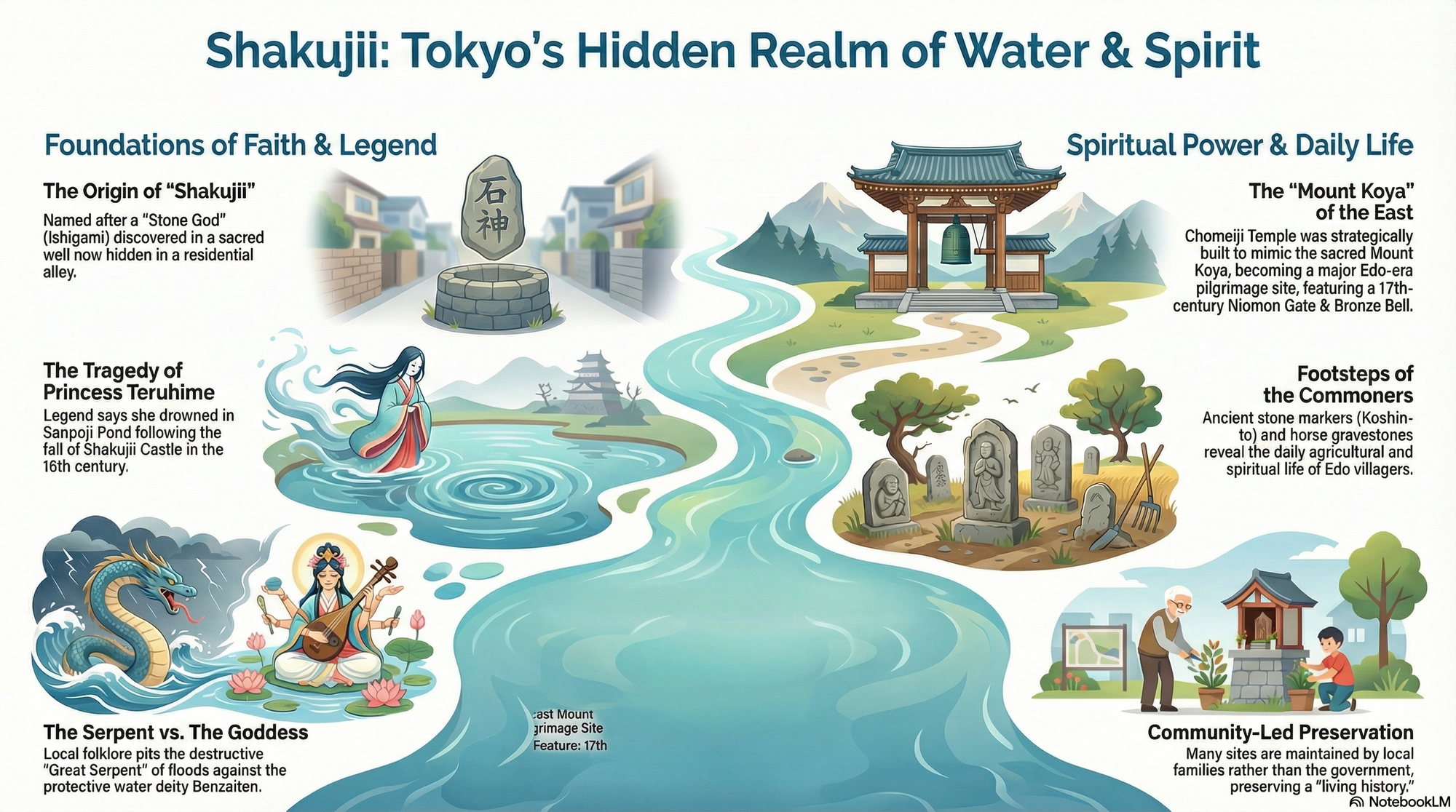
The story of Shakujii is a rich tapestry woven from mythic origins, feudal tragedy, folk beliefs, institutional power, and the quiet lives of its people. These five tales reveal a history deeply connected to place and, above all, to water. The sacred well that gave the area its name, the pond that became a princess’s grave, and the river that was both a serpent and a goddess—all are anchored to the same life-giving water system, creating a powerful narrative throughline.
The true value of Shakujii’s "hidden gems" lies not just in their age, but in their very survival. The well hidden on a private path, the shrine tucked into a small playground, the stone markers swallowed by the suburbs—their existence is a quiet act of resistance against the erasure of memory that so often accompanies modern urban development. They survived not because they were monumental, but because they were cherished by the community.
These stories prove that even in the world’s most futuristic metropolis, history is never truly lost. It is simply waiting, hidden in plain sight. It prompts a final, lingering question: what forgotten stories and sleeping gods are waiting to be discovered in your own neighborhood?
 Lawrence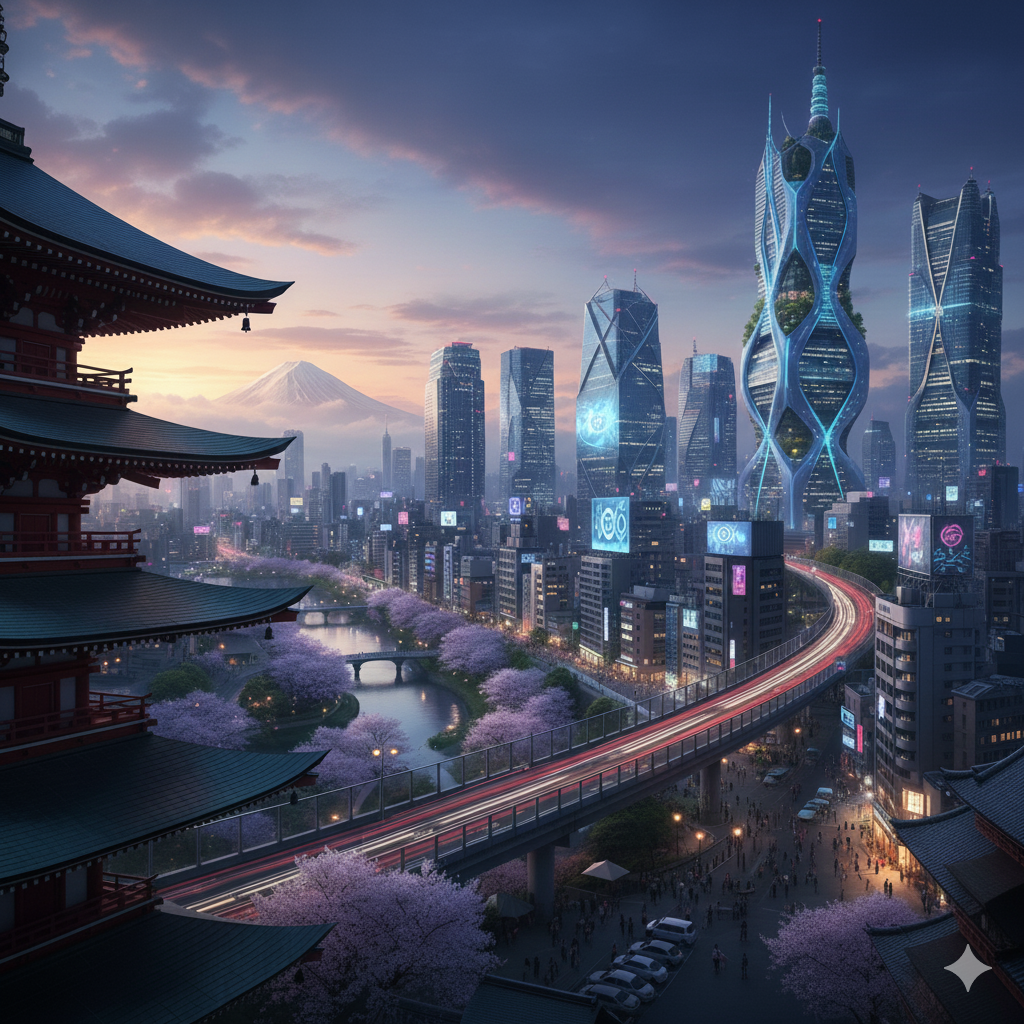
 Lawrence