(ENG) Walking Through Time: Five Hidden Historical Layers of Akatsuka, Tokyo
Akatsuka teach us a lesson on our enduring struggles with conflict, nature, and the search for peace. even in the most futuristic metropolis.
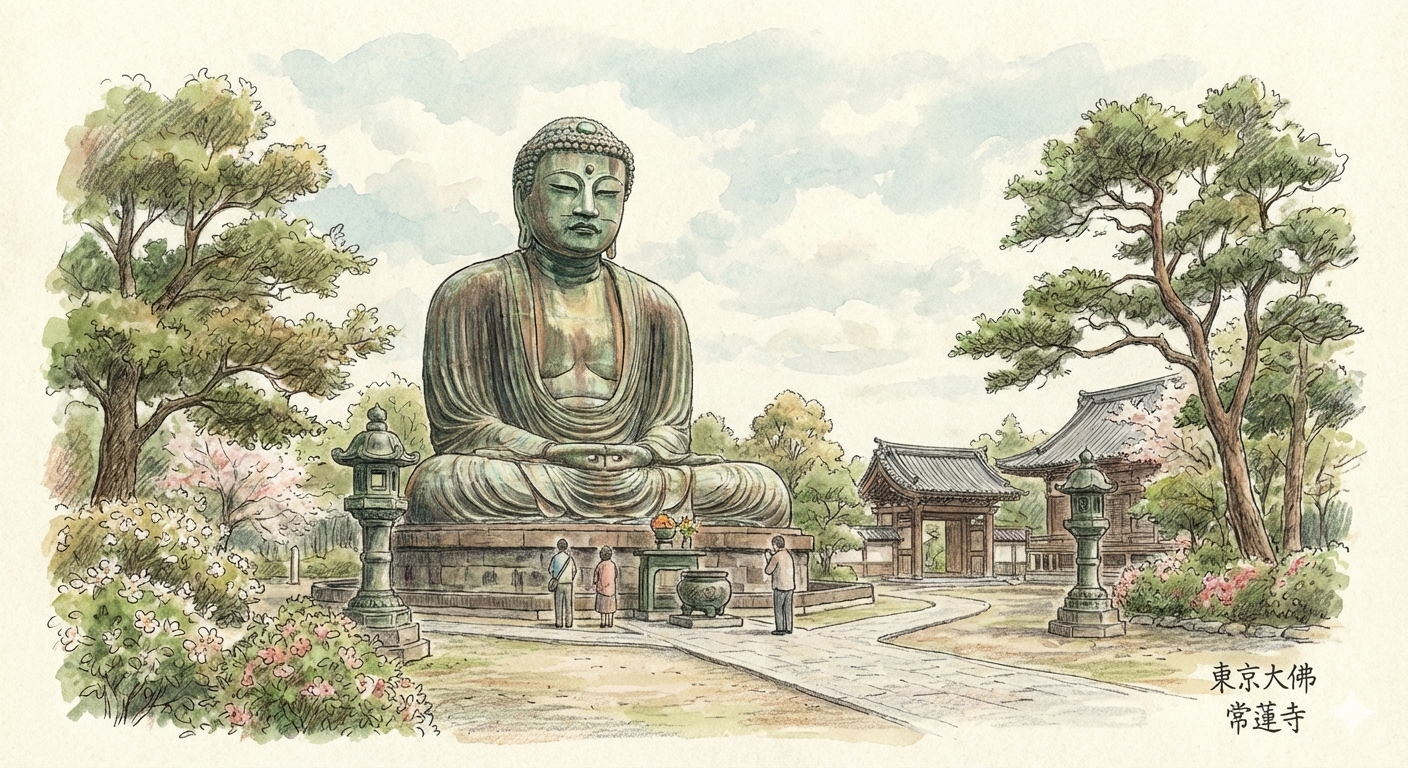
常蓮寺內的東京大佛 The Great Buddha at Joren-ji Temple
Listen to the historical stories told in detail (For subscribers only)
Beyond the Neon, A Tokyo Time Capsule
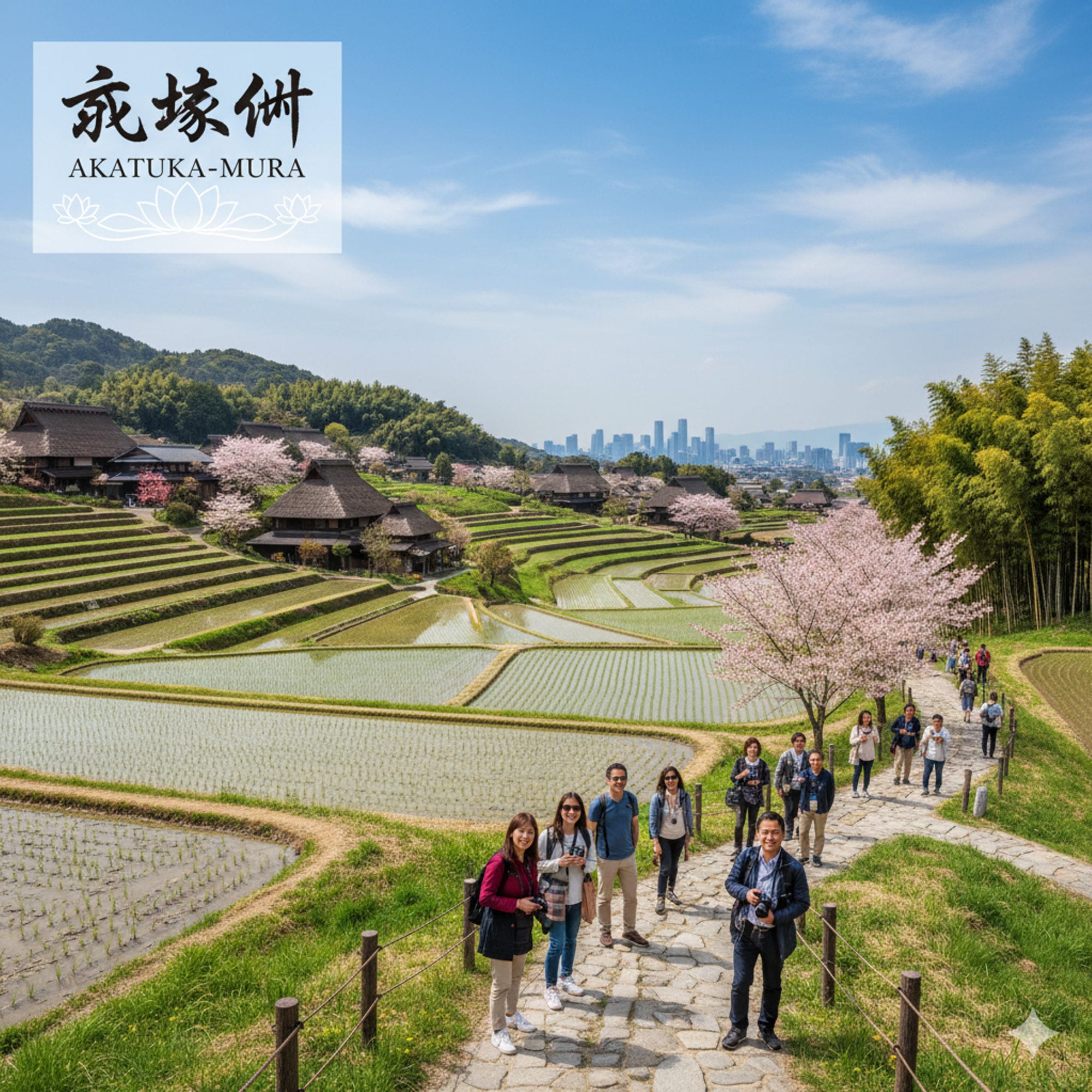
When we picture Tokyo, our minds conjure images of neon-drenched skyscrapers and a relentless push toward the future. Yet, concealed within its quieter districts lies a history as deep as any ancient capital. To walk these neighborhoods is to uncover a story written not in light and steel, but in earth and spirit. The neighborhood of Akatsuka, in western Tokyo’s Itabashi Ward, is a singular time capsule where five centuries of Japan’s evolution can be traced on foot. Its story, however, is not merely a sequence of events, but a profound dialogue between two core tensions that define human history itself: a constant negotiation between enduring culture and its fragile environment—the Field and the Water—and an epic struggle between conflict and peace—the Cannon and the Buddha.
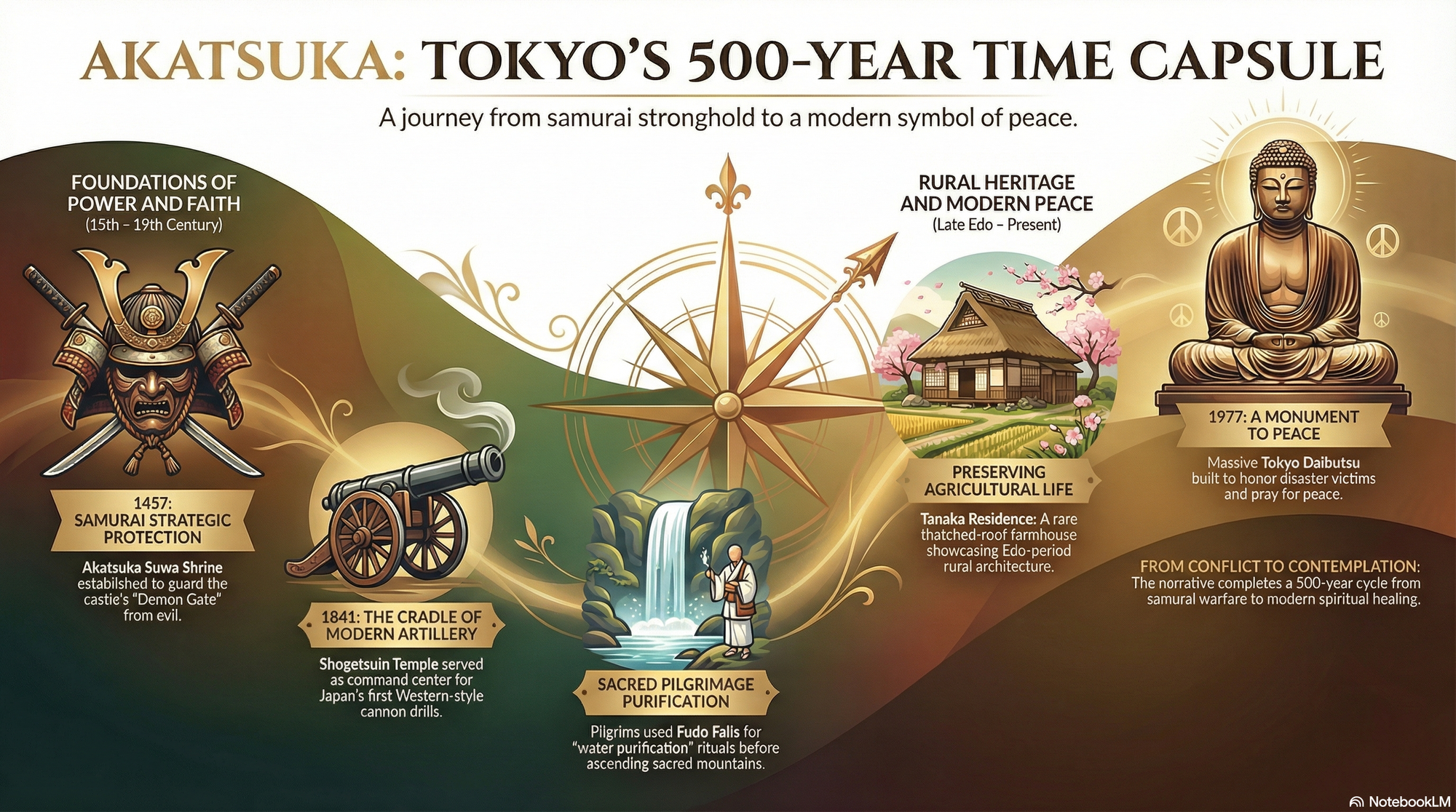
A Samurai Shrine Built for War
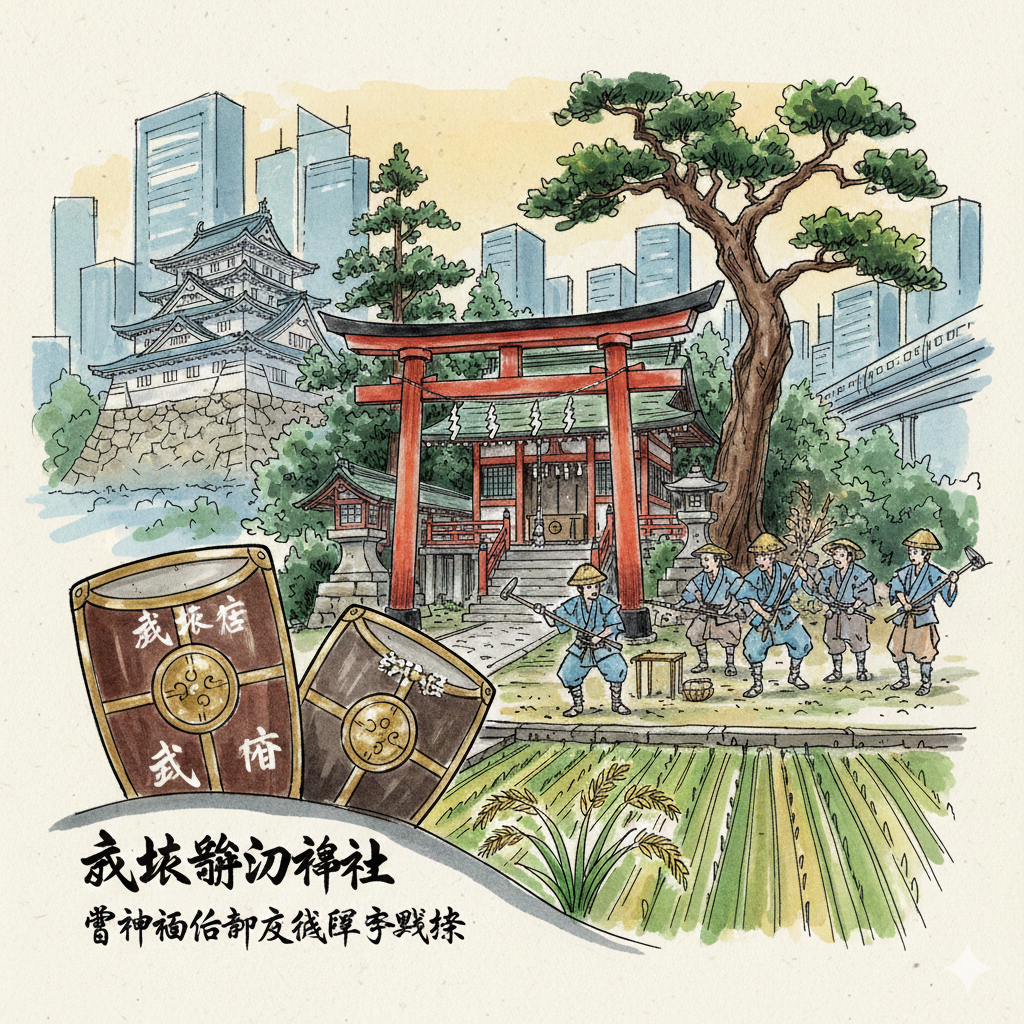
In the modern world, we tend to see a clear line between faith and warfare. But in medieval Japan, religious sites were integral components of military strategy. The Akatsuka Suwa Shrine is a powerful, surviving testament to this fused worldview, a place where spiritual belief was weaponized as a form of strategic defense.
Established between 1457 and 1460 by the samurai lord Chiba Yoritane, the shrine was founded with a clear military purpose. It served as a kimon-yoke, a spiritual shield positioned to guard the northeastern "demon gate" of Akatsuka Castle. By inviting a deity from the renowned Suwa Grand Shrine, Lord Chiba was not merely making a pious gesture; he was erecting a supernatural bulwark against both malevolent spirits and enemy armies. This act reveals the profound pragmatism of the samurai mindset, where Shinto belief, strategic geography, and military necessity were seamlessly integrated. Victory, they believed, depended as much on divine favor as it did on swords and fortifications.
Today, while only the moats and earthworks of Akatsuka Castle remain at the adjacent Akatsuka Tameike Park, the shrine’s enduring presence allows a visitor to stand on the very ground conceived for medieval spiritual warfare. This fusion of the sacred and the strategic hints at the deeper themes of survival that define Akatsuka—a reliance on the land not just for victory in war, but for life itself.
The Quiet Temple That Ignited a Military Revolution
By the mid-19th century, Japan stood at a precipice, its feudal world pried open by the technological might of Western powers. In Akatsuka, this national crisis played out within the serene grounds of a prestigious Buddhist temple, introducing the "Cannon" into a sacred landscape.
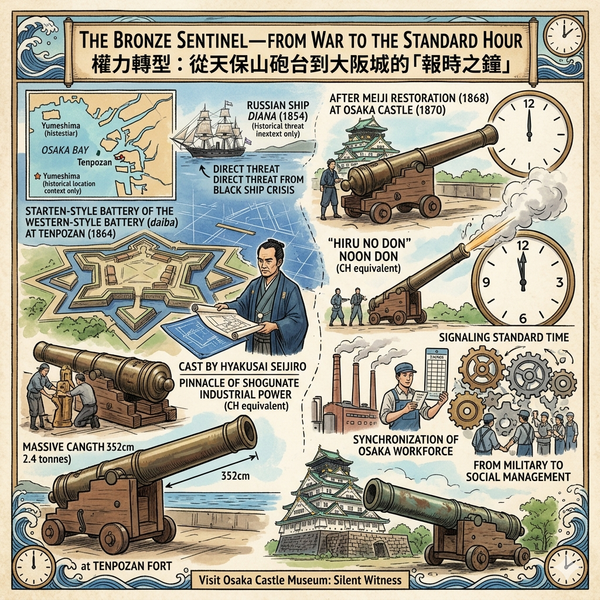
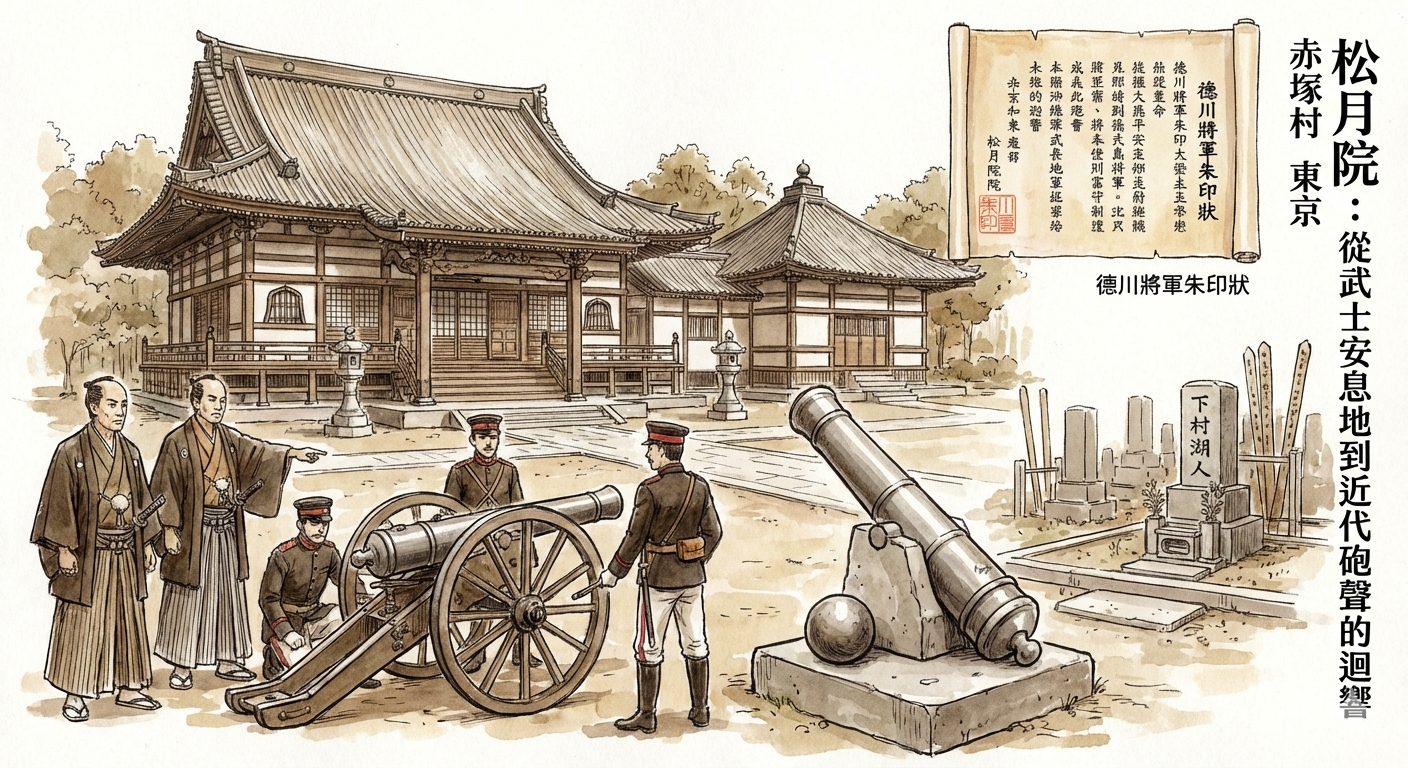
Shogetsu-in Temple had long been the revered family temple of the ruling Chiba clan. Its authority was cemented in the Edo period when Tokugawa Ieyasu himself granted it "朱印地四十石" (40 koku of land under his official seal), a measure of shogunal patronage that elevated its status far above a typical local institution. Yet its most pivotal moment came in 1841, when its grounds were commandeered as the honjin (headquarters) for Takashima Shuhan, a pioneer of military science. It was from here that he conducted Japan's first large-scale demonstration of Western-style cannons and gunnery.
The symbolism of this event is jarring and absolute: a sanctuary for ancestral spirits commandeered as a proving ground for the tools of modern warfare. This juxtaposition physically embodies the clash between feudal Japan’s spiritual traditions and the urgent need to adopt Western technology to survive. Travelers today can witness a monument on the temple grounds, strikingly shaped like a cannon and cannonball, commemorating the drills. In a poignant contrast, the temple is also the final resting place of the novelist Shimo-mura Kojin, creating a space for reflection on the tensions between military history and literary peace.
An Urban Waterfall That Was Once a Pilgrim's Spiritual Gateway
While Shogetsu-in became a stage for national-level transformation, other sites in Akatsuka reveal a more intimate history of faith, one tied directly to the "Water" that sustained the region’s spirit. During Japan’s Edo period, mountain worship was a central part of popular devotion, and pilgrimages to peaks like Mount Fuji required ritual purification.
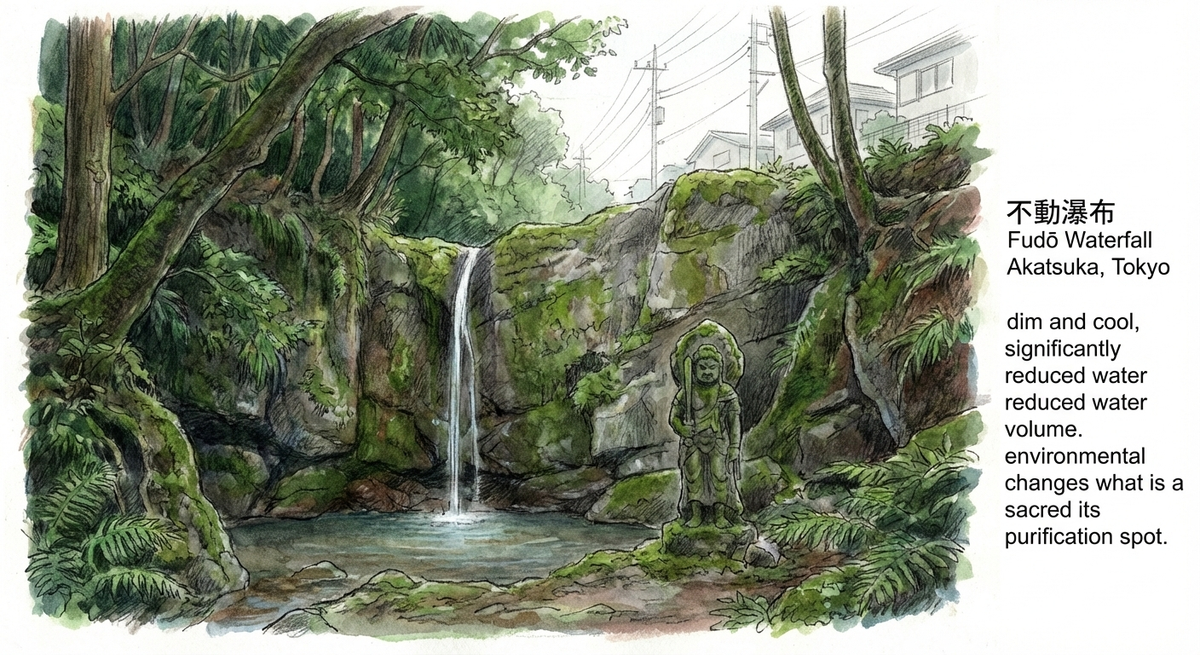
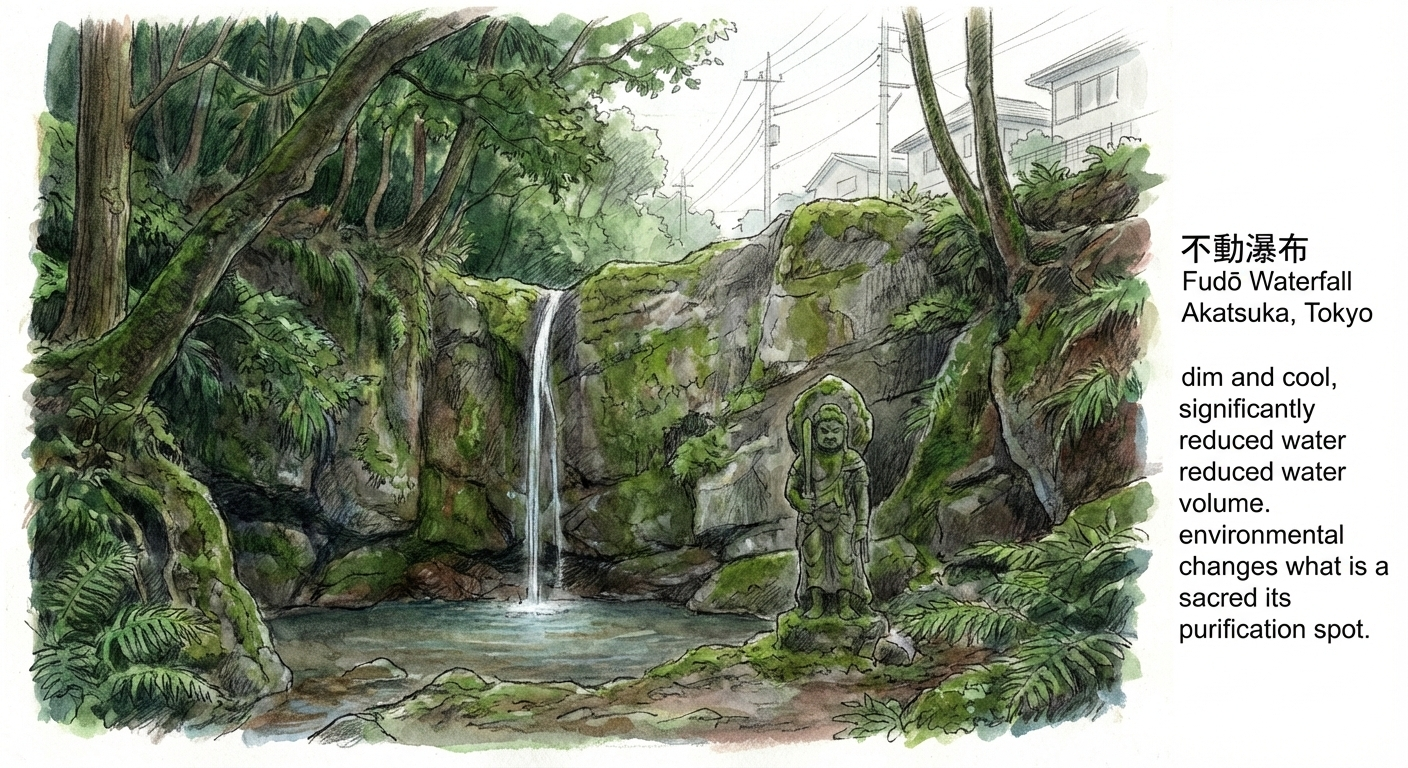
The Akatsuka Fudō-no-Taki waterfall was a key site for this sacred preparation. Here, in front of a purification hall known as a Korido and before a statue of the fierce deity Fudō Myō-ō placed by the Chiba clan, pilgrims would perform mizugori—a grueling ritual of purification by standing under the cold, flowing water—to cleanse both body and spirit. Locals once believed the spring that fed it would never run dry. Today, its story is a lesson in environmental history. Urban development has diminished its flow to a shadow of its former self.
Here, the waterfall becomes a poignant metaphor for modern Tokyo itself—a city that meticulously preserves the rituals of the past while simultaneously severing them from the natural world that gave them meaning. It is no longer just a relic of bygone faith but a living monument to the fraught relationship between urban growth and the preservation of natural heritage.
The Farming Ritual That Echoes Tokyo’s Agricultural Past
It is almost impossible to stand in modern Tokyo and imagine it as a landscape of rice paddies. This makes the survival of Akatsuka’s agricultural heritage—the "Field" to the waterfall's "Water"—all the more remarkable. This past is experienced both spiritually and physically.
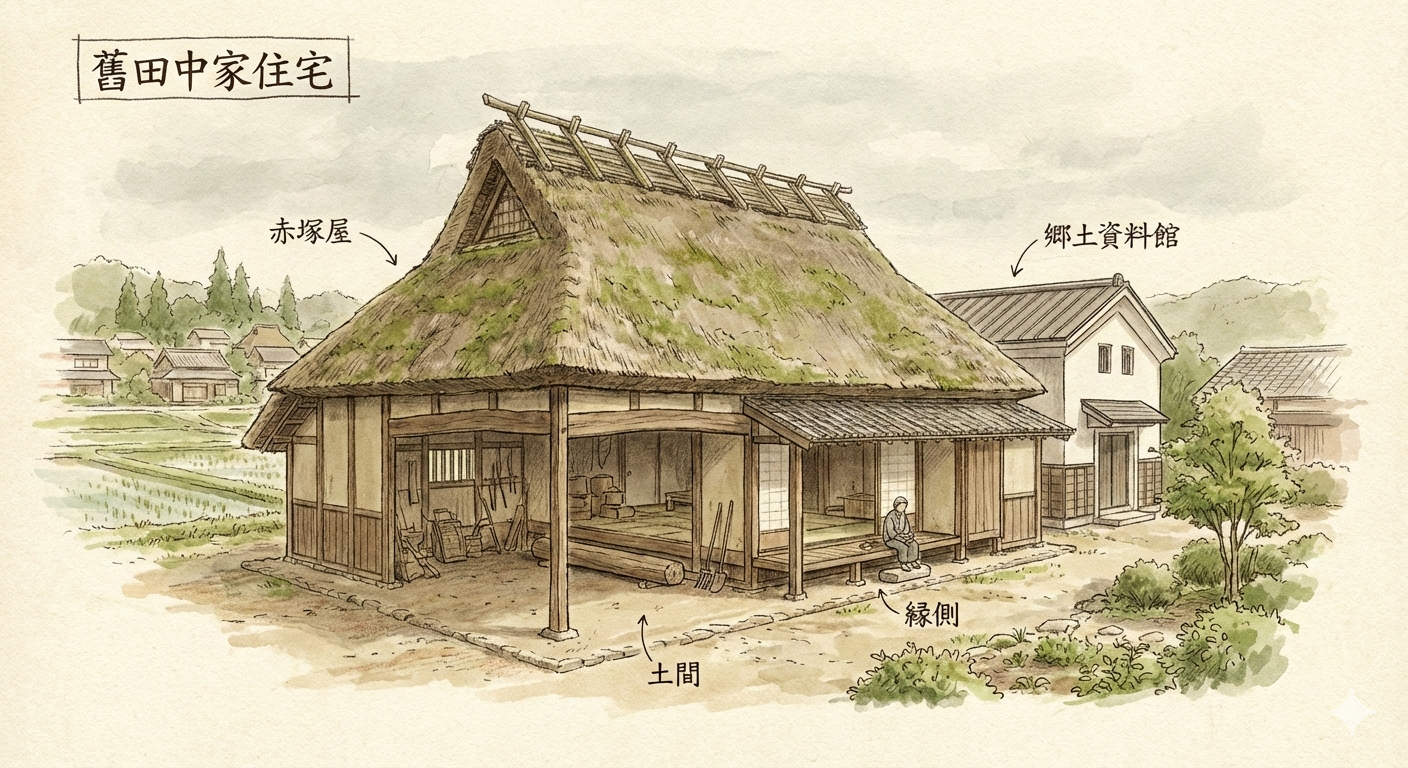
The spiritual echo is found back at the Akatsuka Suwa Shrine. Every February, it hosts the "Ta-asobi" (rice-paddy play) ritual, a performance designated a National Important Intangible Cultural Property. This ceremony is a form of Yōshuku, a "pre-celebration" where the desired outcome—a bountiful harvest—is acted out in advance to make it a reality. A short walk away, at the Itabashi Ward Local History Museum, stands the physical reality of this life: the Old Tanaka House, a preserved Edo-period thatched-roof farmhouse. Its "ta-no-ji" (田 character) layout and large earthen floor (doma) integrated living and working spaces.
Together, the ritual and the farmhouse form a complete cultural circuit—they are the software and hardware of Akatsuka's agricultural soul. One represents the spiritual hopes for the harvest; the other, the physical reality of the life it supported. But as the intimate cycles of the land gave way to the 20th century, the story of Akatsuka zooms out, forced to confront the violent disruptions of the modern world.
Read about other hidden historical neighborhoods in our guide to Itabashi Ward.
A Great Buddha That Heals Modern Wounds
Unlike the ancient Great Buddhas of Nara or Kamakura, the Tokyo Daibutsu at Joren-ji Temple is a modern creation, born from the ashes of 20th-century tragedy. It is the final, powerful chapter in Akatsuka’s story—the "Buddha" that answers the "Cannon."
Completed in 1977, the massive seated Buddha was built for a specific purpose: to comfort the souls of the countless victims of two of Japan's greatest modern catastrophes, the Great Kanto Earthquake of 1923 and the devastating Tokyo air raids of World War II. Its construction was an act of national remembrance and a monumental prayer that such tragedies would never be repeated.
The Great Buddha serves as the solemn conclusion to Akatsuka's historical narrative. After tracing a story that begins with samurai fortifications and moves through the adoption of modern cannons, the journey ends here with a definitive appeal for peace. The statue powerfully links Akatsuka's local history to Japan's national trauma and subsequent recovery, shifting the area’s long narrative of conflict toward a future-oriented hope for healing. For the visitor, its sheer scale creates a contemplative atmosphere, offering a final point of reflection on the cycles of war, loss, and resilience.
History Is A Journey, Not a Destination
The walk through Akatsuka reveals a narrative that spans five hundred years, structured by a profound dialogue between elemental forces. We witness the story of the Field and the Water—a deep agricultural spirit sustained by a natural world now under threat. And we trace the arc of the Cannon and the Buddha—from the strategic fortifications of medieval samurai and the anxieties of a nation embracing modern warfare, to the ultimate, unifying prayer for peace.
This is the essence of what we believe at Lawrence Travel Stories: the true character of a place is revealed not by visiting its landmarks in isolation, but by walking the ground between them and understanding the layers of time that bind them into a coherent narrative. The history is in the journey. Akatsuka teaches us that even in the world’s most futuristic metropolis, the past offers a universal lesson on our enduring struggles with conflict, nature, and the search for peace.
What hidden histories are waiting to be discovered in the quiet corners of your own city?
For more stories that unlock the secrets of the past, consider subscribing to our newsletter.
參考資料
- 230910_AKATSUKA GUIDE MAP - 新潟市, accessed October 13, 2025
- 松月院 - 東京都, accessed October 13, 2025
- 赤塚不動の瀧 - 歴史探訪と温泉 - FC2, accessed October 13, 2025
- 東京9区文化財 - 古民家めぐり, accessed October 13, 2025
- 乗蓮寺の歴史と東京大仏の成り立ち, accessed October 13, 2025
- 赤塚諏訪神社 - 板橋区/東京都 | Omairi(おまいり), accessed October 13, 2025
- 板橋をもっと楽しく!もっと便利に! いたばしらいふ.com, accessed October 13, 2025
- 赤塚諏訪神社田遊び 祭紹介 - まつりーと, accessed October 13, 2025
- 松月院|見る|ぶらり、いたばし 板橋区観光協会, accessed October 13, 2025
- 松月院 - 板橋区 - ポケットの中の物語, accessed October 13, 2025
- 赤塚エリア特集 2021|もっと楽しむ|ぶらり - 板橋区観光協会, accessed October 13, 2025
 Lawrence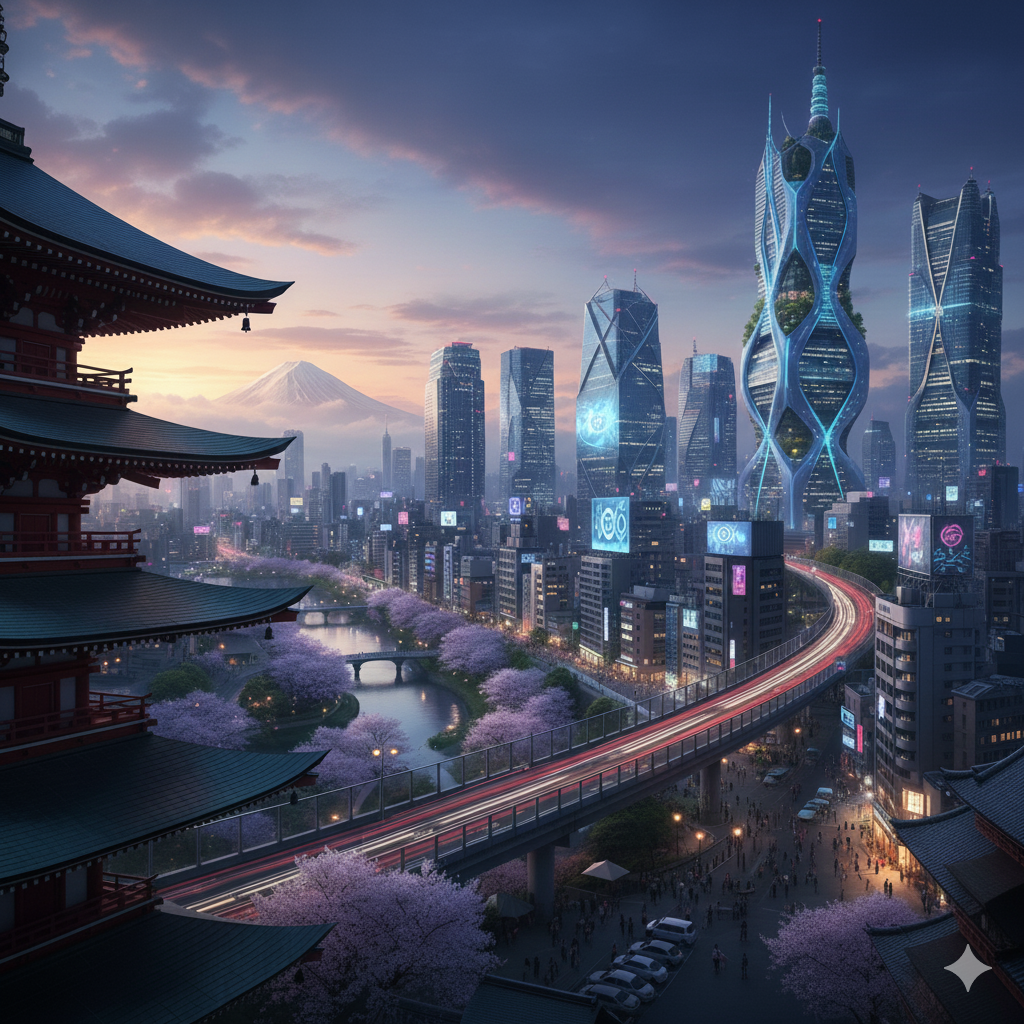
 Lawrence