
Working Osaka 工作大阪
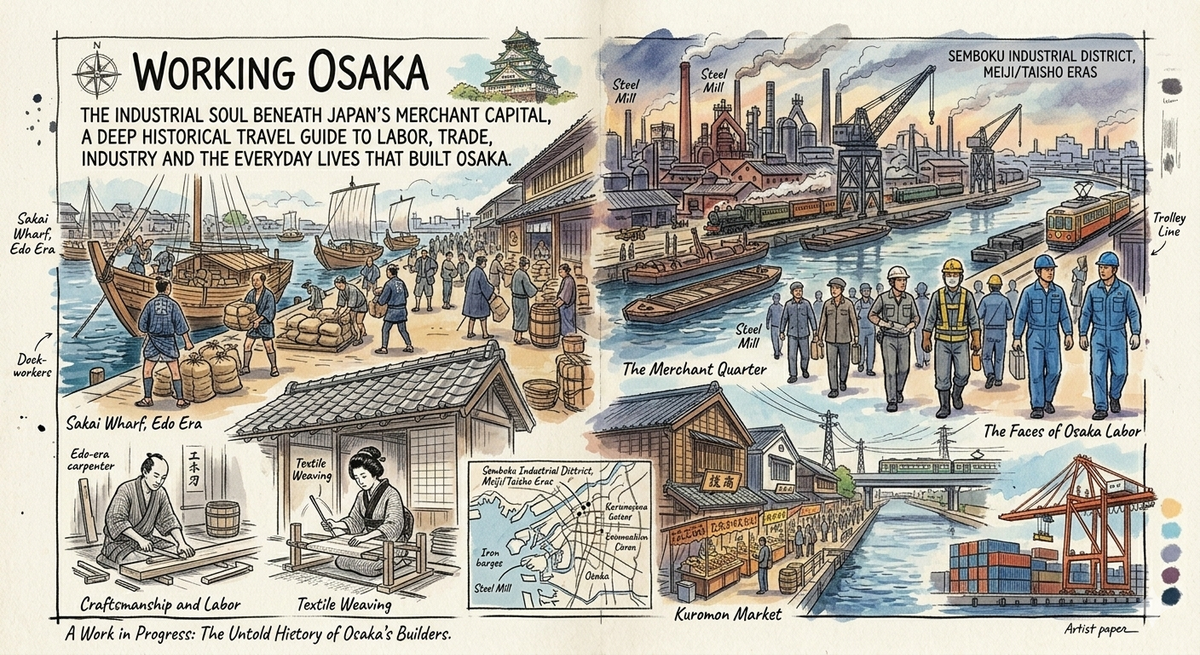
Working Osaka: The Industrial Soul Beneath Japan’s Merchant Capita, a Deep Historical Travel Guide to Labor, Trade, Industry and the Everyday Lives That Built Osaka
Introduction: Beyond Castles and Cuisine
When travelers think of Osaka, they think of neon, street food, and merchant wit.
But Osaka was not only shaped by warlords or merchants.
It was built — physically and culturally — by workers.
Dock laborers. Textile workers. Factory girls. Shipbuilders. Market traders. Day laborers.
If Feudal Osaka was about power,
and Merchant Osaka was about capital,
then Working Osaka was about survival and production.
I. From “Nation’s Kitchen” to Industrial Engine


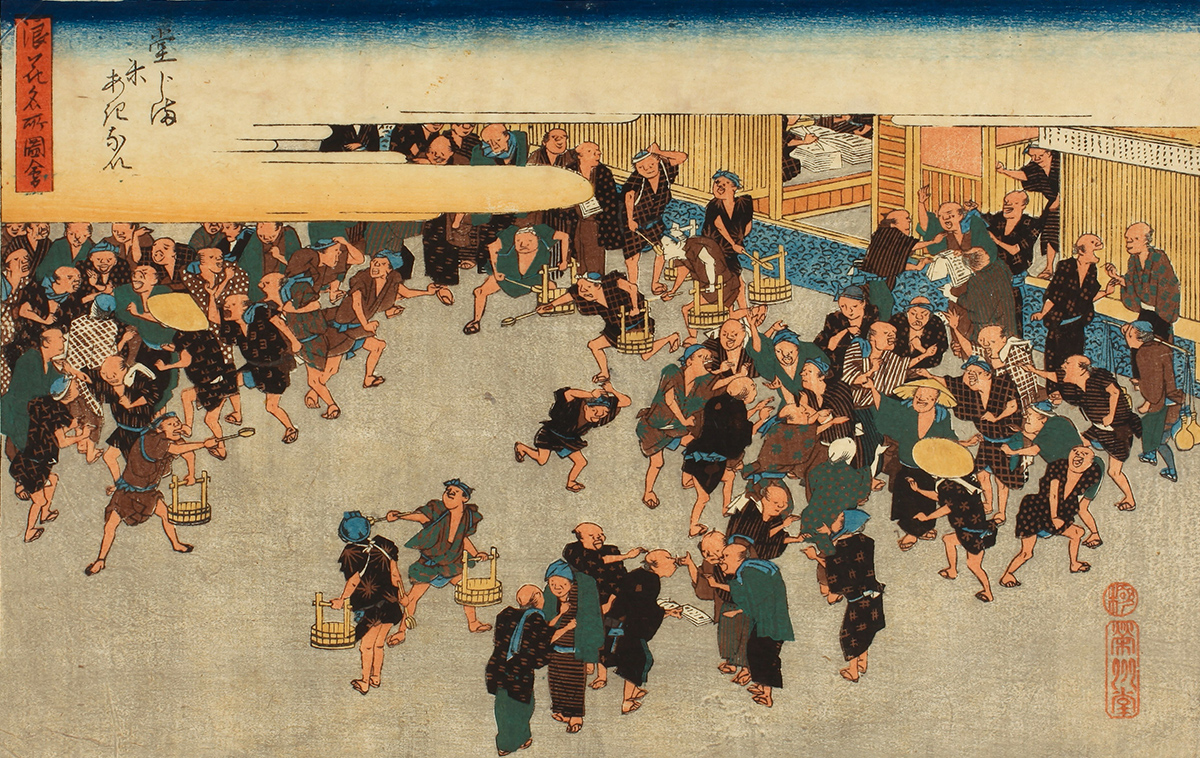

During the Edo period, Osaka earned the name:
天下の台所 — The Nation’s Kitchen
But food logistics naturally evolved into:
- Warehousing systems
- Port expansion
- Commercial finance
- Distribution networks
With the Meiji Restoration, Osaka transformed into:
- Textile manufacturing hub
- Shipbuilding center
- Machinery production base
By the early 20th century, Osaka was known as:
“The Manchester of the East.”
Industrial capitalism took root in neighborhoods that tourists rarely notice.
II. The Rise of Factory Osaka

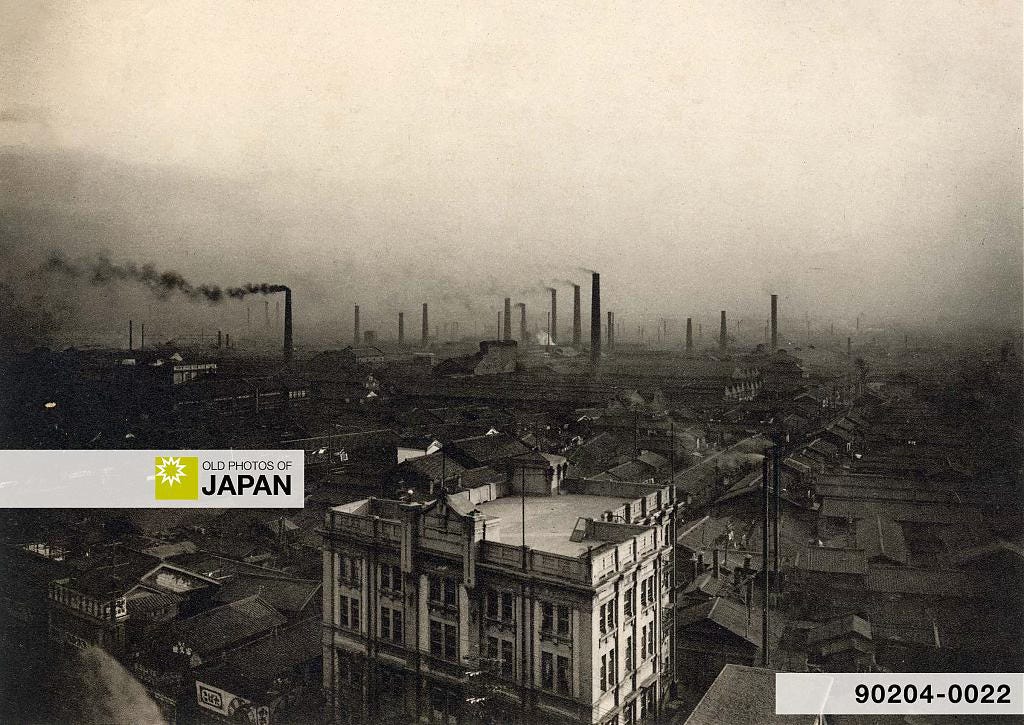
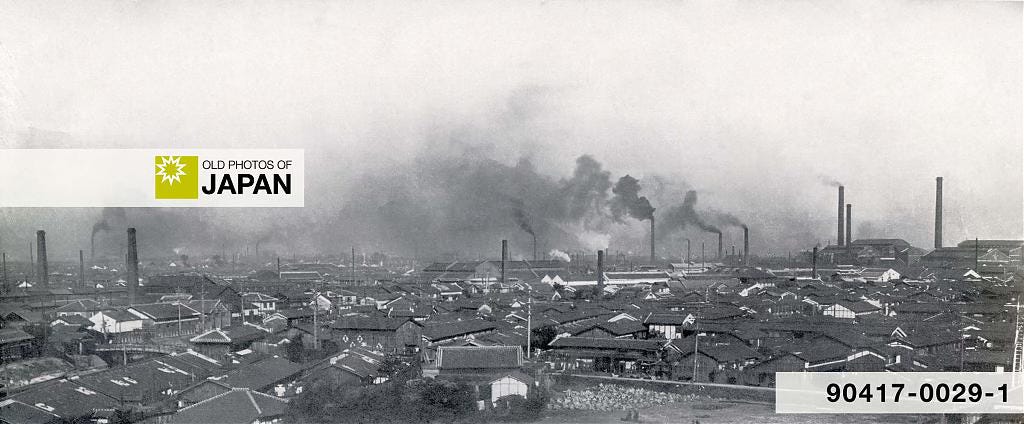
Textile mills dominated early industrial Osaka.
Young women from rural Japan migrated to work in spinning factories.
Working conditions were harsh:
- Long shifts
- Dormitory living
- Low wages
- Health risks
Yet this labor force powered Japan’s modernization.
Industrial Osaka was not glamorous.
It was built on discipline, fatigue, and adaptation.
III. Kamagasaki: The Hidden Labor Quarter

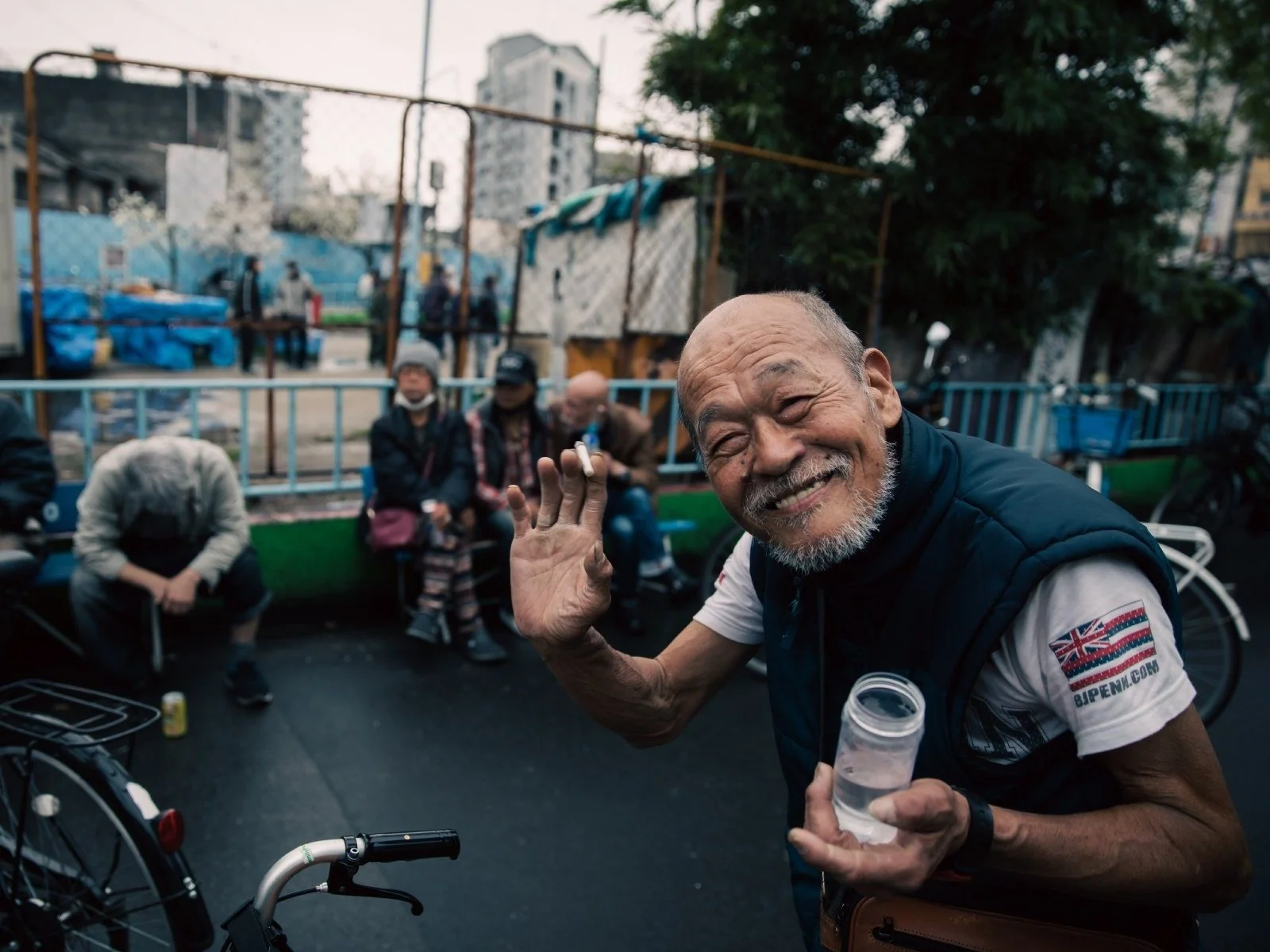
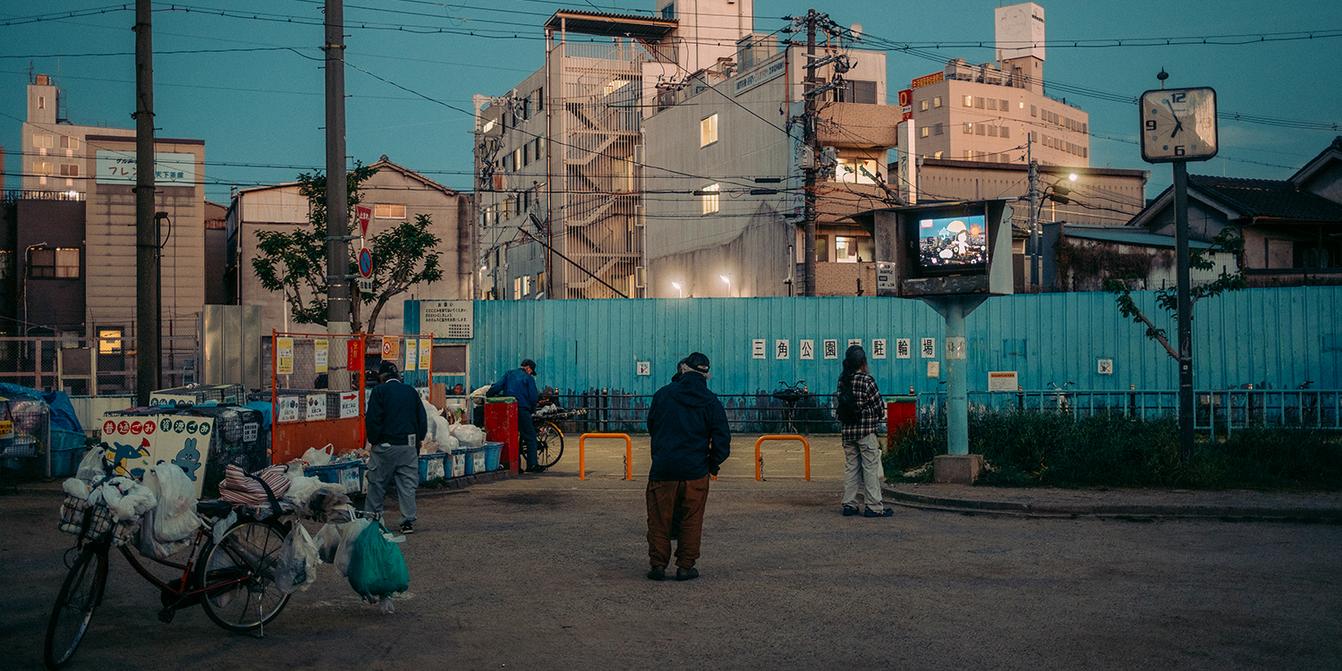

In the postwar era, rapid reconstruction demanded cheap labor.
Kamagasaki (in Nishinari Ward) became Japan’s largest day-laborer district.
Construction workers who rebuilt Osaka’s skyline often lived in:
- Tiny lodging houses
- Informal labor markets
- Economically precarious conditions
Kamagasaki represents a rarely discussed layer of Osaka’s growth:
The invisible workforce behind modern infrastructure.
Understanding this district reframes Osaka beyond tourism branding.
IV. Port Osaka: The Maritime Backbone
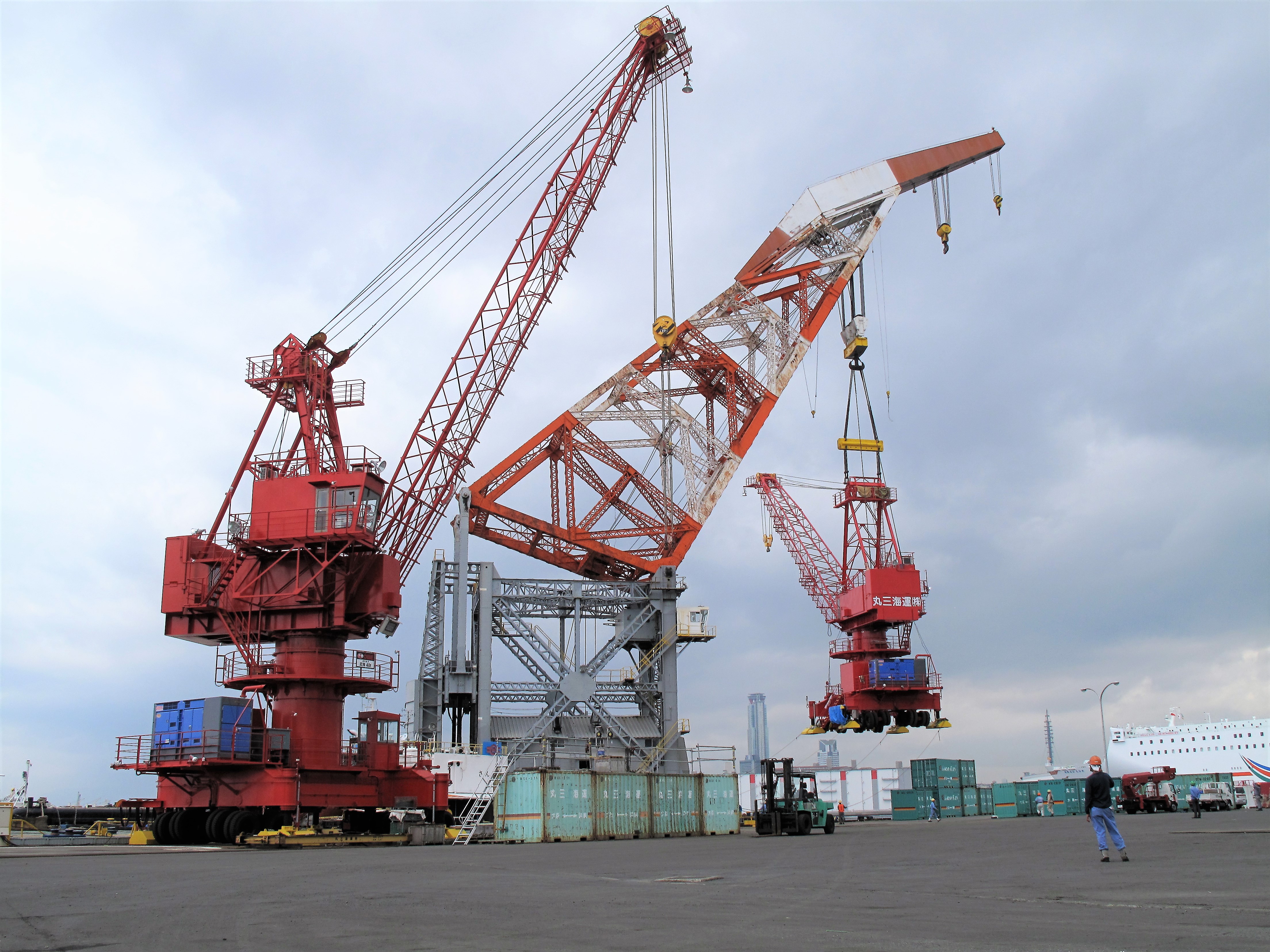
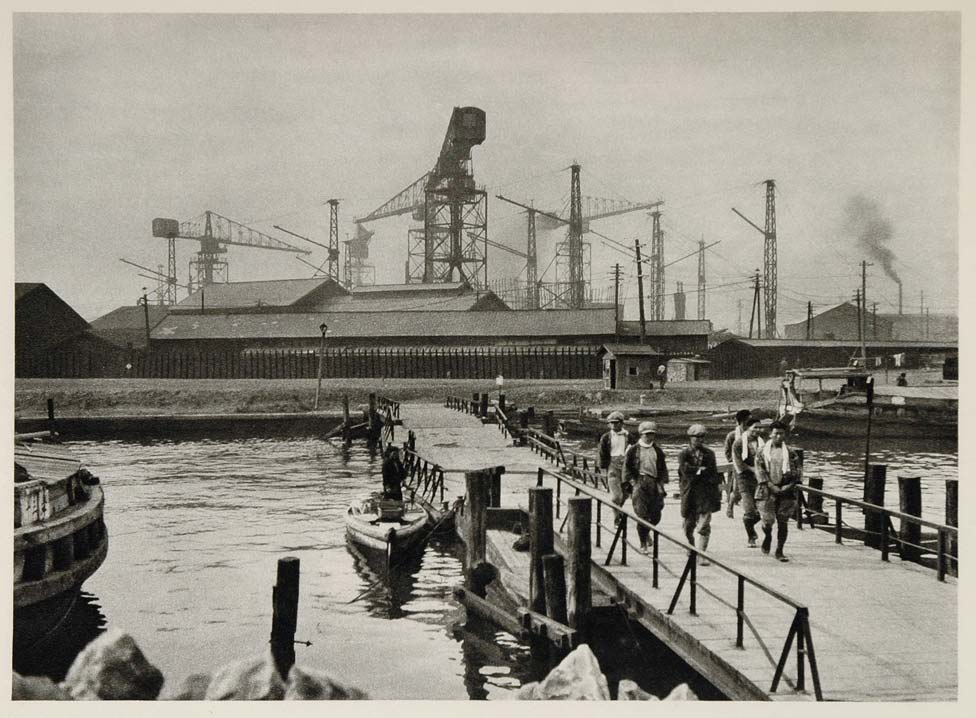

Port of Osaka has long functioned as industrial artery.
From rice shipments to steel exports:
- Dock workers
- Warehouse managers
- Shipping agents
- Logistics coordinators
formed the circulatory system of Kansai’s economy.
Tempozan and surrounding areas still reflect maritime labor history.
The sea built Osaka’s working-class neighborhoods.
V. Labor Movements and Social Change
Industrial growth created tension.
Osaka became an early center for:
- Labor unions
- Socialist movements
- Worker protests
- Postwar labor reforms
Factories were not only sites of production.
They were sites of political awakening.
The city’s working-class identity shaped Osaka’s reputation for:
- Direct speech
- Anti-authoritarian humor
- Practical realism
Cultural traits often attributed to “Osaka personality” may stem from labor culture.
VI. Walking Working Osaka Today (Historical Route)
If you want to explore Working Osaka meaningfully:
1. Osaka Museum of Housing and Living
Understand daily life transitions.
2. Sumiyoshi & Taisho Industrial Zones
Observe surviving industrial landscapes.
3. Tempozan & Port Area
Trace maritime labor history.
4. Nishinari (with sensitivity and context)
Understand day-laborer district history.
5. Nakanoshima
See corporate and financial transformation built on labor capital.
This is not poverty tourism.
It is structural urban literacy.
VII. Why Working Osaka Still Matters
Tokyo centralized governance.
Kyoto preserved culture.
Osaka industrialized.
Without Working Osaka:
- Japan’s textile export economy collapses.
- Postwar reconstruction slows dramatically.
- Kansai’s manufacturing ecosystem weakens.
Modern Osaka’s infrastructure — bridges, railways, skyscrapers — are monuments not only to engineers, but to labor.
Conclusion: The City That Works
Osaka laughs loudly.
But it works harder.
Behind every neon sign is:
- A dock worker
- A textile spinner
- A day laborer
- A machinist
- A delivery driver
Working Osaka is not romantic.
It is resilient.
And to understand the city fully, one must look beyond castles and cuisine — into the factories, ports, and labor quarters that powered its rise.