(ENG) 5 Hidden Stories from Osaka's Forgotten Rebel City: Hirano-go
Hirano-go reminds us that even under great power, ordinary people can build walls, create culture, and forge a spirit that echoes for centuries.

The Ghost of a Fortress in Modern Osaka
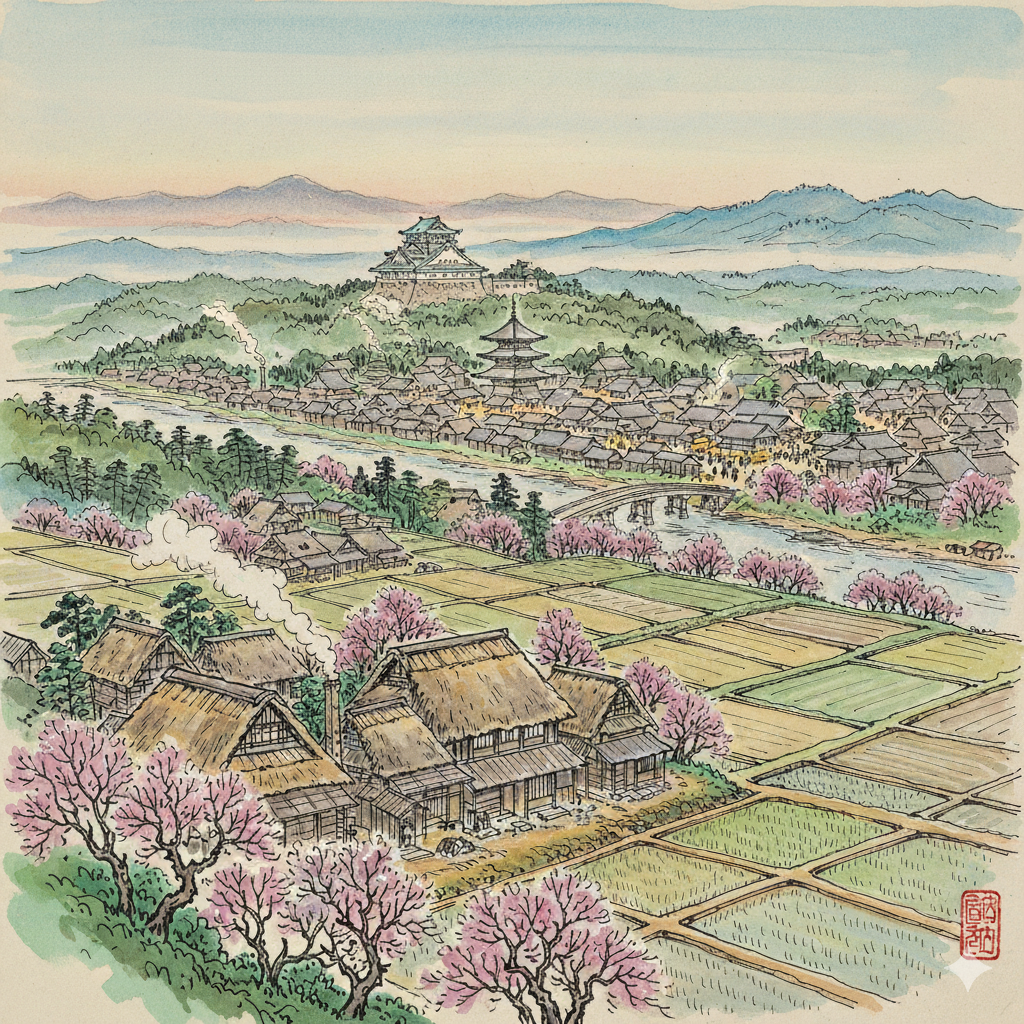
When we think of Osaka, we picture a dazzling metropolis of neon-drenched streets, futuristic architecture, and endless culinary delights. Yet, nestled within its sprawling urban fabric lies a world apart: Hirano-go. This is not just another quiet neighborhood; it is the surviving memory of a fiercely independent "free city," a fortified enclave that once dared to draw a line in the sand and defy the rule of samurai warlords.
Listen to the historical stories told in detail (For subscribers only)
To walk through Hirano-go is to peel back the layers of time, discovering a place where history isn't confined to museums but is etched into the very curve of the streets and whispered in the halls of ancient temples. This journey moves beyond the typical tourist trail to uncover five surprising stories that reveal the unique soul of this rebel town—a legacy of autonomy, defiance, and profound spiritual innovation that continues to echo today, a history you can still taste in a local longevity sweet like the Kame no Manju.
A Moat of Defiance: The City That Built Its Own Walls
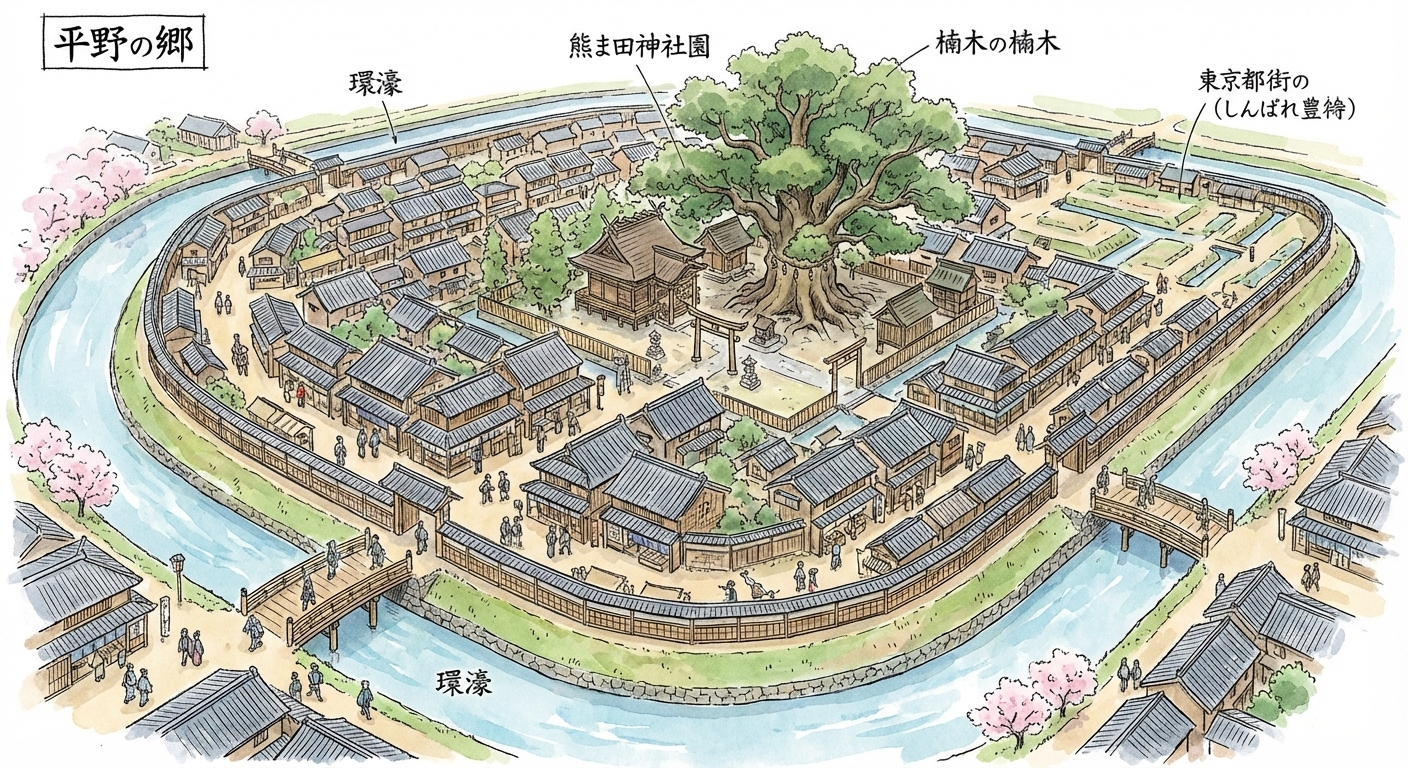
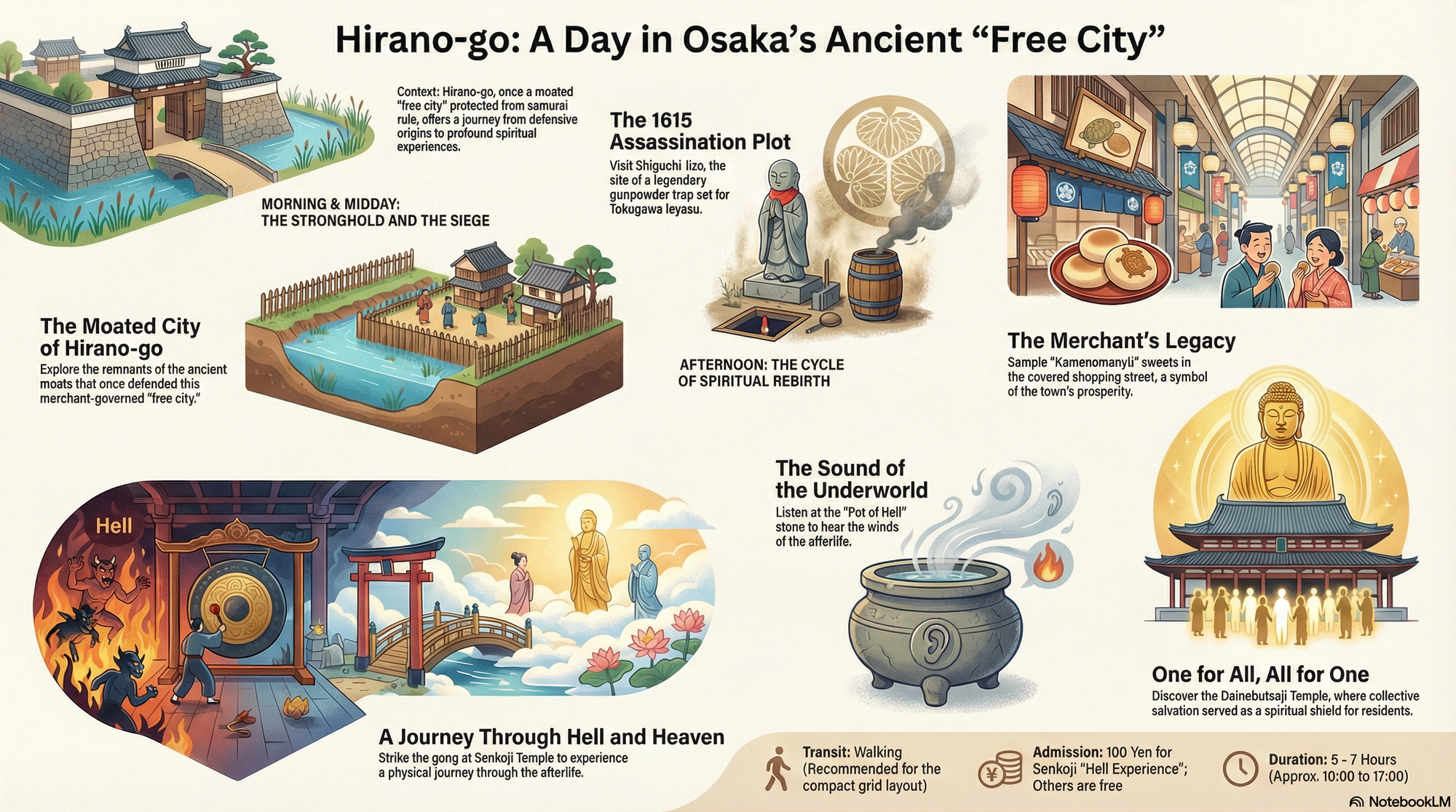
In an era defined by the absolute authority of samurai daimyo, the very existence of a self-governing, fortified civilian town was an act of profound rebellion. The merchants of Hirano-go achieved this autonomy through the 環濠 (kangō), an encircling moat that served as both a physical barrier and a powerful symbolic declaration of independence. Fueled by fortunes made in the cotton trade, this council of wealthy merchants created a radical anomaly in feudal Japan: a "free city" that answered to no lord.
The moat that once protected their textile profits has long since been filled, but its ghost remains, embedded in the landscape as a subtle but tangible link to the past. This physical contour broadcasts the collective will of a community that prized wealth over warfare, a shared determination to protect their hard-won prosperity from the most powerful warriors in the land. The city's defenses, however, were not just built from earth and water, but also from culture and intellect.
Trace the Ghost of the Moat Walk the northeastern streets near Kumata Shrine and observe the subtle dips and curves in the landscape. You are tracing the ghost of the moat that once formed the last line of defense against powerful daimyo.
Power and Poetry: Where Art Was a Weapon
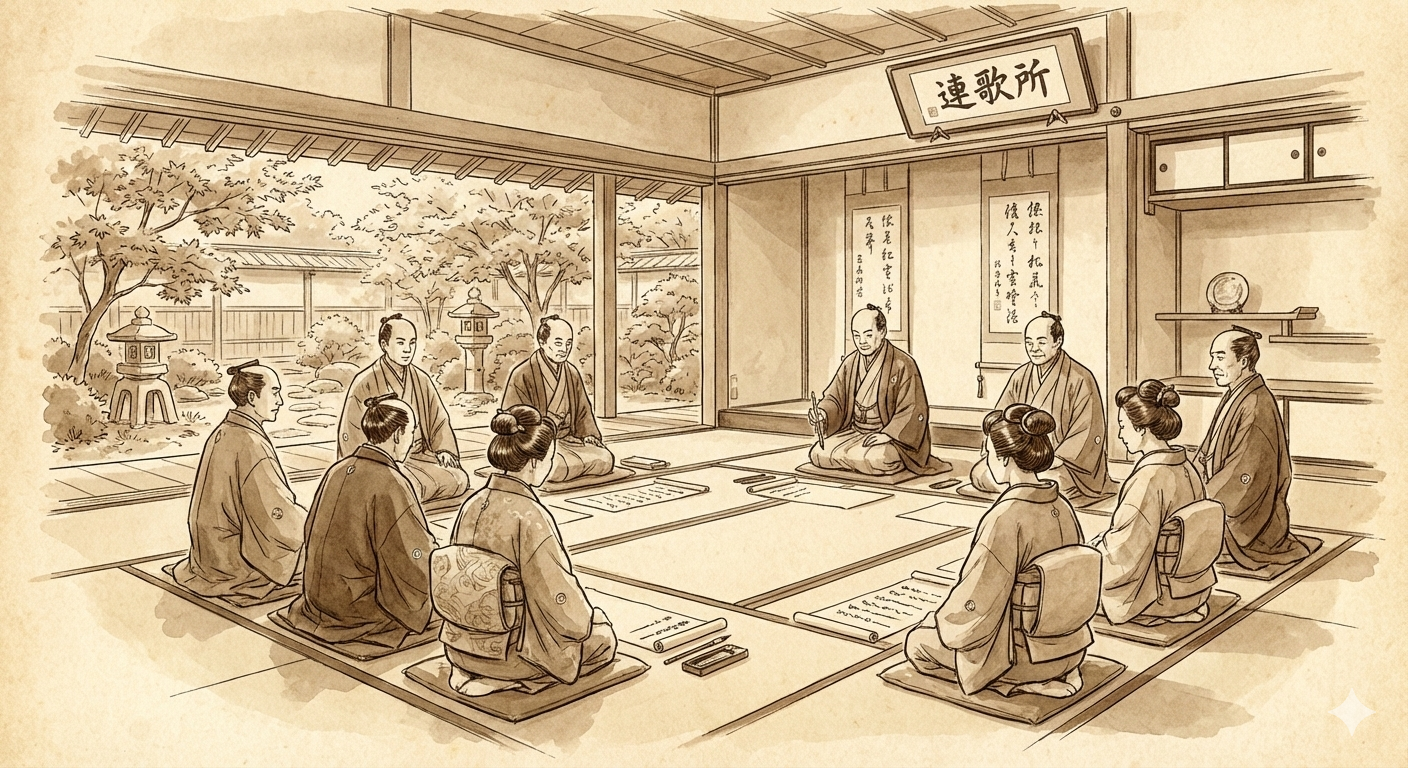
At the spiritual heart of the old city stands Kumata Shrine, a place that was far more than a center for worship. For the merchants of Hirano-go, it was a stage upon which they wielded art and culture as a form of "soft power," challenging the samurai on the field of cultural prestige.
Within the shrine grounds was the "Renga-sho" (連歌所), a hall dedicated to the composition of linked-verse poetry. These sophisticated gatherings were calculated displays of wealth and intellect, through which the merchants declared their home not merely a commercial hub, but a "cultural holy land." By mastering the high arts, they were creating an alternative, non-martial value system. They proved that power flowed not just from the edge of a sword, but from the tip of a brush.
A Witness to History Stand before the giant, thousand-year-old camphor tree within the shrine's grounds. Close your eyes and imagine it not just as a sacred object, but as the city's highest watchtower, a living sentinel that has witnessed centuries of Hirano-go's proud and defiant history.
The Gunpowder Plot: When Civilians Tried to Assassinate a Shogun
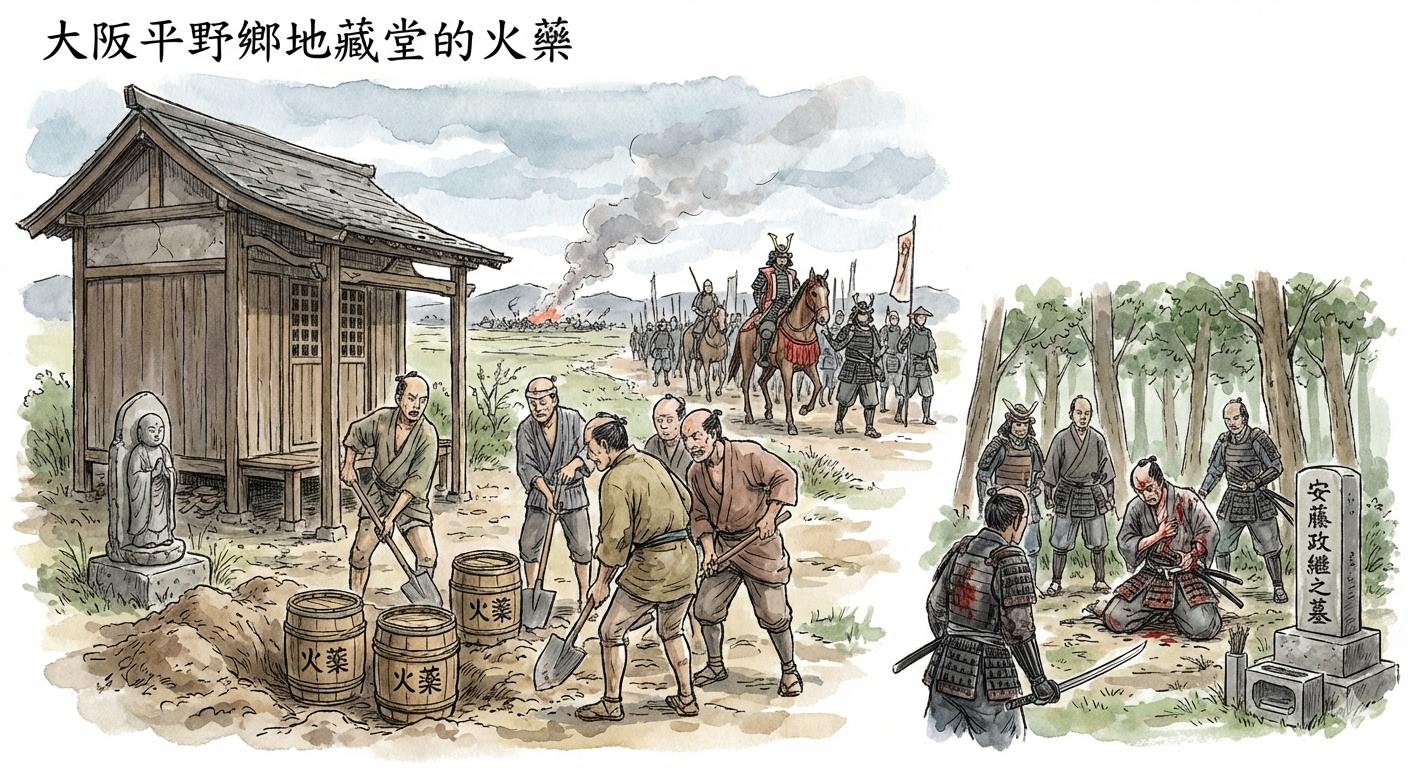
In 1615, during the "Osaka Summer Campaign," the final, bloody clash between the Tokugawa and Toyotomi clans, tiny Hirano-go was caught at the epicenter of history. History is written by the victors, but folklore preserves the rebellions of the vanquished. And in Hirano-go, the legend of the gunpowder plot at Shiguchi Jizo Hall is the town's defiant folklore.
Pushed to the brink, the townspeople allegedly hatched a plot of astonishing courage: to plant gunpowder beneath the hall in a daring attempt to assassinate the great shogun himself, Tokugawa Ieyasu. This story, true or not, captures the ultimate act of resistance against overwhelming power. Yet nearby, a somber monument reveals the tragic helplessness of their position, a poignant counter-narrative to this tale of audacious civilian courage.
The Samurai's Sorrow A short walk from the site of the foiled plot lies the tomb of Ando Masatsugu, a Tokugawa samurai who fell in the battle. Pausing here offers a reflection not just on war's cost, but on Hirano-go's specific tragedy: the tragic heroism and helplessness of a small community caught in a conflict between giants, far beyond its control.
The Temple of Terrors: A Journey Through Hell (and Back)
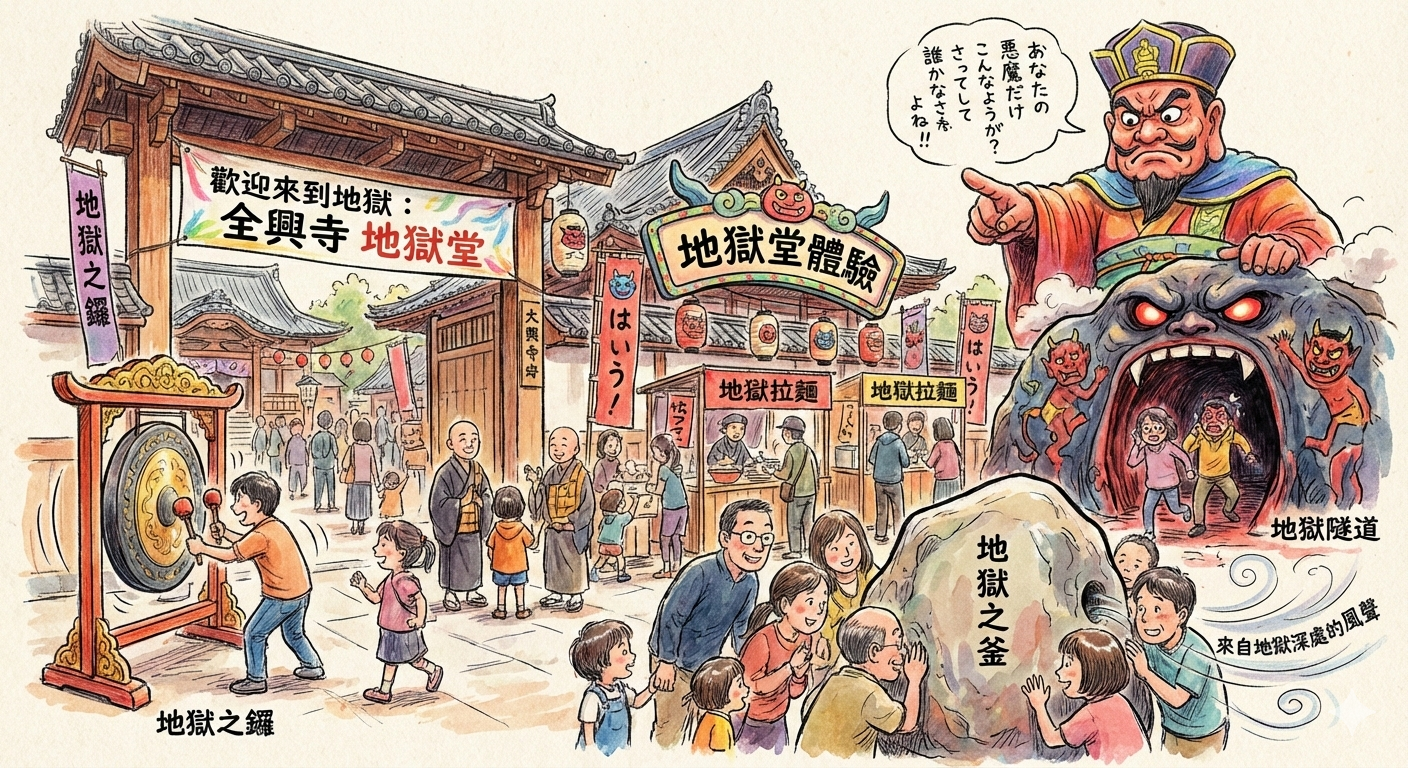
From the hell of war, we journey to another underworld—one designed not for punishment, but for enlightenment. Senkoji Temple offers one of Japan's most unique spiritual experiences. It brilliantly adapts the ancient Buddhist faith of Prince Shotoku into a modern, interactive journey, a masterclass in what can only be called spiritual "edutainment."
The journey begins as you ring the "Gong of Hell" and listen to the recorded judgment of King Enma. You then enter a pitch-black tunnel, a physical passage through hell, before emerging into the light of a Buddhist paradise. This visceral experience is an unforgettable lesson on morality and redemption, demonstrating the creative vitality of Hirano-go's commoner culture. An even more chilling detail, however, awaits those who know where to look.
Listen to the Underworld As you explore Senkoji, seek out a stone called the "Cauldron of Hell" (地獄之釜). This detail is easily missed. Press your ear to its opening, and it is said you can hear the faint, rushing sound of the fires below—a chillingly intimate touch that makes the supernatural feel astonishingly real.
One for All: The Faith That Shielded a City
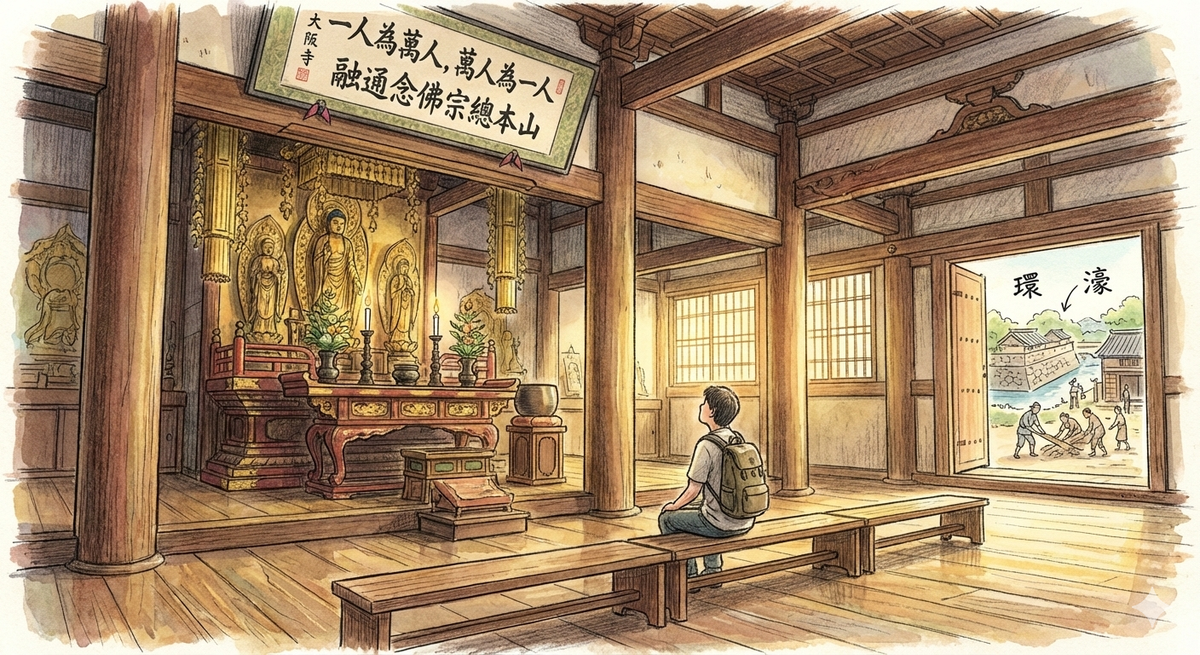
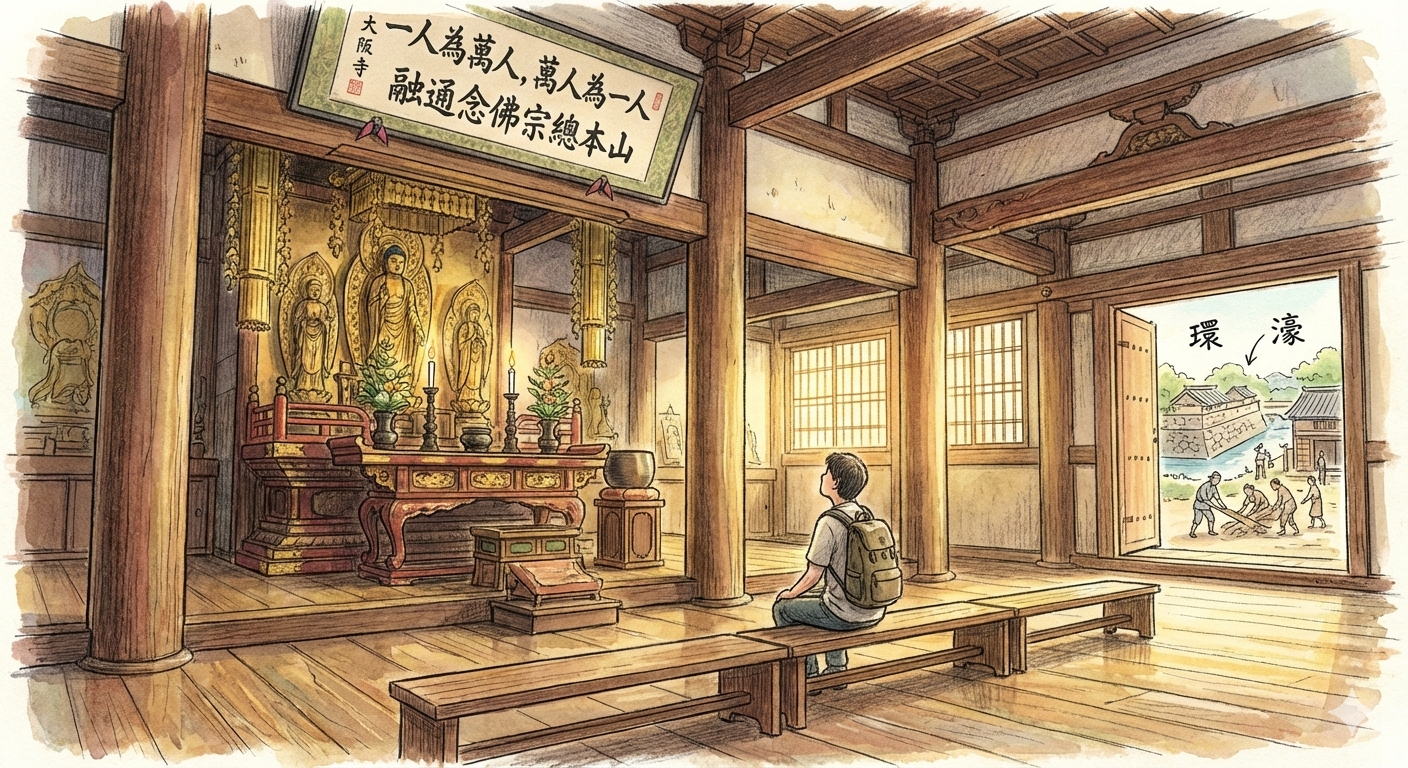
Just as Senkoji offers an individual path to salvation, the nearby Dainenbutsuji Temple—head temple of the Yuzu Nembutsu school—was built on the very idea of collective salvation. Its foundational philosophy is beautifully simple yet profoundly powerful: one person's prayer benefits everyone, and everyone's prayers benefit the one.
This belief in collective destiny was the perfect ideology for Hirano-go. For a community that had to band together to dig moats and defend its political autonomy, this philosophy of mutual dependence was their ultimate "spiritual shield." It affirmed their lived reality—that survival depended not on individual strength, but on communal solidarity. The very architecture of the temple's main hall seems to embody this principle. This collective spirit, forged in history and sanctified by faith, is the true and enduring legacy of Hirano-go.
The Architecture of Unity As you sit in the vast main hall, contemplate how the very structure reflects the town's spirit. The grand, open space feels all-encompassing. This was not a faith for isolated monks, but a faith for a community that understood its survival depended entirely on each and every member.
The Echoes of a Rebel's Spirit
The quiet streets of Hirano-go reveal a multi-layered defense against a world of samurai lords. Here, a community protected itself with physical defiance in the form of a moat, with cultural defiance in its poetry halls, and with violent defiance in its legendary plots. It armed itself with psychological defiance through a temple that teaches morality on its own terms, and with spiritual defiance through a faith built on collective strength. This is a place that reminds us that even in the shadow of great power, ordinary people can build walls, create culture, and forge a spirit that echoes for centuries.
The next time you walk through a modern city, ask yourself: what forgotten rebellions and hidden worlds lie just beneath the surface?
 Lawrence
 Lawrence