
Hong Kong 香港
Explore Hong Kong through historical travel stories and guides. Discover old streets, harbours and neighbourhoods filled with memories and cultural heritage.

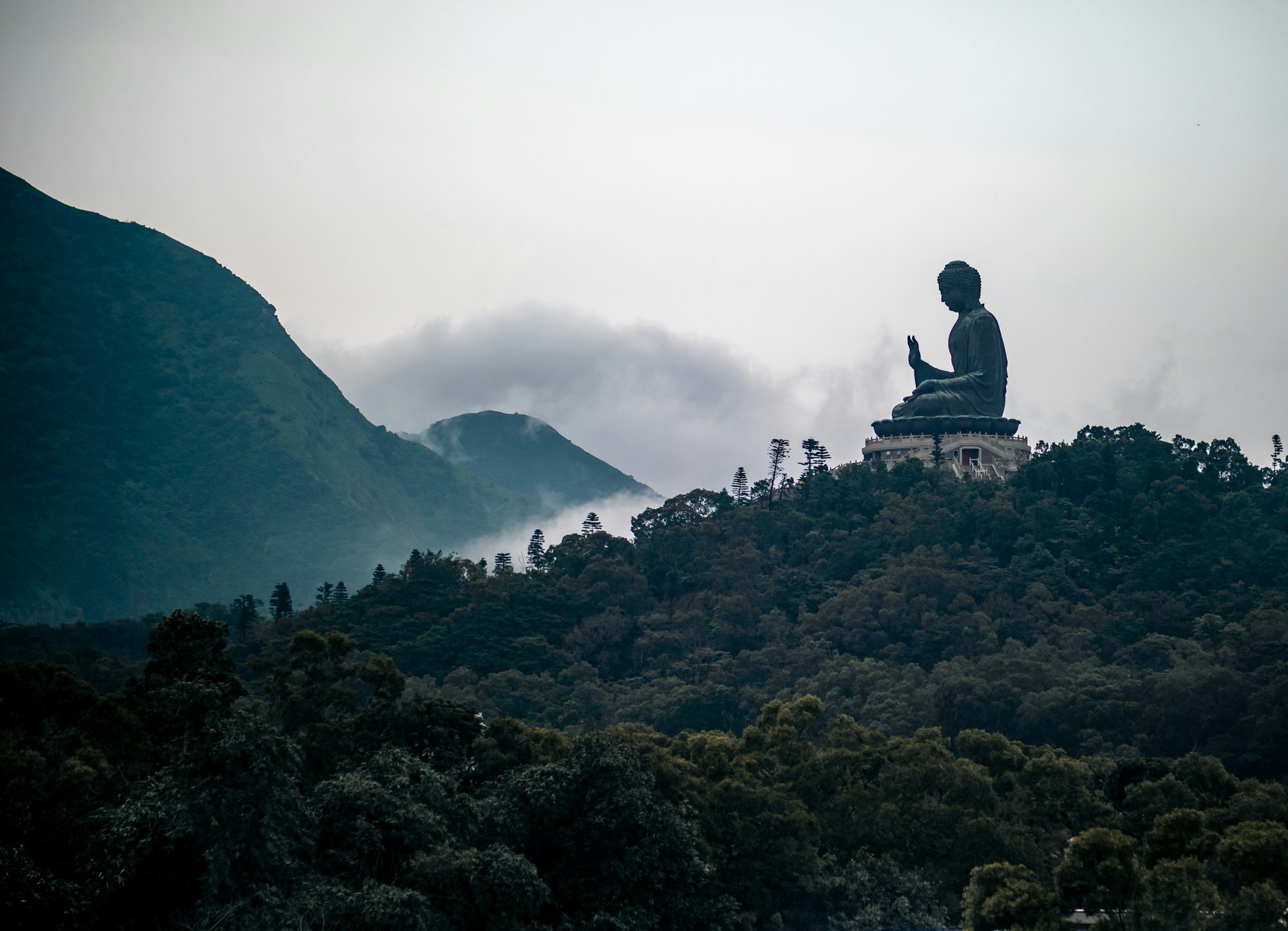
HONG KONG — The Complete Authority Guide
History, Culture, Hidden Stories and the City That Never Stopped Reinventing Itself
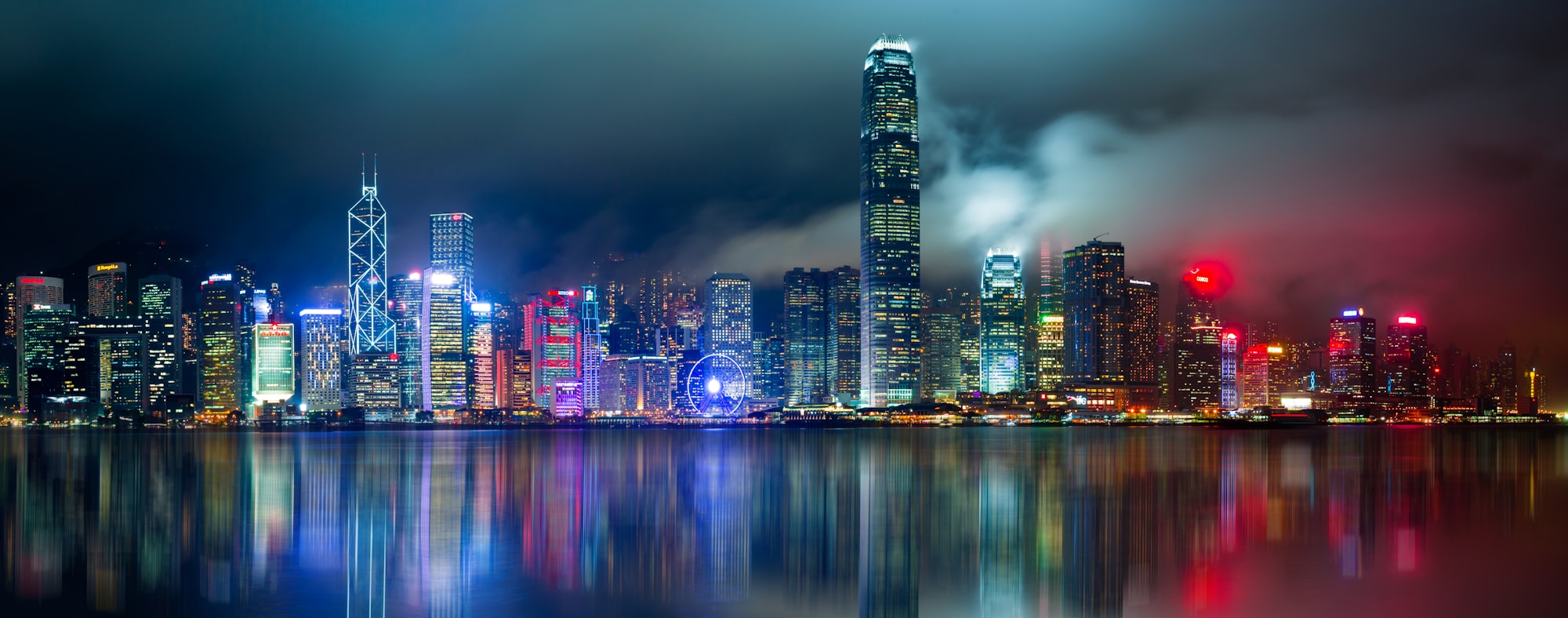
Hong Kong is often described through its skyline.
Victoria Harbour.
The Peak.
Central's towers.
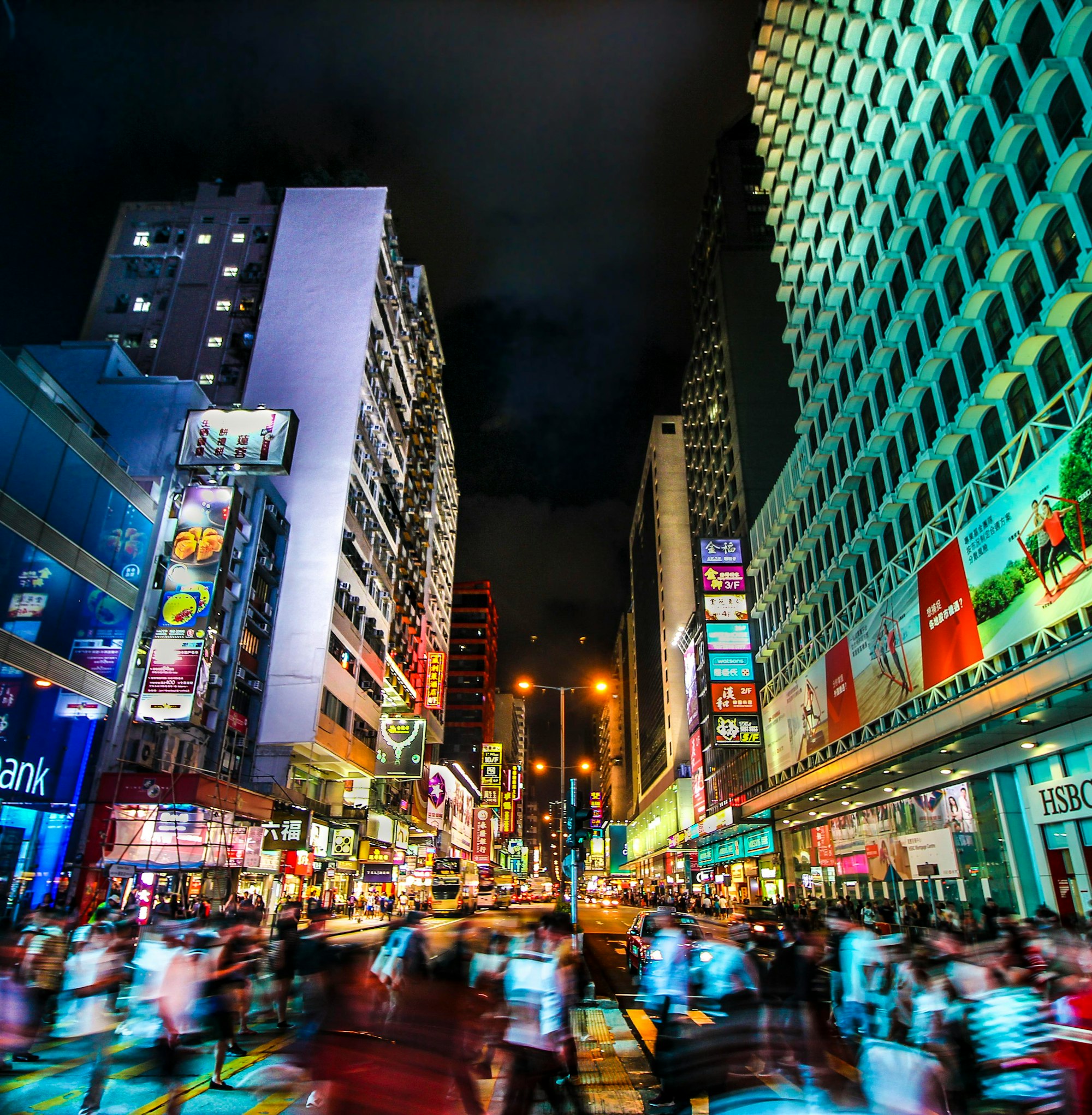
Kowloon's neon streets.
The crowded markets.
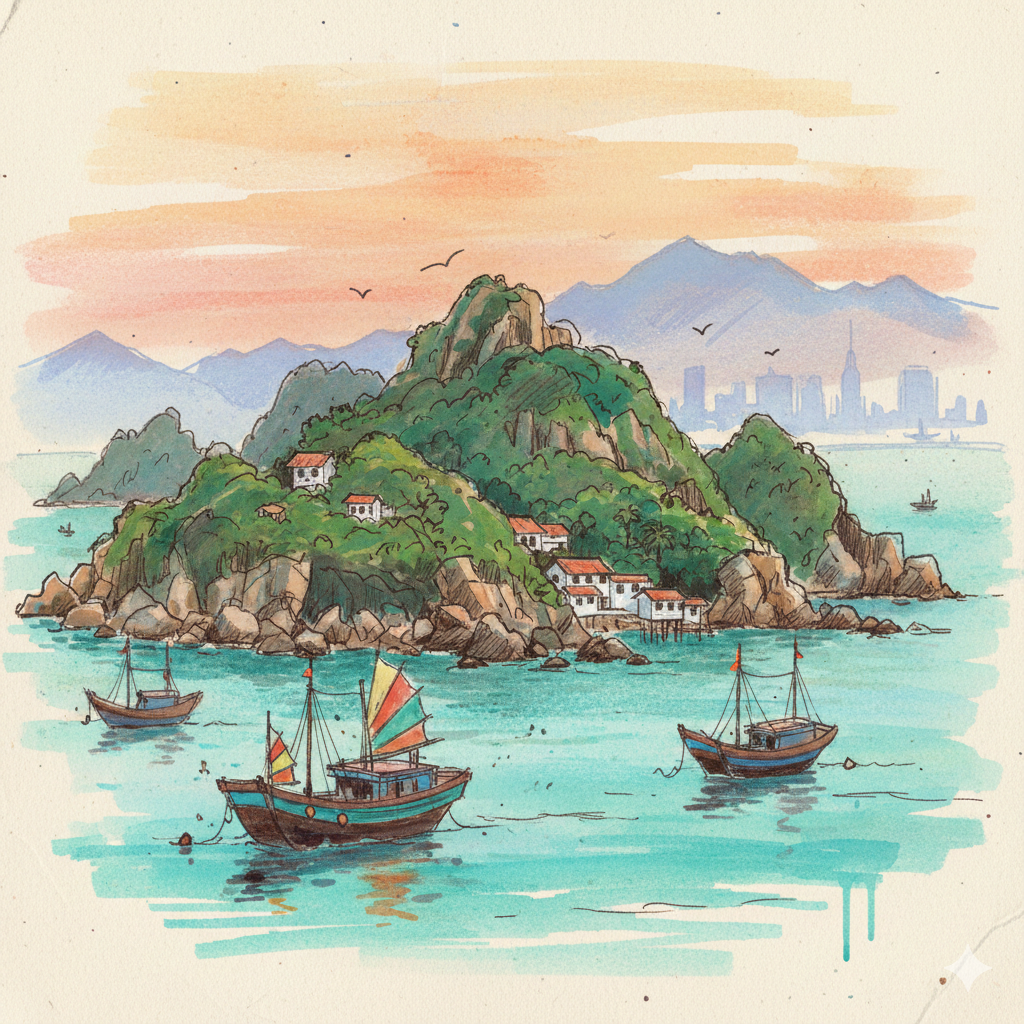
The fishing villages.
But the visible city is only the latest layer.
Beneath it lies a much older landscape of coastal communities, villages, temples, trading networks and maritime life.
Then came colonial rule.
A harbour became a global port.
Chinese communities built their own institutions beside colonial government.
Industrialization transformed the waterfront.
Millions of migrants reshaped the city after the Second World War.
Public housing pushed urban life vertically.
New towns reorganized the New Territories.
Old villages, temples, markets and fishing communities survived alongside one of Asia's most intensely developed metropolitan landscapes.
That is why Hong Kong cannot be understood through individual districts alone.
Hong Kong is a layered historical system.
This guide connects those layers.
It brings together the historical stories of Hong Kong Island, Kowloon, the New Territories and the Outlying Islands through five major themes:
Colonial Hong Kong
Sacred Hong Kong
Commercial Hong Kong
Modern Hong Kong
Hidden Hong Kong
Together, they create a framework for understanding how this extraordinary city and territory became what it is today.
Hong Kong Is Not One City
Hong Kong is often imagined as a single urban landscape.
Historically, it was never that simple.
Hong Kong Island developed differently from the New Territories.
Kowloon became a bridge between the colonial city and the mainland.
The New Territories preserved extensive village, clan and agricultural landscapes.
The islands maintained distinctive maritime communities.
Even within a single district, several historical layers can coexist.
A temple may stand beside a tower block.
A colonial road may pass a Chinese market.
A former industrial waterfront may become a cultural district.
A traditional village may sit beside a new-town development.
A fishing community may survive within sight of one of the world's busiest transport systems.
The value of historical travel in Hong Kong is therefore not simply discovering old places.
It is understanding the relationships between them.
1. COLONIAL HONG KONG — Empire, Administration and the Making of the Modern City
 Lawrence
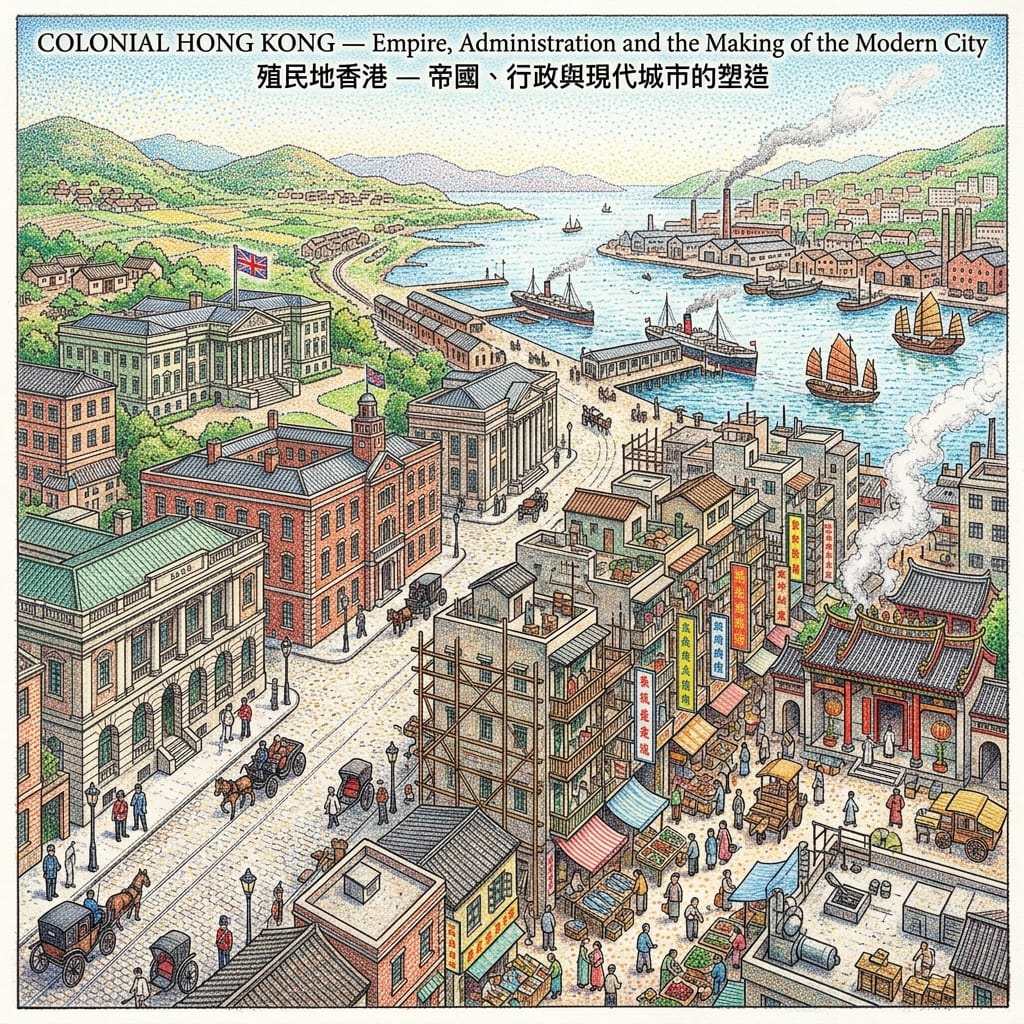
Hong Kong's modern trajectory was fundamentally shaped by British colonial rule.
After the British occupation of Hong Kong Island in 1841 and the subsequent establishment of the colony, a new political and economic system began to develop around Victoria Harbour. The Hong Kong Museum of History describes the emerging City of Victoria as the political and economic heart of colonial Hong Kong, with European-style buildings concentrated around Central while Chinese communities developed strongly in areas such as Sheung Wan and Sai Wan.
But Colonial Hong Kong was not created from an empty landscape.
The colonial administration built over older communities and trading networks.
That produced a distinctive urban juxtaposition:
- Colonial government beside Chinese neighbourhoods
- European architecture beside Chinese tenements
- Military installations beside markets
- Commercial infrastructure beside temples
- Reclaimed land beside older shorelines
Central became the administrative and financial core.
Sheung Wan developed as a major Chinese commercial and residential district.
Kowloon became increasingly important as the city expanded across the harbour.
The New Territories introduced a very different historical landscape of villages, clans, agriculture and border communities.
Colonial Hong Kong is therefore not simply a story of British architecture.
It is a story of how an imperial system reorganized an existing Chinese landscape.
Explore Colonial Hong Kong
→ Colonial Hong Kong Theme Pillar
Explore stories about:
- Central and Victoria City
- Sheung Wan
- Government House
- Central Police Station
- Colonial military sites
- Historic piers and waterfronts
- Kowloon development
- New Territories colonial administration
- Railways and infrastructure
- Japanese Occupation and the collapse of colonial rule
The Hong Kong Government Records Service contains extensive photographic and archival material documenting the growth of Victoria Harbour, Central, government institutions and colonial infrastructure.
2. SACRED HONG KONG — Temples, Belief and the Spiritual Landscape
 Lawrence
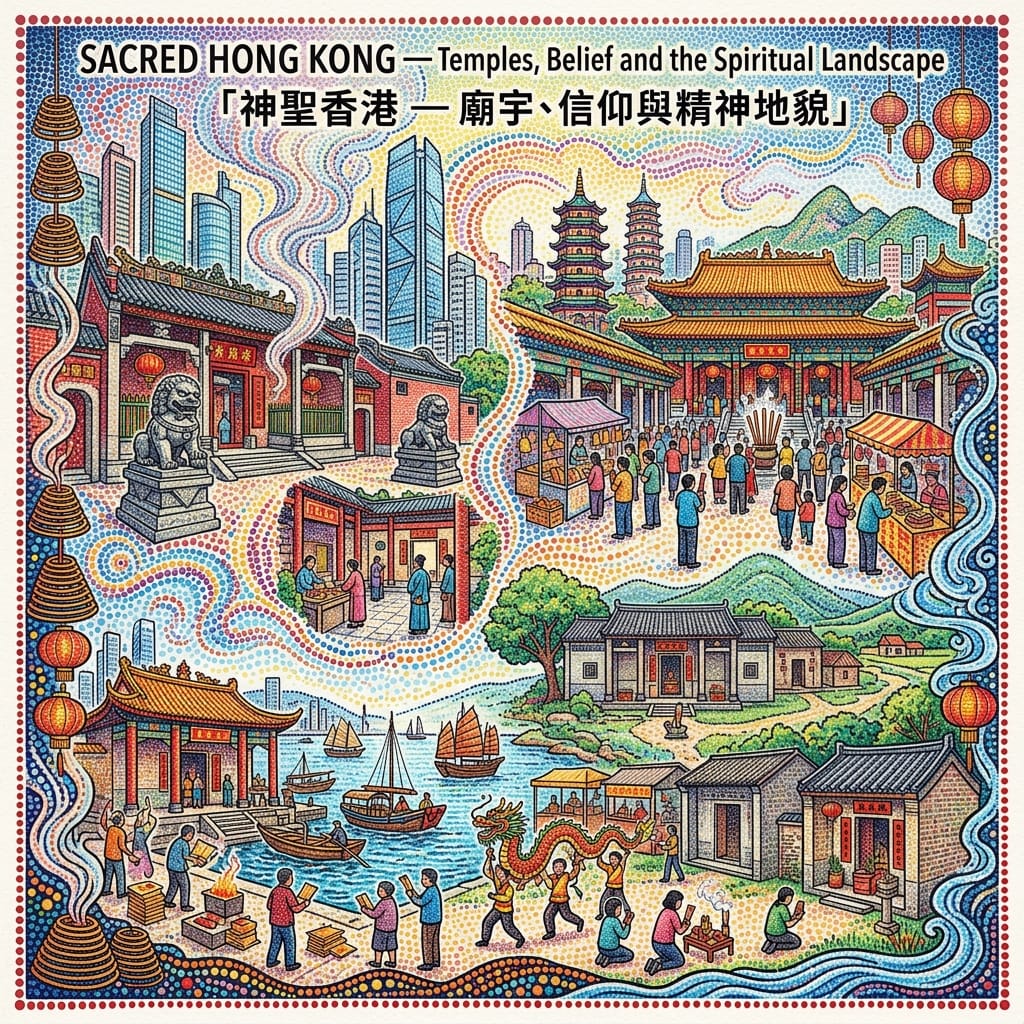
Modern Hong Kong often looks intensely secular.
Glass towers dominate the skyline.
Financial markets operate around the clock.
Yet religious life remains deeply embedded in the city's neighbourhoods.
Temples and shrines are not merely surviving monuments.
They are community institutions.
The Man Mo Temple compound in Sheung Wan, for example, was built in the nineteenth century by wealthy Chinese merchants and included not only the temple itself but also Lit Shing Kung and Kung Sor, a space associated with community affairs and dispute resolution. The Antiquities and Monuments Office describes the complex as an important representation of the traditional social organization and religious practices of Chinese communities in old Hong Kong.
This is an important clue to Hong Kong's religious history.
A temple could be:
- A place of worship
- A community meeting place
- A social institution
- A place for arbitration
- A guardian of local identity
The same principle can be seen throughout the territory.
Wong Tai Sin developed into one of Hong Kong's best-known religious centres after the Wong Tai Sin image was brought from Guangdong in the early twentieth century and the temple opened to the public in the 1950s.
In the New Territories, temples could also serve rural communities and village networks.
Sacred Hong Kong therefore reveals a Hong Kong beyond the skyline:
a city whose social history is partly written through belief.
Explore Sacred Hong Kong
→ Sacred Hong Kong Theme Pillar
Explore stories about:
- Man Mo Temple
- Wong Tai Sin
- Tin Hau temples
- Kwun Tai Lo and local religious geography
- Village temples
- Taoist and Buddhist traditions
- Folk religion
- Festivals and rituals
- Feng Shui landscapes
- Temple communities
3. COMMERCIAL HONG KONG — Harbour, Trade, Markets and Global Capital
 Lawrence
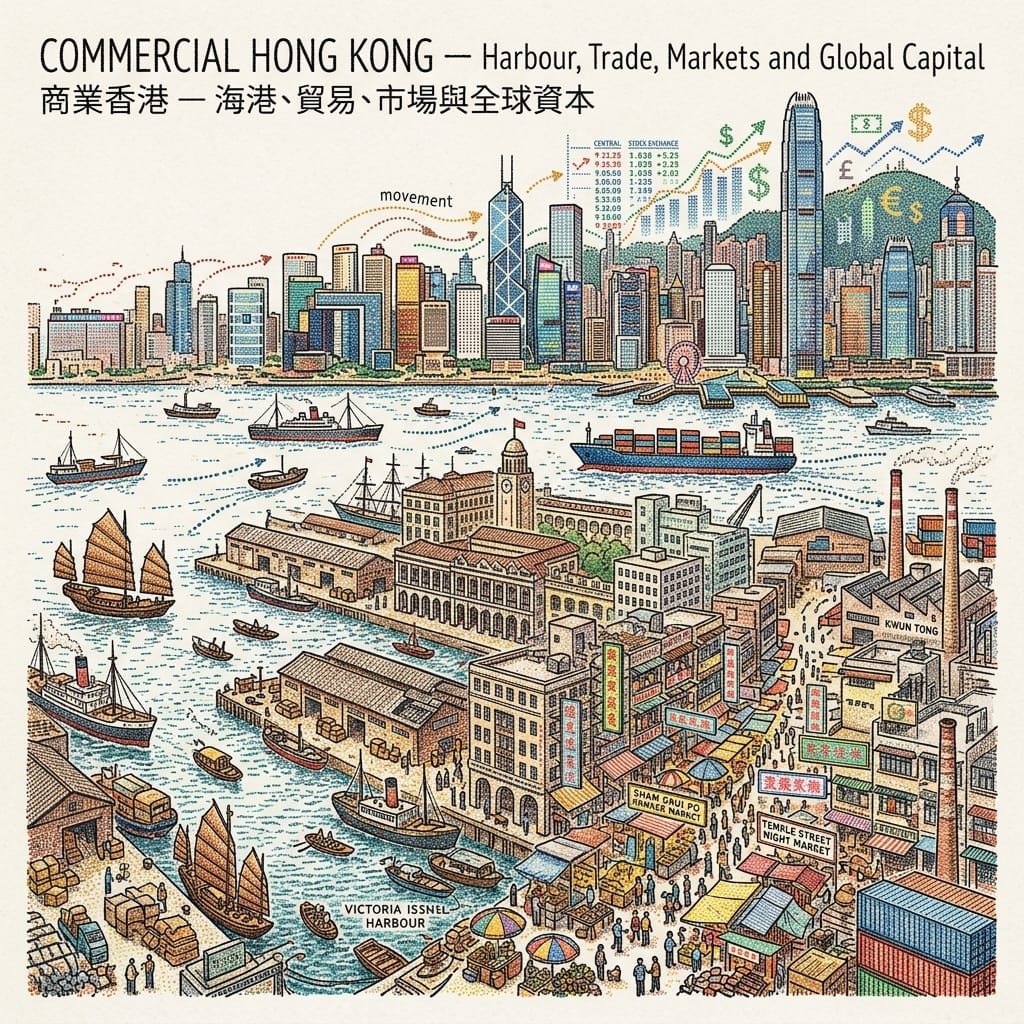
Hong Kong exists economically because of movement.
Ships.
Merchants.
Migrants.
Goods.
Money.
Information.
The harbour has always been more than scenery.
It is infrastructure.
Historical photographs of Victoria Harbour show the transformation from a waterfront of junks, sampans, warehouses and naval facilities into one of the world's great metropolitan commercial landscapes.
Central became the colonial administrative and commercial centre.
The waterfront expanded through reclamation.
Kowloon developed as a major transport and commercial counterpart.
Markets developed around communities and transport nodes.
Later, Hong Kong's manufacturing economy transformed industrial districts such as Kwun Tong, Kwai Chung and Tsuen Wan.
Then manufacturing increasingly moved elsewhere while finance, property, logistics, tourism and professional services expanded.
Commercial Hong Kong therefore contains several economic eras:
port city → trading colony → industrial city → financial centre → global service economy
But commerce was never confined to banks and skyscrapers.
It also existed in:
- Street markets
- Hawker stalls
- Family businesses
- Fishing ports
- Textile workshops
- Wholesale markets
- Local shopping streets
The Government Records Service's 1957 material on Sham Shui Po's hawker market is a particularly revealing reminder that Hong Kong's commercial history was also a history of ordinary vendors and street-level survival.
Explore Commercial Hong Kong
→ Commercial Hong Kong Theme Pillar
Explore stories about:
- Victoria Harbour
- Central
- Sheung Wan
- Tsim Sha Tsui
- Mong Kok
- Sham Shui Po
- Temple Street
- Traditional markets
- Industrial districts
- Hong Kong's port history
- Manufacturing and trade
- Finance and global commerce
4. MODERN HONG KONG — Migration, Density and Reinvention
 Lawrence
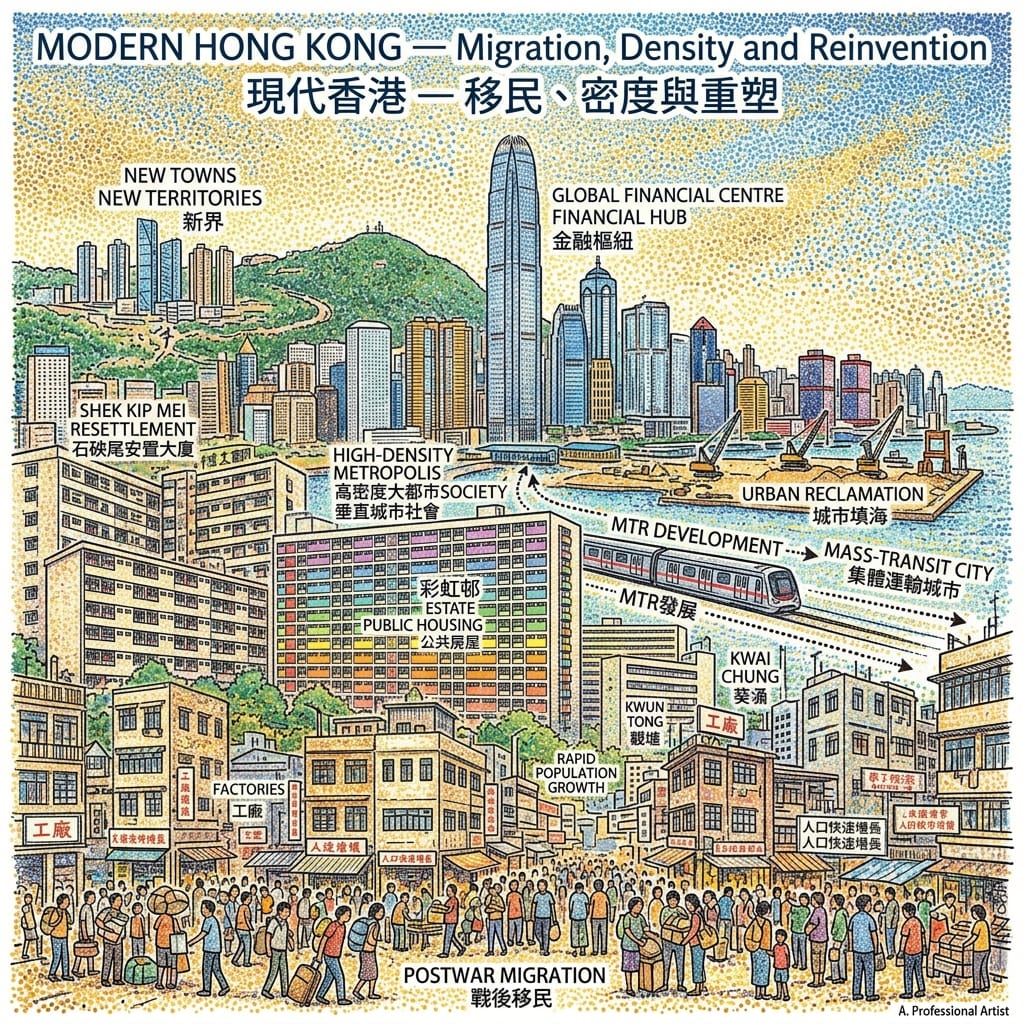
The Hong Kong we see today was largely created in the twentieth century.
The Second World War and Japanese Occupation caused enormous disruption.
After 1945, Hong Kong experienced rapid population growth.
Refugees and migrants arrived.
Factories expanded.
Housing became a critical problem.
New towns were developed.
The city began building upwards.
Public housing became one of the defining features of Hong Kong's social landscape. The Housing Authority's historical material traces public housing from the first resettlement estate established for fire victims in Shek Kip Mei in 1954 through successive generations of housing development.
The transformation was extraordinary.
Hong Kong changed from a port-and-market colonial city into:
- A manufacturing centre
- A high-density metropolis
- A global financial centre
- A mass-transit city
- A highly vertical urban society
The MTR transformed movement.
Reclamation transformed the harbourfront.
New towns transformed the New Territories.
Housing estates transformed the social geography.
Skyscrapers transformed the skyline.
But Modern Hong Kong is not simply a story of development.
It is a story of adaptation under extreme pressure.
Limited land.
Rapid population growth.
Economic uncertainty.
Natural hazards.
Industrial transformation.
Social change.
Again and again, Hong Kong responded by changing its physical form.
Explore Modern Hong Kong
→ Modern Hong Kong Theme Pillar
Explore stories about:
- Public housing
- Shek Kip Mei
- Choi Hung Estate
- Kwun Tong
- Kwai Chung
- Tsuen Wan
- New towns
- MTR development
- Urban reclamation
- Industrialization
- Postwar migration
- Hong Kong's changing skyline
5. HIDDEN HONG KONG — The Places Development Did Not Erase
 Lawrence
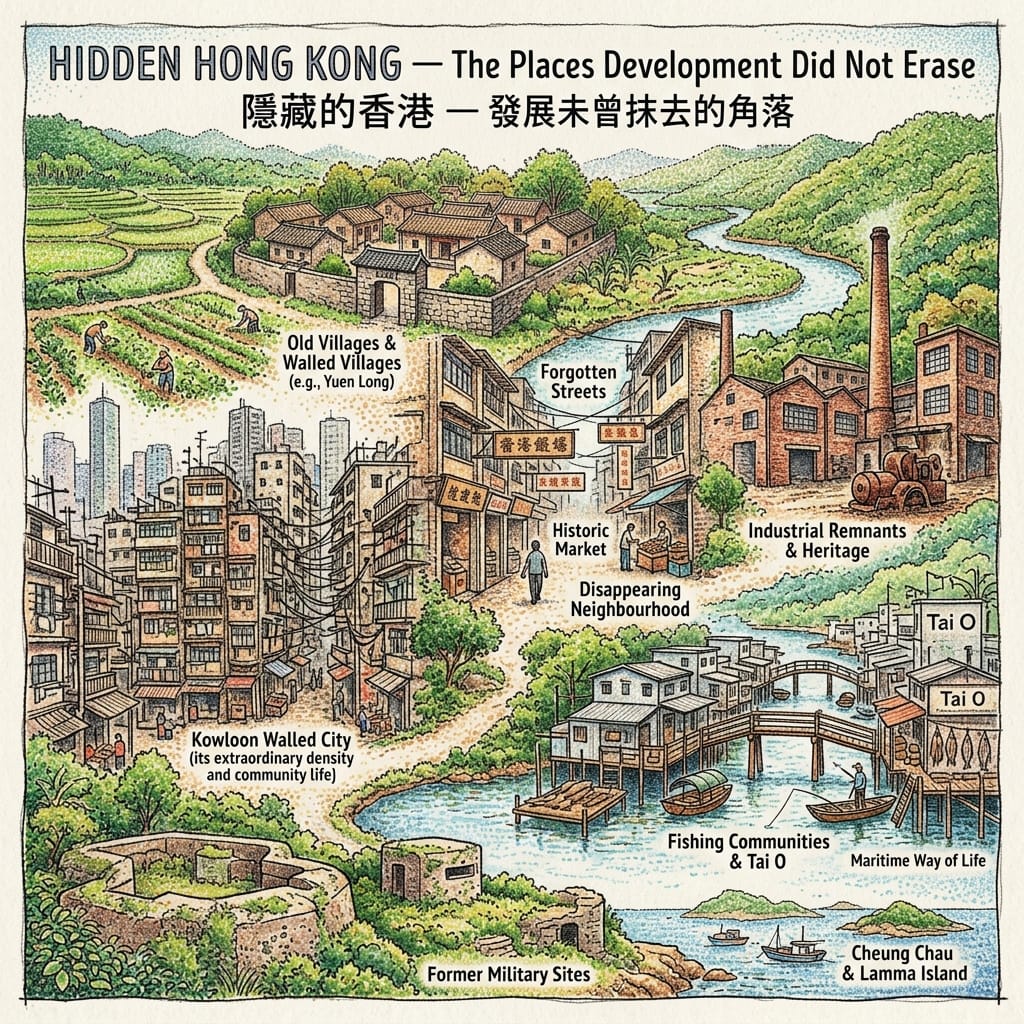
The most famous Hong Kong stories often celebrate success.
The skyline.
The harbour.
The financial district.
The shopping streets.
But another Hong Kong survives outside that narrative.
It exists in:
- Old villages
- Fishing communities
- Industrial remnants
- Forgotten streets
- Historic markets
- Former military sites
- Rural landscapes
- Abandoned or transformed spaces
- Communities displaced by development
Hidden Hong Kong asks a different set of questions.
What existed before the towers?
What disappeared when the city expanded?
Who lived on the land before redevelopment?
Why did some communities survive?
Why were others erased?
And what happens when something once considered ordinary becomes heritage?
The Kowloon Walled City is perhaps the most famous example of this tension.
Its extraordinary density emerged from a complicated political and legal history, and after the Second World War refugee arrivals helped transform it into an intensely populated enclave. National Geographic's historical account emphasizes both its extraordinary density and the fact that residents created their own services and forms of community life within an ambiguous political space.
But Hidden Hong Kong is much larger than the Walled City.
It includes village landscapes.
Former industrial zones.
Old markets.
Fishing communities.
Forgotten neighbourhoods.
Tai O is an especially powerful example.
Its stilt houses, waterways and fishing traditions preserve a maritime way of life associated with the Tanka community and demonstrate how a radically different social landscape can survive within the territory.
Explore Hidden Hong Kong
→ Hidden Hong Kong Theme Pillar
Explore stories about:
- Kowloon Walled City
- Tuen Mun
- Yuen Long
- Tai O
- Cheung Chau
- Lamma Island
- Old villages
- Walled villages
- Industrial heritage
- Fishing communities
- Forgotten military sites
- Disappearing neighbourhoods
Hong Kong as a Historical System
These five themes should not be read separately.
They overlap constantly.
A temple can be part of a commercial district.
A colonial road can follow an older Chinese settlement pattern.
A public-housing estate can stand on former industrial land.
A fishing village can preserve traditions that existed before colonial rule.
An industrial district can later become a creative neighbourhood.
A modern skyscraper can stand metres away from a historic temple.
This is the key to understanding Hong Kong.
Its history is not arranged in separate chapters.
Its historical layers occupy the same geographical space.
The Five Historical Layers of Hong Kong
Colonial Hong Kong
 Lawrence
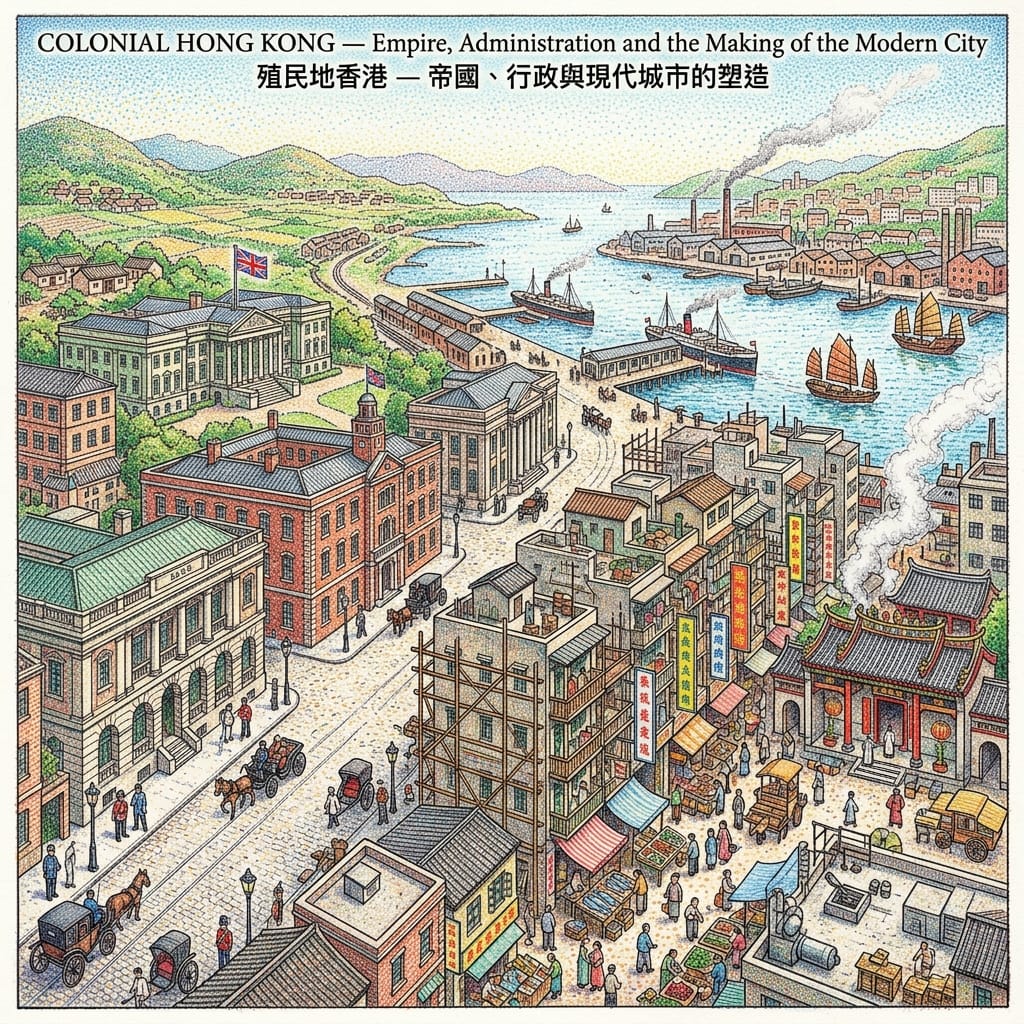
Power and institutional transformation
How colonial government, military strategy, infrastructure and urban planning reshaped the territory.
Sacred Hong Kong
 Lawrence
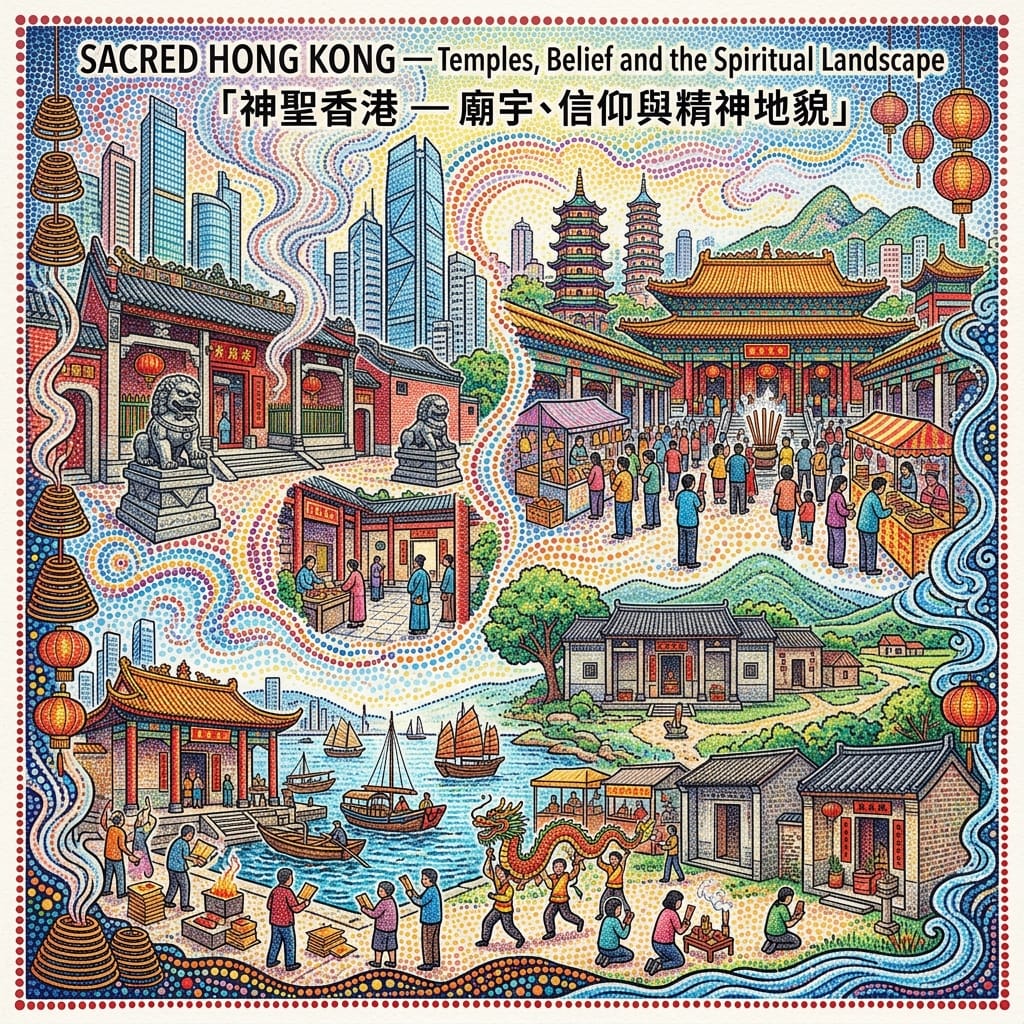
Belief and community
How temples, rituals and spiritual traditions created social networks and cultural continuity.
Commercial Hong Kong
 Lawrence
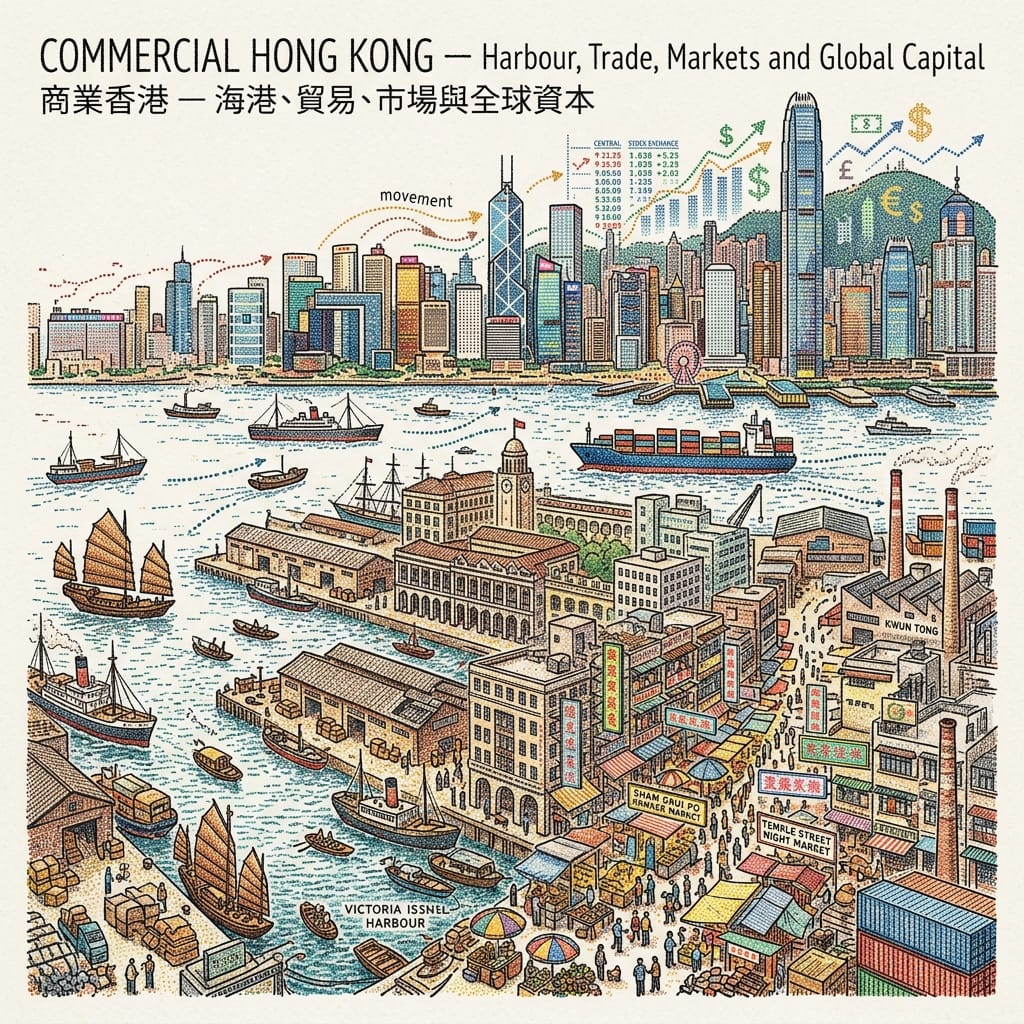
Trade and economic transformation
How the harbour, markets, industry and finance turned Hong Kong into a global economic hub.
Modern Hong Kong
 Lawrence
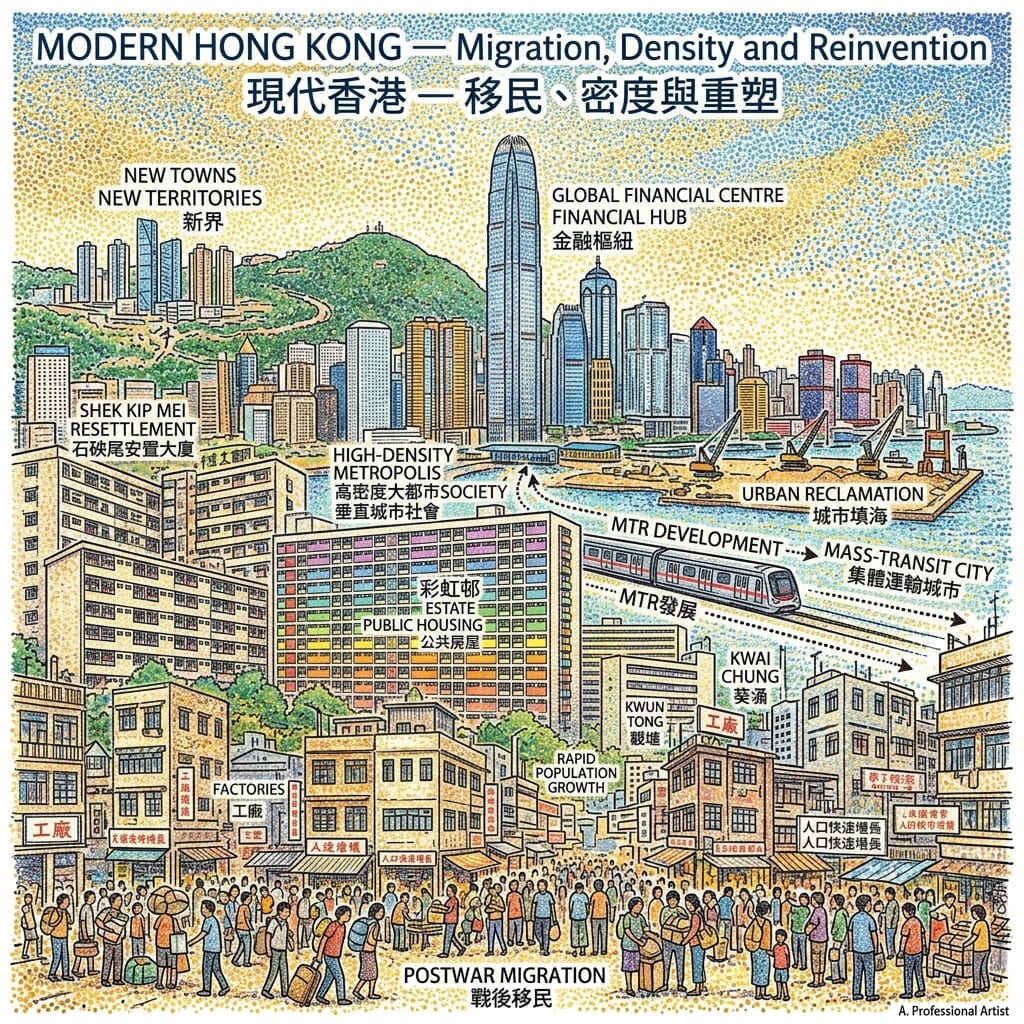
Migration and urban reinvention
How population growth, housing, infrastructure and economic change produced the modern metropolis.
Hidden Hong Kong
 Lawrence
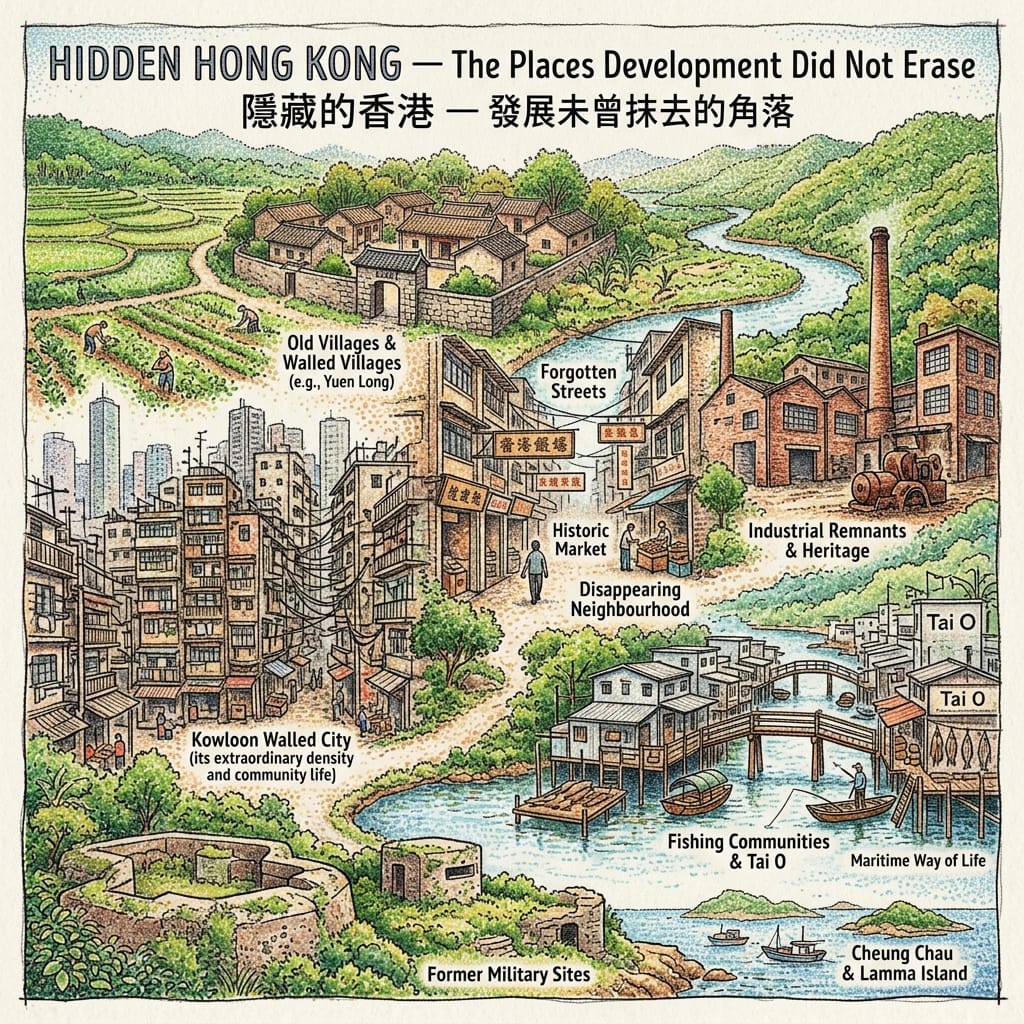
Memory and survival
How villages, fishing communities, industrial remnants and forgotten spaces preserve histories outside the mainstream narrative.
Together, these layers provide a more complete explanation of Hong Kong than geography alone.
Hong Kong by Historical Geography
You can also explore Hong Kong geographically.
Hong Kong Island
 Lawrence
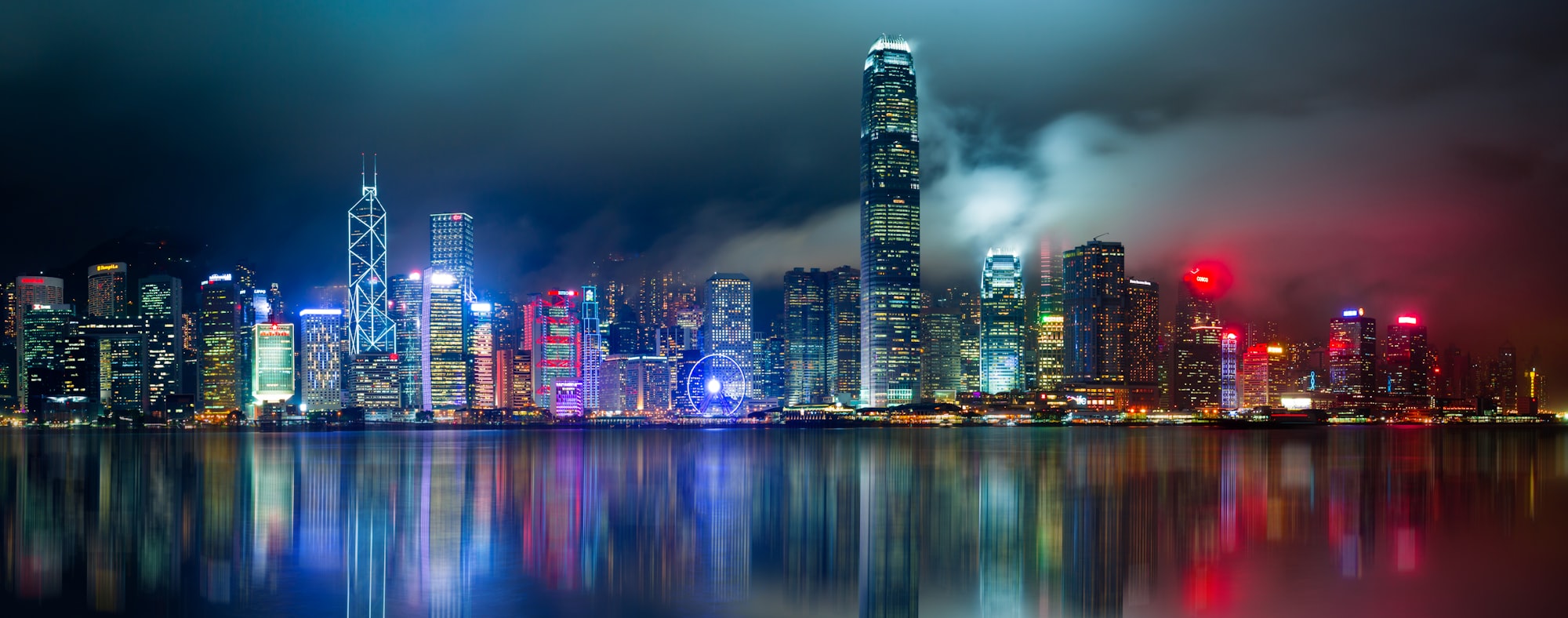
Central and Sheung Wan reveal colonial administration, Chinese commerce and the evolution of Victoria City.
Wan Chai reveals working-class, commercial and waterfront histories.
The southern side preserves fishing and military landscapes.
Kowloon Peninsula
 Lawrence
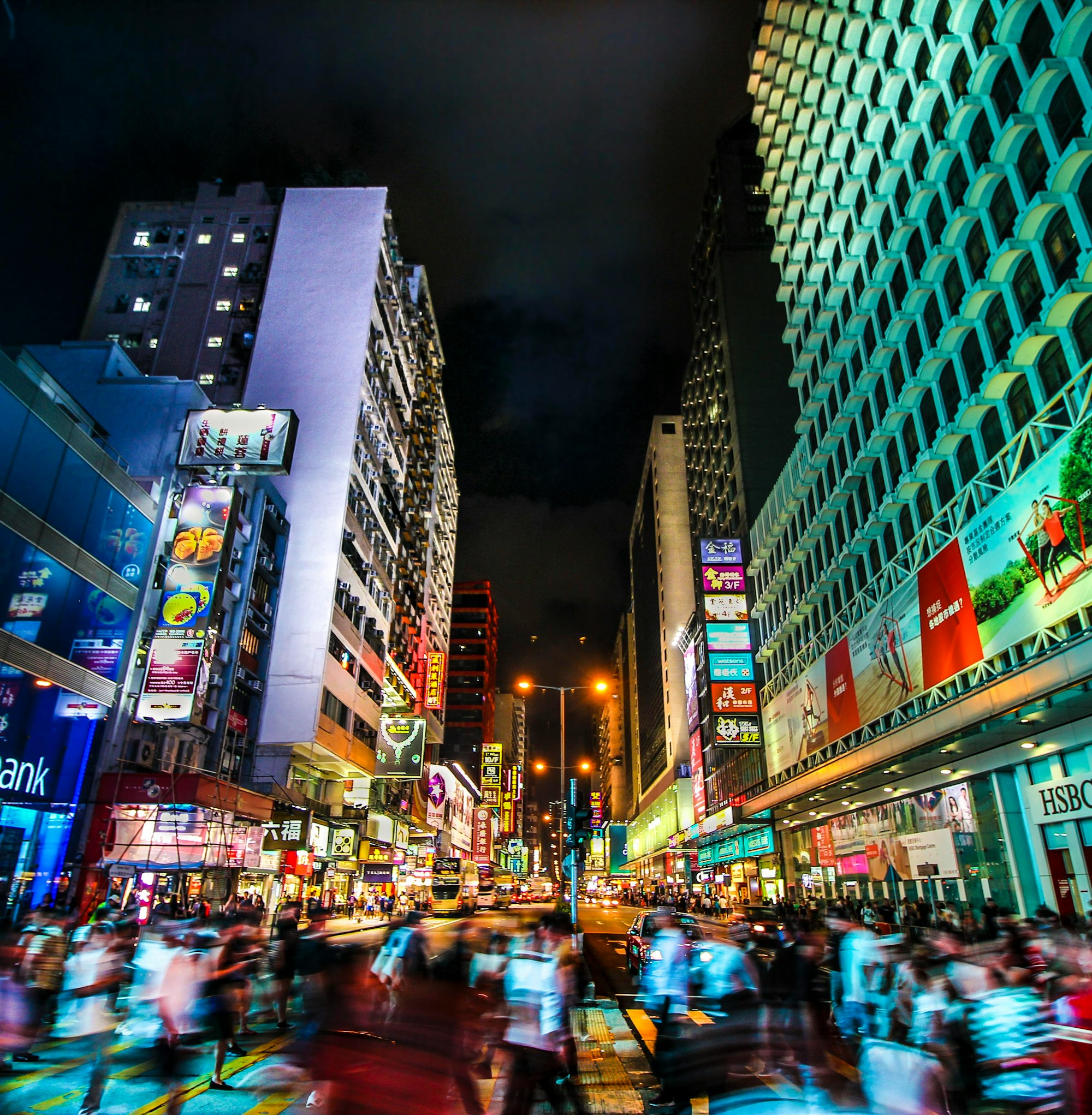
Kowloon reveals the expansion of the colonial city beyond the harbour.
Tsim Sha Tsui became a gateway for transport, hotels and global commerce.
Mong Kok and Sham Shui Po reveal dense neighbourhood commerce and working-class histories.
Kowloon City reveals military, aviation and one of the territory's most extraordinary examples of informal urbanism.
New Territories
 Lawrence
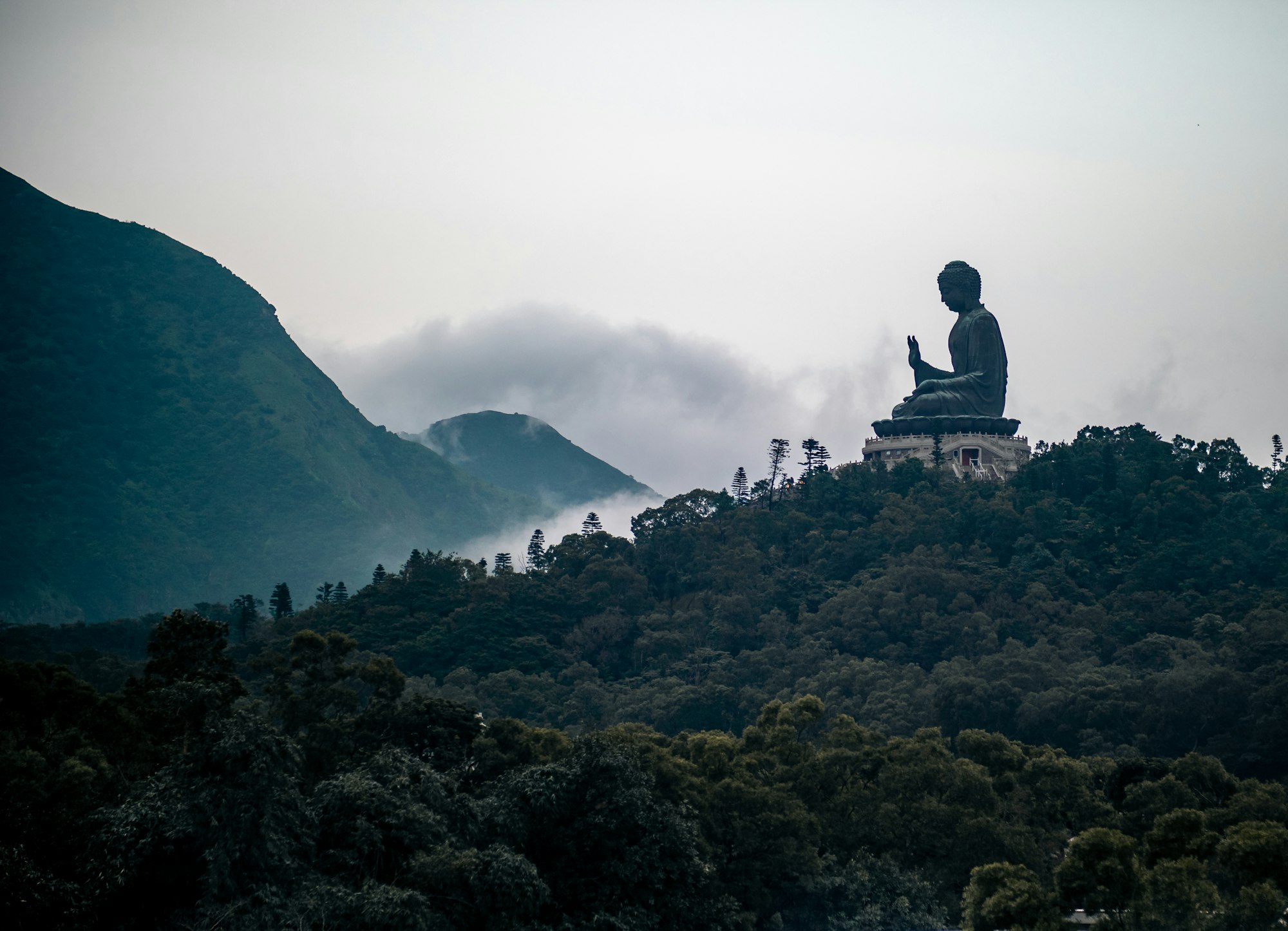
The New Territories reveal histories that are frequently hidden by the image of metropolitan Hong Kong.
Village networks.
Clan organizations.
Agriculture.
Border politics.
Railways.
New towns.
Industrialization.
Religious landscapes.
Outlying Islands
 Lawrence
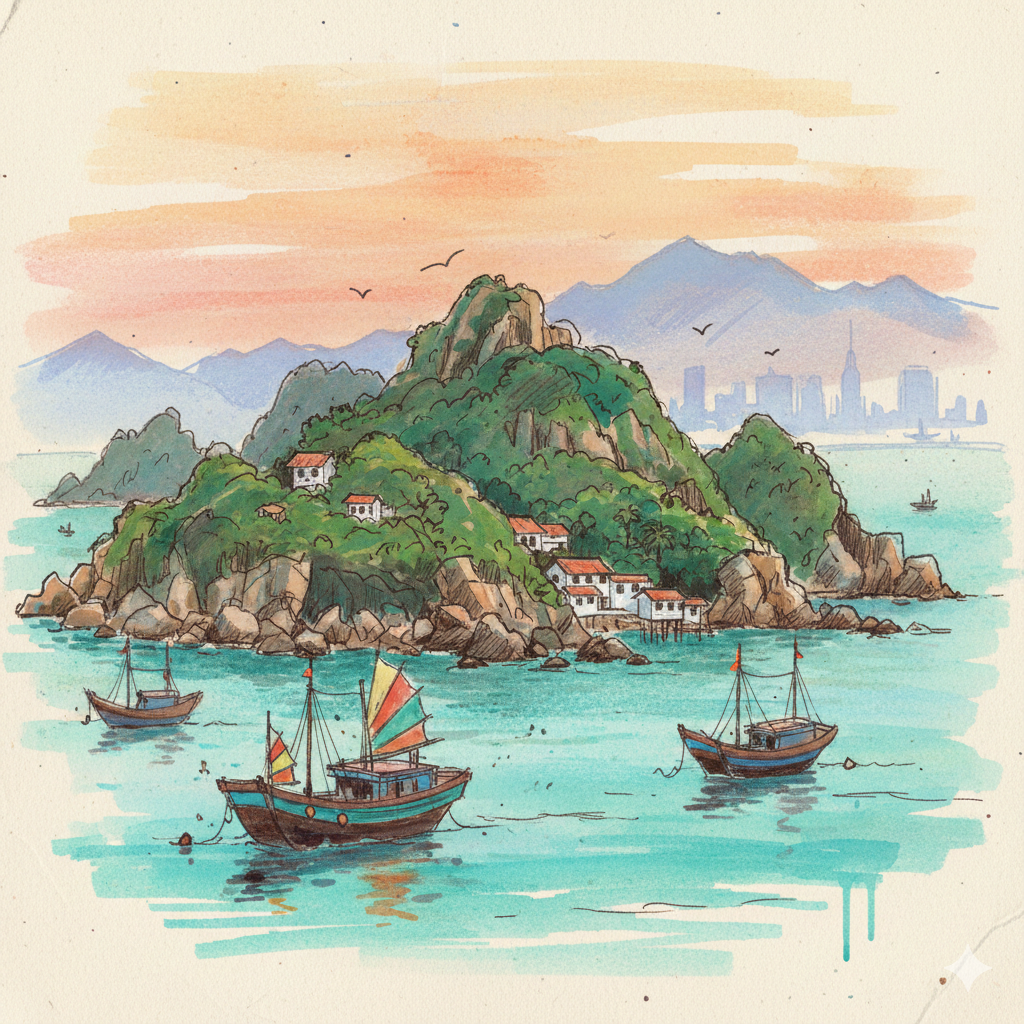
The islands reveal another Hong Kong again.
Fishing.
Salt.
Maritime trade.
Piracy.
Religion.
Villages.
Migration.
Tourism.
Places such as Tai O demonstrate the persistence of maritime traditions within a territory increasingly defined by metropolitan life.
How to Explore Hong Kong Through Historical Layers
A conventional travel guide asks:
Where should I go?
A historical travel guide asks:
What happened here?
Then:
What remains?
And finally:
Why does it matter?
That approach changes the way you walk.
Central becomes more than a financial district.
It becomes the physical legacy of Victoria City.
Sham Shui Po becomes more than a local market district.
It becomes a record of postwar migration, hawker culture and working-class urban life.
Tai O becomes more than a scenic fishing village.
It becomes a surviving maritime community.
Kowloon Walled City becomes more than a vanished curiosity.
It becomes a question about governance, housing, migration and the boundaries of the modern city.
Tuen Mun becomes more than a new town.
Its landscape can be read through maritime history, archaeology, religion, villages and twentieth-century redevelopment.
Hong Kong Is a City of Compression
Perhaps the most distinctive characteristic of Hong Kong is compression.
Different eras are often separated by only a few streets.
A nineteenth-century temple can sit among twentieth-century housing and twenty-first-century towers.
A village can stand beside a new town.
A historic market can survive beneath a modern commercial district.
A former industrial waterfront can become a new urban centre.
This means historical travel in Hong Kong does not necessarily require long journeys.
Sometimes the most revealing historical journey is only a few hundred metres long.
Hong Kong Through the Lens of Survival
There is another theme connecting almost every part of this authority system:
survival.
Colonial Hong Kong survived political transformation.
Religious communities survived modernization.
Traditional markets survived mass retail.
Fishing villages survived urban expansion.
Public housing communities adapted to redevelopment.
Industrial districts reinvented themselves.
Old neighbourhoods survived—or fought to survive—despite intense land pressure.
This does not mean every story is one of triumph.
Some communities disappeared.
Some landscapes were destroyed.
Some historical memories survive only through photographs, archives and oral histories.
That tension between survival and disappearance is central to Hong Kong's historical character.
A Historical Framework for Walking Hong Kong
Route 1 — Colonial Hong Kong
Central → Sheung Wan → Western District
Read the city through:
colonial administration, Chinese commerce, religious institutions and harbour development.
→ Related pillars: Colonial + Sacred + Commercial Hong Kong
Route 2 — Working Hong Kong
Sham Shui Po → Cheung Sha Wan → industrial Kowloon
Read the city through:
migration, hawker culture, public housing, industry and working-class life.
→ Related pillars: Commercial + Modern + Hidden Hong Kong
Route 3 — Forgotten Kowloon
Kowloon City → former Kai Tak landscape → surrounding neighbourhoods
Read the city through:
military geography, aviation, informal urbanism and redevelopment.
→ Related pillars: Colonial + Modern + Hidden Hong Kong
Route 4 — Ancient New Territories
Tuen Mun → Ping Shan → Yuen Long
Read the territory through:
archaeology, village networks, religion, agriculture and changing forms of settlement.
→ Related pillars: Sacred + Colonial + Hidden Hong Kong
Route 5 — Maritime Hong Kong
Tai O → Cheung Chau → other island communities
Read the territory through:
fishing, maritime trade, religion, migration and the survival of island communities.
→ Related pillars: Sacred + Commercial + Hidden Hong Kong
Why Hong Kong Is Worth Reading Historically
Hong Kong is often presented as a city of extremes.
Skyscrapers and villages.
Finance and street markets.
Tradition and technology.
Density and wilderness.
Chinese culture and global influence.
But these contrasts are not random.
They are the visible consequences of history.
Every contrast has a reason.
Every surviving building has a story.
Every district contains layers.
Every harbourfront tells a story about reclamation, trade and movement.
Every temple carries some memory of community.
Every public-housing estate reveals something about postwar social transformation.
Every village preserves evidence of a Hong Kong that existed before the modern metropolis.
Once these connections become visible, Hong Kong becomes far more than a destination.
It becomes a historical landscape.
Final Reflection — Learning to Read Hong Kong
There are two ways to visit Hong Kong.
You can look at the city.
Or you can read it.
The first gives you the skyline.
The second gives you the layers beneath it.
Central becomes the story of empire and commerce.
Sheung Wan becomes a meeting place of Chinese community and colonial government.
Sham Shui Po becomes a record of migration and survival.
Kowloon City becomes a story of military geography, aviation and urban reinvention.
Tuen Mun becomes a landscape where ancient settlement meets new-town planning.
Tai O becomes evidence that maritime Hong Kong has not completely disappeared.
And Victoria Harbour becomes more than a view.
It becomes the geographical force around which the modern territory was built.
Hong Kong's history is therefore not confined to museums.
It is on the streets.
In the temples.
Under the towers.
Along the harbour.
Inside the markets.
Across the villages.
And sometimes in the empty spaces where something once stood.
Hong Kong is not simply a city that grew quickly.
It is a territory that has repeatedly reinvented itself without ever completely escaping its earlier layers.
That is why the best way to travel Hong Kong is not simply to see more places.
It is to understand the connections between them.
Historical Sources & Further Reading
For the Hong Kong collection, prioritize primary and institutional sources wherever possible:
Government and Official Archives
- Hong Kong Government Records Service
- Hong Kong Memory
- Antiquities and Monuments Office
- Hong Kong Museum of History
- Hong Kong Public Records Office
- Hong Kong Housing Authority historical resources
The Government Records Service provides extensive historical photographs and records covering Victoria Harbour, Central, government institutions, markets, hawkers and postwar development.
Heritage and Cultural Institutions
- Hong Kong Museum of History
- Antiquities and Monuments Office
- Hong Kong Memory
- District-level cultural heritage programmes
- Museum and archive collections
The Hong Kong Museum of History's historical photograph collections document the city's streets, architecture, businesses, customs and everyday life from the nineteenth century onward.
Further Research
For deeper articles, particularly useful themes include:
- Colonial urban planning
- Chinese community institutions
- Maritime history
- Hong Kong's port economy
- Public housing
- Industrialization
- Migration
- Village and clan history
- Religious geography
- Fishing communities
- Urban redevelopment
- Heritage preservation
- Oral history
For Lawrence Travel Stories, major historical assertions should be supported contextually within the relevant sections, rather than relying entirely on a bibliography at the end.
Continue Exploring Hong Kong
Colonial Hong Kong
Empire, administration and the foundations of the modern city
→ Colonial Hong Kong Theme Pillar
Sacred Hong Kong
Temples, beliefs, rituals and the spiritual landscape
→ Sacred Hong Kong Theme Pillar
Commercial Hong Kong
Harbour, markets, trade, industry and global capital
→ Commercial Hong Kong Theme Pillar
Modern Hong Kong
Migration, housing, infrastructure, industrialization and urban reinvention
→ Modern Hong Kong Theme Pillar
Hidden Hong Kong
Forgotten communities, villages, fishing towns, industrial remnants and disappearing landscapes
→ Hidden Hong Kong Theme Pillar
HONG KONG — A City to Read
Start with one district.
Follow one street.
Enter one temple.
Cross one harbour.
Look beyond the skyline.
Then follow the historical connections.
Because Hong Kong's greatest stories are rarely contained within a single place.
They exist in the spaces between places.
 Lawrence
 Lawrence
 Lawrence
 Lawrence
 Lawrence