
Colonial Hong Kong 殖民地香港
Hong Kong's modern identity became one of the most important ports of the British Empire, yet the city that emerged was never simply British. It was built on a landscape that already contained Chinese villages, temples, markets, agricultural communities and maritime networks.
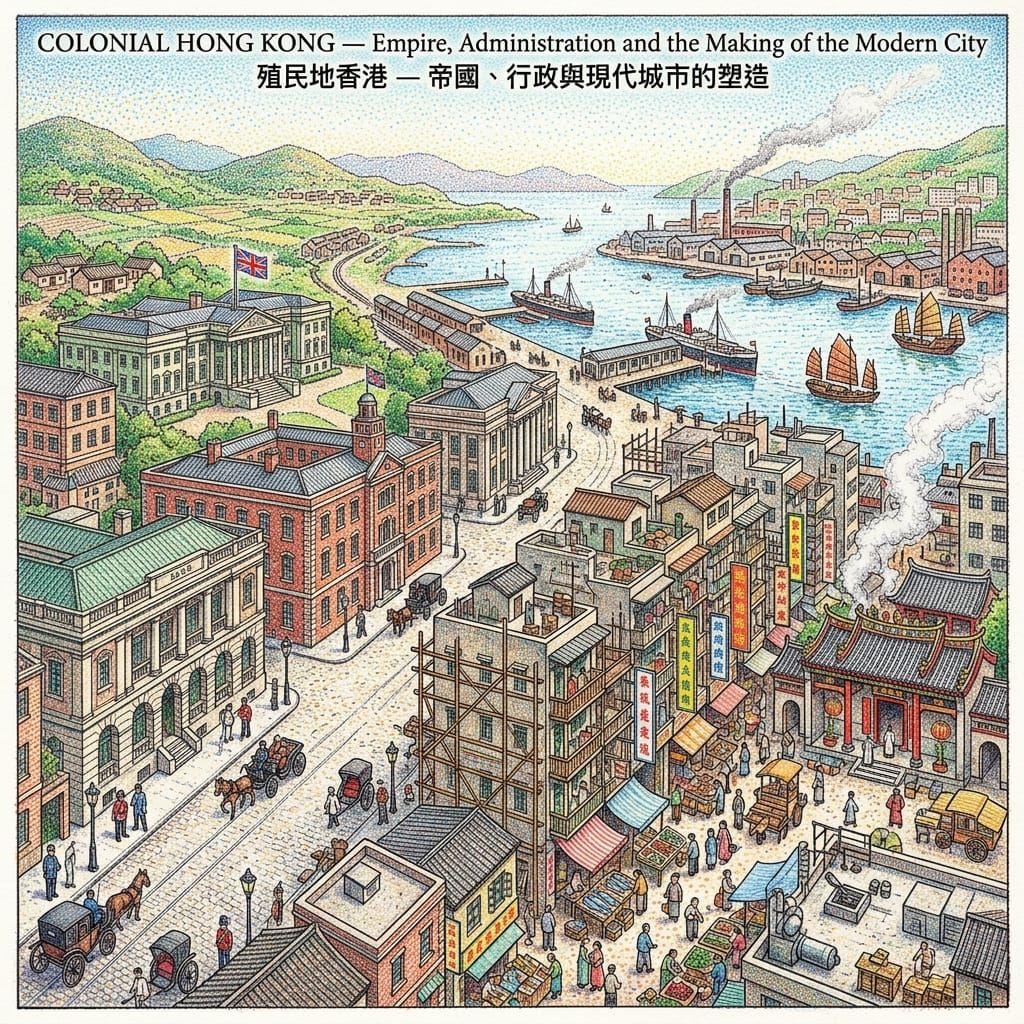
Colonial Hong Kong — Empire, Harbour and the Making of the Modern City
How an Imperial Port Was Built on an Older Chinese Landscape
Hong Kong's modern identity began with a paradox.
The territory became one of the most important ports of the British Empire, yet the city that emerged was never simply British.
It was built on a landscape that already contained Chinese villages, temples, markets, agricultural communities and maritime networks.
After the British occupation of Hong Kong Island in 1841 and the formal cession of the island in 1842, a new colonial administration began constructing roads, military facilities, government buildings, commercial infrastructure and a port city around Victoria Harbour. The Hong Kong Museum of History describes the early development of the City of Victoria as the political and economic heart of colonial Hong Kong, while also noting the continuing concentration of Chinese communities in areas such as West Point and Sheung Wan.
The result was neither a completely new city nor a continuation of the old one.
It was a layered city.
British administration occupied the centre.
Chinese communities developed their own neighbourhoods and institutions.
The harbour became a global commercial gateway.
The hills and villages beyond the urban core retained older landscapes.
And as Hong Kong expanded into Kowloon and the New Territories, the colonial system continually adapted to a territory far more diverse than its famous skyline suggests.
This is the story of Colonial Hong Kong.
1. Before the Colony — The Chinese Landscape the British Inherited
Hong Kong Was Not an Empty Harbour
The colonial story should not begin with the British.
Long before 1841, Hong Kong was part of a wider South China maritime world.
Fishing communities lived along the coast.
Villages cultivated the land.
Temples connected communities to local religious traditions.
Merchants operated within regional trading networks.
The harbour itself was part of an established maritime environment rather than an untouched natural resource waiting to be commercialized.
This matters because colonial development was fundamentally an act of reorganization.
The British did not create Hong Kong's landscape from nothing.
They imposed a new political and economic order onto an existing one.
The historical photographs preserved by the Hong Kong Museum of History are particularly valuable because they document not only colonial buildings but also Chinese streets, markets, businesses and everyday life from the nineteenth and early twentieth centuries. The museum's collection contains more than 14,000 historical photographs dating from the 1860s onward.
Explore Further
→ Sacred Hong Kong Theme Pillar
→ Commercial Hong Kong Theme Pillar
→ Hidden Hong Kong Theme Pillar
2. 1841–1842 — The Birth of Colonial Victoria
A Military Occupation Becomes a City
The British occupation of Hong Kong Island began in 1841.
The formal cession followed in 1842.
The first major colonial task was practical:
build a functioning port and administrative centre.
Roads were laid out.
Military facilities were constructed.
Government offices appeared.
Commercial premises followed.
The first major urban concentration developed along the northern shore of Hong Kong Island.
The Hong Kong Museum of History describes Queen's Road as the first major road completed in the new colony and identifies the urbanized area stretching across present-day West Point, Sheung Wan, Central and Wan Chai as the City of Victoria.
This is where the geography of modern Hong Kong begins to become recognizable.
3. Central — The Political Architecture of Empire
Where Colonial Power Became Physical Space
Central became the heart of colonial government.
Government offices.
Courts.
Banks.
Police.
Military facilities.
Religious institutions.
Commercial companies.
Together they created a highly concentrated administrative and economic district.
The Antiquities and Monuments Office's Central and Western Heritage Trail now identifies around 40 historic buildings and former sites in Central, demonstrating how densely political, commercial and civic history was concentrated there.
But colonial Central was never purely European.
Chinese merchants, workers and residents lived and conducted business close to the colonial administrative core.
That produced one of Hong Kong's defining characteristics:
the coexistence of imperial institutions and Chinese urban society within an intensely compressed landscape.
Explore Further
→ Your Central historical story
→ Commercial Hong Kong Theme Pillar
→ Sacred Hong Kong Theme Pillar
4. Government House — The Symbolic Centre of Colonial Rule
Where the Governor Ruled
Government House was completed in 1855 and served as the office and residence of Hong Kong's colonial governor.
Originally built in Neo-classical style, it was altered over time, including substantial changes during the Japanese occupation. The building is now the official residence and office of Hong Kong's Chief Executive and was declared a monument in 1995.
Its historical importance lies not only in architecture.
Government House represents the political structure of colonial Hong Kong.
From here, policies affecting the harbour, land, public health, policing, infrastructure and communities were administered.
It therefore belongs at the top of any serious historical reading of Central.
The building is also a reminder that colonial architecture can survive political change while its institutional meaning changes.
5. Law, Police and Control — The Machinery Behind the City
Empire Required Institutions
A port city cannot operate through trade alone.
It requires rules.
Colonial Hong Kong developed a complex institutional system involving:
- Courts
- Police
- Prisons
- Customs
- Public health
- Land administration
- Government departments
The surviving Central Police Station Compound, former Central Magistracy and Victoria Prison together reveal this institutional architecture.
The former Central Magistracy, completed in 1914, formed part of this system of law and administration; it later became part of the revitalized Tai Kwun heritage complex.
This creates a useful way of understanding colonial architecture.
A police station is not simply a historic building.
A courthouse is not merely an architectural object.
Together they reveal how colonial authority operated in everyday life.
Explore Further
→ Central Police Station story
→ Tai Kwun historical story
→ Modern Hong Kong Theme Pillar
6. The Harbour — The Real Engine of Colonial Hong Kong
Empire Needed a Port
The harbour was the reason Hong Kong became strategically valuable.
It connected the colony with:
- Southern China
- British India
- Southeast Asia
- Europe
- Global shipping networks
The waterfront therefore became a landscape of:
- Piers
- Warehouses
- Naval facilities
- Reclamation
- Markets
- Passenger transport
- Commercial offices
Historical photographs in the Government Records Service show how the waterfront and Central evolved over time, including the changing Praya and harbourfront.
The harbour was not simply a backdrop.
It was the infrastructure around which colonial Hong Kong was built.
7. Reclamation — How the Colonial City Expanded Into the Sea
When Land Became an Imperial Project
Hong Kong Island had limited flat land.
The answer was reclamation.
The shoreline was progressively altered to create additional space for:
- Roads
- Government buildings
- Commercial premises
- Transport infrastructure
- Warehouses
- Public facilities
The Antiquities and Monuments Office's Central heritage route preserves markers for several phases of the historic waterfront, including the original 1841 shoreline and reclamation periods from 1843–1865 and 1890–1904.
This means that parts of modern Central stand on land that did not exist in the same form in the early colonial period.
Reclamation therefore changed more than the coastline.
It changed the geography of political and economic power.
Explore Further
→ Victoria Harbour history
→ Commercial Hong Kong Theme Pillar
→ Modern Hong Kong Theme Pillar
8. Sheung Wan and Sai Ying Pun — The Other Side of Colonial Hong Kong
Chinese Hong Kong Beside British Hong Kong
Colonial Hong Kong cannot be understood through Central alone.
The urban area west of Central developed a very different character.
Chinese residents, businesses and religious institutions became concentrated in places such as Sheung Wan and Sai Ying Pun.
The Hong Kong Museum of History notes that most Chinese residents in the early City of Victoria lived in West Point and Sheung Wan, in Chinese-style tenement buildings.
This created a dual urban structure:
Central — colonial administration and international commerce
Sheung Wan / West Point — Chinese residential and commercial society
The two were physically adjacent but socially and culturally distinct.
Yet neither could function without the other.
Colonial government required workers.
International trade required Chinese merchants and intermediaries.
The colonial economy therefore depended upon communities that it did not completely control.
9. Man Mo Temple — Chinese Community Life Under Colonial Rule
A Temple Beside the Colonial City
Man Mo Temple in Sheung Wan offers one of the clearest examples of this coexistence.
The temple complex was built in the nineteenth century by wealthy Chinese merchants and includes Man Mo Temple, Lit Shing Kung and Kung Sor. The Antiquities and Monuments Office identifies the complex as an important representation of traditional Chinese religious practice and the social organization of Chinese communities in old Hong Kong.
Kung Sor is especially revealing.
It was associated with community affairs and arbitration.
This demonstrates that Chinese community institutions operated alongside the official colonial system.
Colonial Hong Kong therefore contained more than one form of authority.
There was government authority.
But there were also:
- Merchant networks
- Family organizations
- Temples
- Community leaders
- Chinese associations
This is one of the most important themes of the colonial period.
The colonial state governed Hong Kong, but everyday society was never completely reducible to colonial administration.
Explore Further
→ Sacred Hong Kong Theme Pillar
→ Sheung Wan historical story
→ Commercial Hong Kong Theme Pillar
10. Public Health — The Colonial City Under Pressure
Disease Changed the Meaning of Urban Space
Colonial Hong Kong was also a city of epidemics.
The density of housing.
Poor sanitation.
International shipping.
Limited urban space.
All created serious public-health challenges.
The bubonic plague outbreak of 1894 became a major turning point.
Government Records Service records include the official medical report on the epidemic, submitted to the Legislative Council in 1895.
The response to disease reshaped colonial ideas about:
- Housing
- Sanitation
- Regulation
- Public health
- Urban density
This is important because colonial modernization was not simply about beautiful buildings.
It was also about controlling the physical conditions of an increasingly dense population.
Disease therefore became another force shaping the modern city.
11. Architecture — Why Colonial Hong Kong Looks the Way It Does
Architecture as a Language of Authority
Colonial architecture was never merely decorative.
Different building types communicated different forms of power.
Government buildings projected administration.
Courthouses projected law.
Banks projected economic confidence.
Churches represented colonial religious institutions.
Military structures projected strategic power.
Residential and commercial buildings reflected the growing complexity of the city.
The Central and Western Heritage Trail demonstrates the extraordinary variety of this architectural landscape, from Government House and St John's Cathedral to the former magistracy, police station, Pedder Building and former waterfront sites.
But architecture also changed over time.
Hong Kong did not remain a Victorian city.
The postwar Central Government Offices, for example, reflect a later architectural language of functional modernism. The Antiquities and Monuments Office's heritage study emphasizes the buildings' importance not only architecturally but also as a location for important decision-making in Hong Kong's history.
Colonial Hong Kong therefore has several architectural phases rather than one.
12. The Forgotten Waterfront — What the Modern Skyline Hides
Where Was the Original Shoreline?
One of the most revealing ways to experience Colonial Hong Kong is to stop looking at today's harbourfront.
Instead, imagine the earlier shoreline.
The Antiquities and Monuments Office preserves commemorative markers identifying the original waterfront of 1841 and several later reclamation phases.
This allows us to reconstruct an older city where:
- Boats approached closer to the streets
- Piers defined movement
- Warehouses occupied the waterfront
- Commercial activity concentrated around the harbour
The modern skyline therefore conceals a substantial amount of history.
The shoreline itself is a historical document.
13. Kowloon — When the Colonial City Crossed the Harbour
The Second Half of the Urban Story
Colonial Hong Kong initially concentrated heavily on Hong Kong Island.
But the political and economic geography changed as Britain acquired control over Kowloon and later the New Territories.
Kowloon became increasingly important for:
- Transport
- Warehousing
- Residential development
- Military strategy
- Industry
- Tourism
Tsim Sha Tsui became an important gateway between Hong Kong and the wider world.
Railways connected Kowloon to the mainland.
The Kowloon Peninsula became the urban counterweight to Central.
This created a two-sided metropolitan system:
Central — administration, finance and colonial power
Kowloon — transport, population, industry and commercial expansion
That relationship remains visible today.
Explore Further
→ Tsim Sha Tsui historical story
→ Kowloon historical stories
→ Commercial Hong Kong Theme Pillar
14. The New Territories — A Different Colonial Landscape
Empire Beyond the Urban Core
The New Territories introduced an entirely different problem for colonial administration.
Unlike Victoria City, much of the New Territories consisted of:
- Villages
- Agricultural land
- Clan territories
- Temples
- Walled settlements
- Market towns
Colonial government therefore had to operate within an established rural social landscape.
This produced a different form of colonialism.
The government expanded administrative control while village organizations and local institutions continued to shape everyday life.
This is why colonial history in the New Territories cannot be understood through architecture alone.
It must be understood through:
land + lineage + village + administration
Explore Further
→ Tuen Mun historical story
→ Yuen Long historical story
→ Ping Shan heritage
→ Hidden Hong Kong Theme Pillar
15. Colonial Hong Kong Was Never Entirely British
The Limits of the Colonial Label
The phrase “British Hong Kong” can unintentionally make the territory sound culturally British.
It was not.
Chinese communities remained the majority.
Cantonese became central to everyday urban life.
Chinese temples remained active.
Traditional markets continued.
Family and clan networks survived.
Chinese merchants became increasingly important to commerce.
Local traditions adapted rather than disappearing.
Hong Kong's identity therefore emerged from interaction rather than simple cultural replacement.
The colonial administration created the political framework.
But the population created much of the city's everyday culture.
This distinction is central to understanding Hong Kong's later identity.
16. Japanese Occupation — When Colonial Rule Collapsed
The City That Lost Its Colonial Government
The Japanese invasion and occupation of Hong Kong in December 1941 abruptly ended normal British colonial administration.
Government House itself was used by Japanese military authorities during the occupation, and the building was altered at that time.
The occupation represents a major rupture.
It demonstrates that colonial power was not permanent.
The institutions that had seemed stable could disappear within days.
Population movement, shortages, violence and economic disruption transformed everyday life.
When British rule returned in 1945, Hong Kong's colonial system had survived—but the society around it had changed.
Explore Further
→ Modern Hong Kong Theme Pillar
→ Hong Kong wartime stories
→ Hidden Hong Kong Theme Pillar
17. The Postwar Colonial City — Empire Enters Its Final Phase
From Trading Port to Industrial Metropolis
After 1945, Hong Kong entered another transformation.
Population increased rapidly.
Factories expanded.
Housing became a crisis.
New districts grew.
Public infrastructure expanded.
The colonial government increasingly became involved in planning, housing and social welfare.
This later phase of colonial Hong Kong therefore looked very different from the nineteenth-century City of Victoria.
The colonial city was no longer simply:
port + government + merchant houses
It had become:
housing + industry + transport + mass society
This transition connects Colonial Hong Kong directly to Modern Hong Kong.
18. The Architecture That Survived Colonialism
When Political Heritage Becomes Cultural Heritage
Some colonial buildings no longer serve their original functions.
Yet they survive.
Government buildings become museums.
Police compounds become cultural centres.
Old commercial structures become heritage destinations.
Historic houses become public institutions.
This process raises a difficult question:
What does it mean to preserve colonial architecture after colonial rule has ended?
A building can be preserved without celebrating the political system that created it.
It can instead be used to examine:
- Power
- Architecture
- Labour
- Law
- Migration
- Urban development
- Everyday life
That is the approach Lawrence Travel Stories should take.
Preserve the evidence, interpret the history.
19. Colonial Hong Kong Walking Routes
Route 1 — The Political City
Government House → Central Government Offices → Former Central Police Station → Former Central Magistracy → Victoria Prison
Historical focus:
administration, law, policing and colonial power.
The Antiquities and Monuments Office's Central route already connects these sites into a coherent historical landscape.
Route 2 — Empire and Commerce
Statue Square → Queen's Road Central → Pedder Street → waterfront reclamation sites
Historical focus:
finance, commerce, architecture and the expansion of the colonial city.
Route 3 — Chinese Hong Kong Beside the Colony
Man Mo Temple → Hollywood Road → Sheung Wan → Western District
Historical focus:
Chinese community life, religion, trade and colonial urban coexistence.
Route 4 — Reading the Harbour
Central waterfront → old reclamation markers → Tsim Sha Tsui
Historical focus:
shipping, reclamation, transport, tourism and the geographical expansion of the colony.
Route 5 — Colonial Hong Kong Beyond the City
Tuen Mun → historic villages → temples → modern New Territories
Historical focus:
rural administration, land, village society and the transition from colonial countryside to modern metropolis.
20. What Colonial Hong Kong Really Changed
Colonialism changed Hong Kong in profound ways.
It transformed:
- Political authority
- Land administration
- Urban planning
- Harbour infrastructure
- Commercial networks
- Legal institutions
- Public health
- Transportation
- Education
- Architecture
But it did not erase the pre-existing Chinese landscape.
Instead, the two became intertwined.
That interaction produced the Hong Kong that later developed into an industrial and financial metropolis.
This is why Colonial Hong Kong should neither be romanticized nor reduced to a list of colonial buildings.
It should be studied as a process of power, adaptation and urban transformation.
Final Reflection — The City Empire Built, and the Society It Could Not Completely Redesign
Colonial Hong Kong began as an imperial project.
A harbour became a port.
A port became a city.
A city became a colony.
But the colony was never socially empty.
Chinese merchants built businesses.
Families created communities.
Temples preserved belief.
Workers built infrastructure.
Villages maintained their own institutions.
Migrants transformed the population.
And the city continually evolved beyond the plans of its rulers.
Today, some of the most visible structures of colonial Hong Kong survive as heritage.
But the deeper legacy is less visible.
It lives in the roads.
The reclamation.
The harbour.
The neighbourhood boundaries.
The legal institutions.
The commercial geography.
The bilingual cultural environment.
The architecture.
And the tensions between imported systems and local adaptation.
Colonial Hong Kong is therefore not simply the story of Britain in Asia.
It is the story of what happens when an imperial city is built inside an older Chinese world—and when the people living in that city continuously reshape what the empire created.
That is the history beneath modern Hong Kong.
Historical Sources & Further Reading
For deeper research, prioritize primary and institutional sources.
Government and Official Archives
- Hong Kong Government Records Service
- Hong Kong Memory
- Antiquities and Monuments Office
- Hong Kong Museum of History
- Hong Kong Public Records Office
The Government Records Service contains extensive historical maps, plans, photographs and administrative records. For example, its archive includes an 1889 Plan of the City of Victoria covering Sai Ying Pun, Sheung Wan and Tai Ping Shan.
The Hong Kong Museum of History's historical photograph collection contains more than 14,000 images dating from the 1860s, documenting the physical and social development of Hong Kong.
Heritage Sources
- Antiquities and Monuments Office
- Central and Western Heritage Trail
- Government House historical records
- Central Government Offices heritage study
- Historic buildings and declared-monument records
The Antiquities and Monuments Office's Central and Western Heritage Trail provides a particularly strong research framework because it connects government, religious, legal, commercial and waterfront sites into a single historical landscape.
Research Themes for Future Articles
- Colonial urban planning
- Land reclamation
- Chinese merchant communities
- Chinese temples under colonial rule
- Public health and epidemics
- Police and law
- Military history
- Railway development
- Kowloon expansion
- New Territories administration
- Japanese Occupation
- Postwar colonial transformation
- Heritage and adaptive reuse
For Lawrence Travel Stories, use contextual citations beside major historical claims, while keeping this section as the broader research trail.
Continue Exploring Hong Kong
HONG KONG — The Complete Authority Guide
→ Colonial Hong Kong — Empire, administration and the making of the modern city
→ Sacred Hong Kong — Temples, belief and community identity
→ Commercial Hong Kong — Harbour, trade, industry and global capital
→ Modern Hong Kong — Migration, housing, infrastructure and reinvention
→ Hidden Hong Kong — Forgotten communities and surviving landscapes
Colonial Hong Kong is not simply a chapter in the city's history.
It is the political and physical framework upon which much of modern Hong Kong was built.
 Lawrence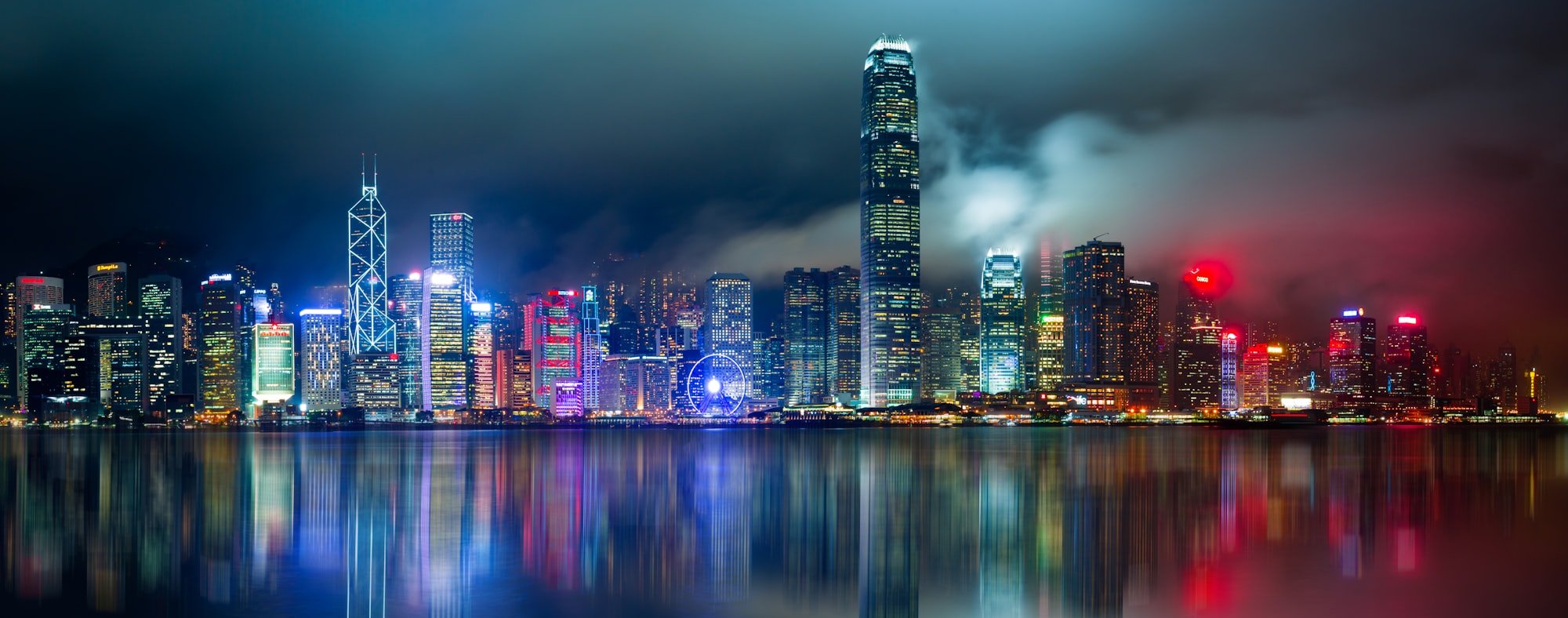
 Lawrence
 Lawrence
 Lawrence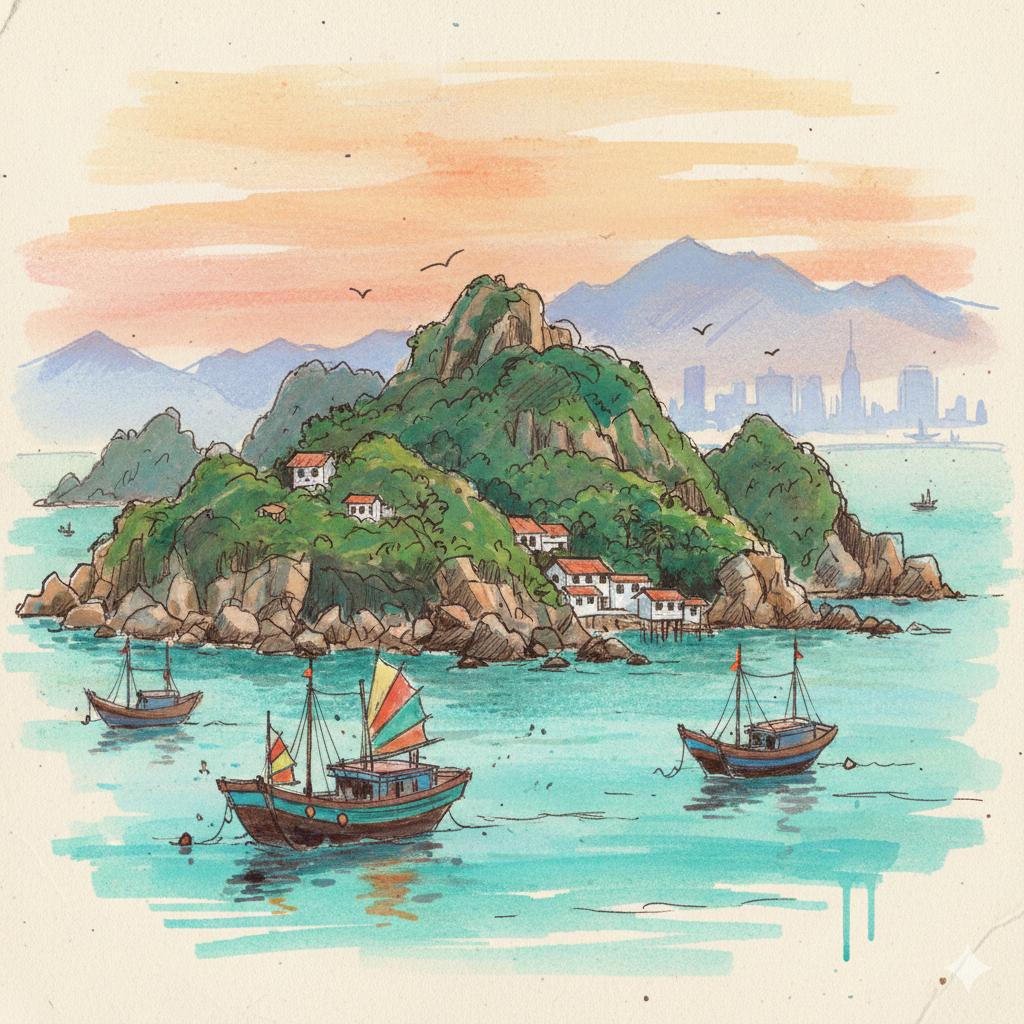
 Lawrence