(ENG) Beyond the Concrete Jungle: 5 Hidden Stories That Redefine Hong Kong's Kowloon City
5 stories paint a picture of Kowloon City reveals a place defined by astonishing resilience, profound diversity, and a paradoxical truth.

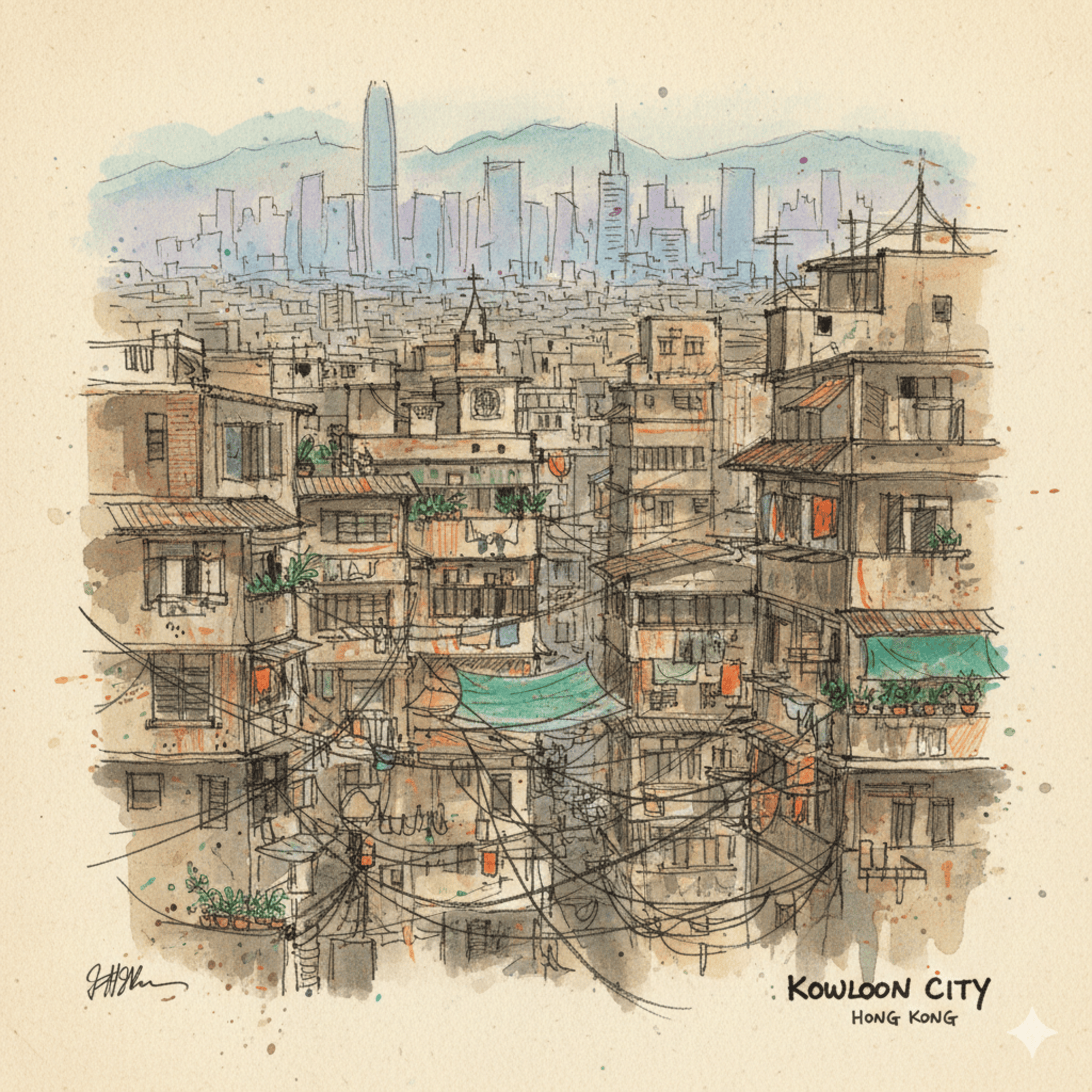
九龍寨城公園 Kowloon Walled City Park
I don't visit Kowloon City often. When I do, it's usually just a stopover. I'll park on Nga Tsin Wai Road, mainly to buy egg tarts from Hoover Cake Shop. I heard that Hoover Cake Shop opened in the 1970s and at its peak sold over 3,000 egg tarts a day. When I returned to Hong Kong a few years ago, I found that the shop had closed down, ending its 51-year history!
Listen to the historical stories told in detail (For subscribers only)
The Ghost of the Walled City
Mention the Kowloon Walled City, and a familiar image instantly materializes: a lawless, hyper-dense vertical slum, a concrete leviathan teeming with anarchy and vice. For decades, this was its sensationalized identity, a dark legend in the heart of Kowloon peninsula, Hong Kong. But what if this infamous image, while not entirely untrue, obscures a far more profound and resilient human story? What if the real legacy of this neighborhood isn't the chaos we remember, but the remarkable communities that grew in the cracks left by history?
This journey goes beyond the ghost of the Walled City to uncover five hidden narratives that redefine Kowloon City. These are stories of political isolation, profound faith, commercial ambition, cultural fusion, and architectural memory—stories that reveal the true, complex soul of one of Hong Kong's most fascinating districts.
The 5 Surprising Stories of Kowloon City
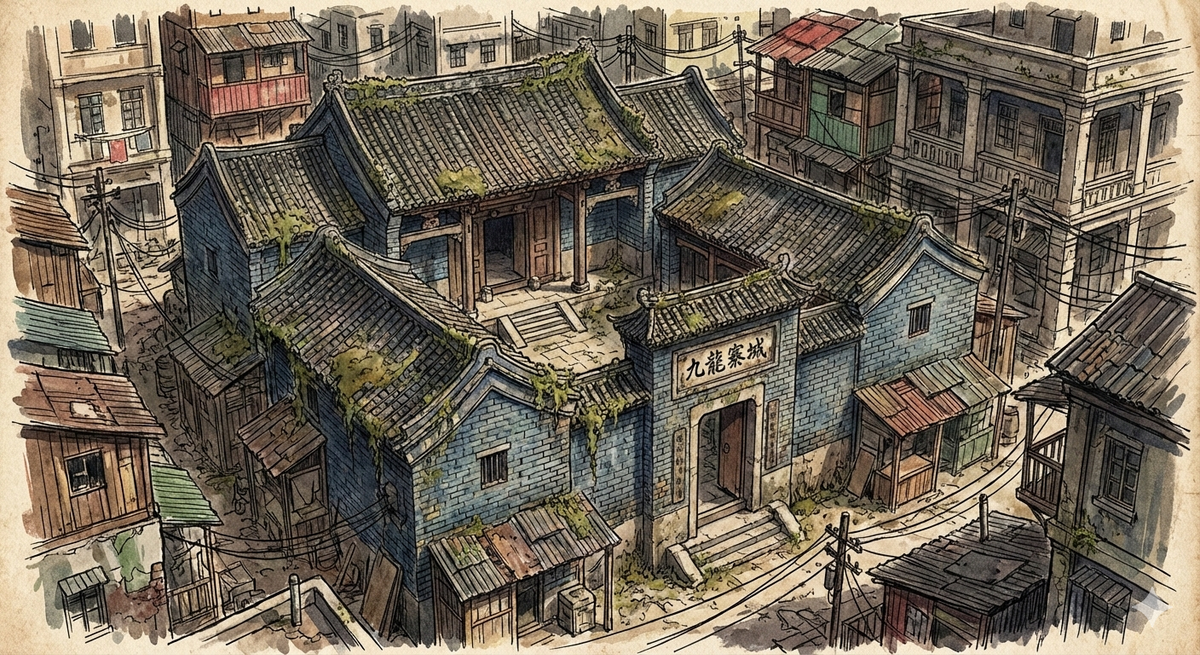
The Political Orphanage - A Piece of Imperial China Lost in Time
To truly understand Kowloon City, we must begin not with its infamous collapse into lawlessness, but with its formal, dignified origins. It was born not as a slum, but as an imperial Chinese outpost that became politically stranded—a historical accident that set the stage for everything that followed.
The story begins in 1847, when the Qing Dynasty established the Kowloon Walled City as a military and administrative fort to strengthen its coastal defenses. The conflict arose in 1898, when a new treaty leased the surrounding New Territories to Great Britain for 99 years. The treaty created a sovereign gray area, leaving the Walled City as a tiny "Chinese enclave" completely surrounded by a British colony.
This political dispute had a monumental consequence: it created a sovereignty vacuum. While technically still Chinese territory, Qing officials withdrew in 1899, and the British colonial government largely neglected the area. This abandonment by both sides made the Walled City a political orphan, directly creating the conditions for the decades of lawlessness for which it would become famous.
Today, you can physically touch this paradox at the serene Kowloon Walled City Park. The park’s greatest treasure is the meticulously preserved former Kowloon Walled City Yamen—the original administrative building from 1847. Now a declared monument, its simple brick courtyards once housed imperial officials. Nearby, the original "South Gate" stone slab, unearthed during demolition, serves as a tangible relic of a border that defined a nation but failed to govern a community. This political isolation, however, would have profound human consequences.
The Saint of the Citadel - Finding Light in Utter Darkness
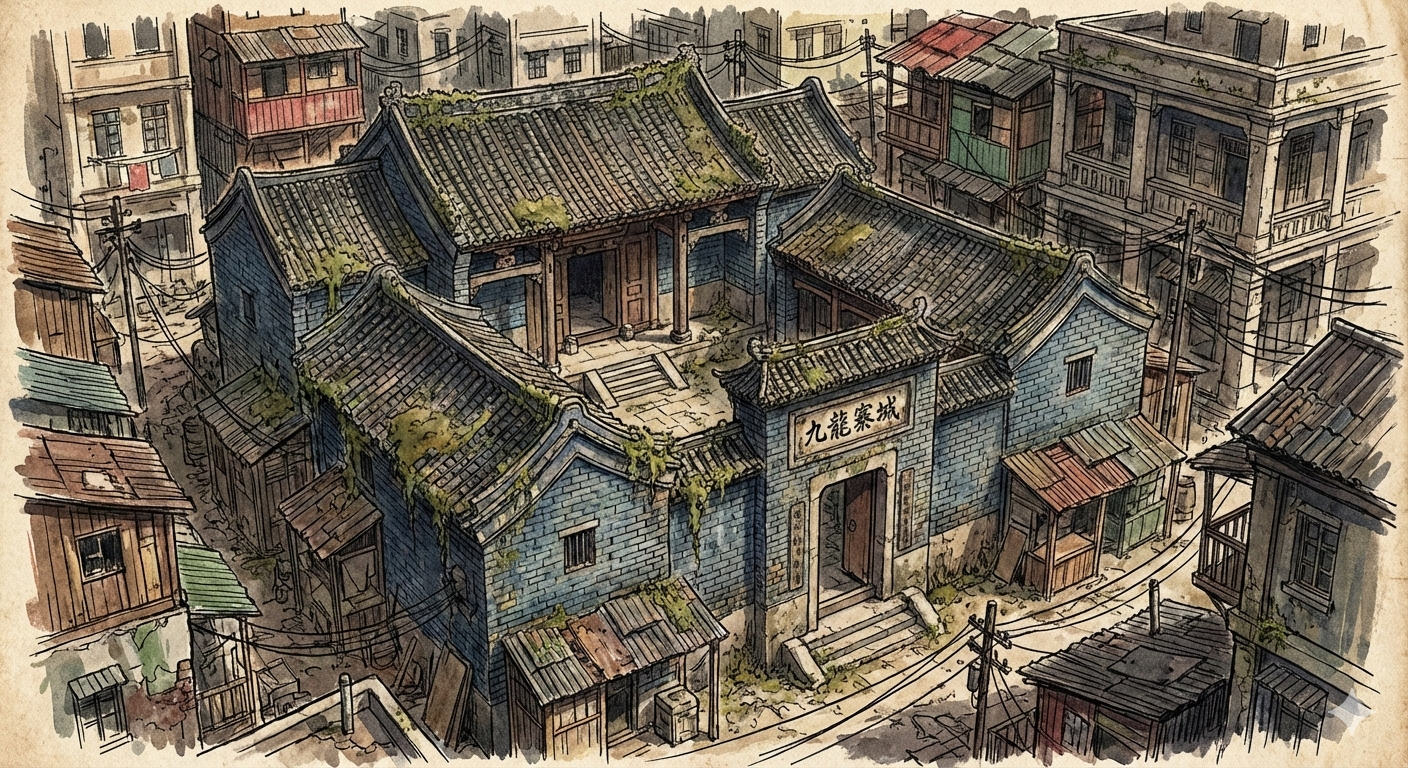
The story of the Walled City is often reduced to its vices, and for good reason. During its "lawless" period, it became a global hub for opium production, a dark industry run by the Triads. Yet this narrative of extreme adversity is precisely what makes the counter-story so powerful—one that demonstrates how utter darkness can inspire profound acts of humanity.
Into this world walked Jackie Pullinger, a British missionary who arrived in Hong Kong in 1966 with next to nothing. She entered the Walled City and began working to help the most marginalized: drug addicts, sex workers, and the homeless. Her approach was unconventional—a non-medicinal method based on intensive prayer and community support to help addicts break their dependency.
Her impact reveals a deeper truth about the nature of the "lawless" city.
Her story is a testament to the power of bottom-up social change. Initially harassed by Triad leaders, her relentless compassion eventually won their respect, leading them to protect and even support her work. This proves that the 'lawless' environment didn't just breed crime; it also created the conditions for a community to respond to and embrace genuine aid.
Today, visitors can connect with this legacy by viewing the Kowloon Walled City Park not just as a garden, but as an "Anti-Monument." It doesn't commemorate buildings; it commemorates the resilience of the human spirit. The park's very design is an act of selective memory; by preserving the imperial government building while erasing the chaotic residential towers, it intentionally shifts the narrative from anarchy to heritage, making the stories of human resilience within its walls all the more important to remember. While standing on the ground where she worked, one can reflect on the stories from her seminal book, Chasing the Dragon, and understand this place not as a den of vice, but as a site of redemption.
Yet, the profound irony of Kowloon City is that this crucible of poverty and redemption was not an isolated island. Its walls, both real and invisible, bordered a parallel universe—one built not on survival, but on staggering commercial ambition.
The Merchant Princes - How "Little Chiu Chow" Built an Empire of Flavor
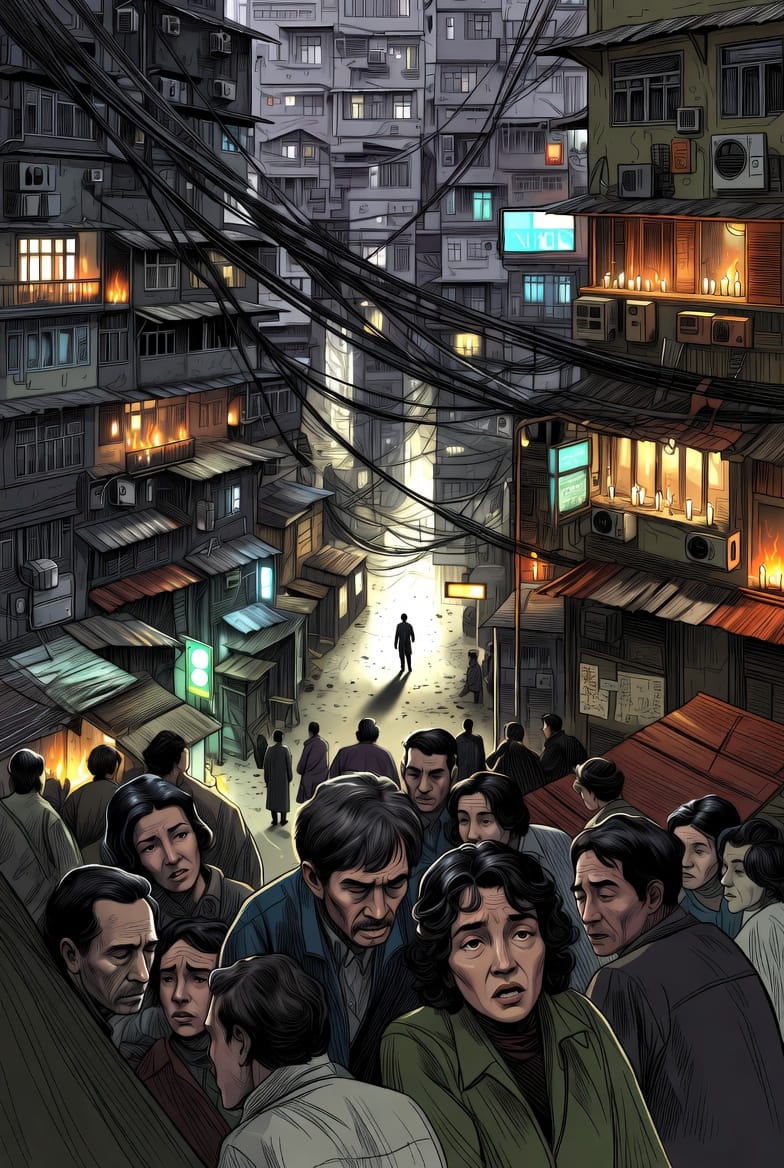
While the Walled City was infamous for its poverty, the surrounding Kowloon City area was simultaneously becoming a vibrant hub of commerce and culture, driven by a specific wave of immigrants. This is the story of how the Chiu Chow (or Teochew) community built a kingdom right next door.
After World War II, a wave of Chiu Chow immigrants settled in Kowloon City. Crucially, many were not destitute refugees but merchants with significant business capital. They established a thriving commercial ecosystem, opening everything from humble rice shops to purveyors of luxury goods like shark fin, signaling their considerable economic power.
This created a stark socio-economic contrast that defines the neighborhood to this day. One could find wealthy Chiu Chow merchants conducting business over lavish meals in upscale restaurants, just a short walk from the desperate struggles within the Walled City. Kowloon City became, and remains, a microcosm of Hong Kong's complex class diversity and disparity.
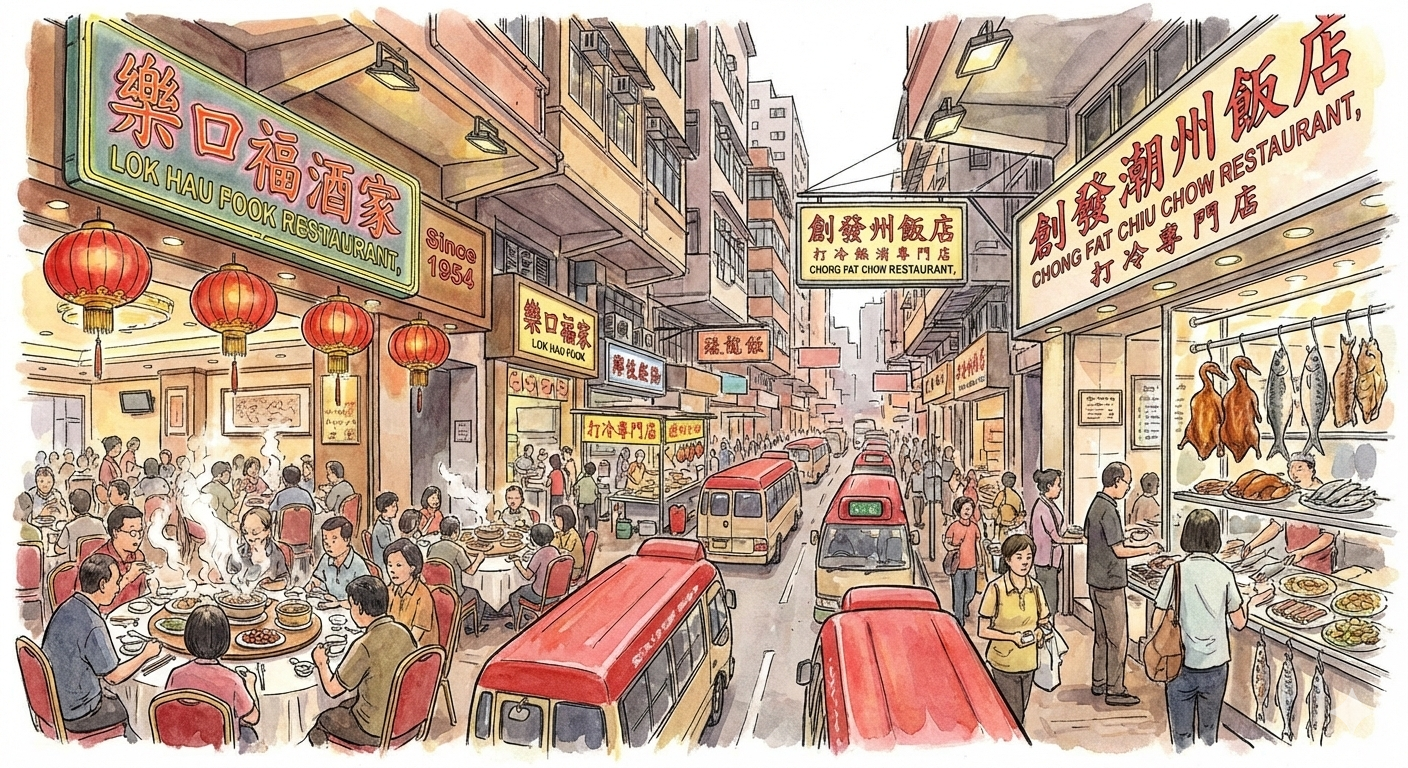
You can still taste this history in the neighborhood's living museums. Lok Hau Fook Restaurant, founded in 1954, is a time capsule from Hong Kong's post-war industrial boom. Factory bosses from the nearby industrial areas of San Po Kong and Kwun Tong flocked here to seal deals over authentic Chiu Chow cuisine like the classic "pomegranate chicken." Nearby, Chong Fat Chiu Chow Restaurant became a famous canteen for celebrities like Chow Yun-fat, embodying the welcoming "架己冷" (our people) spirit of the community.
The Bangkok of Hong Kong - A Taste of Thailand in the Heart of the City
Kowloon City’s story is one of continuous cultural layering. Long after its early history was established, it continued to evolve, proving its unique capacity to embrace and nurture new communities. Starting in the 1980s, the area transformed once more, becoming the undisputed heart of Hong Kong’s Thai community.
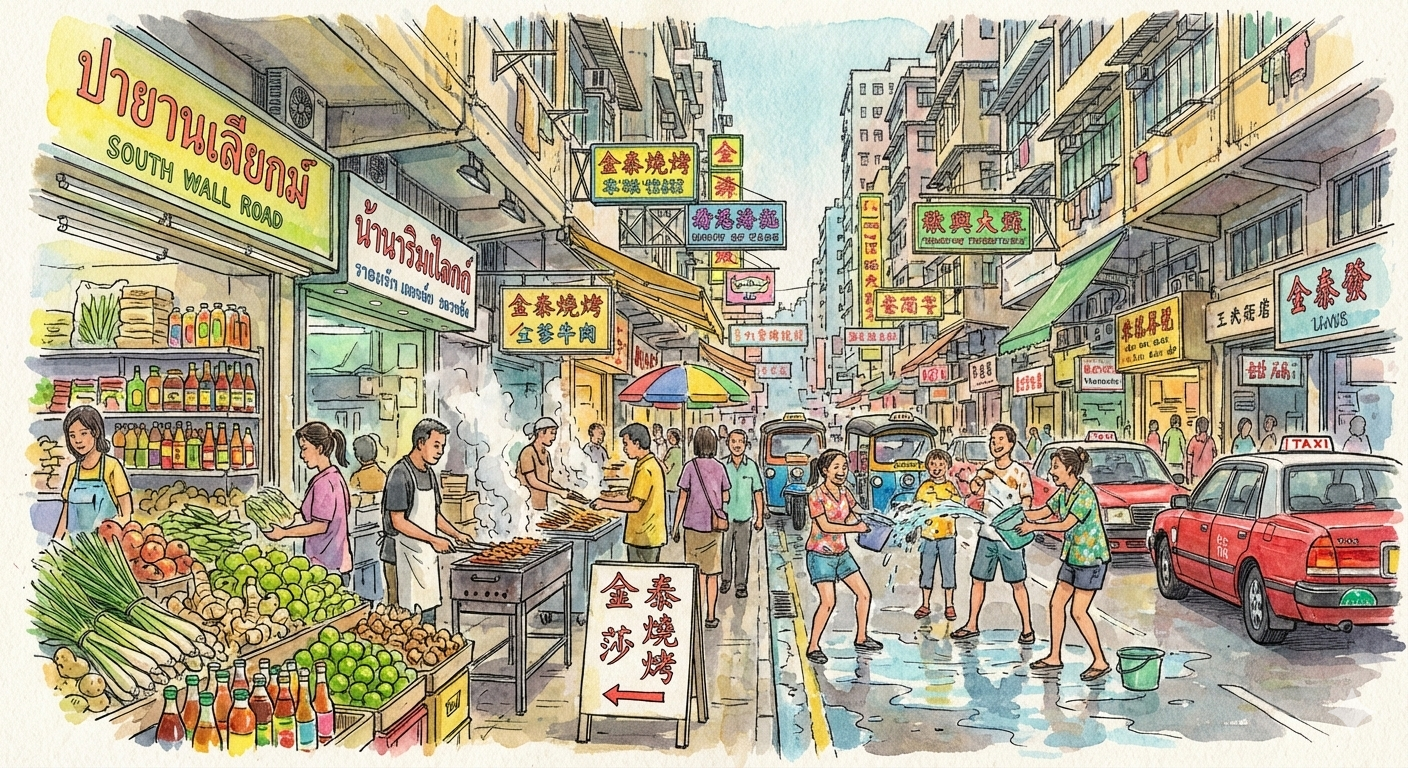
Today, "Little Thailand" is a bustling, self-contained world. Over a third of Hong Kong's entire Thai population lives or works in the area, supporting a network of over 100 businesses, including 70 restaurants and crucial specialty grocery wholesalers.
This concentration created a complete cultural ecosystem. The large population (the cause) was able to support a wide range of specialized businesses—from grocery stores stocking fresh lemongrass and galangal to remittance shops and freight forwarders (the effect). It’s a self-sustaining enclave that offers a truly immersive cultural experience.
For visitors, the hidden gems are everywhere. You can explore the aromatic Thai grocery shops on South Wall Road, enjoy unbelievably authentic and affordable street food at small eateries like Kam Thai BBQ, or witness the joyous chaos of the annual Songkran (Water Splashing) Festival each April.
This vibrant, living culture of 'Little Thailand' demonstrates Kowloon City's constant evolution. Yet, for a city to truly know itself, it must not only embrace the new but also learn to listen to the silent stories told by its oldest bones—the very buildings that have witnessed every chapter.
The Cafes of Memory - Where Old Buildings Learn New Tricks
Our final story brings us to the present day, revealing a profound shift in Hong Kong's soul-searching. Where the city once bulldozed its past, it now carefully resurrects it, and nowhere is this change more poignant than in two of Kowloon City's historic buildings: Tai Wo Tang, representing the middle-class commercial past, and Stone House Family Garden, representing the working-class residential story.
First is Tai Wo Tang, a pre-war "veranda-style" shophouse built in the 1920s that was once a Chinese medicine practice. Second is the Stone House Family Garden, originally part of a squatter village and, at one point, a film studio.
Their revitalization offers unique hidden gem experiences. At Tai Wo Tang, now a stylish cafe, you can sip a modern coffee while sitting beside the original, century-old "hundred-drawer cabinet" that once held countless Chinese herbs. At the Stone House Family Garden, you can tour a heritage center that introduces the history of the ancient Lung Tsun Stone Bridge, before dining in a social-enterprise-run retro bing sutt (ice-drink room) that lovingly preserves 1960s architectural details like its distinctive geometric floor tiles. These revitalized spaces serve as a living bridge between the city’s past and its future.

The Soul of a City in the Cracks
Taken together, these five stories paint a picture of Kowloon City that is far richer and more nuanced than the old myths of lawlessness. They reveal a place defined by astonishing resilience, profound diversity, and a paradoxical truth. The political marginalization that created the "three-unregulated" state, while fostering crime, also acted as an incubator for extreme self-reliance. This vacuum of official governance forced the creation of powerful internal support systems—seen in the grassroots compassion of Jackie Pullinger, the commercial kingdom of the Chiu Chow merchants, and the self-sustaining ecosystem of the Thai community.
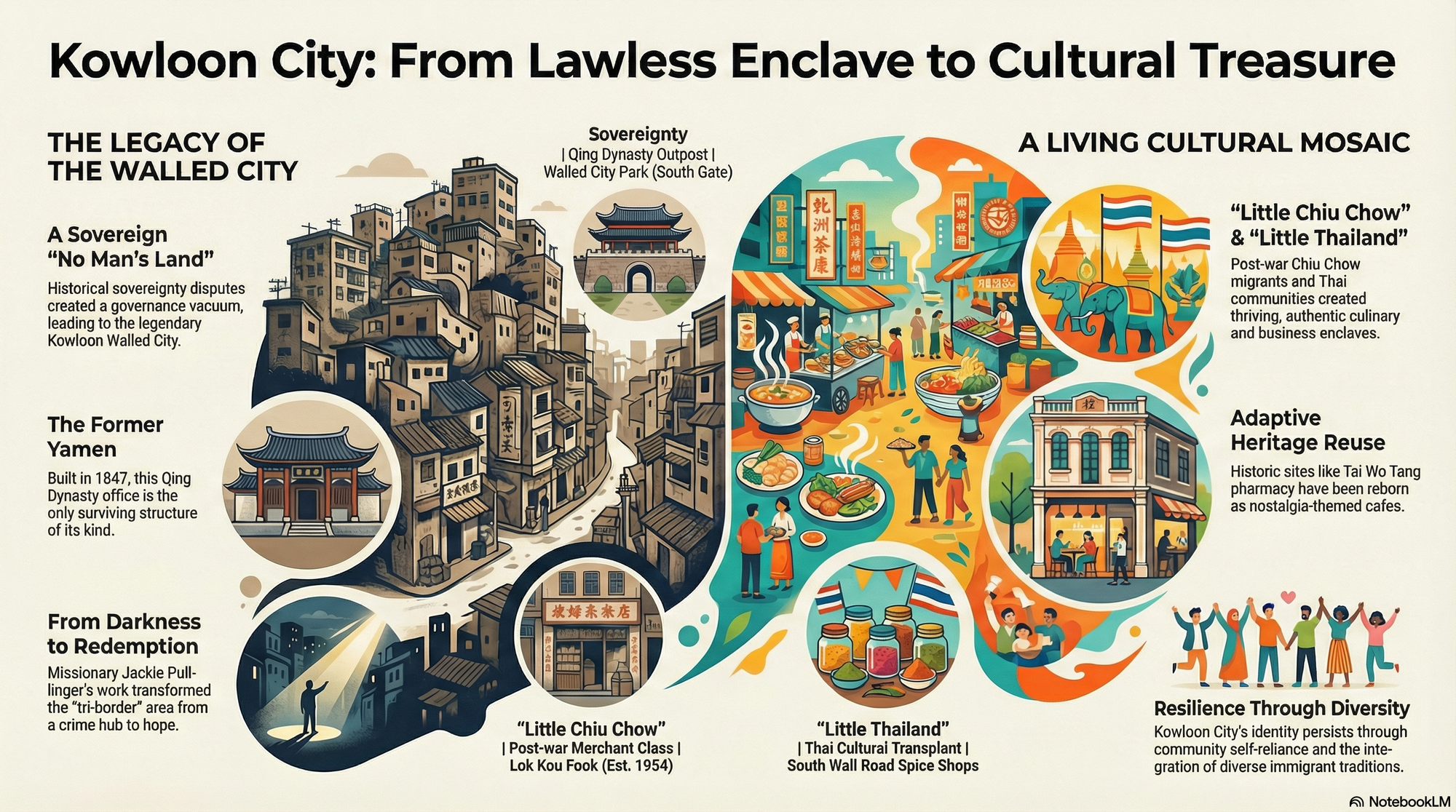
Kowloon City’s enduring lesson is this: a city's most profound treasures are often hidden in the cracks of politics, the margins of society, and the corners forgotten by time.
 Lawrence
 Lawrence