(ENG) Beyond the Night Market: 5 Hidden Histories That Will Change How You See Taipei's Shilin District
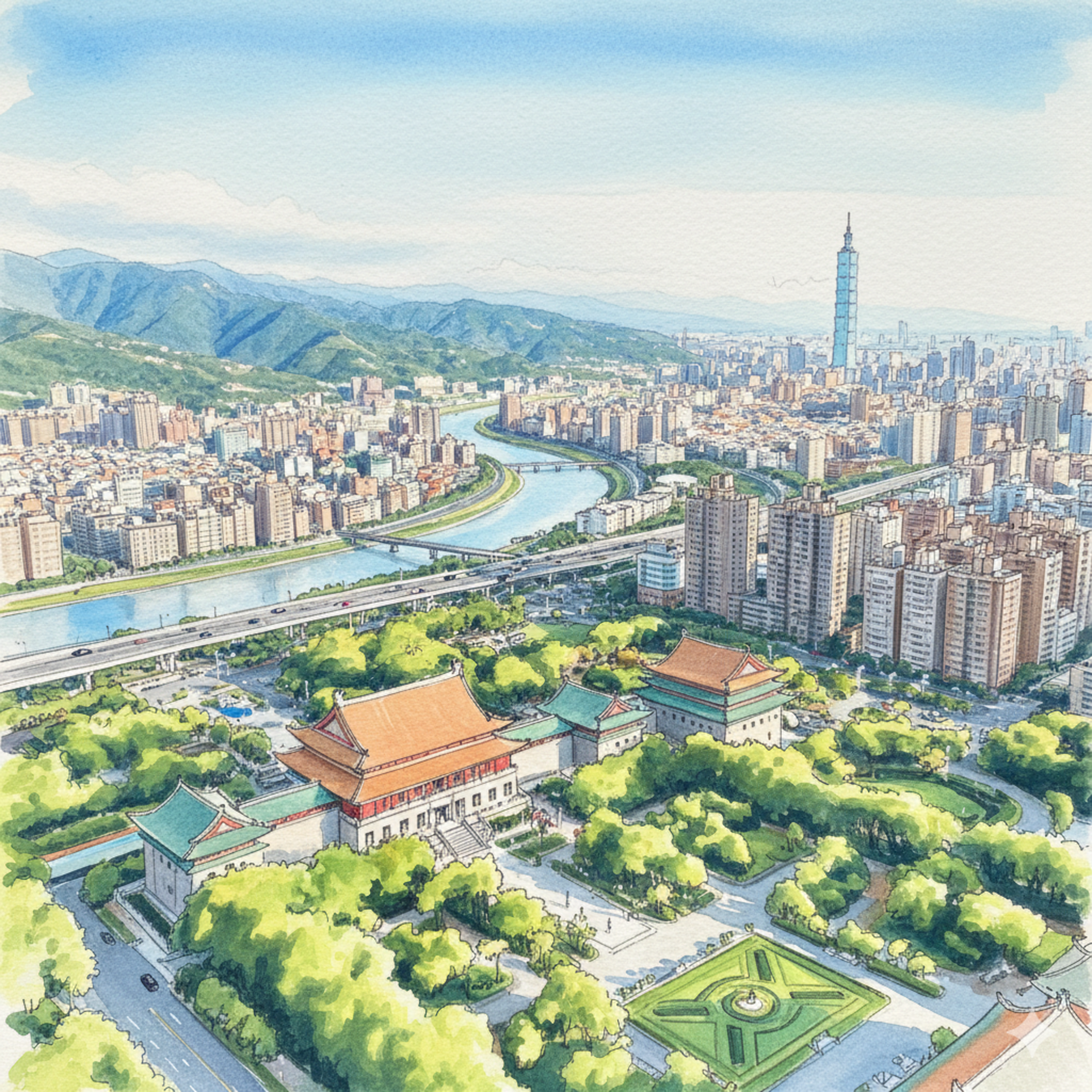
In my eyes, Shilin is equal to the night market, because every time I come to Shilin, Taipei, I will taste the delicious food in night market.

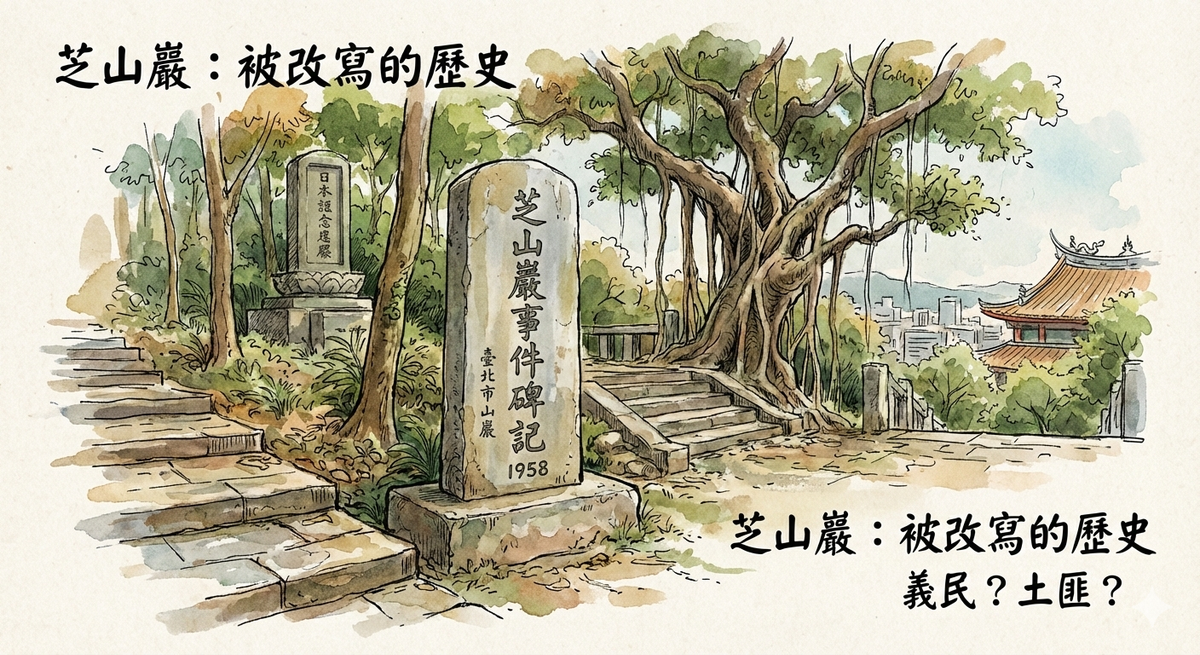
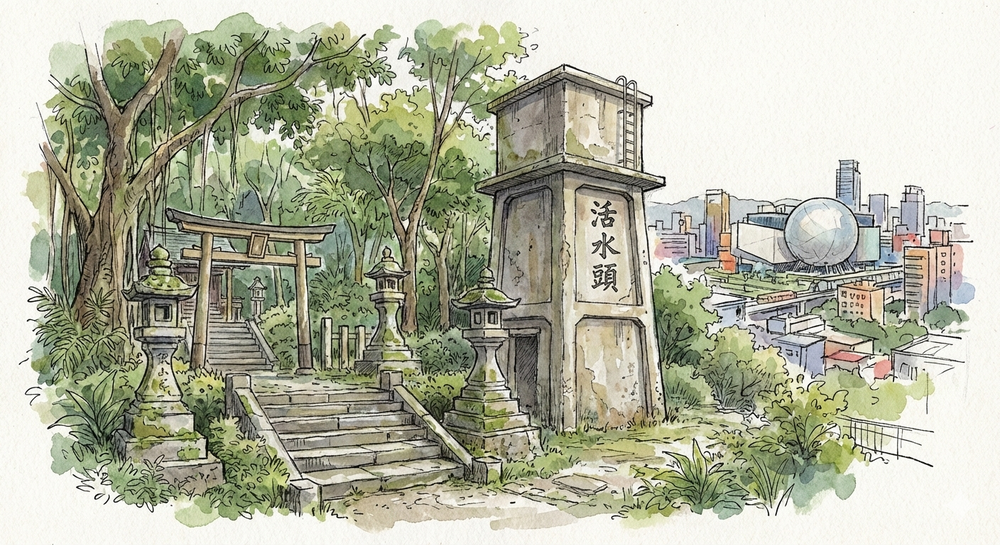
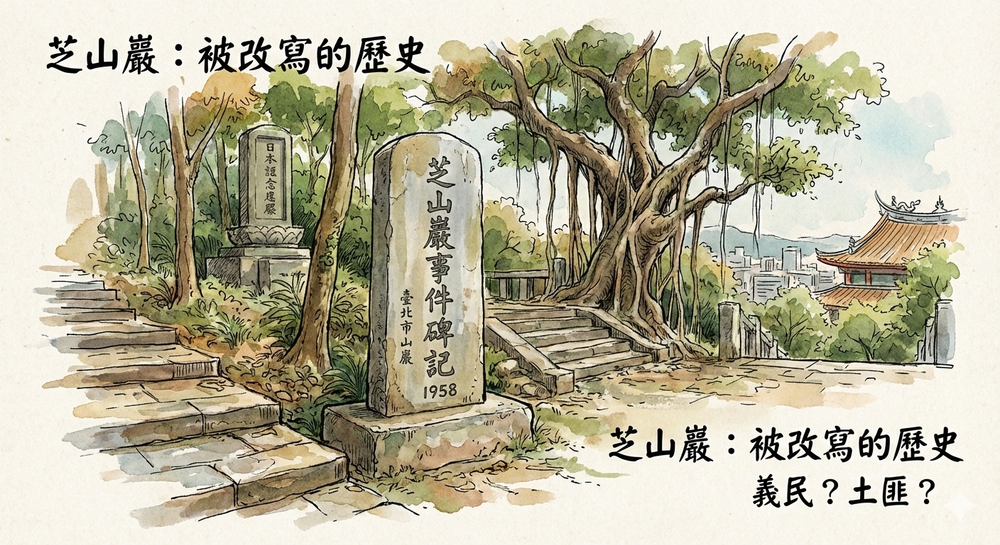
臺北自來水事業處陽明分處「活水頭」"Source of Living Water" at Taipei Water Department's Yangming Branch office > 芝山巖事件碑記 1958 'Zhishanyan Incident Stele'
Listen to the historical stories told in detail (For subscribers only)
More Than Just a Night Market
right! In my eyes, Shilin is equal to the night market, because every time I come to Shilin, Taipei, I will visit the night market and taste the delicious food. Even if I don’t patronize the night market stalls, I will still visit and feel the atmosphere of the local night market.
For most visitors, the name "Shilin" conjures one image: the sprawling, vibrant chaos of Taipei's most famous night market. It's a world of sizzling street food, bustling crowds, and neon-lit entertainment. But beneath this modern surface lies a district with a history far deeper and more complex than its famous snacks suggest. Shilin is a landscape of hidden fortresses, sacred springs, forgotten battlefields, and camouflaged centers of power. This is a guide to uncovering those hidden layers, transforming a simple visit into a profound journey through time, where every street corner tells a story of conflict, innovation, and reinvention.
The Ghost of a Fortress Town, Lost to Modernity
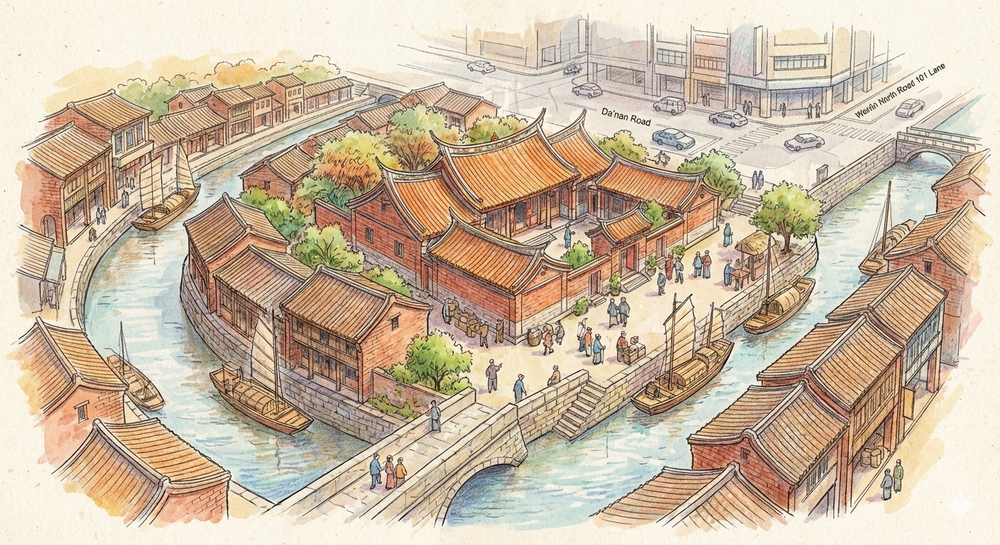
The way a city is first planned reveals the deepest anxieties and ambitions of its founders. More than a simple grid of streets, a city's original blueprint is a map of what its people valued, what they feared, and how they intended to survive. In Shilin, the original design was not about grand boulevards, but about clever, water-based defense.
The story begins with a man named Pan Yongqing, who designed what became known as the "Shilin New Street." This was no random settlement but a meticulously conceived "planned city," a self-contained world praised with the idiom "麻雀雖小,五臟俱全" (a sparrow may be small, but it has all the vital organs). To defend against theft, Pan engineered a brilliant defensive barrier using canals, known as "water dongs" (literally, "water blocks"), which functioned as protective moats. The Pan family's own house, the Pan Yuan Ji, was strategically placed beside the temple, market, and river dock, cementing their role at the center of local life. The tragic irony is that this foundational piece of Shilin's history survived for 128 years only to be partially demolished around 2017, not by war or disaster, but by modern disputes over family interests and private property rights—a stark reminder of how fragile heritage is in the face of progress.
Hidden Gem for Tourists: For a taste of this vanished history, trace the ghost of the old canals. Take a walk along Danan Road and Wenlin North Road Lane 101. While the water is gone, the curve of the modern streets still follows the path of these forgotten defensive moats, offering a subtle clue to the city's original blueprint.
This early feat of water engineering for survival stands in fascinating contrast to a later, far grander project designed to symbolize imperial power.
The Sacred Spring Hiding in Plain Sight
For a colonial power, modern infrastructure is never just about function; it's a statement. For the Japanese empire in Taiwan, controlling water was not merely an engineering achievement but a powerful symbol of bringing "civilization," order, and modernity to the island.
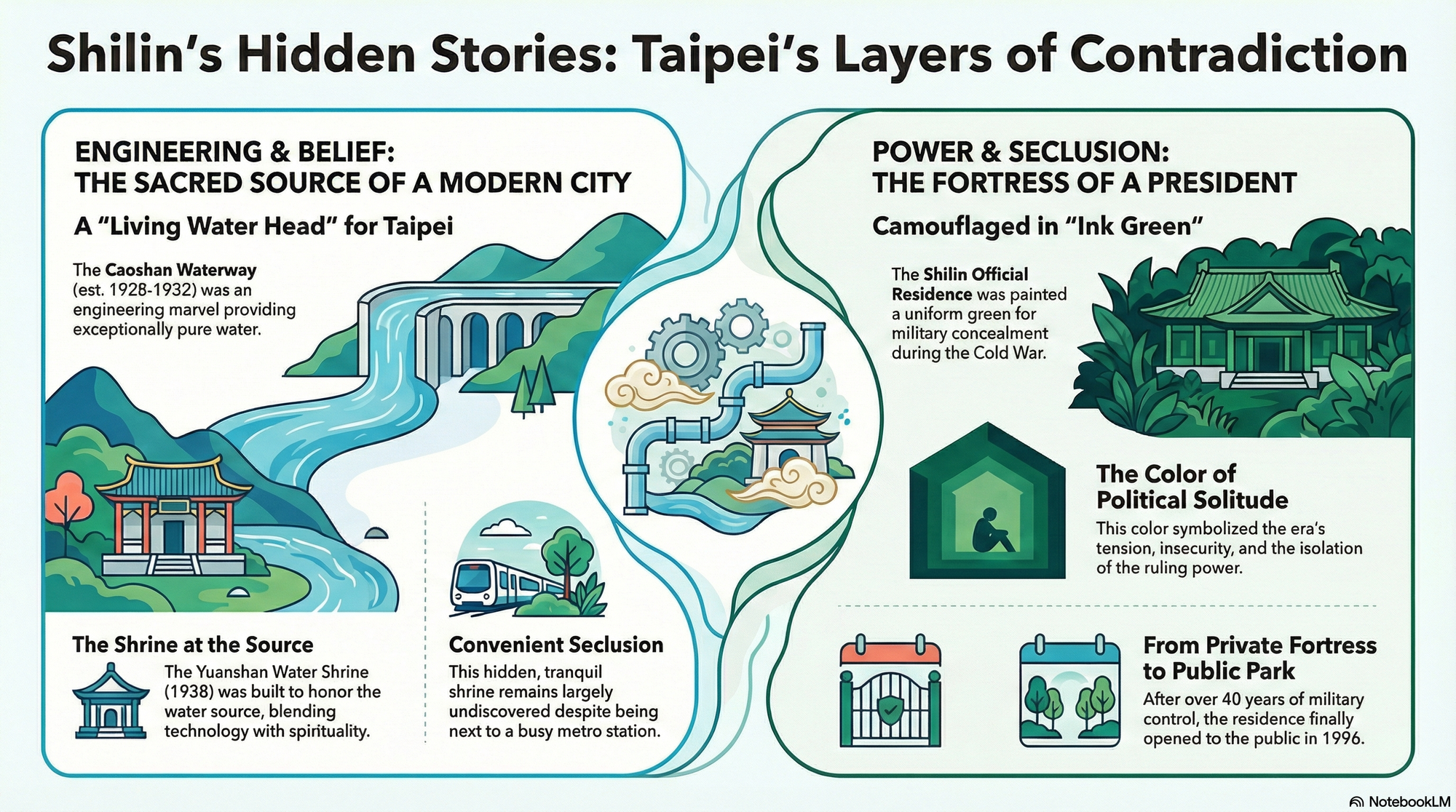
Constructed between 1928 and 1932, the Caoshan Waterway System was a marvel of Japanese engineering, tapping mountain springs to provide Taipei with exceptionally pure drinking water. The quality was so remarkable that it needed almost no complex filtration or sedimentation. Atop a reservoir, the mayor of Taipei proudly inscribed "活水頭" ("Source of Living Water")—a testament to technological pride. But the story’s counter-intuitive heart is the Maruyama Water Shrine, built nearby in 1938. Still retaining its original stone lanterns and guardian lion-dogs (狛犬), it embodies a profound "ironic coexistence": a serene spiritual site located just steps from the Jiantan MRT station. This perfect "convenient seclusion" is a pocket of quiet reverence hidden within the city's modern pulse.
Hidden Gem for Tourists: To find this pocket of tranquility, head to the Taipei Water Department's Yangming Branch office, right next to Jiantan MRT station. A simple set of concrete stairs leads you into another world, where you can experience the quiet reverence of the shrine, a place where modern engineering and ancient respect for nature meet.
This symbol of colonial pride and order, however, sits not far from a site that represents the violent conflicts born from that same colonial project.
The Hill Where "Bandits" Became "Martyrs"
Historical sites are rarely neutral records of the past. More often, they are battlegrounds where different regimes and ideologies fight to control the narrative, rewriting history to serve the present. Zhishanyan Hill in Shilin is a masterclass in this very process.
In 1895, at the dawn of the Japanese colonial period, a group of Taiwanese locals attacked a Japanese-run school on the hill, killing six teachers. The Japanese regime immediately framed the incident as an act of barbarism, elevating the teachers to "martyrs for education." For decades, this was the official story. After World War II, however, the new KMT government completely reframed the event. In 1958, it erected a stele celebrating the attackers as "righteous people" ("義民") who fought a heroic struggle against the "enslavement education" (奴化教育) of a foreign power. This stark contrast demonstrates how history is never static; it is a fluid story, politically charged and constantly reinterpreted.
"Were the attackers 'bandits' or 'righteous people'? Depending on one's standpoint, it's difficult to reach a conclusion."
Hidden Gem for Tourists: When you visit Zhishanyan, don't just see the sights; embark on a "reflection walk." Find the 1958 'Zhishanyan Incident Stele' (芝山巖事件碑記) near the Huiji Temple. By comparing it to other markers on the hill, you can physically walk through a corridor of competing histories and witness how the same story can be retold to serve entirely different purposes.
From this public battleground of ideas, our journey moves to a nearby site that was, for half a century, the hidden center of absolute and isolated power.
The President's Camouflaged Fortress and Accidental Paradise
The architecture of power is a revealing text. The design of a leader's residence can express their sense of security, their relationship with the public, and the political climate of their time. In Shilin, one compound tells a story of fear, isolation, and unintended consequences.
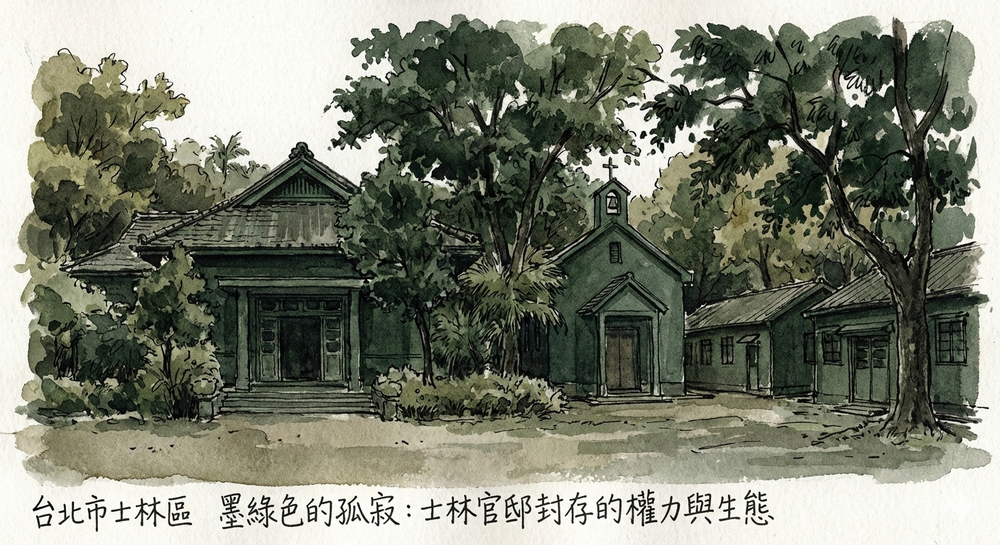
For decades, the Shilin Official Residence was the nerve center of post-war Taiwan under President Chiang Kai-shek. The entire compound is painted a ubiquitous "deep green," not for aesthetics, but as military camouflage to hide it from potential air raids. This color became the visual representation of political loneliness and Cold War tension. This decades-long isolation had a surprising outcome: the strict military cordon inadvertently created an urban ecological sanctuary, protecting the area's biodiversity. The story's climax arrived in 1996, when the residence was finally opened to the public, a powerful symbol of Taiwan’s transition from authoritarian rule to an open democracy.
Hidden Gem for Tourists: Beyond the main residence, seek out the Kaige Hall (凱歌堂). This surprisingly simple chapel was the private spiritual heart of the compound, where decisions that shaped a nation were made alongside quiet family moments. Its austerity offers a stunning contrast to the immense power it once contained.
From a story of political power shaping the landscape, we turn to a final story of community survival achieved by carving a new life from that same landscape.
The Living Waterways Carved by Hand
Official histories often focus on grand, state-led projects—the dams, the railways, the highways. But the true resilience of a people can often be found in the smaller, traditional systems they build with their own hands to survive.
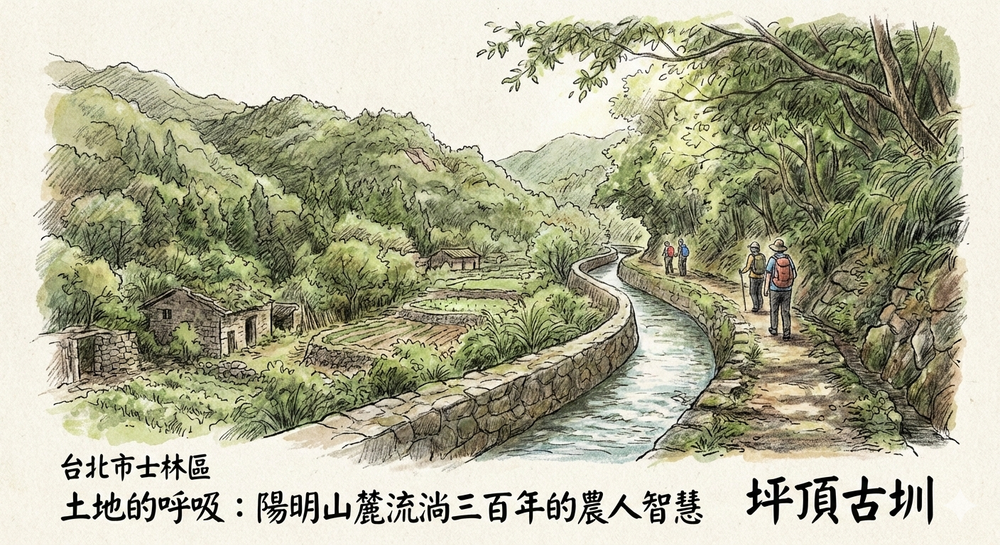
High in the foothills of Yangmingshan lies a network of irrigation channels—the Pingding Ancient Canal, Pingding New Canal, and Dengfeng Canal—carved directly into the mountainside by early settlers. This is a story of grassroots engineering. In stark contrast to the modernity-based Caoshan Waterway, these canals represent a "survival-based" water system, a living testament to pioneer ingenuity. Remarkably, these channels are not relics; they are still in use today, channeling water to terraced fields and functioning as a "living fossil" of Taiwan's self-reliant spirit.
Hidden Gem for Tourists: For one of Taipei's best summer escapes, hike the Pingding Ancient Canal Trail. The path runs directly alongside the flowing water, sometimes even crossing over channels running beneath your feet. It’s a rare opportunity to physically connect with history, creating an immersive experience of literally walking on water and time.
These five stories, woven together, create a portrait of a place far more complex than any single landmark can suggest.
A City of Contradictions
To truly know Shilin is to understand it not as a single place, but as a landscape of powerful contradictions. Here, you can walk along modern roads that trace the Faded Blueprint of a lost fortress. You can stand beside a bustling MRT station and slip into the Convenient Seclusion of a forgotten shrine. You can visit an Ambiguous Monument on a quiet hill and witness how "bandits" become "martyrs" with the stroke of a pen. You can see how the Political Camouflage of a dictator's fortress inadvertently created an ecological paradise, and you can hike along the Living Water Veins of ancient canals that still nourish the land. Shilin's identity is forged in these tensions—between imperial engineering and local ingenuity, state power and community survival, historical fact and narrative reinvention.
What hidden histories lie dormant beneath the familiar streets of your own city?
 Lawrence
 Lawrence