
Taipei City 臺北市
Taipei is more than a modern capital. It is a city built from layers. Beneath today's MRT stations, shopping districts and high-rise skyline are older stories of Indigenous communities, Qing settlement, Japanese colonial rule, post-war migration, economic transformation and democratic change.
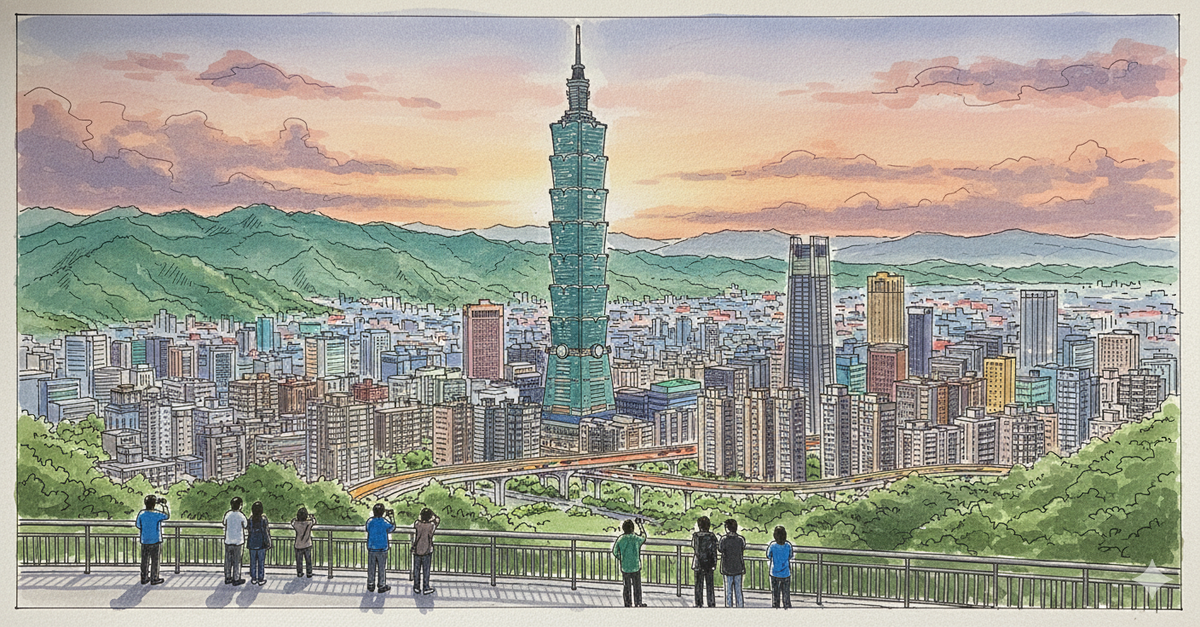
TAIPEI — The Complete Authority Guide
History, Culture, Hidden Stories and the City Beneath the Surface
Taipei is more than a modern capital.
It is a city built from layers.
Beneath today's MRT stations, shopping districts and high-rise skyline are older stories of Indigenous communities, Qing settlement, Japanese colonial rule, post-war migration, economic transformation and democratic change.
Walk through Taipei carefully and the past is never far away.
A temple may stand beside a modern apartment tower.
A Japanese-era building may sit behind a busy commercial street.
An old village may survive inside a rapidly developing neighbourhood.
A traditional market may reveal more about Taipei's history than a famous landmark.
This guide explores Taipei through these connections.
Rather than treating Taipei as a collection of tourist attractions, Taipei — The Complete Authority Guide brings together its history, culture, architecture, religion, commerce, neighbourhoods and hidden stories into one connected cultural map.
1. Colonial Taipei — Empires, Settlement and the Making of a Modern City
 Lawrence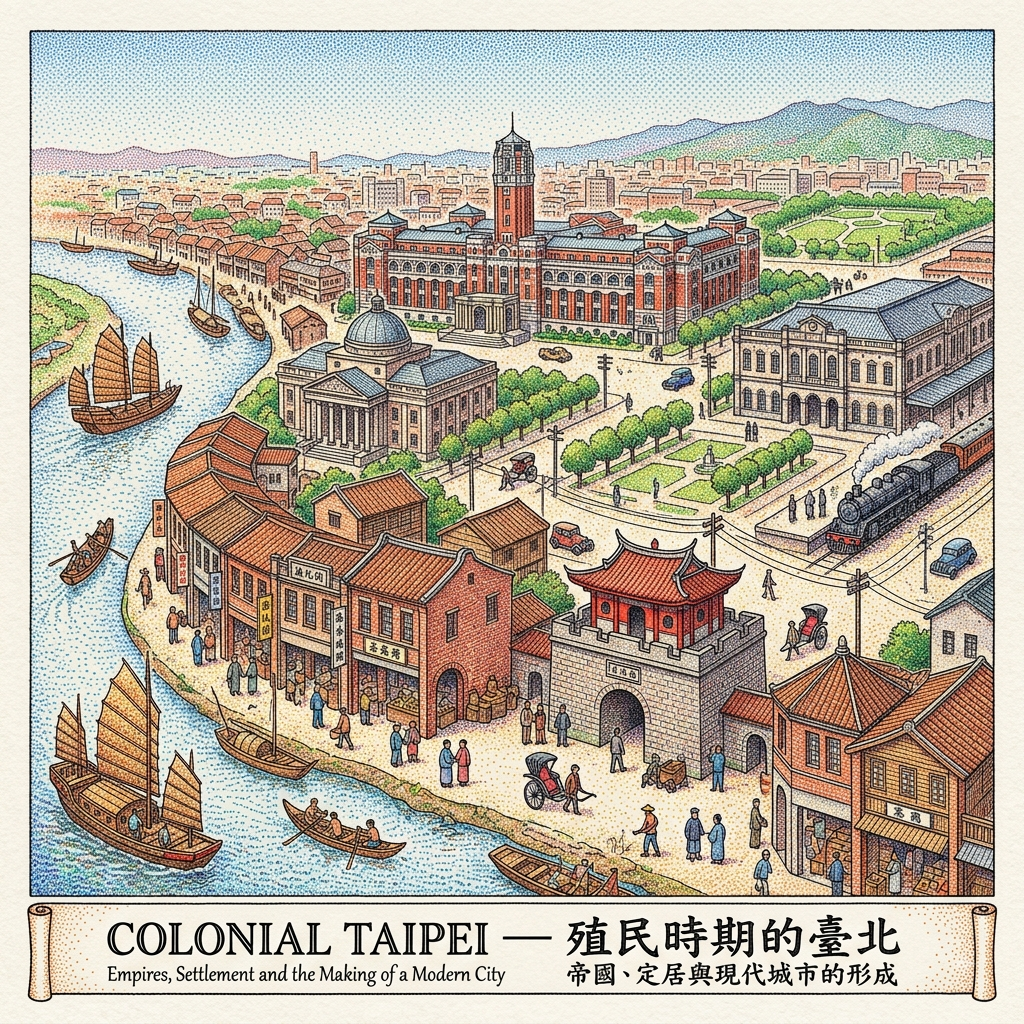
Before Taipei became the capital we know today, the Taipei Basin was already a landscape of Indigenous communities, rivers, settlements and trade.
During the Qing period, Han migration and settlement transformed the basin. Commercial centres developed, temples became community anchors, and places such as Dadaocheng emerged as important centres of trade.
Then came another transformation.
Japanese colonial rule, beginning in 1895, introduced new forms of administration, urban planning, transportation, architecture and public infrastructure.
The foundations of modern Taipei were laid through these successive layers.
Colonial Taipei therefore is not simply a story about Japanese-era buildings.
It is the story of how political power, migration, commerce and urban planning repeatedly reshaped the same landscape.
Explore Colonial Taipei
- Qing-era Taipei
- Dadaocheng
- Dihua Street
- Taipei North Gate
- Taipei Railway Station
- Japanese colonial architecture
- National Taiwan Museum
- Presidential Office Building
- Early Taipei urban planning
Recommended reading:
→ Colonial Taipei Theme Pillar
2. Sacred Taipei — Temples, Belief and the Spiritual City
 Lawrence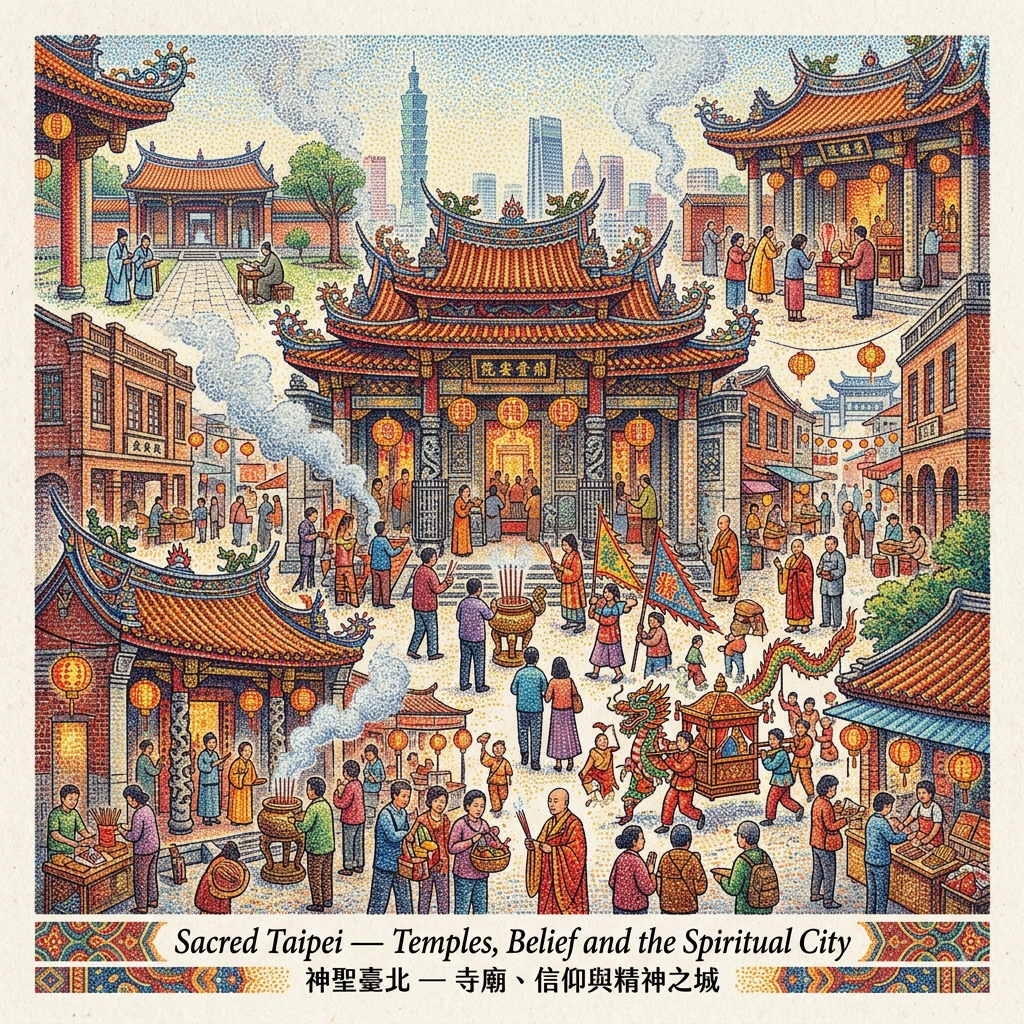
Taipei may look intensely modern, but its spiritual landscape is remarkably old.
Temples are woven into neighbourhood life.
They are places of worship, community gathering, festivals, memory and identity.
Longshan Temple, Bao'an Temple, Taipei Confucius Temple and Xiahai City God Temple each reveal different aspects of Taipei's religious and cultural history.
But Sacred Taipei is not simply a guide to temples.
It asks a deeper question:
How did belief shape the development of the city?
Religious institutions helped communities establish themselves, merchants sought protection and prosperity through local deities, and festivals transformed streets into temporary cultural spaces.
Even today, modern Taipei continues to coexist with these older traditions.
Explore Sacred Taipei
- Longshan Temple
- Bao'an Temple
- Taipei Confucius Temple
- Xiahai City God Temple
- Folk religion
- Taoist traditions
- Buddhist traditions
- Confucian culture
- Traditional festivals
- Temple communities
Recommended reading:
→ Sacred Taipei Theme Pillar
3. Commercial Taipei — Markets, Merchants and the Making of a Trading City
 Lawrence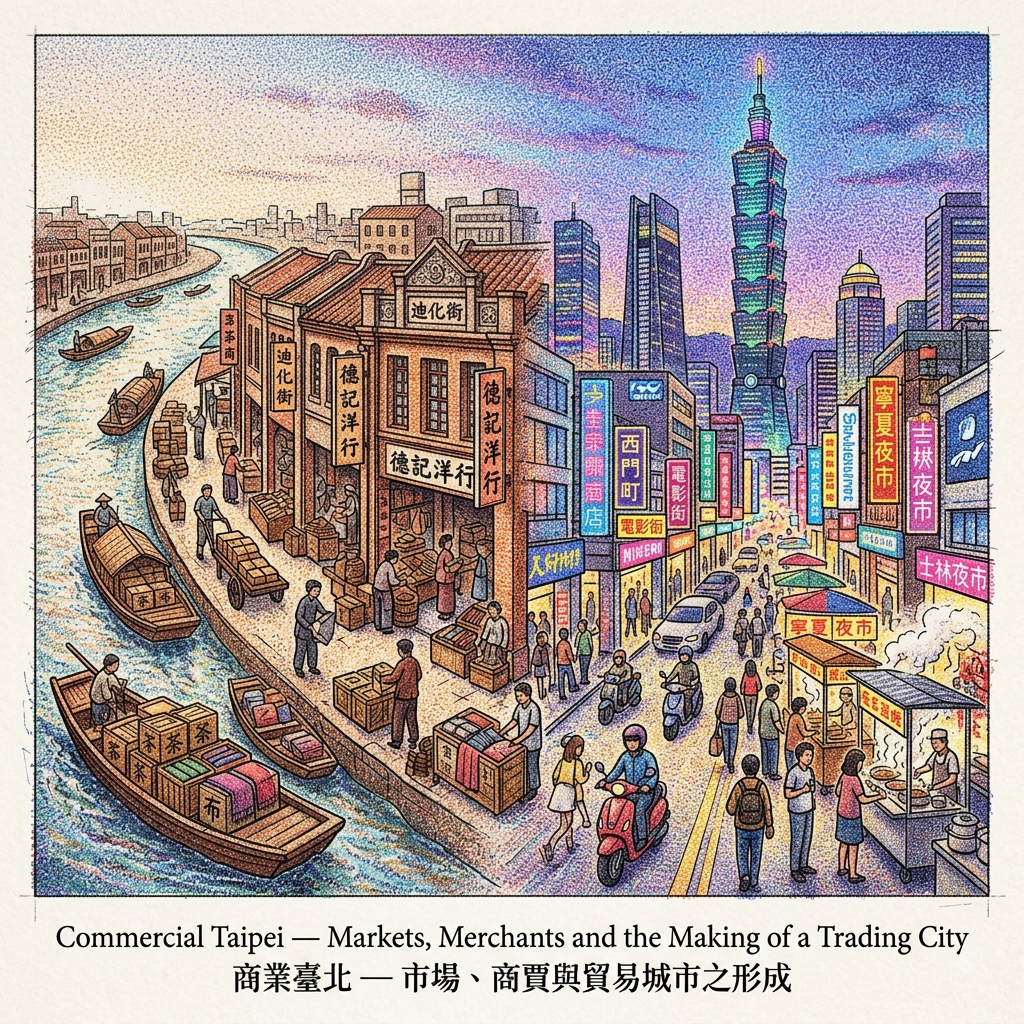
Taipei was shaped by commerce long before it became a modern business centre.
The rivers were once essential transportation routes.
Markets connected producers and consumers.
Merchants created commercial networks.
Dadaocheng became one of the most important trading districts in the city, while tea, textiles, traditional goods and imported products helped connect Taipei with markets beyond the island.
Today, the commercial landscape has changed dramatically.
Department stores, shopping districts, night markets, technology companies and global brands now coexist with traditional markets and family businesses.
Commercial Taipei tells the story of this transformation:
from river commerce to modern consumer culture.
Explore Commercial Taipei
- Dadaocheng
- Dihua Street
- Traditional markets
- Ningxia Night Market
- Shilin Night Market
- Ximending
- Zhongshan
- Yongkang Street
- Taipei's tea trade
- Taipei's commercial history
Recommended reading:
→ Commercial Taipei Theme Pillar
4. Modern Taipei — Transformation, Technology and a New Capital
 Lawrence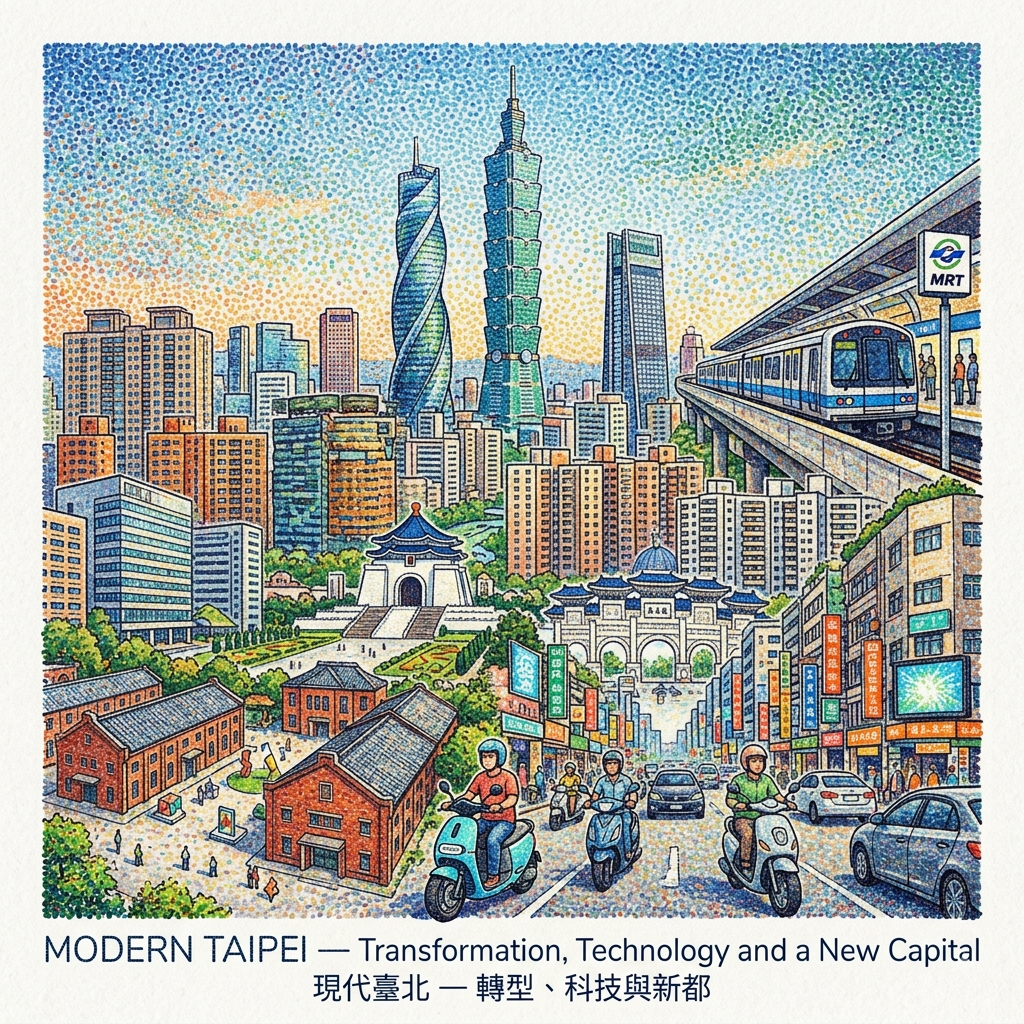
The Taipei of today was created through extraordinary transformation.
The twentieth century brought political change, migration, industrialization and rapid urban growth.
After 1949, Taipei expanded dramatically as new communities arrived and the city became the political and economic centre of the Republic of China on Taiwan.
High-density housing transformed the urban landscape.
The MRT connected distant neighbourhoods.
Economic development produced new commercial districts.
Taipei 101 became an international symbol of the city.
And political liberalization and democratization fundamentally changed Taipei's identity.
Modern Taipei is therefore not simply a story of skyscrapers.
It is a story of how a relatively compact city adapted to enormous social, political and economic change.
Explore Modern Taipei
- Taipei 101
- Xinyi District
- Taipei MRT
- Chiang Kai-shek Memorial Hall
- Post-war Taipei
- Public housing
- Democratization
- Huashan 1914 Creative Park
- Songshan Cultural and Creative Park
- Taipei's technology culture
Recommended reading:
→ Modern Taipei Theme Pillar
5. Hidden Taipei — Forgotten Places and Invisible Histories
 Lawrence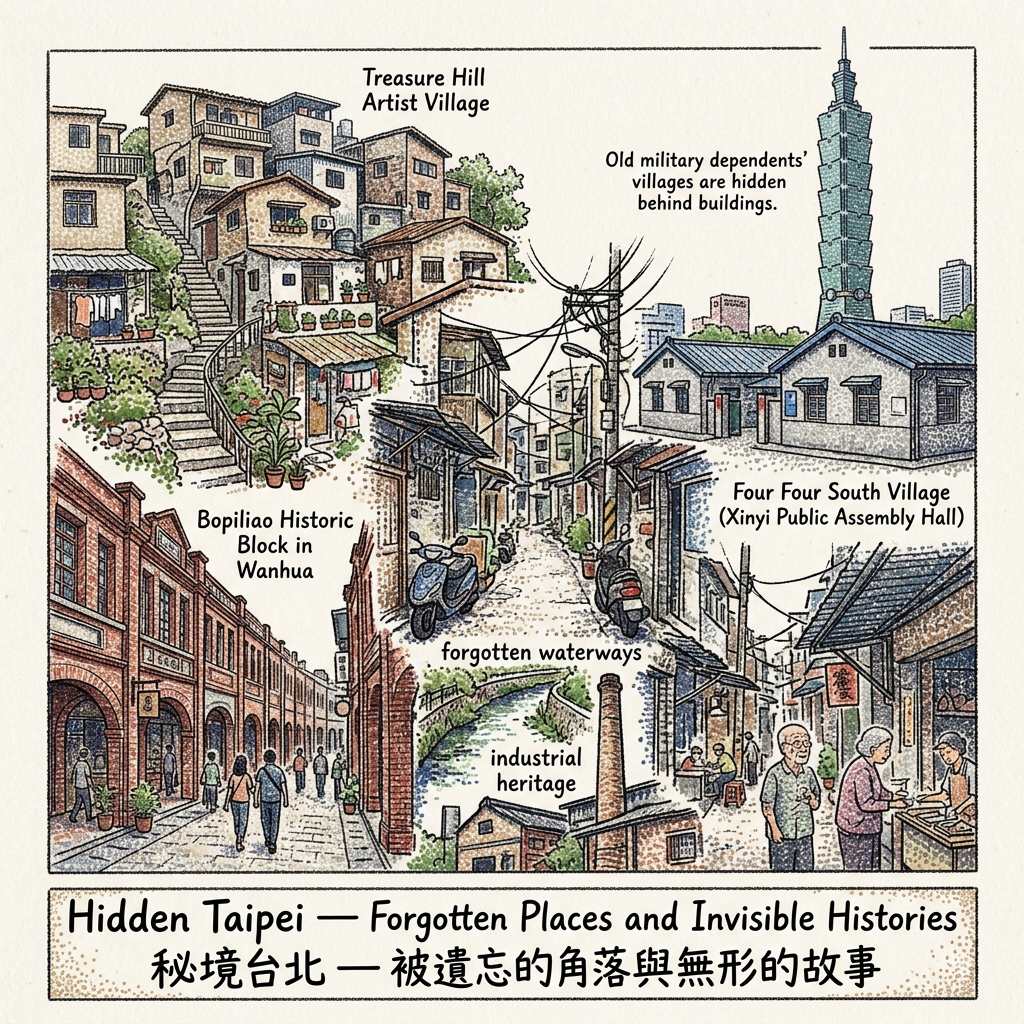
The most interesting Taipei stories are not always found on the main tourist routes.
Some survive in narrow lanes.
Some are hidden behind modern buildings.
Some exist only in the memories of local communities.
Old settlements, military dependents' villages, abandoned industrial spaces, historic waterways and overlooked neighbourhoods reveal a different Taipei.
Places such as Treasure Hill and Four Four South Village show how communities once lived within a city that was rapidly changing around them.
Other stories have almost disappeared.
This is where Hidden Taipei begins.
It explores the places and memories that conventional travel guides often overlook.
Explore Hidden Taipei
- Treasure Hill
- Four Four South Village
- Bopiliao Historic Block
- Old settlements
- Military dependents' villages
- Forgotten waterways
- Historic neighbourhoods
- Industrial heritage
- Disappearing communities
- Taipei's overlooked stories
Recommended reading:
→ Hidden Taipei Theme Pillar
6. Living Taipei — Food, Tea, Markets and Everyday Culture
 Lawrence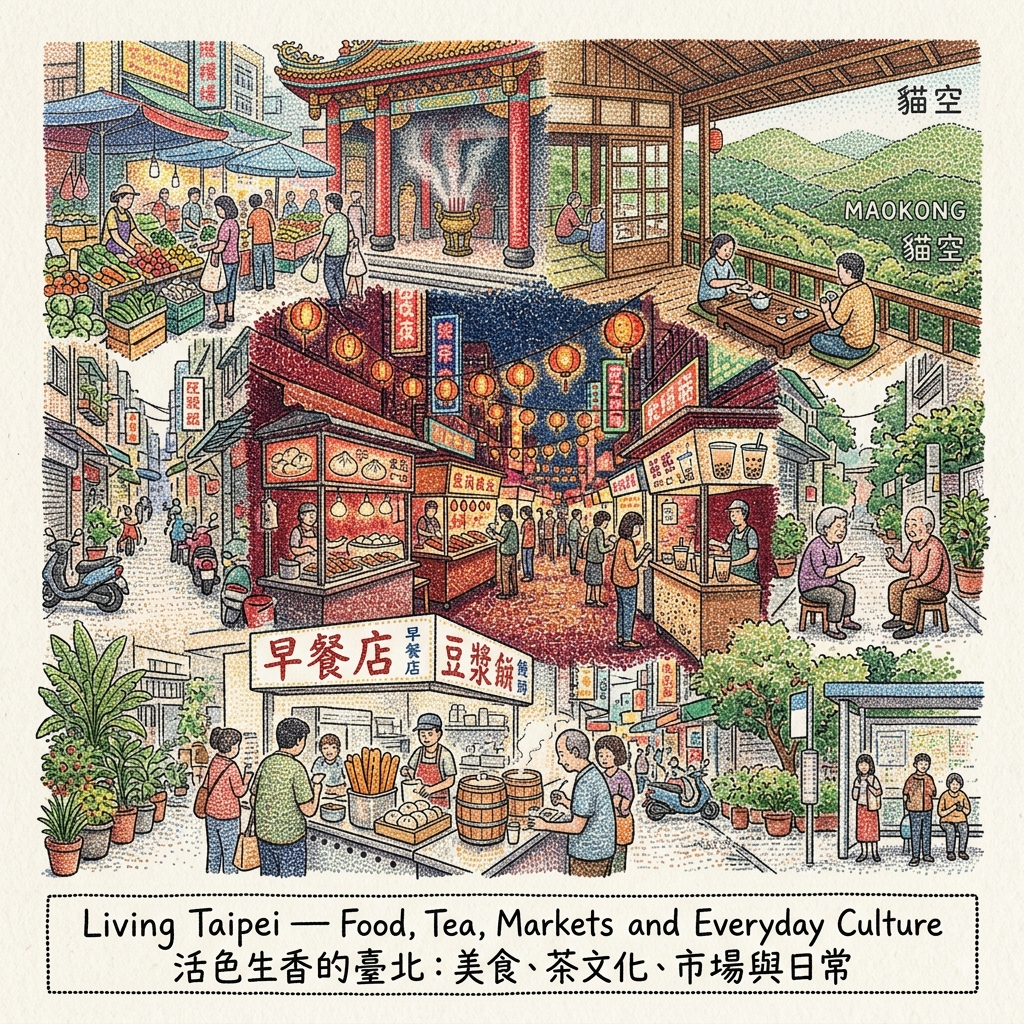
History does not live only inside museums.
It lives in breakfast shops.
It lives in traditional markets.
It lives in tea houses, night markets, temples, parks and neighbourhood streets.
Taipei's everyday culture reveals how historical traditions continue to evolve.
A bowl of traditional breakfast can reflect migration and food culture.
A tea house can reveal the city's connection with Taiwan's tea-producing regions.
A night market can reveal the evolution of street commerce and popular culture.
A neighbourhood market can show how communities have survived generations of urban transformation.
Living Taipei explores the culture that people experience every day.
Explore Living Taipei
- Taipei night markets
- Traditional breakfast culture
- Tea culture
- Maokong
- Traditional markets
- Street food
- Neighbourhood life
- Festivals
- Cafés and tea houses
- Taipei's everyday culture
Recommended reading:
→ Living Taipei Theme Pillar
Taipei Through Six Historical Layers
The six themes above are not separate stories.
They overlap.
A temple can also be a commercial centre.
A market can preserve colonial history.
A neighbourhood can contain traces of Qing settlement, Japanese planning and post-war migration.
A modern building can stand on land with centuries of history.
This is why Taipei should be understood as a layered city.
The Six Layers
Colonial Taipei
Power, settlement, empire and urban foundations.
Sacred Taipei
Temples, beliefs, rituals and spiritual communities.
Commercial Taipei
Markets, merchants, trade and consumer culture.
Modern Taipei
Migration, urbanization, technology, democracy and reinvention.
Hidden Taipei
Forgotten places, disappearing communities and overlooked histories.
Living Taipei
Food, tea, festivals, markets and everyday cultural life.
Together, these layers form a more complete picture of Taipei.
Explore Taipei by Historical Journey
Taipei Before the Modern City
Begin with the Taipei Basin, Indigenous communities, Qing settlement and the emergence of early commercial centres.
Taipei Under Japanese Rule
Follow the transformation of Taipei into a modern colonial administrative city through architecture, transportation and urban planning.
Post-war Taipei
Discover how migration, economic development and rapid population growth transformed the city after 1949.
The Rise of Modern Taipei
Explore the MRT, high-rise development, new commercial districts and the city's emergence as a global Asian capital.
Taipei Today
Look beyond the skyline to discover a city where historical traditions, creative culture, technology and everyday life continue to intersect.
Explore Taipei by Place
You can also explore Taipei geographically.
Discover the historic commercial world of Dadaocheng.
Follow the religious and community history of Wanhua.
Explore the political heart of central Taipei.
Understand the transformation of Xinyi through modern architecture and Taipei 101.
Walk through the older streets of Zhongshan.
Discover tea culture around Maokong.
Or leave the conventional tourist routes behind and explore Taipei's forgotten neighbourhoods.
Every district contains more than one story.
Taipei's Hidden Connections
One of the best ways to understand Taipei is to connect apparently unrelated places.
A temple may explain the development of a neighbourhood.
A market may explain migration.
A railway may explain commercial growth.
A colonial building may explain political transformation.
A housing development may explain post-war population growth.
A night market may reveal the evolution of everyday commerce.
These connections transform a collection of places into a historical narrative.
A Different Way to Travel Taipei
Most travel guides ask:
What should you see in Taipei?
This guide asks a different question:
Why is Taipei like this?
Why are temples located where they are?
Why did Dadaocheng become a commercial centre?
Why does Japanese architecture remain visible?
Why did Taipei grow so densely?
Why did certain neighbourhoods survive?
Why do traditional markets remain important?
Why does old culture coexist so naturally with technology and modern architecture?
Once you start asking these questions, Taipei becomes much more than a destination.
The city becomes a story.
Why Taipei Is Historically Fascinating
Taipei's uniqueness comes from the interaction of different historical forces.
It is simultaneously:
- A city shaped by Indigenous heritage
- A product of Qing-era settlement
- A former Japanese colonial capital
- A post-war migration centre
- A rapidly modernized Asian metropolis
- A democratic capital
- A technology and creative hub
- A city where traditional culture remains part of everyday life
Few cities allow these layers to be explored within such a compact urban landscape.
Taipei: A City That Never Stopped Changing
Taipei's history is not a straight line.
It is a process of adaptation.
Settlements became markets.
Markets became commercial districts.
Colonial infrastructure became part of the modern city.
Old temples survived beside new buildings.
Military villages became cultural spaces.
Industrial areas became creative districts.
Traditional food became part of contemporary urban culture.
The city continually transforms itself while carrying fragments of its previous identities forward.
That is what makes Taipei worth exploring beyond its famous landmarks.
Final Reflection — Reading Taipei
If you only visit Taipei, you see destinations.
If you walk through Taipei with historical curiosity, you begin to see connections.
A street becomes a former river route.
A temple becomes a community archive.
A market becomes evidence of migration.
A colonial building becomes a reminder of political change.
A housing estate becomes a record of post-war transformation.
A hidden alley becomes a surviving fragment of an older city.
And suddenly, Taipei is no longer just a place to visit.
It becomes a city to read.
This is Taipei — not as a checklist of attractions, but as a living historical landscape.
Explore the Taipei Collection
Start with the theme that interests you most:
Colonial Taipei — Discover the political, architectural and urban foundations of the modern city.
Sacred Taipei — Explore temples, beliefs and the spiritual landscape of Taipei.
Commercial Taipei — Follow the evolution from river trade and traditional markets to modern commerce.
Modern Taipei — Understand migration, urbanization, technology, democracy and reinvention.
Hidden Taipei — Uncover forgotten places, disappearing communities and overlooked histories.
Living Taipei — Experience the food, tea, markets, festivals and everyday culture that keep Taipei alive.
Taipei is not one story.
It is thousands of stories occupying the same city.
 Lawrence
 Lawrence