(ENG) Terajima Labyrinth Walk – A Literary and Historical Journey through Tokyo’s Forgotten Alleys
Step into the "Terajima Labyrinth," a forgotten corner of Tokyo where Nagai Kafu once wandered. The hidden stories of Higashi-Mukojima: from its origins as a riverside flower garden to its survival as a maze of Showa-era nostalgia and local craftsmanship.

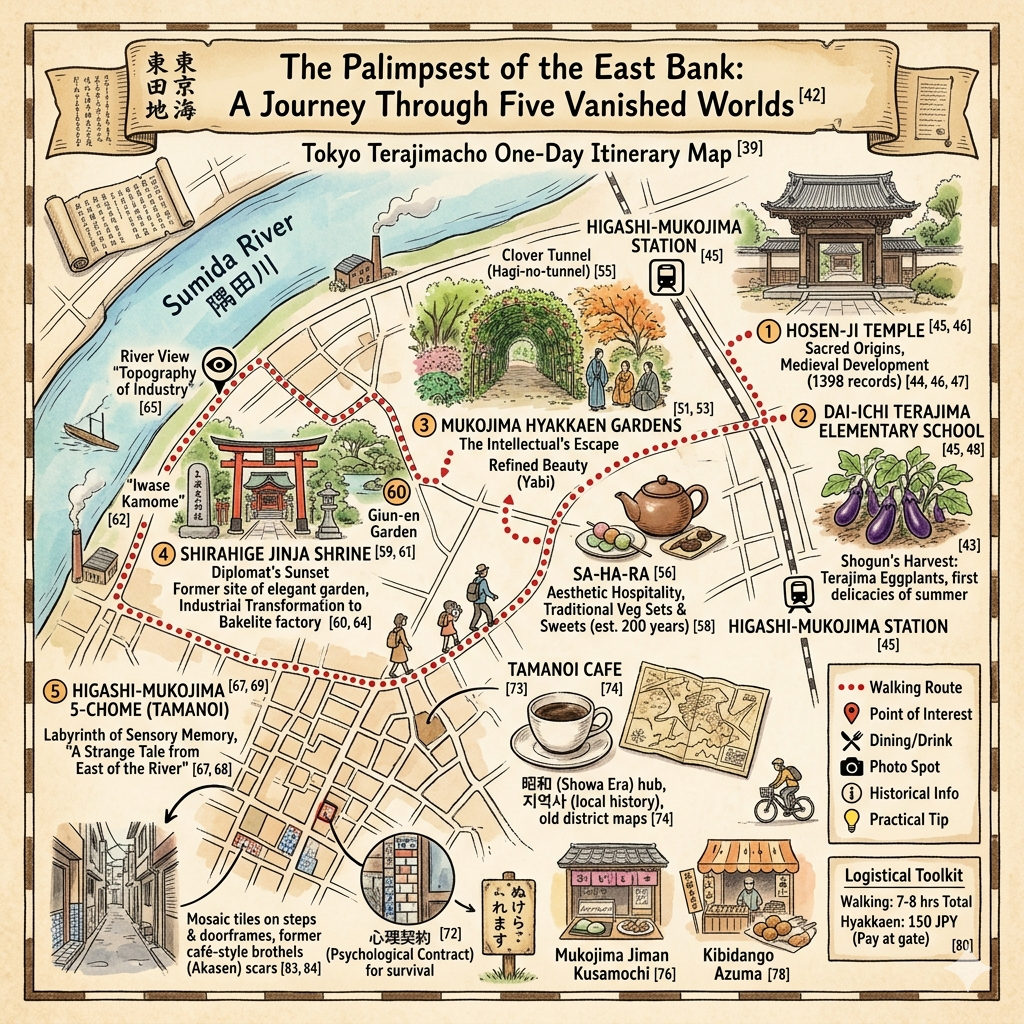
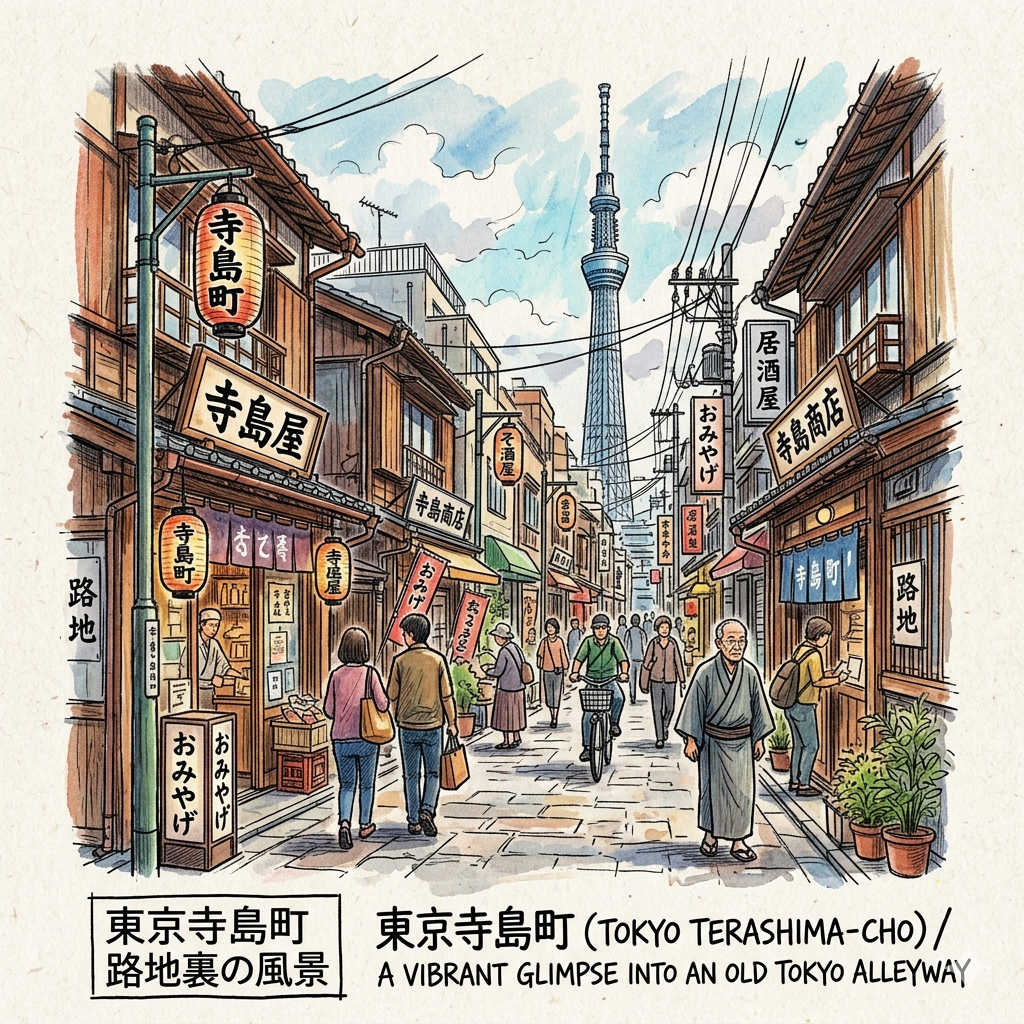
This is a historical travel story and walking guide to Terajima, a hidden neighborhood in Tokyo's Sumida Ward now known as Higashi-Mukojima. By navigating its maze-like alleys, it explores the literary traces of Nagai Kafu, surviving Showa-era architecture, and the resilient local spirit that defines this former "Island of Temples." Readers will discover a nostalgic perspective of Tokyo where history, craftsmanship, and urban legends still linger.
 Lawrence
To step away from the concrete embankments of the Sumida River and into the claustrophobic alleys of East Mukojima is to traverse a landscape of persistent ghosts. This district, historically known as Terajima, serves as a profound urban palimpsest, where medieval temple boundaries, Shogunal garden logistics, and the neon-lit shadows of the Taisho underworld remain etched into the current street grid. Once a precarious collection of natural levees in a sprawling marshland, Terajima evolved into a vital industrial heartland and a sanctuary for the literati. To walk here today is not to observe history from a distance, but to navigate a living spatial archaeology. By peeling back the layers of this resilient neighborhood, we uncover a microcosm of Tokyo’s soul—a city defined by the constant, restless tension between administrative erasure and historical continuity.
Listen to the historical stories told in detail (For subscribers only)
The Island of Temples: Medieval Power in the Delta
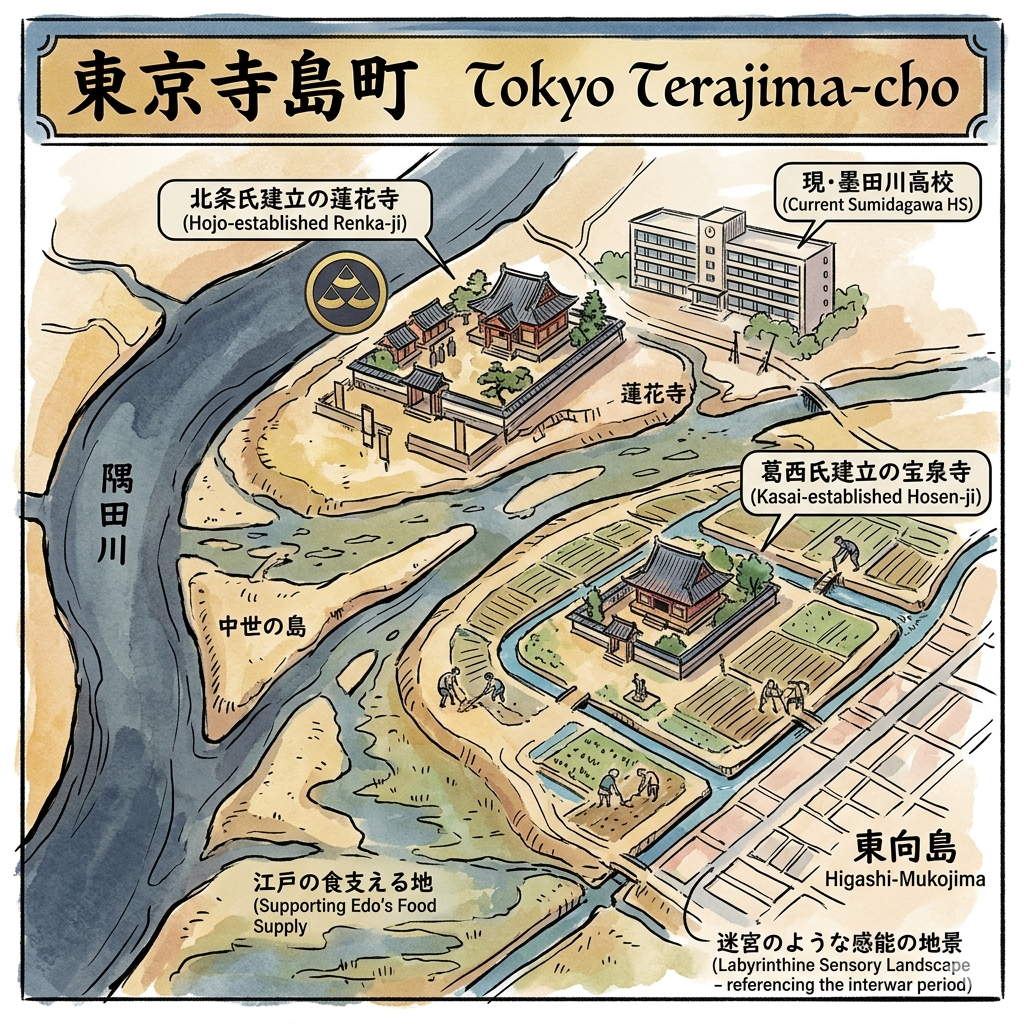
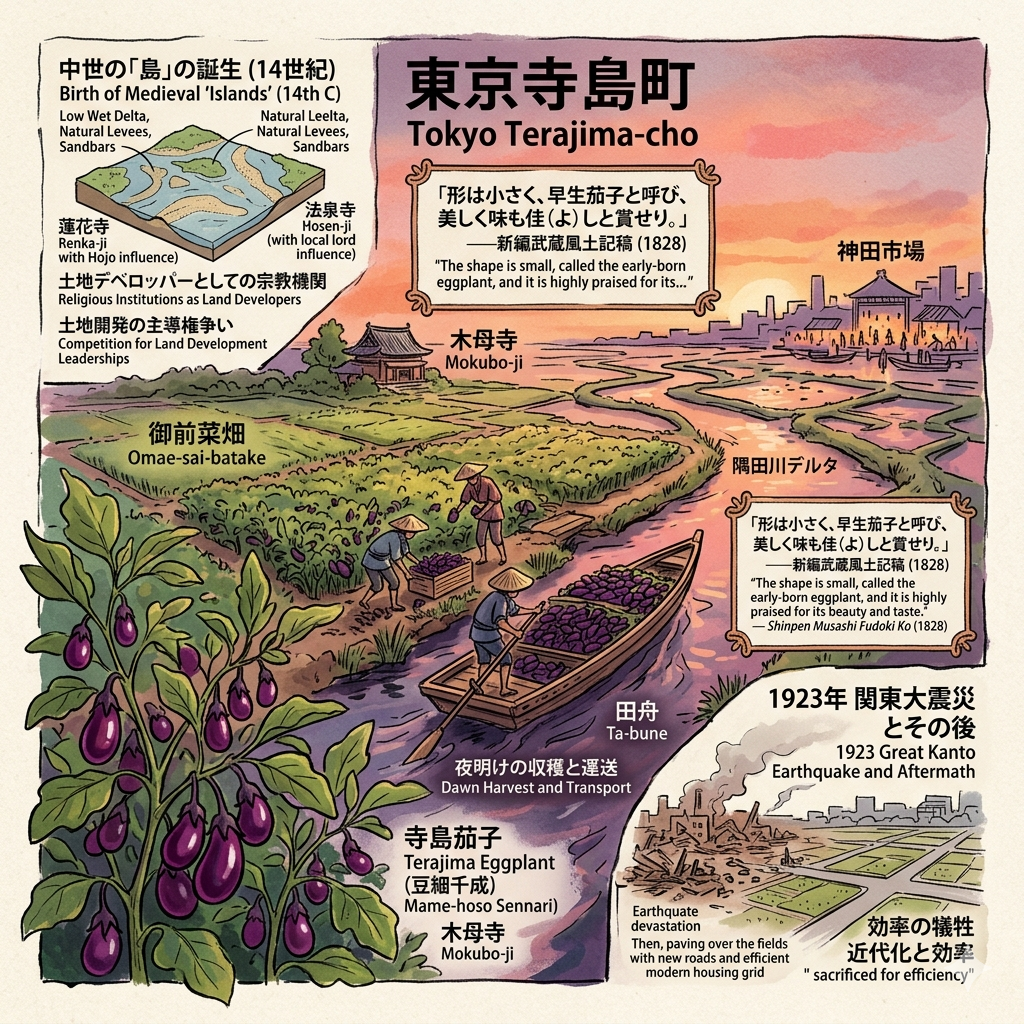
In the 14th century, the term "island" (jima) was a literal topographical reality. The Sumida delta was an unstable landscape of sandbars and natural levees rising precariously from the floodplains. In this frontier, the "Creation Myths" of Terajima reveal a medieval power struggle played out through religious architecture. One narrative, preserved in the Shinpen Musashi Fudoki Ko, links the area’s birth to Renka-ji, founded by the Hojo clan in 1261 to project their ideological influence into the delta. A competing narrative credits Hosen-ji, established by Kasai Kiyoshige, a local lord who transformed the marsh into a stable, taxable domain.
These religious institutions functioned as the area’s primary urban developers, acting as essential "organizers of irrigation" and legitimizers of land rights. This religious land management provided the first stable ground in the delta, turning broken silt into a productive community. The irony of this transformation is visible in the neighborhood’s current geography: while Hosen-ji remains a quiet anchor in Higashi-Mukojima 3-chome, the former site of Renka-ji has transitioned into Sumidagawa High School. The ground that once legitimized the feudal rights of the Hojo clan now serves the civic utility of Tokyo’s youth—a transition from sacred boundary to educational frontier.
The Shogun’s Kitchen and the "Gem" of the Field
By the 18th century, the fertile alluvial soil of Terajima was co-opted for the "Edo Kitchen," a massive agricultural expansion fueled by the Shogunate’s logistical needs. Near the temple of Mokubo-ji, the Omae-sai-batake (Imperial garden) was established—a specialized site dedicated to the terroir of the delta. The undisputed star of this period was the Terajima Eggplant (Mame-hoso Sennari). This small, egg-shaped fruit with skin like deep purple lacquer was a luxury brand, highly prized for its firm texture and beauty.
The logistics of this "gem" were as refined as the produce itself. At dawn, farmers would load their harvests onto Ta-bune (field boats), navigating the intricate waterways of the Sumida to reach the elite markets of Kanda.
"The shape is small, called the early-born eggplant, and it is highly praised for its beauty and taste." — Shinpen Musashi Fudoki Ko (1828)
This early wave of agricultural commercialization marked Terajima as a place of high aesthetic and practical value. However, the 1923 Great Kanto Earthquake triggered an unsentimental modernization; as the city rushed to house displaced residents, the eggplant fields were paved over. The disappearance of this crop mirrors the broader story of Tokyo: a city that frequently sacrifices its historical "flavor" for the efficiency of the grid.
Mukojima Hyakkaen and the Democratization of Beauty
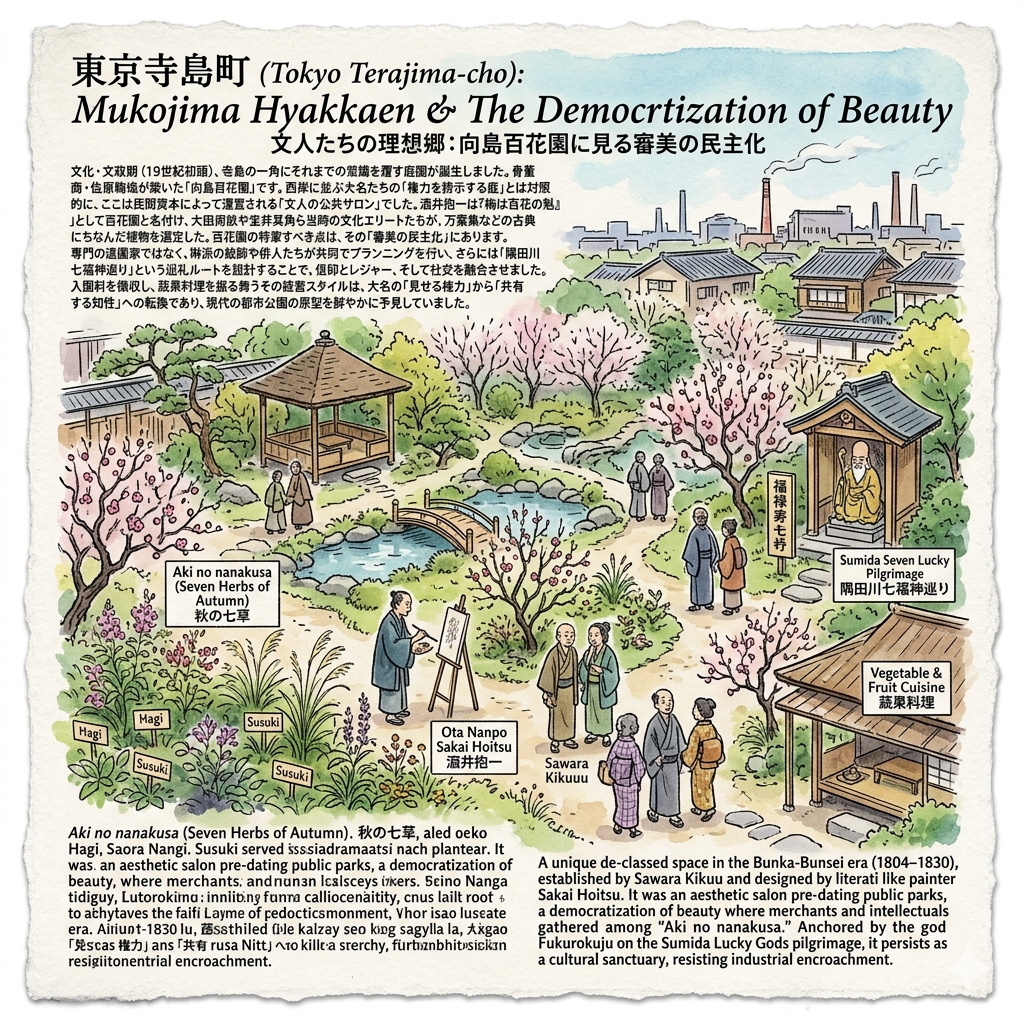
During the Bunka-Bunsei era (1804–1830), Terajima became the epicenter of a "democratization of beauty." While Shogunal gardens were formal projections of feudal power, Mukojima Hyakkaen—established by the antique dealer Sawara Kikuu—was a product of aesthetic networks. Designed by literati like the painter Sakai Hoitsu rather than professional landscapers, the garden functioned as a private salon that pre-dated the concept of the public park.
This was a "de-classing" of space, where merchant-class intellectuals gathered among the "Seven Herbs of Autumn" (Aki no nanakusa), a literary anchor that still draws visitors today. Hyakkaen also became a focal point for the Sumida Seven Lucky Gods pilgrimage, housing the god Fukurokuju and anchoring the garden to the neighborhood’s spiritual geography. It persists as a cultural sanctuary, a site where the soft power of aesthetic refinement successfully resisted the encroachment of the surrounding industrial landscape.
Tamanoi: The Labyrinth of Literary Memory
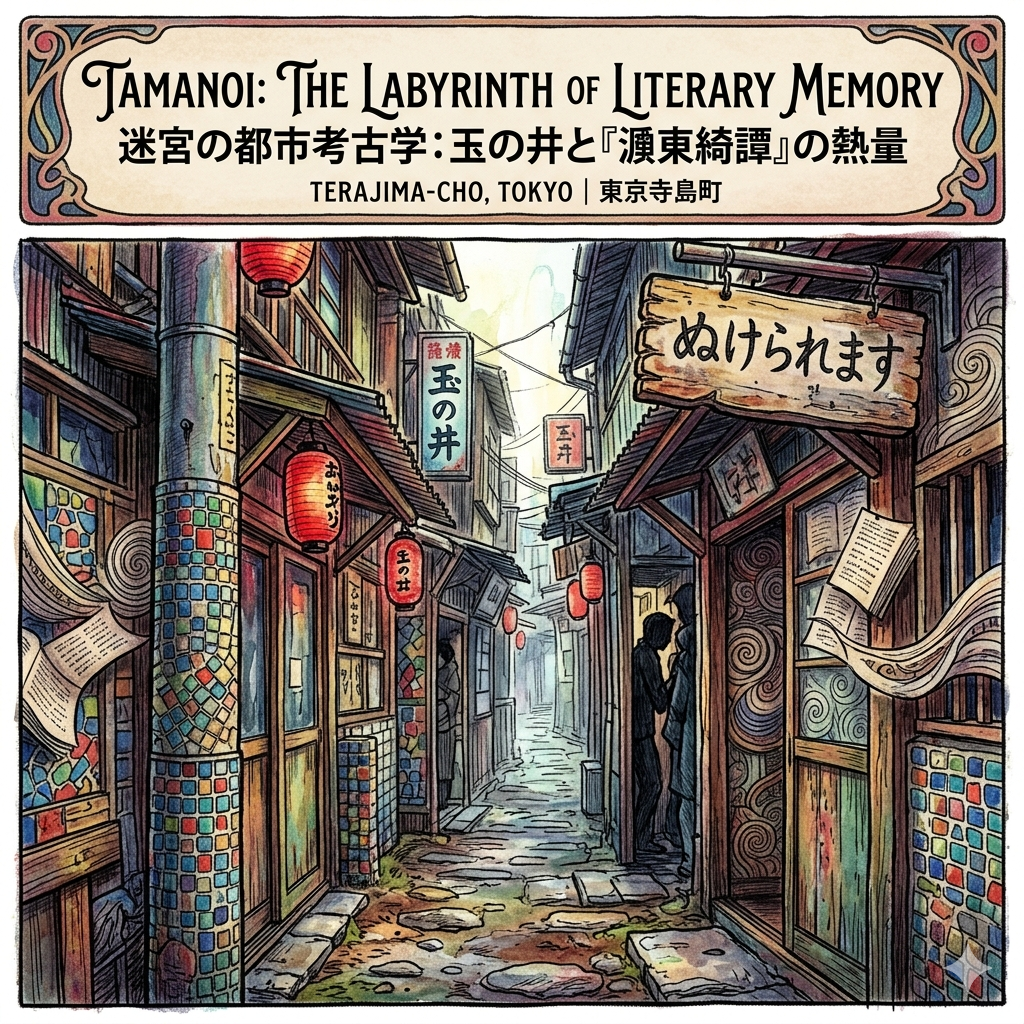
The most visceral layer of Terajima’s palimpsest is Tamanoi, an entertainment district that rose from the marshy lowlands following the 1923 earthquake. Immured in the prose of Nagai Kafu’s A Strange Tale from East of the River (Bokuto Kitan), Tamanoi was a "spatial archaeology" of desire. It was defined by its "Rabi-lanto" (labyrinth) structure—a maze of alleys so narrow that two souls could barely pass without touching.
This "illegal" space offered a refuge from the rigid, modernizing grid of the city. The architectural language of Tamanoi was sensory and secretive, marked by vibrant mosaic tiles on pillars and signs reading nukeraremasu ("you can pass through"), inviting the traveler into a hidden world. Today, in the alleys of Higashi-Mukojima 5-chome, one can still find "sensory scars"—fragments of these residual mosaic tiles clinging to old walls. They are the last architectural witnesses to a district that resisted the cold order of progress with a chaotic, human-scaled intimacy.
Kiun-en: From Diplomatic Exile to Bakelite Factories
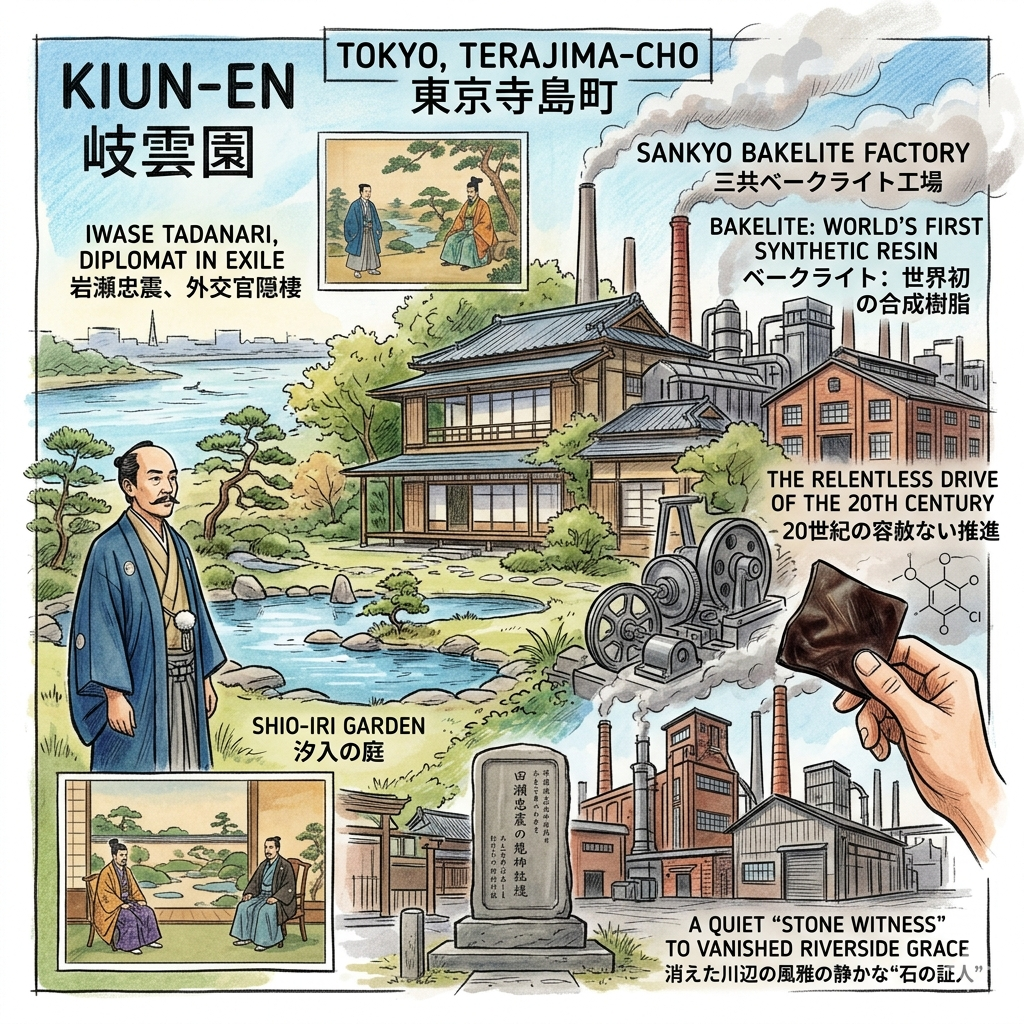
The final layer reveals the brutal logic of Tokyo’s land use. In the mid-19th century, the riverside hosted Kiun-en, the residence of the diplomat Iwase Tadanari (Osho). A key architect of the Treaty of Amity and Commerce, Tadanari lived here in political exile, tending a "Shio-iri" (tide-inlet) garden that rose and fell with the Sumida’s pulses.
The site’s transition encapsulates the relentless drive of the 20th century. This garden, which once hosted the Emperor under the ownership of Sanjo Sanetomi, was ultimately consumed by the Sankyo company. The diplomatic villa was razed to make way for factories producing Bakelite—the world’s first synthetic resin. This shift from high diplomacy to chemical manufacturing is the ultimate industrial overlay. Today, Tadanari’s monument stands at the Shirahige Shrine, a quiet "stone witness" to a vanished riverside grace, standing in the literal shadow of the area's manufacturing legacy.
The Hidden Gem for the Thoughtful Traveler
The Tamon-ji Exchange Farm offers a rare moment to touch the tangible history of the district. It is here that local residents successfully revived the nearly extinct Terajima Eggplant using seeds recovered from a national gene bank. Visiting this community farm allows the traveler to witness the resilience of the neighborhood's botanical heritage, bridging the gap between the Shogun's table and the modern neighborhood's efforts to reclaim its identity.
Conclusion: A Philosophical Reflection
The story of Terajima is a narrative of resilience and the persistent nature of the palimpsest. This land has survived floods, earthquakes, and the firebombing of 1945, each time rising atop its own ruins. Yet the most profound wound was the "linguistic erasure" of 1964, when the name "Terajima" was struck from administrative maps in favor of the functional "East Mukojima." This change reflects a modern struggle: the state’s desire for efficiency versus the human need for historical identity.
While the name has faded from the postmarks, the "Genius Loci"—the spirit of the place—stubbornly remains. It survives in the stubborn curve of a medieval alley, the blooming herbs of the Hyakkaen, and the deep purple skin of a revived eggplant. As you walk these streets, you are treading upon five centuries of ambition, exile, and art. It leaves one to contemplate: what layers of memory are we walking over in our own cities, and what essential names are we allowing to slip into silence?
To explore the deeper layers of the world's great urban centers, we invite you to subscribe to the Historical Travel Stories newsletter.
How to Experience Terajima Today
- Getting There: Take the Tobu Skytree Line to Higashi-Mukojima Station. The district’s historical core is located immediately to the west.
- Walking Tours: Embark on a self-guided "Nagai Kafu" walk, starting at Shirahige Shrine and winding through the narrow corridors of the former Tamanoi district (Higashi-Mukojima 5-chome).
- Best Time to Visit: Visit Mukojima Hyakkaen in September or October to witness the "Seven Herbs of Autumn" or during the first week of January for the Sumida Seven Lucky Gods pilgrimage.
Q & A
What is the cultural significance of the 'Tamanoi' labyrinth in literature?
In literature, the Tamanoi labyrinth holds profound cultural significance as a symbol of resistance to modern urban order, a preservation of sensory history, and a haven for marginalized culture. Its significance is primarily cemented through the works of the great writer Nagai Kafū, particularly his 1937 novel Bokutō Kitan (A Strange Tale from East of the River).
The cultural significance of this labyrinthine space can be understood through several layers:
1. A Sanctuary of "Edo-style Freedom" against MilitarismDuring the 1930s, as Japan moved toward a rigid, suffocating militaristic social order, the chaotic and "illegal" nature of Tamanoi became a cultural refuge. Nagai Kafū viewed the labyrinth—with its narrow, irregular paths (referred to as Rabi-lanto)—as an escape from the cold, functionalist grid of the modernizing city. In this sense, the labyrinth represents a silent resistance to the centralized control and homogenization of the era.
2. Architectural Language as Narrative ToolThe physical characteristics of Tamanoi were not just a backdrop but a vital part of its literary identity. Kafū meticulously recorded the unique "architectural language" of the district:
- Visual Markers: The "café-style" buildings featured vibrant mosaic tiles, glass-embedded pillars, and specific signage like "Nukeraremasu" (You can pass through).
- Spatial Intimacy: The extreme narrowness of the paths, often only wide enough for one person, facilitated the chance encounters between the protagonist and the heroine, O-yuki, making the geography essential to the plot.
3. Literary Archaeology and Urban RecordKafū acted as a "pathological observer," using literature to perform a kind of spatial archaeology. In both Bokutō Kitan and his diary, Danchōtei Nichijō, he included precise maps and descriptions of landmarks such as the Tamanoi Inari Shrine (nicknamed the "Poverty Inari") and the Whitebeard Shrine. This literary effort transformed a transient, marginal district into a permanent record of Tokyo’s urban history, preserving the "scars of desire" that administrative records sought to erase.
4. The "Genius Loci" of the Marginal SpaceTamanoi represents the "marginality" that allows for cultural diversity. It is a place where the "refined" (literary pursuits) and the "vulgar" (the private brothel district) could coexist. Even today, the residual labyrinthine structure and fragments of mosaic tiles in the modern East向島 (Higashi-Mukojima) area serve as a "Genius Loci" (spirit of place), allowing modern residents and readers to connect with a vanished era of sensory and emotional complexity.In summary, the Tamanoi labyrinth is significant in literature not just as a setting, but as a living organism that challenged the sterility of modern urban planning and provided a space for individual freedom and historical continuity.
What is the cultural significance of the legendary Terajima eggplant?
The legendary Terajima eggplant (scientifically known as Tsuruboso Sennari) is far more than a historical crop; it serves as a vital cultural symbol representing the agricultural heritage, elite status, and modern identity of the Terajima-cho (now Higashi-Mukojima) area,.According to the sources, its cultural significance is defined by several key factors:
1. Symbol of "Edo’s Kitchen" and Elite StatusDuring the Edo period, Terajima was renowned as the "Kitchen of Edo" due to its fertile alluvial soil. The Terajima eggplant reached its peak of cultural prestige during the reign of the fourth Shogun, Tokugawa Ietsuna, when the Shogunate established "Gozensai-hata" (exclusive gardens) in the area. These gardens were dedicated to growing high-quality vegetables specifically for the Shogun’s table, marking the eggplant as a high-value cultural asset.
2. Artistic and Social RepresentationThe eggplant’s significance was captured in the popular culture of the time:
- Visual Arts: It was immortalized in Utagawa Hiroshige’s One Hundred Famous Views of Edo, specifically the print "Mokuboji Uchikawa Gozensaihata," which depicted the busy agricultural landscape of the Shogun's gardens.
- Early-Season Delicacy: Known as an "early-maturing" variety, it was a seasonal marker for the people of Edo. Its firm flesh and tough skin made it ideal for pickling and frying, and durable enough to be transported via "Ta-bune" (field boats) to major markets like Kanda,.
3. A Marker of Urban TransformationThe disappearance of the Terajima eggplant following the 1923 Great Kanto Earthquake symbolizes a major turning point in Tokyo’s urban history. As the area transitioned from a rural supply base to a densely populated residential and industrial district, the loss of the crop represented the literal and figurative "burial" of the region's agricultural past under modern asphalt.
4. Modern Identity and "Genius Loci"Today, the Terajima eggplant has been reinterpreted as a tool for regional branding and community building:
- Cultural Resurrection: In 2009, seeds were retrieved from a national gene bank, and the "miraculous" revival of the crop in local school gardens and community farms has allowed modern residents to reconnect with their history,.
- Regional Mascot: The character "Terajima Nasunosuke," whose statue stands in front of Higashi-Mukojima Station, serves as a visual anchor for the community’s identity, transforming a "vanished" vegetable into a modern symbol of regional pride and nostalgia.
In summary, the Terajima eggplant is a living bridge between the elite shogun-era traditions and the modern effort to preserve a unique "spirit of place" (Genius Loci) against the homogenization of contemporary Tokyo.
Reference and Further reading
- 寺島と柳島 隅田川が育んだ村の伝承 墨田区公式ホームページ, accessed April 8, 2026,
- 寺島町 - accessed April 8, 2026,
- 向島百花園 - accessed April 8, 2026,
- 旧町名 東京市向島區寺島町 - 歩・探・見・感, accessed April 8, 2026,
- 寺島-子育地蔵・旧墨堤 - FC2, accessed April 8, 2026,
- 寺島なす復活プロジェクト - てらたま, accessed April 8, 2026,
- 江戸の記憶を今に。幻の「寺島ナス」が彩る豊かな食卓と心繋がる ..., accessed April 8, 2026,
- 寺島ナス | 東京農業歴史めぐり, accessed April 8, 2026,
- すみだ地域学情報 - 墨田区, accessed April 8, 2026,
- 向島百花園|公園へ行こう! - 東京都公園協会, accessed April 8, 2026,
- 向島百花園 ご案内パンフレット – 東京観光デジタルパンフレットギャラリー(TOKYO Brochures), accessed April 8, 2026,
- 佐原鞠塢(すみだゆかりの人物を紹介します) - 墨田区立図書館, accessed April 8, 2026,
- 向島百花園① - 歴史探訪と温泉 - FC2, accessed April 8, 2026,
- 東京都の歴史散策(妙見山別院、勝海舟像、藤田東湖「天地正大気」の漢詩碑、榎本武揚像…), accessed April 8, 2026,
- 服との対話を生む場所。『モードの悲劇』を訪れて|すみだ向島EXPO NOTE, accessed April 8, 2026,
- 『濹東綺譚』の舞台を訪ねて - 荷風の すみださんぽ, accessed April 8, 2026,
- vol.63 永井荷風「濹東綺譚」を読んで|西野 友章 - note, accessed April 8, 2026,
- 男子の義 胆 堅 きこと鉄 に似たり - 特許庁技術懇話会(特技懇), accessed April 8, 2026,
- 【向島】岩瀬忠震君之墓碑(白鬚神社)岐雲園跡(岩瀬忠震居住の地)白鬚橋【雑司ケ谷】岩瀬忠震墓@雑司ケ谷霊園|pase_kamui - note, accessed April 8, 2026,
- 「白ひげ神社」は、墨田区内ではここだけ? - 荷風の すみださんぽ, accessed April 8, 2026
 Lawrence
 Lawrence
 Lawrence