
Sacred Relics in Warfare 聖髑出征
For three thousand years, armies have carried the bones of saints into war. From the contested caves of Kyiv to the Horns of Hattin, relics were never mere religious objects. They were territorial claims that no earthly court could overturn.
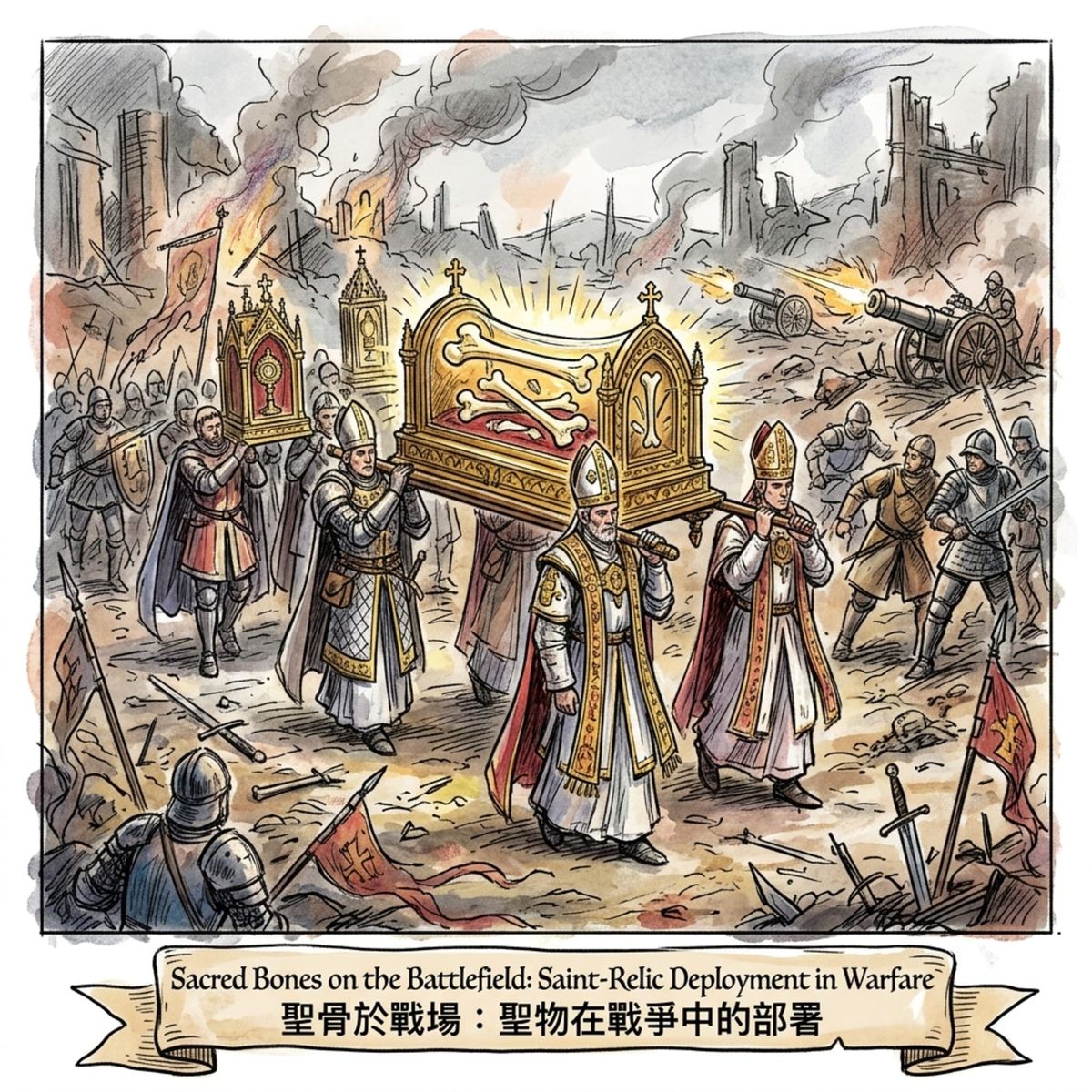
This is a historical travel essay about one of the most persistent and least examined military practices in recorded history: the deployment of saints' relics on the battlefield. It moves between five locations — the cave-monastery beneath the hills of Kyiv, a Carmelite convent on the edge of a gorge in southern Spain, a volcanic plateau above the Sea of Galilee, a spring shrine in a back street of Istanbul, and an excavated destruction layer in the West Bank — and across five civilisations separated by as many as three thousand years. What connects them is not a shared religion, nor a shared culture, nor any historical contact. What connects them is a shared logic: that the physical remains of the holy dead could stake a territorial claim that no army, no treaty, and no court of law could ultimately overturn. The reader who arrives at the end of this essay will, I hope, understand not only why this logic was so durable, but why, in certain respects, it has not yet stopped working.
 Lawrence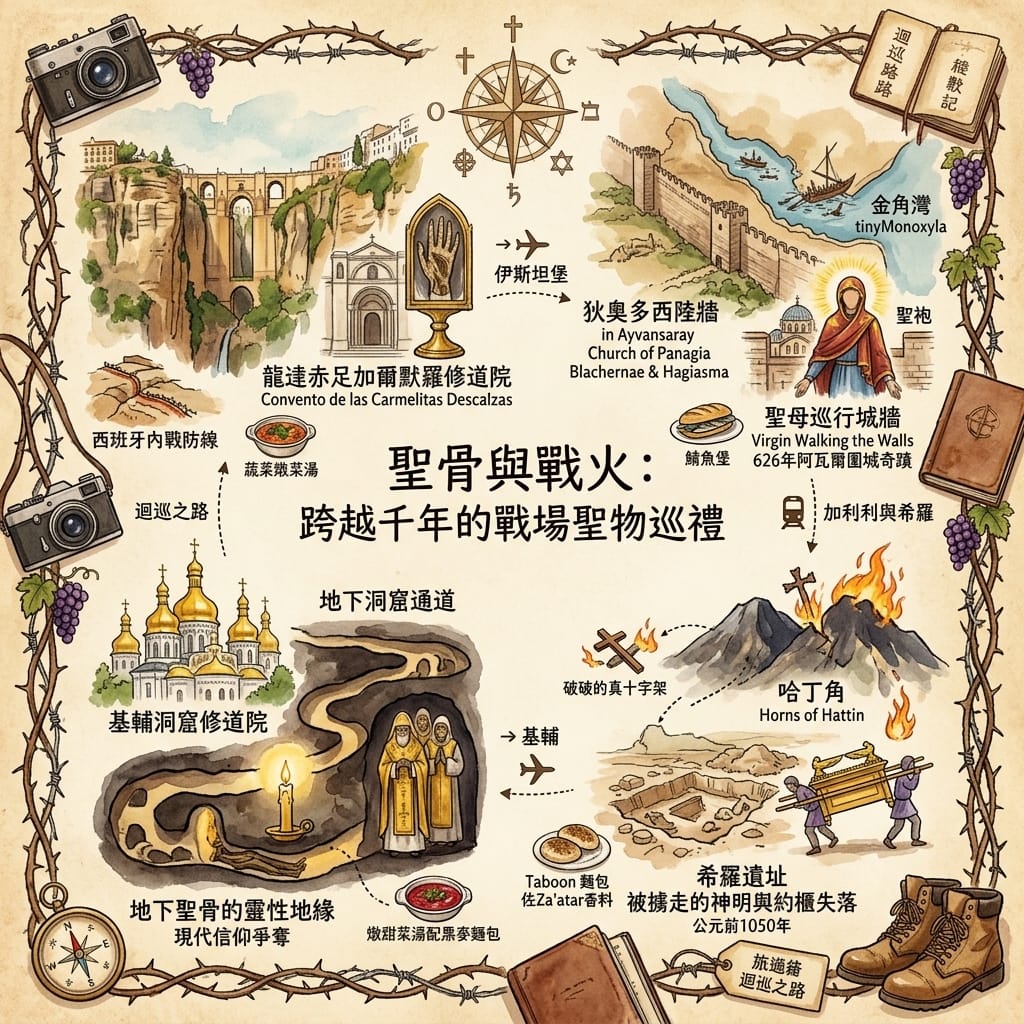
 Lawrence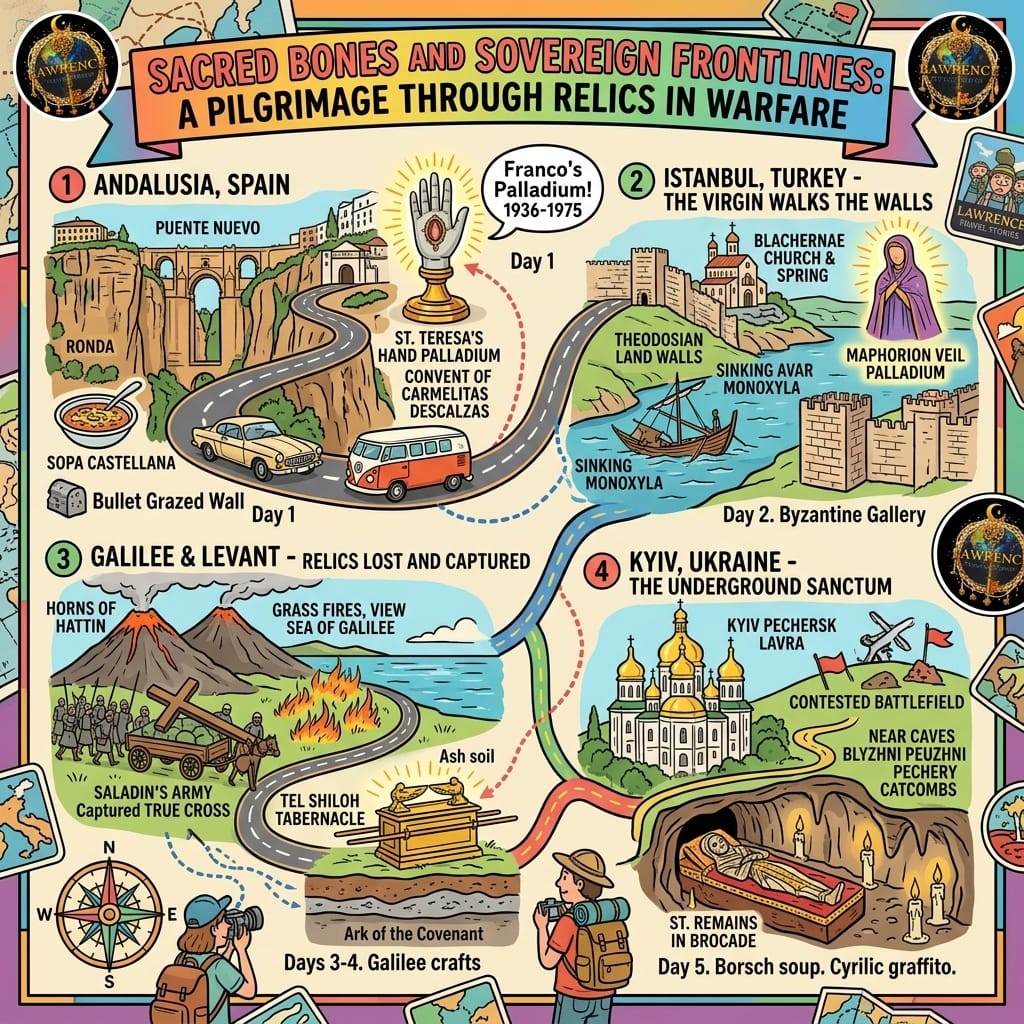
 Lawrence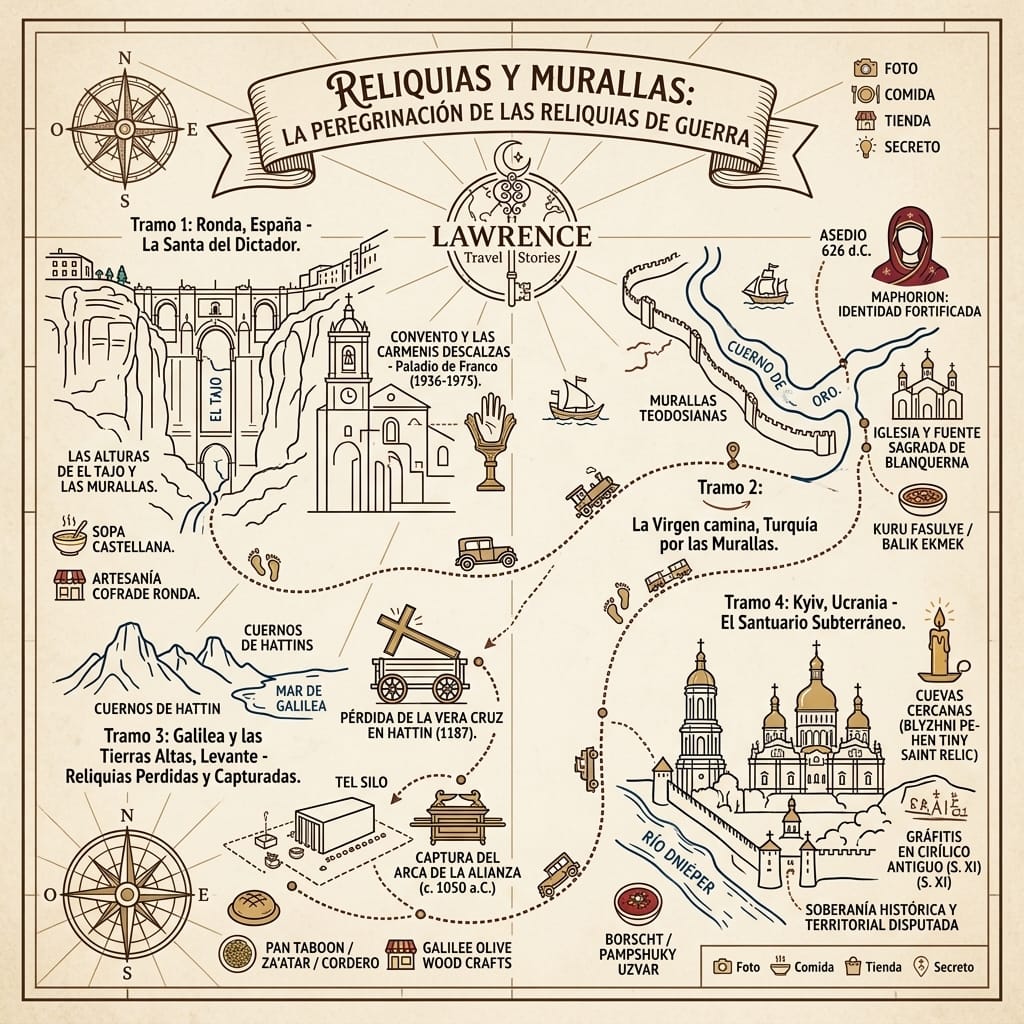
 Lawrence
 Lawrence
 Lawrence
 Lawrence
 Lawrence
 Lawrence
 Lawrence