(ENG) The Ghost of Mikawashima: Walking Through Tokyo’s Forgotten Industrial Heart
Mikawashima serves as a profound reminder that the true identity of a place is not found in its official title, but in its resilience.
Did Mikawashima experience a fourfold increase in population in just ten years?
Is Mikawashima renowned for its effective treatment of sexually transmitted diseases?
How did Father Lassalle help the marginalized on Mikawashima?
The Weight of a Vanishing Map
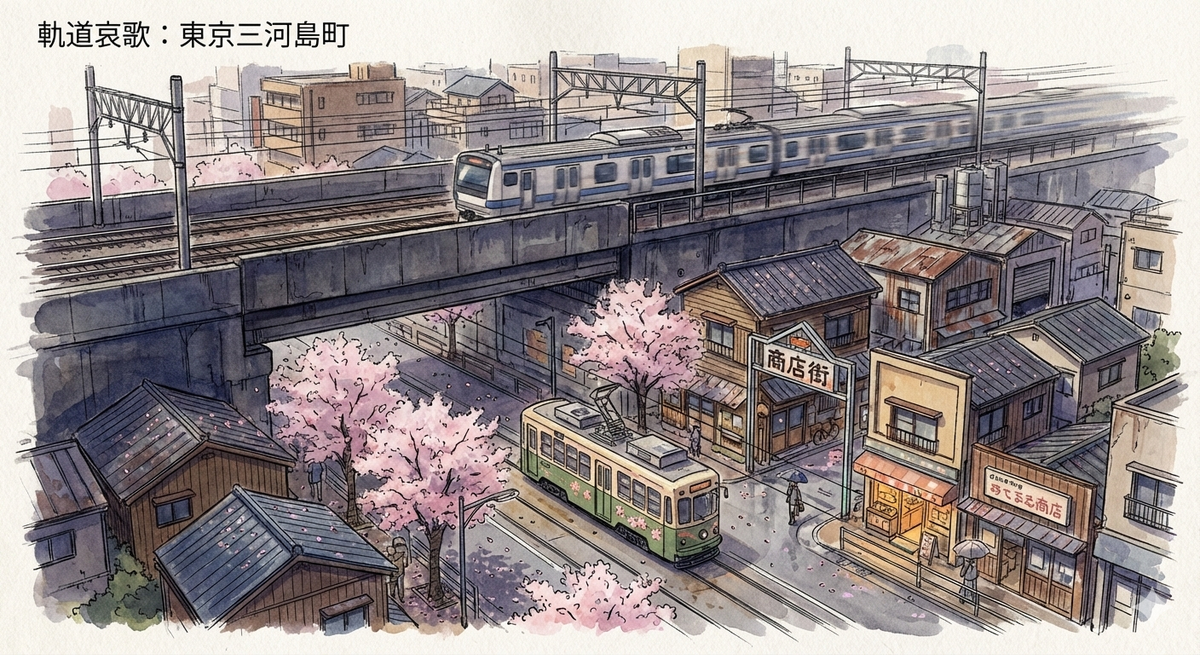
To traverse the modern districts of Arakawa and Machiya is to navigate a landscape defined by an almost violent metamorphosis. This segment of Tokyo, once a serene agricultural hinterland during the Edo Period, was rapidly recast as a soot-stained industrial corridor as the city hurtled toward modernity. Today, the name "Mikawashima" has largely vanished from the official cartography, systematically erased and subsumed into the administrative label of "Arakawa" by 1969. For the intellectually curious traveler, this disappearance offers a profound metaphor for Tokyo’s relentless drive toward the future. Mikawashima is a "lost island"—a district whose true identity is no longer found in the sterilized language of city planning, but in the physical sediment of the past. To find the "true" Mikawashima, one must engage in a form of urban archaeology, seeking the layers the city attempted to pave over and treating each step as an act of historical recovery.
Listen to the historical stories told in detail (For subscribers only)
The Geography of Disappearance: When a Name Becomes a Memory
The erasure of Mikawashima from the map was a deliberate act of administrative pruning. Such renamings are rarely mere bureaucratic updates; they are tools of identity loss, stripping the collective memory from the soil. The friction of this process is visible in the archives: in Meiji 11 (1878), the area of Machiya expressed a distinct sense of "humiliation" when it was merged into Mikawashima Village, reflecting a localized resistance to the folding of one identity into another. Decades later, the irony was completed when Mikawashima itself was absorbed into Arakawa Ward in 1932, before being officially scrubbed from street addresses in the late 1960s. For the traveler, this administrative shuffle matters because it highlights the fragility of "authentic" Tokyo—a city that exists as a series of nested secrets beneath generic labels.
The Evolution of a Name:
- Edo Period: Mikawashima Village (A primary agricultural suburb)
- Meiji Era: North Toyoshima County, Mikawashima Town (The industrial pivot)
- 1932: Tokyo City, Arakawa Ward (The first stage of absorption)
- Circa 1969: Official erasure of "Mikawashima" from most street addresses.
The Resilient Seed: The Century-Old Legacy of Mikawashima Greens
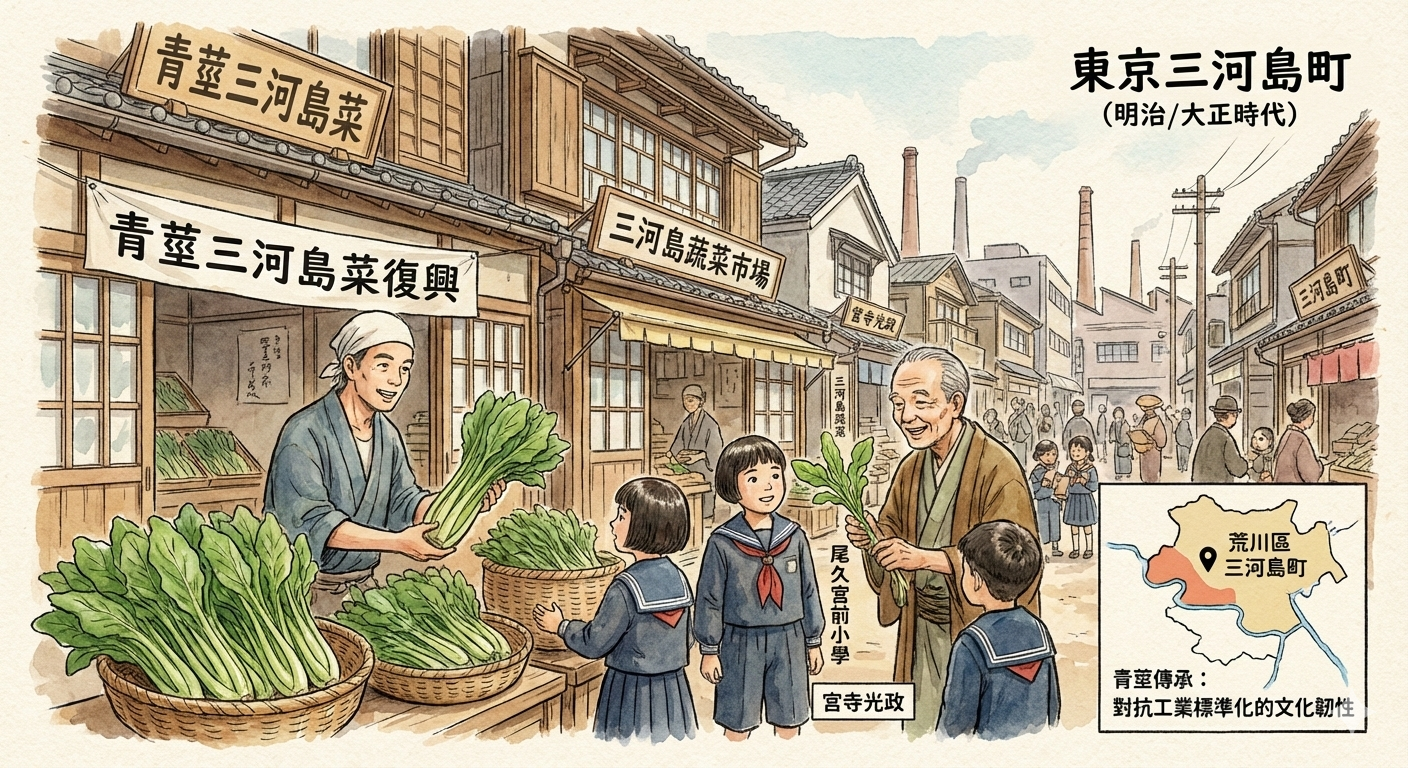
As urban sprawl and industrial concrete choked the fields of old Tokyo, the city’s traditional "Edo Vegetables" were nearly driven to extinction. Among the most resilient survivors is the Aoguki Mikawashima-na (green-stemmed Mikawashima leaf). This vegetable is not merely a crop; its preservation represents a quiet form of cultural resistance against the standardized, industrial food systems of the 21st century. Through the dedication of local experts like Mr. Mitsumasa Miyadera and the students of Ogumiyamae Elementary School, this heirloom plant has been pulled back from the brink. The revival of the Mikawashima-na functions as a living palimpsest, where the act of farming becomes a bridge across a century of industrialization.
"The growth of the traditional Aoguki Mikawashima-na was so impressive it even surprised the Superintendent of Education, reaching a quality comparable to professional farmers." — Superintendent of Education, Arakawa Ward
The Black Gate’s Ballistic Scars: Entsu-ji and the Fallen Shogunate
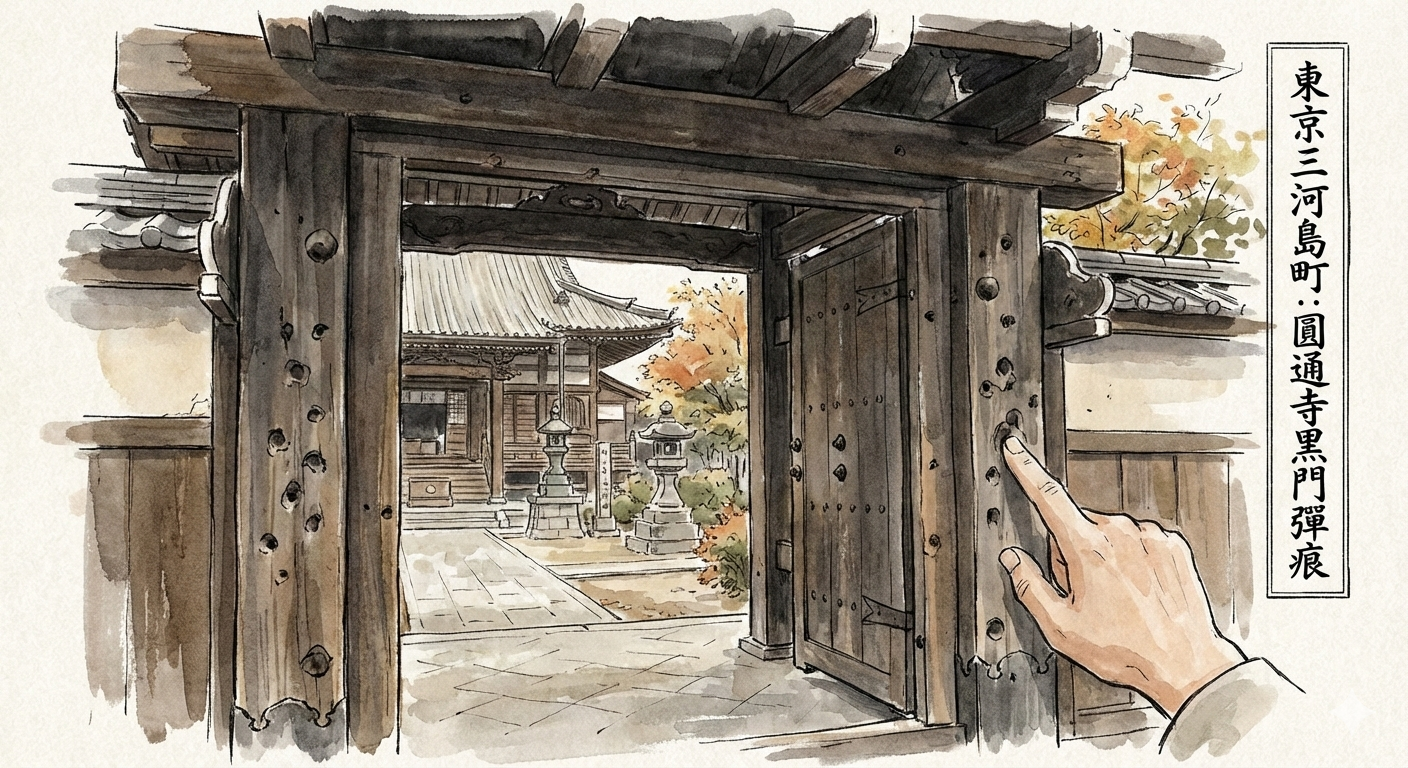
In 1868, the Boshin War’s Battle of Ueno signaled the brutal end of the Tokugawa Shogunate. In the aftermath, approximately 105 warriors of the Shogitai—the defeated loyalists—were left rotting in the heat of Ueno Park, as the new government forbade their burial as a political warning. It was the priest of Entsu-ji who risked political execution to gather these abandoned bodies and provide them with a final resting place. This choice was geographically poignant; Entsu-ji sits near Kozukappara, one of Edo’s most notorious execution grounds. By placing the "defeated" here, Mikawashima became a sanctuary for the marginalized and the forgotten. As a token of gratitude, the "Kuro-mon" (Black Gate) from Ueno’s Kaneiji Temple was moved here, peppered with the literal ballistic scars of the conflict.
Actionable Travel Tip: Stand before the Black Gate and run your fingers over the deep indentations in the timber. These are the bullet holes from 1868. Touching them bridges the gap between the violence of the Meiji Restoration and the silence of the present day.
The Vow of Silence: The Earless Fudo and the Shadows of Yoshiwara
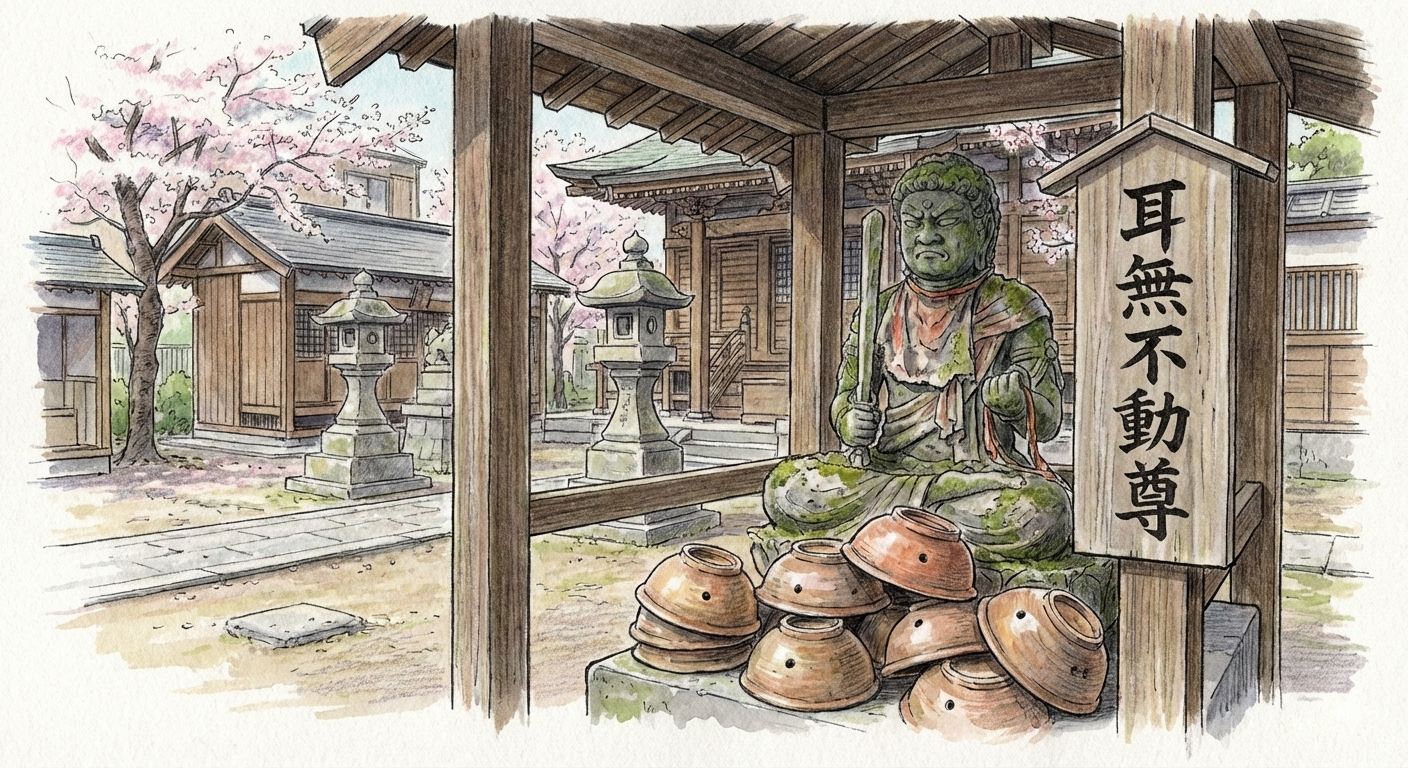
The spiritual landscape of Mikawashima was long tethered to the nearby Yoshiwara pleasure quarters. At Mitsumine Shrine, one finds the "Earless Fudo" (Keshazuka no Miminashi Fudo), a deity rooted in a tragic, forbidden romance between the priest Kohei and the Yoshiwara courtesan O-kinu. This site originally served as a place of desperate pilgrimage for those suffering from "flower and willow diseases" (venereal diseases), common in the pleasure quarters. Over time, the shrine’s history underwent a process of societal purgation; its specialty was rebranded to cure "ear ailments," sanitizing a taboo history for a more polite modern public.
The Ritual of the Pierced Bowl: Visitors continue to offer small rice bowls with a hole poked through the bottom. These stacked vessels act as a silent, porous archive of human desperation—a visual representation of a deity who chose to be "earless" to remain mercifully silent regarding the secret sufferings of those living in the city's shadows.
Lighthouses of the Industrial Slum: Father Lassalle’s Social Experiment
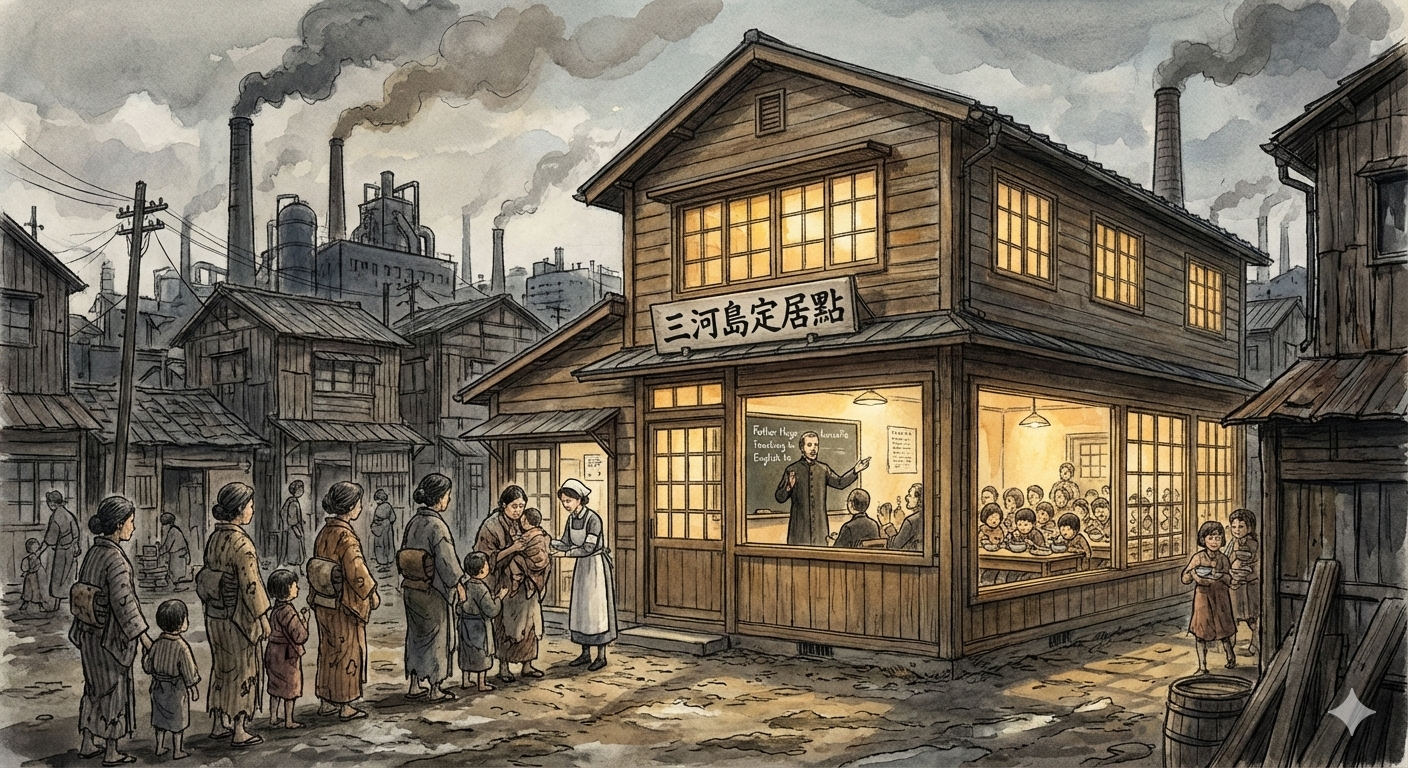
By the 1930s, the combined weight of rapid industrialization and the 1923 Kanto Earthquake had turned Mikawashima into a "poverty zone" of extreme liminality. In 1931, Father Hugo Lassalle established the "Mikawashima Settlement," a social experiment designed to provide a lighthouse of dignity amidst the industrial squalor. Lassalle did not observe poverty from a distance; he lived within it, providing English lessons, health clinics, and social work. This settlement was a precursor to Japan’s modern welfare state, positioning this "marginalized" district as a vital laboratory for social change. It was this very industrial density—the crowded tenements and the humming factories—that necessitated the infrastructure that would eventually define the district’s greatest tragedy.
The Rhythm of the Rails: From Tragedy to the "Slow Life" of the Tram
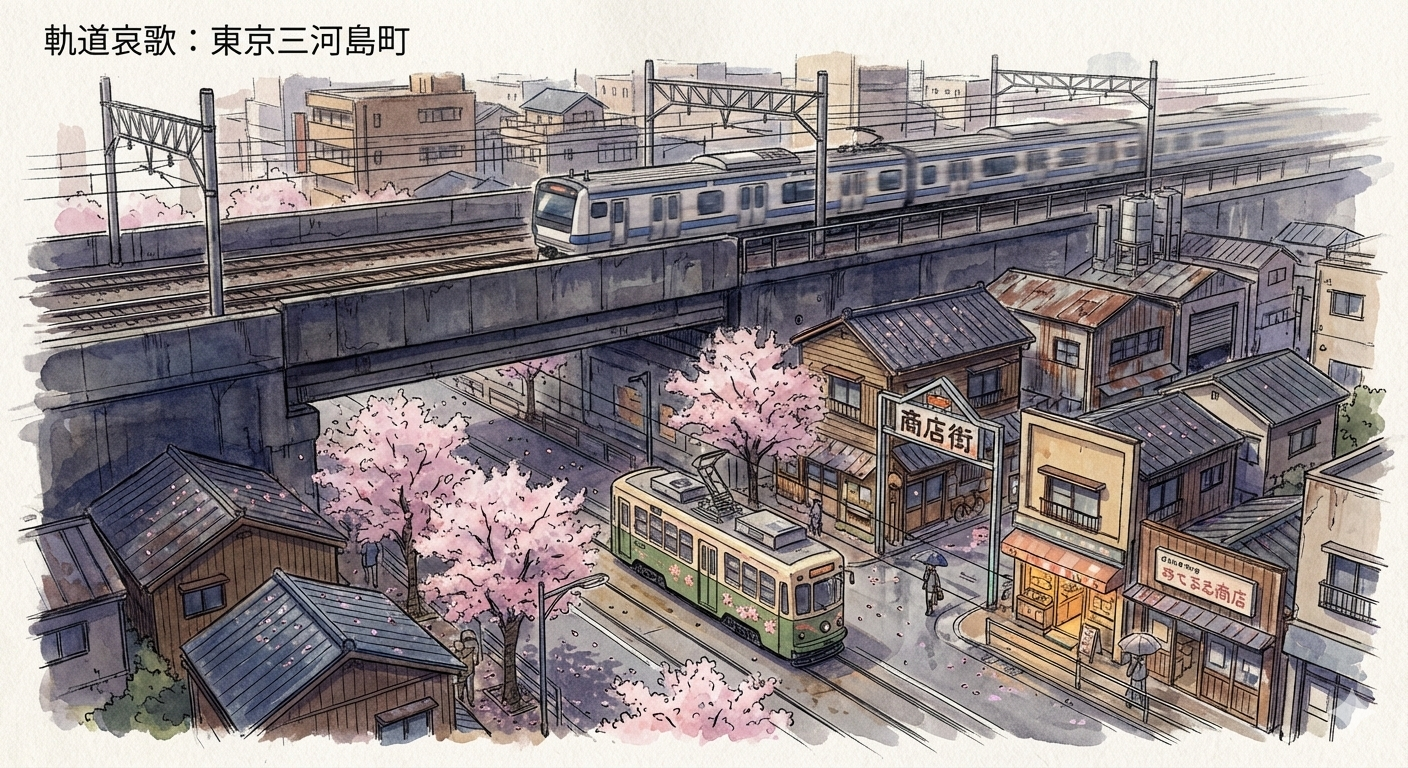
The railway is the bloodstream of Mikawashima, but it has also been the site of its deepest trauma. In 1962, the district was the scene of the Mikawashima train crash, a horrific triple train collision on the Joban Line that claimed 155 lives. This disaster stands as a grim monument to "Modern Speed"—the era when the drive for economic efficiency outpaced the protocols of safety. In poignant contrast, the district is also bisected by the Toden Arakawa Line (Tokyo Sakura Tram). As one of the city’s last streetcars, the tram moves at a "Human Speed." It functions as a moving monument that heals the industrial trauma of the past, offering a slow, rhythmic alternative to the relentless velocity of the surrounding metropolis.
The "Lost Island" Walking Route & Hidden Gems
To truly see Mikawashima, one must follow the path of the Toden Arakawa Line, which serves as the spine of this historical recovery. Begin at South Senju (near the execution grounds of Kozukappara) to visit Entsu-ji, then drift toward the Joyful Minowa shopping street, a corridor of low-slung, Showa-era shops that feels insulated from the glass-and-steel progress of the city center.
Hidden Gems of the District:
- Sakamoto Shoten: A 100-year-old miso shop that stands as a fermented bulwark against industrial food production. Its vats represent a continuity of flavor that predates the district's renaming.
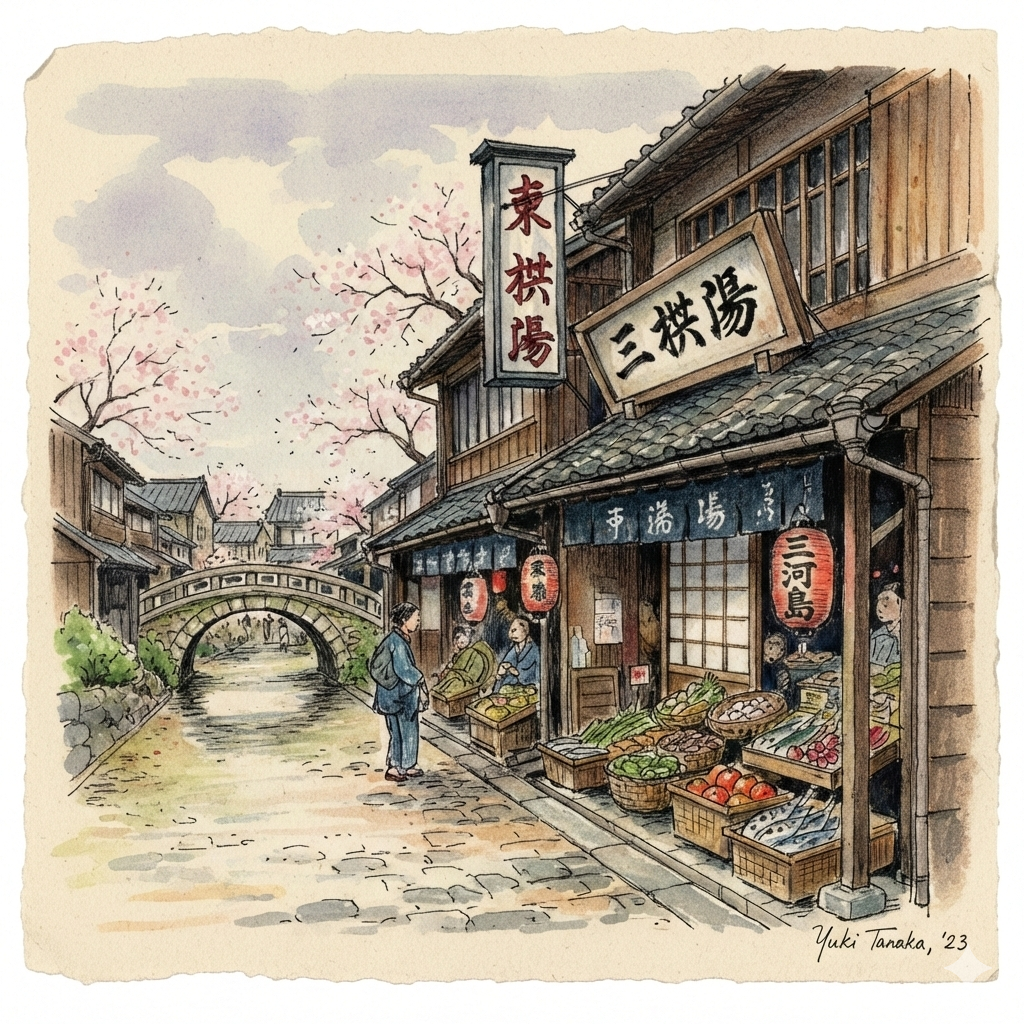
- Daisho-yu Public Bath: A "living fossil" of neighborhood life. In a district that was once an "industrial slum," the communal bath remains a vital site of social cohesion and physical relief.
Sophisticated Reflection: The Soul of the Periphery
Mikawashima serves as a profound reminder that the true identity of a place is not found in its official title, but in its resilience. It is a palimpsest of survival—a container for everything the "center" of Tokyo attempted to exile: its defeated samurai, its industrial poor, its social experiments, and its forbidden diseases. In being marginalized, Mikawashima preserved a depth of character that the hyper-modernized center has long since polished away. It teaches us that history is not a static record, but a living, breathing presence found in the seeds of a vegetable, the scars on a gate, and the slow clang of a tram bell. As our modern cities continue to "rename" and "erase" at the cost of collective memory, we must ask: what part of our own soul is being paved over in the name of efficiency?
For more deep-dives into the spatial continuity of global cities, subscribe to Lawrence Travel Stories.
Practical Logistics
Navigating the Lost Island
- How to Get There: Minowa Station (Hibiya Line) or Minowabashi Station (Toden Arakawa Line).
- Recommended Accommodation: Stay near the Joyful Minowa area for a lived experience of the "Showa-era" atmosphere.
- Tours: Seek out the "Historical Arakawa Walking Tour," which provides expert context on the Edo-period transitions and the industrial heritage of the district.
References
- Tokyo City - accessed October 13, 2025
- 三河島町 - accessed October 13, 2025
- Arakawa, Tokyo - accessed October 13, 2025
- 荒川ゆうネットアーカイブ > 歴史探訪 - 荒川区, accessed October 13, 2025
- 地元の伝統野菜・青茎三河島菜の生育に荒川区の教育長もびっくり。 - 江戸東京野菜通信, accessed October 13, 2025
- 荒川ふるさと文化館刊行物のご案内「子ども向け歴史読本『あらかわ今昔ものがたり』」, accessed October 13, 2025
- 坂上商店 - 荒川区, accessed October 13, 2025
- 東京万景 荒川区南千住 円通寺|消雲堂 - note, accessed October 13, 2025
- 円通寺/荒川区観光公式サイト, accessed October 13, 2025
- 三峰神社 袈裟塚(けさづか)の耳無不動 - 荒川区, accessed October 13, 2025
- 荒川ゆうネットアーカイブ > 特集 > 荒川区再発見7「荒川」> 三峰神社, accessed October 13, 2025
- SOPHIA ARCHIVES ONLINE EXHIBITION(The 4th Online ..., accessed October 13, 2025
- 15 Mikawashima Stock Photos, High-Res Pictures, and Images, accessed October 13, 2025
- 食べ歩きにオススメ!レトロな商店街【ジョイフル三の輪】をご紹介します, accessed October 13, 2025
- 東京都荒川区の呉服店一覧 - NAVITIME, accessed October 13, 2025
 Lawrence
 Lawrence