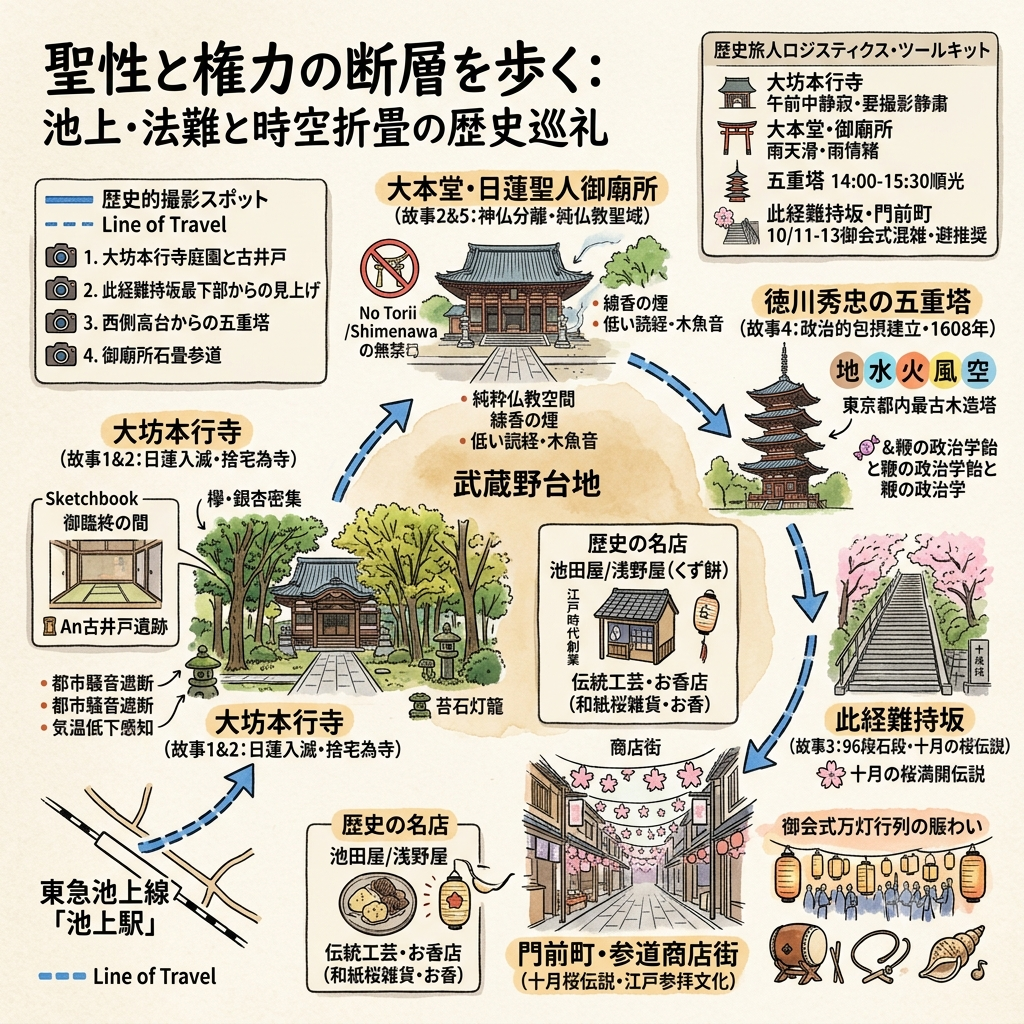
Ikegami-cho 池上町
In Tokyo's Ōta Ward, a hill named Ikegami has spent seven hundred years absorbing governments that tried to suppress, control, and reshape it. Each attempt deepened the site rather than diminishing it. This is the story of how suppression became sanctity.
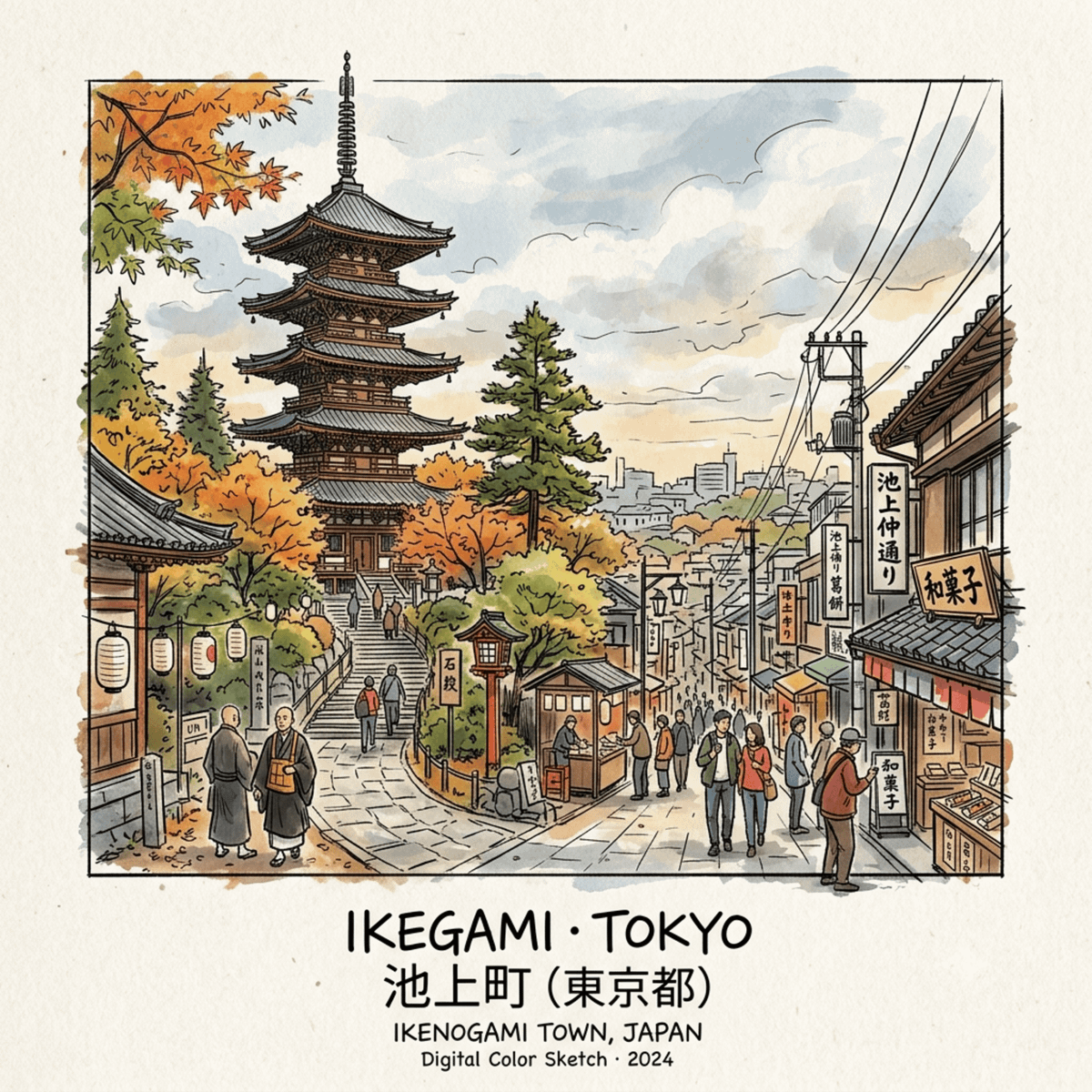
This is a historical travel essay about Ikegami Honmonji, a major Nichiren Buddhist temple complex on a hillside in the Ōta Ward of south Tokyo. In October 1282, the monk Nichiren died here. In the seven centuries since, the site has been targeted by a medieval shogunate, repurposed by a Tokugawa shogun, and surgically altered by Meiji reformers — and emerged from each encounter more significant than before. Visitors who know what happened here will find the grounds read like a stratigraphic record of Japanese religious and political history, with each era's attempts at control visible in the landscape. This essay tells five of those layered stories.
 Lawrence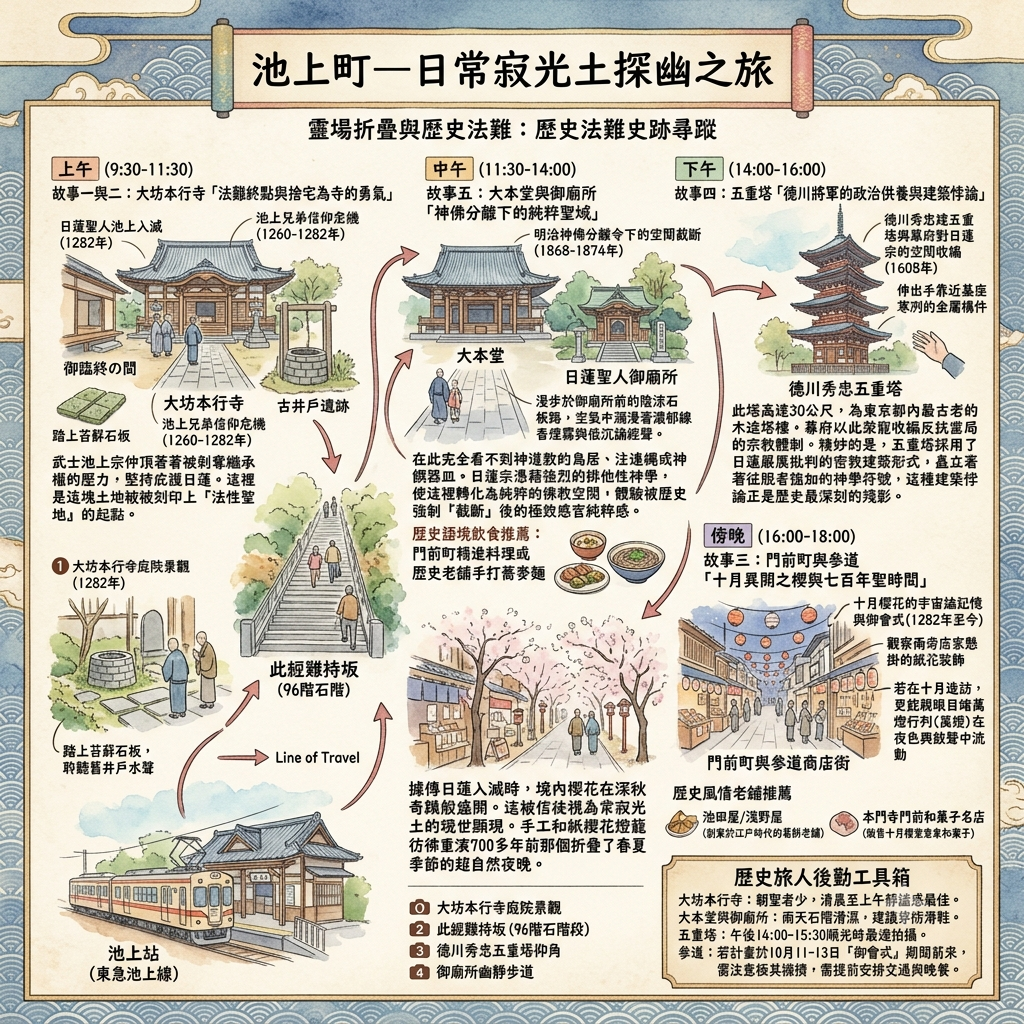
 Lawrence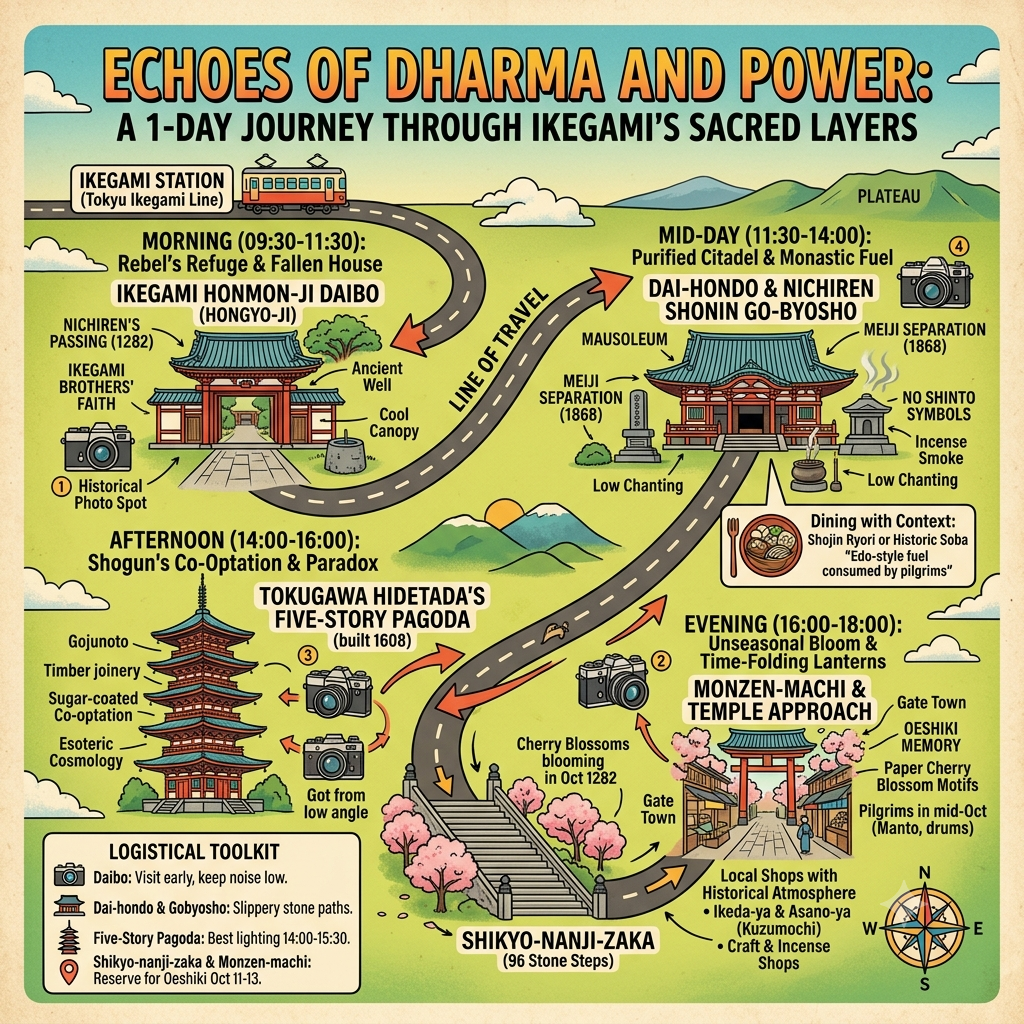
 Lawrence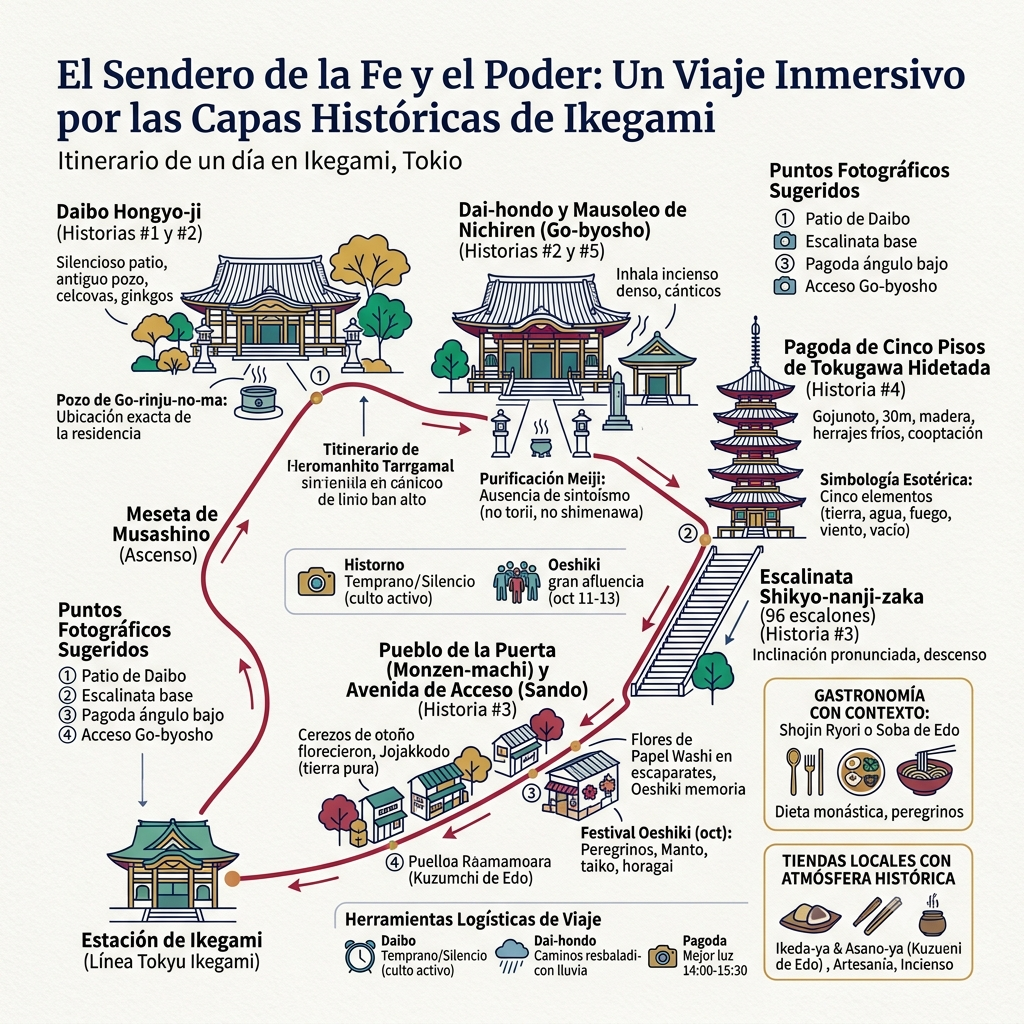
 Lawrence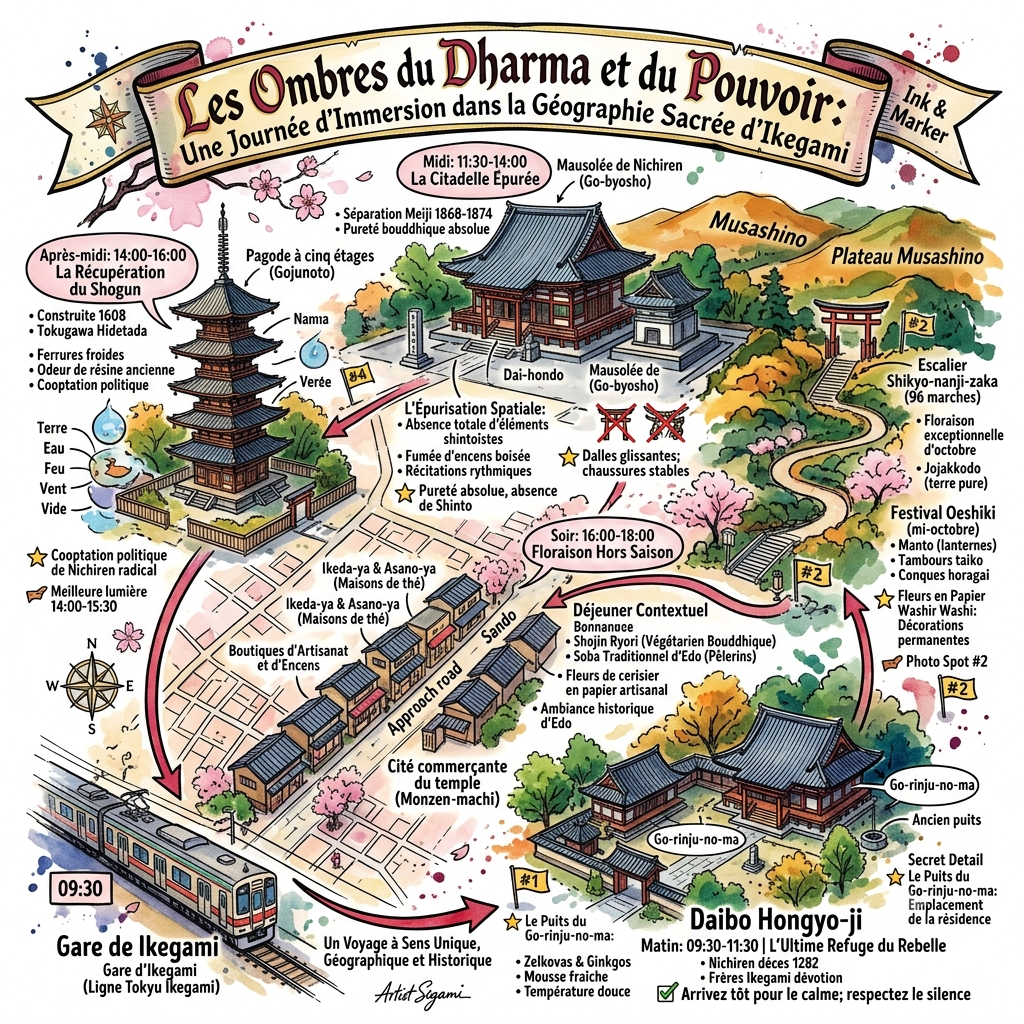
 Lawrence