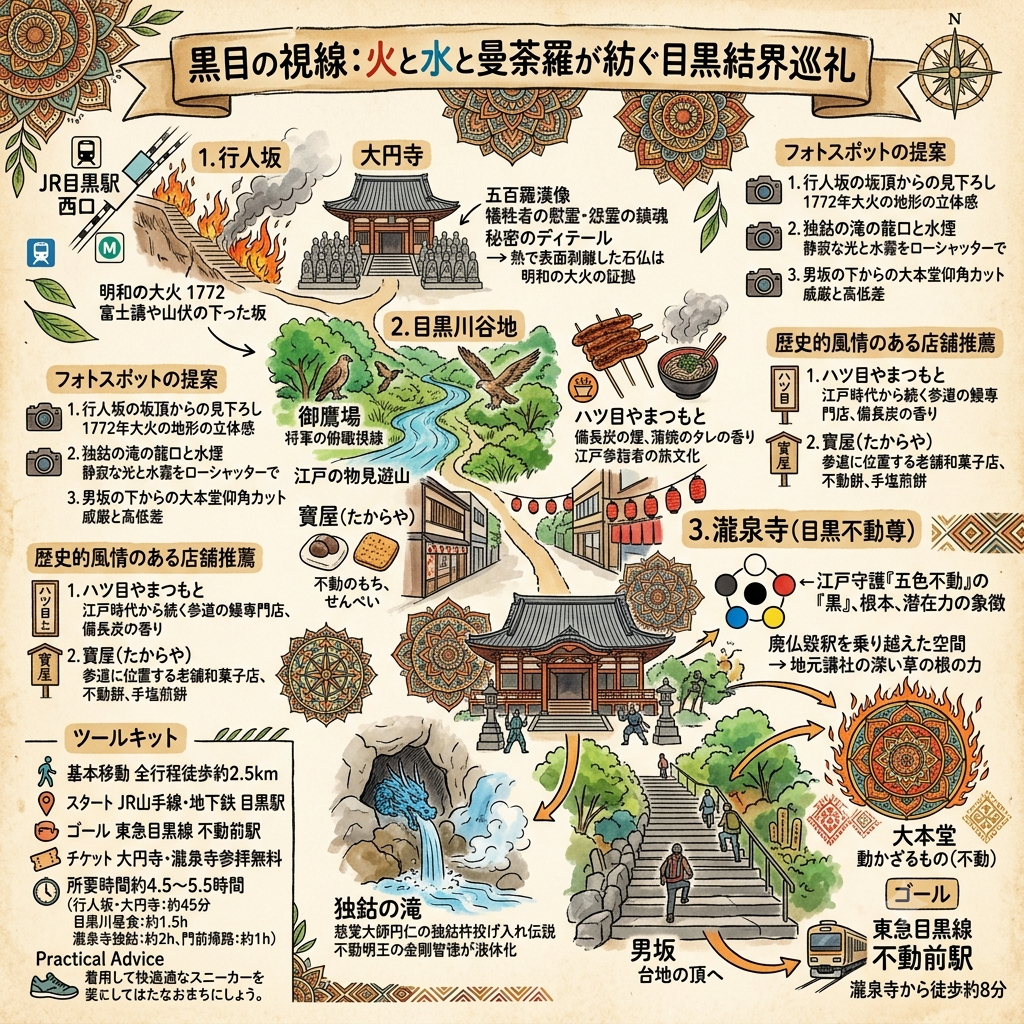
Meguro ku 目黒町
The name Meguro means "Black Eye." That eye belongs to Fudō Myōō — the Immovable One — whose blue-black gaze has watched over Tokyo from this hillside for more than a thousand years. This is the story of the city's most consequential sacred geography, and why it still hasn't moved.
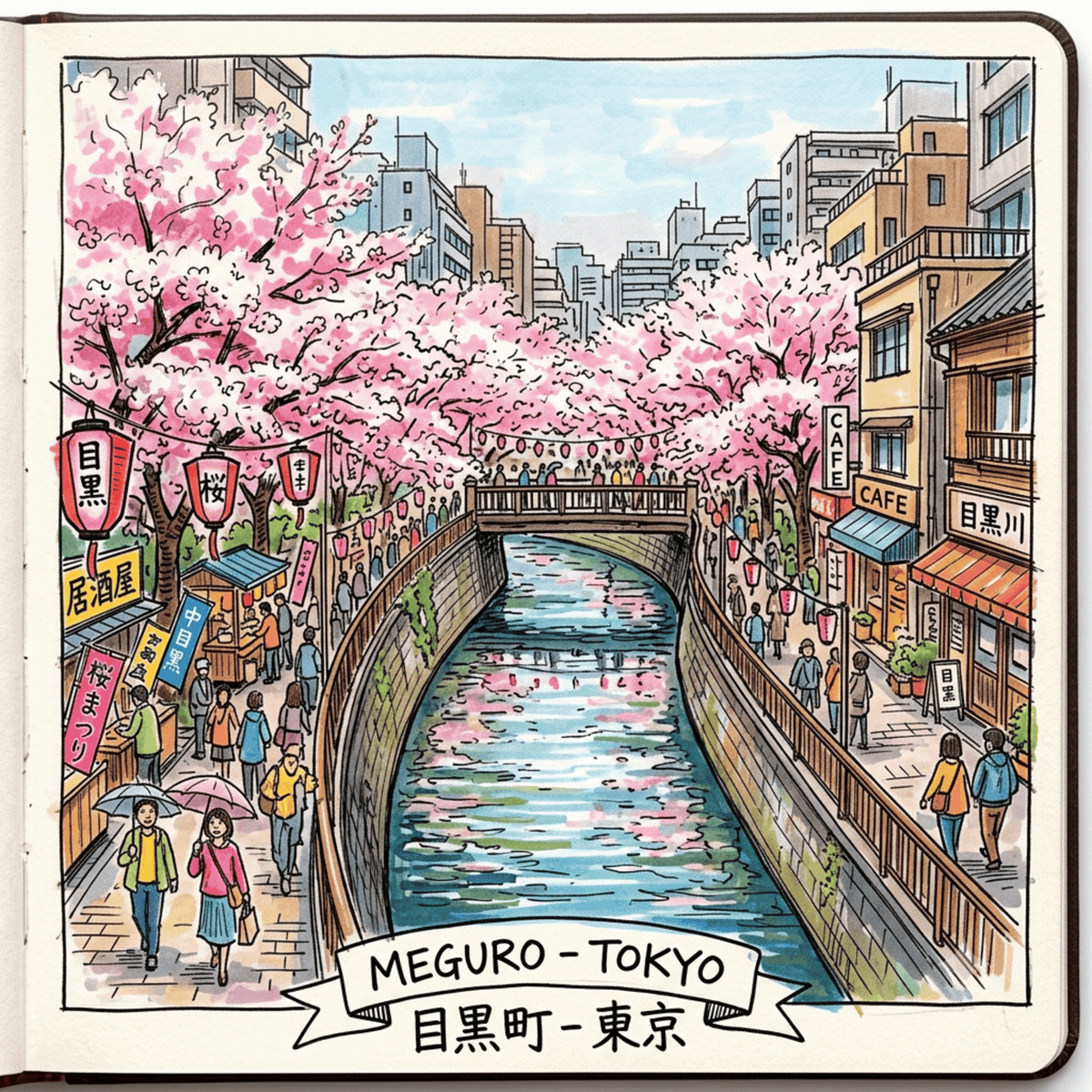
This is a historical travel piece about Meguro — a Tokyo neighborhood better known today for its riverside cafés and spring tunnel of cherry blossoms than for its extraordinary place in the spiritual cartography of Edo. Walking from the ancient temple of Ryūsen-ji (瀧泉寺 / 目黒不動尊) through the medieval slope of Gyōnin-zaka and into the layers of esoteric Buddhist sacred geography beneath the modern city, this article traces five stories that no guidebook has assembled in one place: the founding of Tokyo's oldest esoteric stronghold, the city-wide sacred mandala installed around Edo's perimeter, the 1772 fire that burned from the wrong temple, the Shogunal hunting grounds that accidentally preserved a sacred landscape, and the Meiji purge that nearly erased a thousand years of religious history. What the reader gains: a completely different Meguro, operating at an entirely different depth.
 Lawrence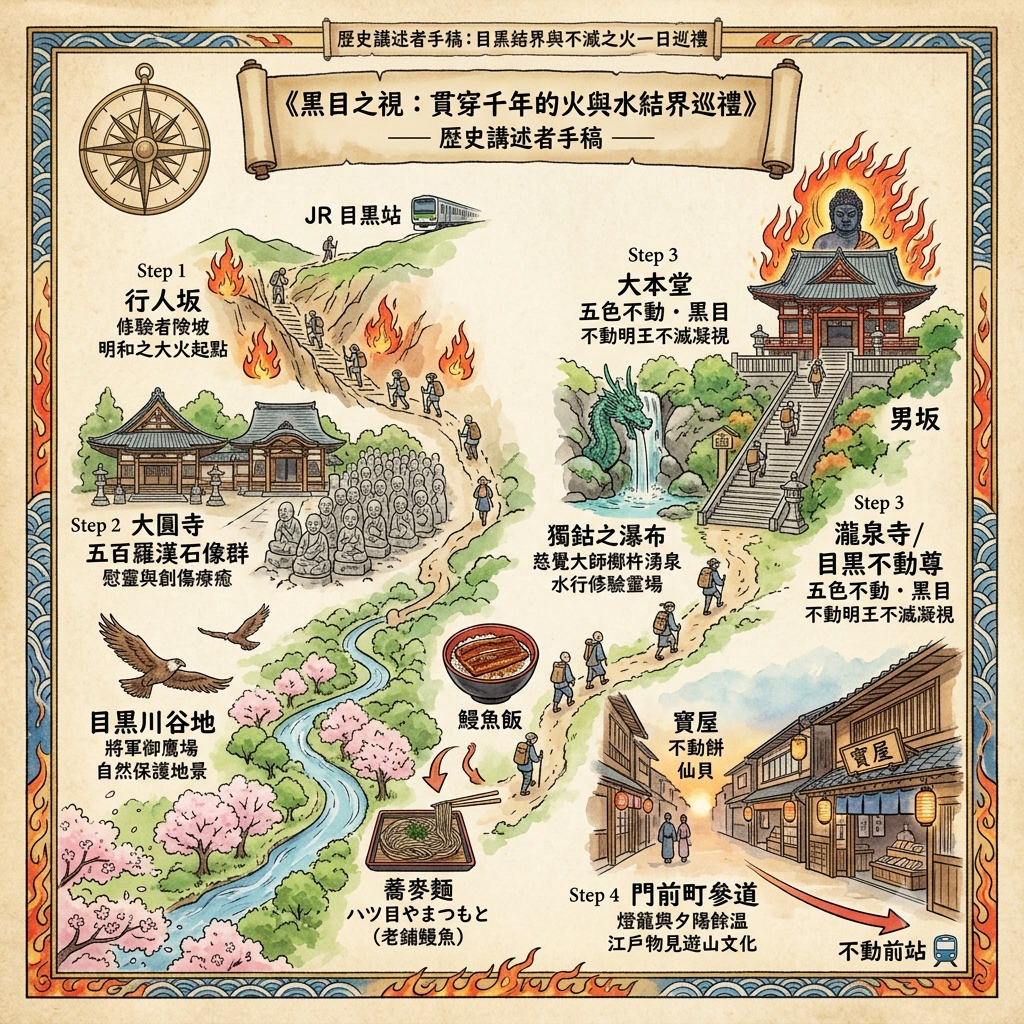
 Lawrence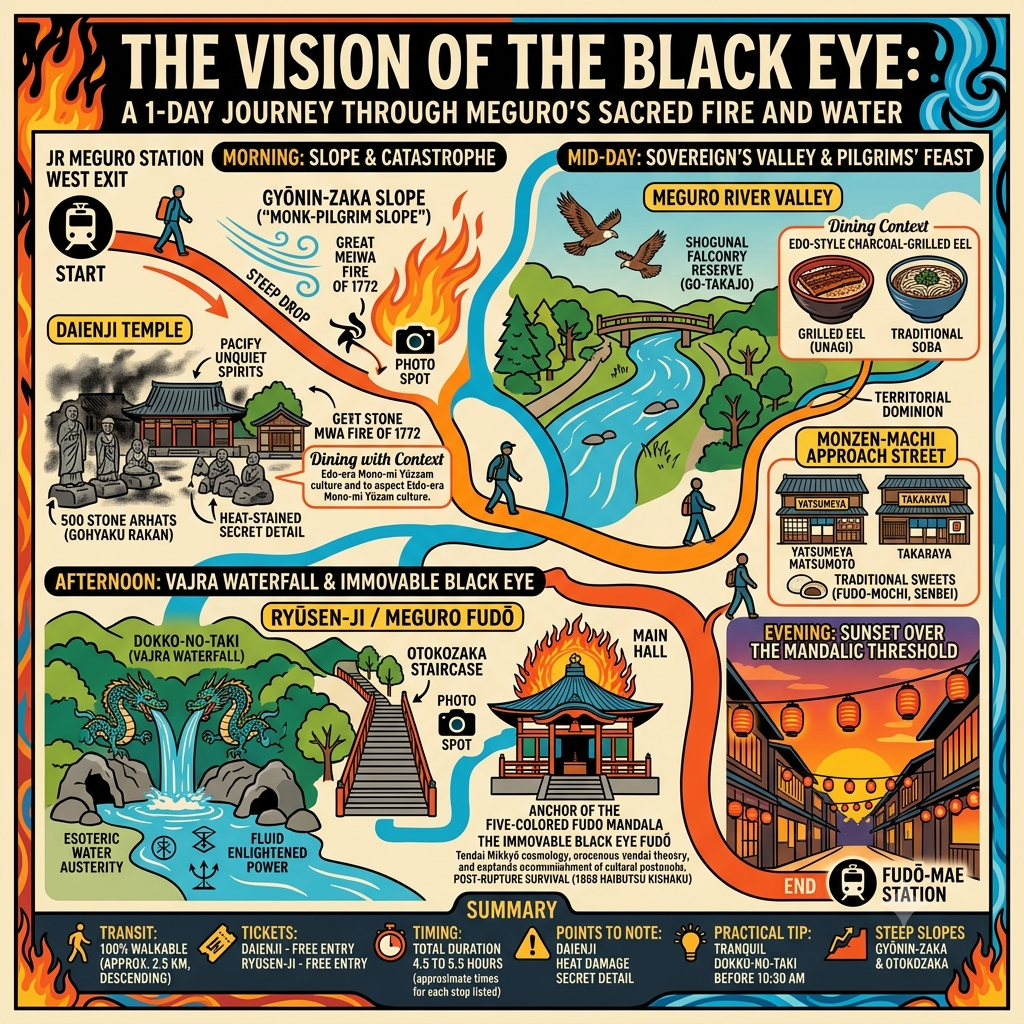
 Lawrence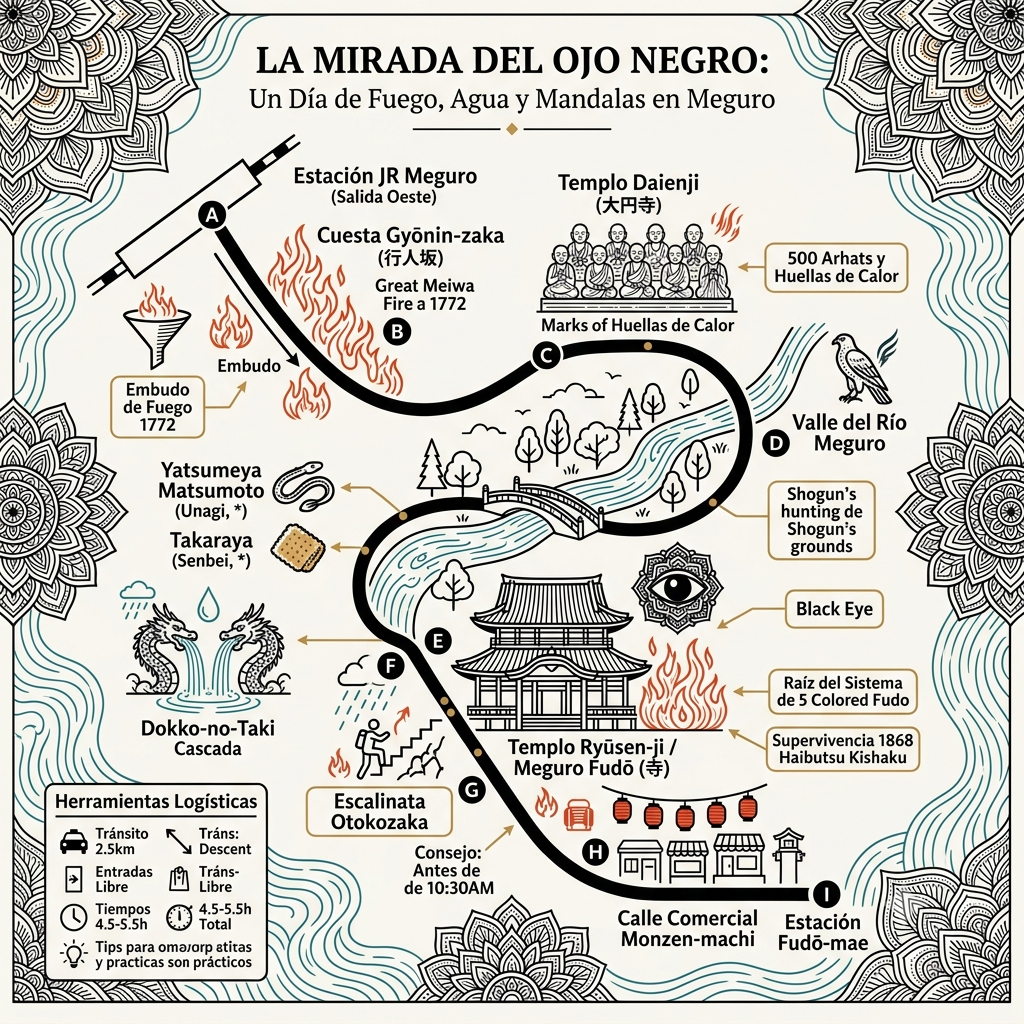
 Lawrence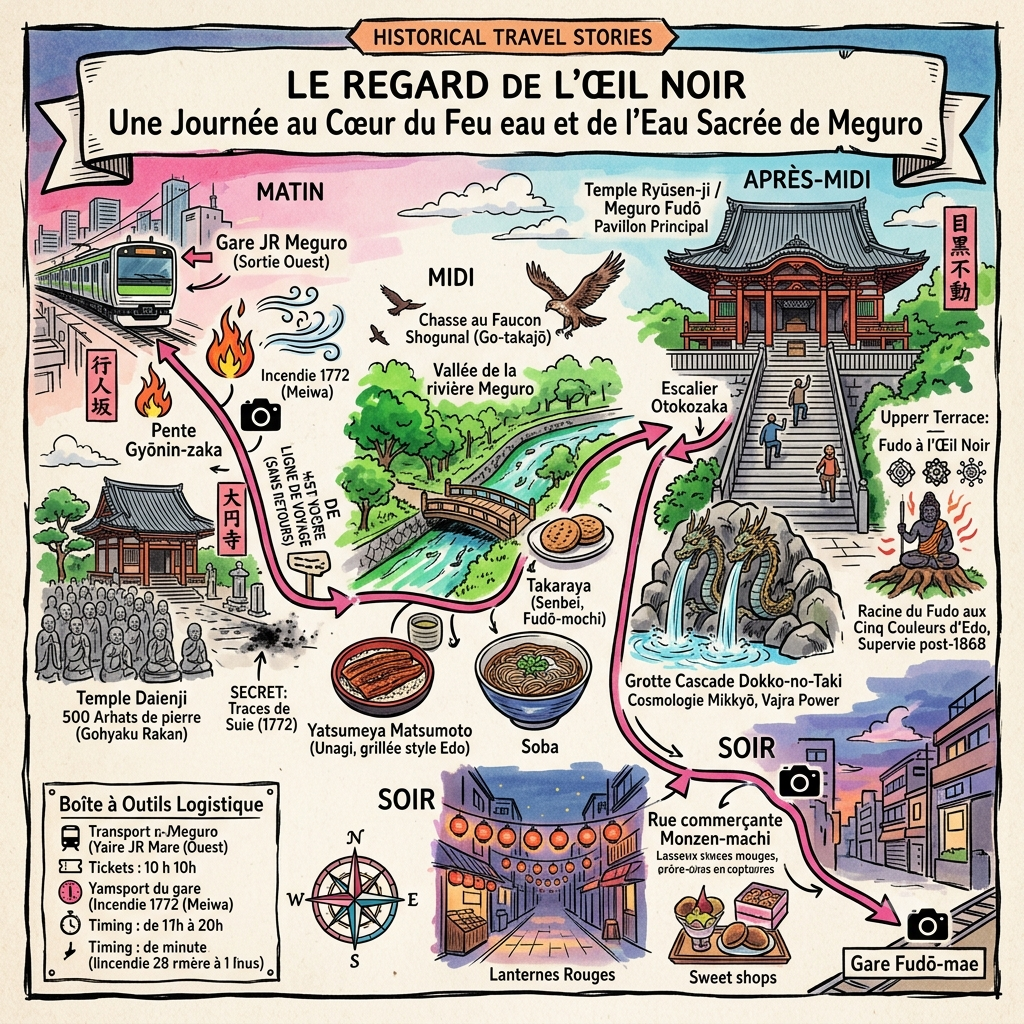
 Lawrence