(ENG) Cheung Chau’s Pirate King: Beyond the Cave and Into the Maritime Frontier
Discover how a 50,000-strong pirate fleet governed from Cheung Chau using "God-ships" and outmaneuvered global empires. A deep dive into the Red Flag Fleet's legacy.

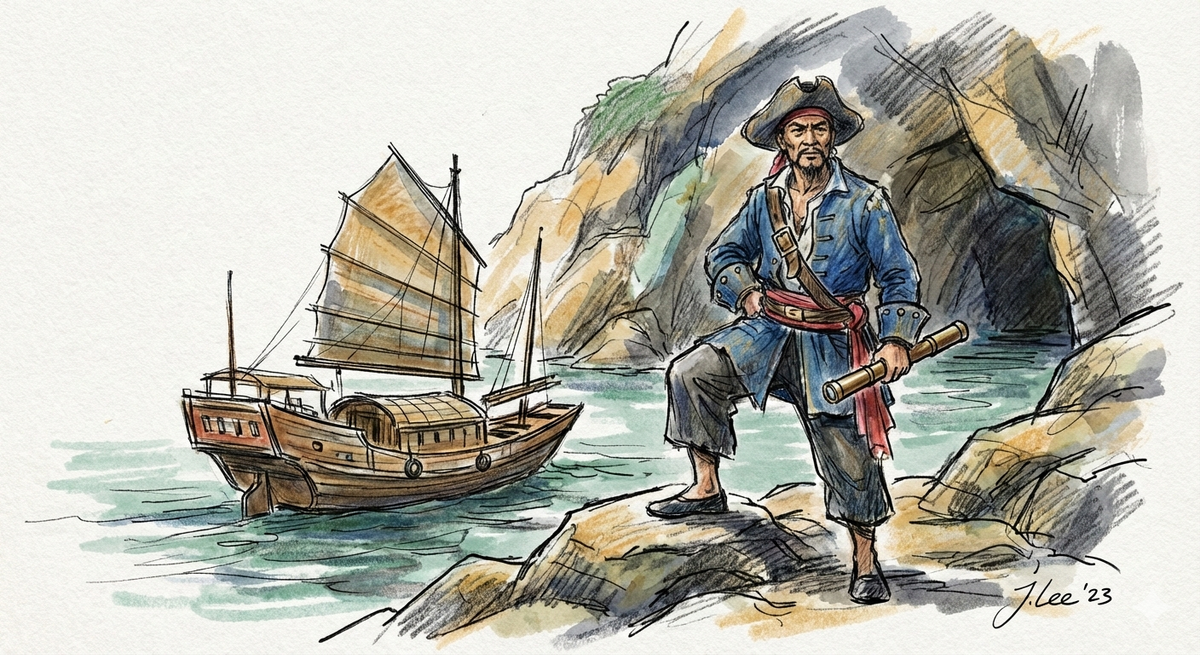
How did Cheung Po Tsai utilize folk beliefs to manage the massive Red Flag Gang?
Did their relationship evolve from "mother and son" to lovers? What was the special relationship between Cheung Po Tsai and Cheng Yi Sao?
Did Lin Zexu have a prejudice against Cheung Po Tsai?
This article follows on from "A Deep Dive into Cheung Chau's History: Five Stories of Land Ownership, Pirate Legends, and Colonial Boundaries," and will reveal five core truths behind Cheung Po Tsai from a geographer's perspective.
 Lawrence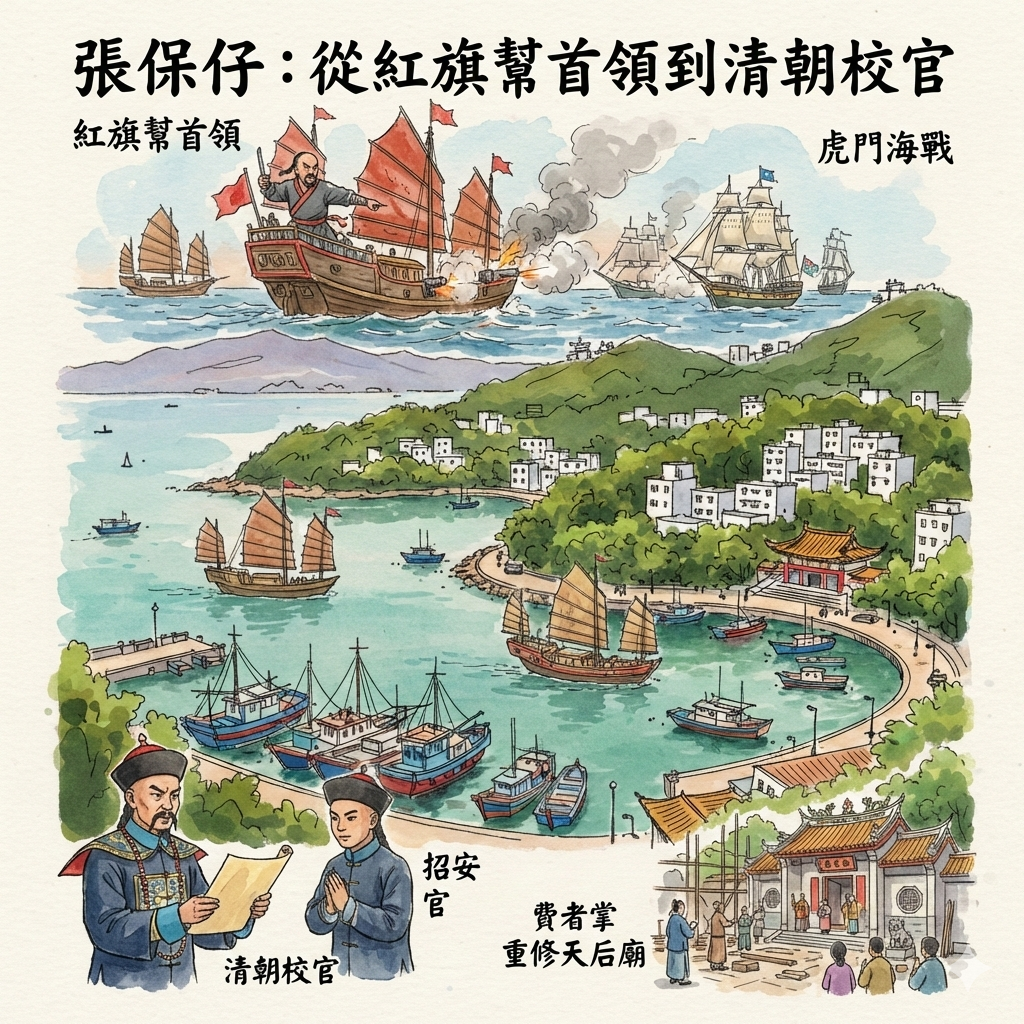
The Living Geography of a Pirate Sovereignty
In the early nineteenth century, the Pearl River Delta functioned as a volatile maritime frontier—a space where the rigid, land-based laws of the Qing Empire dissolved into the salt spray of the South China Sea. This was a realm of asymmetric sovereignty, where Cheung Chau served as the strategic heartbeat of the Red Flag Fleet. Under the command of Cheung Po Tsai, this was no mere criminal syndicate; it was a maritime nation-state of 50,000 souls and over 600 warships.
To walk the streets of Cheung Chau today is to navigate a landscape that once operated under its own sophisticated administrative logic. The island’s current geography still reflects this period of defiance, where the Tanka (蜑家) culture carved out a sanctuary beyond the reach of the Mandarins. For the discerning traveler, the island offers more than a tourism checklist; it presents layers of lived experience where the streets themselves acted as the infrastructure of a pirate kingdom. This sovereignty was maintained through a meticulous blend of naval might and a psychological architecture designed to govern the ungovernable, transitioning from the physical landscape to the divine.
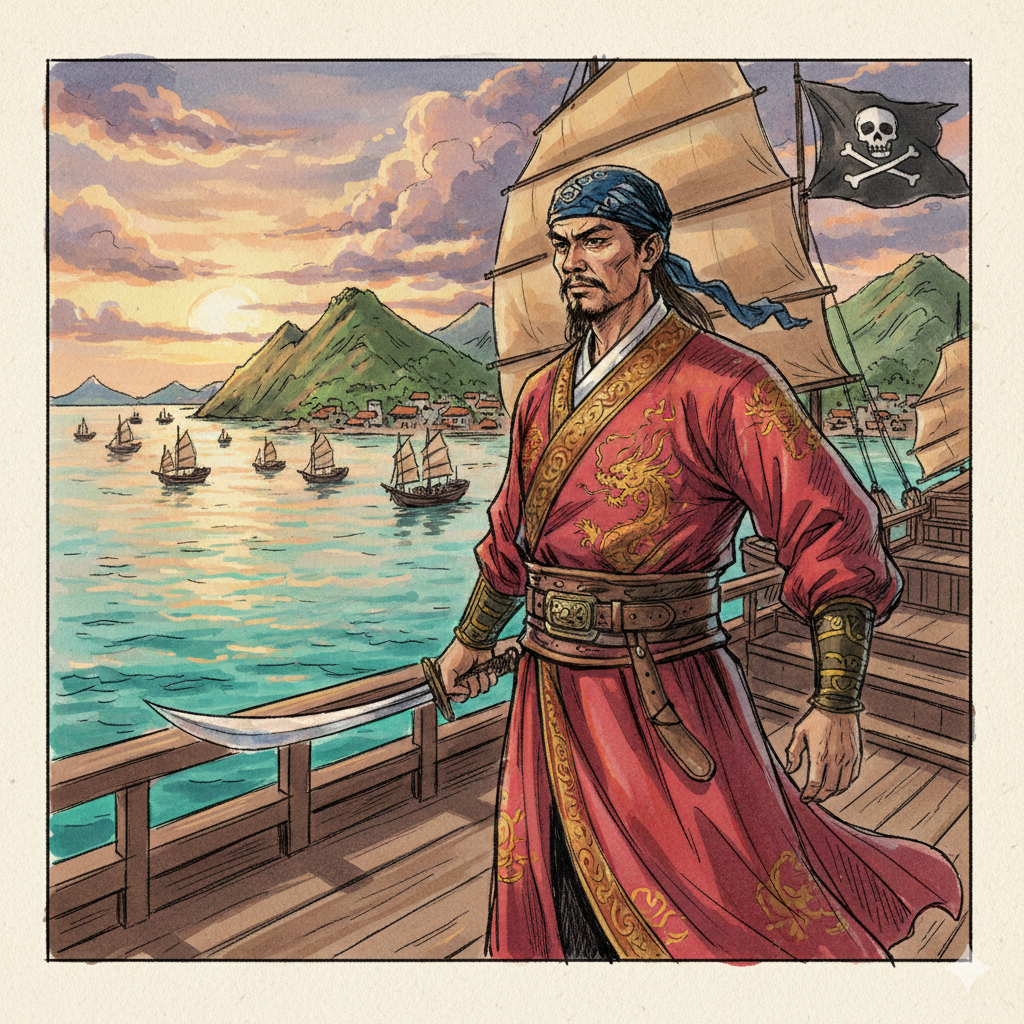
Listen to the historical stories told in detail (For subscribers only)
The Divine Bureaucracy: Governance via the "God-Ship"
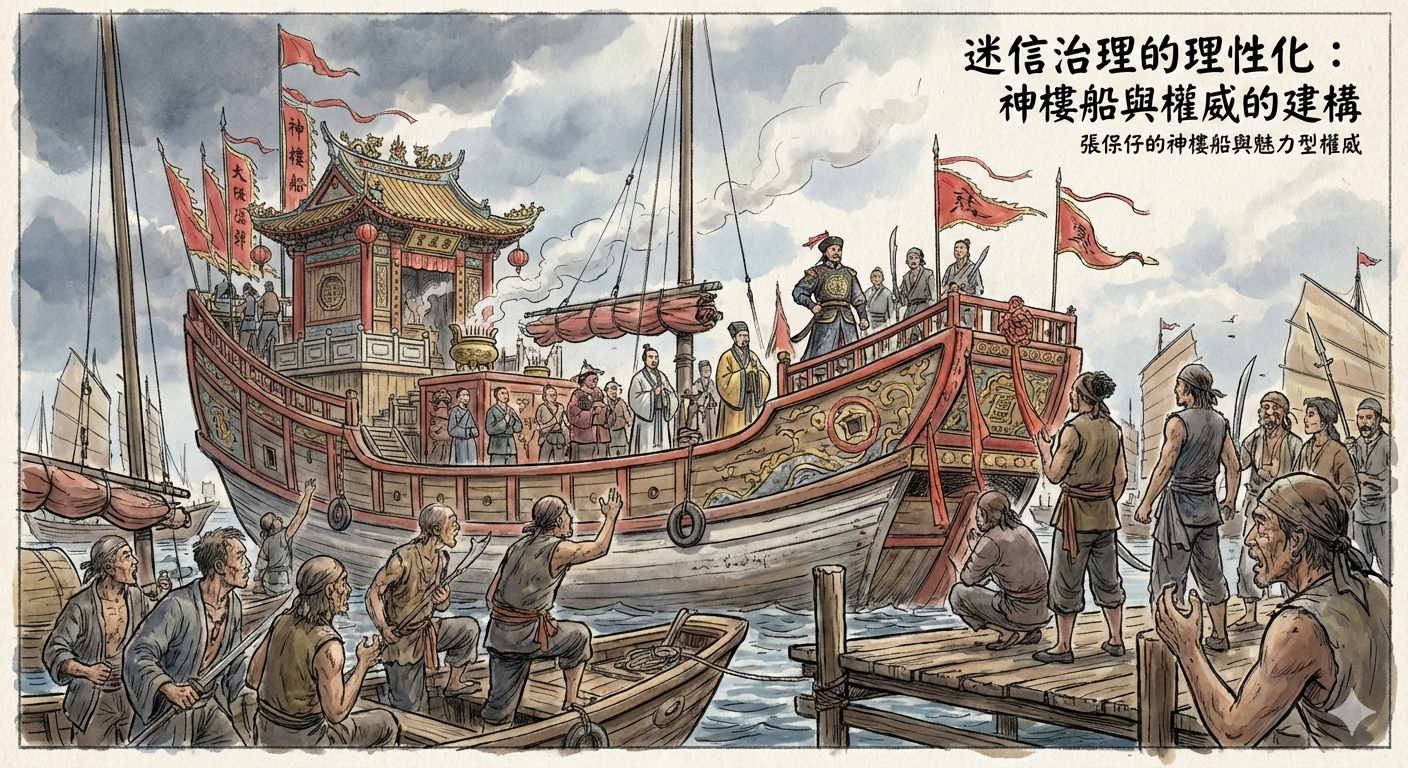
To maintain discipline among a massive fleet of social outcasts, Cheung Po Tsai recognized that secular law was an insufficient leash. He constructed a "Divine Bureaucracy," utilizing religion as a strategic tool to outsource difficult command decisions to the heavens. This was not simple superstition; it was a sophisticated method of maintaining internal harmony by transforming strategic commands into unquestionable "oracles."
The centerpiece of this governance was the "Shrine Boat" (神樓船)—floating cathedrals opulently decorated and staffed by professional Taoist priests. In the sheltered, quiet waters of Sai Wan, away from the prying eyes of the crew, Cheung Po Tsai would pre-negotiate tactical decisions with his clerics. When the smoke of incense rose and the "will of the Goddess" was proclaimed, it carried a Charismatic Authority that no earthly general could replicate. This divine sanction allowed for the enforcement of the Red Flag Fleet's draconian gang rules (幫規):
"The priests proclaim: Let it be known that the heavens demand absolute purity. Those who desert or go ashore without leave shall have their ears bored in public and then be executed; those who commit rape or loot women shall be put to death immediately, for the Gods tolerate no such filth on the waves."
By anchoring military law in the divine, Cheung Po Tsai achieved a level of group cohesion that the Qing navy, hampered by distant continental bureaucracy, could never hope to achieve.
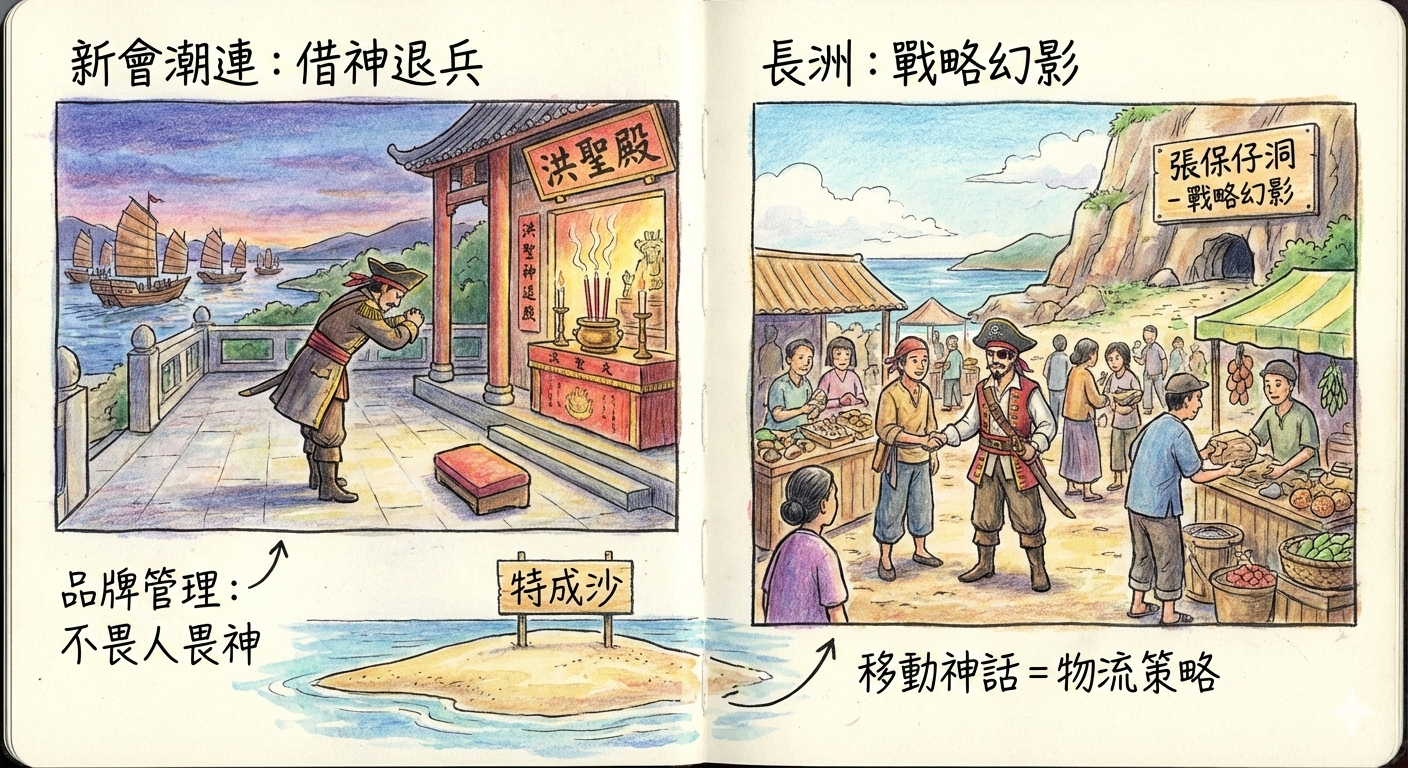
The "Fear of Gods": Strategic PR and the Te-Cheng Sand
While religion governed the fleet internally, it was also used as a sophisticated branding exercise to manage the coastal populations. To secure essential supply lines of fresh water and grain, the fleet utilized a system of "protection fees" (行水), but Cheung Po Tsai understood that sustainable power required the image of the "Robin Hood" protector.
A masterclass in this strategic branding occurred at the Hung Shing Temple in Xinhui. Facing a stalemate against well-defended villages, Cheung Po Tsai orchestrated a "pious retreat," famously declaring, "I do not fear the people of Chao-lian, but I fear the God of Chao-lian." He led his men in a grand ceremony of worship before withdrawing. During this operation, one of his vessels accidentally sank, leading to a silt deposit known as "Te-Cheng Sand" (特成沙).
While the physical sandbar remains in Xinhui (Jiangmen), the mythic weight of the story resides in Cheung Chau. It served as a template for how the pirates communicated with the civilian world. Today, the Tin Hau and Pak Tai temples on Cheung Chau stand as the remnants of these essential nodes of communication—spatial anchors where the pirate elite signaled their alignment with local spiritual values to ensure their logistics remained uninterrupted.
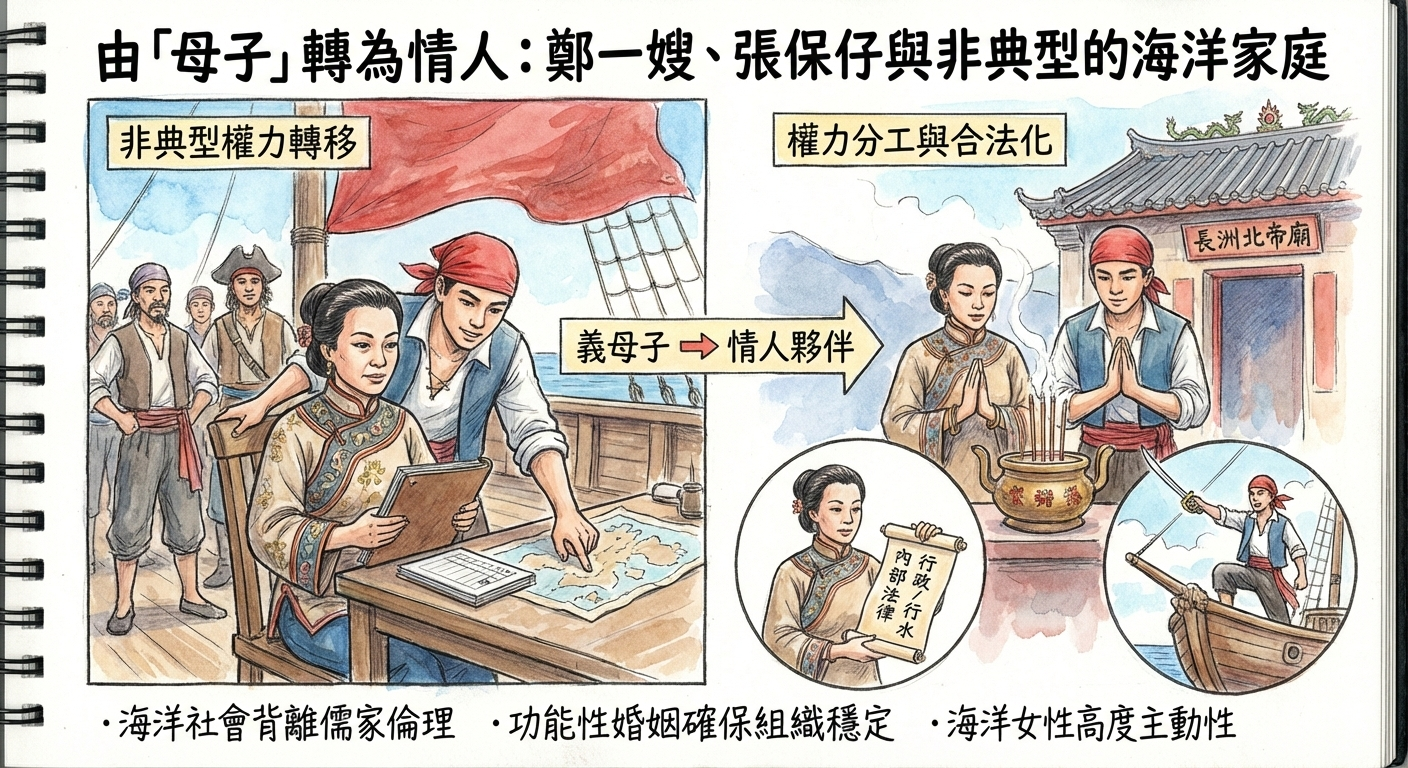
The Functional Family: The Power Trio of the Red Flag Fleet
The Red Flag Fleet’s resilience was rooted in the pragmatic kinship structures of Tanka maritime culture. Departing from the land-based Confucian ethics of the Qing state, the fleet was governed by a "triangular" relationship that prioritized survival over traditional morality.
The bond began with Zheng Yi and the fifteen-year-old Cheung Po Tsai; archival fragments suggest their initial relationship was one of profound personal and intimate closeness, far exceeding the typical father-son adoption. Following Zheng Yi’s death in 1807, his widow, Zheng Yi Sao—a brilliant political architect—formed a romantic and tactical alliance with Cheung Po Tsai.
This "functional marriage" saw Zheng Yi Sao managing the fleet's complex financial codes and administrative laws while Cheung directed the front-line combat. To the Qing scholars, a "mother" marrying her "son" was an abomination; to the maritime frontier, it was a structural necessity that prevented the fleet from splintering. It was a radical departure from the continental norm, proving that on the water, power was the only true lineage.
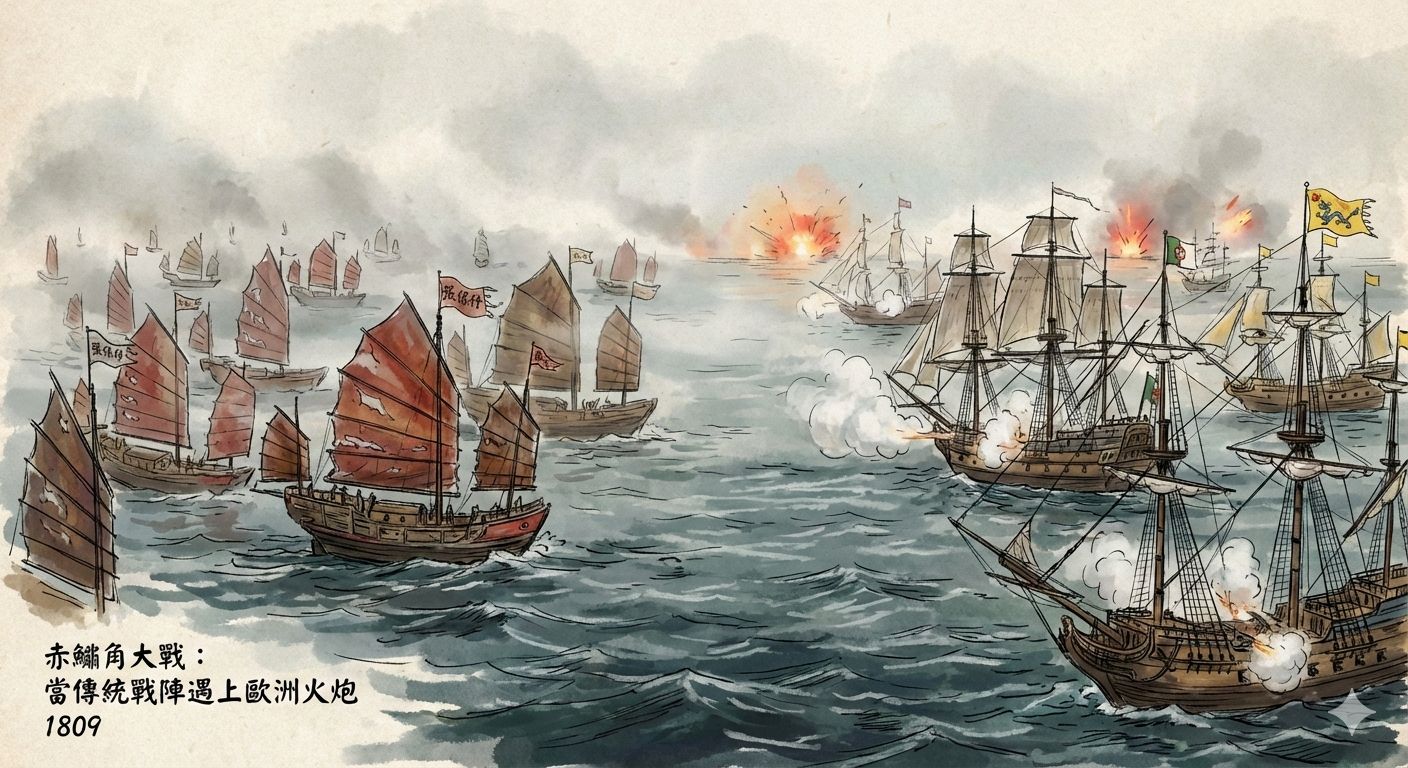
Global Collisions: The Battle of Chek Lap Kok
By 1809, the waters around Cheung Chau became the stage for one of the first truly international wars in the region. The Battle of Chek Lap Kok (also known as the Battle of Lantau) saw the Red Flag Fleet face a desperate alliance between the Qing navy and Portuguese warships equipped with Western firearms.
Cheung Po Tsai met this challenge with a technological fusion, combining traditional Chinese naval formations with captured Western weaponry. He utilized "swarm tactics," directing his ships through the shallow, treacherous waters that larger Portuguese vessels could not navigate. Leveraging the dense fog and shifting winds of the Pearl River Delta, he outmaneuvered a force of 1,200 cannons.
Today, the battle lines of 1809 are visible from Cheung Chau’s peaks, though the landscape has been transformed. Where planes now roar as they take off from Hong Kong International Airport, the thunder of pirate cannons once echoed. The sensory contrast is profound: the whine of modern jet engines now occupies the same airspace where Cheung Po Tsai once commanded the winds to fire-ship his way through an imperial blockade.
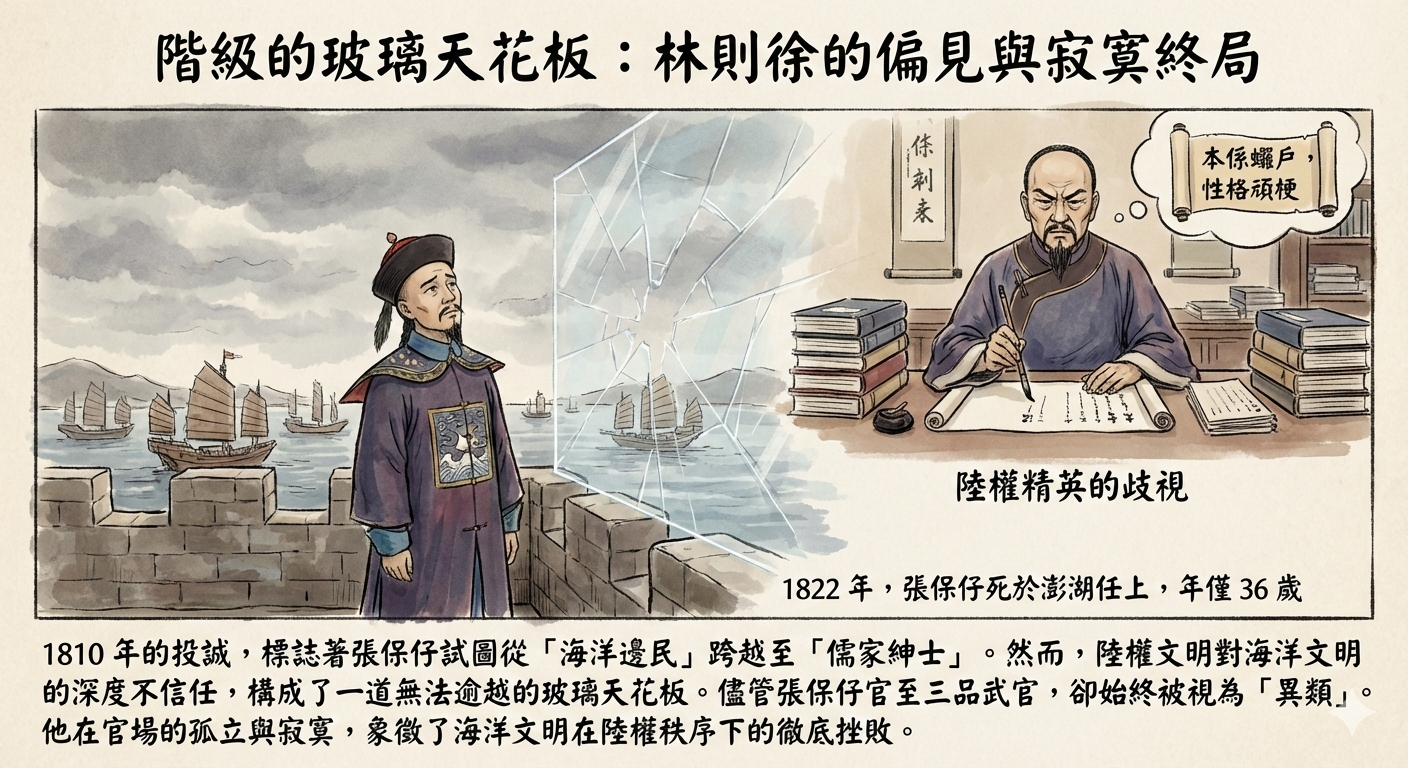
The Glass Ceiling: Lin Zexu and the Limits of "Gentlemanly" Ambition
The maritime era effectively ended in 1810 with Cheung Po Tsai’s surrender (招安). Though he was granted a high-ranking military post, he soon encountered the "glass ceiling" of the Qing social order. The elite Confucian bureaucracy, personified by Lin Zexu, viewed him with an unshakable "continental myopia."
To Lin, Cheung Po Tsai was forever a "Tanka" (蜑戶)—a member of the marginalized "boat people" caste. Lin Zexu actively blocked Cheung’s promotions, arguing that his "stubborn character" and low-born origins would shame those who had entered the service through the "proper" path of the scholar-official. This caste-like barrier represented a tragic failure of the Qing state. By marginalizing their most capable maritime experts, the empire ensured it would remain defenseless against the naval onslaught of the Opium War just decades later. Cheung Po Tsai’s lonely end in the Penghu islands in 1822 was a testament to a state that would rather perish in its traditions than embrace its frontier.
Walking the Layers: Spatial Continuity and Hidden Gems
The history of the Red Flag Fleet is woven into the very urban fabric of Cheung Chau. To find it, one must look beyond the cave and toward the island's old sentry lines.
The Sai Wan Tin Hau Temple is the essential site for the historical traveler. Rumored to have served as an original pirate sentry post, its location offers a commanding view of the western approaches. Visit at sunset to appreciate the "sentry perspective"—the same golden light once illuminated the masts of the Red Flag Fleet as they returned to the safety of the bay.
For the intellectually curious, history is not found in a single museum but in the walking routes that trace these old boundaries. To delve deeper into these narratives, explore our comprehensive Historical Travel Guide to the Pearl River Delta.
Conclusion: A Philosophical Reflection on the Maritime Frontier
Cheung Po Tsai was neither a checklist hero nor a simple villain. He was a man who successfully navigated a sovereignty vacuum, building a life of agency for thousands who had been discarded by the land-based world. His legacy is a study in the tension between the fluid, outward-looking maritime identity and the rigid, inward-looking continental bureaucracy.
Even today, a distinct "insider/outsider" identity persists among Cheung Chau’s residents. Near the St. John Hospital, the colonial-era Boundary Stones serve as a silent echo of this history—reminders of the "separation" and social exclusions that have long defined the island's relationship with the mainland. One is left to wonder: Does the spirit of the maritime frontier still exist in the modern harbor, or has the "asymmetric sovereignty" of the pirate king finally been anchored by the weight of time?
Subscribe for more "Travelable History" and uncover the hidden architectures of the Cheung Chau.
 Lawrence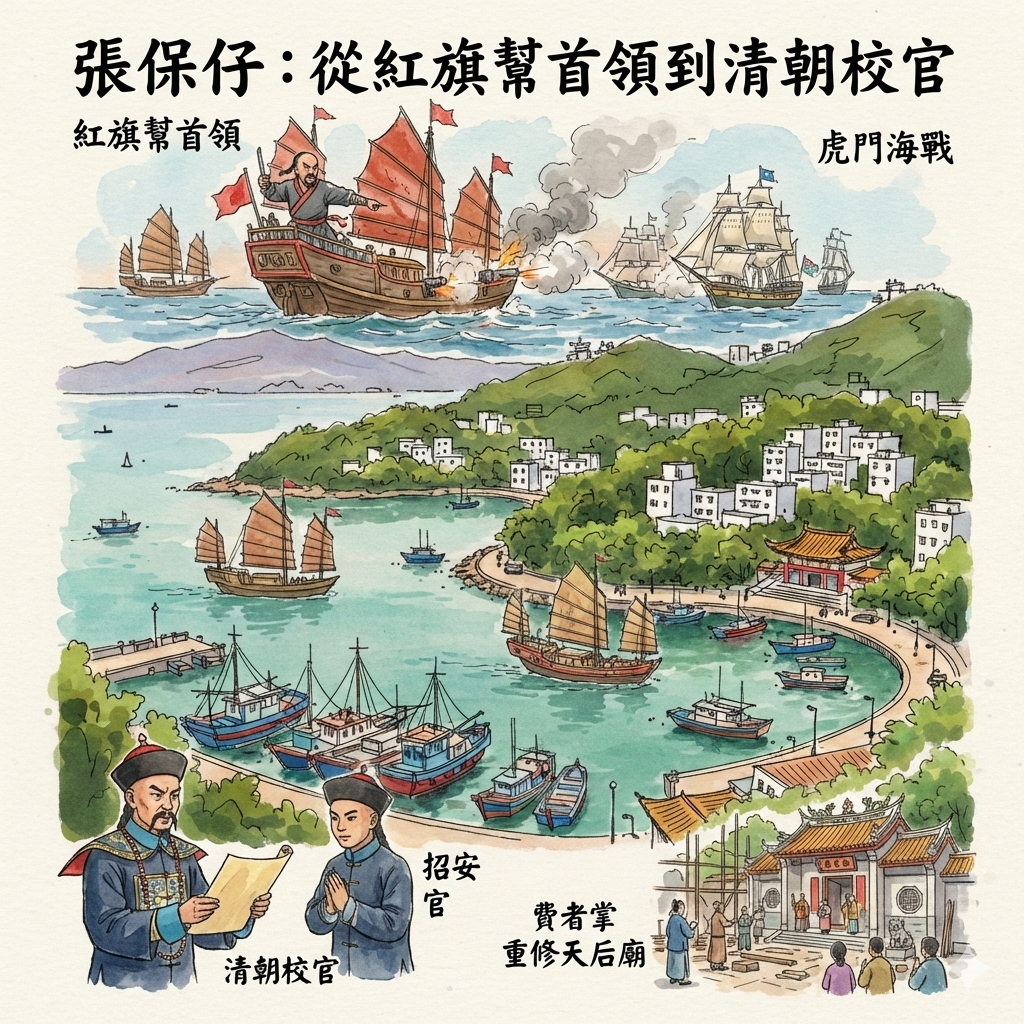
Practicalities for the Historical Traveler
- How to Get There: Board the ferry from Central Pier 5 to Cheung Chau. The fast ferry (35 mins) provides a swift transit, but the ordinary ferry (55 mins) allows you to better observe the naval approaches used by the fleet.
- Recommended Walking Route: Start at the Pak Tai Temple (the guardian of maritime peace), traverse the village center toward the southwest, and conclude at the Sai Wan Tin Hau Temple to view the old sentry lines.
- Nearby Historical Points: Locate the St. John Hospital Boundary Stones; they represent the historical segregation of the island, a lingering spatial reflection of the "insider/outsider" status of the Tanka people.
- Optimal Timing: Arrive at Sai Wan during the "golden hour" to experience the temple as the pirate sentries did, overlooking the waters that once held the Red Flag Fleet.
Reference and further reading
- 張保仔- accessed on February 25, 2026,
- 香港歷史與旅遊黃頁之香港的海盜 - York Region Times 約克時報, accessed on February 25, 2026,
- The pirate becomes the pirate catcher | macaomagazine.net, accessed on February 25, 2026,
- History of Cheung Chau: Pirates, Rituals and Segregation - Historical Travel Stories, accessed on February 25, 2026,
- 《壹捌零壹》——張保仔與香港故事 - 菜市場政治學, accessed on February 25, 2026,
- 廣健銘專文:亦俠亦盜張保仔與香港故事| 鄺健銘 - 風傳媒, accessed on February 25, 2026,
- 張保仔,1786-1822 - 澳門記憶, accessed on February 25, 2026,
- 風流海盜張保仔的戰火情仇強盛時率800船10萬人縱橫珠江口附近海域,1810年被清廷招安, accessed on February 25, 2026,
- Cheung Po Tsai - accessed on February 25, 2026,
- Cheung Po Tsai - CHISE project, accessed on February 25, 2026,
- 被黃飛鴻踢爆的大海盜張保仔,在南洋曾經是多麼牛的存在|文史宴 - QQ News, accessed on February 25, 2026,
- Ching Shih and the Pirates of the South China Coast: Shifting Alliances, Strategy, and Reputational Racketeering at the Start - Squarespace, accessed on February 25, 2026,
- Cheung Chau: Past and Present - Hong Kong - Big Foot Tour, accessed on February 25, 2026,
- National Palace Museum's Compilation of the Historical Accounts Regarding the Subjugation and Pacification of Cheung Po Tsai (in Chinese), accessed on February 25, 2026,
- 院藏剿撫張保仔史料彙編 - 國立故宮博物院, accessed on February 25, 2026,
- 與澎湖水師副將張保仔 - ResearchGate, accessed on February 25, 2026,
- Cheung Po Tsai Cave 2025: Pirate Treasure Adventure & Cheung Chau Island Guide Hong Kong - Lei Yue Mun, accessed on February 25, 2026,
- Cheung Po Tsai - History of Piracy, accessed on February 25, 2026,
- The 49 best nature near Hong Kong - Wanderlog travel planner, accessed on February 25, 2026,
- 張保仔 -, accessed on February 25, 2026,
- information on landmarks, history, and community of cheung chau island, accessed on February 25, 2026,
- 【香港舊日誌#4】張保仔(下):從戰勝官府到成為官府- 香港古事記 ..., accessed on February 25, 2026,
- 像映留痕- 長洲的張保仔 - YouTube, accessed on February 25, 2026,
- Famous Pirate: Cheung Po Tsai - The Way Of The Pirates, accessed on February 25, 2026,
- 長洲北帝廟內的文物 - 群峰學會, accessed on February 25, 2026,
- Yuk Hui Temple (Pak Tai Temple), Cheung Chau - Chinese Temples Committee - 華人廟宇委員會, accessed on February 25, 2026,
- Lifestyle Archives - Pale Ale Travel, accessed on February 25, 2026,
- 鴉片戰爭後澳門地位的變化, accessed on February 25, 2026,
- Cheung Po Tsai Cave · CCCH9051 Group 36 - HKU Online Learning, accessed on February 25, 2026
 Lawrence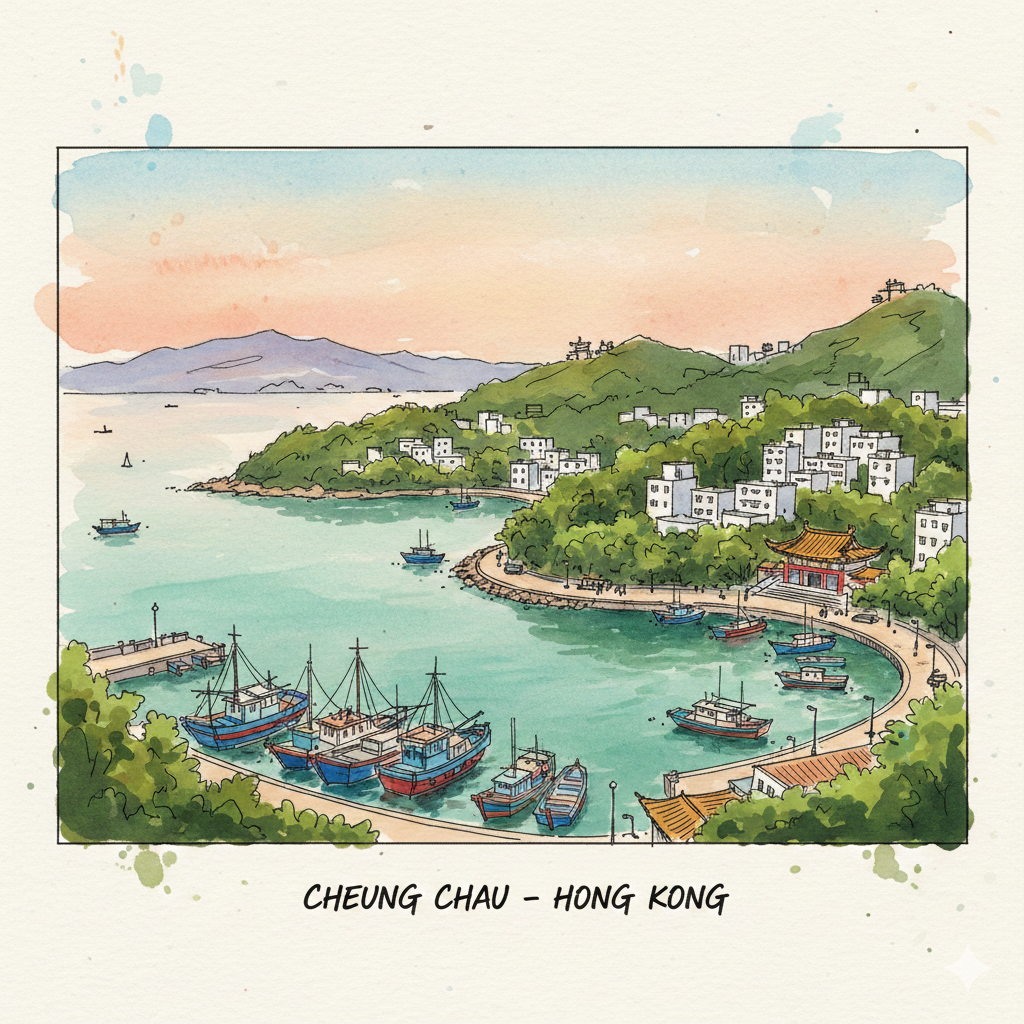
 Lawrence
 Lawrence