(ENG) Pok Fu Lam Historical Walk – Tracing the Milky Past and Vanishing Pastoral Stories
Discover the pastoral side of Hong Kong Island in Pok Fu Lam. This walk takes you from the stone ruins of a colonial dairy empire to the narrow alleys of a centuries-old village, uncovering a layer of history where cows, missionaries, and local traditions once converged.
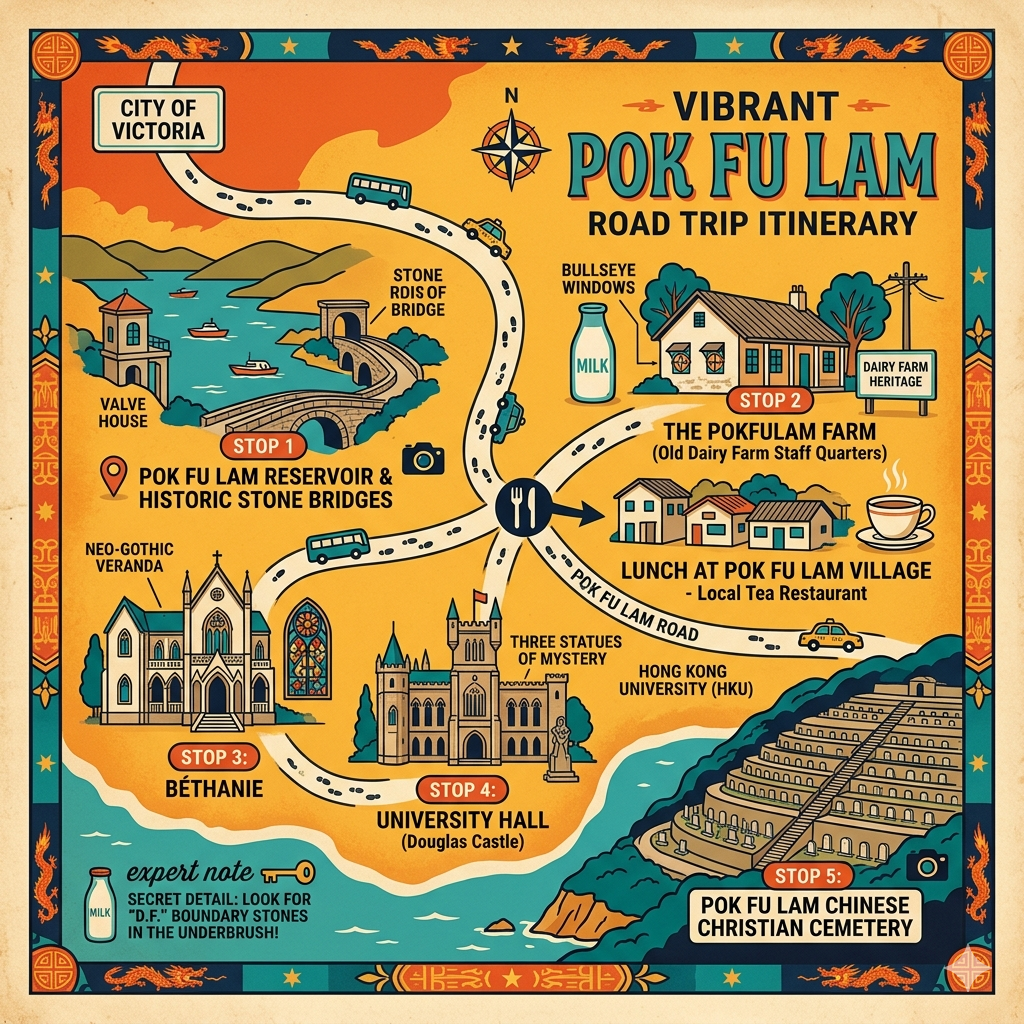
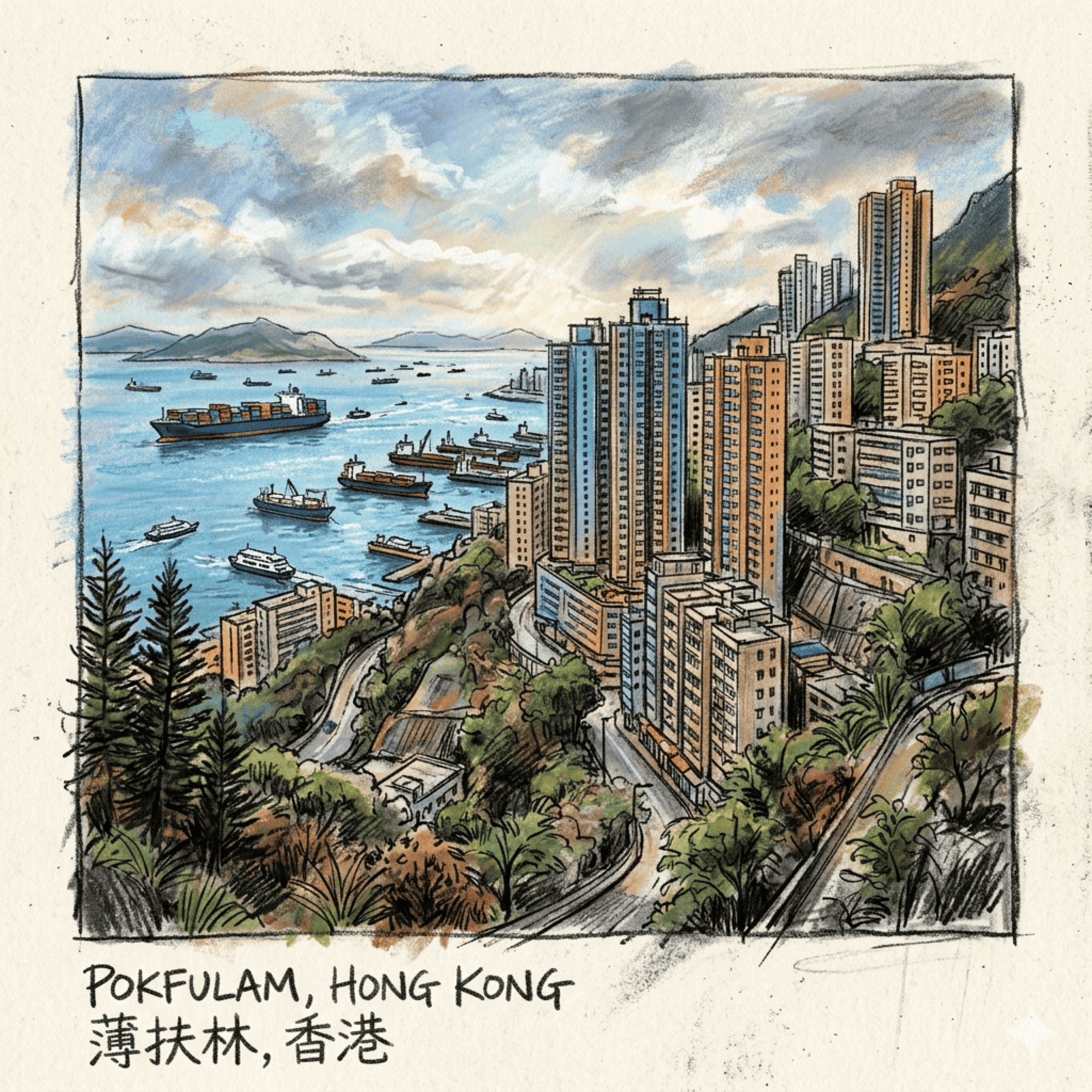
This is a historical travel story and walking guide to Pok Fu Lam, a hidden cultural valley on Hong Kong Island. By exploring the remnants of the old Dairy Farm, the Bethanie monastery, and the resilient Pok Fu Lam Village, this journey reveals how colonial dairy industries and traditional village life shaped a unique pastoral landscape that still breathes amidst modern development.
 Lawrence
For much of the nineteenth century, the southwestern topography of Hong Kong Island existed in a state of productive, often grueling, tension. To the administrators and residents of the disease-haunted City of Victoria, Pokfulam was a necessary lung—a colonial refuge where the altitude offered thinner air and a reprieve from the swelter of the harbour. Yet, to view it merely as a suburban retreat is to miss its more profound identity. Pokfulam functioned as a high-stakes "dual space": a sanctuary for the body and a sophisticated laboratory for global experiments in parasitology, shipping capital, and cross-cultural communication.
Understanding this specific contour of the island is essential to grasping how the young colony survived its early tropical challenges. It was here that the city learned to feed itself, to secure its water, and to project its intellectual influence across the South China Sea. By peeling back the layers of the modern landscape, we find a narrative of survival carved into the very ridges of the mountain. What follows is a walking exploration through these surprising layers—a journey through a landscape that served as the experimental bedrock for the modern city.
Listen to the historical stories told in detail (For subscribers only)
The Science of Survival: Pure Protein and Tropical Acclimatization
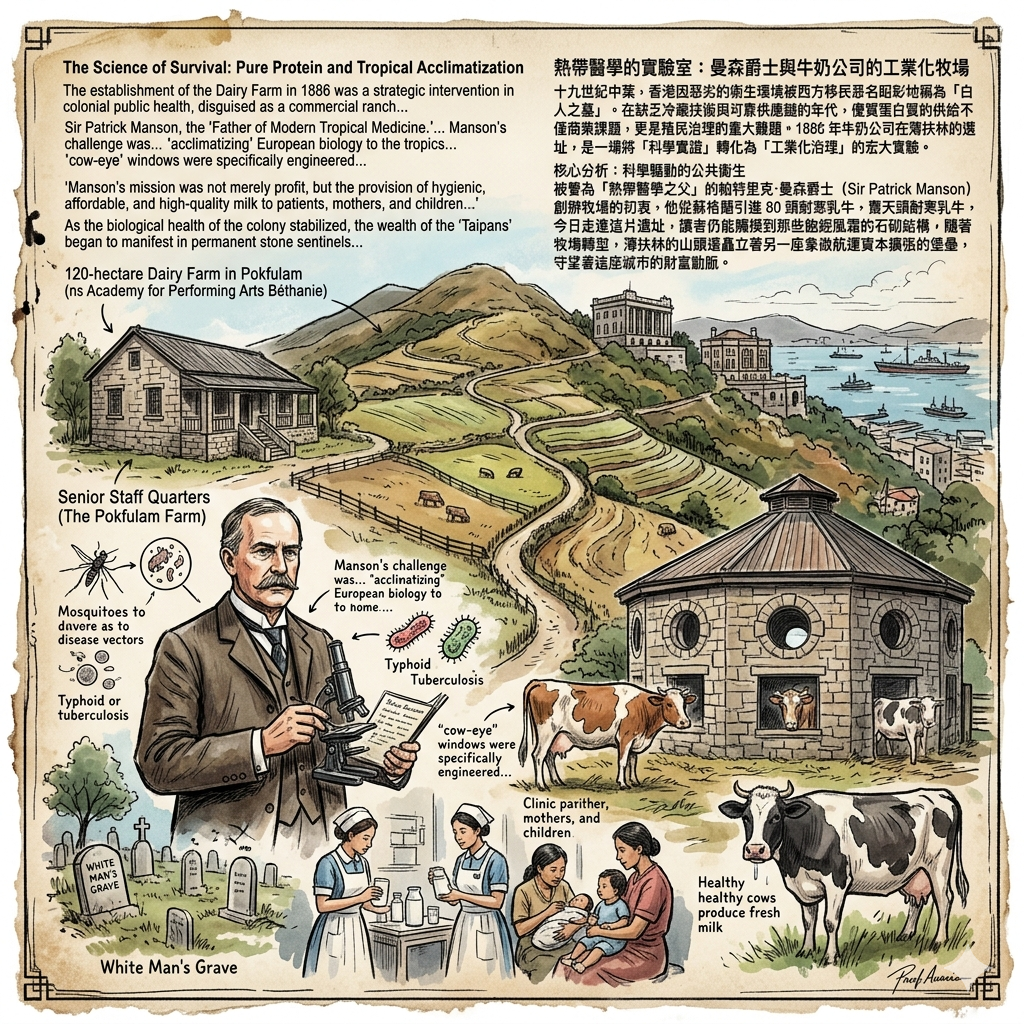
The establishment of the Dairy Farm in 1886 was a strategic intervention in colonial public health, disguised as a commercial ranch. In the late 19th century, Hong Kong was notoriously dubbed the "White Man's Grave," a place where the lack of reliable refrigeration and the prevalence of disease made fresh milk a dangerous rarity. The quest for "pure protein" was, in reality, a matter of biological security.
This scientific frontier was spearheaded by Sir Patrick Manson, the "Father of Modern Tropical Medicine." Tracing the 120-hectare contour of what was once the East’s most sophisticated ranch, one realizes Manson’s challenge was not merely logistical but biological: his imported European cattle were dying from local tropical diseases. Manson applied the same clinical mindset he used to reveal mosquitoes as vectors for filariasis to the problem of "acclimatizing" European biology to the tropics.
The physical remains of this experiment punctuate the landscape today. The Senior Staff Quarters (now The Pokfulam Farm) and the octagonal cowshed—now part of the Academy for Performing Arts—were responses to the latitude. Their "cow-eye" windows were specifically engineered for maximum ventilation to prevent the spread of disease among the herd.
"Manson’s mission was not merely profit, but the provision of hygienic, affordable, and high-quality milk to patients, mothers, and children in a colony plagued by typhoid and tuberculosis."
As the biological health of the colony stabilized, the wealth of the "Taipans" began to manifest in permanent stone sentinels, positioned at the strategic apexes of the island.
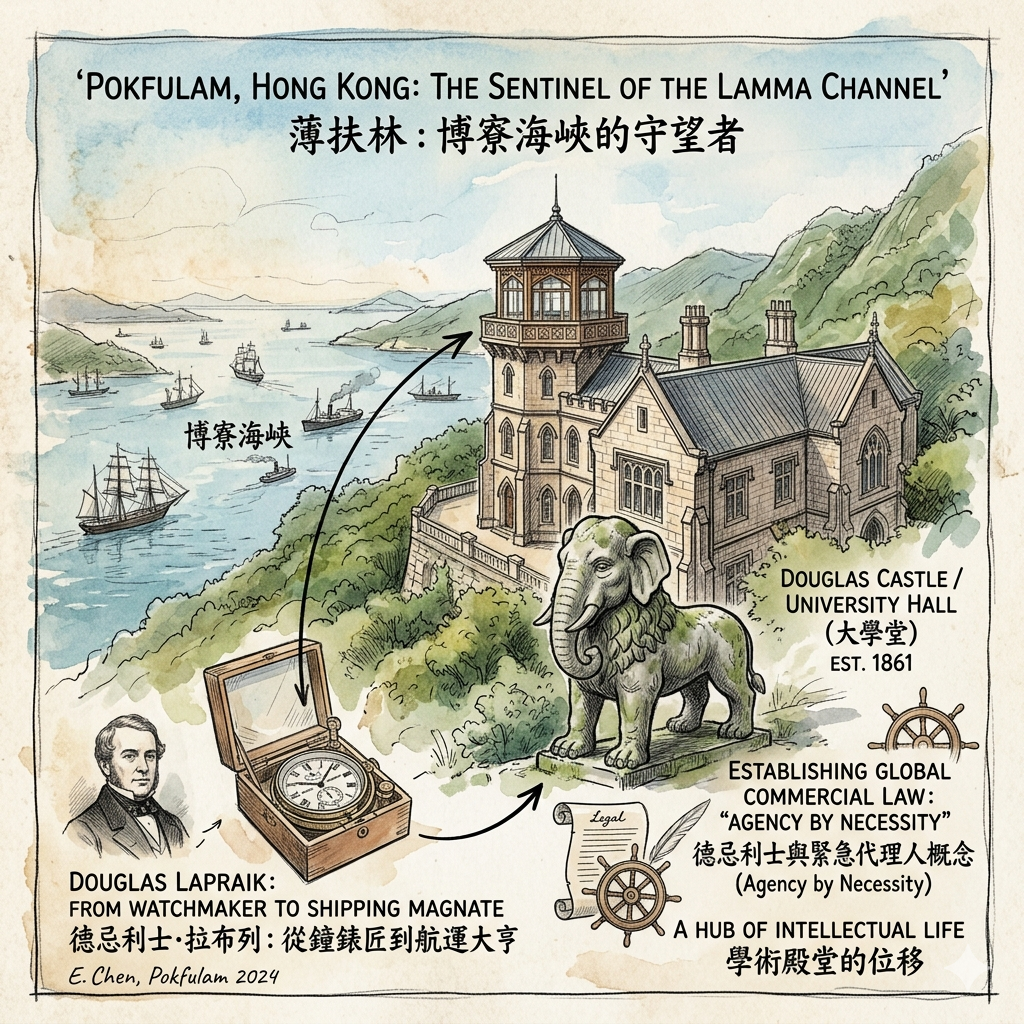
The Sentinel of the Lamma Channel: Capital and Chronometry
Pokfulam’s geography offered a distinct tactical advantage: height. From its ridges, one could survey the Lamma Channel, the primary maritime artery connecting the global trade routes of the South China Sea to Victoria Harbour. For a 19th-century magnate, this vantage point was a functional tool for the management of capital.
Douglas Lapraik, who rose from a watchmaker’s apprentice to a titan of industry, embodied this transition. A key founder of HSBC, Lapraik built Douglas Castle (now University Hall) in 1861. The architecture is a fusion of New Gothic and Tudor styles, but its most telling feature is the octagonal top-floor bedroom. From this perch, Lapraik could monitor the arrival of his fleet with the same chronometric precision he once applied to clockwork. His influence was so pervasive that the SS The legal case associated with his firm helped establish the concept of "agency by necessity" in global commercial law—linking this Pokfulam fortress to the very foundations of international trade.
Today, the castle is guarded by the "Statues of the Four Disguises"—mythical chimeras with elephant heads and lion bodies. These stone sentinels, once symbols of a shipping empire’s prestige, are now anchors for modern student superstition. As the castle transitioned from shipping capital to a hub of intellectual life, Pokfulam’s focus shifted toward the global circulation of ideas.
The Global Language Factory: The Printing Press as Arsenal
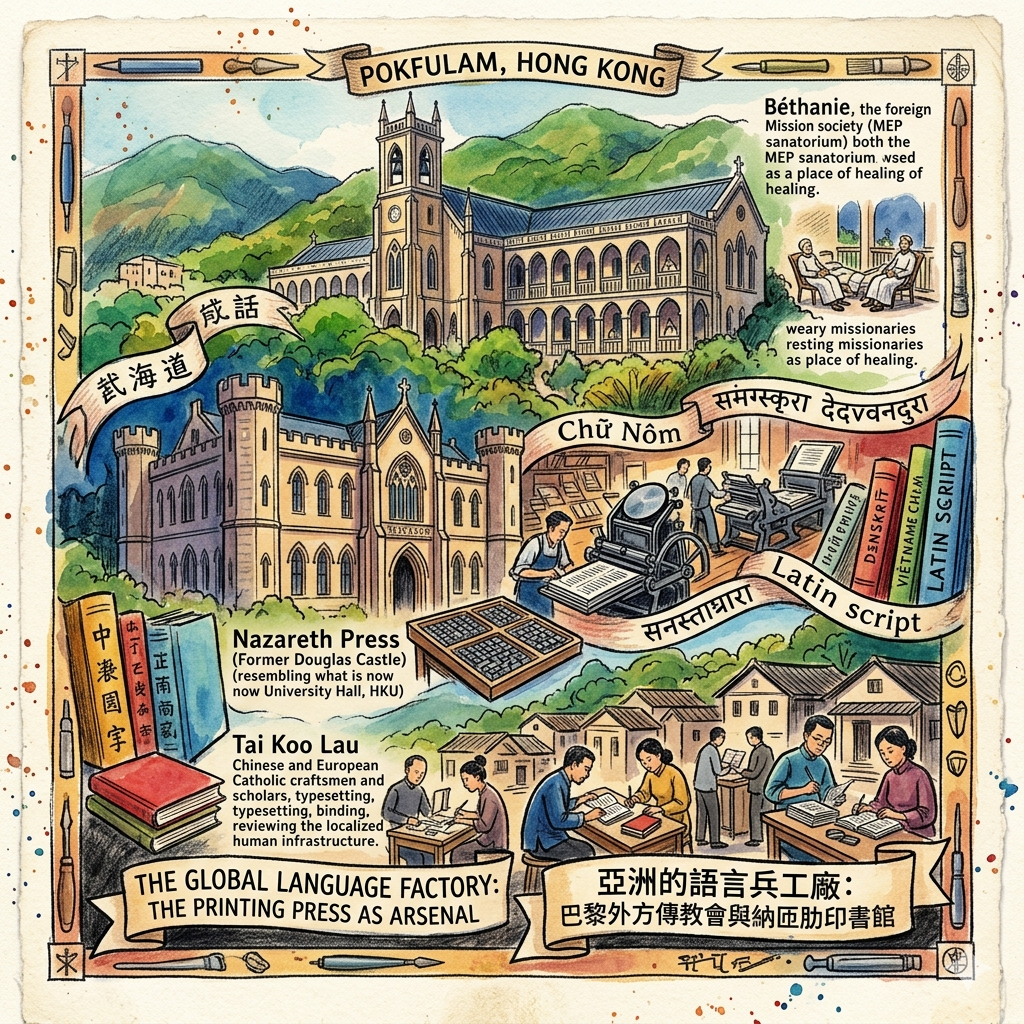
Beyond trade and medicine, Pokfulam served as a sophisticated "arsenal" for cross-cultural communication. The Paris Foreign Missions Society (MEP) utilized this remote hillside to establish Béthanie and Nazareth, institutions that transformed Hong Kong into the "Knowledge Production Base of Asia."
While Béthanie served as a sanatorium for thousands of missionaries, the Nazareth Press—housed within the former Douglas Castle—was a factory of the mind. Capable of printing in 28 languages, including Sanskrit and Vietnamese Chữ Nôm, the press produced over 800 titles and churned out 70,000 pages a day at its peak. This operation required a specialized workforce, leading to the "Tai Koo Lau" settlement—a localized enclave of Catholic craftsmen and scholars who formed the human infrastructure of this global ideological network. This was not mere religious piety; it was intellectual labor on a continental scale.
The Cost of Colonial Thrift: The Chadwick Report and the Reservoir
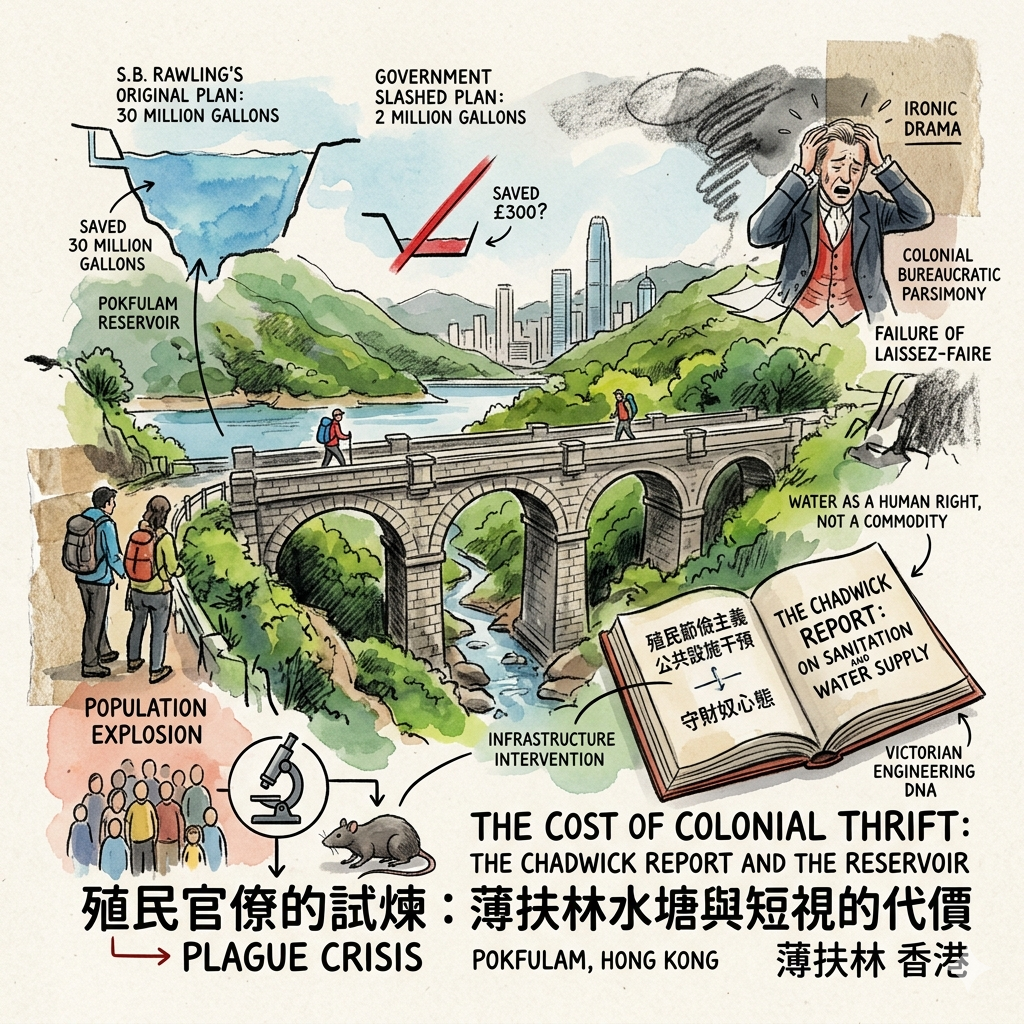
The construction of the Pokfulam Reservoir in 1863 marked a pivotal shift from laissez-faire governance to public infrastructure intervention. Yet, the story is one of "ironic drama" fueled by colonial bureaucratic parsimony.
The original engineering plan by S.B. Rawling called for 30 million gallons, but the government, in a bid to save a few hundred pounds, slashed this to a mere 2 million. The resulting water crisis backfired almost immediately as the population exploded. This failure eventually prompted the Chadwick Report, a landmark document that shifted the philosophical status of water from a commercial commodity to a human right.
For the modern traveler, the "Victorian engineering DNA" of this struggle remains visible in the four historic stone bridges spanning the valley. These granite structures are the physical remains of a city grappling with its own expansion, leading the way from the infrastructure of the living to the monuments of the dead.
The Vertical Map of Social Mobility: The Merchant Princes
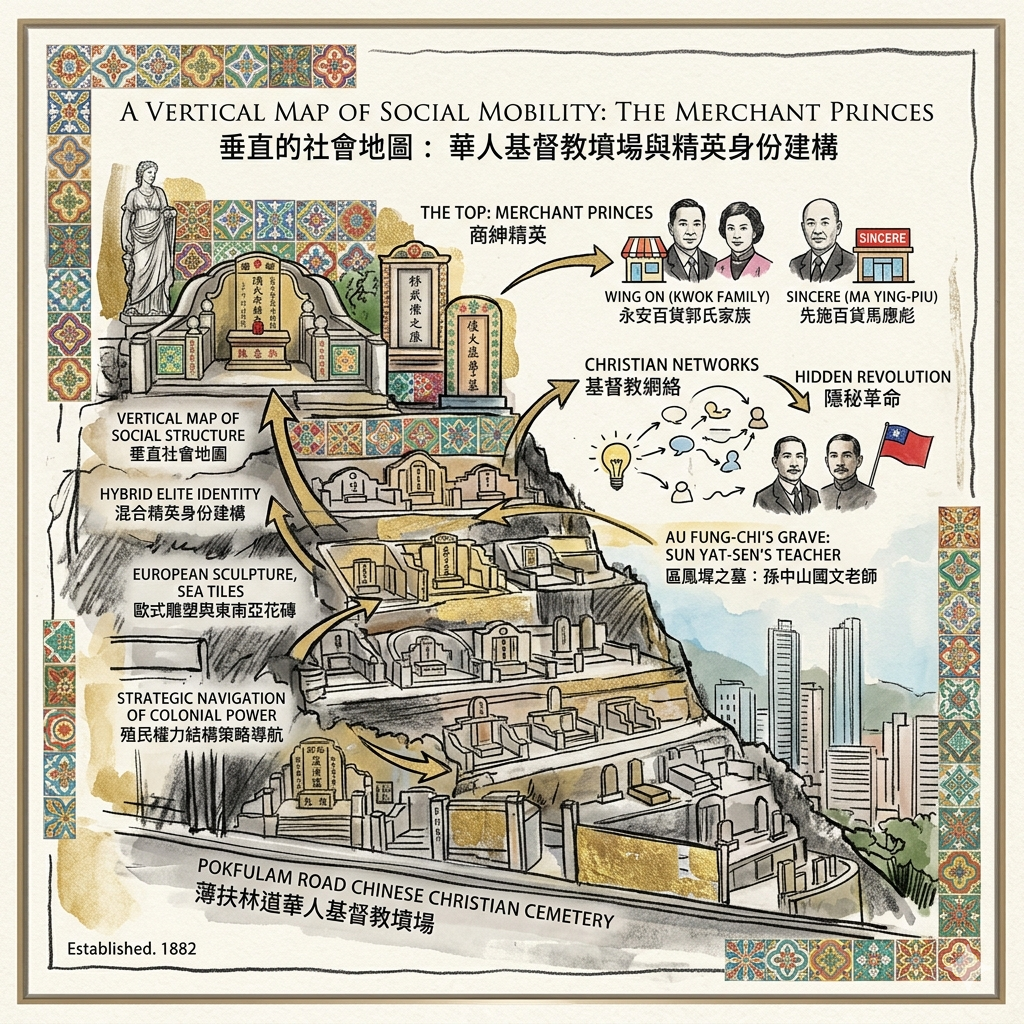
If the reservoir represents the city’s physical growth, the Pokfulam Road Chinese Christian Cemetery serves as a "vertical map" of its social and spiritual evolution. Established in 1882, the cemetery’s terraced landscape mirrors the hierarchy of Hong Kong’s early Chinese Christian elite.
Here lie the "Merchant Princes"—founders of retail empires like Wing On and Sincere—alongside political subversives. Notably, the cemetery holds the grave of Au Fung-chi, the teacher of Sun Yat-sen, revealing how these Christian networks served as a hidden channel for the revolutionary thoughts that would eventually topple the Qing Dynasty. The graves themselves are artifacts of hybrid identity: European sculptures paired with Southeast Asian patterned tiles and traditional Chinese epitaphs. This was a strategic navigation of the colonial power structure, where a "middle-ground" identity was used to bridge heritage with global systems of trade.
The Hidden Gem & Philosophical Reflection
Along the hiking trails, appearing like ghosts among the undergrowth, are the ruined manure pits and grass huts of the 19th-century waste-management infrastructure. These stone-lined excavations are the silent witnesses to the earthy, physical labor that powered the "clean" modernization of the Dairy Farm. They remind us that the soaring Gothic spires of the missionaries and the magnates were built upon a foundation of literal waste and backbreaking agriculture.
To walk through Pokfulam is to engage in a practice of "layered observation." This landscape proves that a great city is constructed not just of stone, but of "milk, water, type-metal, and trade-winds." It was an experimental zone where global ambitions were tested against tropical realities. As you look at the modern skyline of the Southern District today, one must wonder: what "experimental" infrastructure is our own generation building that will one day be buried beneath the layers of the future?
For more explorations into the spatial storytelling of the world's great cities, [subscribe to our comprehensive Hong Kong historical travel guide].
Travel Logistics
- Access: Pokfu Lam Road is the primary artery. Buses from Central or Admiralty stop near University Hall and the Reservoir.
- Recommended Tours: A "History and Architecture Walking Tour" of the Southern District provides access to the interior of Béthanie and the hidden ruins of the Dairy Farm.
- Accommodation: For those wishing to explore the heritage trail in depth, look for stays near the University of Hong Kong or the Pokfulam area for a more authentic [neighborhood-level history of the Southern District] experience.
Reference and Further reading
- 施設及び歴史的背景|新宿御苑|国民公園|環境省, accessed April 23, 2026,
- 新宿公園と太宗寺で発見した旧町名の痕跡 - 歩・探・見・感, accessed April 23, 2026,
- 9月1日(木)日本橋→内藤新宿→高井戸へ 25.5km | ちょっと寄り道・甲州街道ひとり旅, accessed April 23, 2026,
- 四ツ谷から新宿へ|内藤新宿を歩く歴史散歩|ましゅまろ - note, accessed April 23, 2026,
- 新宿區Shinjuku city, accessed January 1, 1970,
- 内藤新宿、 新宿2,3丁目、 歌舞伎町, accessed April 23, 2026,
- うさぎの気まぐれまちあるき「新宿DeepZone&歴史探訪」, accessed April 23, 2026,
- 内藤新宿コース(約6.0km、所要時間約5時間40分)新宿駅周辺エリア ..., accessed April 23, 2026,
- 江戸きっての宿場町に漂う悲哀「新宿二丁目の地獄と極楽」を2つの寺から考察する|裏・東京の不思議 | 男の隠れ家デジタル, accessed April 23, 2026,
- 江戸時代の内藤新宿ー遊女と飯盛女ー - 六部塾・小金井風土知, accessed April 23, 2026,
- 『新宿の歴史を歩く』新宿(東京)の旅行記・ブログ by 愛吉さん【フォートラベル】, accessed April 23, 2026,
- 新宿歴史博物館 - 【公益財団法人新宿未来創造財団】, accessed April 23, 2026,
- 江戸開幕から400年の時を刻んだ内藤家の中屋敷跡地 新宿御苑に抱かれる、緑豊かな住空間が広がる – Geo Plat - 阪急阪神の住まい〈ジオ〉, accessed April 23, 2026,
- 新宿御苑 | 出かける | 連載コラム「エコレポ」|| EICネット『エコナビ』, accessed April 23, 2026,
- 1 新宿御苑とその使命(1590 年~) 上野 攻 1.新宿御苑が現存する僥倖 (1)徳川家康と内藤, accessed April 23, 2026,
- 新宿副都心の整備, accessed April 23, 2026,
- 西新宿地域情報紙 第41号, accessed April 23, 2026,
- 7:江戸・東京の生活を支えた「玉川上水」と「淀橋浄水場」 ~ 新宿, accessed April 23, 2026,
- 淀橋浄水場 - accessed April 23, 2026,
- 国立公文書館所蔵資料, accessed April 23, 2026,
- 新宿騒乱 - accessed April 23, 2026,
- 『ノルウェイの森』で描かれた新宿駅西口の地下通路は、副都心計画のカギだった。【速水健朗の文化的東京案内。西新宿篇③】 - Pen Online, accessed April 23, 2026,
- 通行人の交流による都市空間の公共性の創出過程 - CiNii Research, accessed April 23, 2026,
- フォークゲリラWORD|大人のMusic Calendar|大人のミュージック ..., accessed April 23, 2026,
- 「新宿駅西口地下広場」は、誰も気づかないまま50年前に消滅していた | 戦国ヒストリー, accessed April 23, 2026,
- 鬼、地蔵、閻魔、怨霊とディープな伝承を探して新宿~四谷散歩!成覚寺、太宗寺編, accessed April 23, 2026,
- 検索結果詳細 | 温故知しん!じゅく散歩 新宿文化観光資源案内サイト, accessed April 23, 2026
Lawrence Lawrence
 Lawrence