(ENG) Ōizumi: 5 Forgotten Stories Hidden in a Quiet Tokyo Suburb
A temple, a map, a stone, a farm, Ōizumi teaches us to listen to the silent echoes of the past that resonate beneath the surface of the present.

白石農園 | 野菜収穫体験・農業体験 Shiraishi Farm | Vegetable harvesting and farming experience
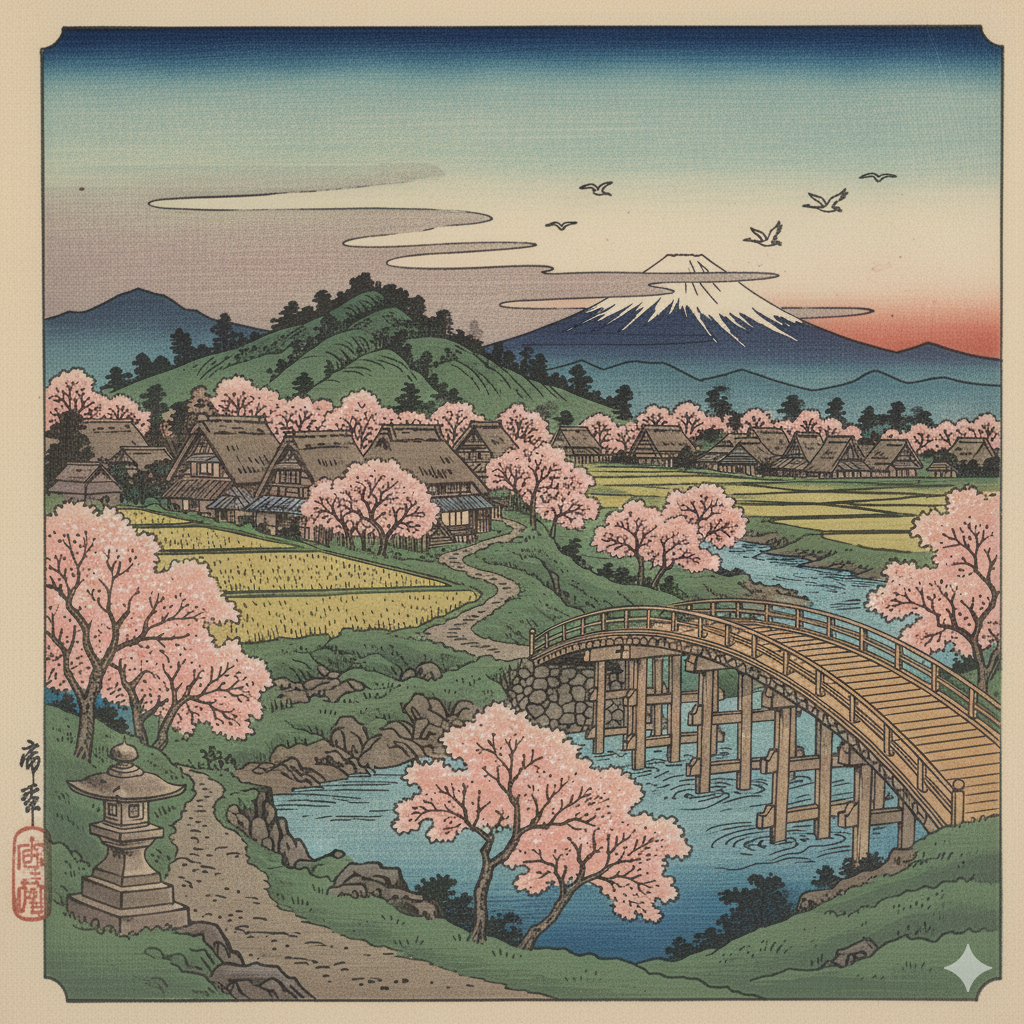
Listen attentively to the historical stories told in detail
When we picture Tokyo, we see a metropolis of frantic energy—a dazzling spectacle of neon signs, teeming crowds, and skyscrapers piercing the clouds. It’s a city that seems to live entirely in the future. Yet, beyond the famous scramble of Shibuya and the Imperial Palace's grand moat, profound history breathes in the most unexpected of places: its quiet, unassuming suburbs. This is an invitation to explore one such place, Ōizumi, a neighborhood in the city's western reaches. Not a tourist destination, but a suburban manuscript, its tranquil streets are filled with forgotten stories of shoguns, failed utopias, and retired spies. It’s here, far from the noise, that we can discover a deeper, more resonant side of the world’s greatest metropolis.
A Warlord's Temple: The Ancient Political Stronghold Disguised as a Local Shrine
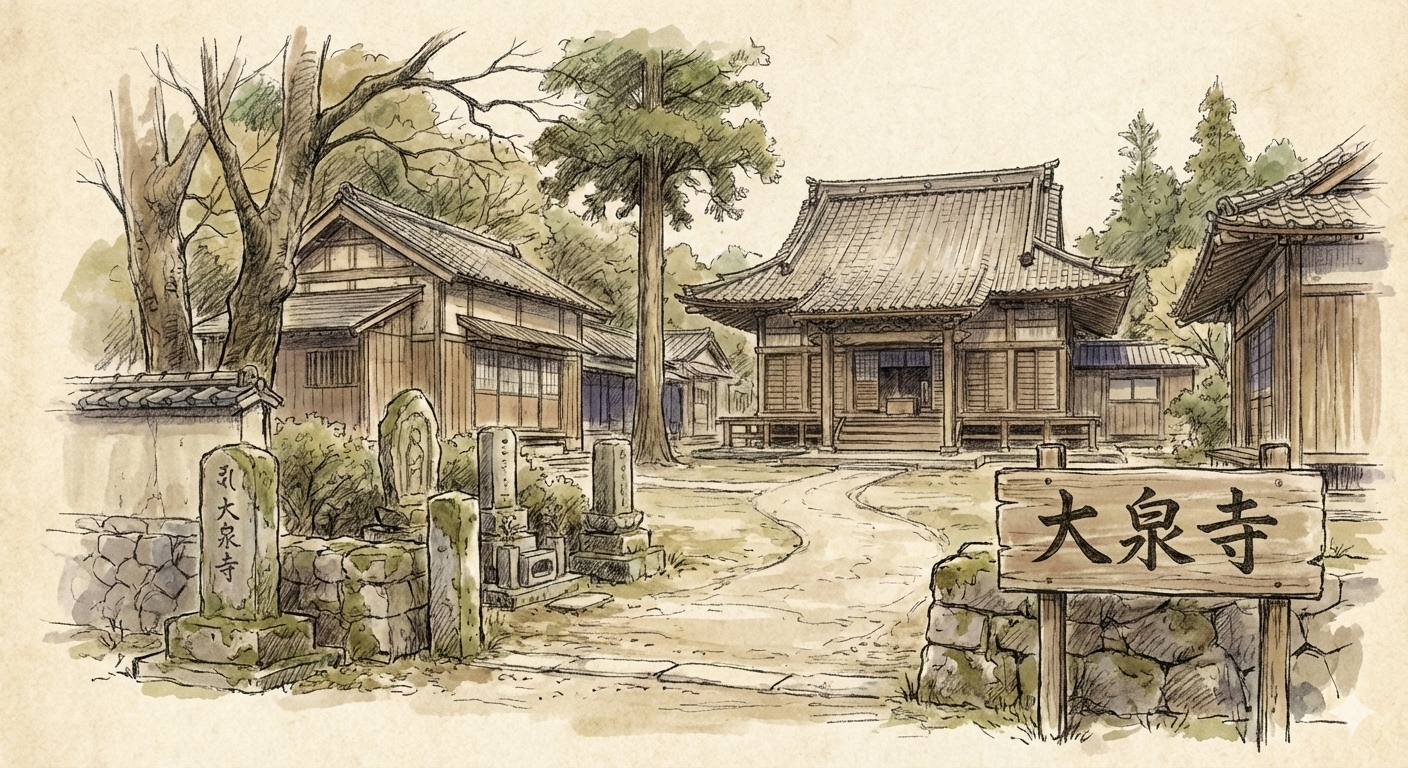
While many Tokyo suburbs have a local temple, few can claim to be a silent witness to the most pivotal power shifts in Japanese history. Ōizumi’s Daisen-ji Temple is different. From the age of the first shogun to the bloody unification wars and the eventual peace under the Tokugawa clan, this quiet site has been inextricably linked to the samurai elite, making it less a simple place of worship and more a living fossil of political power.
- The Shogun's Bloodline The temple’s story begins with an impeccable political pedigree. It was founded by Ano Zenjō, the half-brother of Minamoto no Yoritomo, the very first shogun of the Kamakura period. This direct connection to the ruling Minamoto clan meant that from its inception, Daisen-ji was more than a local shrine; it was a site with deep roots in Japan’s warrior class, a place established to honor the spirits of the nation’s most powerful family.
- A Warlord's Patronage During the war-torn 15th and 16th centuries, the temple’s importance only grew. It found a powerful patron in the Imagawa clan, one of the era’s most formidable military families. Ancient documents show the clan’s leader, Imagawa Yoshimoto, granted the temple 15 koku of land in both 1536 and 1558. Astonishingly, his heir sent another confirmation in 1560—the very year Yoshimoto was famously killed in battle. This continued support reveals the temple’s immense strategic and spiritual importance as a stabilizing force in a chaotic world.
- An Act of Adaptation But the temple was not merely a passive recipient of warlord patronage; it was an active player in its own destiny. During the turbulent Tenshō era (1573-1592), as old powers waned, the temple made a pivotal strategic move: it converted from the ancient Shingon sect to the ascendant Sōtō Zen sect. This was an act of profound internal resilience, an alignment with a growing religious movement to ensure its own survival and relevance for the centuries to come.
- The Unifier's Seal of Approval After decades of civil war, a new leader emerged: Tokugawa Ieyasu, the unifier of Japan. Once he established his shogunate, he officially recognized Daisen-ji with a shuinjō—a vermilion-sealed edict—granting it 16.5 koku of land. This was a masterful political gesture. By honoring an ancient institution and providing a slight increase over the Imagawa clan’s 15 koku, Tokugawa was both respecting the precedent set by a previous ruler and subtly asserting his own superior power and generosity. He co-opted the temple's spiritual authority to legitimize and cement his new regime.
For the discerning traveler, the hidden gem here is seeking out Daisen-ji Temple, a site connected to the first Shogun's family and a witness to the rise and fall of samurai clans.
This legacy of political power and grand ambition laid the groundwork for the modern dreams that would later shape the suburb.
The Utopian Dream That Vanished: A Neighborhood Named for a Failure
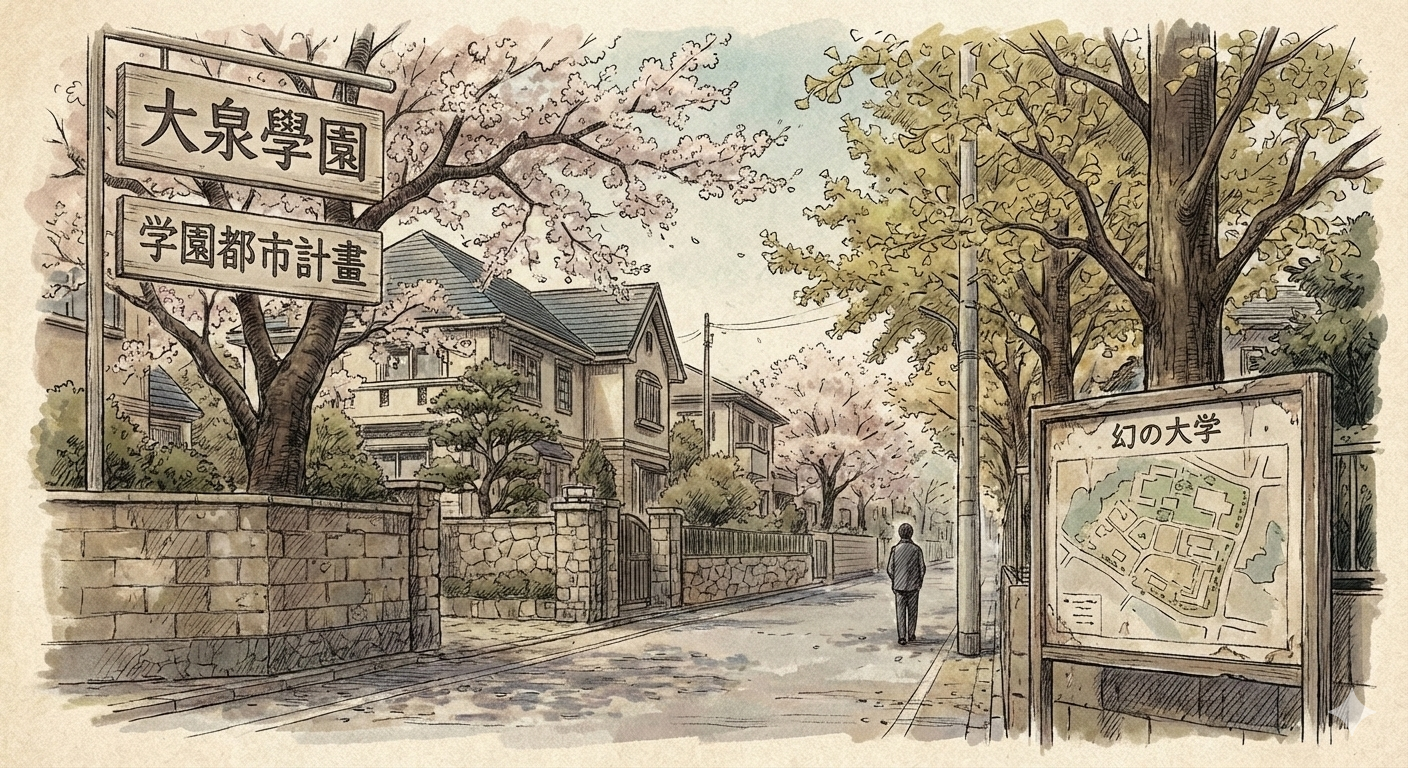
The name of Ōizumi Gakuen—"Ōizumi School Garden"—is a profound paradox. It promises an elegant center of learning, a university town nestled in the suburbs. In reality, the name is a living monument to a spectacular failure of urban planning, a ghost of a dream that never came to be. This makes it one of the most uniquely fascinating stories in Tokyo's modern history.
- The Grand Vision In the optimistic atmosphere of the 1920s Taishō era, Tokyo was expanding rapidly. Private railway companies weren’t just laying tracks; they were building idealized suburban communities to attract residents. Yasujirō Tsutsumi, a visionary developer and founder of the Seibu corporation, proposed a breathtakingly ambitious "Gakuen Toshi" (School City) on 500,000-tsubo of land in Ōizumi. His vision was to create a perfect, cultured community anchored by a prestigious university.
- The Unraveling The initial land sales, which began in 1924, were a stunning success, selling out almost instantly. Tokyo’s rising middle class was hungry for the suburban ideal Tsutsumi was selling. But the entire project rested on a single, fragile assumption. In September 1925, the plan’s anchor institution, the Tokyo University of Commerce (now Hitotsubashi University), announced its decision to relocate not to Ōizumi, but to another suburb. With the university gone, the "School City" concept collapsed overnight, a powerful lesson in the dangers of speculative, top-down urban planning.
- A Name as a Scar Though the university never arrived and the grand vision evaporated, the name "Ōizumi Gakuen" remained. Today, the name itself is the most important historical artifact of this entire saga. It hangs over the quiet residential streets as a constant, silent reminder of a bold utopian dream that was never realized—a scar left by ambition.
The true treasure here is an intellectual one: walking the quiet residential streets of Ōizumi Gakuen and reflecting on its name, a living monument to a grand, unfulfilled dream from the 1920s.
While one grand vision failed to materialize, another, much older community remained hidden just beneath the surface.
The Secret Ninja Village in Plain Sight: Where Shadow Warriors Retired
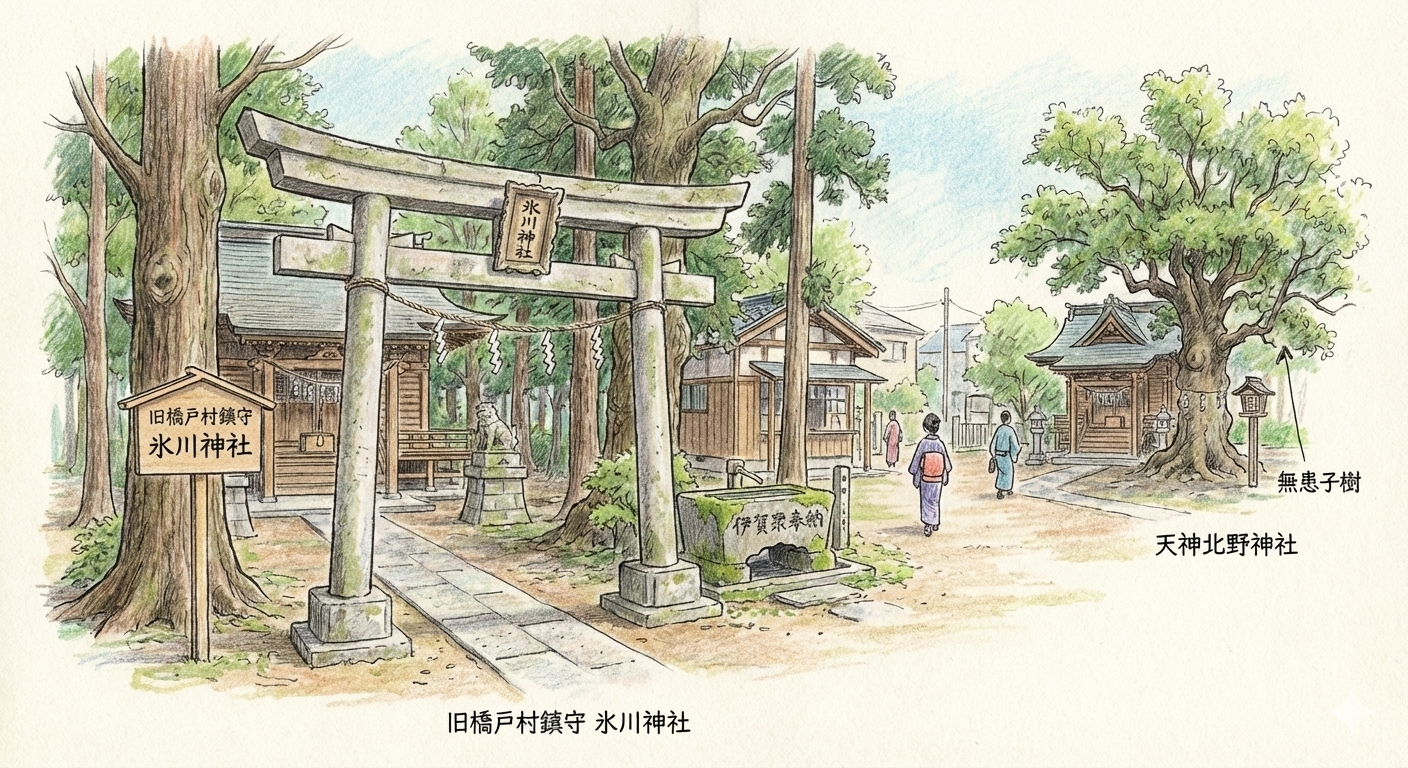
Beneath the tranquil surface of Ōizumi's residential grid lies the forgotten history of an elite military community. This was no ordinary village; it was a settlement of the legendary Iga-shū, the famed ninja clans from Iga province, placed here as a strategic outpost by the shogun himself. The evidence of their presence isn’t hidden in scrolls but is sitting in plain sight, carved in stone across two quiet, neighboring shrines.
- The Shogun's Spies After unifying Japan, Tokugawa Ieyasu rewarded the Iga-shū who had served him by granting them fiefs on the outskirts of his new capital, Edo. Organized into administrative units called Iga-gumi, they served as strategic watch posts for the shogunate. The area then known as Hashido Village, now part of Ōizumi, was one of these territories, transforming a simple village into a home for some of the nation’s most secretive warriors.
- A Dual Legacy in Stone The proof of their dual identity—as both warrior protectors and community builders—resides in two adjacent shrines. The first, Ōizumi Hikawa Shrine, speaks to their martial past. Here, you can find a stone water basin and a massive stone torii gate, both designated as tangible cultural assets by Nerima Ward. Their donor was the Iga-shū. These were not secrets, but public declarations of their presence and authority. Just next door, the Ōizumi Tenjin Kitano Shrine, dedicated to the god of learning, reveals their aspirations for culture. Together, they represent a perfect synthesis of the warrior’s protection and the scholar’s prayer.
- From Assassin to Administrator This evidence shatters the pop-culture myth of the ninja as a mere shadow warrior. These artifacts, along with the sacred Mukuroju tree at the Tenjin shrine, prove that in the peace of the Edo period, these operatives transitioned into new roles. They became respected landowners and community administrators, fully integrated into the society they once protected from the shadows, valuing both the sword and the scroll.
The ultimate secret to uncover is at the unassuming Hikawa and Tenjin Kitano Shrines. Search for the stone relics that offer physical proof of Ōizumi's past as a secret ninja settlement defined by both martial strength and cultural aspiration.
From the martial history carved in stone, we turn to a different kind of resilience, one rooted in the earth itself.
The Farm That Time Forgot: An Agricultural Oasis in the Concrete Jungle
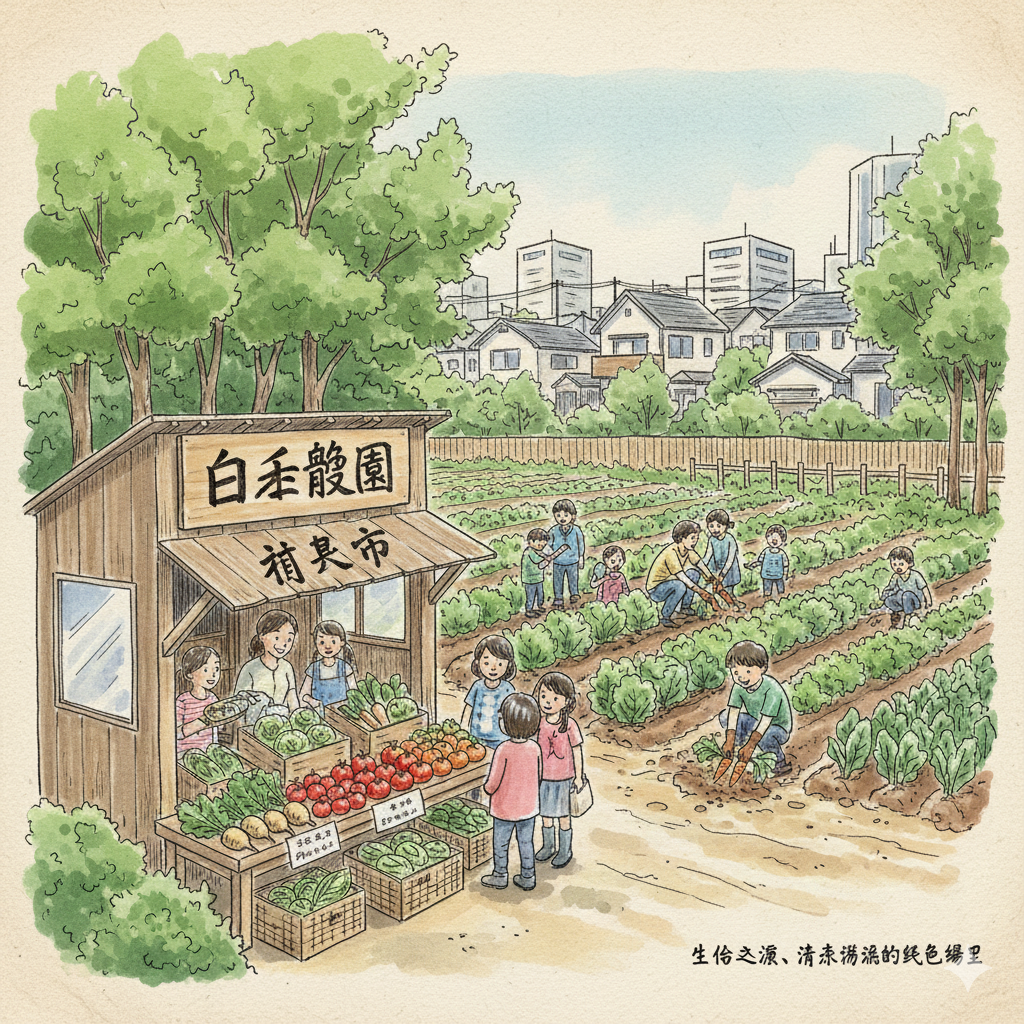
Tokyo is a city defined by relentless urbanization, a place where concrete and steel seem to devour every inch of available land. Yet, here in Ōizumi, an act of quiet defiance persists. Shiraishi Farm stands as a powerful symbol of resistance and resilience—a patch of "real earth" that continues to thrive against all odds, offering a vital connection to a part of Tokyo’s identity that has been almost entirely paved over.
- A Patch of Green Urban agriculture is a rarity in a megacity like Tokyo, making places like Shiraishi Farm incredibly precious. Officially recognized by Nerima Ward as a direct-sales farm stand, it represents a commitment to preserving green space and local food sources in an environment of immense development pressure. It is a living remnant of the fields that once dominated this landscape.
- More Than Just Food The farm’s role extends far beyond simply growing vegetables. It is a key participant in Japan's national cultural policy of shokuiku, or "food education," making it a vital community classroom. For city children accustomed to sterile convenience stores and digital screens, the farm offers a profound sensory education: the feeling of soil on their hands for the first time, the taste of a vegetable picked moments before, and a connection to the muddy, authentic reality of their food source.
The most nourishing experience in Ōizumi is visiting Shiraishi Farm, especially during a seasonal harvest event, to connect with the city's surprisingly resilient agricultural soul.
This patch of authentic earth sets the stage for a final, fascinating confrontation between the real and the magical.
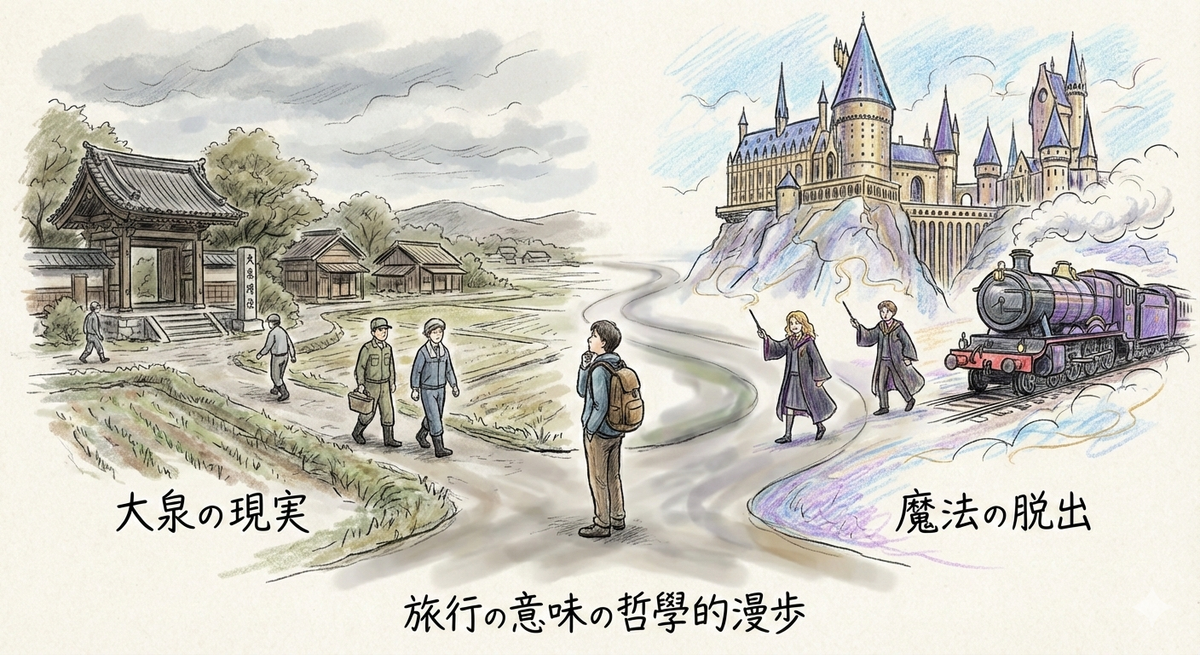
The Choice at Magic's Doorstep: Where Authentic History Meets a Global Fantasy
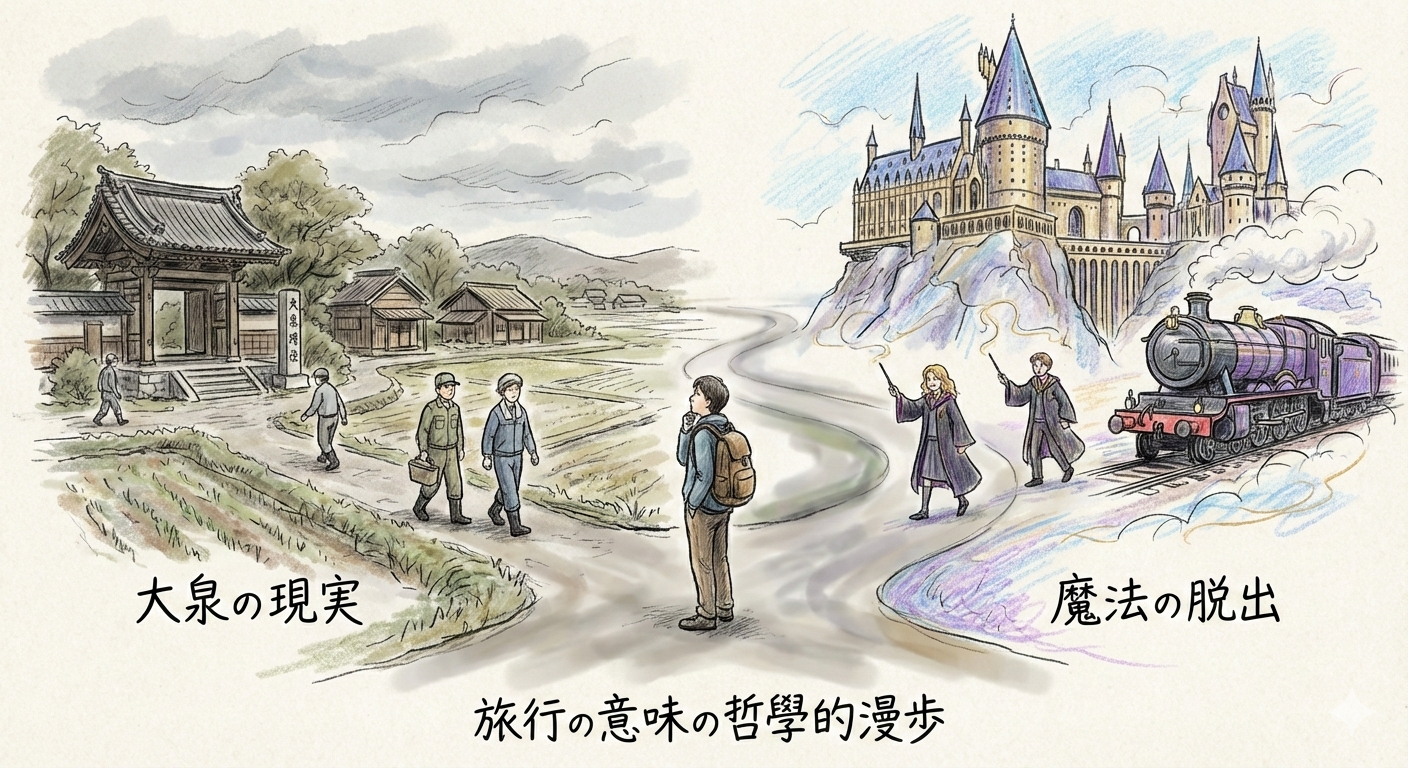
The final and perhaps most profound story of Ōizumi is not about the past, but about a choice every visitor faces today. It's a philosophical dilemma presented by a stark geographical fact: Ōizumi’s quiet, layered, and authentic history exists directly beside a global entertainment behemoth, The Warner Bros. Studio Tour Tokyo – The Making of Harry Potter.
- Two Worlds Collide On one side of this invisible line lies Ōizumi's slow, authentic reality. Here you find the centuries of political maneuvering etched into Daisen-ji Temple; the failed urban dream fossilized in a neighborhood's name; the stone relics of retired ninja at Hikawa Shrine; and the earthy persistence of Shiraishi Farm. These are complex, quiet stories that grew from this specific soil over hundreds of years.
- The Allure of the Unreal On the other side lies the pinnacle of a fast, magical fiction. The Harry Potter Studio Tour is a perfectly crafted, globally exported fantasy offering immersive escape. It is a brilliant spectacle, but one that is completely disconnected from the local history, culture, and land upon which it sits.
- The Traveler's Crossroads This sharp contrast reveals something essential about the nature of modern travel and what we seek from it. It forces a question upon every visitor: Is the goal to escape reality, or to understand it more deeply? Ōizumi's greatest gift may be that it doesn’t offer a simple answer. Instead, it presents the two paths side-by-side, forcing you to consider why you came here in the first place.
The final discovery is a choice: stand at the crossroads between Ōizumi's quiet historical sites and the nearby Harry Potter Studio Tour, and consciously decide which story—the authentic or the magical—you have come to explore.
What Stories Does Your Neighborhood Hide?
The five stories of Ōizumi reveal a powerful truth: the most profound travel experiences are often found not in world-famous landmarks, but in the subtle, layered histories of ordinary places. A quiet temple, a name on a map, a stone in a shrine, or a small urban farm can tell us more about the currents of history and the resilience of culture than any towering monument. Ōizumi teaches us to look closer, to listen to the silent echoes of the past that resonate just beneath the surface of the present.
What forgotten stories lie waiting to be discovered in the quiet corners of your own city?
 Lawrence
 Lawrence