(ENG) The Bedrock of Taipei: A Deep-Mapping Journey Through Neihu’s Hidden Histories
Neihu is not merely a collection of tech offices; it is a palimpsest. It is a place where materials are never truly discarded, only reimagined.

Did Taipei's "Black Gold Years" and "Quarrying History" Shape It?
Is the "Nighttime Earth God Dance" Related to the "Turtle Seeking" Ritual?
From the "Guo Family Red Mansion" to the "Jinrui Park," How to Integrate Tradition and Modernity?
The Inner Lake and the Architecture of Time
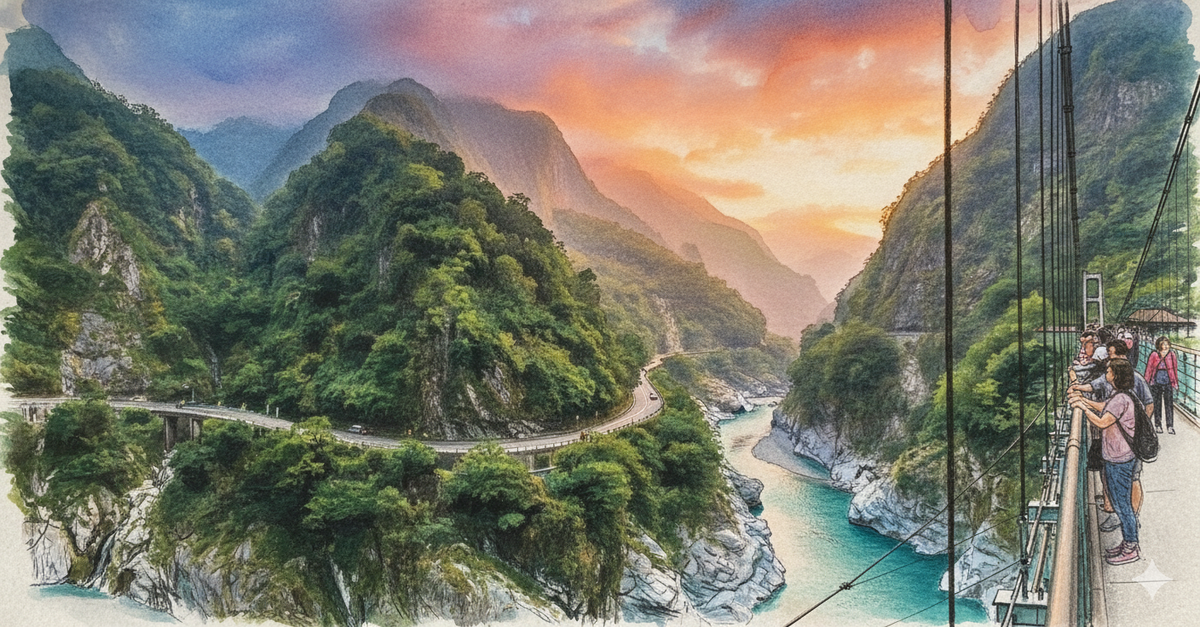
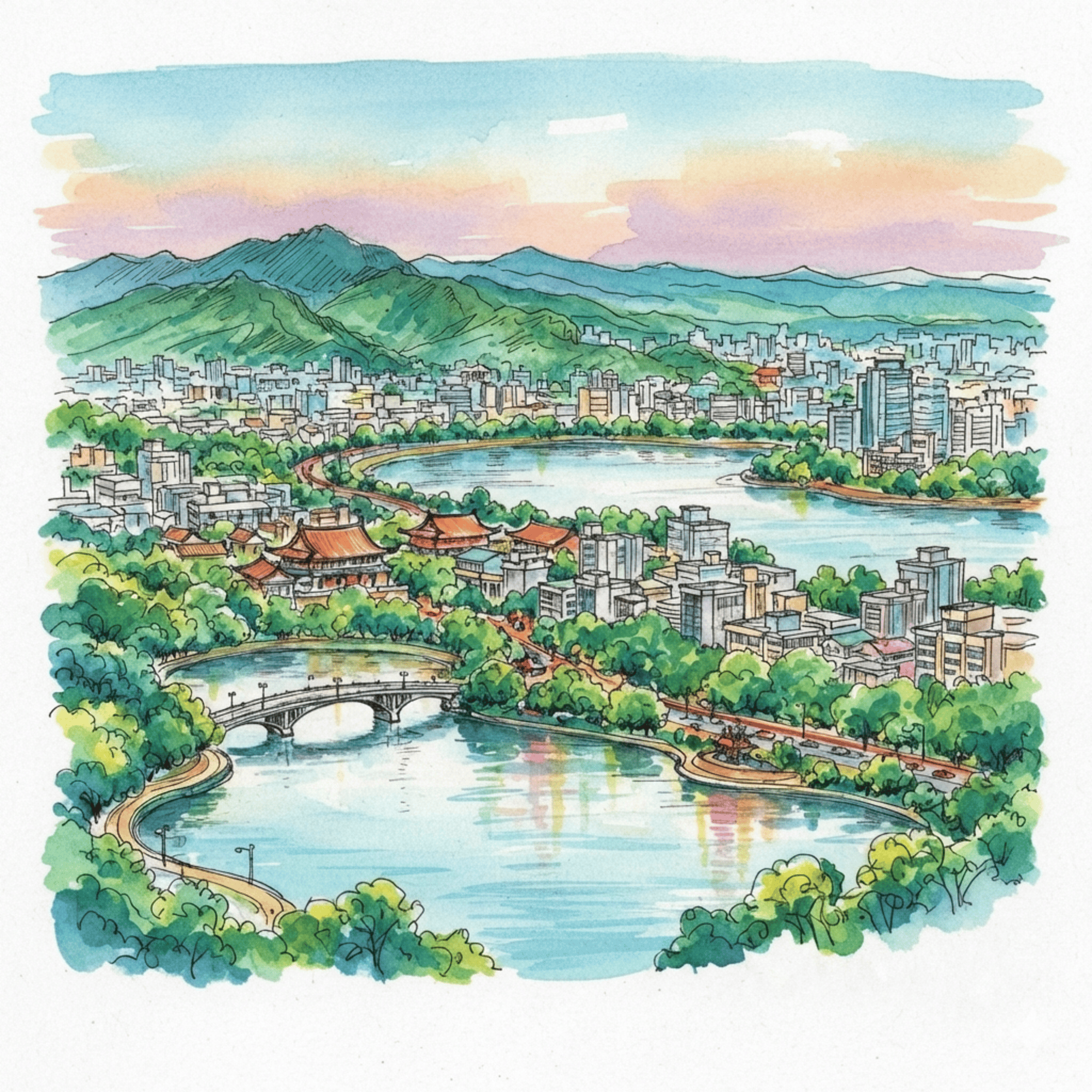
To the modern commuter, Neihu is a skyline of glass and steel—the gleaming heart of Taipei’s Tech Park. Yet, to the historically minded traveler, these "mountain-cradled lowlands" reveal a far older manuscript. Long before the first server was humming, Neihu was defined by its "multi-basin" topography. Derived from the Qing-era name "Nei-ao-hu" (inner lake), the district's identity is rooted in its relationship with the water and the ridges that surround it.
The very language of the land has shifted over centuries. Early settlers called the heart of the region "Jiantou," a functional term for the starting point of irrigation channels. As the community matured, the name transitioned to Neihu, marking a shift from viewing the land as a mere utility to recognizing it as a landscape of resilience. To understand Taipei’s physical and spiritual foundation, one must look up from the asphalt toward the jagged peaks that provided the city its very skin.
Listen to the historical stories told in detail (For subscribers only)
The Silent Foundation: Jinmianshan and the Walls of Taipei
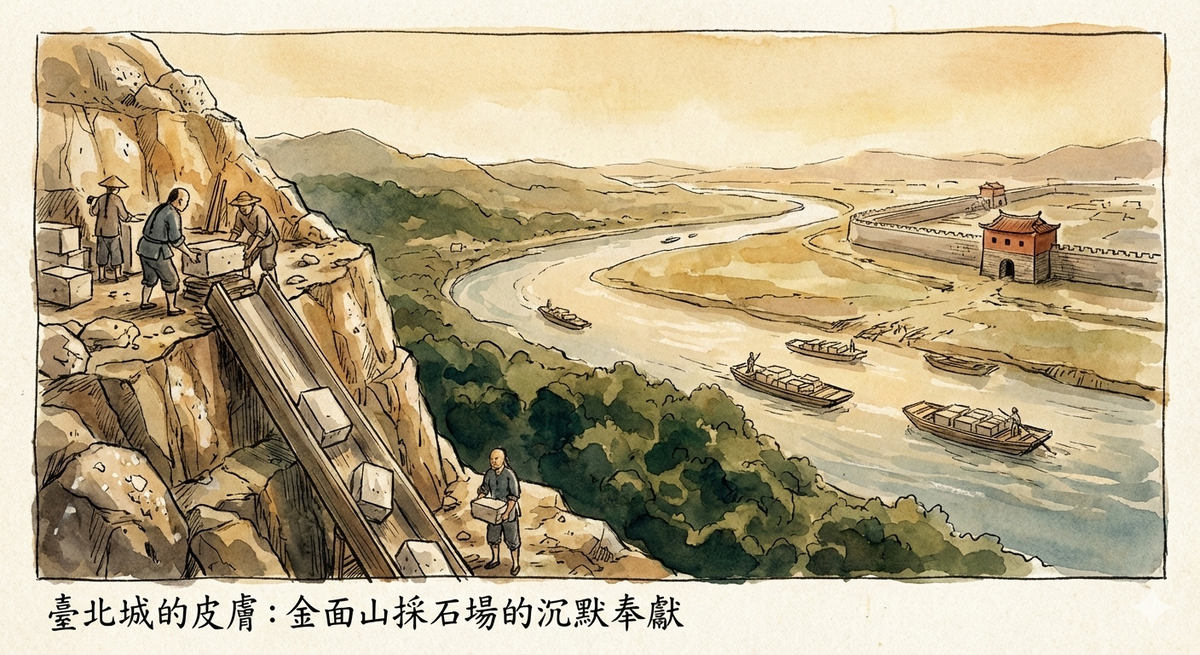
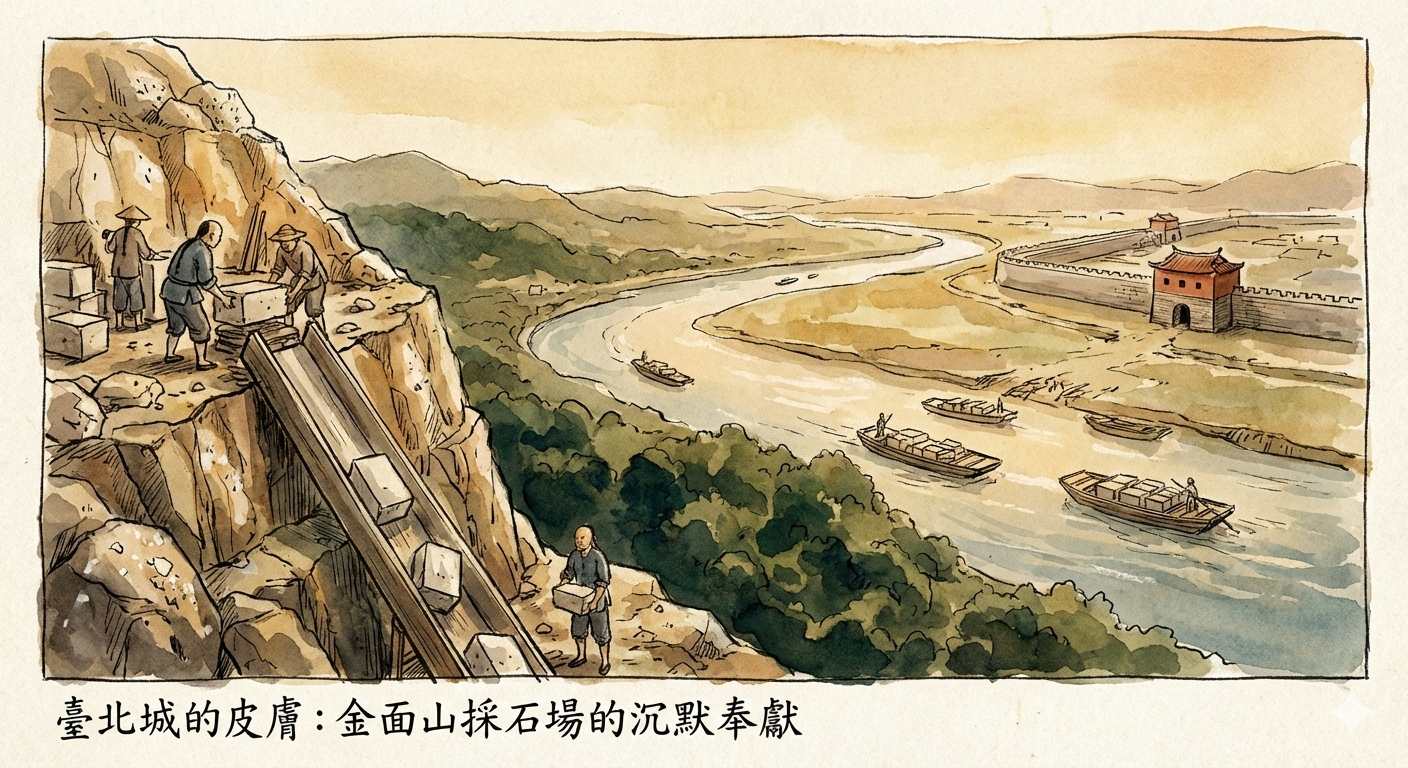
The story of Taipei’s urban existence begins in the rugged silence of the Jinmianshan quarry. During the late 19th-century Qing Dynasty, the high-quality andesite found here was selected for the administrative center of the Taipei Prefecture. These stones, rough-hewn and durable, are the material starting point of the capital.
The extraction was a feat of grit and gravity. Stonemasons carved standard blocks—roughly 90 x 21 x 21 centimeters—and sent them down specialized "stone slope ways," where the friction of the rock against the mountain left scars still visible today.
"The Neihu Qing Dynasty Quarry is unique as the only site in Taiwan designated as a historic monument specifically for its role in providing the stone used to construct the Taipei City walls."
When the city walls were later dismantled, these stones didn't disappear; they were repurposed into railway bridges, sewer linings, and the walls of private houses. The journey of a single stone was an epic trek across the landscape:
- Mountain Slope: Carved and slid down the "stone slope ways" of Jinmianshan.
- Boat Head: Transported to the Beishihu ferry pier.
- Keelung River: Shipped downstream via Dazhi and Jiantan.
- North Gate: Hauled ashore at the "River Ditch Head" to be set into the city's defenses.
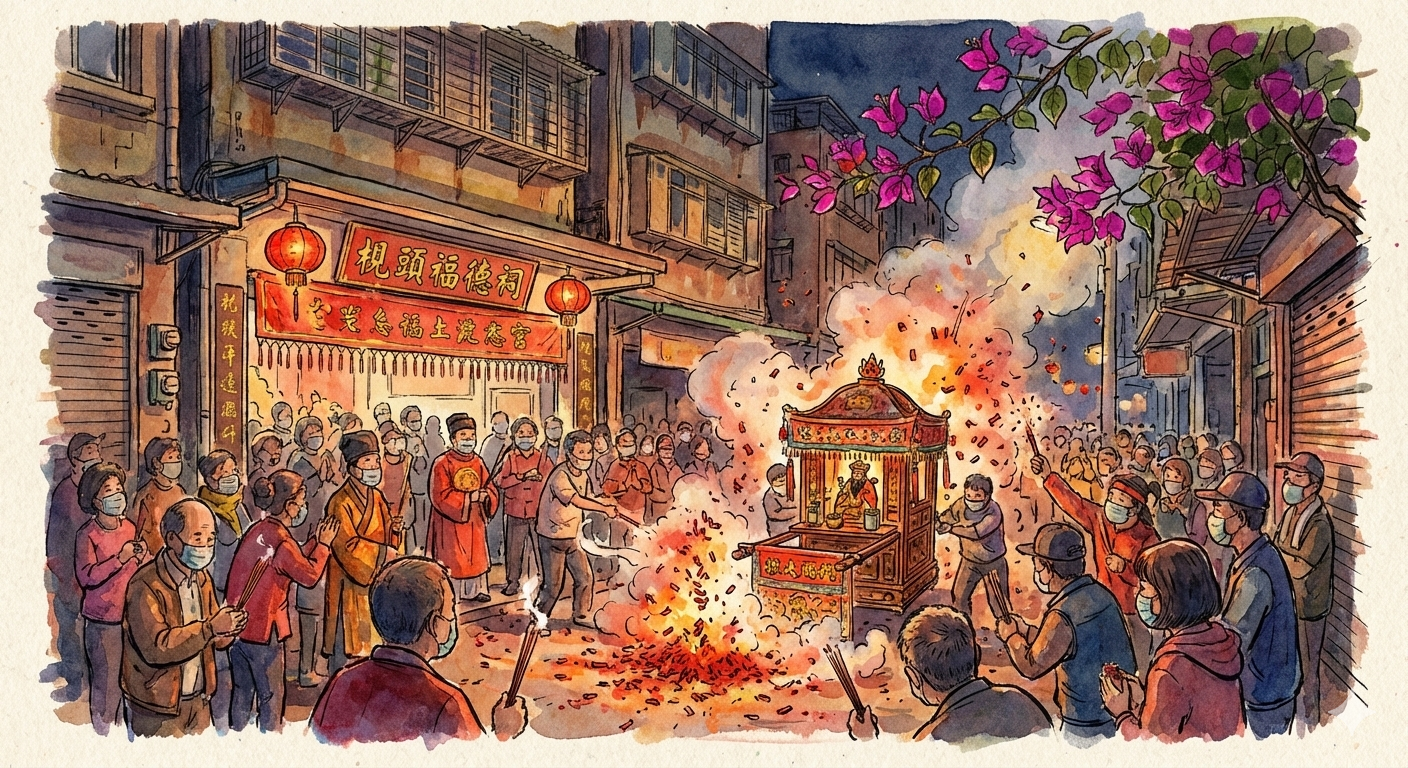
Sparks of the Commons: The "Night Poking" of Tudigong at Jiantou
From the cold, grey stone of the walls, we move toward the fiery warmth of the Jiantou Fude Temple. In this historic heart of Neihu, the community’s focus shifted from managing irrigation to protecting communal wealth. Here, the local deity, Tudigong, is affectionately called the "Rich Grandpa," a guardian of the soil and its secrets.
The most visceral expression of this bond is the "Night Poking" ritual held during the Lantern Festival. Even in a district defined by high-tech innovation, the streets fill with the sharp scent of sulfur and the deafening roar of firecrackers. Citizens throw massive amounts of explosives at the deity’s sedan chair, believing that the more "fervent" the fire, the greater the prosperity.
This success is never meant to be solitary. Through the "Turtle-Seeking" tradition, residents petition for blessings in the form of "flour turtles" or "red turtle cakes." This ritual encodes a sophisticated social philosophy of a "circular blessing": those who find success through the deity's favor are expected to return double the amount to the community the following year. In Neihu, prosperity is not a static hoard but a shared, flowing gift.
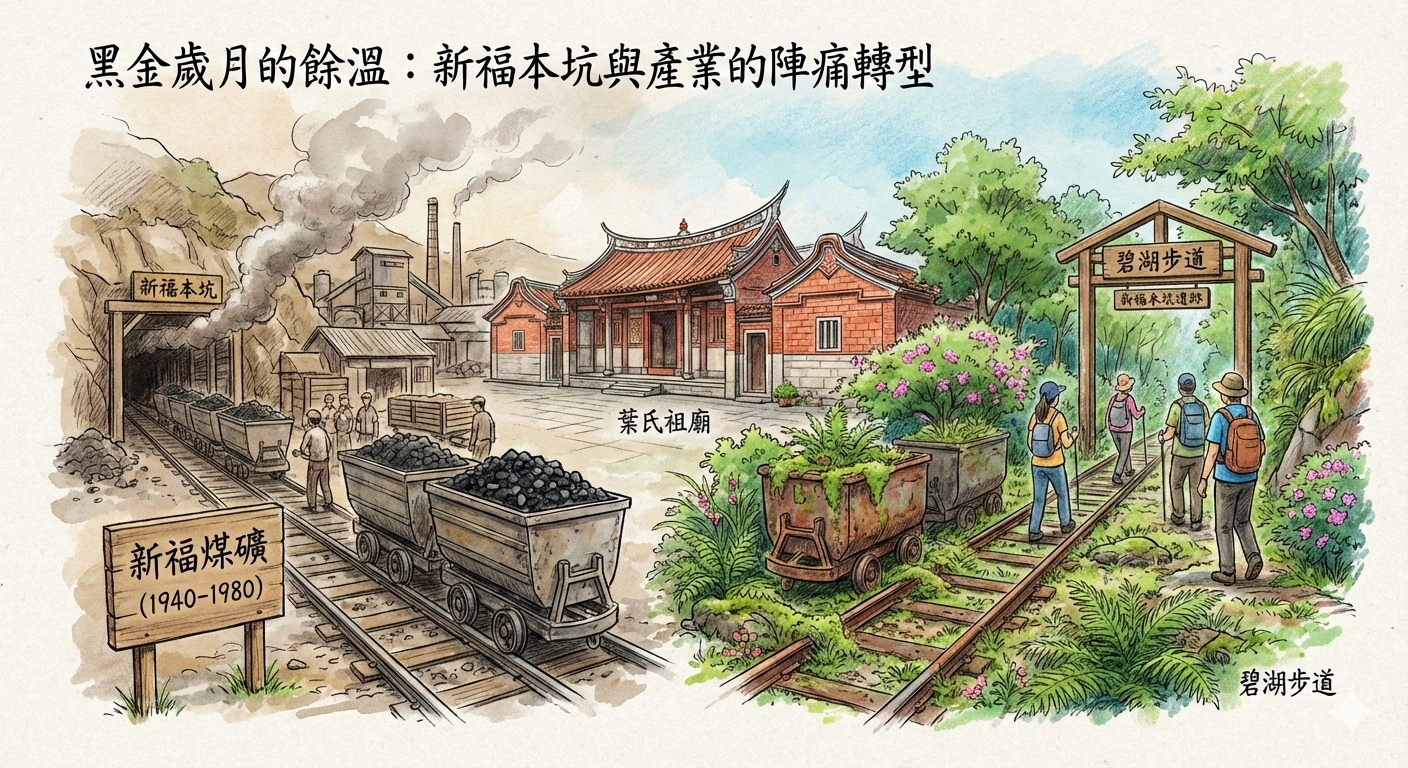
Echoes of Black Gold: The Xinfu Coal Mine and the Healing Landscape
For nearly four decades (1946–1986), Neihu was a landscape of "black gold." The Xinfu Coal Mine produced over 460,000 tons of coal, serving as the bridge between a resource-heavy past and the information-led present. Today, the industrial scars have been largely reclaimed by the Bihu Trail, where lush greenery and S-shaped aerial trails now weave through 13 hectares of lakeside parkland.
Walking this path, one observes the "healing of the land." A poignant symbol of this transition is the Ye Family Ancestral Temple. Moved here from the city center in 1945 by descendants seeking a "quiet hilly backdrop" and "tranquility" away from urban congestion, it sits against the back of Carp Mountain. Its traditional silhouette stands in quiet contrast to the nearby mine entrance, representing a search for ancestral stability amidst an industry that eventually vanished into the earth.
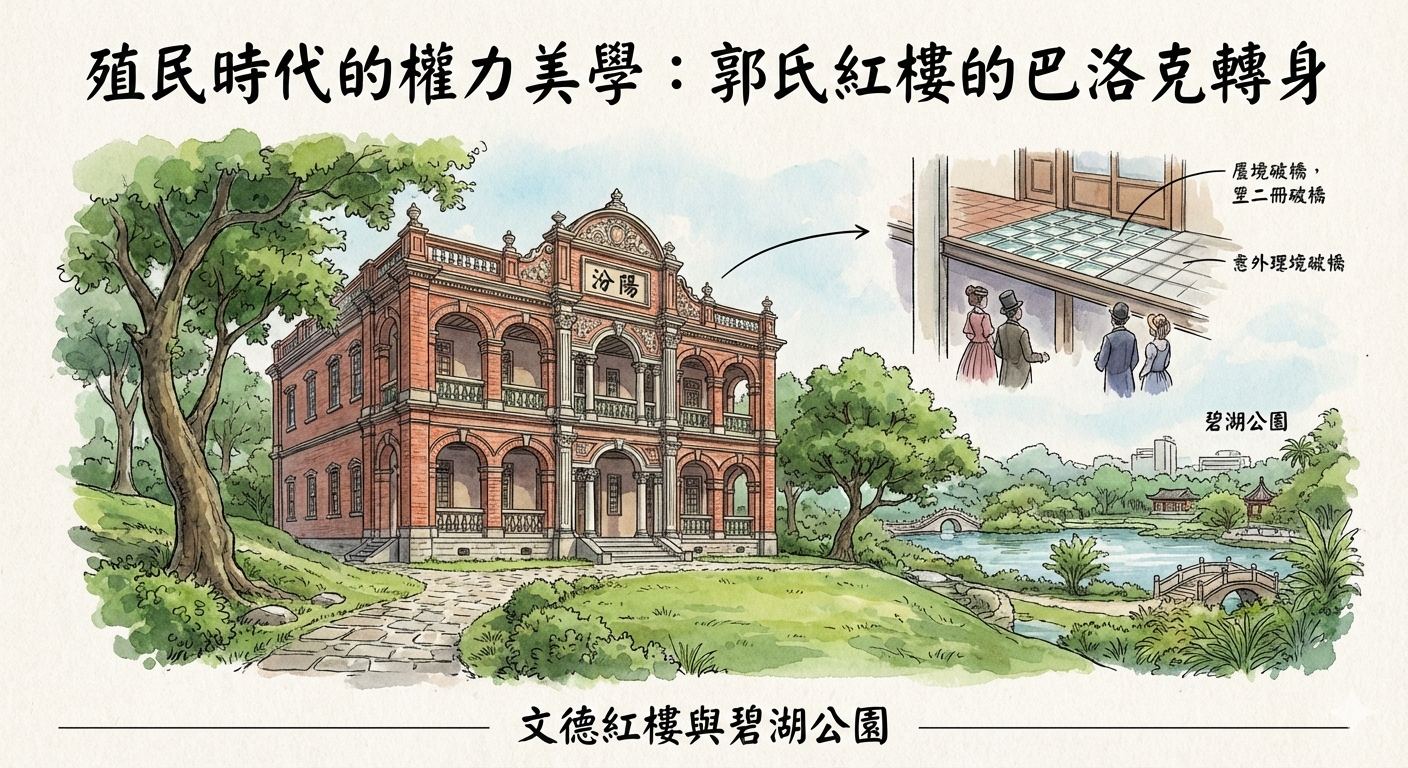
The Red House on the Hill: Elite Power and the Baroque Synthesis
Perched on a quiet slope along Wende Road is the Guo Family Red House, built in 1917. As the residence of the first "Neihu Village Head" during the Japanese colonial era, it is a masterclass in architectural synthesis. Its Western Baroque exterior—complete with imported colored tiles and intricate "Fanyang" hall inscriptions—displays the power of a local elite navigating a globalizing world.
Inside, the architecture functioned as a tool of social hierarchy. The original second-story floor featured "transparent tiles," allowing the master of the house to see who had arrived at the entrance before deciding to descend. Later, these were replaced with frosted glass to protect the modesty of female family members—a subtle nod to shifting social mores. Restored in 2012, the house now serves as a cultural bridge for the global Guo clan diaspora, anchoring a global network to this specific red-brick hill.
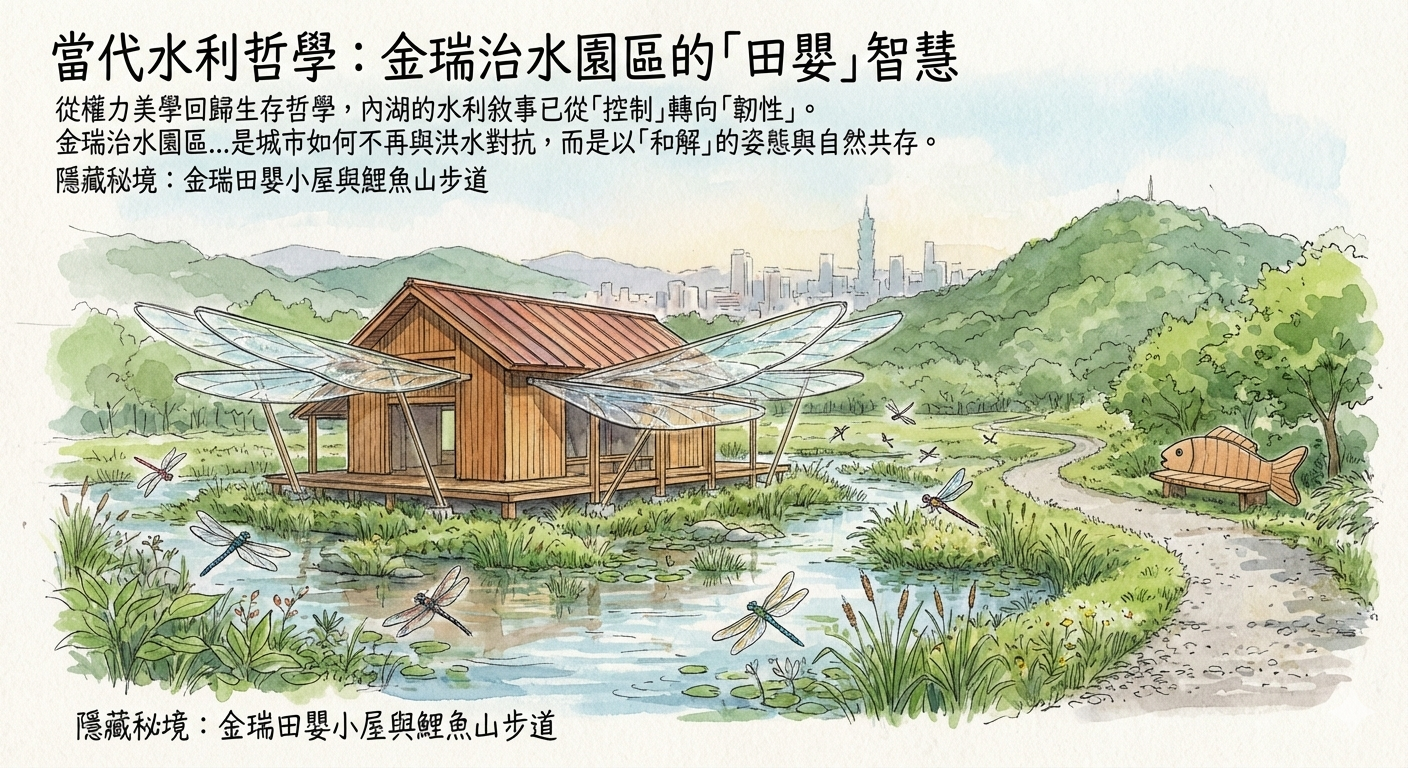
From Irrigation to Resilience: The Modern Dragonfly Philosophy
The journey concludes at the Jinrui Flood Control Park, a site that represents the evolution of Neihu's "water wisdom." If the Qing-era "Jiantou" was about controlling water for irrigation, this modern park is about "coexisting" with it. It is an urban ecosystem functioning as a living laboratory for resilience.
The park is anchored by the "Dragonfly" (Tian-ying) motif, a tribute to the fact that one-third of all Taiwan’s dragonfly species thrive here. The "Tian-ying" pavilion is a strategic statement on sustainability; constructed from 100% domestic thinning wood and topped with copper roofing, it was designed to minimize its carbon footprint while harmonizing with the surrounding hills. This is the modern answer to the ancient basins of Neihu: a space where flood prevention and ecological sanctuary become one and the same.
Hidden Gems for the Thoughtful Wanderer
For those who seek the quiet rewards of the landscape, a sunset hike on the Jinmianshan Trail offers a unique spectacle. As the light fades, the quartz embedded in the mountain peaks begins to glint, turning the ridge into a crown of light above the city.
Alternatively, find a moment of stillness on the carp-shaped benches of the Liyushan Trail. These artistic resting points mirror the fluid history of the waters below, offering a vantage point to reflect on how Neihu’s industrial past has been so gracefully reclaimed by the forest.
A Sophisticated Reflection on the Layers of Neihu
Neihu is not merely a collection of tech offices; it is a palimpsest. Every layer—from the andesite stone of the city walls and the fiery rituals of the "Rich Grandpa" to the coal dust of the Xinfu mine and the Baroque bricks of the Red House—is built upon a foundation of human grit and ecological adaptation. It is a place where materials are never truly discarded, only reimagined.
As we stand amidst the high-tech materials that define Neihu today, we must ask: which of our current innovations will be remembered 100 years from now as the bedrock of the future? What stories will the stones of the 21st century tell when the scholars of the future come to read our landscape?
Join the Lawrence Travel Stories newsletter to explore more "Travelable History" and uncover the hidden narratives of the world’s most resilient cities.
Plan Your Pilgrimage
- How to Get There: Neihu is easily navigated via the Wenhu Line (Brown Line). Disembark at Neihu, Wende, or Dahu Park stations to begin your journey into the district’s "inner lake" origins.
- Where to Stay: Rest your head where the mountain shadows meet the water's edge. Look for boutique stays near Dahu Park to experience the district’s "slow travel" charm away from the city’s frantic core.
- Recommended Tours:
- Neihu Historical Walking Tour: A deep dive into the elite history of the Guo Family Red House and the folk traditions of the Jiantou Fude Temple.
- Jinmianshan Geological Hike: A more strenuous trek visiting the ancient Qing-era quarry sites and the quartz-glinting peaks that provided the literal foundation of Taipei.
References
- 內湖采風行- 一、地名由來, accessed on November 21, 2025
- 內湖區-, accessed on November 21, 2025
- 臺北市內湖區公所-古蹟尋幽-內湖清代採石場, accessed on November 21, 2025
- 臺北內湖清代採石場歷史遺跡及臺北城壁石材拆毀後之使用 - 淡江大學機構典藏, accessed on November 21, 2025
- 內湖旅遊-北勢湖清代打石場遺跡 - 臺北市內湖區公所, accessed on November 21, 2025
- 內湖賞景秘境!100% 木造小屋給你與自然共處的靜謐空間 - TVBS GOOD, accessed on November 21, 2025
- 金面山(258公尺) 是早期古台北城城牆石材的主要開採地 - 荒野汐湖, accessed on November 21, 2025
- 【013】內湖梘頭福德祠「夜弄土地公」與「求龜」 求財求平安的 ..., accessed on November 21, 2025
- 1011215內湖-叭嗹煤礦 - 放羊的狼, accessed on November 21, 2025
- 【雙北通】內湖站-探訪葉氏祖廟煤礦遺跡新福本坑(文湖線) - YouTube, accessed on November 21, 2025
- 【台北內湖旅遊】郭氏古宅:內湖老洋樓重生與郭子儀紀念堂1172 ..., accessed on November 21, 2025
- 郭子儀紀念堂_內湖紅樓 - 臺北旅遊網, accessed on November 21, 2025
- 內湖郭氏古宅(內湖紅樓、郭子儀紀念堂 - 【臺北文化小旅行】, accessed on November 21, 2025
- 搶收台北人私藏秘境!9個「內湖自然系景點」先筆記,免費爽拍「13公頃湖景公園、S型空中步道」假日就衝。 | WalkerLand 窩客島| LINE TODAY, accessed on November 21, 2025
 Lawrence
 Lawrence