(ENG) Tokyo's Forgotten Time Capsule: 5 Hidden Stories That Will Change How You See the City--Shimura district
These small and scattered fragments, when read together, tell a story far richer and more complex than the familiar narrative of hyper-modernity.

志村一里塚 (Shimura Ichirizuka) > 藥師之泉庭園 (Yakushi-no-izumi Teien)
Listen attentively to the historical stories told in detail
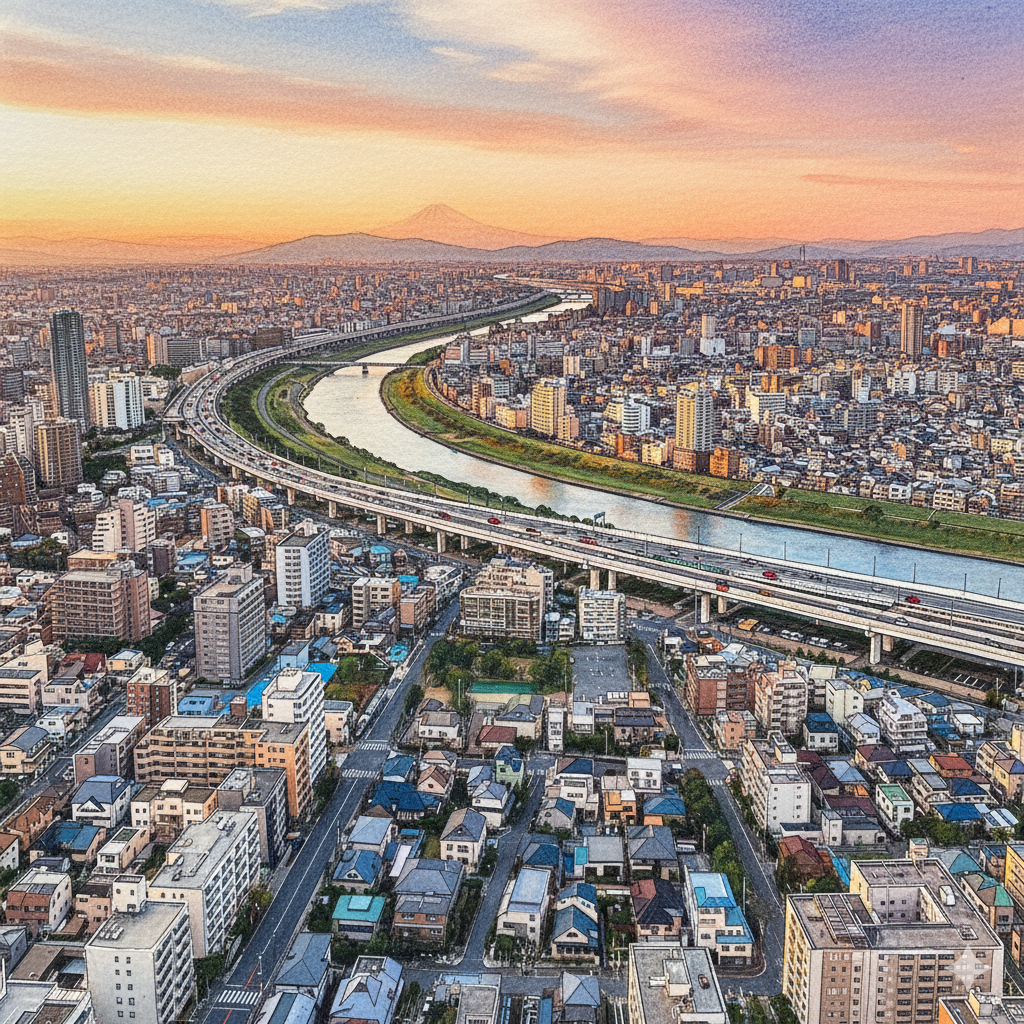
When we picture Tokyo, we imagine a dazzling metropolis of neon-drenched skyscrapers and futuristic bullet trains—a city perpetually erasing its past to build its future. But this image, while true, is incomplete. The city's deepest, most resonant stories are not always found in its bustling centers. Instead, they are preserved like amber in its quiet, peripheral neighborhoods, where the frantic pace of redevelopment has been gentler. The Shimura district in Itabashi Ward is one such time capsule, a place where the clamor of the modern city fades just enough for the past to speak. Hidden in plain sight among its parks, shrines, and residential streets are five surprising historical narratives that offer a profound new way to understand the soul of Tokyo.
A 400-Year-Old Traffic Marker Reveals the Soul of the Samurai Road
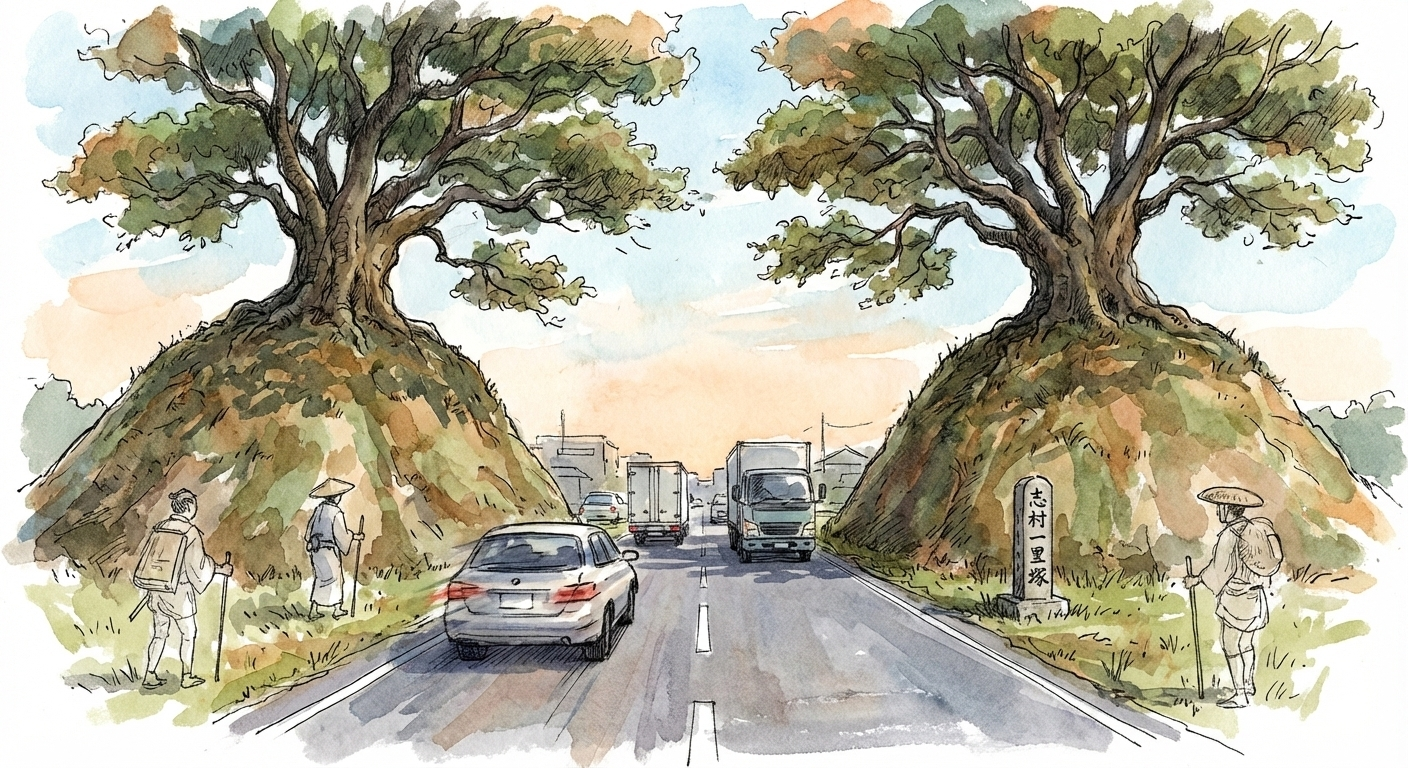
Before the age of asphalt and steel, Japan was connected by a network of great highways, or kaidō, that served as the arteries of the nation. While most of these ancient paths have been buried under modern infrastructure, their remnants offer a rare physical link to Japan's pre-modern era. In Shimura, one such remnant stands not merely as a historical object, but as a profound symbol of the order, scale, and meticulous symmetry of the Tokugawa shogunate. This is the Shimura Ichirizuka, a milestone established in 1604 by order of the first shogun, Tokugawa Ieyasu. As the third milestone from the starting point of Nihonbashi, located just past the first post town of Itabashi-juku, it marked a critical point on the great Nakasendo road—the vital inland route connecting the shogun's capital of Edo with the imperial capital of Kyoto.
What makes the Shimura Ichirizuka an exceptional treasure is its extreme rarity; it is the only milestone in Tokyo to survive in its original "double-mound" form, with a distinct earthen mound on each side of the road. This perfect symmetry, a testament to the Tokugawa aesthetic of balance, survived purely by chance during road-widening projects for National Route 17 in 1933. To stand between these two small hills, shaded by the same species of Enoki (hackberry) trees planted for ancient travelers, is to experience a powerful sense of time travel. One can almost feel the slow, deliberate pace of foot-travelers pausing in the shade, their world measured in footsteps and seasons. This quiet moment is thrown into sharp relief by the ceaseless flow of modern traffic on the adjacent highway. The hidden gem is the Shimura Ichirizuka itself, now a designated National Historic Site just a short walk from Shimura-sakaue Station.
It is a living fossil of transportation history, where the footsteps of samurai and pilgrims echo against the hum of the modern city.
This monument of order and travel serves as a gateway to our next story, where the stability of the road gives way to the turbulence of conflict and the steadfastness of faith.
A Fallen Castle and a Timeless Shrine Tell a Story of Power and Faith
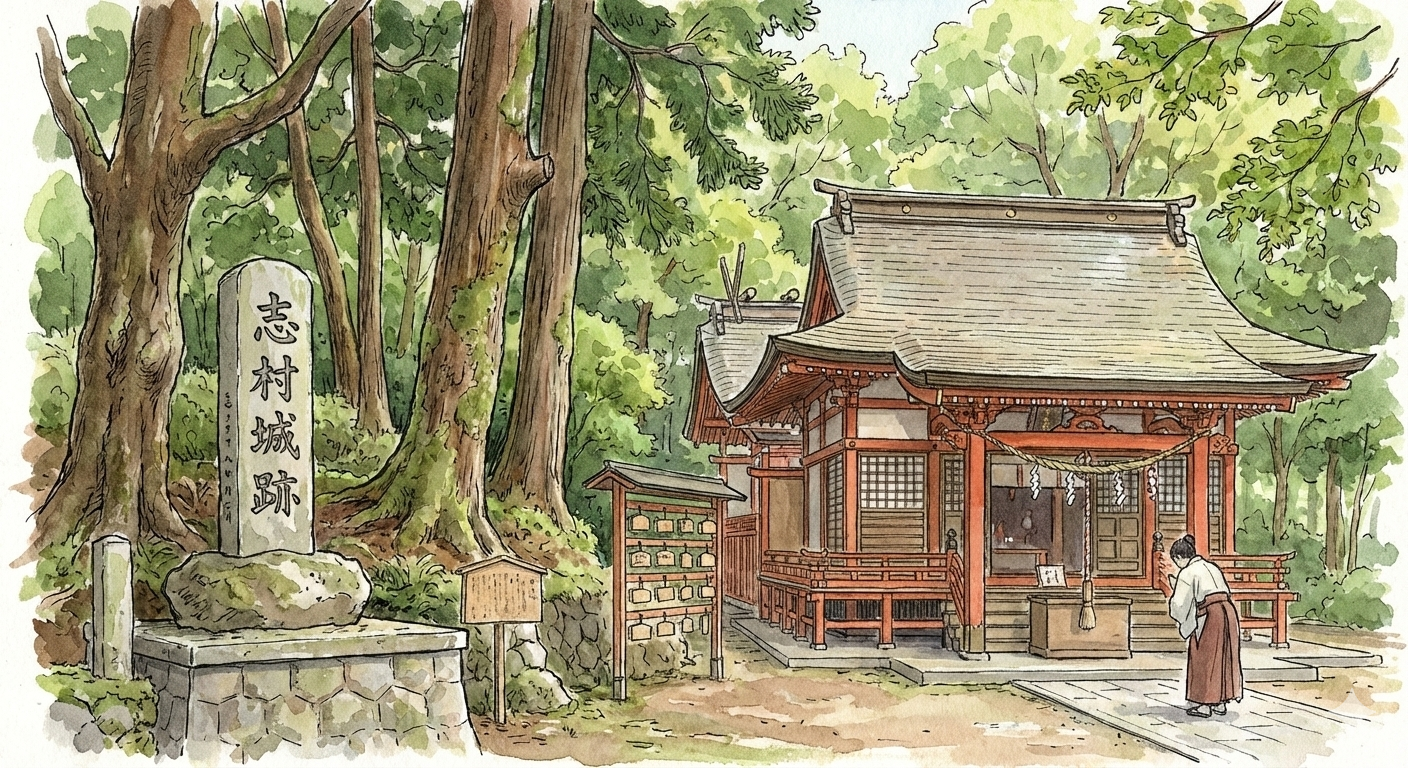
Across history, landscapes bear the marks of two fundamental human impulses: the quest for secular power and the search for spiritual meaning. In Shimura, this tension is written directly onto the land, telling a timeless story of how ephemeral fortifications can fall while enduring beliefs take root and thrive for a millennium. In the 16th century, Shimura Castle stood as a strategic stronghold, but its reign was short-lived. In 1522, the fortress was attacked and destroyed by the rival Hojo clan and soon abandoned. Today, the castle's military power has vanished, leaving behind only a single, quiet stone monument as a testament to its fleeting existence.
Contrast this ghost of a fortress with the vibrant, living presence of the thousand-year-old Shiroyama Kumano Shrine. Founded in 1032 by a local clan leader named Shimura Shōgen, this sacred site predates the castle by nearly five centuries and has outlasted it by another five. Dedicated to Japan's foundational creation deities, including Izanagi and Izanami, the shrine established a spiritual anchor for the community that proved far more resilient than any military wall. The castle’s last physical remnant, its stone monument, now stands protected within the grounds of the shrine itself, which is in turn buffered by the modern Shimura Shiroyama Park. To explore the shrine is to discover treasures that speak not of strategy, but of hope. The true hidden gem here is the oldest ema (votive prayer tablet) in Itabashi Ward, a small wooden plaque that offers a profoundly personal link to the prayers of past generations.
Here, the ghost of a fallen fortress reminds us of power's short lifespan, while a millennium-old shrine proves that faith is carved into a more permanent landscape.
From these grand themes of war and religion, our next story turns to the influence of a single powerful individual whose simple act transformed a local spring into a celebrated landmark.
A Shogun's Sip of Water Created an Enduring Urban Oasis
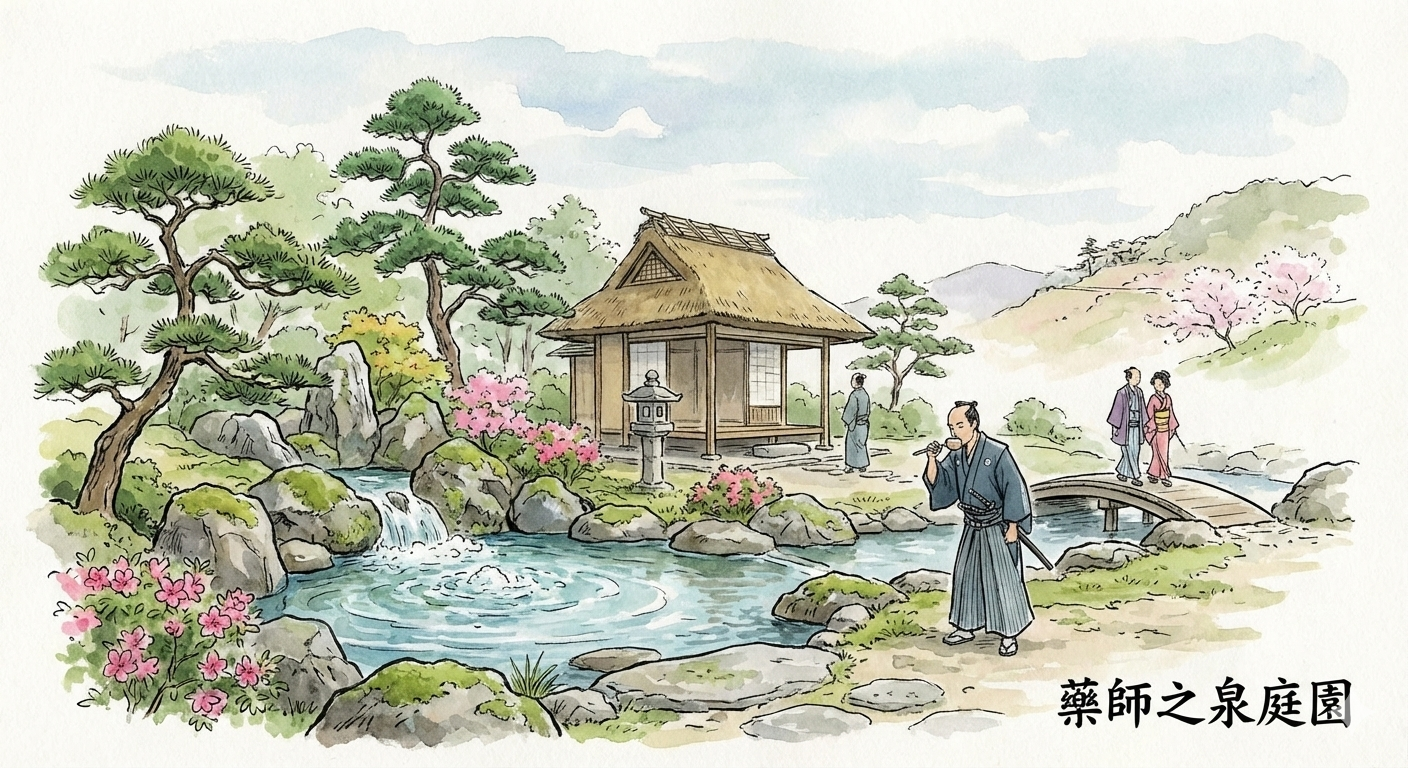
The concept of a "celebrity endorsement" feels distinctly modern, yet its power has shaped landscapes for centuries. In Edo-period Japan, the patronage of the shogun could instantly transform an unknown location into a celebrated landmark. Such is the charming story behind the Azusawa area's tranquil oasis. The eighth Tokugawa shogun, Yoshimune, was on a falconry hunt when he paused at Daizen-ji Temple. Thirsty, he drank from a natural spring on the temple grounds and was so impressed by the water's clarity that he personally bestowed a new name upon the temple’s deity: "Shimizu Yakushi," the Clear Water Buddha. This singular act of praise from the shogun himself catapulted the humble spring to fame, turning it into a meisho, or famous place, that drew visitors from across Edo.
The hidden gem for visitors today is the Yakushi-no-izumi Teien (Medicinal Spring Garden). What makes this garden fascinating is that it is not the original site, but a meticulous reconstruction based on illustrations from the Edo Meisho Zue, one of the most beloved guidebooks of the era. This means the garden is more than just restored history; it is the physical manifestation of a collective cultural memory—an idealized landscape reborn from art, designed to match the romantic image people held of this shogun-approved spring.
This garden is more than a historical site; it is an act of cultural archaeology, allowing us to visit not just a place, but the memory of a place as the people of Edo imagined it.
From this story of public celebration and artistic memory, we move to a narrative of secret rituals and a faith that was forced to hide in the shadows.
A Buddhist Temple Hides a Secret Code from Japan's Persecuted Christians
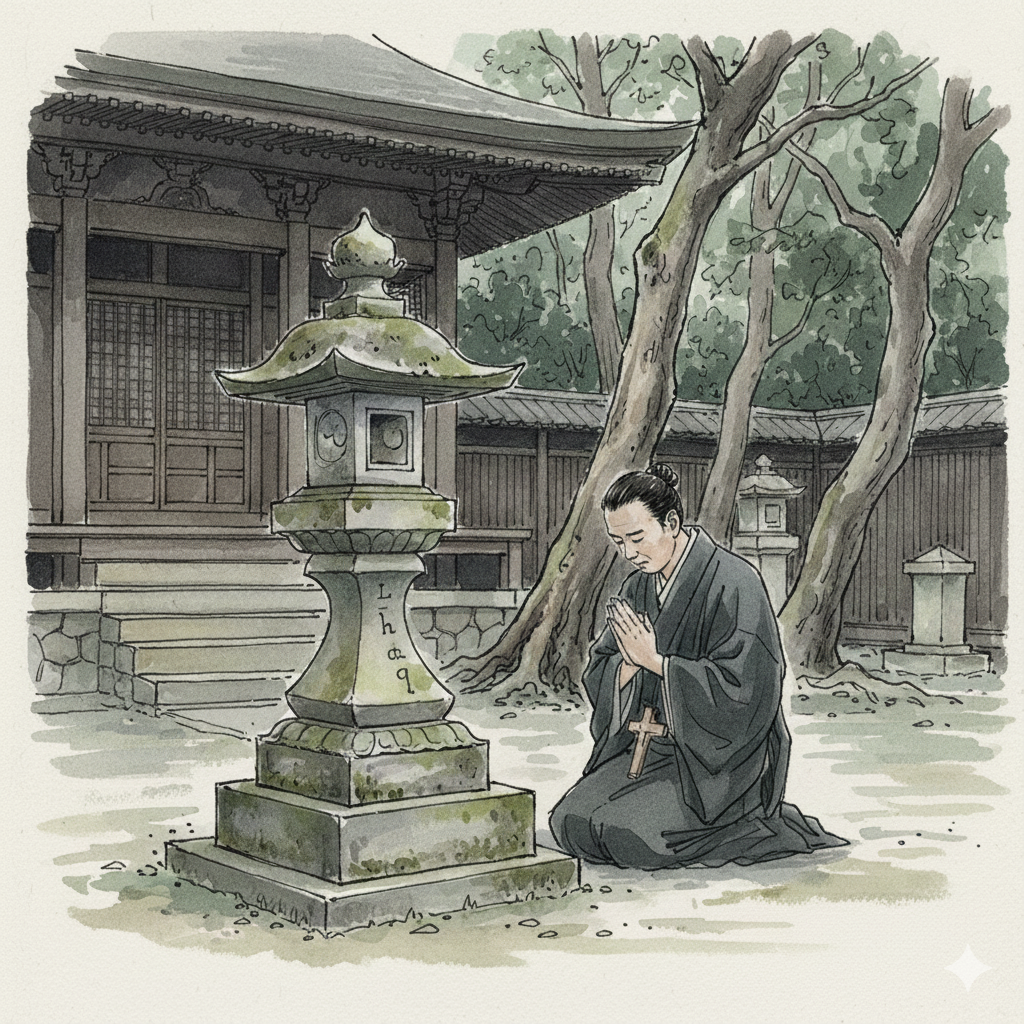
During the Edo period, Japan outlawed Christianity in a brutal crackdown. For the "Kirishitan," as Japan's hidden Christians were known, practicing their faith was a crime punishable by death. To survive, these communities developed an incredible ingenuity, embedding their forbidden beliefs into secret codes disguised within the fabric of mainstream Japanese culture. At first glance, Kenjizan Enmei-ji Temple is a traditional Buddhist sanctuary. Yet, within its grounds lies a remarkable artifact of silent religious resistance: a stone lantern that holds a secret. To evade the watchful eyes of the authorities, believers commissioned objects that appeared perfectly conventional but were embedded with cryptographic Christian symbols.
The lantern's design is a masterclass in covert communication. The central mystery lies in its carvings, particularly a sequence of characters read as "Lhq." While the precise meaning is debated by researchers, one compelling theory suggests this was a deliberate transliteration intended to be deciphered as representing the Latin word Patri, for God the Father. Though this interpretation remains a scholarly discussion, the very act of creating such a cryptic, high-stakes symbol speaks volumes about the risks believers faced. The hidden gem is this Kirishitan Lantern at Enmei-ji Temple. It is more than a religious artifact; it is the physical evidence of an information war fought not with swords, but with symbols.
This single stone lantern is a monument to a silent war of symbols, whispering a story of profound faith, mortal fear, and the stubborn persistence of belief.
This story, focused on a single object, now broadens to our final narrative, which explores how the entire modern landscape of Shimura has become a guardian of its layered past.
Today's Quiet Parks Are Guardians of Ancient Tokyo
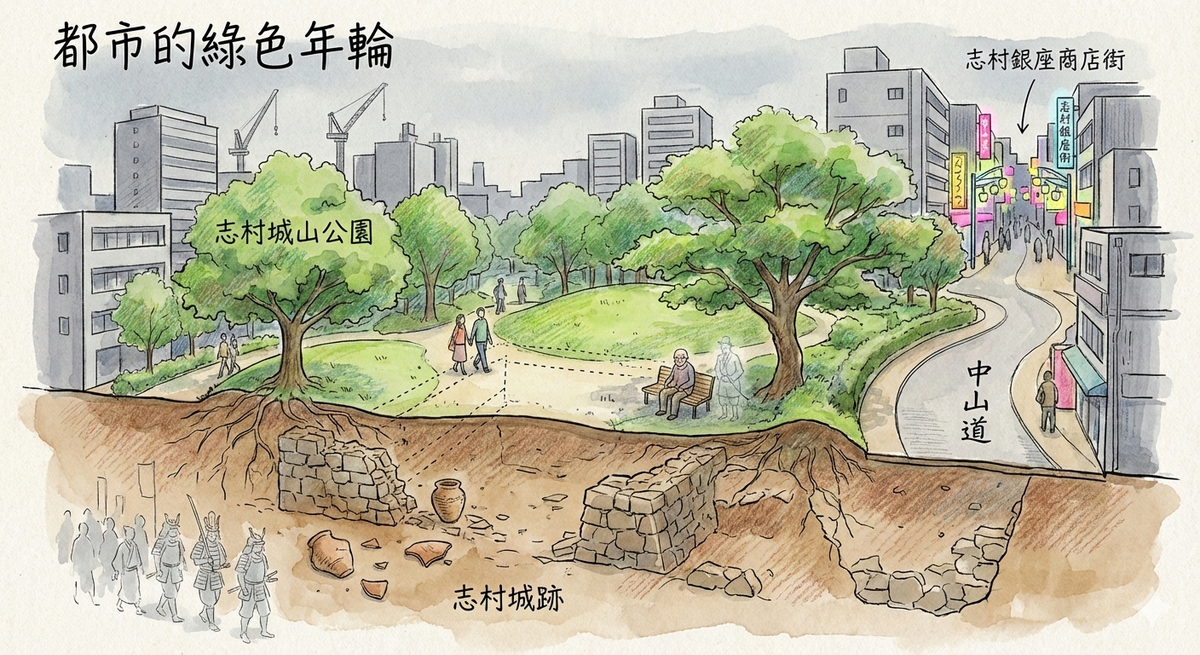
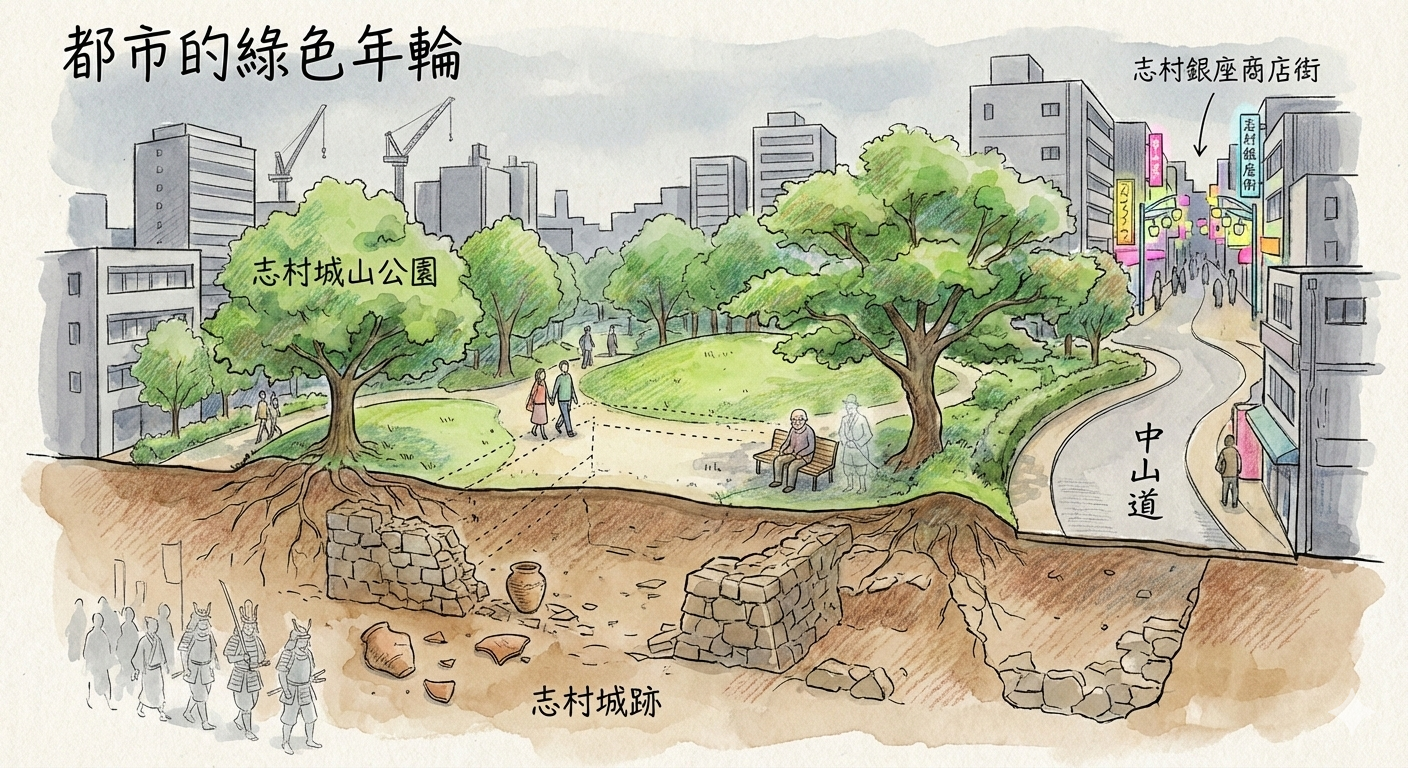
We often think of city parks as purely recreational—green escapes from the concrete and steel of urban life. But in a city like Tokyo, parks can serve a much deeper purpose. They can be one of the most effective tools of historical preservation, acting as modern-day custodians of ancient land. The final secret of Shimura is that its network of public parks serves as a series of "archaeological buffer zones." Astute urban planning has transformed historically significant sites into protected green spaces, shielding them from erasure. Shimura Shiroyama Park was established on the site of the vanished castle ruins, while the tranquil spring garden is protected by the adjacent Kozukue Park.
A simple walk through these grounds becomes an act of urban archaeology, treading on land that holds the deep memory of the ancient Musashi Province. This connection between past and present is not merely academic; it shapes the rhythm of modern life. The ultimate proof is found on the bustling Shimura Ginza shopping street, a hub of local commerce that directly follows the geographical logic of the old Nakasendo highway. Ancient patterns of movement continue to influence our world today.
In Shimura, the parks are not an escape from the city, but a deeper entry into its history. They are open-air museums where the past is protected under a simple blanket of green.
This realization—that the modern city is constantly in dialogue with its ancient foundations—brings our journey through Shimura's hidden history to a close.
The City as a Storybook
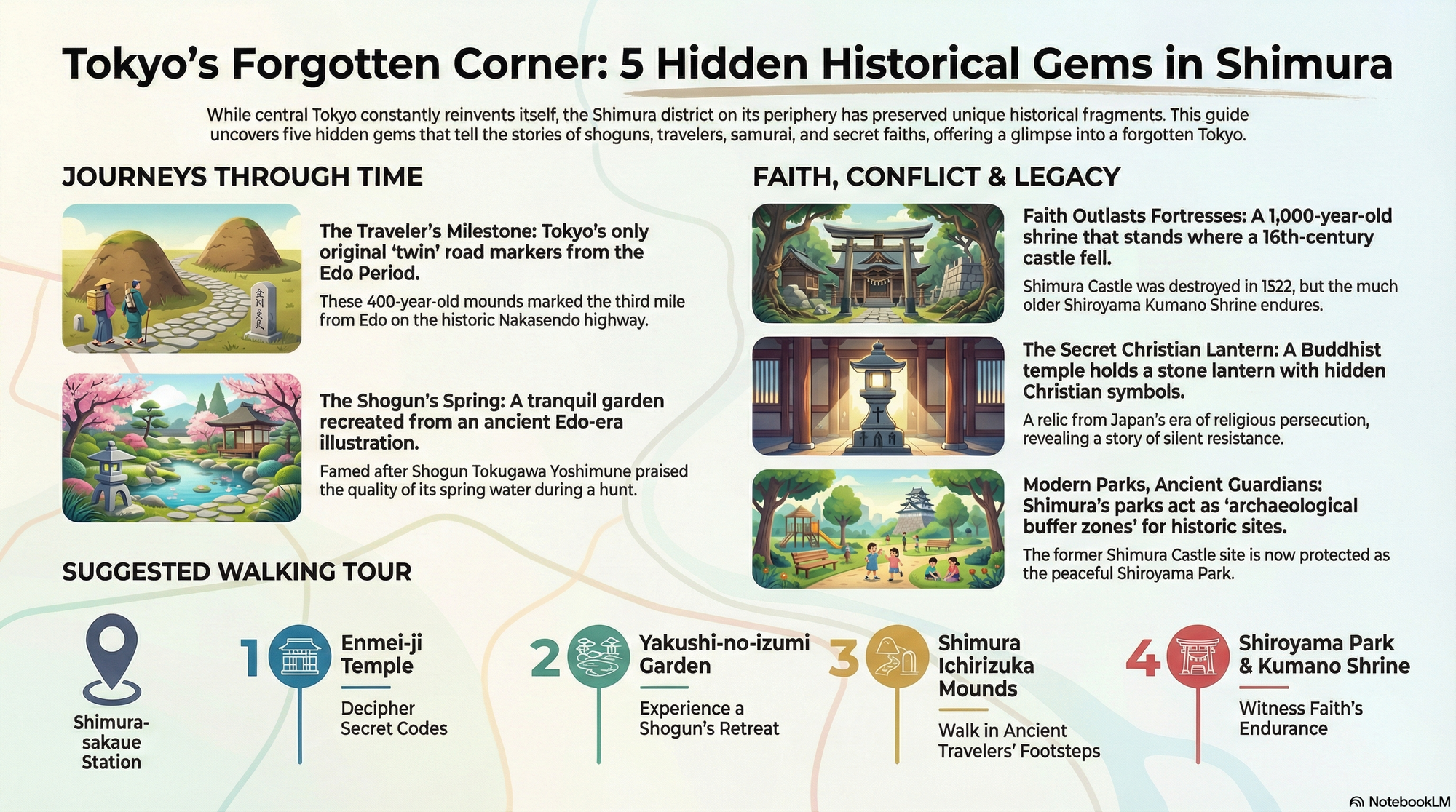
The five stories of Shimura reveal a profound truth: a city's history is not confined to grand museums or official monuments. It is alive, woven into the fabric of everyday urban landscapes—in a milestone by a busy road, a shrine that outlived a castle, a garden born from a drawing, a secret carved in stone, and a park that protects them all. These seemingly small and scattered fragments, when read together, tell a story far richer and more complex than the familiar narrative of hyper-modernity. They remind us that every city is a storybook, filled with chapters waiting to be discovered.
What forgotten stories are hiding in plain sight on the streets of your own city?
 Lawrence
 Lawrence