(ENG) Tokyo's Secret Time Machine: 5 Hidden Histories That Will Change How You See the City
These 5 stories reveal that Tokyo’s true identity is not a futuristic monolith. It is a rich and intricate mosaic, woven from thousands of deep, local histories just like those of Naka-Arai village. The soul of the city is not found in its grand monument but in the subtle, often overlooked details.

貫井川綠道 Nukui River Green Road > 豐玉冰川神社 Toyotama Hikawa Shrine
Listen attentively to the historical stories told in detail
The Echoes in Tokyo's Quiet Corners
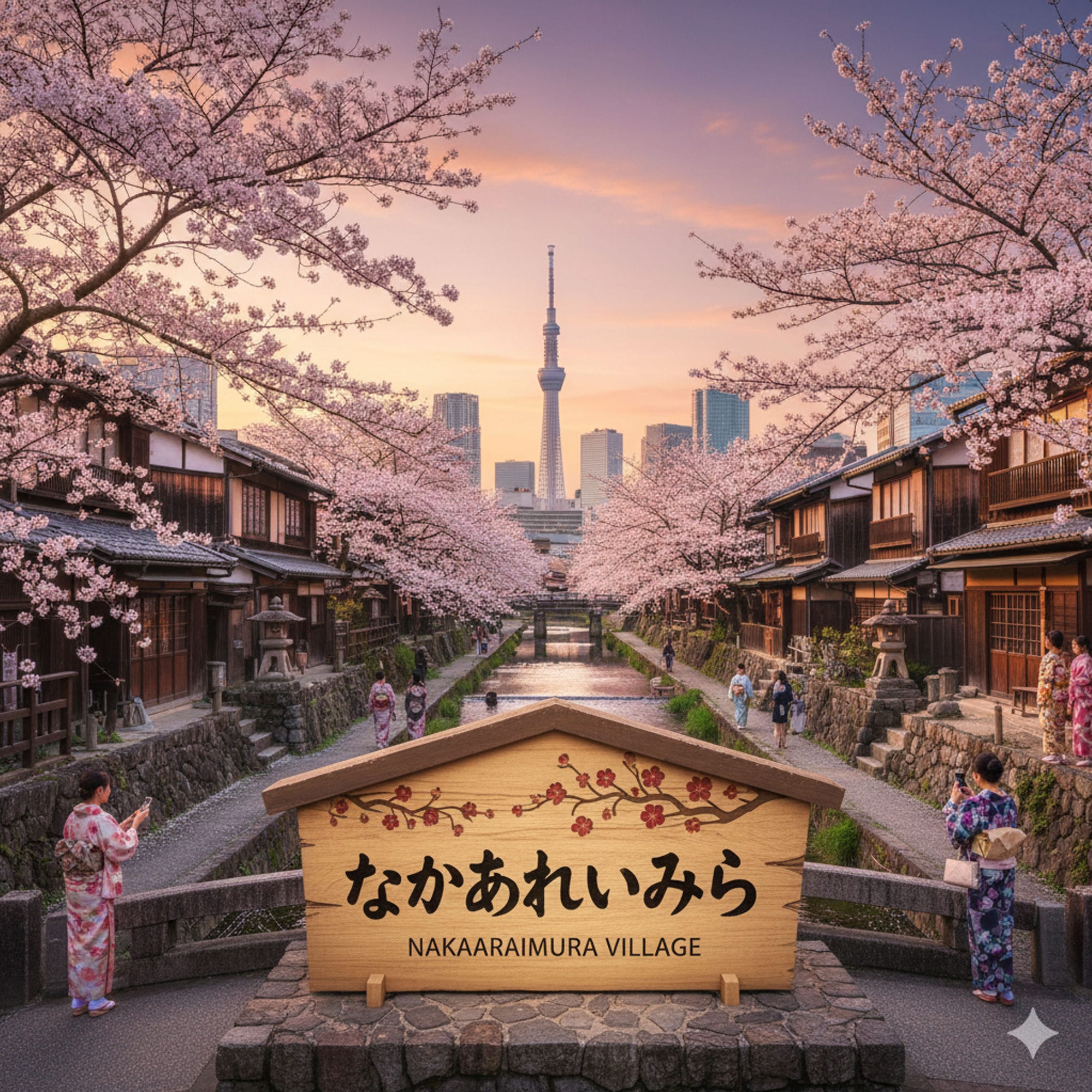
To most, Tokyo is a city of the future—a dazzling metropolis of neon skyscrapers and relentless energy. But its true soul often resides far from the famous scramble crossings, hidden in the quiet corners of its sprawling residential suburbs. In places like Nerima, a seemingly ordinary landscape of homes and parks conceals a deep and layered past, a time when this land was known as Naka-Arai village. What forgotten stories lie embedded in the names of bus stops, the gentle curves of park paths, and the weathered stones tucked away in quiet alleys? The answers reveal an urban palimpsest, where layers of history await a curious eye to trace their outlines.
The Golden Barley: How a Humble Village Sparked Japan’s Beer Revolution
Long before Tokyo became a global culinary capital, a quiet revolution was brewing in the fields of Naka-Arai. This is the story of how a single agricultural innovation, born from the vision of one farmer, not only helped quench the nation's thirst for a modern beverage but also became a potent symbol of Japan's drive toward industrial self-sufficiency. It’s a tale that forever links a sleepy village to the birth of Japan’s modern beer industry.
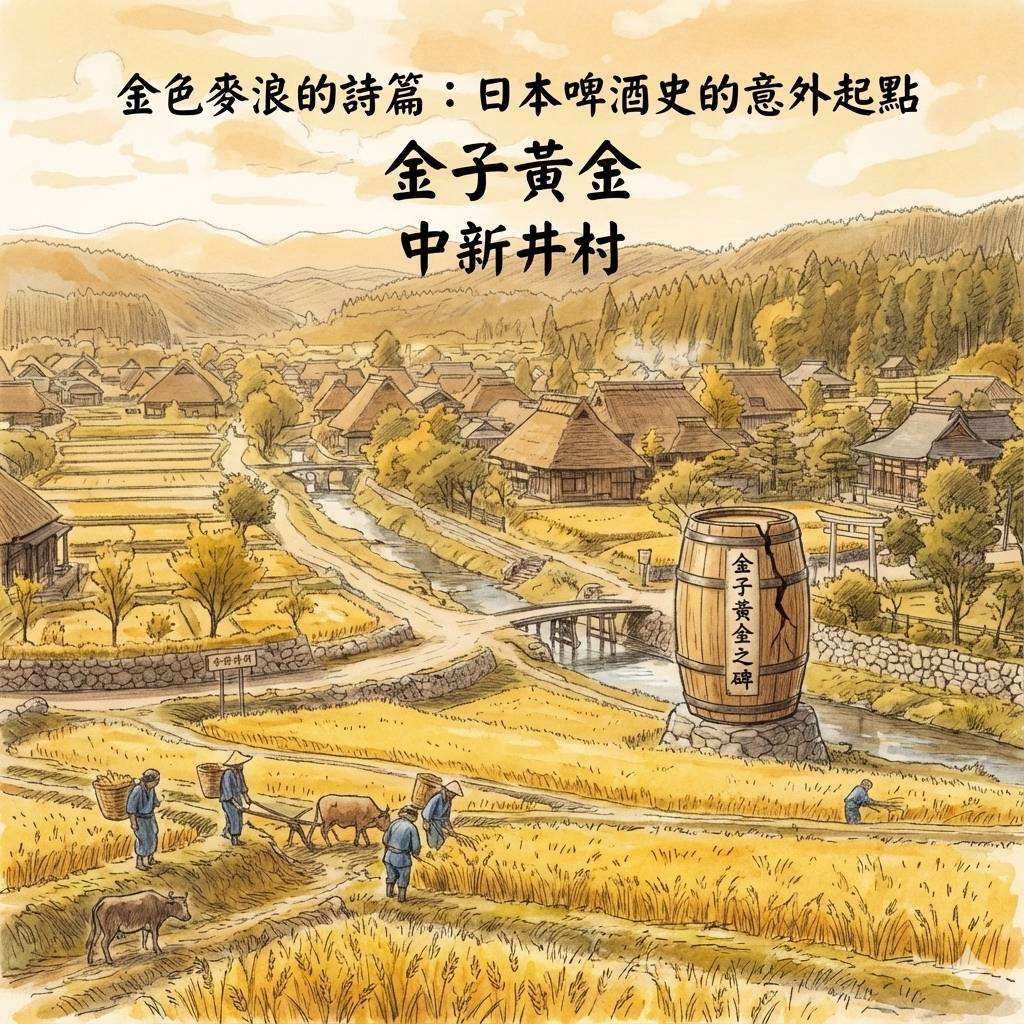
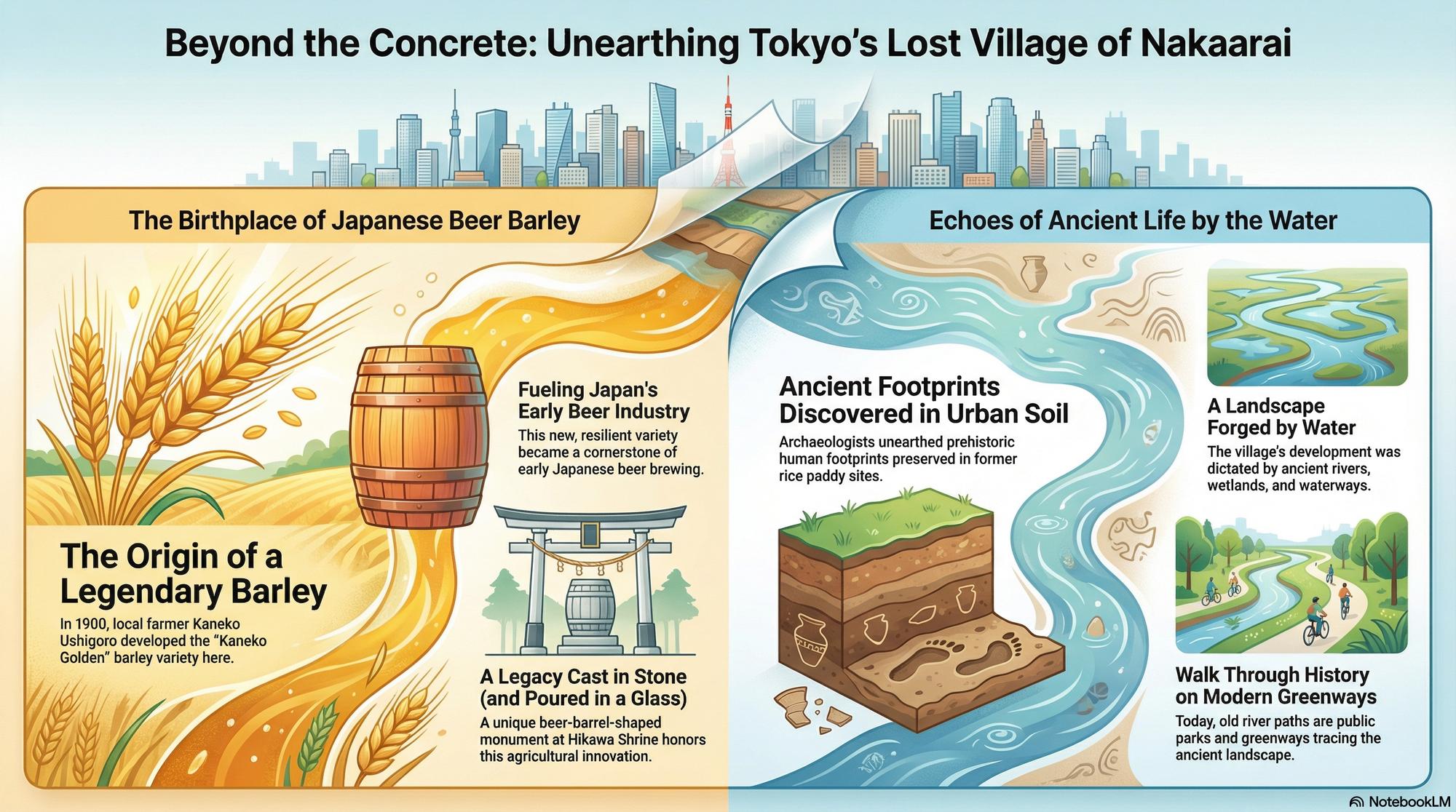
At the heart of this narrative is Kaneko Ushigoro, a forward-thinking farmer who, in the Meiji era, saw a nation developing a taste for beer but relying entirely on imported barley. In 1900, after years of patient work, he successfully cultivated a new variety from a natural cross between the native "Shikoku" barley and an American import called "Golden Melon." He named his creation "Kaneko Golden." This breakthrough variety was Japan's first successful domestic beer barley. Robust, early-maturing, and with a short stalk that resisted collapsing, it was a reliable and valuable crop for farmers across the Kanto region.
This achievement was more than agricultural science; it was a profound statement of national identity, perfectly embodying the Meiji Era’s guiding principle of wakon yōsai—"Japanese spirit, Western techniques." By mastering a Western product with homegrown innovation, Kaneko Golden helped Japan break its dependence on foreign imports. Its monumental impact echoed for decades, as it was later used as a parent to breed other successful varieties like "Ebisu No. 1," cementing its place in the foundations of the industry.
The true testament to this history lies not in a museum, but hidden in plain sight within the sacred grounds of the Toyotama Hikawa Shrine. Here stands the remarkable "Beer Barley Kaneko Golden Monument," a sculpture whose symbolic design—a broken beer barrel—powerfully evokes the "barrel-busting" innovation that changed an industry. Erected in 2006, it immortalizes a moment of industrial ingenuity within a space of spiritual guardianship.
Today, the story comes full circle. The barley has been revived by local farmers, and visitors can taste the "Nerima Kaneko Golden" craft beer, a pale ale with a delicate sweetness and apple-like aroma. This tangible experience creates a sensory link between the past and present, allowing you to taste the legacy of a farmer who changed an entire industry. From this tale of modern invention, we can dig deeper, into the far more ancient stories buried in the very same soil.
Whispers of the Waterways: Walking on Prehistoric Footprints
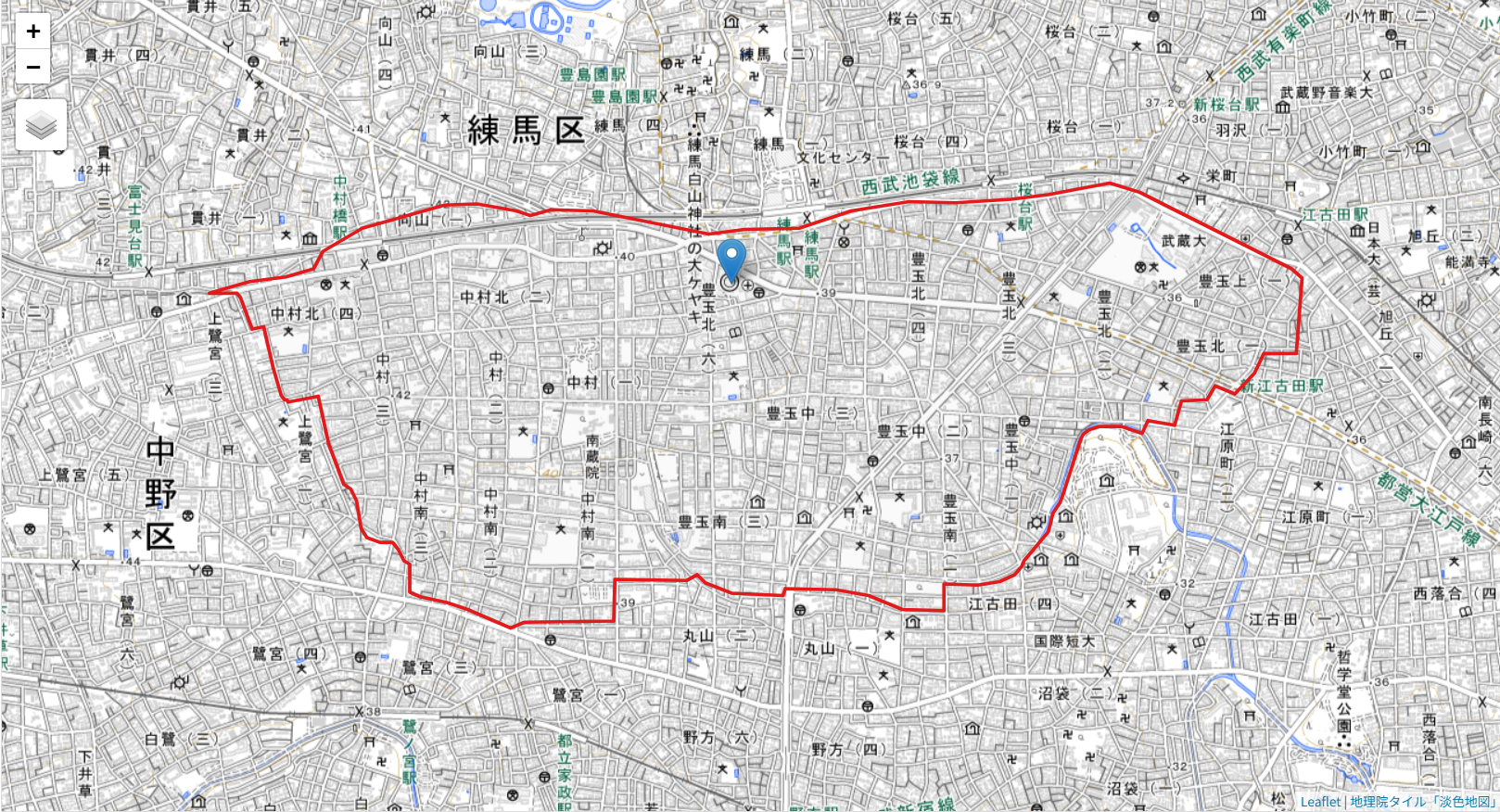
Tokyo's sprawling urban grid feels utterly modern, yet its layout is fundamentally shaped by something ancient and now invisible: a complex network of forgotten rivers and streams. These ghostly waterways, which once nourished the land of Naka-Arai, hold the secrets to the region's deepest prehistoric origins and offer a direct connection to its earliest inhabitants.
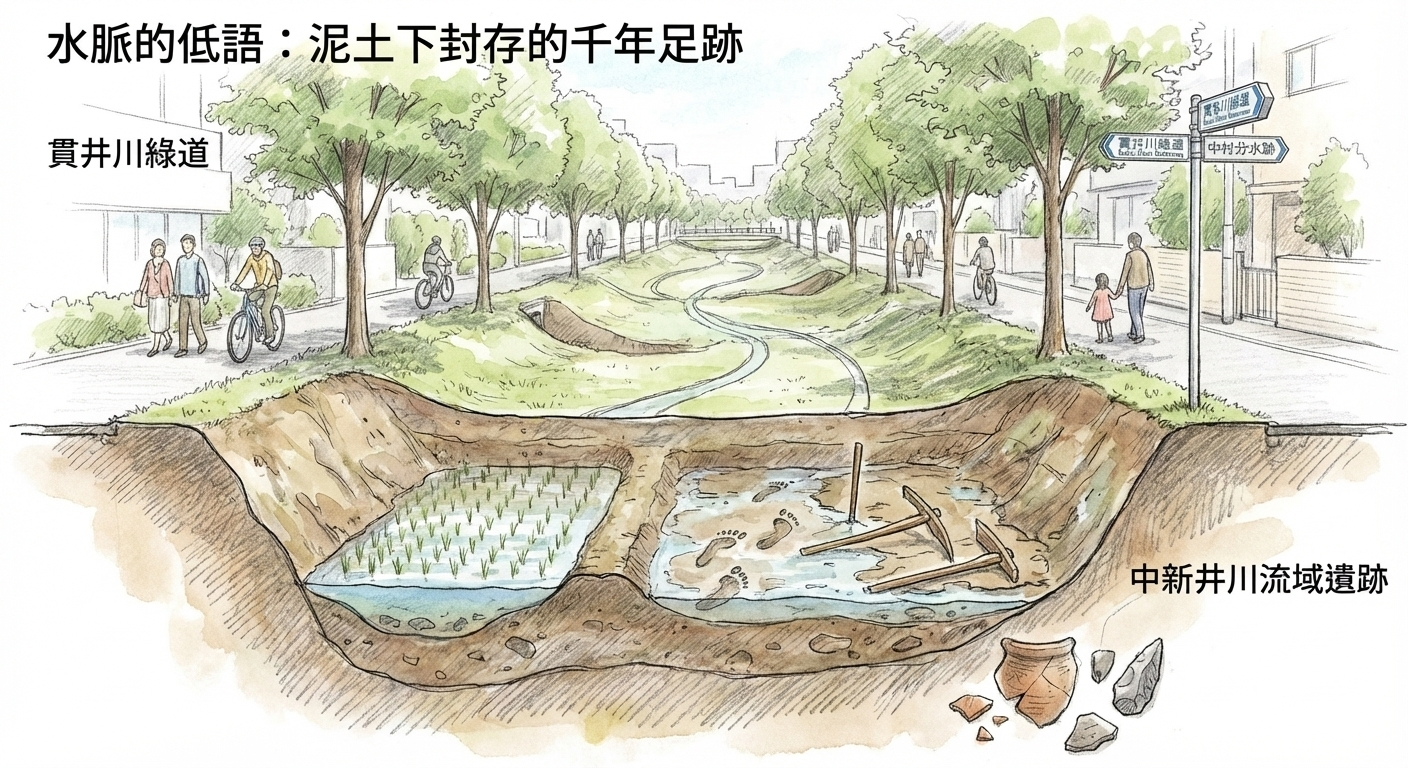
During archaeological excavations along the former Naka-Arai River, a stunning discovery was made: ancient human footprints, perfectly preserved in the traces of old rice paddies. This single finding fundamentally rewrites the local timeline. It proves that long before villages had names or highways were paved, human settlement existed here for thousands of years, with people cultivating the wetlands and shaping their lives around the natural flow of water.
These footprints are more than just archaeological data; they are a profound and physical link to Tokyo's most ancient ancestors. They prove that human life in this basin has always been dictated by an intimate relationship with water and the land, a connection that persists even if the rivers themselves have vanished from sight.
While the ancient rivers have been channeled underground, their paths have been reborn as modern parks and greenways. The experience of walking along the Nukui River Greenway is the true hidden gem. This is not just a stroll through a park; it is an act of "imaginative archaeology." You are literally treading upon invisible layers of history, following the exact routes that guided the lives of prehistoric settlers.
To walk these green paths is to trace the ghost of a river. You are not just in a modern park; you are following the same life-giving arteries that sustained Tokyo's earliest inhabitants thousands of years ago.
This walk transforms a simple recreational space into a profound historical experience, revealing how the landscape was first shaped by nature's arteries before it was redefined by the arteries of human ambition.
The Forgotten Highway: Finding a Lost Market Town in a Bus Stop Name
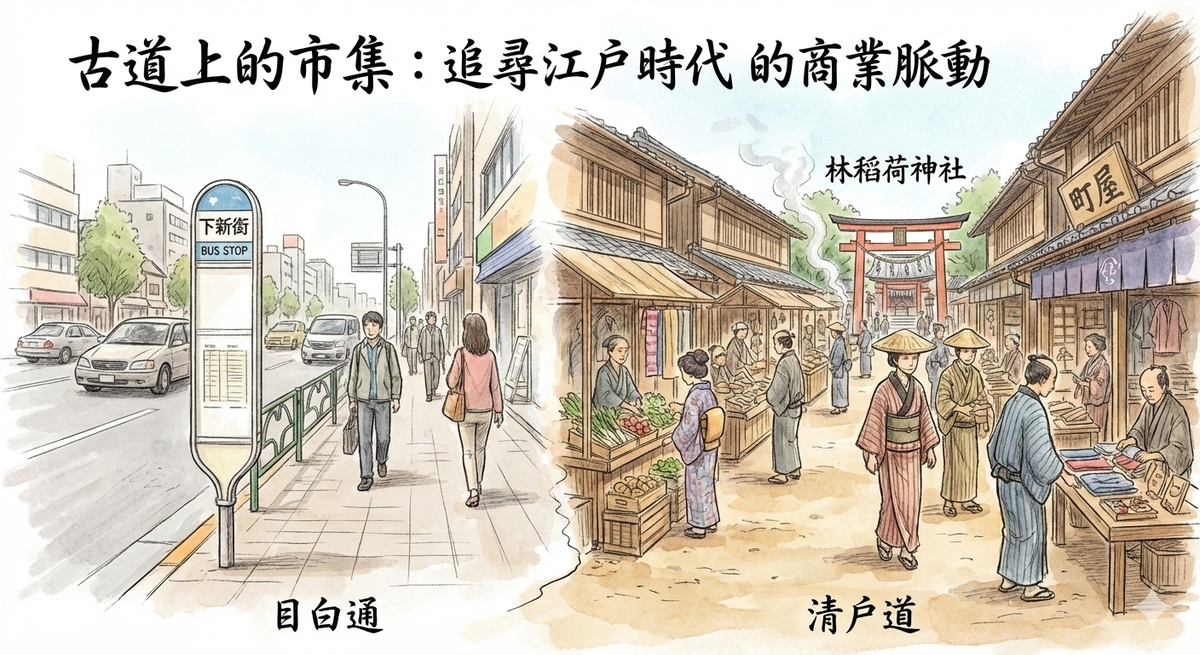
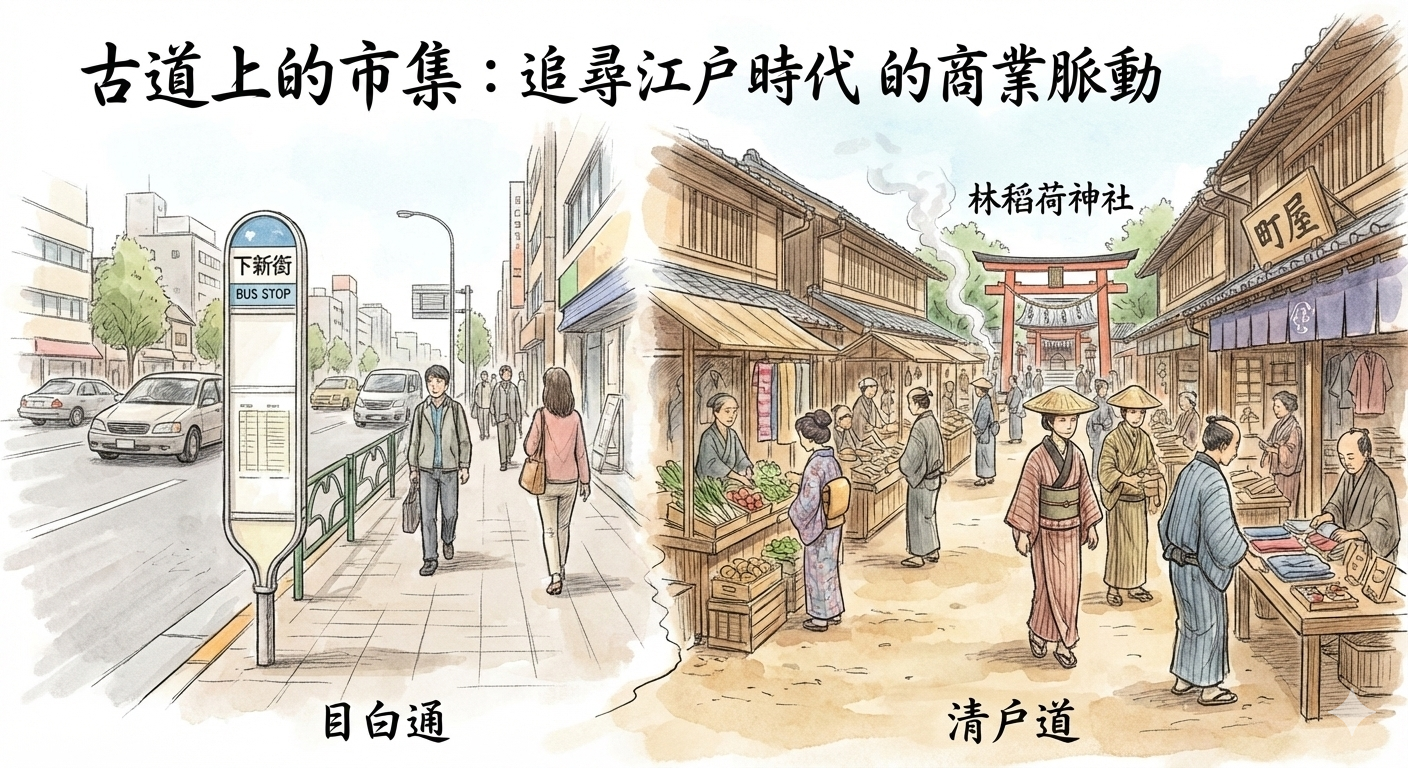
Long before railways and subways crisscrossed the capital, ancient highways were the economic lifeblood of the regions surrounding Edo. The Kiyoto-dō, a vital road connecting the city to the agricultural hinterlands, was the force that created a new identity for villages like Naka-Arai, transforming a purely agricultural community by introducing a commercial artery right through its heart.
As traffic and trade flourished along the Kiyoto-dō, two new commercial strips emerged, known as "Kamishin-gai" (upper new street) and "Shimoshin-gai" (lower new street). This development marked Naka-Arai's evolution from a simple farming hamlet into an important market town, a key node in the supply chain that fed the massive population of Edo.
The most fascinating part of this story is how it survives. Your search for this history begins not at a museum, but at the unassuming "Shimoshin-gai" bus stop on the busy Mejiro-dōri avenue. This is a "place-name fossil"—a rare linguistic remnant of a forgotten commercial landscape. Public transit infrastructure, with its fixed routes and official naming conventions, often acts as an accidental archive, preserving place names long after the worlds they described have vanished. The bus stop serves as a definitive marker, allowing you to stand in the exact location of a once-thriving market street.
Watching over this commerce was the Hayashi Inari Shrine, whose dual role as spiritual guardian for both the village's agricultural harvests and its burgeoning trade perfectly reflects the socio-economic shift caused by the highway. The shrine stands as a quiet witness to the economic forces that shaped this community, leading us to the broader spiritual anchors that defined daily life for all its residents.
Stone Scribes of the Roadside: Reading the Prayers of the Past
In a world without modern medicine or GPS, the people of pre-modern Japan relied on a rich tapestry of folk beliefs and local deities for spiritual comfort and a stable sense of identity. The most personal and powerful layers of this spiritual landscape were not always in the grand shrines, but were carved into stone and placed along the roadside by the common people themselves.
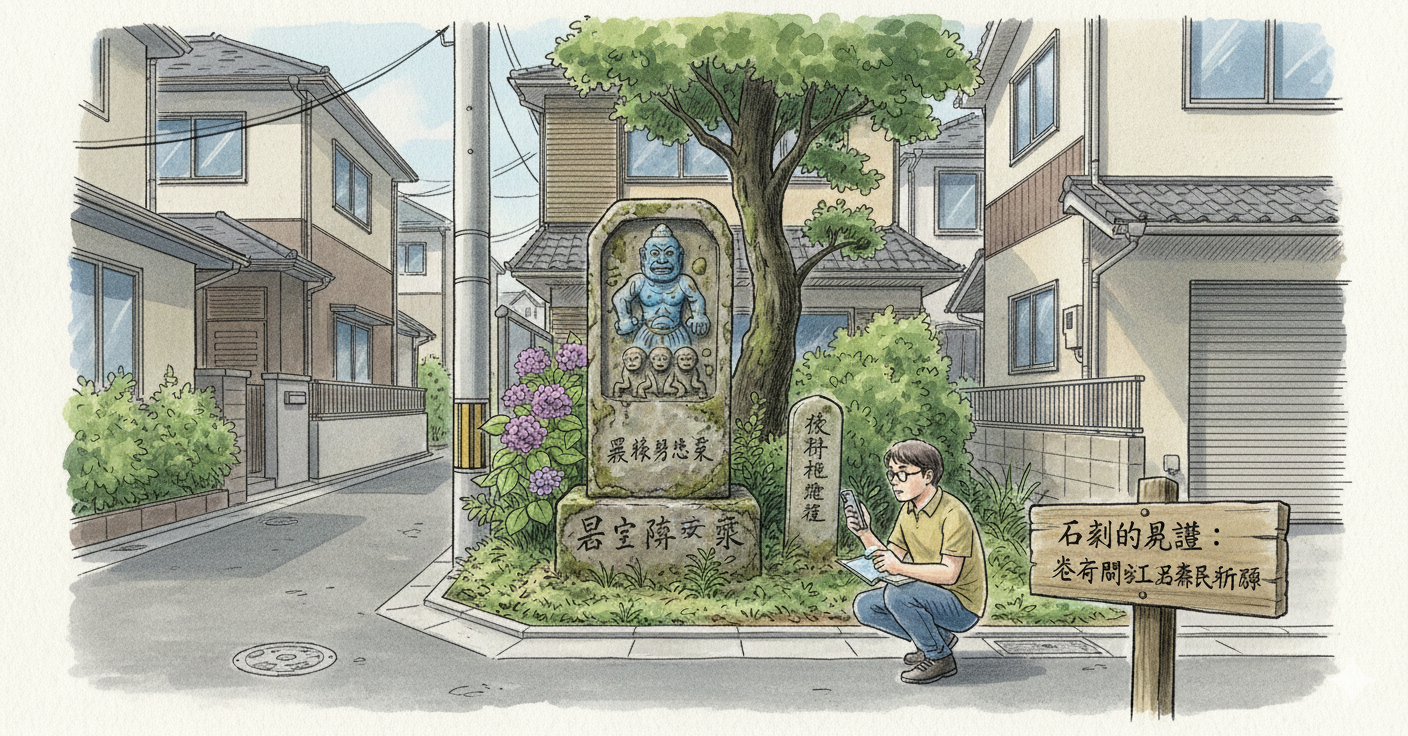
A popular faith during the Edo period was Kōshin, a belief system that blended Daoist, Buddhist, and Shinto elements. Followers erected distinctive stone towers, or Kōshin-tō, which served a triple purpose: they were religious icons, village boundary markers, and vital guideposts for travelers. These stones are typically carved with the fierce guardian deity, the Blue-faced Vajra, and the iconic "three wise monkeys." Crucially, they also bear inscriptions carrying the deepest hopes of the community, with prayers like, "May all diseases be eliminated, and body and mind be at ease."
The true treasure here is an interactive one: becoming a "stone-carving detective." The hidden gems are the weathered Kōshin towers and Bato Kannon statues (guardians of horses) that lie scattered in the alleyways and residential nooks of modern Nerima. Often overlooked, seeking them out transforms a simple walk into a historical treasure hunt.
These weathered stones are not mere statues; they are the diaries of a village, carved with the collective hopes and fears of generations who prayed for safe travels and good health on these very paths.
Finding these stone scribes allows you to read the prayers of the past and connect with the daily realities of a world governed by faith, travel, and the uncertainties of life. These five narratives, from industrial innovation to ancient prayers, collectively reveal a far richer and more complex picture of Tokyo's true character.
Seeing the Soul of the City
These five stories—of golden barley, ancient footprints, a forgotten highway, spiritual guardians, and stone-carved prayers—reveal that Tokyo’s true identity is not a futuristic monolith. It is a rich and intricate mosaic, woven from thousands of deep, local histories just like those of Naka-Arai village. The soul of the city is not found in its grand monuments but in the subtle, often overlooked details. By looking closer, we discover the past is not erased; it is encoded in the very grammar of the city, waiting for us to learn how to read it.
What forgotten stories are waiting to be discovered just outside your own front door?
 Lawrence
 Lawrence