(ENG) Lamma Island: A Walk Through Five Millennia of Hong Kong’s Hidden History
Explore five historical chapters of Lamma Island preserved by time. From bronze casting five thousand years ago to the Kamikaze Cave from World War II, this is an in-depth walking journey about history, ecology, and human resilience.

Does Lamma Island have prehistoric archaeological sites?
Does Lamma Island have Kampucheon Cave and pirate legends?
How far can one go to protect sea turtles on Lamma Island?
To the casual visitor, Lamma Island is often perceived through a singular, modern lens: a retreat for alfresco seafood and a car-free sanctuary for the urban weary. Yet, for the cultural historian, the island reveals itself as a profound temporal enclave—a treasure frozen not by choice, but by the curious vagaries of administrative history. Unlike the vertical, rapid modernization of Hong Kong Island, Lamma remained under Qing jurisdiction until the 1898 Convention for the Extension of Hong Kong Territory. This delay in colonial integration, coupled with a subsequent lack of industrial infrastructure, served as an unintentional preservation mechanism.
This "marginalization" has gifted us a cultural origin point. Lamma’s landscape is a palimpsest where the vertical sprawl of the city is replaced by horizontal layers of human endurance, from Neolithic technological centers to wartime hiding spots. To walk its paths is to decode the very foundations of regional identity, beginning where the land meets the sea at the island’s ancient Neolithic shores.
Listen to the historical stories told in detail (For subscribers only)
The Bronze Palimpsest: Reclaiming the Yue Identity
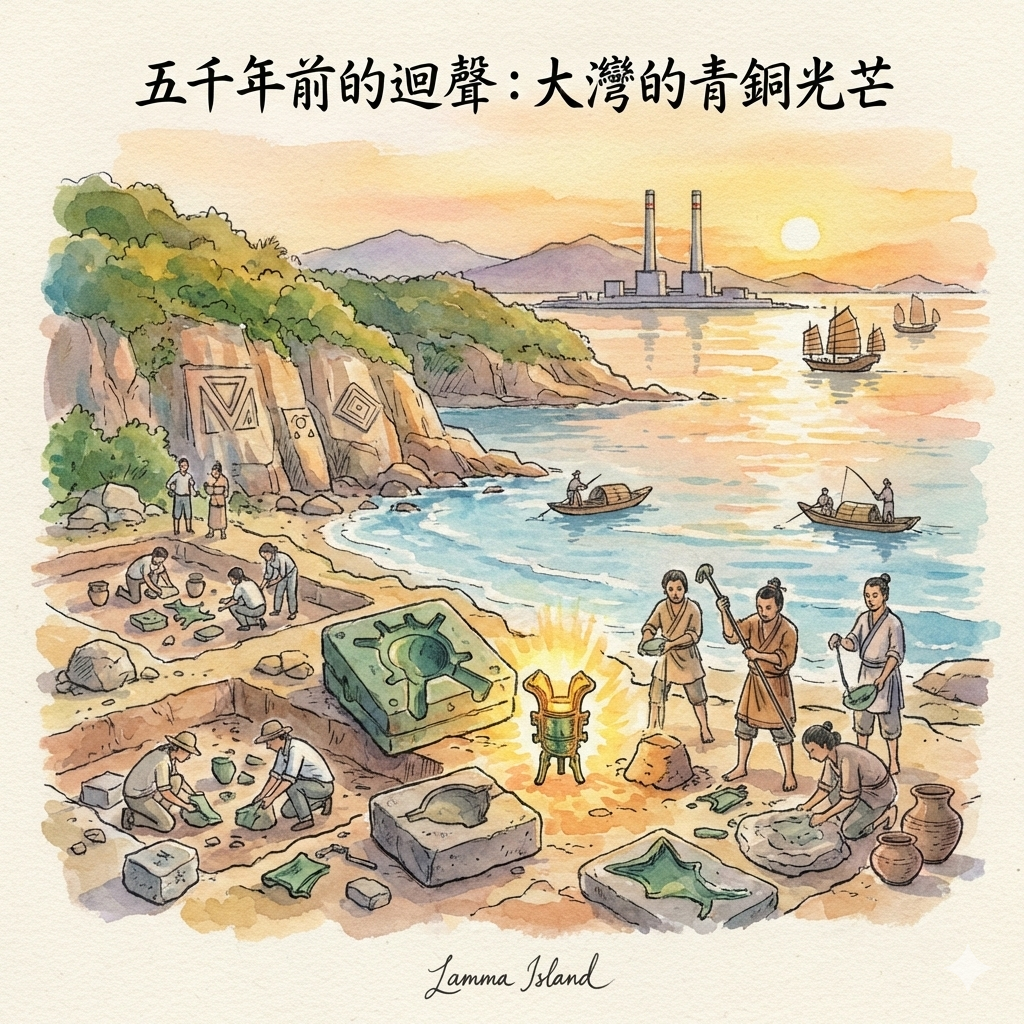
Long before the first colonial surveyors charted these waters, the bays of Tai Wan and Hung Shing Yeh were the beating heart of a sophisticated maritime civilization. Archaeological excavations have unmasked a history stretching back five millennia, proving that by the Bronze Age (circa 1500 BCE), Lamma was a regional node of metallurgical prowess.
The discovery of stone molds at Tai Wan and Sha Po Village upends the simplistic narrative of Hong Kong as a primitive fishing backwater. These molds—used to cast intricate bronze daggers, halberds, and axes—reveal a society with advanced technical knowledge. These were the "Baiyue" (the Hundred Yue), the indigenous inhabitants of the southern coast. Their presence is further whispered in the geometric rock carvings found on neighboring shores, patterns that offer a glimpse into an ancient system of art and belief.
"The archaeological evidence from Tai Wan is transformative. The presence of stone molds for bronze casting proves that Lamma Island was a regional technological and cultural center during the Bronze Age, serving as a vital node in the sophisticated maritime civilization of the Yue people, long before the imperial era reached these shores."
Maritime Hegemony and Moral Order
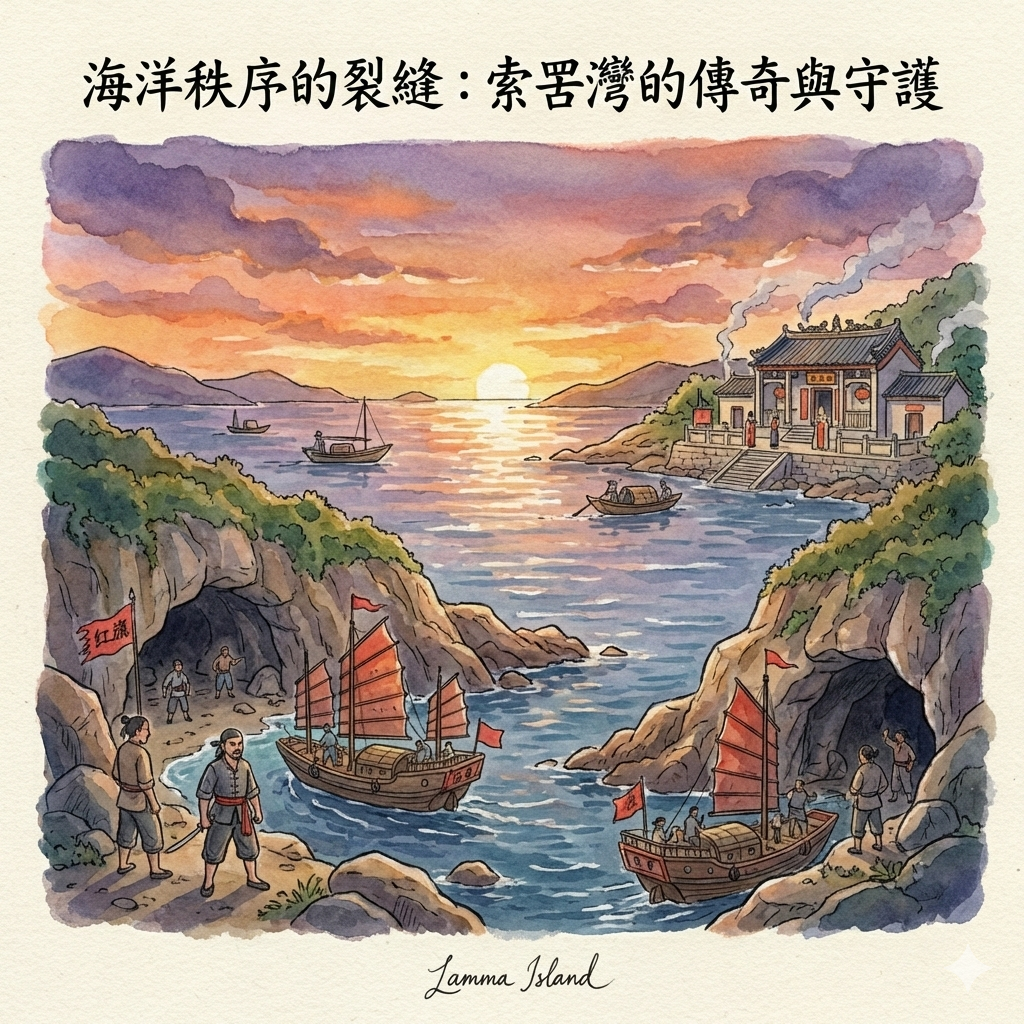
As we move toward the Qing Dynasty, the island’s geography—a jagged coastline of natural rock formations and hidden sanctuaries—facilitated a complex duality of maritime power. Sok Kwu Wan, with its deep inlets, became a landscape defined by the tension between "disorder" and "order."
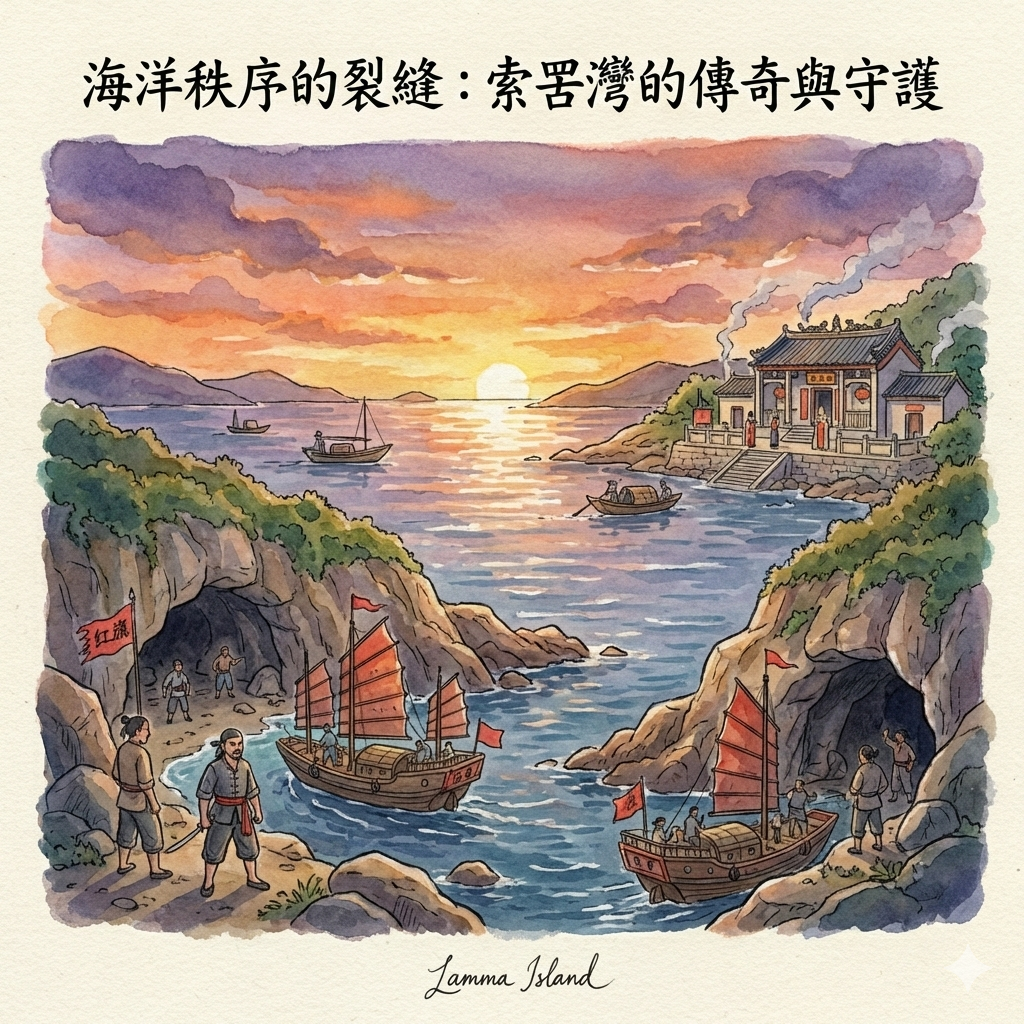
The legendary pirate Cheung Po Tsai once exerted a formidable maritime hegemony over these waters, commanding a fleet of five hundred ships and tens of thousands of men. The natural caves of Lamma provided the perfect infrastructure for such an outlaw kingdom. Yet, stepping into the cool, incense-heavy dimness of the Tin Hau Temples, one finds the counter-narrative. These temples represented the community’s anchor—a spiritual plea for protection against the unpredictable violence of both the sea and the men who sought to control it. This duality defines Lamma’s middle history: a place where one sought refuge in the darkness of a cave, but found stability and social cohesion under the gaze of the sea goddess.
The Resilience of the Night: Echoes of a Secret War
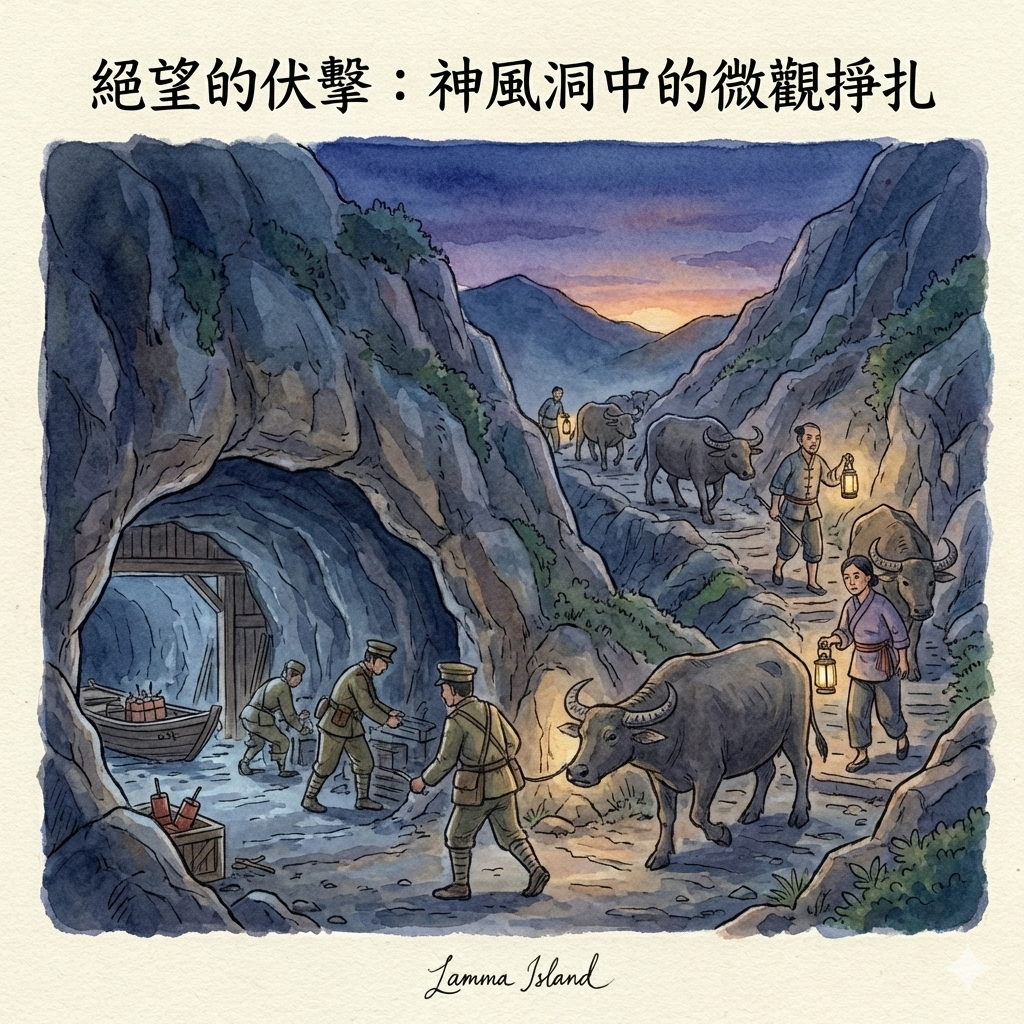
The 1940s added a layer of profound desperation to Lamma’s topography. Near the shores of Lo So Shing, the "Kamikaze Caves" remain as haunting physical manifestations of wartime extremity. In the final months of World War II, the Japanese military excavated these tunnels to hide explosive-laden "suicide boats," intended for a final, catastrophic defense of Hong Kong.
However, the historian finds the true narrative of the war not in these hollowed tunnels, but in the micro-struggles of the island’s farmers. While the "macro" history speaks of military strategy, the local reality was one of quiet, nocturnal resistance.
To preserve their agricultural foundation, Lamma farmers established a desperate ritual: rising at 3:00 AM every morning to lead their cattle into the high hills. This was a necessary deception to prevent Japanese soldiers from seizing and slaughtering the vital livestock for food.
Today, these sites serve as a poignant peace education experience, where the destructive intent of the Kamikaze strategy is outshone by the quiet persistence of those who refused to let their way of life be extinguished by conflict.
The Ethics of Absence: A Contract of Life
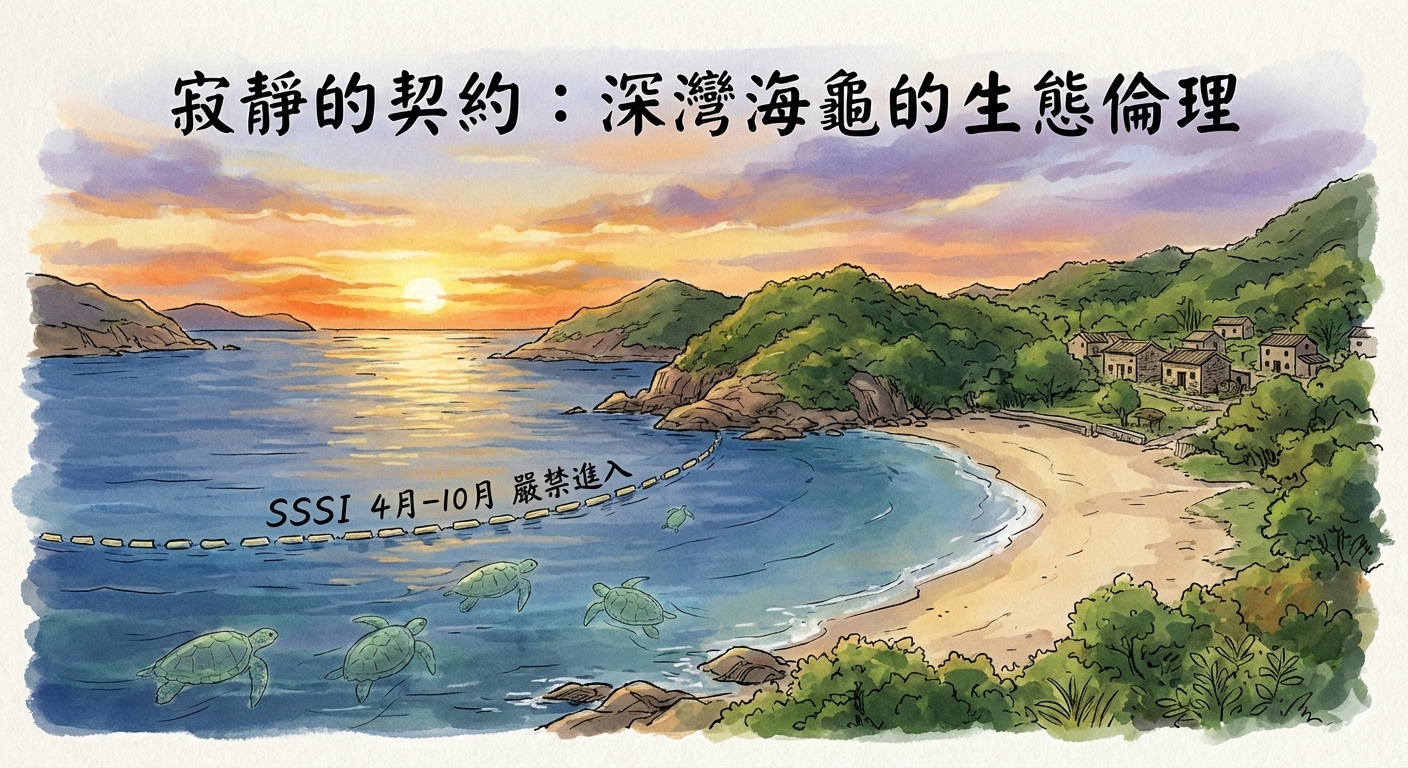
In the island’s southern reaches, the narrative shifts from human history to ecological ethics at Sham Wan (Deep Bay). This site is the only nesting ground for Green Turtles in Hong Kong, and its value is defined by a modern "ecological border."
Recognizing the sensitivity of this species, the government has established a strict seven-month restriction (April to October) covering the beach and 98.2 hectares of the adjacent water. The value of Sham Wan lies in the liminality of "not seeing it"—it is an exercise in respectful travel where we acknowledge that certain spaces must remain beyond human reach.
The Contract of Life: Sham Wan is a designated Site of Special Scientific Interest (SSSI). During the restricted season, unauthorized entry into the beach or the 98.2 hectares of protected water is a criminal offense, carrying penalties of up to HK$50,000. This legal barrier is an ethical contract, ensuring that the rhythm of prehistoric life continues undisturbed by modern intrusion.
The Human Fabric: Navigating Isolation and Mutual Aid
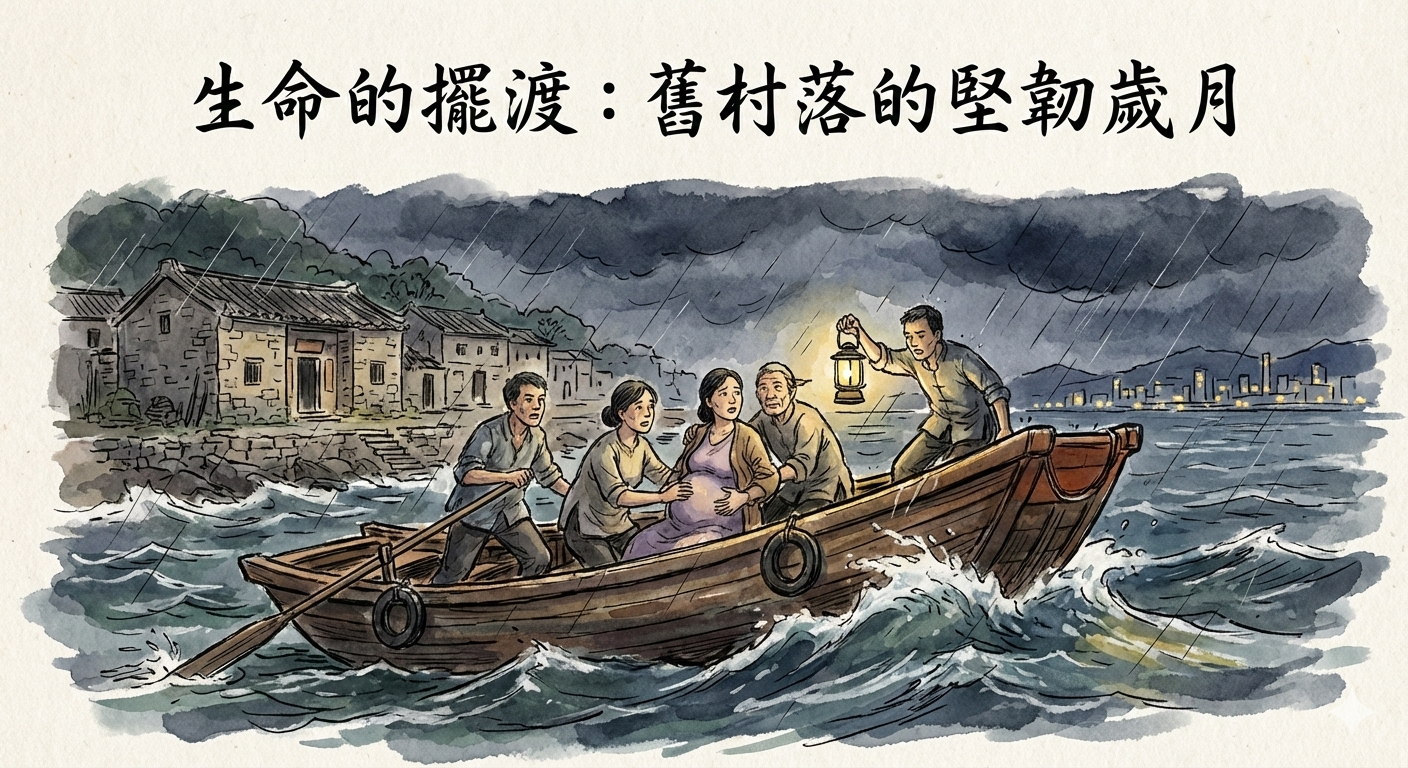
The final layer of Lamma is woven from the social resilience of its oldest villages, such as Mo Tat Wan and Lo So Shing. Before the arrival of modern piers—most of which were only constructed about thirty years ago—life was governed by a profound isolation that fostered a unique "harmonious spirit."
This is best captured in the "Life's Ferry" narrative. Before modern infrastructure, expectant mothers or those facing medical emergencies relied on local midwives (接生婆). If complications arose, they faced a perilous journey by small boat across the Lamma Channel to Tsan Yuk Hospital in Sai Ying Pun. This "lifeline" across the water symbolizes the historic rural-urban divide and the extraordinary mutual aid network of the islanders. The lack of development did not create a vacuum; it created a society where neighbors were the primary source of security and survival.
The Historical Traveler’s Compass
For those seeking to touch these layers of memory, a visit to The Lamma Fishermen’s Culture Village offers an immersive look into the traditional maritime technologies of the South China Sea. Alternatively, walking the old village paths of Mo Tat Wan allows for a quiet reflection on the agrarian persistence that defined the island before the modern era.
Philosophical Synthesis: An Epic of Whitespace
Lamma Island is an epic of whitespace and persistence. Its significance to the modern world is its resistance to the "speed and efficiency" of the urban core. By examining these five layers—from the metallurgical prowess of the Yue to the silent nesting of the Green Turtle—we see that an island’s depth is measured by its memory, not its economic output.
Lamma challenges us to reconsider the balance between exploration and preservation. Can we appreciate a landscape without consuming it? As we walk these ancient paths, we are not merely tourists; we are temporary stewards of a 5,000-year legacy.
To dive deeper into the archival histories and spatial narratives of the region, subscribe for more Travelable History.
Logistics: The Historical Journey
How to Get There
- Central Ferry: Pier 4 serves both Yung Shue Wan (North) and Sok Kwu Wan (South).
- Aberdeen Ferry: A localized service connects Aberdeen to Mo Tat Wan and Sok Kwu Wan, providing a more traditional approach to the island.
Walking Route
- Lamma Island Family Walk: The primary historical artery connecting the north and south, passing Hung Shing Yeh Beach and the Kamikaze Caves.
Recommended Historical Experiences
- Historical Lamma Walking Tours: Specialist-led walks focusing on the island’s archaeological and WWII sites.
- Lamma Fishermen's Culture Village: An interactive site in Sok Kwu Wan dedicated to preserving the island’s maritime heritage and traditional fishing techniques.
Referencias
- 南丫島- 歷史地理 - HKKF, 檢索日期:10月 20, 2025
- 文藝︳【讀書札記】被遺忘的滄涼,或平安/《南丫島故事》 - 中大學生報, 檢索日期:10月 20, 2025
- 考古發現, 檢索日期:10月 20, 2025
- 黃啟深:海盜張保仔與香港- 南丫岛|嘉庆|大屿山|张保仔 - 网易, 檢索日期:10月 20, 2025
- 張保仔洞- 維基百科,自由的百科全書, 檢索日期:10月 20, 2025
- 天后廟, 檢索日期:10月 20, 2025
- 南丫島人說故事, 檢索日期:10月 20, 2025
- 南丫島神秘地方-神風洞檢索日期:10月 20, 2025
- 【南丫島一日遊】熱門景點、美食、行山路線推介(附交通攻略) - Klook旅遊網誌, 檢索日期:10月 20, 2025
- 神風洞-檢索日期:10月 20, 2025
- 【南丫島攻略】由北玩到南體驗傳統x現代的漁村風味 - Trip.com, 檢索日期:10月 20, 2025
- 漁護署提醒市民切勿於限制期內進入深灣限制地區 - 政府資訊中心, 檢索日期:10月 20, 2025
- 南丫島深灣限制地區地圖, 檢索日期:10月 20, 2025
- 南丫島南| WWF Hong Kong, 檢索日期:10月 20, 2025
- 漁護署提醒市民切勿於限制期內進入深灣限制地區, 檢索日期:10月 20, 2025
- 南丫島.石排灣 - 香港山誌Hillmanblog, 檢索日期:10月 20, 2025
- 南丫島漁民文化村| 香港旅遊發展局, 檢索日期:10月 20, 2025
- 【記敘手法大全】記敍文叙事7 要素|DSE(例子教學+好處作用) - AfterSchool, 檢索日期:10月 20, 2025
 Lawrence
 Lawrence