(ENG) Rikami Miura's Millennial Connection with Takarazuka – The Sublimation of the Earth's Spirit
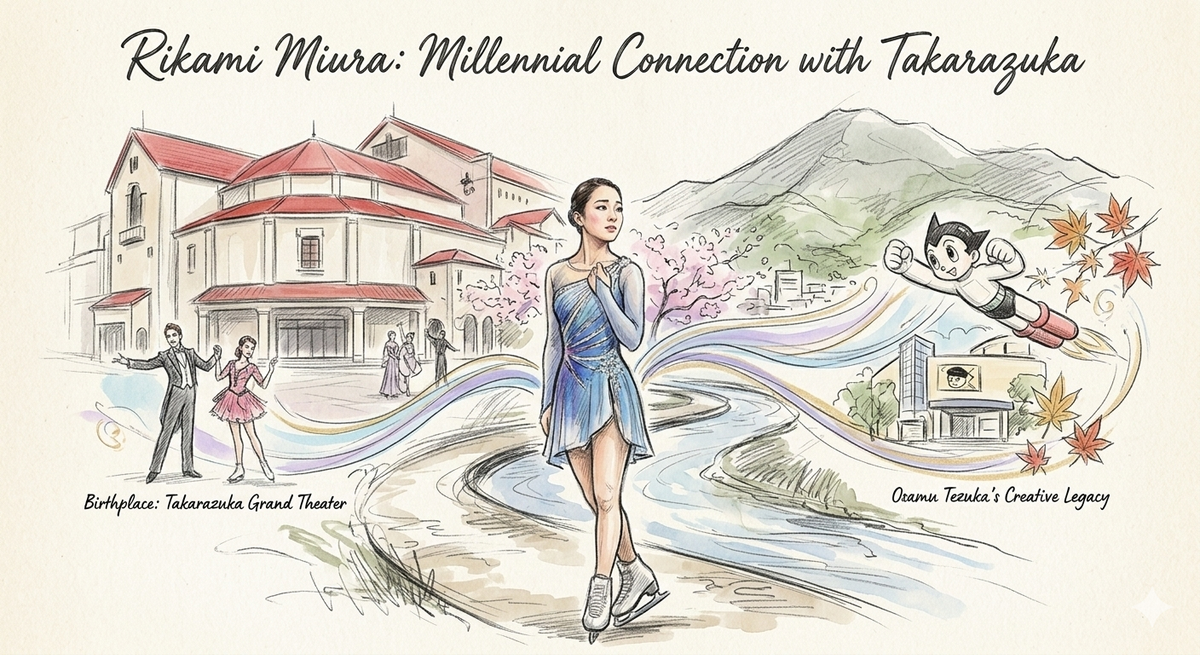
Takarazuka City is the birthplace of Rira Miura. The story of Takarazuka tells us that excellence is not accidental; it is a contemporary epic built layer by layer through the reuse of failed experiments, the sensitivity to primal nature, and the artistic interpretation of traditional beliefs.
How did a failed indoor pool lead to the Takarazuka Revue?
What is the thousand-year connection between Rikami Miura and Takarazuka?
How did Takarazuka's culture influence Osamu Tezuka's famous manga characters?
 Lawrence
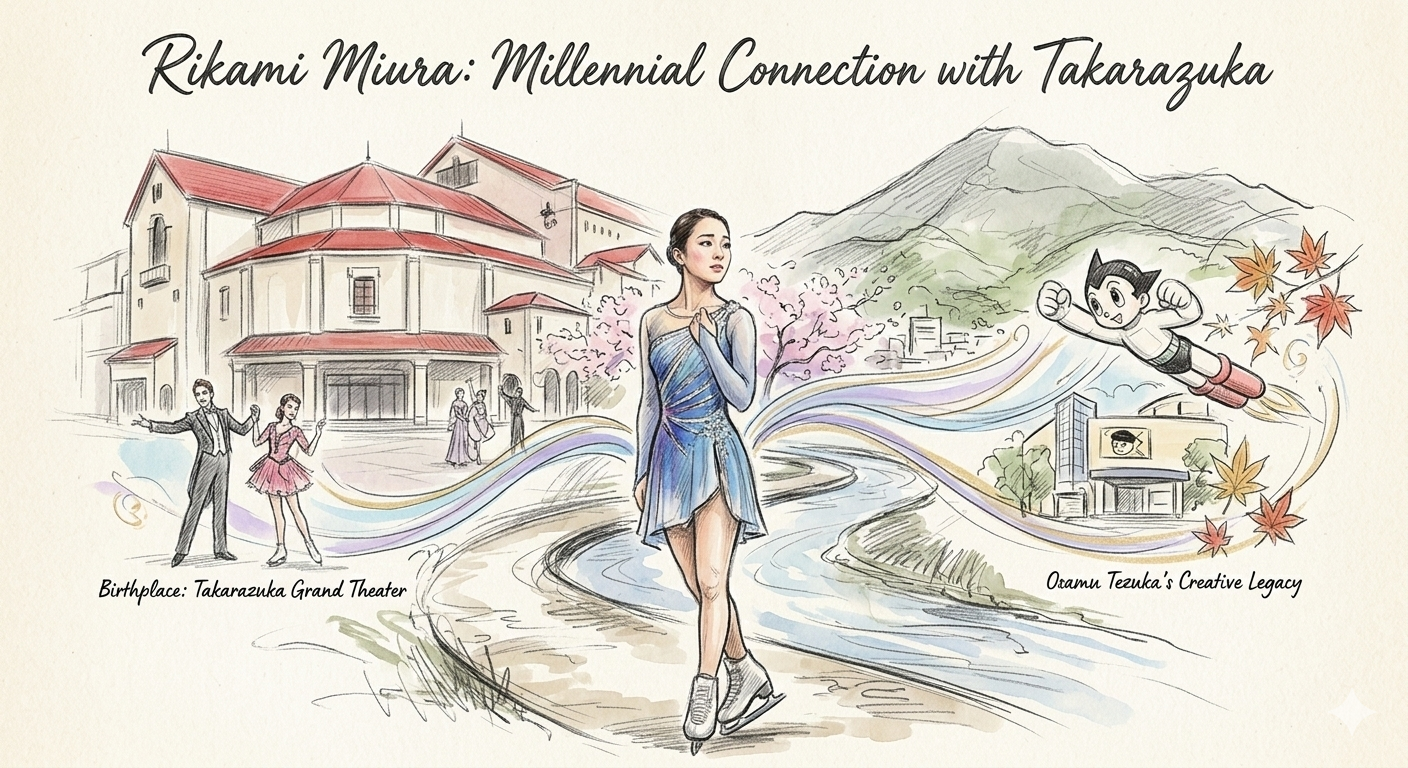
To understand Takarazuka, one must look beyond the marquee lights of its famous theater and into the very soil upon which the city rests. Here, in this corner of Hyogo Prefecture, identity is a matter of "layered history"—a unique convergence of natural spirituality and meticulously crafted spectacle. It is a city best navigated on foot, where the Muko River and the granite-ribbed hills serve as silent witnesses to a millennium of cultural evolution. This enduring "spirit of diligent refinement" (精進精神) found its most contemporary expression in the 2026 Winter Olympics, where local skater Riku Miura together with Ryuichi Kihara claimed gold. Her victory, characterized by a seamless blend of strength and grace, is not merely a modern headline; it is the latest flowering of a historical soil that has been nurtured by ancient rituals, architectural risks, and an unwavering pursuit of the sublime.
Listen to the historical stories told in detail (For subscribers only)
The Geography of the Sacred: Translating Power into Fortune
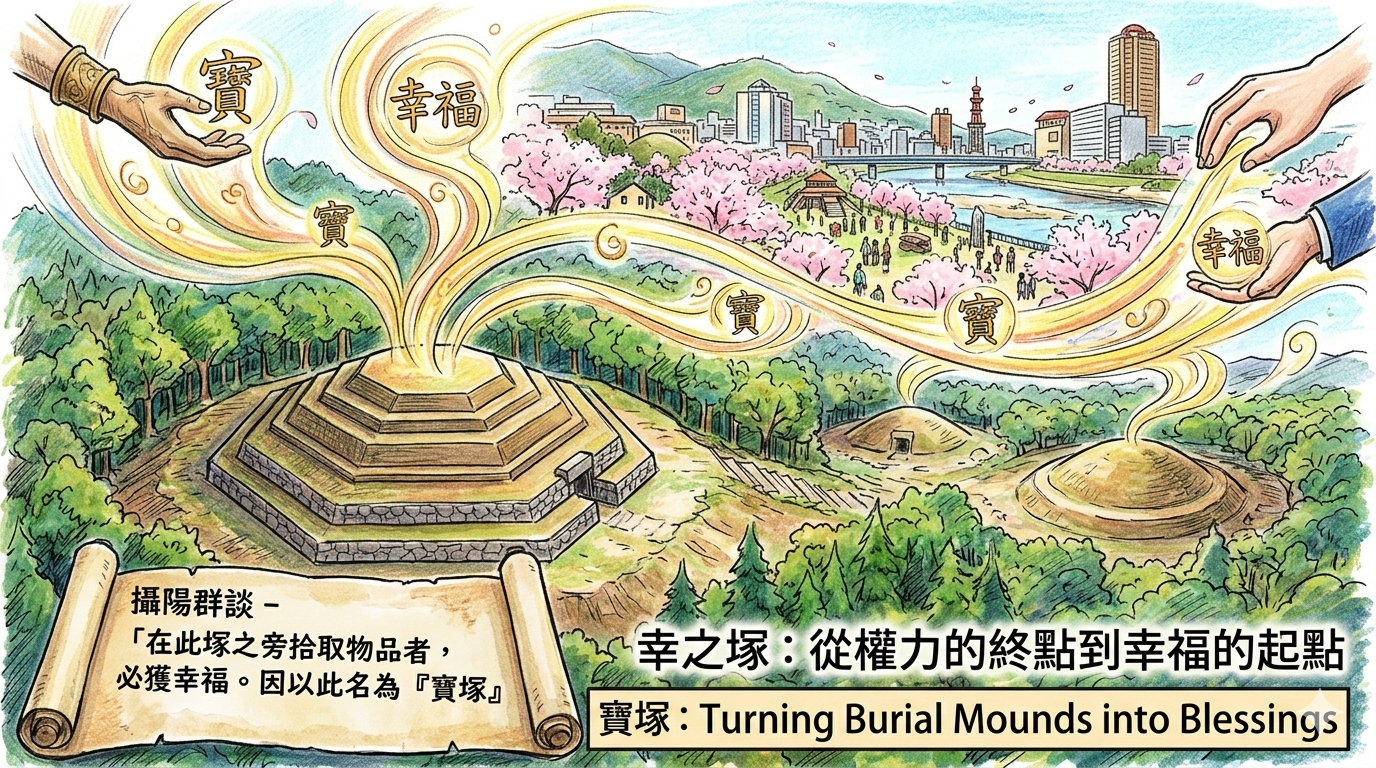
The name "Takarazuka" itself is a linguistic map, tracing the city's journey from a landscape of death to one of prosperity. In his 1701 record, Setsuyo Gundan, the scholar Okada Keishi documented a profound shift in local perception. Originally named for the ancient burial mounds (kofun) that dot the hills, the name evolved through folklore: "Those who pick up items beside this mound will surely find happiness. For this reason, it is named 'Takarazuka' [Treasure Mound]." This simple translation recontextualized the heavy weight of the past into a promise of future fortune, effectively sanctifying the ground for those who would follow.
Walking through the modern residential district of Nakayama Shoen, the historically minded traveler encounters a striking spatial paradox. Beneath the balconies of contemporary apartments lies the Nakayama Shoen Kofun, a mid-seventh-century octagonal tomb. This rare geometric form was a signature of imperial-level authority, reserved for the highest echelons of ancient power. Today, these 1,400-year-old stones rest in the shadows of everyday life—a "landscape of the dead" repurposed for the living. For Riku Miura, the "sense of security" she finds in her hometown is rooted in this very immutability. Her psychological home is a sanctified ground that has remained stable through centuries of upheaval, providing an ancient anchor for modern achievement.
The Aquatic Catalyst: From a Failed Paradise to the Grand Stage
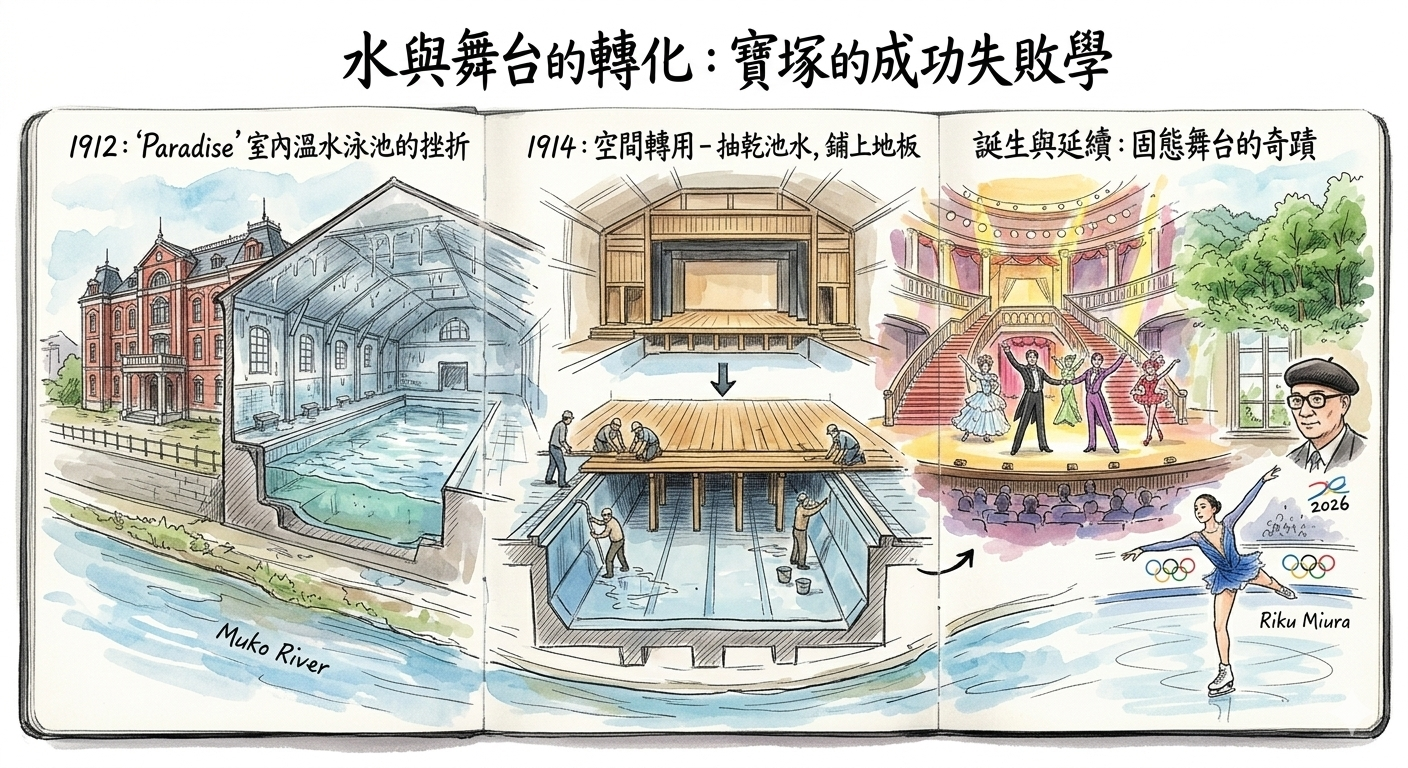
Descending from the silent hills toward the Muko River, one finds the birthplace of Takarazuka’s modern identity—an identity forged from the "alchemy of failure." In 1912, the entrepreneur Kobayashi Ichizo, a visionary of "Hanshin-kan Modernism," opened "Paradise," an indoor heated pool housed in a grand red-brick building. It was intended to be a bastion of Western sophistication, yet it was a technical catastrophe. Lacking ventilation, the ceiling dripped constantly with icy humidity, and the cavernous space remained piercingly cold in winter.
Facing ruin, Kobayashi performed a masterstroke of space repurposing. In 1914, he drained the water and laid down floorboards, transforming the failed aquatic center into the first stage for the Takarazuka Revue. The inaugural performance of Donburako marked a shift from "liquid water" to a "solid stage." This transition mirrors the very discipline that led Riku Miura to Olympic gold. Much like the Revue was birthed from a drained pool, the sport of figure skating requires the artist to carve beauty out of "solidified water." Both the stage and the ice are challenging, cold mediums that demand the total transformation of a physical environment into a realm of dreams.
The Forest of the Mind: Osamu Tezuka’s Urban Ecology
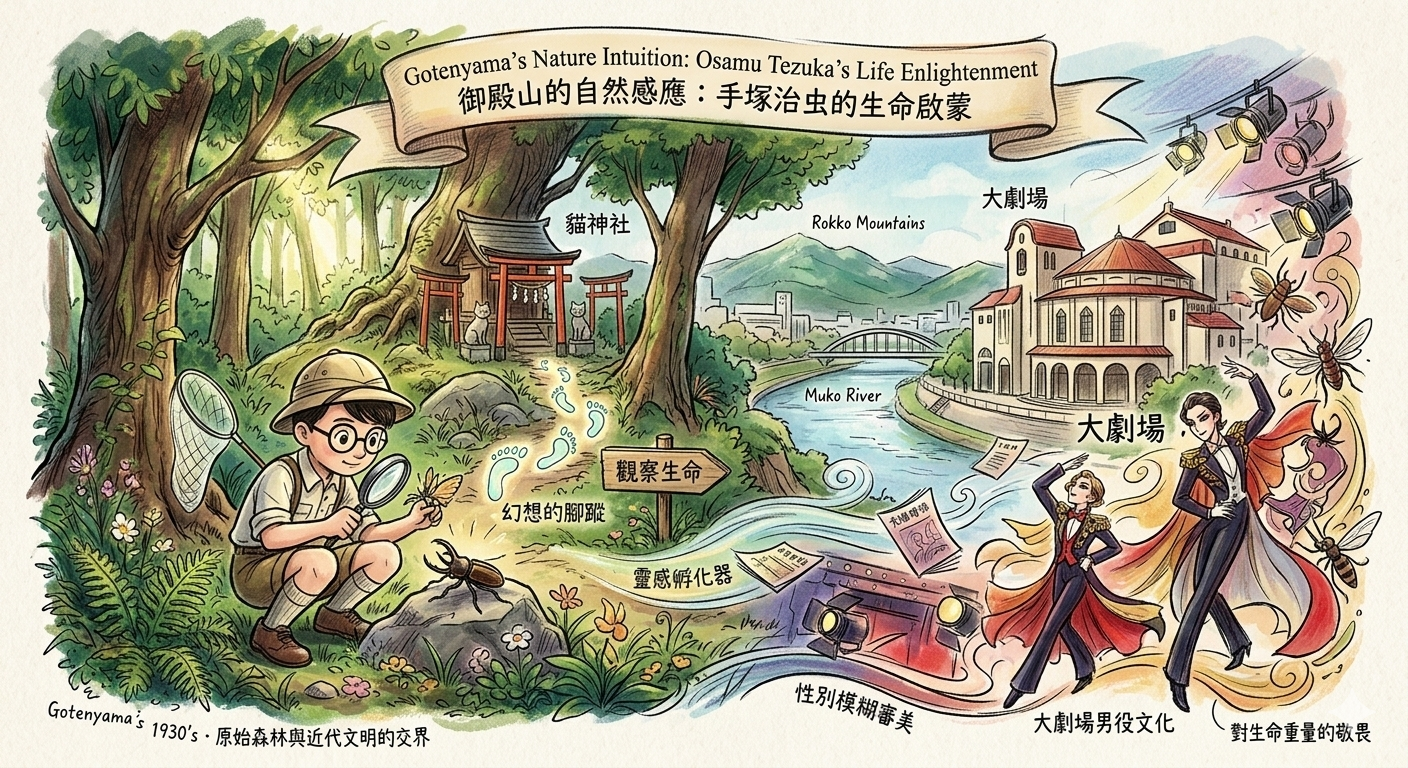
As the theater lights dim, one follows the rising slopes of the Gotenyama district. In the 1930s, this area served as a creative incubator for a young Osamu Tezuka. For twenty years, the "God of Manga" roamed these forests, his eyes alternating between the raw complexity of local insects and the high artifice of the Revue performers. This juxtaposition—the wild, indigenous forests meeting the extreme gender fluidity of the "Otoko-yaku" (female performers in male roles)—became the DNA of his work.
The Neko Jinja (Cat Shrine) remains as a physical remnant of this childhood landscape, a place where nature and mythology blur. Tezuka’s ability to transcend traditional definitions, seen in the "Sapphire" courage of characters like Princess Knight, is a direct legacy of this environment. This same spirit of transcendence is evident in Riku Miura’s athletic resilience. Skaters like Miura represent a modern Sapphire, possessing the courage to defy physical limitations and traditional gender expectations in a discipline that demands both the strength of a hunter and the grace of a dancer.
The Refining Hearth: Spiritual Dualities at Kiyoshikojin
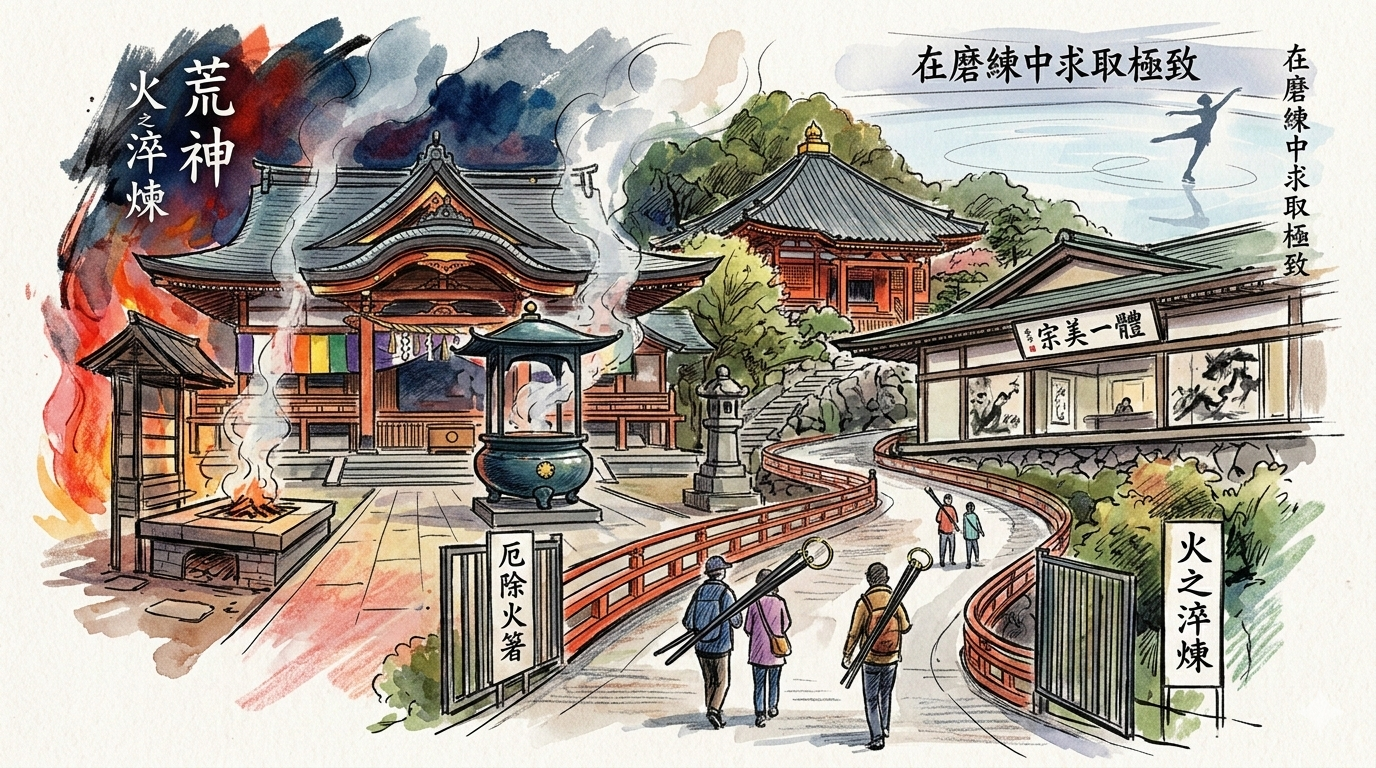
Following the contours of the northern hills deeper into the city’s spiritual bedrock, one arrives at Kiyoshikojin Seicho-ji. Established in the 9th century, this temple complex embodies the city’s fundamental duality: the mundane and the transcendental. At its heart is the "Kojin," the deity of fire and the kitchen, essential to the daily stability of the region's merchants. Pilgrims walk the "Dragon Path"—a 1.2km approach—to reach the "Hibashi-nosho," where they rid themselves of misfortune by offering fire tongs, symbolizing the "clamping away" of life's troubles through the purification of fire.
Yet, alongside this humble ritual lies the Tessai Museum of Art, housing over 2,000 works by Tomioka Tessai, the "last literati painter." This contrast—prayers for kitchen safety existing beside the brushstrokes of high art—defines the essence of 精進 (shojin), or diligent refinement. It is the understanding that the sacred is found in the struggle. Riku Miura’s Olympic gold is the result of such a "refining fire." The years of falling and rising on the ice are a secular form of the temple's faith, a process of purification through persistent, disciplined effort.
White Sands and Modernist Echoes: The Architecture of Calm
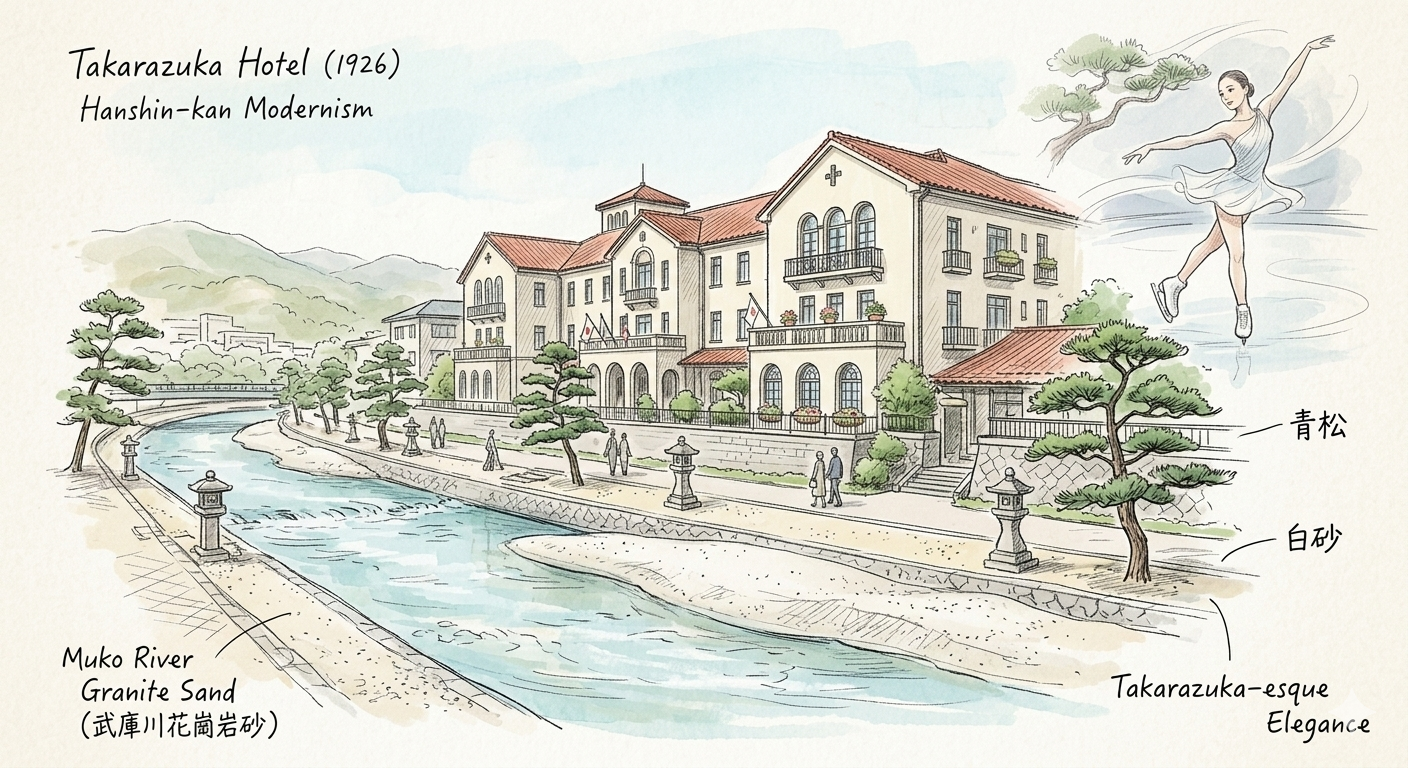
The final layer of Takarazuka’s narrative map is the elegance of "Hanshin-kan Modernism." The Takarazuka Hotel, designed in 1926 by architect Furutsu Masaharu, established an aesthetic of red-tiled roofs and arched windows that sought to transplant a Western ideal into the Japanese riverbank. This "spatial production" was built in conversation with the city’s geology—specifically the "white granite sand" (白砂) of the Muko River. The resulting palette of "white sand and blue pines" (白砂青松) created a cultural special zone of crystalline clarity.
Even after its 2020 reconstruction, the hotel preserves these classical elements, maintaining the "Takarazuka-esque" atmosphere of quality and restraint. Riku Miura has often cited the landscape around Takarazuka Station as her primary source of calm; it is this modernist aesthetic that provides her psychological anchor. The city’s geography is not just a backdrop; it is an aesthetic palette that informs the psyche of those who grow up within its clean, modernist lines.
The Hidden Gem: Tasting the Earth’s Effervescence
Before leaving the city, one should seek out a literal taste of this geological refinement: The Wilkinson Carbonated Water Spring. Born from the natural granite-filtered waters of the Takarazuka hills, this global brand originated here. The pure, crisp quality of the water is a direct product of the local earth, an effervescent reminder that the city’s reputation for "purity and refinement" is not merely a theatrical slogan, but a quality found deep within the stone and springs of its landscape.
The Resilient Genius Loci
The story of Takarazuka is one of constant, brilliant transformation. It is a narrative map that leads from burial mounds turned to treasure, from failed swimming pools turned to world-class stages, and from the fires of the kitchen to the heights of Olympic gold. Whether on the "solidified water" of the skating rink or the "white sand" of the Muko River, the city’s history is a testament to the pursuit of excellence through resilience.
LawrenceRiku Miura’s success is the contemporary flowering of this long-nurtured soil. When we observe a city through these layered observations, we realize that individual achievement is rarely a solo act; it is the result of a genius loci that has demanded refinement for over a thousand years. Does the weight of such history burden the modern achiever, or does it provide the very foundation necessary to leap toward the stars?
For more deep-dives into the soul of places and the histories that shape our modern world, subscribe to Historical Travel Stories.
Reference and Further reading
- 三浦 璃来|スケート・フィギュアスケート|ミラノ・コルティナ2026冬季|JOC - 日本オリンピック委員会, accessed March 6, 2026,
- vol.31 お宝人インタビュー 三浦璃来さん(2022年6月号)|宝塚市 ..., accessed March 6, 2026,
- 宝塚市まちの歴史|宝塚市公式ホームページ, accessed March 6, 2026,
- まちの紹介(しょうかい)|宝塚市の子ども向けサイト たからづかキッズ, accessed March 6, 2026,
- 中山荘園古墳 - 文化遺産オンライン, accessed March 6, 2026,
- 質問宝塚市の名前の由来について教えてください。, accessed March 6, 2026,
- 宝塚温泉物語 第3章 少女歌劇と宝塚新温泉, accessed March 6, 2026,
- ウィルキンソン炭酸水の発祥地「宝塚」 “歌劇団”の始まりは「日本初のプール」 【大東駿介てくてく学】, accessed March 6, 2026,
- 宝塚歌劇場はもともとプールだった。天才経営者・小林一三の発想 | 本がすき。, accessed March 6, 2026,
- Hankyu-cultura, accessed January 1, 1970,
- 漫画の神様ゆかりの地で語り継がれる手塚治虫と宝塚の歴史/手塚 ..., accessed March 6, 2026,
- 宝塚「生(せい)」の祈り2026(阪神・淡路大震災追悼ライトアップ), accessed March 6, 2026,
- 震災20年シンポジウム冊子「明日へ伝えたい」 - 宝塚市, accessed March 6, 2026,
- 清荒神 清澄寺|宝塚市公式ホームページ, accessed March 6, 2026,
- 清荒神清澄寺 - 神仏霊場会【公式ページ】, accessed March 6, 2026,
- 真言三宝宗 清荒神清澄寺, accessed March 6, 2026,
- 境内マップ - 真言三宝宗 清荒神清澄寺, accessed March 6, 2026,
- 清荒神清澄寺 | 宝塚定番スポット, accessed March 6, 2026,
- 鉄斎美術館 | 美術館・博物館 | アイエム[インターネットミュージアム], accessed March 6, 2026,
- 「聖光殿」 鉄斎美術館は、 清荒神清澄寺第三十七世法主 - 坂本光浄和上(1875~1969) が半世紀以上の歳月をかけて, accessed March 6, 2026,
- 【小企画展】鉄斎―新春を彩る吉祥画― | 鉄斎美術館展覧会 - 清荒神清澄寺, accessed March 6, 2026,
- 1.宝塚の街を象徴する建築美 - 阪急阪神第一ホテルグループ, accessed March 6, 2026,
- 阪神間モダニズムvol.1 - YouTube, accessed March 6, 2026,
- 阪神間モダニズム - 西宮市大谷記念美術館, accessed March 6, 2026,
- 阪神間モダニズム ―戦前に開花した都市文化の軌跡― お!ここにも近代建築! - 造形礼賛, accessed March 6, 2026
 Lawrence
 Lawrence