香港
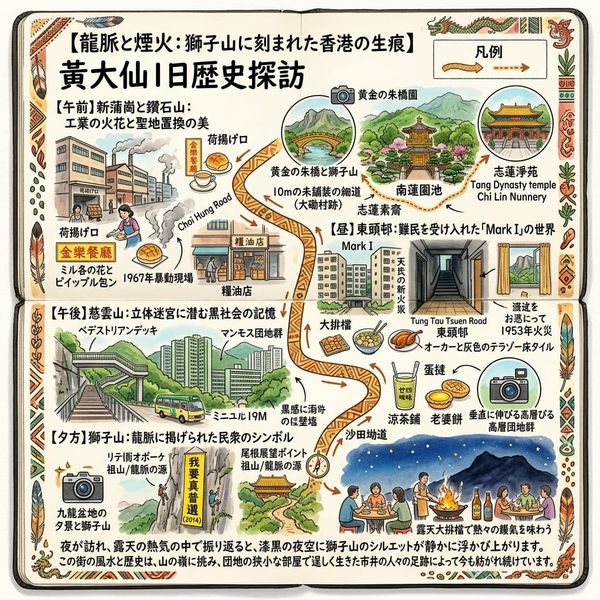
黄大仙区——龍脈を三たび借りた山、沈黙の五つの物語
不死の道士が名を与え、岩の獅子が空を支える。しかしこの土地の深い歴史は、仙人でも山でもなく、移住を強いられた家族、工場の闘いに散った女性たち、消えた路地の記憶に宿っている。山は借用を許す。しかし山は、すべての借用者を覚えている。

我係香港人,細說世界故事。 A Hongkonger, telling world tales. Alma de Hong Kong, cuento viajes del mundo. De Hong Kong, je conte le monde. 香港より、世界の旅語る。
香港
不死の道士が名を与え、岩の獅子が空を支える。しかしこの土地の深い歴史は、仙人でも山でもなく、移住を強いられた家族、工場の闘いに散った女性たち、消えた路地の記憶に宿っている。山は借用を許す。しかし山は、すべての借用者を覚えている。
District de Wong Tai Sin
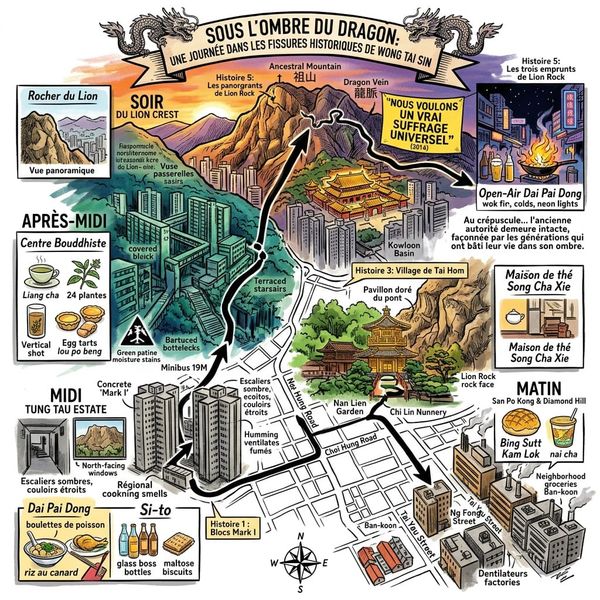
L'immortel taoïste prête son nom au district ; la montagne prête sa silhouette à l'horizon. Ce que ni l'un ni l'autre n'a choisi de prêter, c'est l'oubli. Cinq histoires que la mémoire officielle de Hong Kong a préféré taire, et que la pierre garde néanmoins.
Wong Tai Sin district
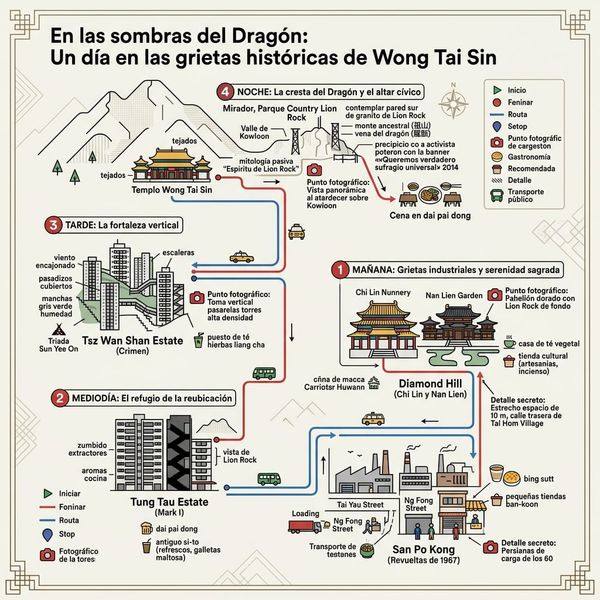
El distrito lleva el nombre de un inmortal taoísta. Su historia verdadera pertenece a los mortales: las familias hacinadas en bloques sin nombre, los obreros que casi hicieron colapsar una colonia, la aldea borrada para construir un monasterio...
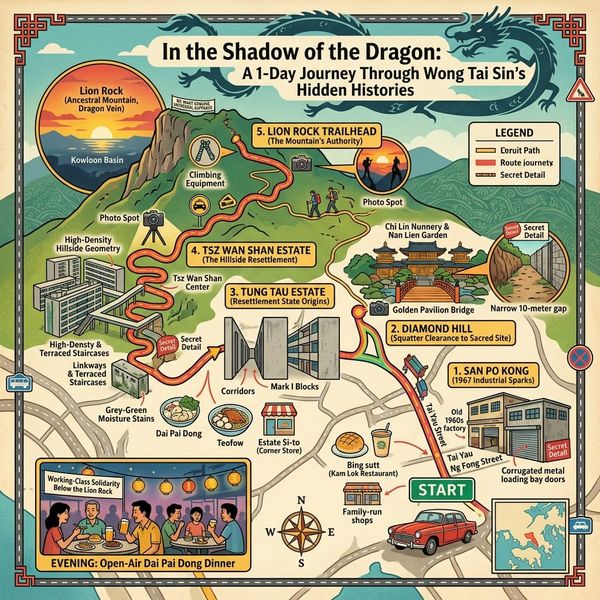
Wong Tai Sin District
Lion Rock names the spirit of Hong Kong. It has also been borrowed — three times, by three different political projects — as a source of authority over the people in its shadow. This is a walk through the ground it watches over, and through five histories most visitors never find.
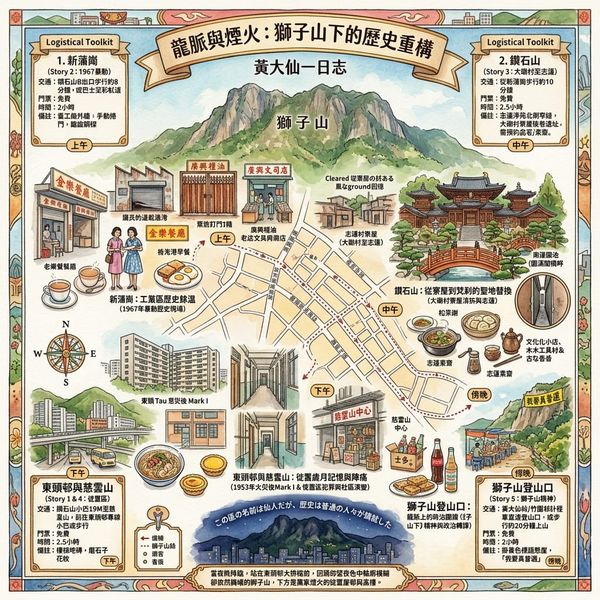
香港
大仙之名,來自道教仙人;而黃大仙區的歷史,卻是凡人的掙扎史。徙置大廈的灰色牆壁、新蒲崗工廠前的一聲衝突、大磡村的消失、慈雲山的黑暗年代——最終,一面黃色橫幅高掛獅子山,向整個九龍宣告:龍脈,從來都可以借用,卻不能佔有。
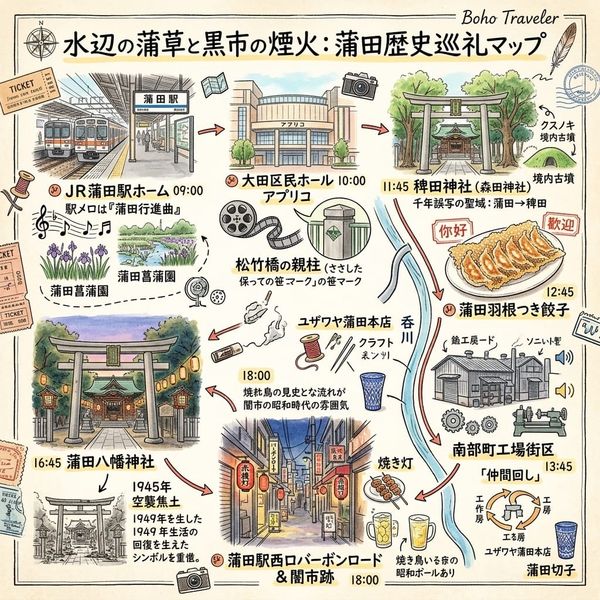
蒲田
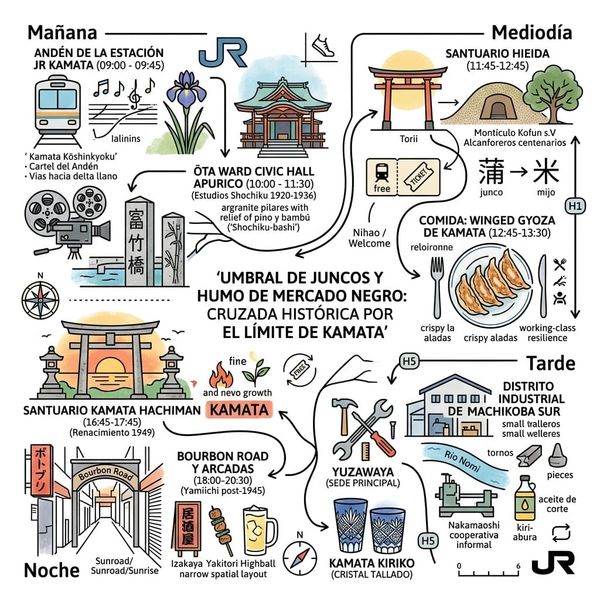
列車が発つたびに、蒲田行進曲が鳴る。一九三〇年に生まれ、撮影所が消えて久しいにもかかわらず、その旋律はいまもJR蒲田駅のホームに満ちている。サインは残り、指示対象は消えた。しかし、消えたものは本当に消えたのだろうか。蒲田という地名が千三百年間語り続けてきた物語を、五つの歴史層に分けて読んでいく。
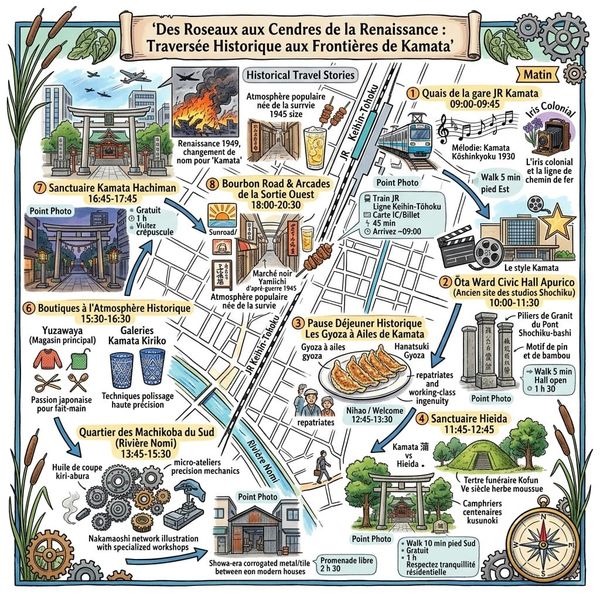
Kamata-chō
Toutes les quinze minutes environ, une mélodie retentit sur le quai de la gare JR de Kamata : la Marche de Kamata, composée en 1930 pour célébrer un studio de cinéma qui n'existe plus. Le signe a survécu à son référent. Kamata ressemble à un non-lieu.
Kamata-chō
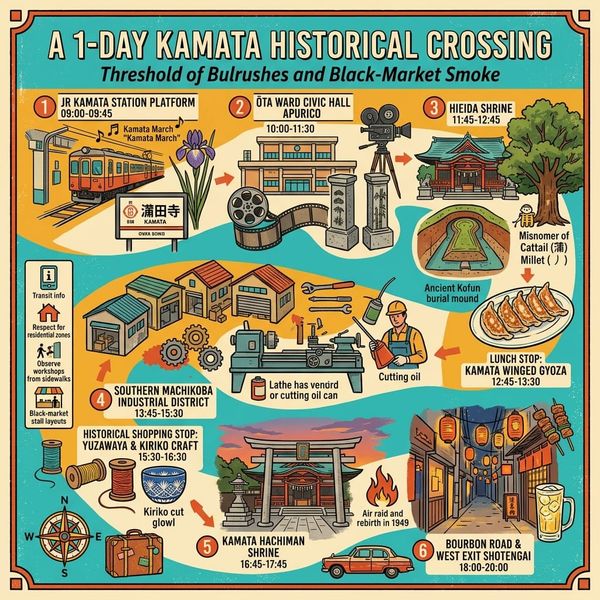
En la llanura aluvial del sur de Tokio existe un lugar cuyo nombre lleva escrito, desde hace más de mil años, la clave de su propio destino. Kamata: el campo del junco. La planta que solo crece en el límite entre el agua y la tierra.
Kamata-chō
In the alluvial flats at the southern edge of Tokyo, a place named for the bulrush plant that grows only at the water's margin has been incubating Japan's next modernity for over a millennium. This is Kamata — not the periphery of the city, but the threshold of an age.
蒲田
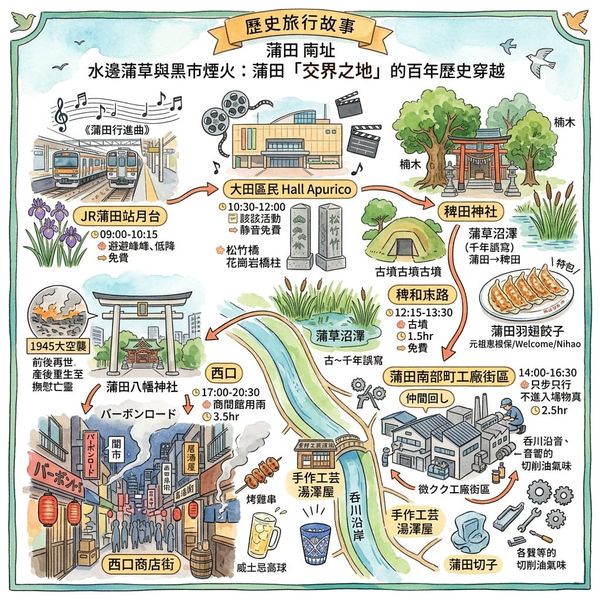
蒲田,名字源自生於水陸之界的香蒲植物。這片東京低地埋藏五重歷史場域:千年誤字、殖民花圃召喚的鐵路、孕育蒲田調的電影攝影所、一夜毀城的燃燒彈,以及九千家工廠的分散智慧——解讀日本現代性的永恆閾值。
日本のバラエティ番組の神話
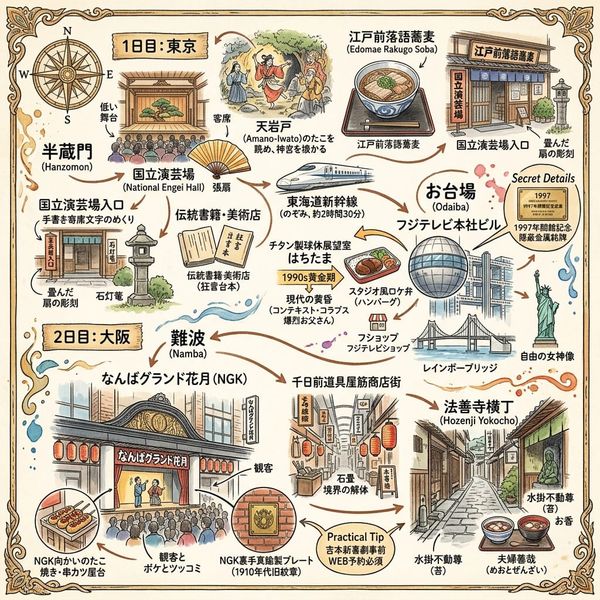
日本のテレビバラエティと笑いの本質に迫る歴史紀行コラム。古事記のアメノウズメの神話から江戸演芸、現代のテレビスタジオまでを巡り、聖なる儀式としての「笑い」の空間と、時代とともに変化した社会的境界の物語を紐解きます。
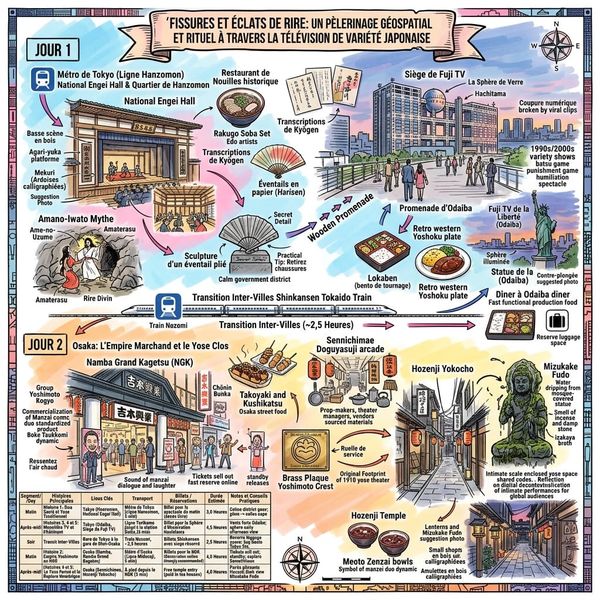
de variétés japonaises
Un voyage historique à travers la télévision de variété au Japon et la philosophie du rire. Des mythes anciens aux émissions télévisées modernes, découvrez comment les rituels et la société ont façonné l'humour et la culture japonaise.