(ENG) North Point Historical Walk – 5 Tales of Military Secrets and "Little Shanghai" Memories
Discover the hidden layers of North Point on this historical walk. From forgotten wartime batteries to the "Little Shanghai" glamour of the State Theatre, explore five stories that define this Hong Kong neighborhood's resilient and diverse spirit.
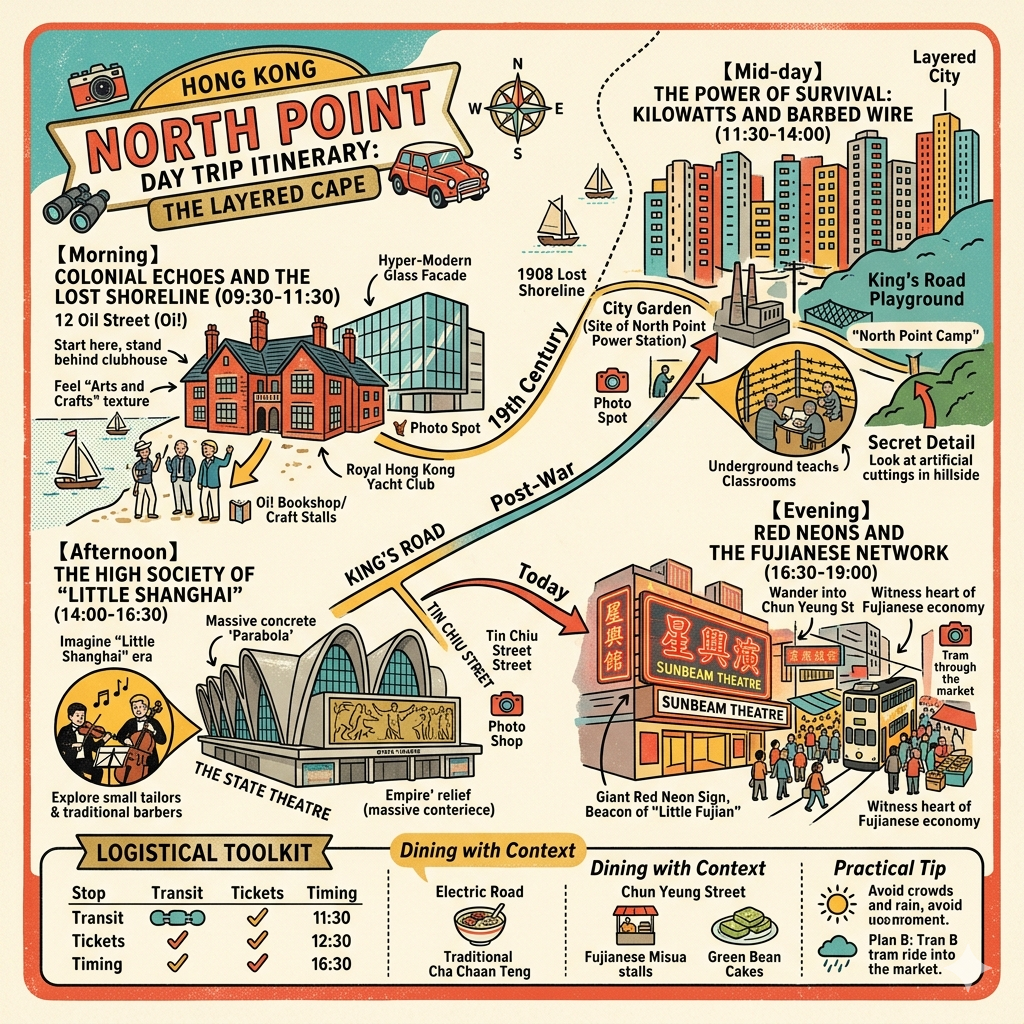
This is a historical travel story and walking guide to North Point, a district on Hong Kong Island known for its dramatic transformations. Through five intriguing stories, it explores hidden military batteries, the iconic State Theatre, and the vibrant wet markets to reveal how this "Little Shanghai" evolved from a defense outpost into a cultural melting pot. Readers will discover a unique walking route that connects colonial history with local immigrant life.
 Lawrence
The Vertical Archive of North Point
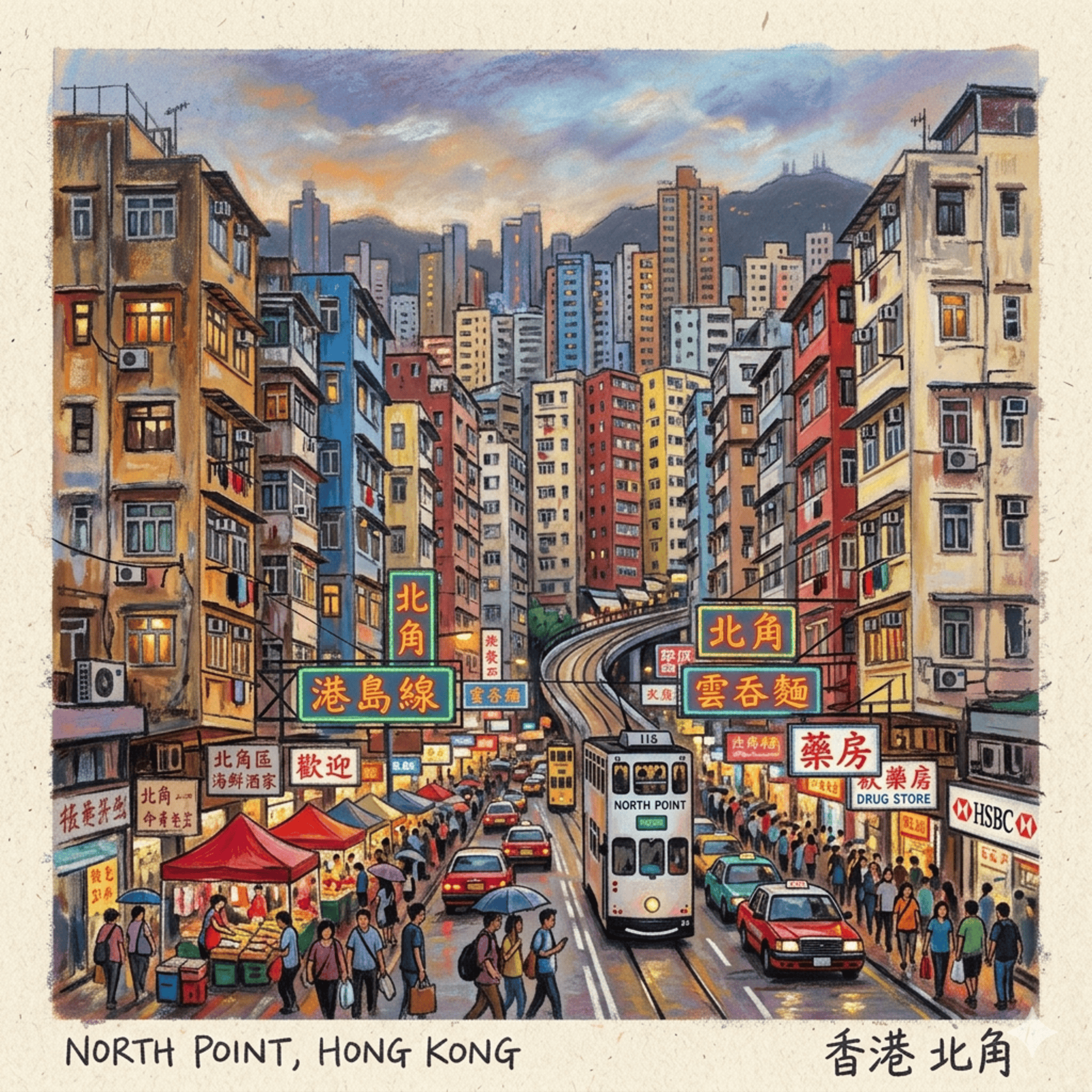
To the uninitiated, North Point is a dense thicket of high-rises and neon-washed markets, a place defined by its modern intensity. Yet, for the historical traveler, this district functions as a "vertical archive"—a layered city where a century of global upheaval is compressed into a few city blocks. Once a rural, windswept "point" jutting into Victoria Harbour, North Point evolved into a strategic industrial hub before serving as a gateway for successive waves of migration.
It is a place defined by profound transitions: from a colonial social playground to a frontline of wartime survival, and from the sophisticated "Little Shanghai" of the 1950s to the grassroots "Little Fujian" of today. North Point matters because it is not merely a residential district; it is a living map of global migrations and human endurance. By walking its streets, one moves through these distinct eras, beginning where the district’s modern energy—both literal and metaphorical—was first generated.
Listen to the historical stories told in detail (For subscribers only)
The Spark of Modernity: The Power Station and the Battle for Electric Road
In the early 20th century, as Hong Kong’s development pushed eastward from Central, North Point became the engine room of the colony. The establishment of the North Point Power Station in 1919 marked the district's transformation into a primary energy hub, essential for the transition from a trade port to a global industrial center.
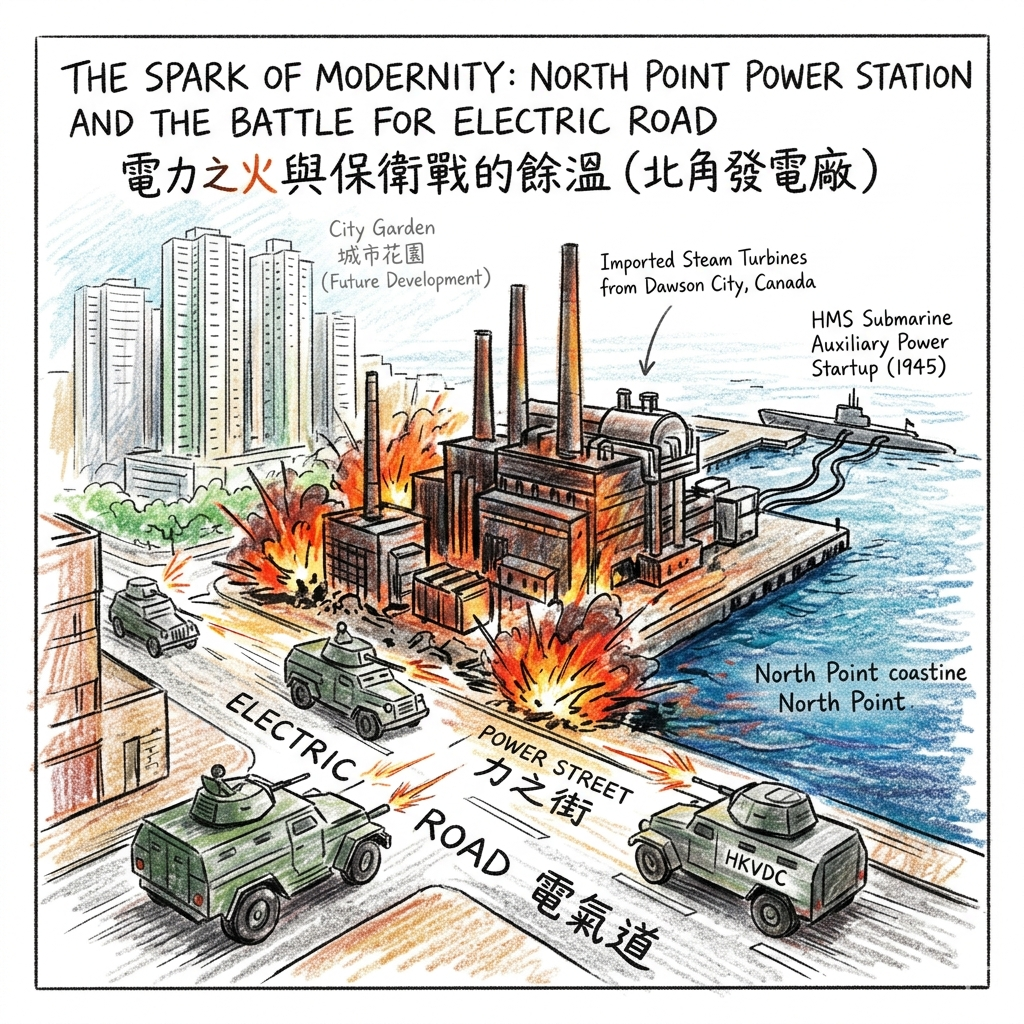
The station’s history is a testament to global resourcefulness. Due to supply chain disruptions caused by World War I, the original equipment was sourced not from Britain, but as second-hand steam turbines from Dawson City, Canada. This industrial era remains etched into the micro-topography; street names like Electric Road and Power Street serve as linguistic fossils of a time when coal and turbines defined the skyline.
In December 1941, the station became a strategic prize during the Japanese invasion. The defense, led by manager Vincent Sorby and the Hong Kong Volunteer Defence Corps (HKVDC), involved a harrowing rearguard action with armored cars along the very streets travelers walk today.
"The defense was exceptionally fierce. The Volunteer Corps deployed armored vehicles... attempting a counter-attack, but they were met with overwhelming firepower. Most members of the defense corps were killed in action." — Historical Records of the 1941 Defense
The station’s post-war reactivation was equally dramatic. In 1945, to overcome a lack of startup power, a Royal Navy submarine was moored at the pier to provide the initial current for the auxiliary pumps. Today, the site has been "residentialized" into the City Garden complex. This represents a classic Hong Kong theme: the victory of private real estate over strategic industrial infrastructure.
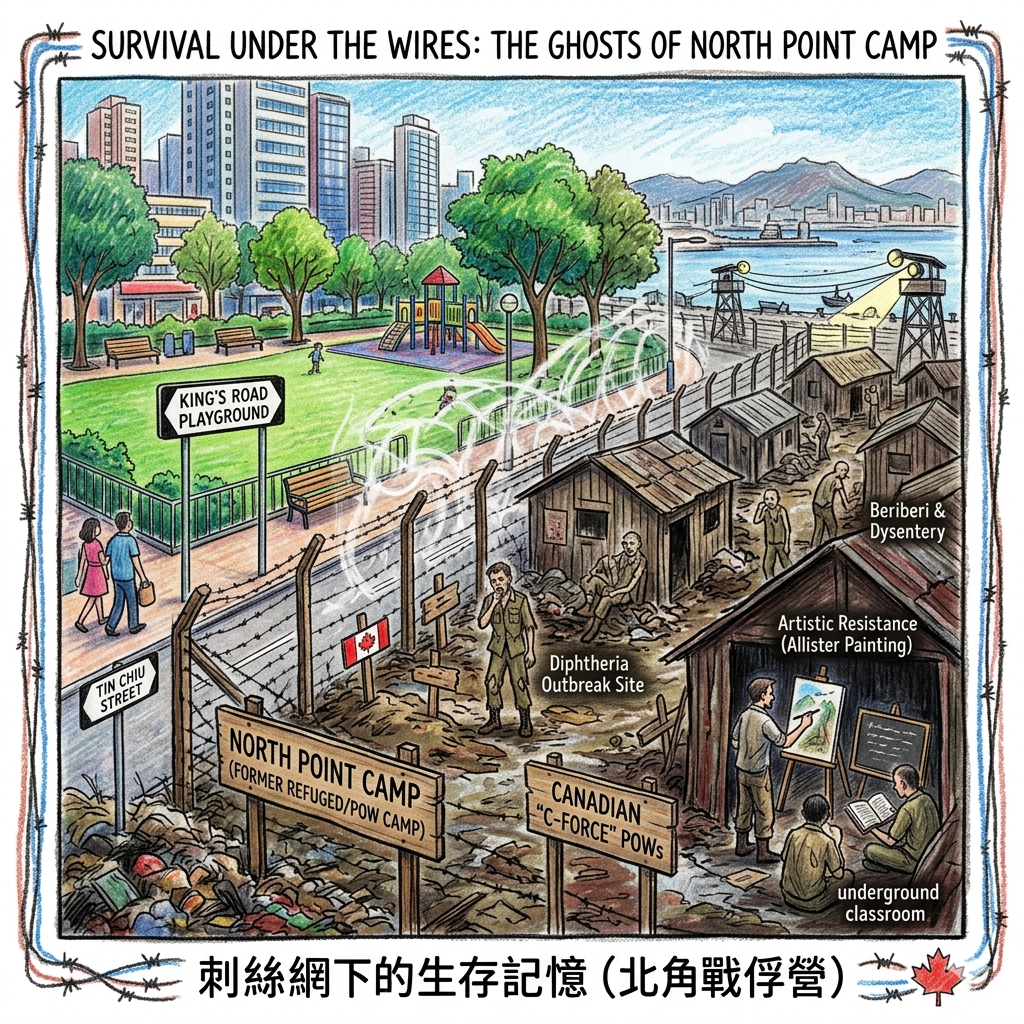
Survival Under the Wires: The Ghosts of North Point Camp
Tracing the invisible line of the former wire fences leads to the King’s Road Playground, a site of profound historical trauma. Originally a temporary refugee camp for those fleeing mainland conflict in the 1930s, it was repurposed by the Japanese into the notorious North Point Camp.
The space became a crowded "hell" for Canadian "C-Force" POWs. Living conditions were nightmarish; wooden huts designed for a few dozen men were packed with over 200. Built atop a former refuse dump, the camp became a breeding ground for disease. Historical records show that 58 Canadians died here of diphtheria alone, a direct result of the "temporary" and unsanitary nature of the architecture. Amidst the outbreaks of beriberi and dysentery, prisoners like William Allister engaged in "artistic resistance," maintaining morale through painting and "underground classrooms."
The current "blankness" of the playground is significant. The lack of a formal memorial at Tin Chiu Street serves as a silent observation of how cities often pave over trauma to make room for leisure. The "temporary" architecture of the camp left a permanent scar on the survivors' psyche, even if the physical wires have vanished.
The Empire’s Stage: Harry Odell and the ‘Little Shanghai’ Modernism
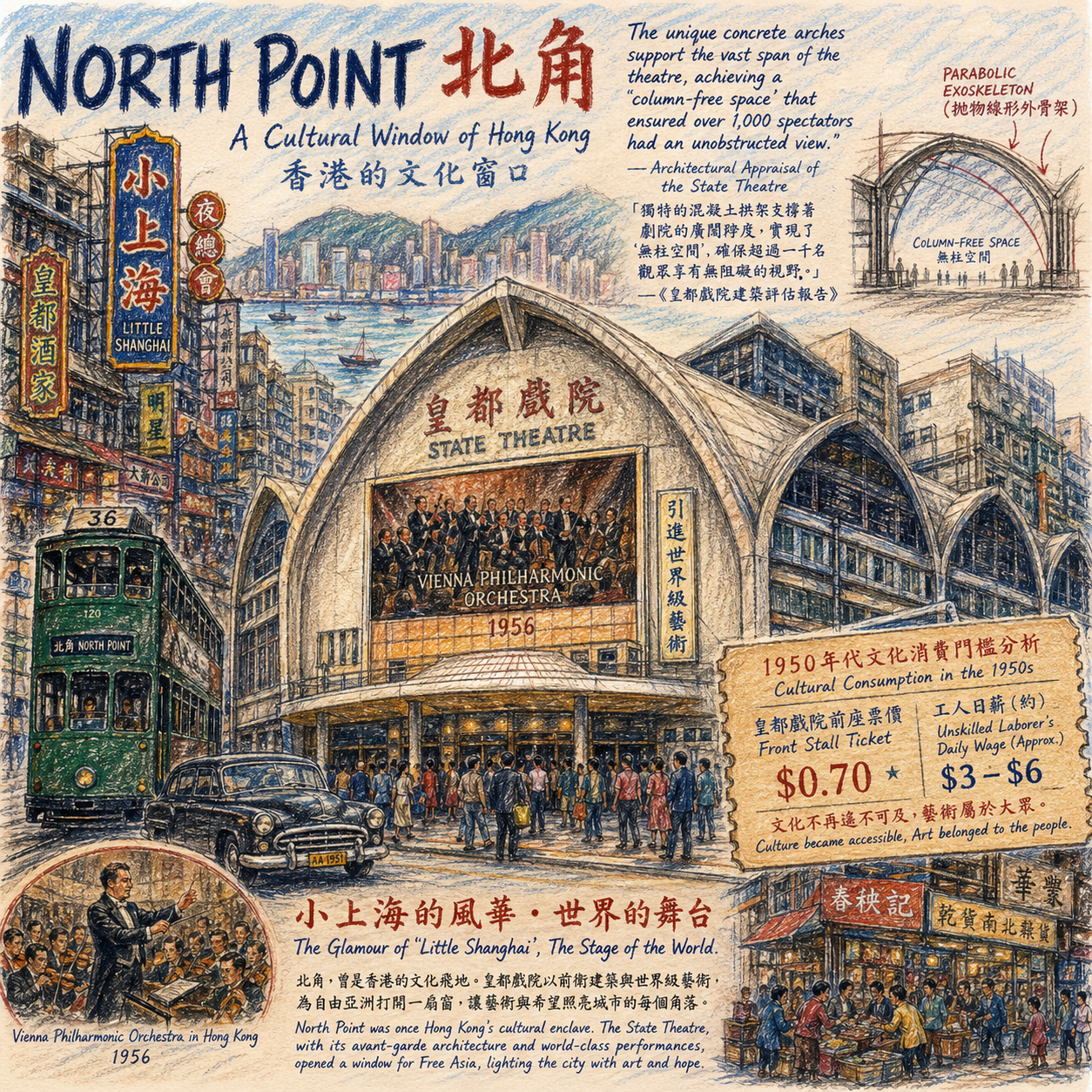
Following the 1949 migration wave, North Point was reborn as "Little Shanghai." Wealthy migrants and film producers brought capital and a hunger for high-end entertainment, turning the district into a cultural window during the Cold War.
The architectural centerpiece of this era is the State Theatre (formerly the Empire Theatre). Commissioned by Harry Odell, a Jewish-Russian entrepreneur, the building features a radical "parabolic exoskeleton" roof. This avant-garde design allowed for a massive, column-free interior space for over 1,000 spectators.
"The unique concrete arches support the vast span of the theatre, achieving a 'column-free space' that ensured over 1,000 spectators had an unobstructed view." — Architectural Appraisal of the State Theatre
The theatre’s significance lay in its democratization of culture. In the 1950s, a front stall ticket cost roughly $0.7—accessible even when compared to an unskilled laborer’s daily wage of $3 to $6. It hosted world-class performers like the Vienna Philharmonic, proving that North Point was a global cultural heart before it eventually transitioned into a local shopping arcade.
Red Neon and Regional Ties: The Resilience of Sunbeam Theatre
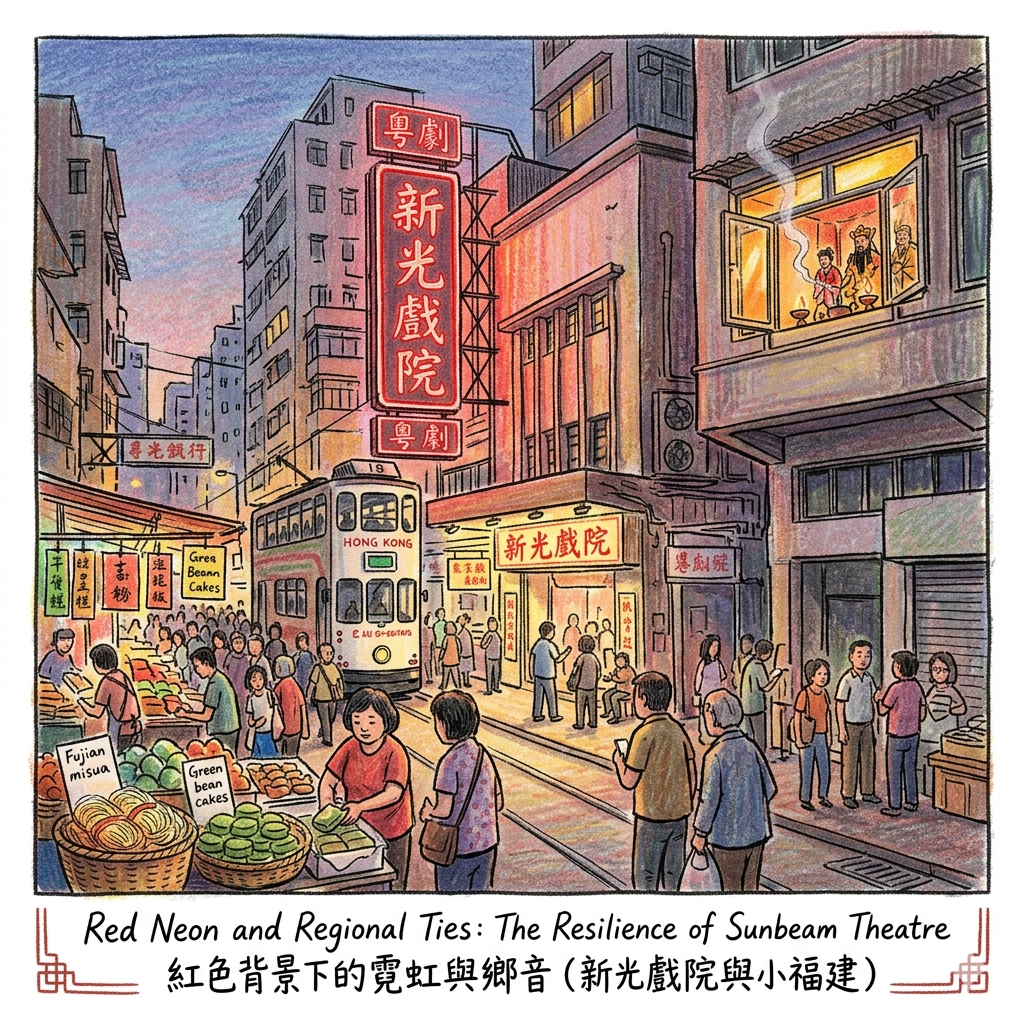
By the 1970s, the demographic shifted toward Fujianese migrants, earning the district the moniker "Little Fujian." This community reshaped the political landscape, centered around the Sunbeam Theatre. Though it had "Leftist" political origins for patriotic cinema, the Sunbeam became the unlikely "savior" of Cantonese Opera and a social network node for the Southeast Asian Fujianese diaspora.
Hidden Gems of ‘Little Fujian’:
- Chun Yeung Street: This market is a cross-national economic network. Watch the tram inch through the crowds past stores selling traditional Fujianese misua (wheat vermicelli) and green bean cakes.
- Residential Temples: On the upper floors of non-descript buildings, look for hidden shrines dedicated to the Broad Wisdom King (Guangze Zunwang), a deity central to Fujianese spiritual life and a remnant of the refuge sought by migrants.
The Arts & Crafts Residue: Oil Street and the Vanishing Coastline
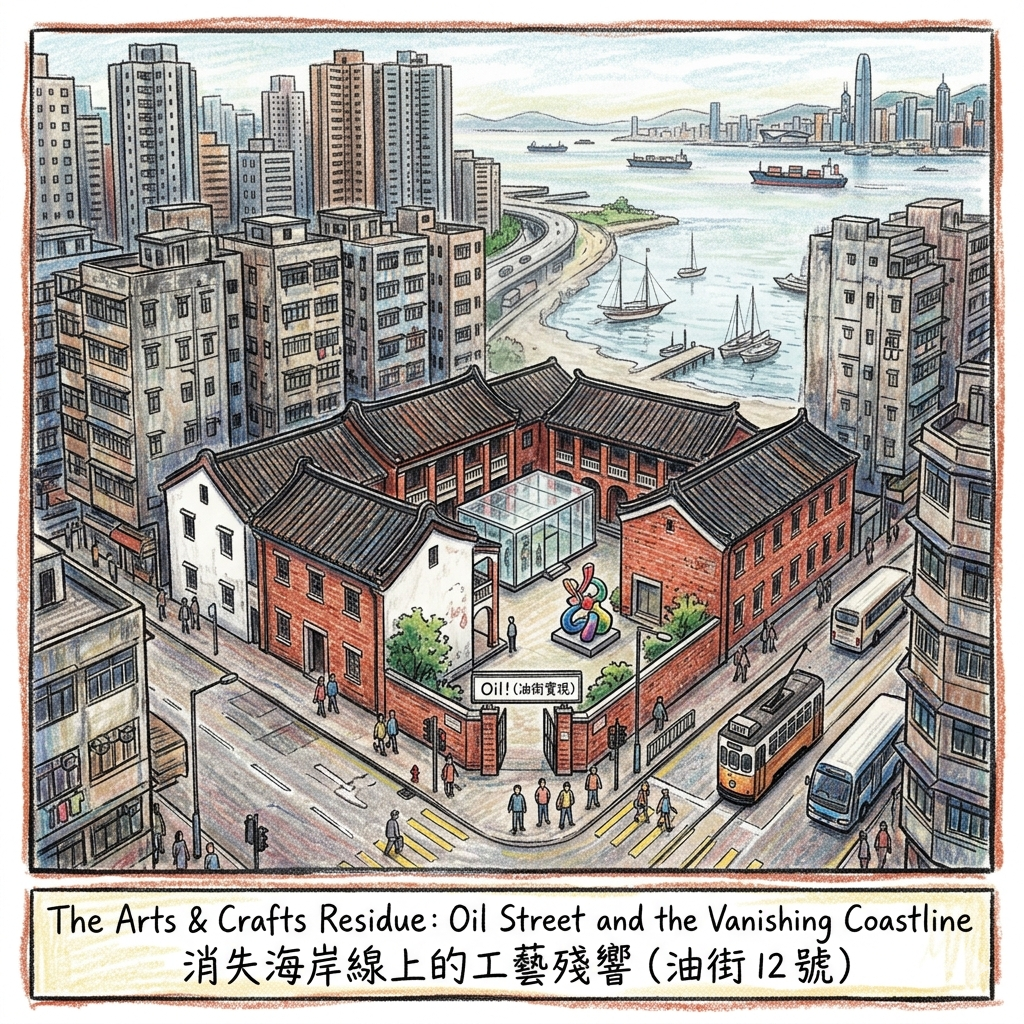
To understand the colonial social hierarchy, one must visit 12 Oil Street. Built in 1908 as the Royal Hong Kong Yacht Club headquarters, the building is a rare example of "Arts and Crafts" architecture in the tropics. Its red brickwork and Chinese tile roofs represent a colonial longing for "home," an attempt to create a British domestic aesthetic on a foreign shore.
The building’s current distance from the water serves as a physical measurement of Hong Kong’s aggressive land reclamation. What was once a seaside retreat for the European elite is now landlocked, several blocks from the harbor. This "sea-to-land" transformation illustrates the district's evolution from a colonial playground to a land-hungry metropolis.
Philosophical Reflection: The Layered City
North Point proves that history is not a timeline, but a stack. Each era—the colonial yacht club, the industrial grid, the POW camp, the Shanghainese cinema, and the Fujianese market—has left a residue that defines the district’s current character.
There is a constant dialectic here between the "temporary" (refugee camps and pop-up markets) and the "permanent" (the power grid and cultural bastions like the State Theatre). As we walk these streets, we must ask: what current "temporary" layers of our city will become the cherished heritage of the next century? In North Point, the past is never truly gone; it is simply the foundation for the next floor.
- Related Guide: [Exploring Hong Kong's Colonial Shorelines]
- Related Neighborhood: [Shanghai Vibes: The Migration that Built Modern Hong Kong]
Practical Essentials: The Historical Traveler's Toolkit
- How to Get There: Arrive via the North Point Ferry Pier for the historic sea-level approach, or take the tram specifically through the Chun Yeung Street market.
- Recommended Accommodation: Stay near Electric Road to remain grounded in the industrial history sites and the "Oil!" art space.
- Recommended Tours: Look for specialized walks focusing on the State Theatre conservation project or the "Little Fujian" cultural landscape.
For more deep-dives into the hidden urban fabric of Asia’s greatest cities, subscribe to ‘Historical Travel Stories.’
Q & A
How did North Point evolve from 'Little Shanghai' to 'Little Fujian'?
The evolution of North Point from 「Little Shanghai」 (小上海) to 「Little Fujian」 (小福建) represents a significant shift in the district's social fabric, driven by geopolitical changes and the movement of different immigrant groups throughout the mid-to-late 20th century.
The "Little Shanghai" Era (Late 1940s – 1960s)
Following the political upheaval in mainland China in 1949, North Point became a primary destination for a new wave of immigrants from Shanghai. This group included industrial magnates, cultural elites, filmmakers, and skilled tailors who brought with them significant capital and a desire for a sophisticated lifestyle.
- Cultural Modernity: Unlike the Cantonese merchants who settled in older districts like Sai Wan, the Shanghainese preferred North Point because it was relatively modern and had industrial potential. This transformed the area into a hub of "Haipai" (Shanghai-style) culture.
- The Empire/State Theatre: A centerpiece of this era was the Empire Theatre (later renamed State Theatre), built in 1952 by Harry Oscar Odell. It served as a world-class venue for international performers like the Vienna Philharmonic, reflecting the cosmopolitan and liberal values of the Shanghainese elite.
- Lifestyle: The neighborhood was dotted with high-end tailors and barbershops, catering to an audience that embraced Western high culture and refined consumption.
The Transition to "Little Fujian" (Late 1960s – 1970s)
The demographic landscape began to shift in the late 1960s as the original Shanghainese elites gradually moved to more affluent areas like Happy Valley or Central. Their departure made way for a new wave of immigrants, predominantly from Fujian province.
- The Overseas Connection: Many of these new residents were overseas Chinese returning from Indonesia and the Philippines due to rising anti-Chinese sentiment in those regions.
- Political Shift: In contrast to the liberal, cosmopolitan vibe of the Shanghainese era, the Fujianese community brought a stronger patriotic and grassroots orientation. During the 1967 riots, North Point (specifically landmarks like Kiu Kwan Mansion) became a stronghold for leftist movements.
The "Little Fujian" Era (1970s – Present)
By the 1970s, North Point’s identity as 「Little Fujian」 was firmly established, characterized by a tight-knit community and a focus on traditional culture.
- Sunbeam Theatre (新光戲院): Established in 1972, Sunbeam became the symbolic heart of this community. While originally intended to promote "patriotic" cinema, it evolved into Hong Kong’s most important venue for Cantonese and Fujianese opera, surviving through the decades thanks to the support of the Fujianese network.
- Chun Yeung Street (春秧街): This street market remains the most visible manifestation of "Little Fujian" today. It is famous for the tram that runs through its center and for its shops selling specific Fujianese ingredients (like misua and mung bean cakes) and Indonesian groceries, reflecting the community's transnational history.
- Hidden Spiritual Spaces: The community's presence is also felt in "residential temples" hidden within apartment buildings, where Fujianese monks serve the spiritual needs of the diaspora.
Summary of the TransformationThe shift was not just about people, but about the nature of the space:
- Shanghai Era: Represented a western-facing, cosmopolitan, and elite cultural enclave.
- Fujian Era: Represents an inward-looking, traditional, and patriotic community network.
Today, North Point is described as a "layered city" (層疊城市), where the remnants of the Shanghainese "Little Shanghai" (like the parabola structure of the State Theatre) coexist alongside the vibrant, daily life of "Little Fujian".
How does North Point's architecture reflect its shifting social classes?
North Point’s architecture serves as a "layered city" (層疊城市) that physically documents the rise and fall of various social classes over the past century. From colonial retreats to elite cultural hubs and grassroots immigrant enclaves, the built environment reflects the shifting demographics and economic power of its residents.
1. Colonial Elite: The Arts and Crafts Period
In the late 19th and early 20th centuries, North Point was a destination for the European colonial management class.
- 12 Oil Street (Former Royal Hong Kong Yacht Club): Built in 1908, its Arts and Crafts Movement style—characterized by red brick chimneys, roughcast walls, and Chinese-style tiled roofs—was designed to evoke a sense of "home" for British expatriates.
- Exclusivity: The architecture reflected a high degree of ethnic and class exclusion, as the club was a private space for European elites and high-ranking officials, far removed from the local Chinese population.
2. The Shanghainese Elite: Modernist Cosmopolitanism
The arrival of wealthy Shanghainese industrialists and cultural figures in the 1950s transformed North Point into 「Little Shanghai」.
- State Theatre (Empire Theatre): This building is the most prominent symbol of this era's elite status. Its modernist parabolic exoskeleton roof was a radical architectural feat that allowed for a pillarless interior, catering to a sophisticated audience that demanded world-class performances from groups like the Vienna Philharmonic.
- Cultural Modernity: The theatre’s design and its surrounding high-end shops, like traditional tailors and barbers, reflected the "Haipai" (Shanghai-style) high culture and liberal values of the new Shanghainese residents.
3. Industrial and Working Class: The Power Hub
Simultaneously, North Point's development as an industrial hub established a permanent working-class presence.
- The Power Station: The massive infrastructure of the North Point Power Station (the largest in Southeast Asia at the time) dictated the urban layout, giving rise to utilitarian streets like Electric Road and Power Street.
- Residential Transformation: In the late 1970s, as the district shifted away from heavy industry, the power station was demolished and replaced by City Garden, a large-scale private housing estate. This transition reflects the "residentialization" of industrial land to accommodate a growing middle class.
4. Fujianese Grassroots: Traditional and Patriotic Spaces
By the 1970s, as Shanghainese elites moved to more affluent areas, Fujianese immigrants (often returning from Southeast Asia) moved in, creating 「Little Fujian」.
- Sunbeam Theatre: Unlike the standalone modernist monument of the State Theatre, Sunbeam is integrated into the ground floor of a commercial/residential block (Kiu Fai Mansion). Its architecture is defined by massive red neon signs, symbolizing a more grassroots, inward-looking, and traditional culture focused on Cantonese and Fujianese opera.
- Chun Yeung Street: The architecture here is functional and crowded, featuring a street market where the tram runs through the center. This space reflects a transnational economic network, with shops selling specific Fujianese and Indonesian goods for the local community.
- Residential Temples: A unique architectural phenomenon of this class is the presence of hidden temples within ordinary apartment buildings, where Fujianese monks serve the spiritual needs of the diaspora in private, non-traditional settings.
Summary of Architectural Reflections
Era | Social Class | Key Architectural Feature | Cultural Reflection |
|---|---|---|---|
Early 1900s | European Elite | Red brick, Arts & Crafts style | Colonial exclusivity and "home" sentiment |
1950s | Shanghainese Elite | Parabolic arches, pillarless halls | Cosmopolitanism and Western high culture |
1970s-Present | Fujianese Grassroots | Neon signs, residential temples | Traditionalism and patriotic community |
Modern Era | Middle Class | Large private housing estates (City Garden) | Urban renewal and industrial decline |
Reference and Further reading
- North Point Power Station – The Industrial History of Hong Kong Group, accessed April 27, 2026,
- North Point Power Station - accessed April 27, 2026,
- North Point Power Station [1919-c.1981] - Hong Kong - Gwulo, accessed April 27, 2026,
- Hong Kong 1941–45: First Strike In The Pacific War [PDF] [2e79hfcta6bg] - VDOC.PUB, accessed April 27, 2026,
- Hongkong Electric Company Ltd. | Encyclopedia.com, accessed April 27, 2026,
- What is Brief History of HK Electric Investments Company? – MatrixBCG.com, accessed April 27, 2026,
- Prisoners of War Camps - Pacific Atrocities Education, accessed April 27, 2026,
- Hong Kong Prisoner of War Camps - VSB BLOGS, accessed April 27, 2026,
- North Point Camp - accessed April 27, 2026,
- The Second Mission: Canadian Survival in Hong Kong Prisoner-of-War Camps, 1941-1945, accessed April 27, 2026,
- My Precious Inner Sanctum Remains Untouched, Untrammelled Through War & Famine - William Allister, accessed April 27, 2026,
- Diary of POW William Allister - Canadian War Museum, accessed April 27, 2026,
- “My Precious Inner Sanctum Remains Untouched, Untrammelled Through War & Famine:” William Allister's, accessed April 27, 2026,
- The Second Mission: Canadian Survival in Hong Kong Prisoner-of-War Camps, 1941-1945, accessed April 27, 2026,
- Prisoners of War | War Experiences | Second World War | Canada's Military History, accessed April 27, 2026,
- Shanghainese people in Hong Kong - accessed April 27, 2026,
- How urban renewal can change people's lives, accessed April 27, 2026,
- Former State Theatre, accessed April 27, 2026,
- Michael Campi September 2024 This remembrance of Freda Freiberg is intended as a personal recollection in addition to the broade - Monash University, accessed April 27, 2026,
- SSPS students learn cultural traditions and society through documentaries - EdUHK - FLASS FORWARD - The Education University of Hong Kong, accessed April 27, 2026,
- State Theatre (Hong Kong) - accessed April 27, 2026,
- State Theatre Hong Kong | Heritage Conservation by Purcell Asia ..., accessed April 27, 2026,
- Preserving the Past, Envisioning the Future: State Theatre - AIA Hong Kong, accessed April 27, 2026,
- CAMPAIGNS - 旅創馬灣涌 Connect Ma Wan Chung, accessed April 27, 2026,
- “Discover the State Theatre in All of Us” An exceptional immersive event in a Grade I historic site before New World Development begins the restoration of the State Theatre, accessed April 27, 2026,
- State Theatre Conservation Project: Unveiling Hong Kongs Cultura | Archify Hongkong, accessed April 27, 2026,
- UNESCO and New World Development Company co-host International Symposium on Heritage Conservation, accessed April 27, 2026,
- North Point -, ccessed April 27, 2026,
- [Big read] Venue closures and talent gaps: Cantonese opera's battle for survival, accessed April 27, 2026,
- Royal Asiatic Society Hong Kong, accessed April 27, 2026,
- tram | Blue Lapis Road, accessed April 27, 2026,
- Searching for the Spirit of North Point and Yau Ma Tei; Hong Kong Students Map What Matters in Two Old Districts - iDiscover Asia, accessed April 27, 2026,
- Luna Park, North Point [1949-1954] | Gwulo, accessed April 27, 2026,
- The Biggest Playground On Earth - New York State Archives Partnership Trust, accessed April 27, 2026,
- Luna Park - iDiscover Maps, accessed April 27, 2026,
- Heritage Impact Assessment for Conversion of the Former Clubhouse of Royal Hong Kong Yacht Club at 12 Oil Street, North Point in - Antiquities and Monuments Office, accessed April 27, 2026
Lawrence Lawrence
 Lawrence