(ENG) Sai Wan Ho Historical Walk – 5 Hidden Stories Beyond the Shifting Coastline
A deep-dive historical walking guide to Sai Wan Ho. Explore five forgotten community stories—from the Taikoo Dockyard era and refugee villages to modern film heritage—to see how this Hong Kong neighborhood redefined its identity.

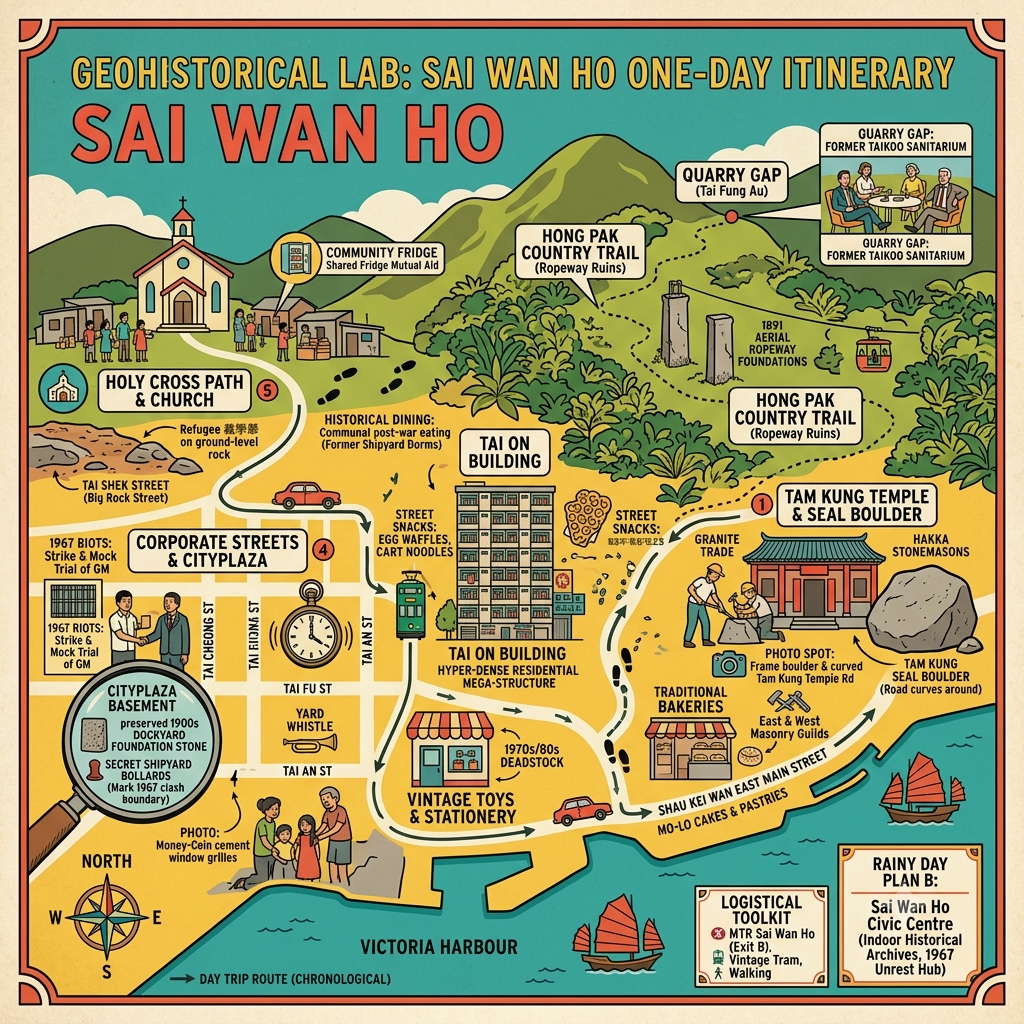
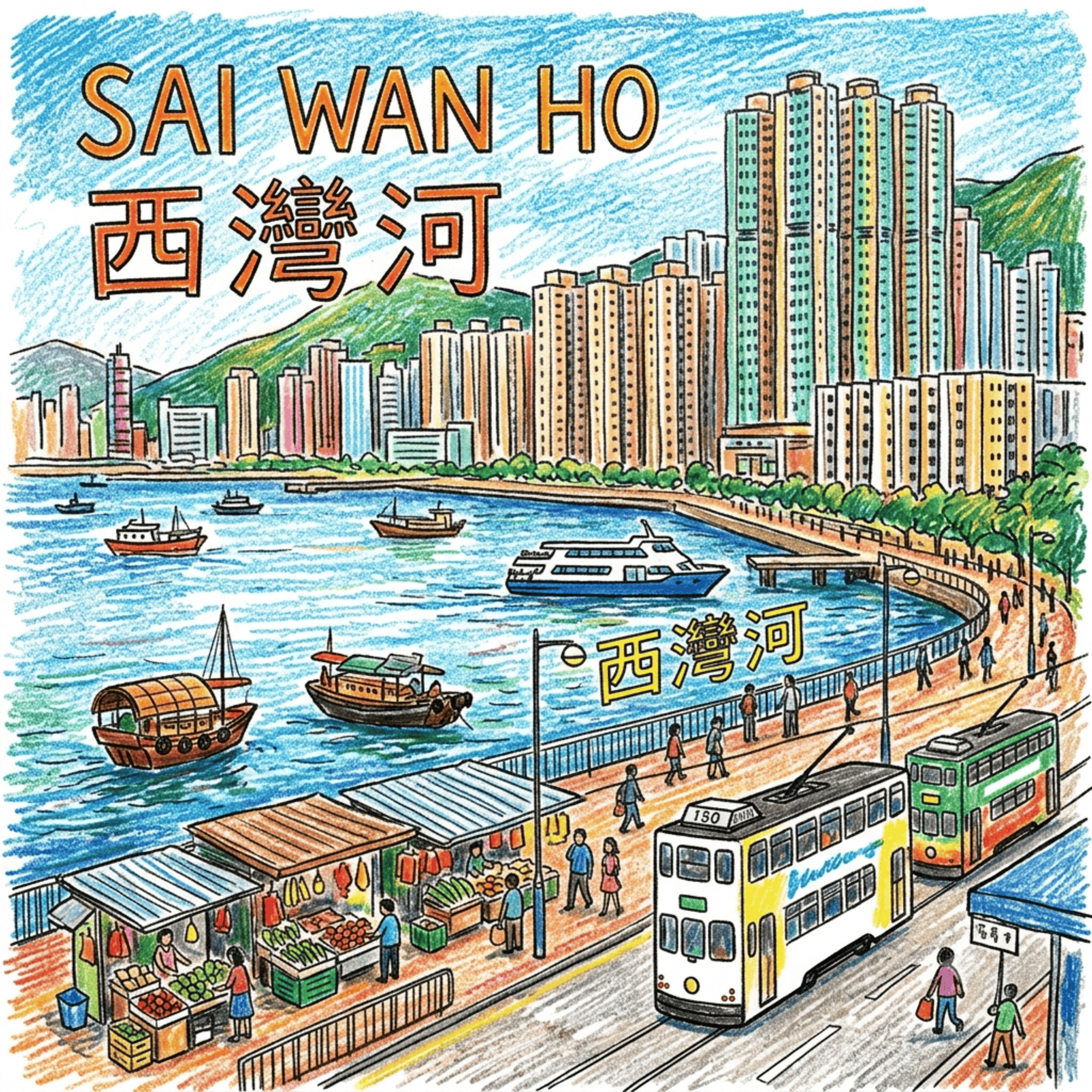
This is a historical travel story and walking guide to Sai Wan Ho, a vibrant neighborhood on the eastern shore of Hong Kong Island. Through five hidden stories, it traces the historical remnants of the old Taikoo Dockyard border, fishermen’s typhoon shelters, early ice factories, and postwar squatter heritage like Holy Cross Village. This guide offers a fresh perspective on how a once-isolated coastal cape transformed through massive reclamation into a resilient hub of local life and cinematic history.
 Lawrence
To the casual commuter, Sai Wan Ho is a landscape of high-density residential towers and a functional transit hub on Hong Kong’s Island Line. However, to the urban morphologist, this district represents a profound landscape experiment—a site where the rigid demands of heavy industry collided with the organic survival of migrant communities. Strategically positioned at the intersection of Quarry Bay’s industrial might and Shau Kei Wan’s traditional fishing heritage, Sai Wan Ho served as a nineteenth-century transitional zone. Here, the physical geography—the unyielding granite spine of the hills and the deep-water access of the harbor—dictated the social class and destiny of its inhabitants. For the traveler-as-observer, a walk through these streets is an exercise in "layered observation," revealing how a rugged terrain of labor evolved into a modern urban center.
Listen to the historical stories told in detail (For subscribers only)
The Hakka Stonemasons and the Power of the Seal
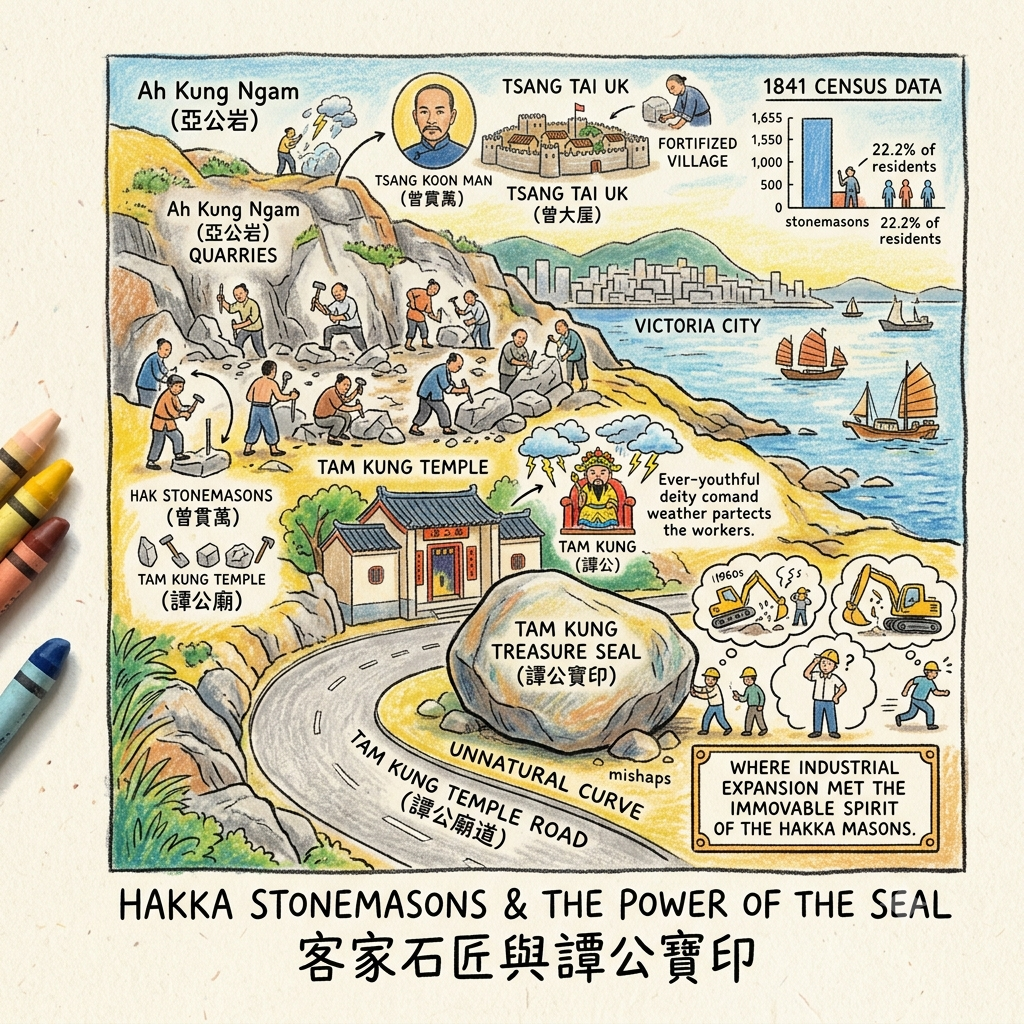
The literal foundations of Victoria City were forged in the quarries of Ah Kung Ngam. In the mid-nineteenth century, the rhythmic, metallic clinking of chisels against the island’s granite spine echoed across the eastern coastline as Hakka stonecutters extracted the high-quality minerals required for the colony’s nascent infrastructure. These laborers, primarily from Mei Zhou, were not merely transient workers but a highly organized technical community led by figures like Tsang Koon Man, whose wealth from the granite trade eventually built the famed "Tsang Tai Uk" fortified village.
The sheer scale of this industry is reflected in the early data of the colony:
"According to the 1841 census, out of a total population of 7,450 in Hong Kong, there were 1,655 stonemasons—accounting for nearly 22.2% of the residents. By 1848, in the Shau Kei Wan and Ah Kung Ngam area, stonemasons represented a staggering 78.1% of the population."
This high-risk labor required a powerful social glue, provided by the "East House" (employers) and "West House" (workers) guilds, and a shared spiritual resilience in the Tam Kung faith. Transplanted from Huizhou, Tam Kung—the "ever-youthful" deity capable of commanding the weather—provided protection for men facing the constant threat of blasting accidents. A physical sentinel of this era remains in the "Tam Kung Treasure Seal," a massive boulder in front of the Tam Kung Temple. During 1960s reclamation efforts, the stone allegedly caused construction mishaps until the government relented, diverting the road around it. This boulder stands as a testament to where industrial expansion met the immovable spirit of the Hakka masons.
The Sky-High Hospital: A Victorian Experiment in Verticality
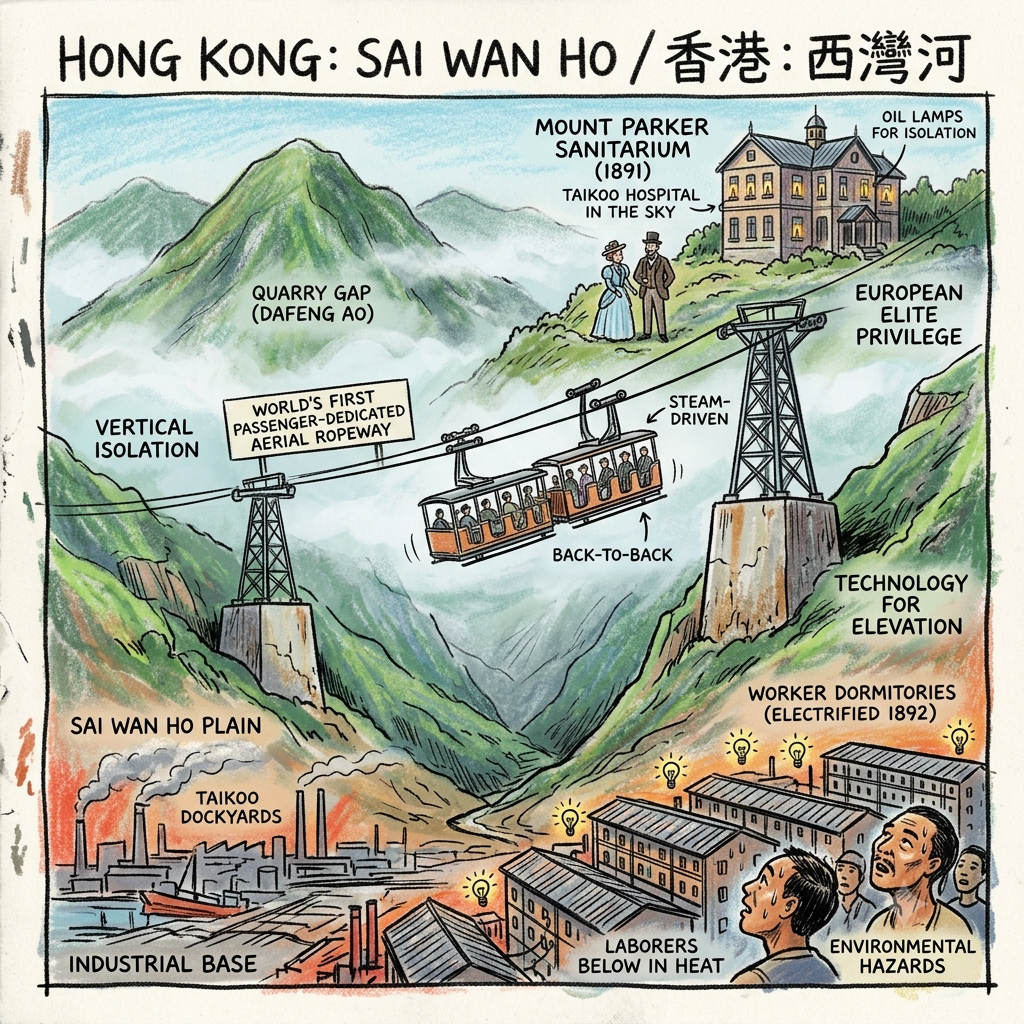
As the quarries hummed below, a different experiment in "medical colonialism" was unfolding on the peaks of Mount Parker. In 1891, the Taikoo company constructed the Mount Parker Sanitarium at Quarry Gap (Dafeng Ao), 300 meters above sea level. In an era ravaged by plague and cholera, high-altitude air was prized as a prophylactic, reserved exclusively for the European elite. To bridge the gap between the sweltering dockyards and this mountain refuge, the world’s first passenger-dedicated aerial ropeway was built.
This 2.3-kilometer steam-driven system served as a stark symbol of social stratification. While the managers glided through the cool mountain mist in open-air cars, the laborers remained in the heat below. Ironically, while the workers’ dormitories in the valley were electrified by 1892, the mountain sanitarium relied on oil lamps for four decades to maintain a sense of rustic "purity" and isolation. Today, hikers on the Hong Pak Country Trail can still find the weathered concrete plinths that once supported the ropeway’s steel towers—ruins that prompt the observer to recognize how technology was once used to physically elevate one class above the environmental hazards of the industrial base.
The Red Brick Order: Living in a Company Town
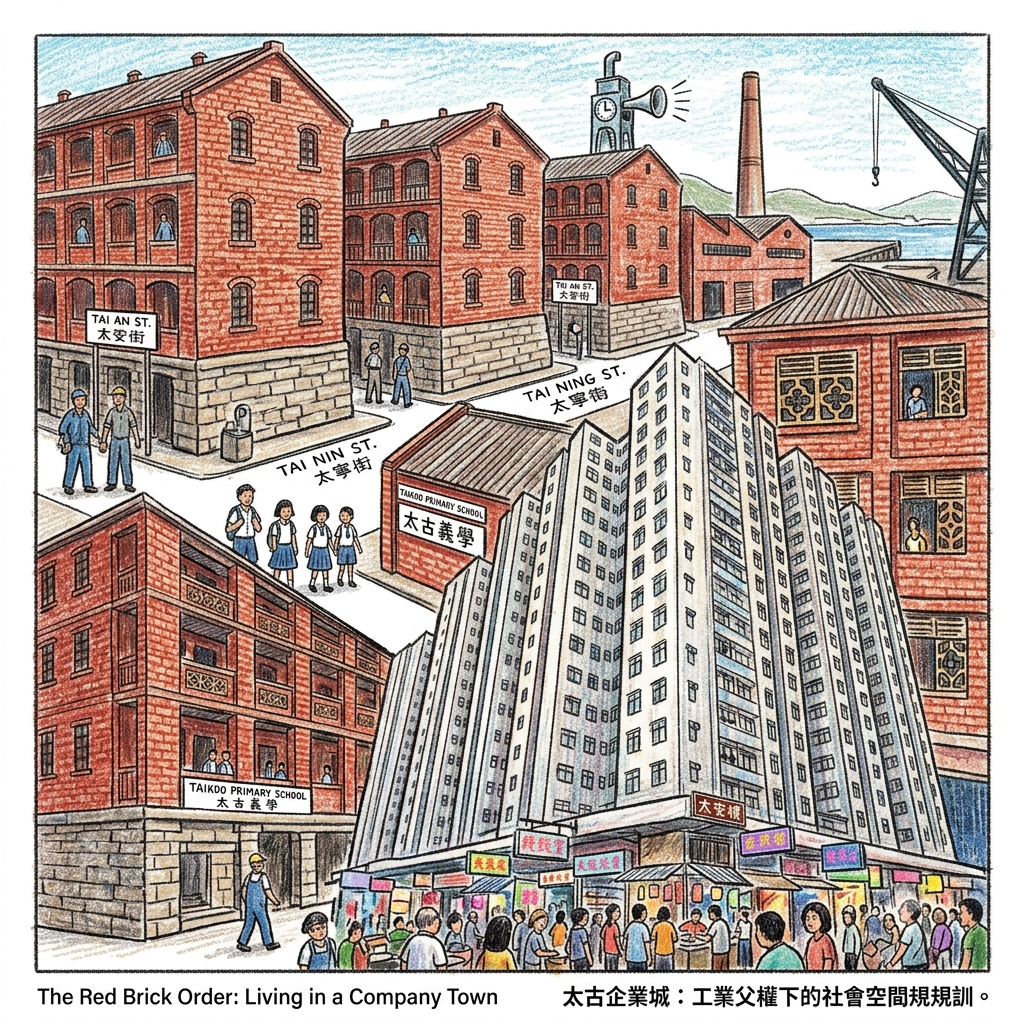
While the managers sought the heights, the life of the laborer was dictated by the gravity of the dockyard floor. By 1907, the completion of the Taikoo Dockyard transformed Sai Wan Ho into a "Company Town." This was a model of industrial paternalism where the Swire Group (Taikoo) controlled the entire social fabric. The "Tai" name was physically carved into the urban landscape through street names like Tai An, Tai Ning, and Tai Hong.
The shipyard's whistle governed the biological and social clocks of the residents. At 7:50 AM, the first whistle summoned thousands; at 8:00 AM, the gates closed. This created a "state within a state," where the company provided for the worker from cradle to grave.
Facilities of the Taikoo Company Town:
- Red Brick Housing: High-density, four-story dormitories built on massive stone plinths.
- Taikoo Primary School: Dedicated education for the children of shipyard employees.
- Taikoo Hospital: Free medical care to ensure a healthy, productive labor force.
- Themed Leisure: An exclusive employee cinema and an open-air swimming pool.
This absolute corporate order would eventually fracture under the political pressures of the 1960s, but its footprint remains. The modern Tai On Building (1968) stands precisely on the former site of the first, second, and third street red-brick dormitories, a literal layering of residential history.
The 1967 Riots: Where Ideology Met the Dockyard
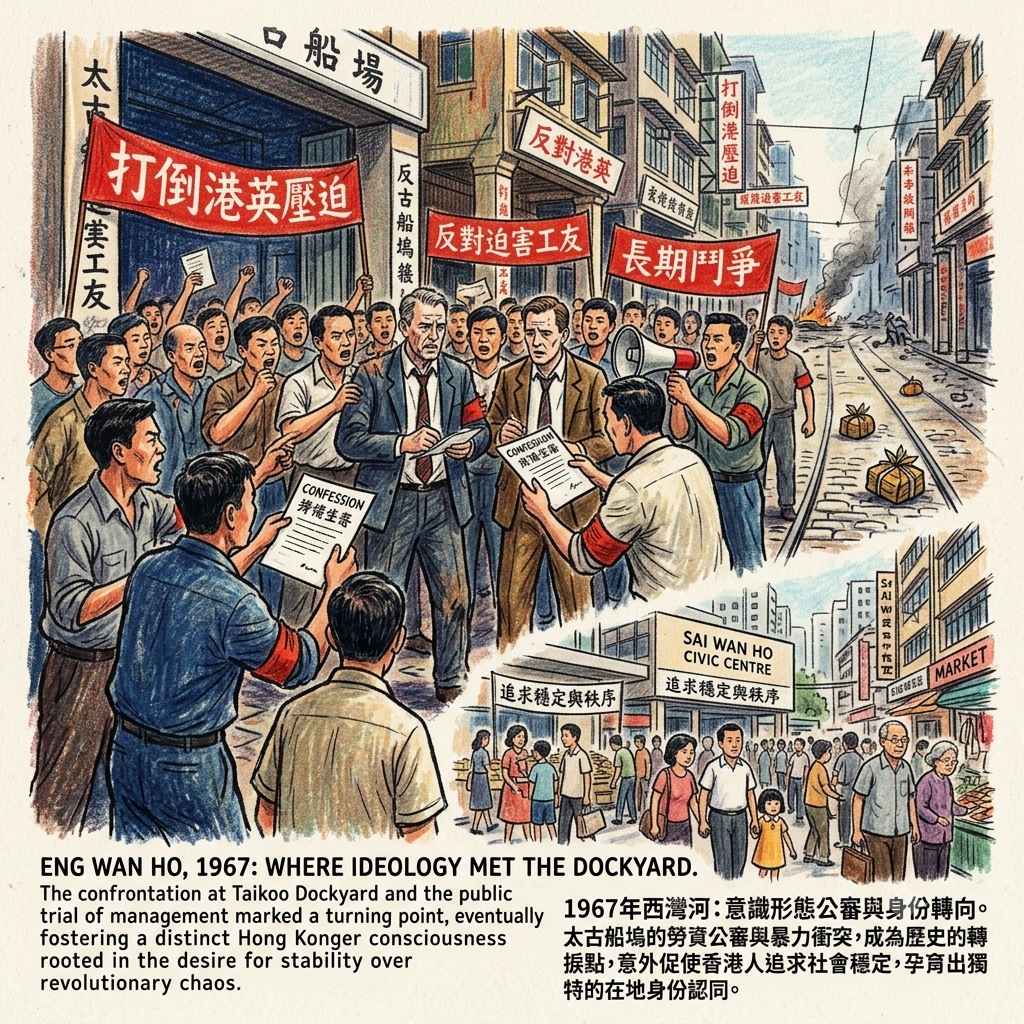
The paternalistic bond between the "Company" and the "Town" broke during the 1967 Riots. As the Cold War reached a boiling point, dockyard workers became the vanguard of a leftist movement. Sai Wan Ho was transformed into a theater of ideological warfare, reaching a peak on June 6, 1967, when workers detained the dockyard management for a "public trial."
"Management, including Manager James Cassels and Manager Duncan, were held within the plant for an eight-hour confrontation, during which they were pressured to sign 'confessions' admitting to the persecution of workers."
This internal conflict forced a fundamental shift in local identity. As the violence escalated—specifically the "soil-made pineapples" (indiscriminate roadside bombings) that began to claim civilian lives—the public alienated the movement. Residents began to choose local stability over external revolutionary ideology. This era marked the birth of a distinct "Hong Konger" consciousness, rooted in a desire for a stable, rule-based society rather than the chaos of the Cultural Revolution.
Holy Cross Path: The Geography of Grace and Resilience
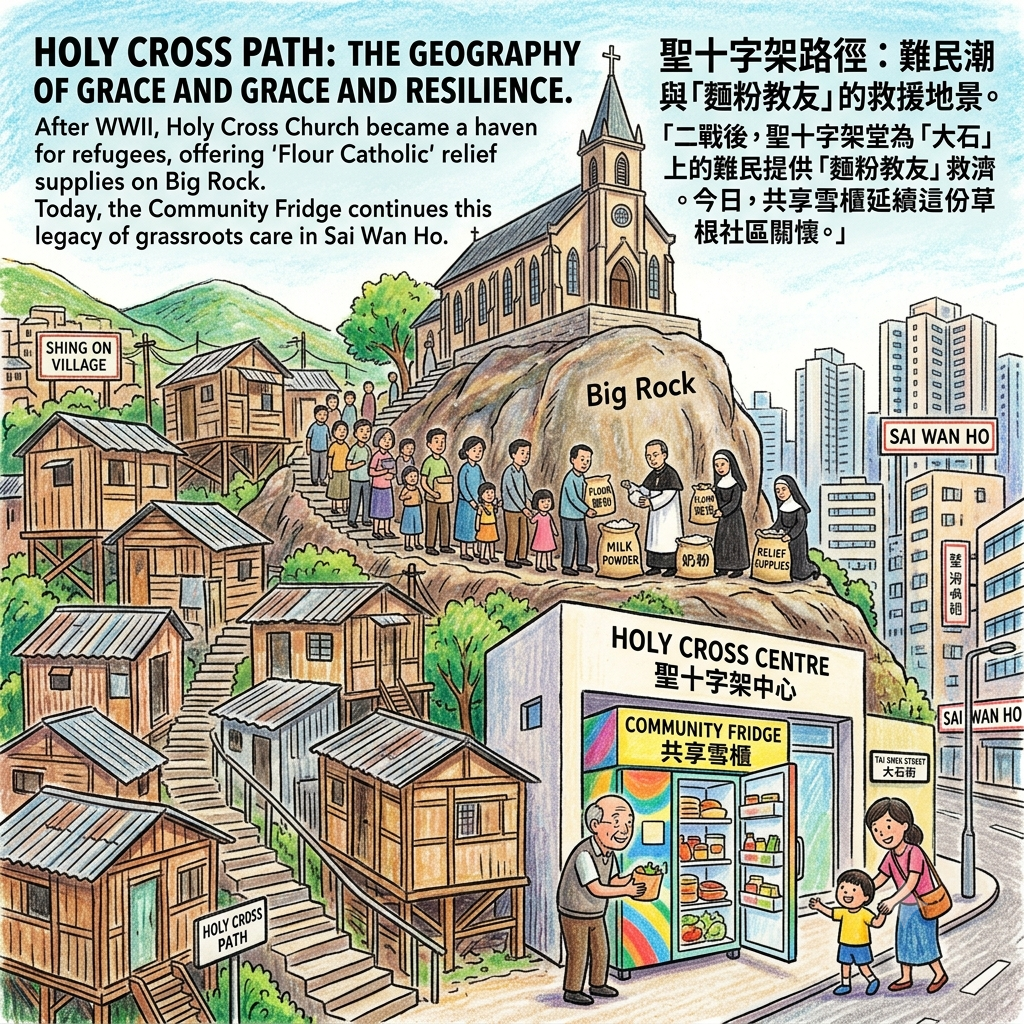
While the dockyards represented corporate order, the hillsides of Sai Wan Ho represented the chaotic resilience of post-war refugees. Clusters of squatter huts sprouted in villages like Shing On and Holy Cross Path. In the absence of a colonial social safety net, the Holy Cross Church—built on "Big Rock" (the namesake of modern Tai Shek Street)—filled the vacuum.
The church became the center of the "Flour Catholic" phenomenon, where refugees received relief supplies like flour and milk powder. Yet, this was more than a transaction; it was the foundation of a mutual-aid community.
Former Squatter Village | Social Characteristic | Modern Site |
Shing On Village | Stone houses for the relatively established | Hing Tung Estate |
Holy Cross Path Village | Timber huts centered around the church | Holy Cross Centre |
Kiau Man Village (教民村) | High-density Catholic migrant community | Public Housing Estates |
Au Pui Lung Village | Harsh conditions on steep, precarious slopes | Yiu Tung Estate |
The legacy of this era survives in the "Community Fridge" at the Holy Cross Centre. It is a direct descendant of the 1950s flour distribution—a modern iteration of grassroots urban care.
The Hidden Gem & Urban Reflection
For those seeking the spirit of old Sai Wan Ho, the ground floor of the Tai On Building remains the district’s "hidden gem." Though the original red-brick dormitories are gone, the building’s dense, communal marketplace maintains the vibrant, chaotic energy of the old collective life.
To understand a city, one must look beyond the glass and steel of the present. Sai Wan Ho teaches us that the urban landscape is a living record of industrial ambition, political struggle, and human resilience. Whether it is a street name, a moss-covered concrete plinth in the woods, or a boulder diverted by faith, every layer is a sentinel of a forgotten era. To understand the present, one must walk the ghosts of the past.
Subscribe to Historical Travel Stories for more deep-mapping of the world's urban landscapes.
Traveler’s Appendix: Wayfinding
- Arrival: MTR Sai Wan Ho Station, Exit B.
- The Recommended Walk: Begin at Tam Kung Temple Road to observe the "Treasure Seal" boulder. Proceed through the markets of Tai An Street toward the hills, then ascend to the Hong Pak Country Trail to locate the aerial ropeway ruins.
- Historical Proximity: For those wishing to stay within the historical Taikoo footprint, EAST Hong Kong in nearby Quarry Bay offers a vantage point over the district’s industrial evolution.
Q & A
Tell me about the world's first passenger ropeway system.
The world's first aerial ropeway system specifically designed for passenger transport was the Mount Parker Ropeway (柏架山吊車), constructed in 1891 in Hong Kong.
This system was an extraordinary engineering feat for its time, serving as a vital link for the Taikoo Sanitarium located at Quarry Gap (Mount Parker). Here are the key details of this historical system:
Purpose and Construction
- Medical Necessity: In the late 19th century, Hong Kong suffered from severe tropical diseases like plague and cholera. Western medical experts believed the cooler air at higher altitudes could help recovery, leading the Swire Group to build a sanitarium at an elevation of 300 meters.
- The System: To avoid the arduous hike up the mountain, Swire commissioned the London-based Bullivant & Company to build a 2.3-kilometer ropeway for £5,000.
- Technical Specifications: It was a steam-powered system using a winch. The steel towers were spaced up to 200 yards apart, and the two open-air cars—each seating six people back-to-back—hung as high as 200 feet above the ground at their steepest point.
Social and Industrial Context
- Class and Racial Segregation: While the ropeway was a technological marvel, it was a tool of social segregation. It was reserved exclusively for senior European staff and their families, while the local Chinese laborers remained in crowded quarters at sea level.
- Operating Hours: The ropeway ran from 6:00 AM until midnight, providing a "highway in the sky" for management to escape the heat and disease of the industrial waterfront.
Decline and Current Remains
- Obsolescence: The system and the sanitarium were dismantled in 1932. This was due to several factors: high maintenance costs, the emergence of early antibiotics, and the invention of indoor ventilation (like electric fans) which reduced the need for high-altitude retreats.
- Modern Legacy: Today, hikers on the Hong Pak Country Trail (康柏郊遊徑) can still find the concrete plinths and stone bases that once supported the steel cables. These ruins are often mistaken for military remains but are actually the last vestiges of this pioneering industrial experiment.
This ropeway remains a significant example of how Sai Wan Ho and Quarry Bay served as a global testing ground for cutting-edge industrial technology during the late 19th century.
Where can I find the remains of the ropeway today?
You can find the remains of the Mount Parker Ropeway today by hiking the Hong Pak Country Trail (康柏郊遊徑), which is accessible from Sai Wan Ho.
According to the sources, the following traces of this 19th-century engineering marvel and its associated sanitarium are still visible:
- Concrete Plinths: Along the trail, you can still find the weathered concrete foundations and stone bases that once supported the massive steel towers for the ropeway's cables. These ruins are sometimes overgrown with vegetation and are often mistaken for military remains by hikers.
- Quarry Gap (Mount Parker): At the area formerly known as "Sanitarium Gap" (now Quarry Gap or Tai Feng Au / 大風坳), you can look for the remnants of steps and building foundations on the hillsides. While the original Taikoo Sanitarium building was dismantled in 1932 and replaced by modern pavilions and BBQ facilities, these subtle ground-level ruins still mark the site's outline.
Walking this trail allows visitors to experience the "vertical" history of the area, moving from the industrial coastline of Sai Wan Ho up to the high-altitude retreat where the world's first passenger ropeway once operated.
Reference and Further reading
- Sai Wan Ho - accessed May 20, 2026,
- 西湾河- accessed May 20, 2026,
- 【實在尋常西灣河】西灣河前世之太古舊事-社會- 明周文化, accessed May 20, 2026,
- Report on The History of Quarrying in Hong Kong 1840 - 1940, accessed May 20, 2026,
- 筲箕灣譚公廟- 華人廟宇委員會, accessed May 20, 2026,
- Hong Kong's Industrial History, Part IV: The Rock That Built Hong Kong - ZOLIMA CITYMAG, accessed May 20, 2026,
- (PDF) The Exportation of Hong Kong's Quality Granite in the 19th and 20th Centuries: A Historical Re-Evaluation - ResearchGate, accessed May 20, 2026,
- 筲箕灣歷史古蹟之旅, accessed May 20, 2026,
- 2023筲箕灣海濱廣場/一級歷史建築譚公廟+天后廟(詳細中文字幕介紹) Tam Kung Temple & Tin Hau Temple of Shau Kei Wan - YouTube, accessed May 20, 2026,
- History:The Story of Ming Wah Dai Ha Starts from Shau Kei Wan, accessed May 20, 2026,
- 筲箕灣譚公廟- accessed May 20, 2026,
- 西灣河 - 香港巴士大典- Fandom, accessed May 20, 2026,
- 筲箕灣譚公廟 - 香港自遊樂在18區, accessed May 20, 2026,
- 【實在尋常西灣河】西灣河前世之寮屋歲月-社會- 明周文化, accessed May 20, 2026,
- The Mount Parker Ropeway - The First in Hong Kong — J3 Private Tours Hong Kong | Authentic Experiences Since 2010, accessed May 20, 2026,
- 太古歷史檔案部精選的六個故事(下) - Swire Pacific, accessed May 20, 2026,
- Mount Parker Cable Car - accessed May 20, 2026,
- The Aerial Ropeway (1891-1932) and Sanitarium (1893-1932) of the Taikoo Sugar Refinery - The Industrial History of Hong Kong Group, accessed May 20, 2026,
- Taikoo Ropeway [1891-1932] - Gwulo, accessed May 20, 2026,
- Hong Kong from Mount Parker, with cable car | Historical Photographs of China, accessed May 20, 2026,
- 六七暴动- accessed May 20, 2026,
- 六七暴動- accessed May 20, 2026,
- 從被捕示威者的組成研究六七暴動的示威活動 - ArcGIS StoryMaps, accessed May 20, 2026,
- 「六七暴動」與「香港人」身份意識的萌生 - The Chinese University ..., accessed May 20, 2026,
- 太古城的前身是太古船塢,二戰时候它是戰火轟炸的主要目標。 accessed May 20, 2026,
- 聖十字架堂| 天主教香港教區- 歷史建築探索, accessed May 20, 2026,
- 堂區簡史- 聖十字架堂, accessed May 20, 2026,
- 聖十字架堂設共享雪櫃施與受皆享喜樂平安 - 公教報, accessed May 20, 2026,
- 聖十字架堂-, accessed May 20, 2026,
- 最新消息- 聖十字架堂, accessed May 20, 2026,
- Meaning and History of Sai Wan Ho, accessed May 20, 2026
Lawrence Lawrence
 Lawrence