
Commercial Osaka 商業大阪
Discover how Osaka’s merchant districts like Dotonbori, Namba, and Shinsaibashi shaped Japan’s economic and cultural history through centuries of trade, entertainment, and urban evolution.
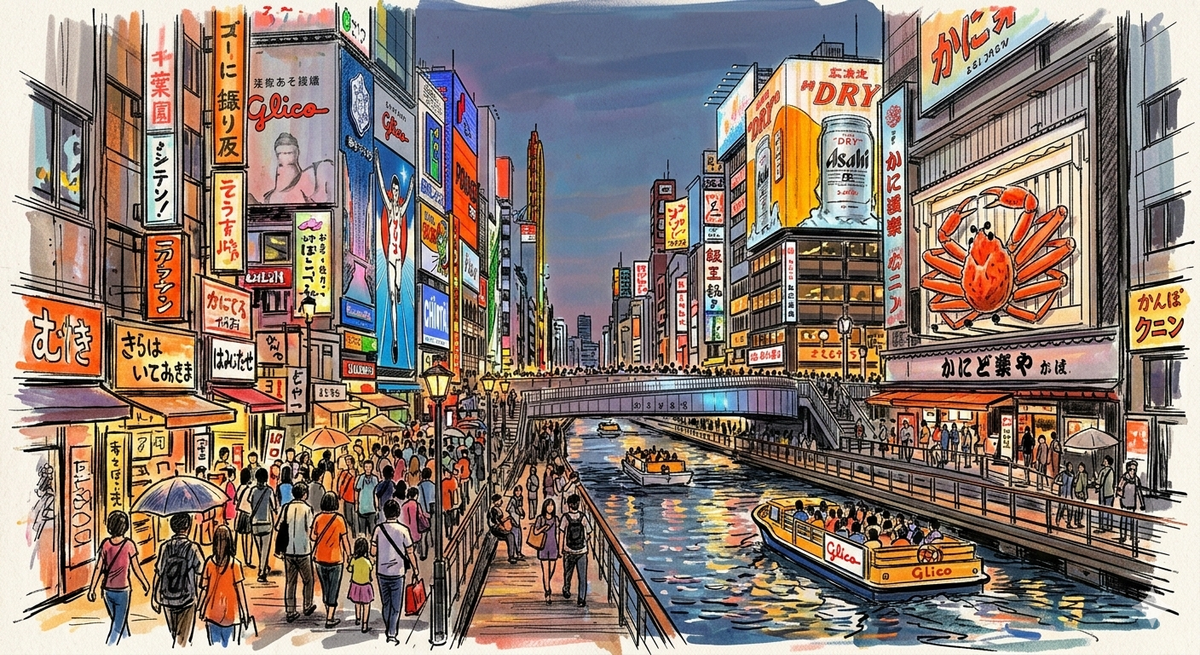
A Deep Historical Travel Guide to Trade, Markets, Capital and the DNA of Osaka’s Business Culture
Introduction: The City That Sold Japan to Itself
Osaka is often described as Japan’s “kitchen.”
But that nickname understates its real historical role.
Osaka was not merely a place where goods passed through.
It was where:
- Prices were set
- Futures were invented
- Merchant ethics were refined
- Distribution systems were perfected
If Feudal Osaka was about samurai power, and Working Osaka was about labor, then Commercial Osaka was about capital — and control through trade.
This pillar explores how Osaka became Japan’s economic brain long before Tokyo centralized political authority.
I. The Birth of “Tenka no Daidokoro” — The Nation’s Kitchen
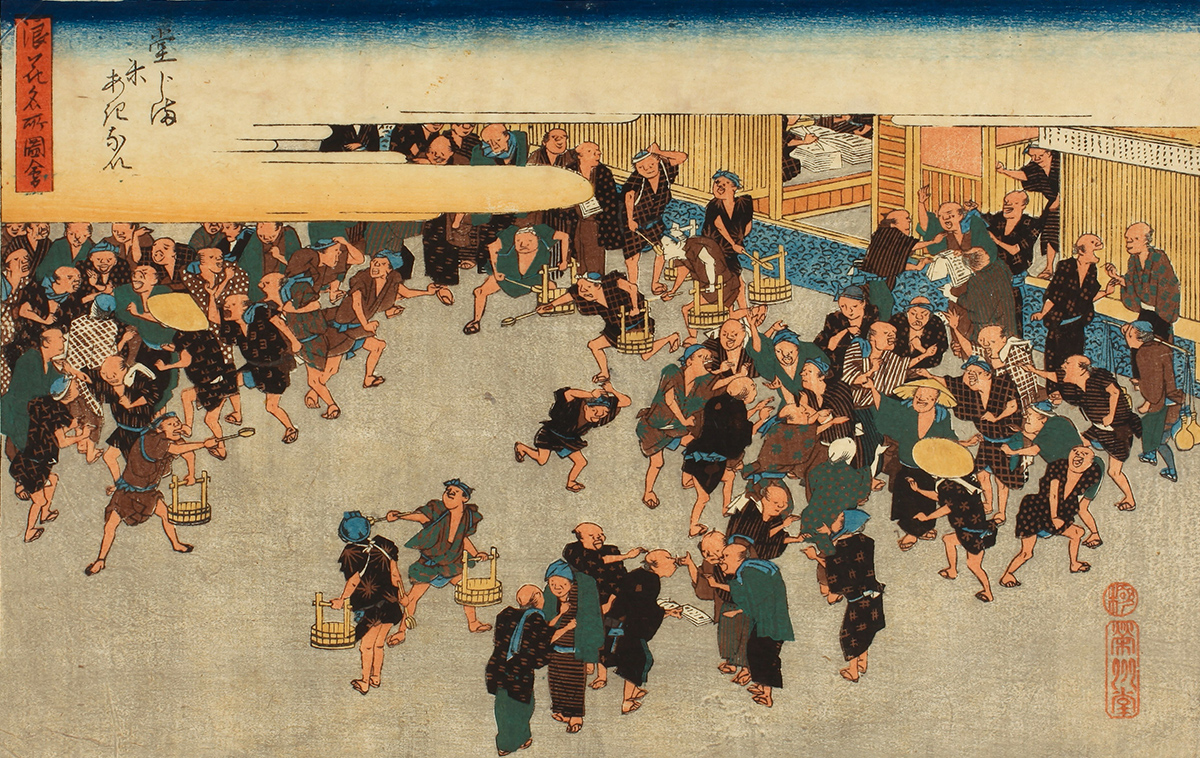
During the Edo period, Osaka earned the title:
天下の台所 (Tenka no Daidokoro) — The Nation’s Kitchen
This was not poetic branding.

It was structural reality.
Rice — the tax base of the Tokugawa regime — flowed into Osaka’s warehouses. From there:
- Daimyo converted rice into currency
- Merchants speculated on price fluctuations
- Urban markets stabilized national supply
At the center stood the legendary Dojima Rice Exchange.

It pioneered early forms of futures trading — arguably one of the world’s earliest organized commodity exchanges.
Osaka did not just trade goods.
It traded time and risk.

II. Canal City: Infrastructure as Commerce
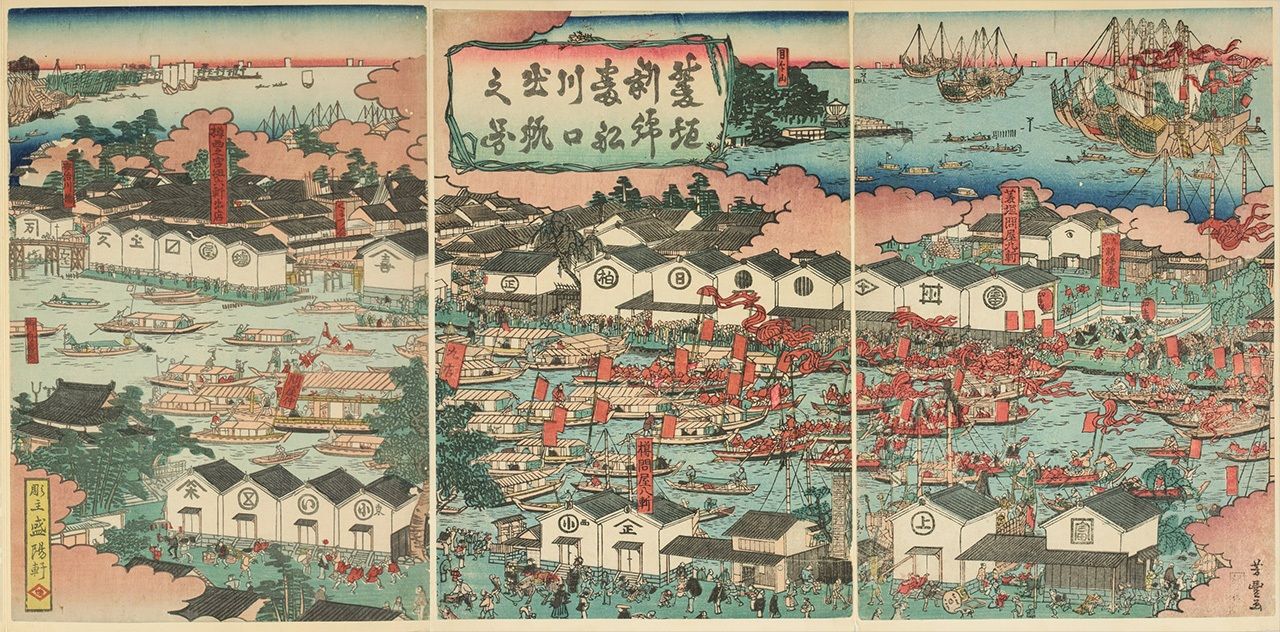
Before railways, Osaka’s arteries were waterways.

Canals connected:
- Rice warehouses
- Merchant houses
- Port terminals
- Financial districts

Districts like Dotonbori and Kitahama evolved as commercial nodes.
Water infrastructure allowed Osaka to function as a logistics machine — centuries before modern supply chain theory.
Modern Osaka still follows these commercial geographies.
Subway lines often mirror old canal routes.
Urban planning grew from mercantile necessity.

III. Merchant Ethics: The Culture of Trust and Calculation
Commercial Osaka was not only about money.
It was about systems of trust.
Merchant families developed:
- Ledger-based accounting discipline
- Contract enforcement norms
- Reputation networks
- Intergenerational trade houses
Unlike samurai honor codes, merchant ethics emphasized:
- Reliability
- Negotiation
- Long-term relationships
- Practical results
This culture shaped Osaka’s modern corporate temperament — pragmatic, direct, performance-driven.
IV. Sakai: The Precursor to Commercial Autonomy
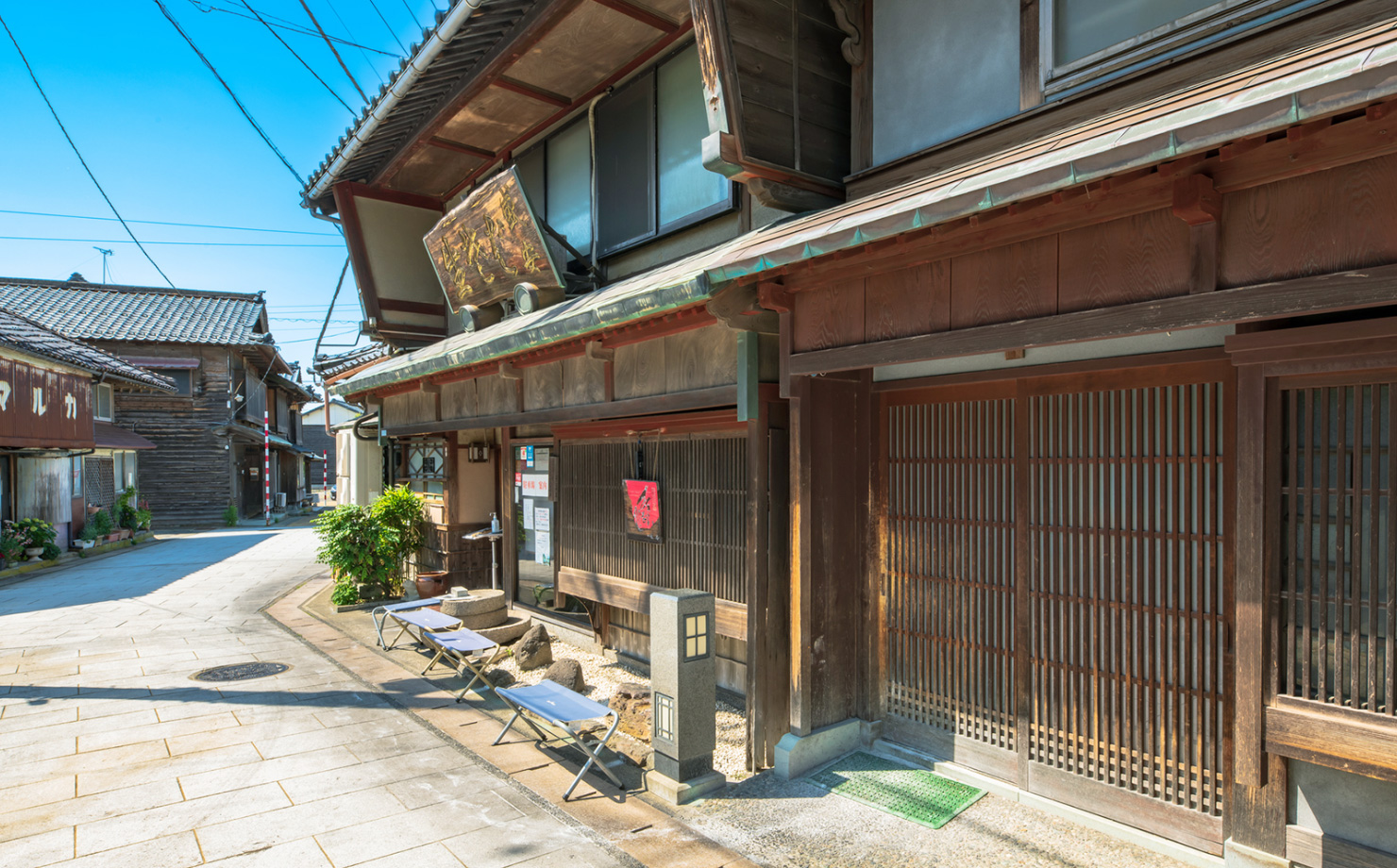
Before Osaka dominated trade, nearby Sakai pioneered commercial independence.
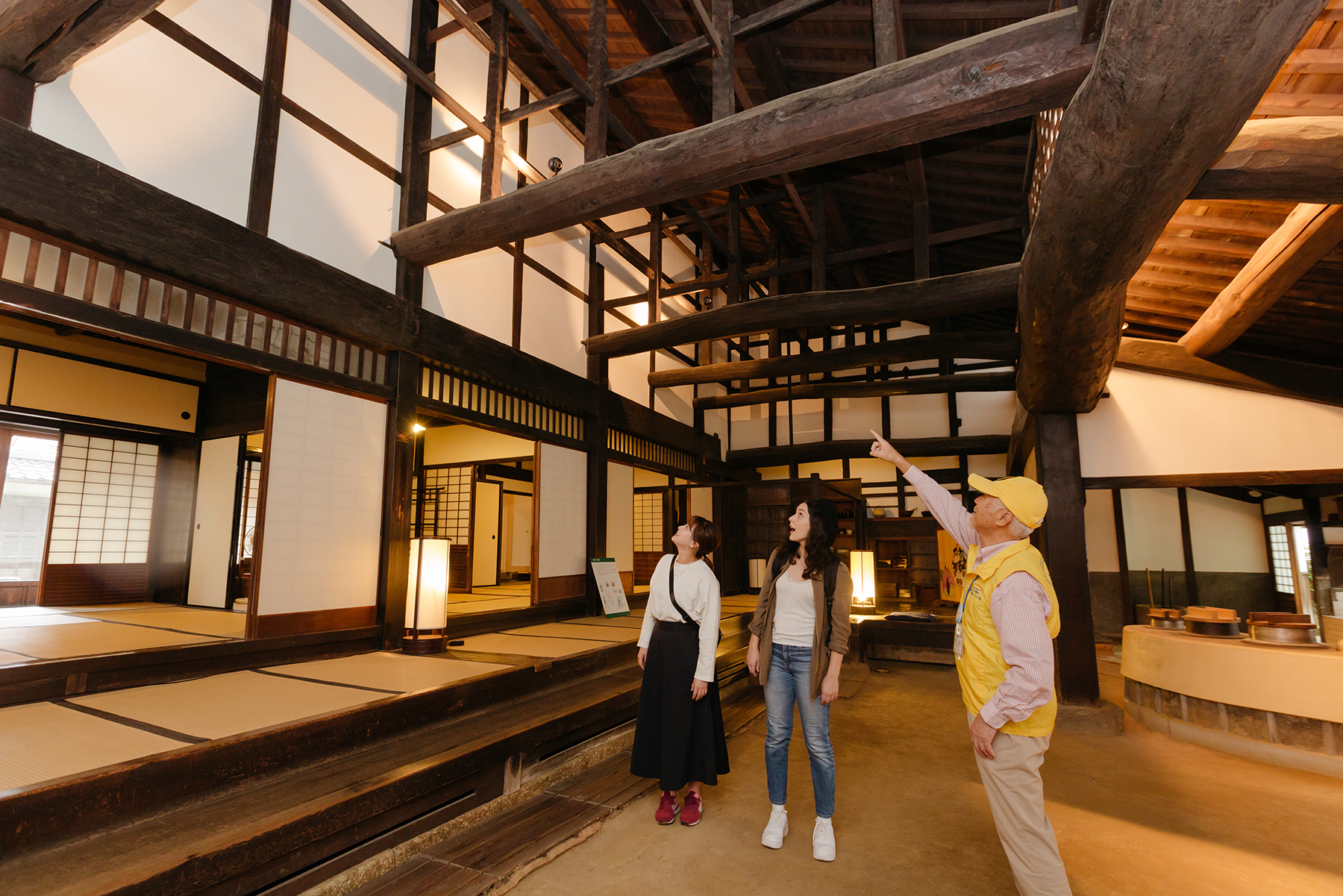
Sakai functioned almost like a merchant republic:
- Self-governed trade guilds
- International exchange with China and Portugal
- Early firearms import
- Tea ceremony patronage
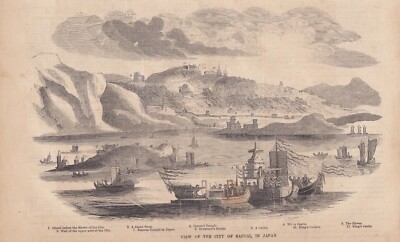
Its autonomy influenced Osaka’s commercial identity — less hierarchical than Edo (Tokyo), more civic-driven.

The spirit of Sakai infused Osaka’s later economic rise.
V. From Rice to Finance: Early Capital Markets
The Dojima Rice Exchange introduced sophisticated instruments:
- Standardized contracts
- Price signaling mechanisms
- Warehouse receipts
- Speculative trading
Some economic historians consider it a proto-stock exchange.
By the 18th century, Osaka merchants controlled significant liquidity.
Tokyo may have held political power, but Osaka held financial gravity.
The pattern persists in subtle ways even today.
VI. Modern Commercial Transformation

Modern commercial Osaka evolved into:
- Financial districts in Kitahama and Nakanoshima
- Retail powerhouses like Shinsaibashi
- Corporate headquarters zones in Umeda

The Osaka Stock Exchange (now integrated into Japan Exchange Group) symbolized continuity between Edo rice trading and modern financial markets.
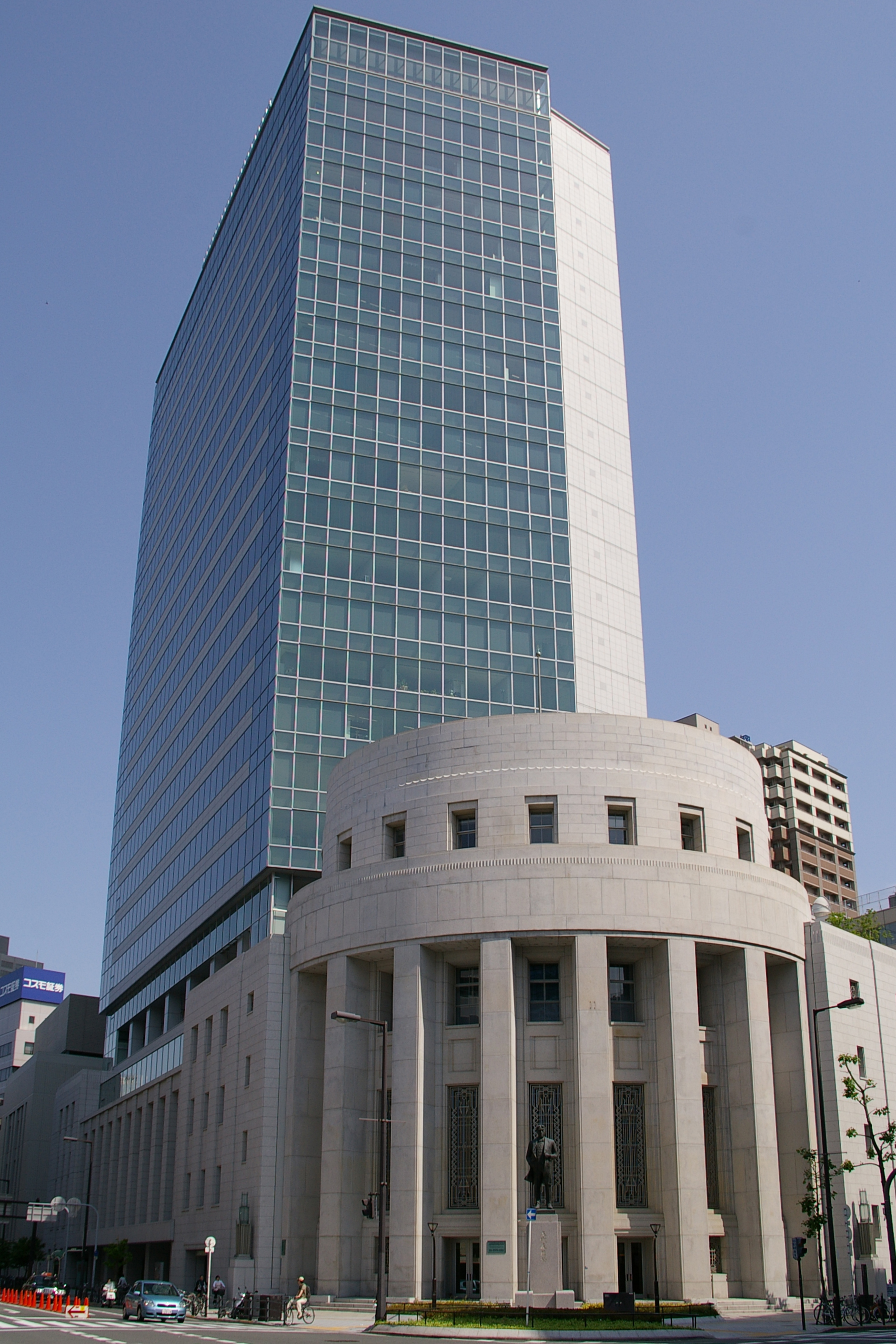
Osaka’s commercial identity did not disappear.
It modernized.

VII. Walking Commercial Osaka Today (Strategic Route)
To experience Commercial Osaka as a historical layer:
1. Kitahama
Former rice exchange district → modern financial core.
 Lawrence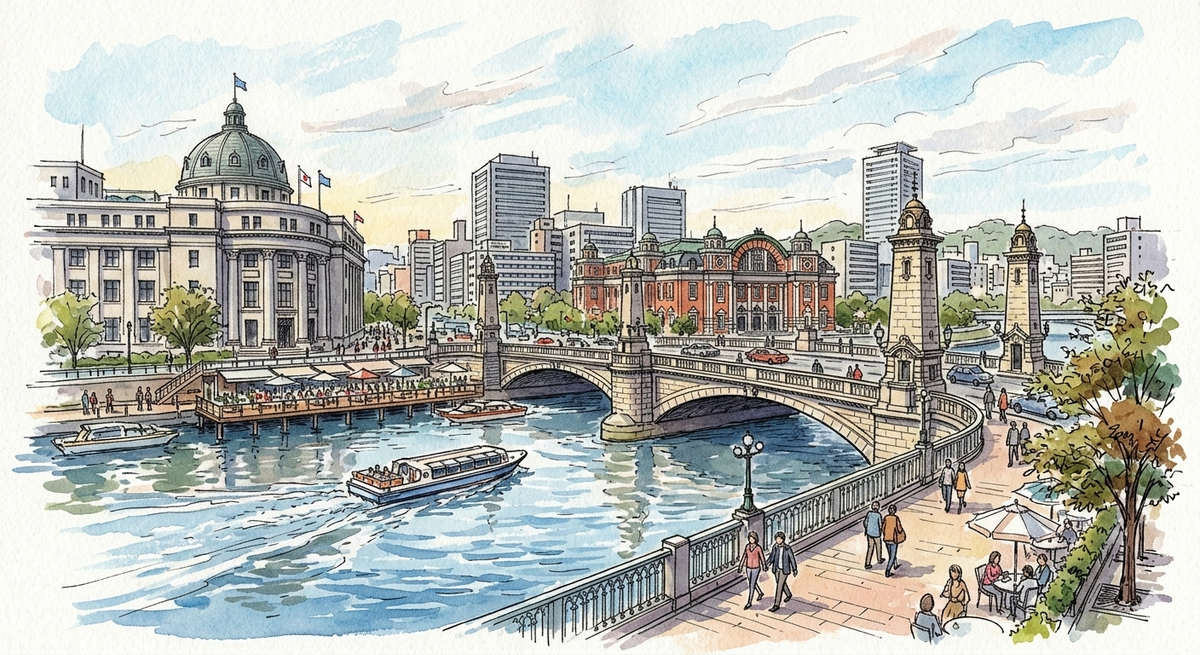
2. Nakanoshima
Corporate and banking transformation zone.
3. Dotonbori
Commercial theater — where trade meets spectacle.
 Lawrence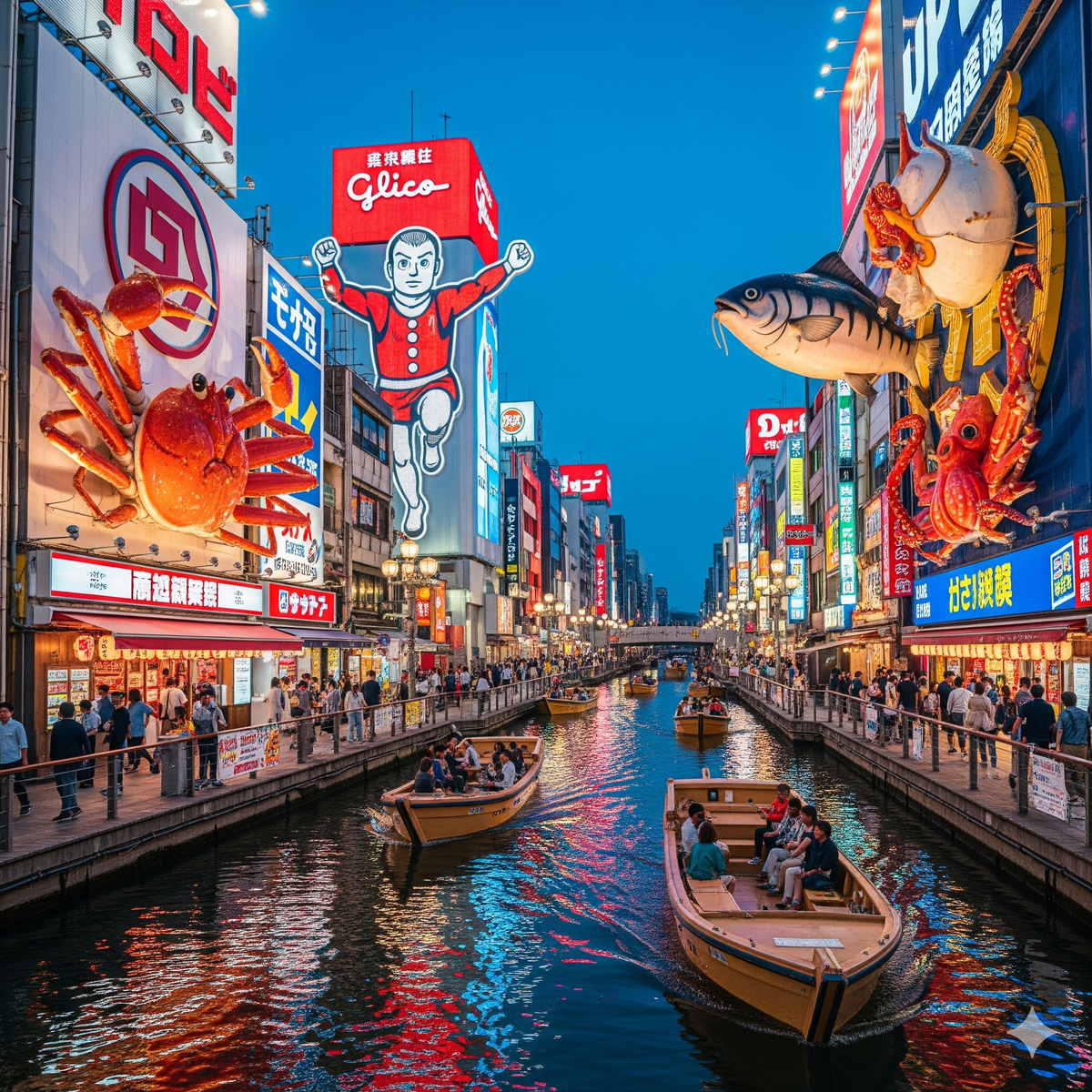
Legacy of food distribution networks.
 Lawrence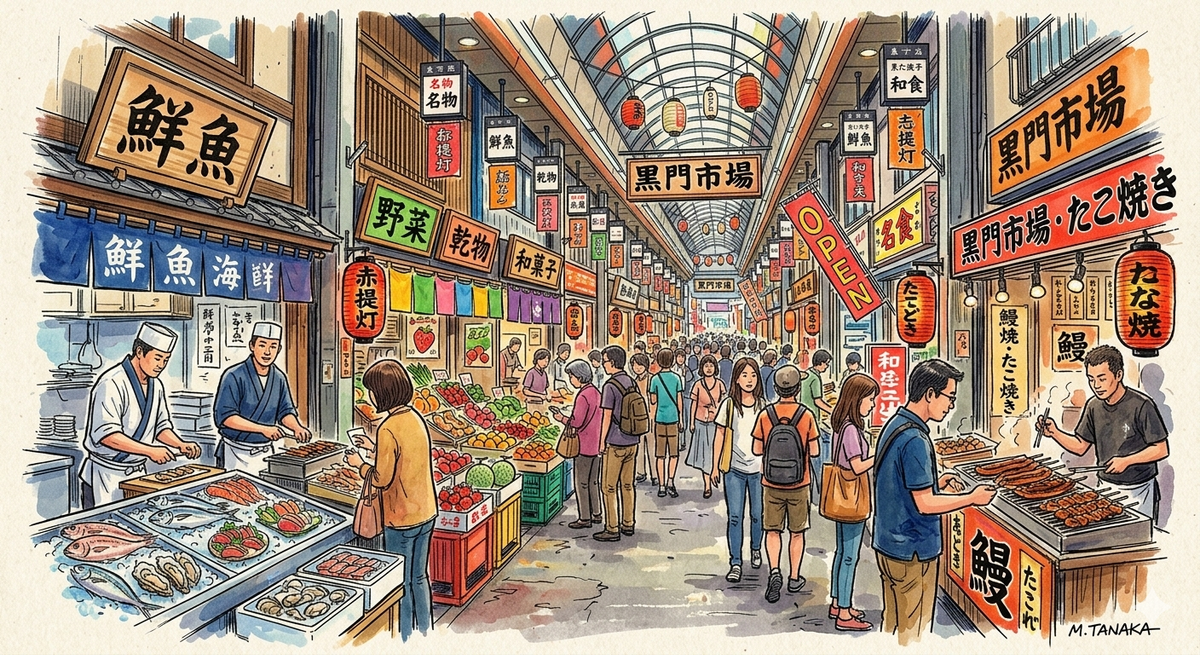
5. Sakai (Half-Day Trip)
Pre-modern merchant autonomy.
 Lawrence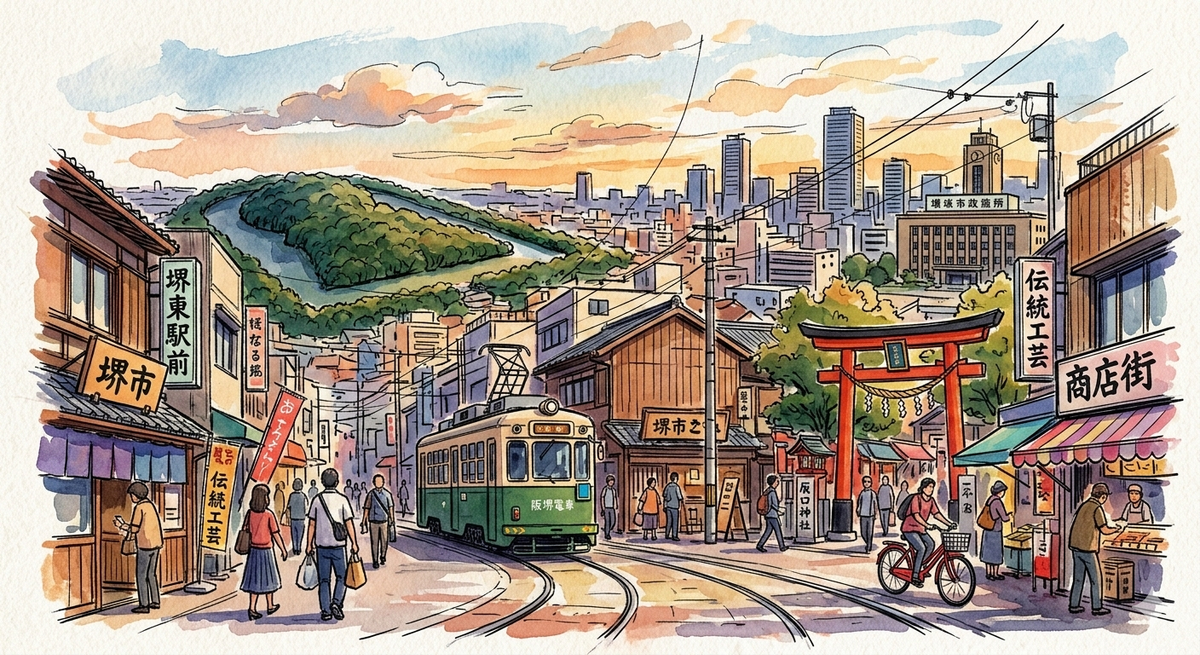
This route reveals economic continuity across four centuries.
VIII. Why Commercial Osaka Still Matters
Understanding Commercial Osaka explains:
- Why Osaka businesses value speed and pragmatism
- Why Kansai firms often differ culturally from Tokyo corporations
- Why entrepreneurship thrives in small and medium enterprises
- Why Osaka retains strong wholesale and distribution networks
Commercial DNA shapes civic personality.
It is not coincidence.
It is inheritance.
Conclusion: The City That Monetized a Nation
Osaka did not need to be capital.
It monetized the capital.
It converted rice to currency.
It converted waterways to logistics.
It converted trust into systems.
Commercial Osaka is not a background detail in Japanese history.
It is one of its structural foundations.
To walk Osaka today without seeing this layer is to miss the invisible architecture of its success.