Ngau Chi Wan Historical Walk – 5 Hidden Layers of a Fading Hong Kong Village
Explore Ngau Chi Wan, a 200-year-old Hong Kong village on the brink of redevelopment. This deep historical walking guide decodes five unique urban fragments—from ancient temples to revolutionary roots—offering an immersive route to backup a fading community's memory.
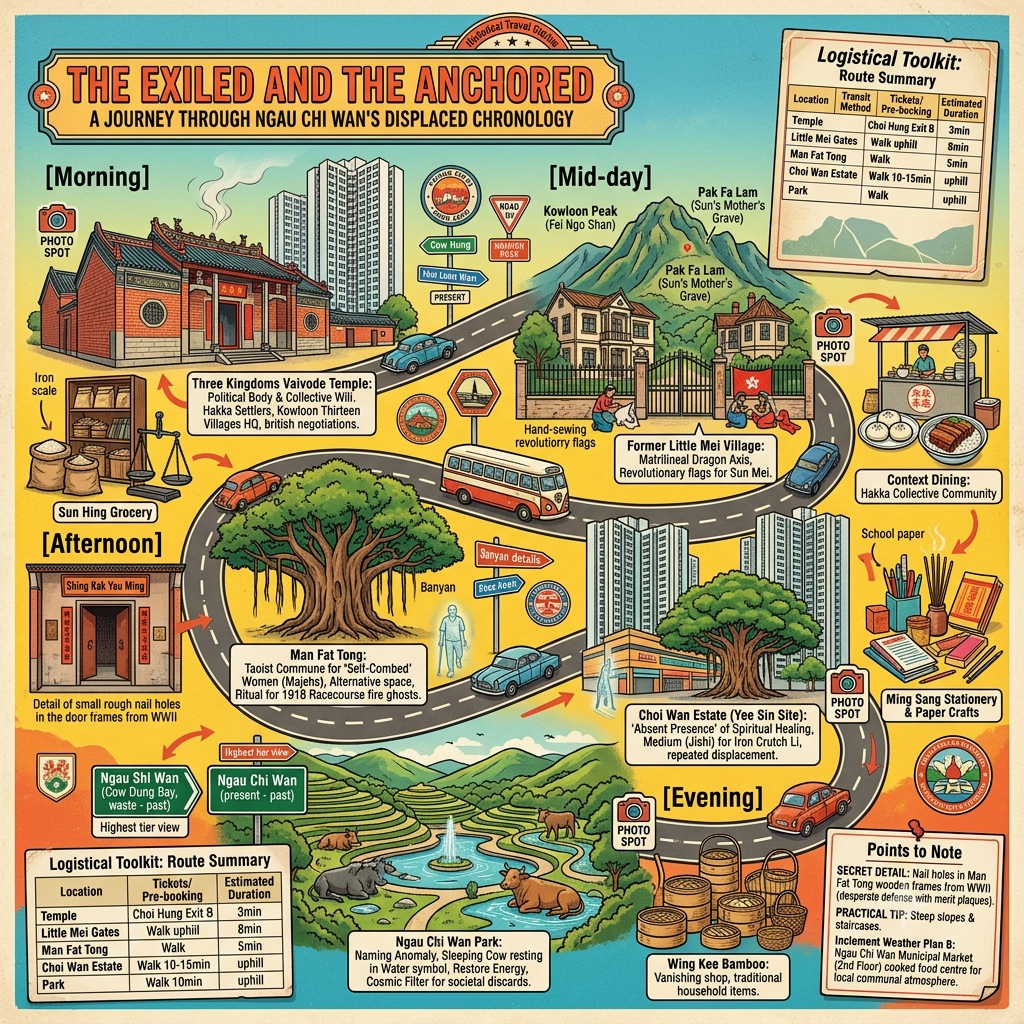
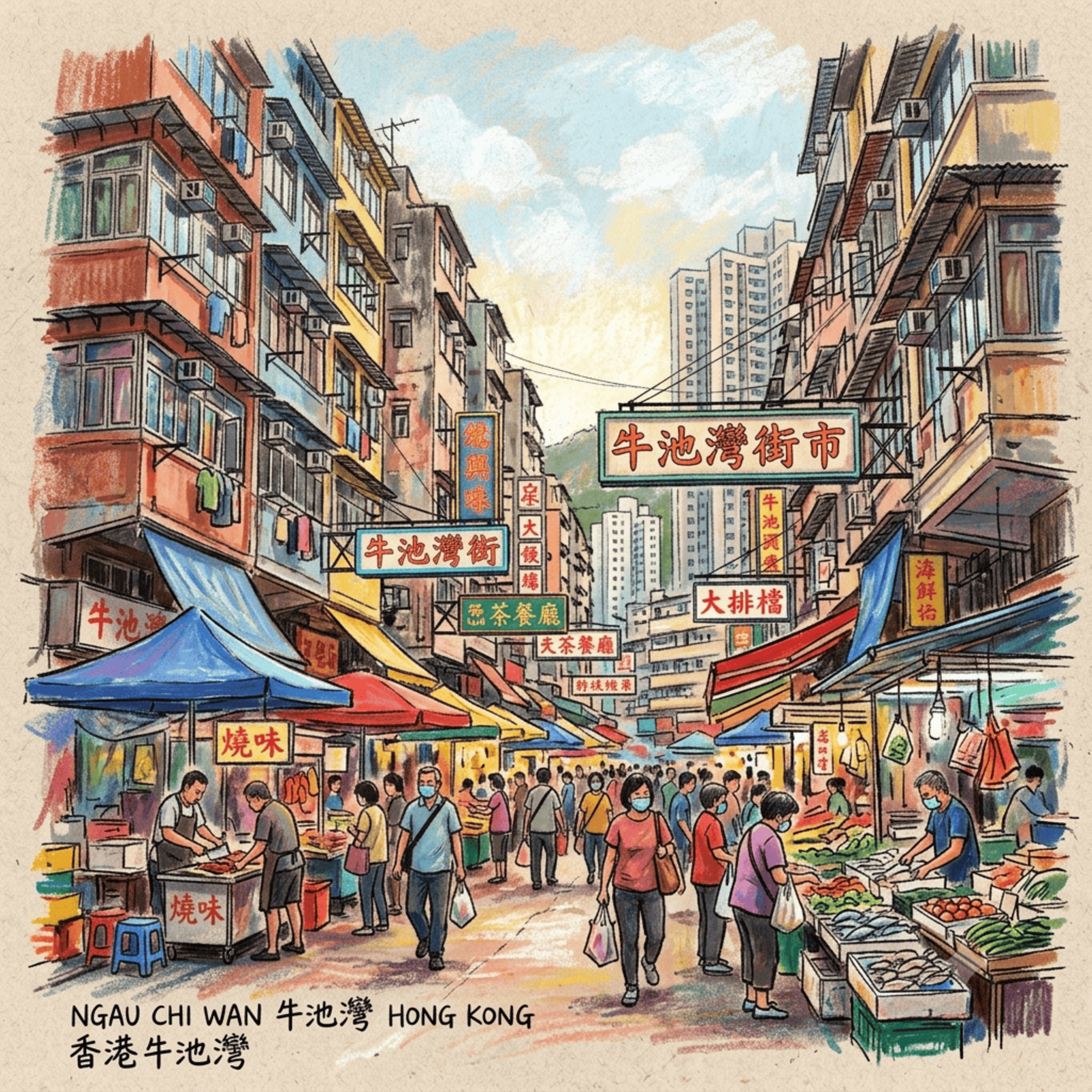
This is a historical travel story and walking guide to Ngau Chi Wan, a two-hundred-year-old urban village tucked away in East Kowloon, Hong Kong. Through five hidden histories—spanning ancient temples, a secret sanctuary for self-combed women, and early revolutionary grounds—it explores how marginal communities carved out a space of existence amidst rapid modernization. Readers will discover a unique walking route, immersive sensory narratives, and a philosophical look at land memory just before the village faces its final redevelopment.
 Lawrence
Ngau Chi Wan is far more than a vestigial pocket of low-rise dwellings amidst the verticality of modern Kowloon; it is a spiritual anchor in multidimensional spacetime. For over two centuries, this coordinate has served as a critical "centrifugal buffer node" for Hong Kong’s historical development, absorbing the city’s marginalized energies—refugees, rebels, and those who rejected traditional social structures—when the mainstream urban fabric could no longer contain them. While the village enters a phased move-out commencing in 2025, with final redevelopment into public housing slated for 2031–2033, it remains a dense repository of human consciousness. Here, the boundaries between political resistance, spiritual autonomy, and geographic destiny are inextricably blurred. The physical stones of the village do not merely occupy space; they vibrate with two centuries of accumulated memory, acting as a spatial residue that resists the flattening of time.
Listen to the historical stories told in detail (For subscribers only)
The Political Body: Three Mountain Kings Temple
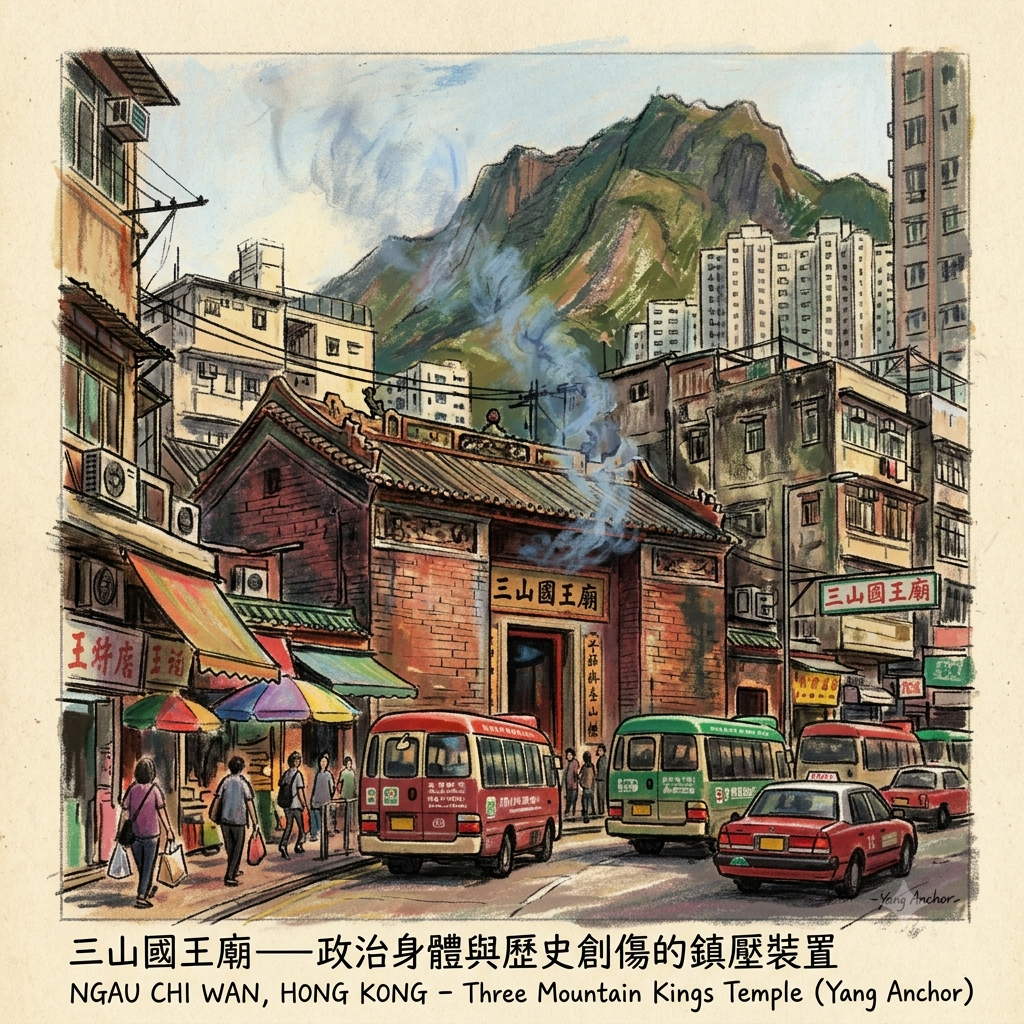
The Three Mountain Kings Temple serves as the primary "Yang" anchor of Ngau Chi Wan, functioning as both a spiritual sanctuary for displaced identities and a strategic command center for political resistance. Established circa 1800, the temple was never the product of a single bloodline but rather the collective effort of a multi-surname community of Hakka immigrants and seafarers. This functional diversity, rare in the context of Hong Kong's lineage-based villages, created a unique social cohesion. This solidarity allowed the site to evolve from a spiritual refuge for those identifying with the fall of the Southern Song into the headquarters of the "Kowloon Thirteen Villages" committee during the high-stakes land disputes of the 1970s.
Within the interpretive framework of "High-Dimensional Physics," the temple is positioned at a crucial convergence point of collective consciousness. Local cultural coding identifies this as a "Dragon Vein" (龍脈) where energy flowing from Fei Ngo Shan—the highest peak in Kowloon—descends through Axe Hill and "pauses" precisely at Ngau Chi Wan. The temple acts as a stabilizer for this energy, anchoring the "presence anxiety" of a community historically pushed to the margins. Its gate couplet serves as a geospatial manifesto, welding distant historical trauma to these specific coordinates, thereby claiming spiritual sovereignty over a precarious physical landscape.
Standing at the temple gates, one experiences a profound sensory dissonance: the unrelenting roar of Kwun Tong Road traffic competes with the thick, sweet scent of sandalwood incense. The brick walls carry a dark, exhaust-stained reddish hue—a patina of urban survival. Inside, the dark wooden tables of the committee hall remain smooth and cool to the touch, their surfaces stained by the sweat of palms pressed down during decades of negotiations that sought to turn a spiritual sanctuary into a political shield.
While the temple anchored the village's public and political life, a different kind of autonomy was being forged in the private, "Yin" spaces of the community.
The Sacred Feminine: Wan Fat Tong
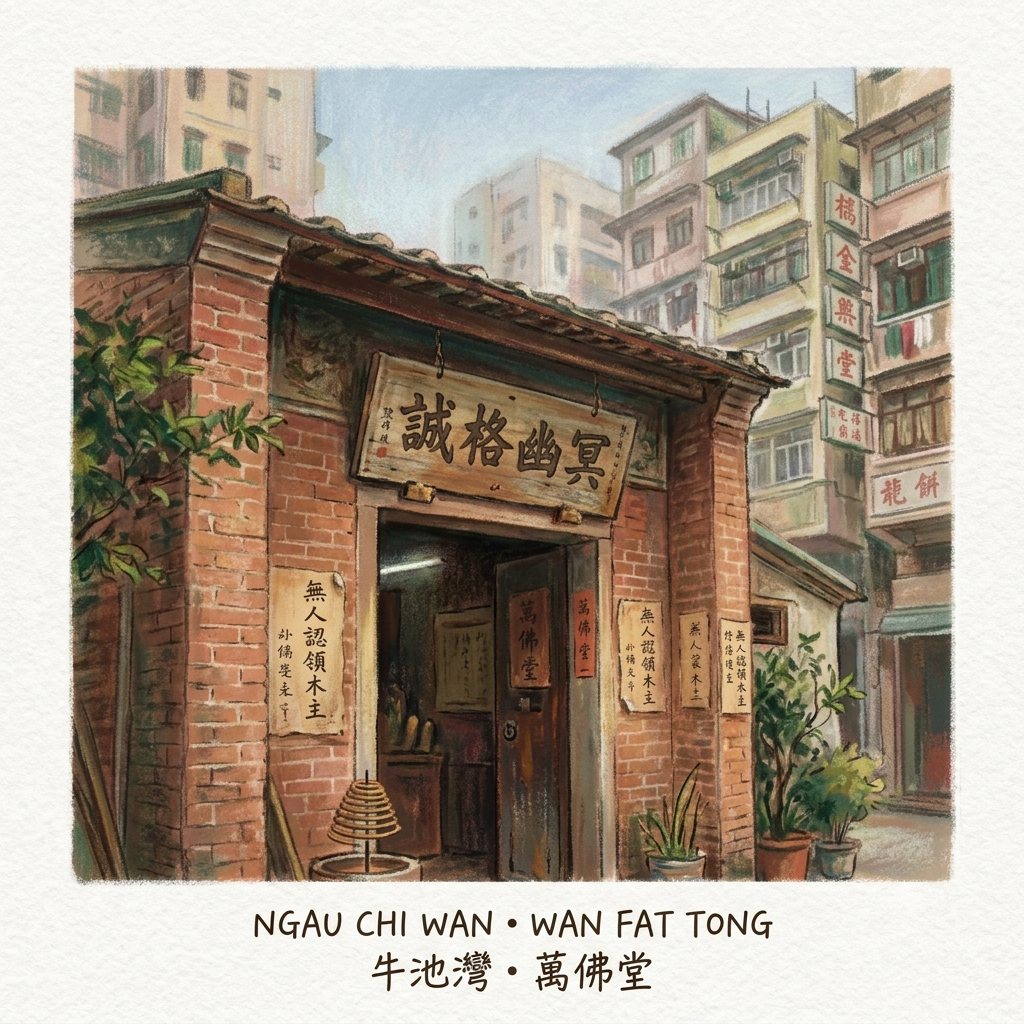
Wan Fat Tong stands as a "Heterotopia"—a space governed by female autonomy within the patriarchal village structure. Founded between 1912 and 1915 by Lai Yuk-ching, this Daoist cloister was established by "Sizishu" (self-combed women) and "Majie" who vowed never to marry, choosing instead economic independence and communal spiritual practice. These women, rejected by traditional kinship systems, formed a lineage not of blood, but of shared resistance. Their impact on the city’s collective memory was cemented following the 1918 Happy Valley Racecourse Fire, when they performed "Chao You" (transcendence) rituals for the victims, earning them recognition from the Tung Wah Hospital as stabilizers of the city’s post-traumatic psyche.
In the spiritual ecology of the village, Wan Fat Tong provides the "Yin" counterweight to the male-dominated temple. This balance is poignantly illustrated by the Daoist principle that "nothing is wasted in the cycle of life and death." During the Japanese Occupation, when resources were scarce, the commemorative plaques from the 1918 fire were repurposed as physical doors for the hall. This transformation of a ritual object into a protective barrier reflects a sophisticated understanding of spatial fluidity—where the sacred and the functional are one.
Inside the hall, the silence of the thick brick walls provides a sanctuary from the humid Hong Kong heat. There is a visual absurdity in the "Unclaimed History" notices posted for ancestors who purposefully vowed to have no descendants; it is a theater of the absurd where the choice to be forgotten becomes a permanent record. The wood of the "Sincerity Reaches the Underworld" plaque is weathered, yet the indentations of wartime nails remain visible, marking the site where the veil between worlds is thinnest.
From this sanctuary of private resolve, the narrative pivots to the clandestine origins of a political revolution.
The Revolutionary Seed: Siu Mui Village
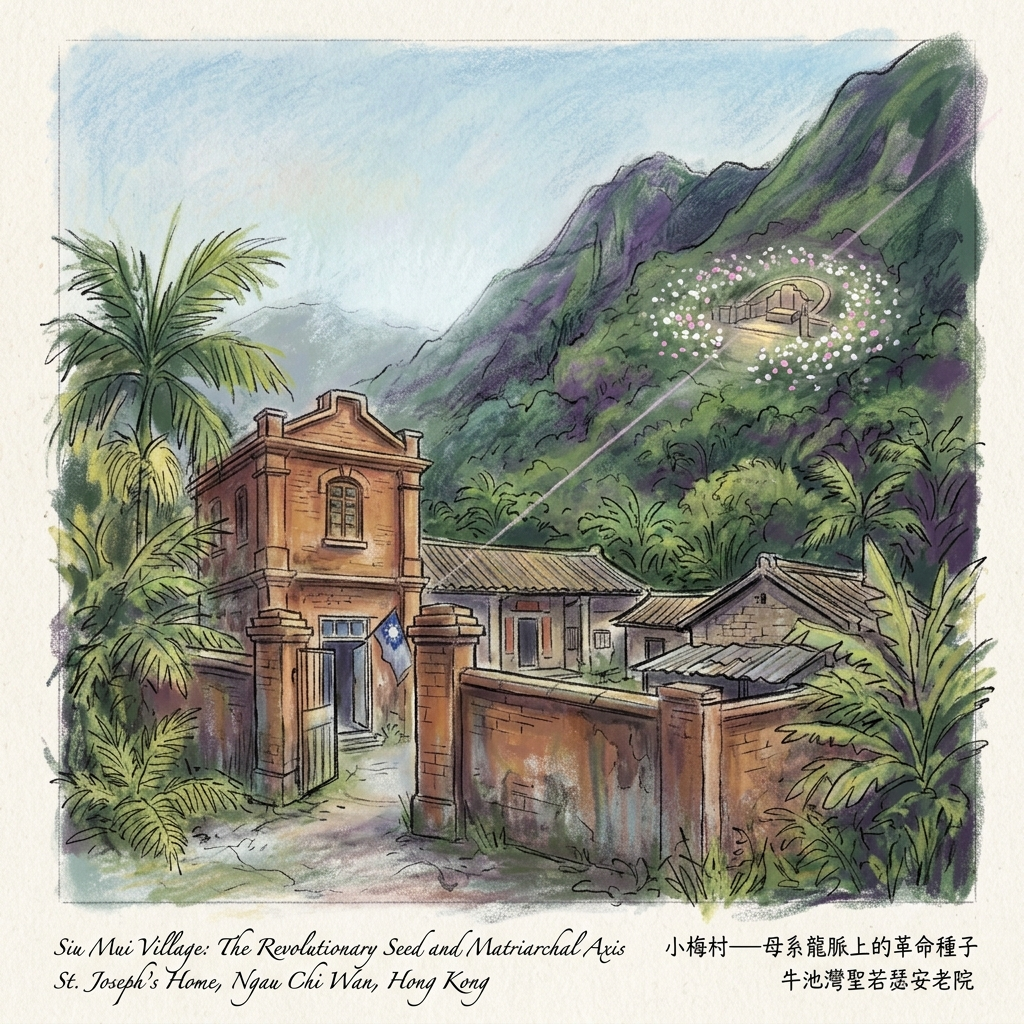
Ngau Chi Wan’s marginality made it the ideal "grey zone" for revolutionary activity in the early 20th century. In 1908, Chen Shaobai purchased land in Siu Mui Village and lent it to Sun Mei, the brother of Sun Yat-sen. Under the guise of a farm, this archaic structural anomaly became a secret manufacturing base for the "Blue Sky, White Sun" flag. The village absorbed this revolutionary energy precisely because its status as an administrative frontier allowed it to hide what the British-governed urban center would have rejected, until the colonial government finally intervened in 1910.
This site is a crucial coordinate in a "Matriarchal Revolutionary Axis." There is a striking geometric alignment between the physical birth of the revolutionary flag at the foot of the mountain and the "Hundred Flower Forest" on the slopes above, where Sun Yat-sen’s mother rests. This alignment suggests that the political "seed event" was grounded by maternal energy—a literal and symbolic anchoring of the revolution within the shadow of the ancestor.
The St. Joseph’s Home gatehouse presents a Victorian brick aesthetic that acts as a visual rupture in the tropical landscape. The air carries the smell of damp stone and decaying vegetation, while the vacant corridors produce a delayed echo of footsteps. This acoustic delay reflects a history that is not yet fully resolved, held in a state of suspension between its revolutionary past and its uncertain future.
The political seeds of the past were sown in a land whose very name reflects a journey of re-coding historical trauma.
The Sleeping Cow: Etymology and Geomancy
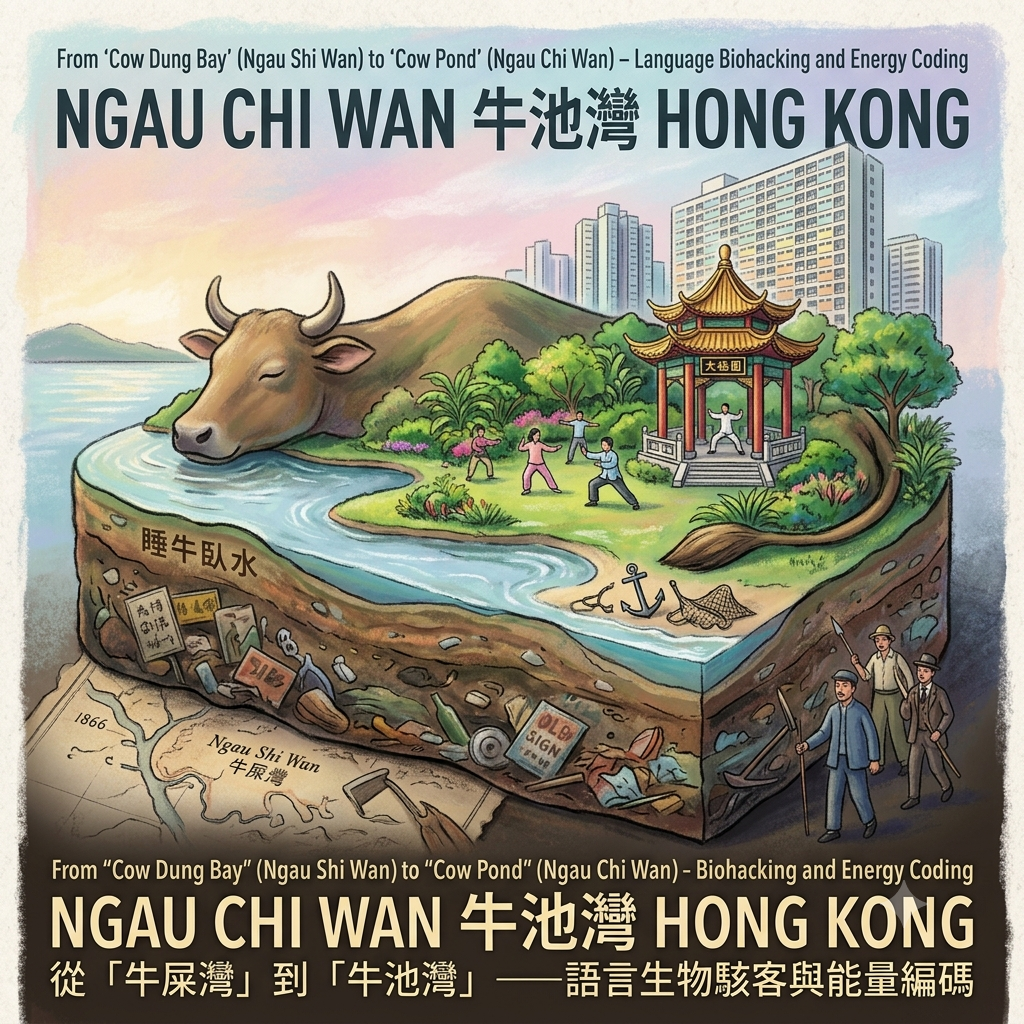
The power of naming in Ngau Chi Wan has served as a tool for "re-coding" the site’s historical identity. The area’s evolution is captured in the shift from the vulgar "Cow Dung Bay" (Ngau Shi Wan) on 1866 maps to the auspicious "Cow Pond" (Ngau Chi Wan) of later legend. This transition represents a conscious act of social mobility, as the community moved from pastoralists to seafarers, using language to rewrite their perceived value within the regional hierarchy.
The topography is traditionally interpreted as a "Sleeping Cow Lying in Water" (睡牛臥水). In the symbolic language of geomancy, a "sleeping" animal signifies an inward-turning, receptive power. This defines the site’s character as a "collector" of marginalized people—a place of rest for the refugees and revolutionaries who have been pushed out of the city’s centrifugal flow. Ngau Chi Wan does not move; it absorbs, providing a site of hibernation for those gathering strength against the mainstream.
Standing in Ngau Chi Wan Park today provides a vertical time-lapse of the city's memory. One stands on lush greenery while knowing that meters below lie layers of discarded waste from the site's era as a landfill. It is a physical manifestation of the village's ontological role: a beautiful, receptive surface resting upon a foundation of things the city once sought to discard or forget.
Finally, the narrative moves to the most fragile layer of the village's memory—the medium through which its structural trauma is processed.
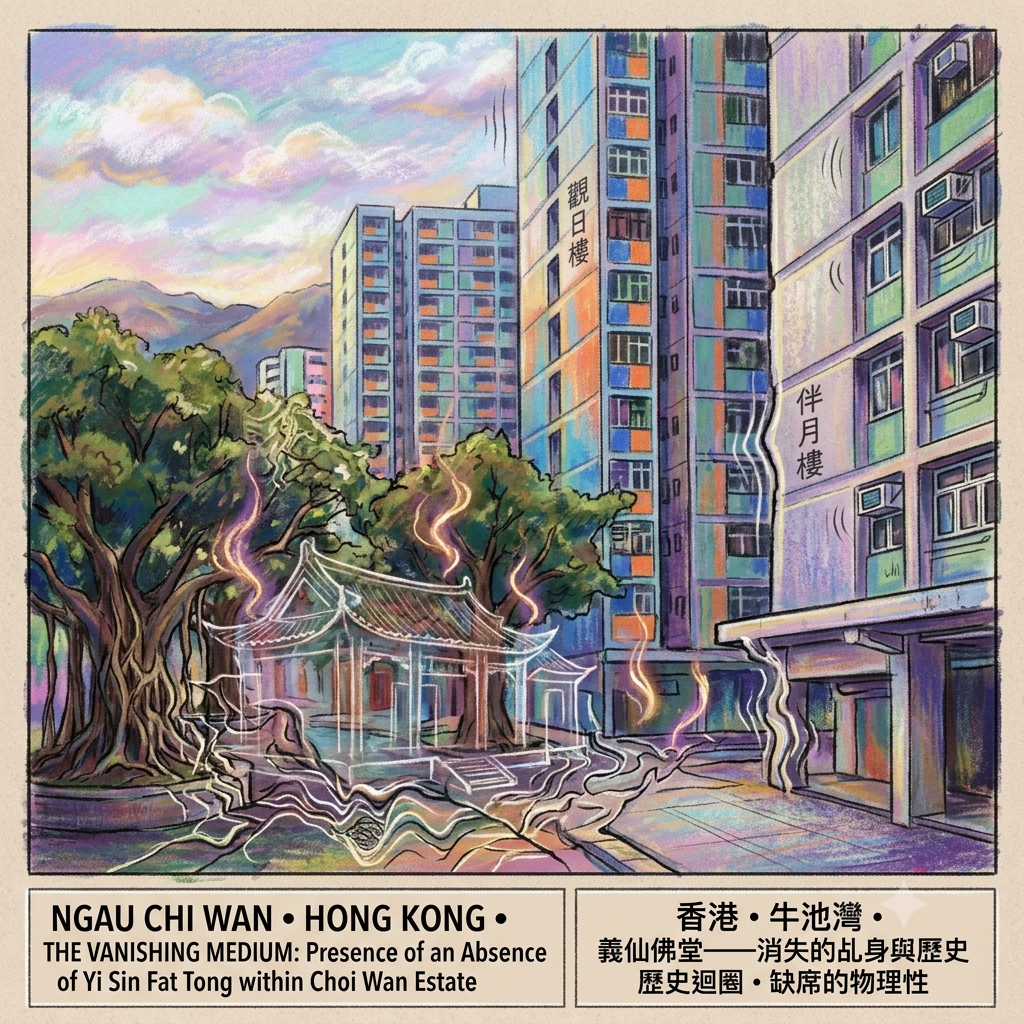
The Vanishing Medium: Yi Sin Fat Tong
The cycle of forced demolition and rebirth defines Ngau Chi Wan’s existence. This structural trauma was embodied by the Yi Sin Fat Tong, a site founded on the healing of a "Jishen" (spirit medium). This medium functioned as a biological interface, a human bridge designed to absorb and stabilize the psychic shocks of repeated land resumptions—from the 1939 British military camps to the 1970s MTR construction and the final clearance of 2025.
Because the Yi Sin Fat Tong was erased to make way for the Choi Wan Estate, it serves as the ultimate example of "the presence of an absence." The total physical erasure of the temple does not mean the energy has vanished; rather, it has been internalized by the landscape. The site demonstrates that even when the medium is destroyed, the vibrations of the trance remain as a subtle distortion in the modern urban fabric.
At the modern Choi Wan Estate, the organic tremors of a spirit medium’s trance have been replaced by the geometric regularity of 1970s public housing. Yet, near the old banyan trees, a phantom scent of incense occasionally lingers—a sensory residue where the past is felt only as a localized glitch in the steady hum of air conditioners.
These five nodes synthesize into a final realization about the nature of space and the destiny of the "buffer."
The Philosophical Anchor: Destiny in the Multidimensional Flow
Ngau Chi Wan has functioned as the essential organ that allowed Hong Kong to maintain its precarious balance. By serving as a buffer for the city’s centrifugal forces, it absorbed the political exiles, the social rebels, and the discarded remnants of progress. As we move toward the total redevelopment of this site by 2033, we must recognize that historical memories are our most valuable cosmic assets. They remind us that certain coordinates are destined to hold the weight of resistance, and that the soul of a place cannot be cleared by bulldozers.
Join the Narrative Architecture Community. Explore the deep structures of our world and uncover the hidden stories that define our shared reality. Subscribe now to join our collective of researchers and historians as we map the multidimensional soul of the global landscape.
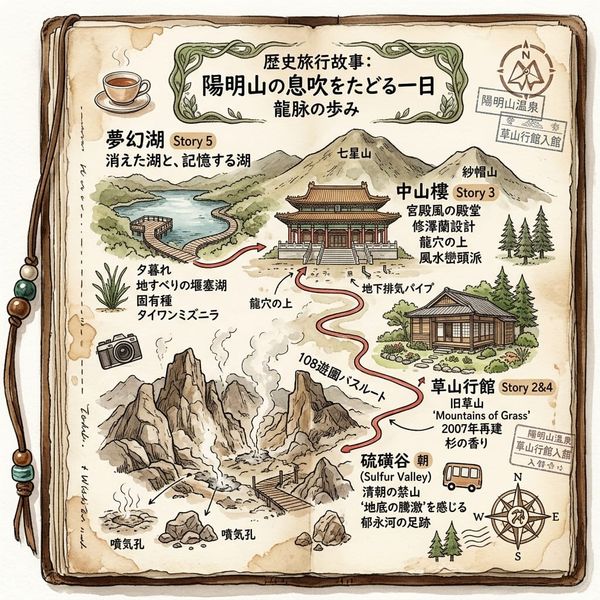
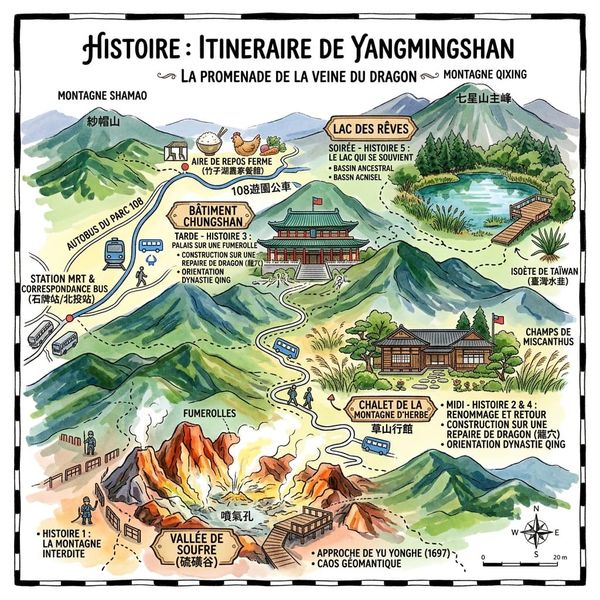
Geospatial Navigation Guide
To experience the spatial resonance of Ngau Chi Wan before its phased transformation begins, follow this sequence of ritual access:
- Arrival: Proceed to Choi Hung MTR Station (Exit C1 or C2). This portal leads directly from the subterranean transit grid into the organic heart of the village market.
- Geospatial Anchor: To fully observe the site's transition from day to night, consider a stay within the East Kowloon urban hubs of Kwun Tong or Kowloon Bay.
- A Sequence of Ritual Access:
- The Yang Anchor: Begin at the Three Mountain Kings Temple on Kwun Tong Road to witness the stabilization of urban energy.
- The Market Matrix: Navigate the dense, organic stalls of the Ngau Chi Wan Village Market, the last vestige of the "Thirteen Villages" social structure.
- The Revolutionary Gate: Locate the St. Joseph’s Gatehouse to experience the Victorian silence of the revolutionary "grey zone."
- The Sleeping Cow: Conclude at Ngau Chi Wan Park, standing atop the layers of the city's discarded history to view the Dragon Vein descending from Fei Ngo Shan.
Reference and Further reading
First layer – Main sources of literature and institutions:
- 嘉慶二十四年(1819年)《新安縣志》(官富司管轄記載);古物古蹟辦事處對牛池灣村及周邊文物的評級紀錄。
- 古物諮詢委員會(古諮會)對萬佛堂的三級歷史建築評級文件;土地註冊處對 Lot 1656 地段1915年由 Lai Yuk Tsing 向 Li Kung Po 購地、1931年以「祖堂」方式註冊之土地紀錄。
- 香港古物古蹟辦事處對聖若瑟安老院建築群(別墅、宿舍A、門樓)之二級歷史建築評級紀錄。
- 嘉慶二十四年(1819年)《新安縣志》對「牛池灣」地名之最早文字記載。
- 《香港工商日報》對1939年駐港英軍徵收田心村土地建營房事件之同期報導(內容轉引自二次文獻,原始報紙條目建議向香港公共圖書館多媒體資訊系統查證確認)。
The second layer – secondary academic materials:
- 陳天權,〈牛池灣鄉與三山國王〉,《灼見名家》;張瑞威,〈香港鄉村記憶:牛池灣鄉的過往、當下與活化之問〉,紫荊網。維基百科「三山國王廟(平山)」條目記載廟宇約建於1800年前後,惟此條目屬二級轉述性質,建議進一步查證原始建廟碑記或地方志原文。
- 陳天權,〈隱沒於牛池灣的古老齋堂〉,《灼見名家》(引用《黃大仙區風物志》關於牛池灣20世紀上半葉至少六所先天道堂的記載);張瑞威於紫荊網發表之考察文章,引述2001年對黎姑及堂內「師太」之實地訪問記錄。
- 陳天權,〈牛池灣鄉與三山國王〉一文中引述「長春社」對小梅村歷史的研究成果;《明報》2014年7月30日報導〈安老院建築群屬反清基地 僅列二級建築面臨重建 環團翻舊檔尋歷史〉。
- 港識多史(WeToastHK)團隊整理之地名考證文章〈喊出黎,龍池灣變牛屎灣,邊個咁大整蠱?〉,引用1866年意大利傳教士所繪《新安縣全圖》及香港公共圖書館1898年牛池灣村歷史照片。
- 香港中文大學新聞與傳播學院學生刊物《大學線》(U Beat)所刊〈被發展推著走的二百年村落——牛池灣村〉一文,整理1939年軍營徵地、二戰炮火破壞及戰後歷次收地的完整時間軸。
Third layer – Supplementary information:
- 水部落格關於「九龍九條龍脈」的論述(解答人生,Medium)——此說法流通於民間風水論壇,並無學術出處或古代堪輿文獻直接佐證,其「龍脈路線」的具體劃法亦可能因不同風水師而異,列為待證的民俗詮釋資料,不應視為史實。
- 《明周文化》〈再見牛池灣村〉報導中對萬佛堂歷史的口述補充;地方歷史團體「尋思我城」導賞團之口述歷史整理。
- 香港道路大典(Fandom)條目對相關歷史背景的整理,屬二次轉述性質。
- 民間風水論述「九龍九條龍脈」說(Medium部落格,作者署名「解答人生」)——此說法明確標註為民俗信仰整理,並非經過堪輿學界同行評審或考古驗證之學術論述,引用時務必清楚標明其詮釋性質,不可作為史實陳述。
- 《明周文化》〈再見牛池灣村〉報導及「尋思我城」導賞團對義仙佛堂乩身傳說之口述歷史記錄整理。
史學缺口:
- 廟宇確切建造年份、最初發起興建的具體人物姓名,均缺乏原始碑記佐證,現有「約1800年」之說均為後世推估。十三鄉委員會的具體談判過程、政府檔案中的對應紀錄,尚未見公開的政府土地檔案完整披露,建議查證地政總署及立法會檔案室1970年代收地相關卷宗。
- 萬佛堂確切建成年份在不同來源中分別記載為「1912–1913」及「1912–1915」,存在矛盾,建議進一步查證古蹟辦原始文物影響評估報告以確認。此外,萬佛堂與其他五所同期先天道堂(金霞精舍、永樂洞、淨室、賓霞洞等)之間的具體互動關係、是否存在共同的女性自梳網絡組織架構,目前學術研究極為有限,建議查證香港大學或中文大學人類學系是否有相關田野調查未發表資料。1918年馬棚大火超幽法事的具體儀式內容及參與人數,亦缺乏第一手文字記錄,現有敘述多依賴後世口述整理。
- 陳少白購地及借予孫眉經營農場的具體交易文件、孫眉在小梅村活動的具體時間範圍及參與人數,現有資料多依賴後世回憶及長春社的研究整理,尚未見原始土地買賣契據或同期報章報導的直接引用,建議查證香港歷史檔案館及《華字日報》《循環日報》等同期報刊資料庫。聖若瑟安老院最終命運(是否拆卸重建、政府與發展商協議進展)截至本檔案撰寫時仍未確定,建議追蹤土地註冊處最新地段紀錄及城規會相關申請。
- 「牛尿灣/牛屎灣」雅化為「牛池灣」的具體時間點及由誰主導這項命名變更,現有資料均無法確切考證,兩種地名起源說法(污名雅化說 vs. 地形象形說)孰先孰後、抑或同時並存,仍待方言學及地方志學者進一步交叉考證。牛池灣堆填區的啟用與停用具體年份、及其覆土改建為公園的工程細節,建議查證香港特別行政區政府環境保護署及土木工程拓展署的歷史工程檔案。
- 義仙佛堂創立的具體年份、乩身本人姓名及其家族後續發展,現有資料完全依賴口述傳說,沒有任何文字檔案或廟宇登記紀錄可供交叉比對,這是本檔案五個故事中史料基礎最薄弱的一例,建議標註為「口述傳說,史實性質存疑」,並於改寫階段謹慎處理其敘事權重。1939年田心村請願代表的具體姓名及請願結果(村民最終是否獲得政府承諾的安置撥地),現有資料同樣語焉不詳,建議查證香港歷史檔案館中1939年「田土廳」或「工務局」相關卷宗。
 Lawrence
 Lawrence
 Lawrence