タワーブリッジ ― 閉じることのないテムズ川の曲がり角
タワーブリッジは単なる撮影スポットではなく、テムズ川の潮の満ち引きに刻まれた3,000年の境界線です。本記事は、青銅器時代の武器奉納、地中のローマ密教神殿、海事裁判所による海賊処刑、ヴィクトリア朝の開閉橋建設、二戦中の空襲という5つの秘話を辿る歴史散策ガイド。干潮時の干潟で触れる記憶とともに、ロンドンの隠された水上軸線を紐解きます。

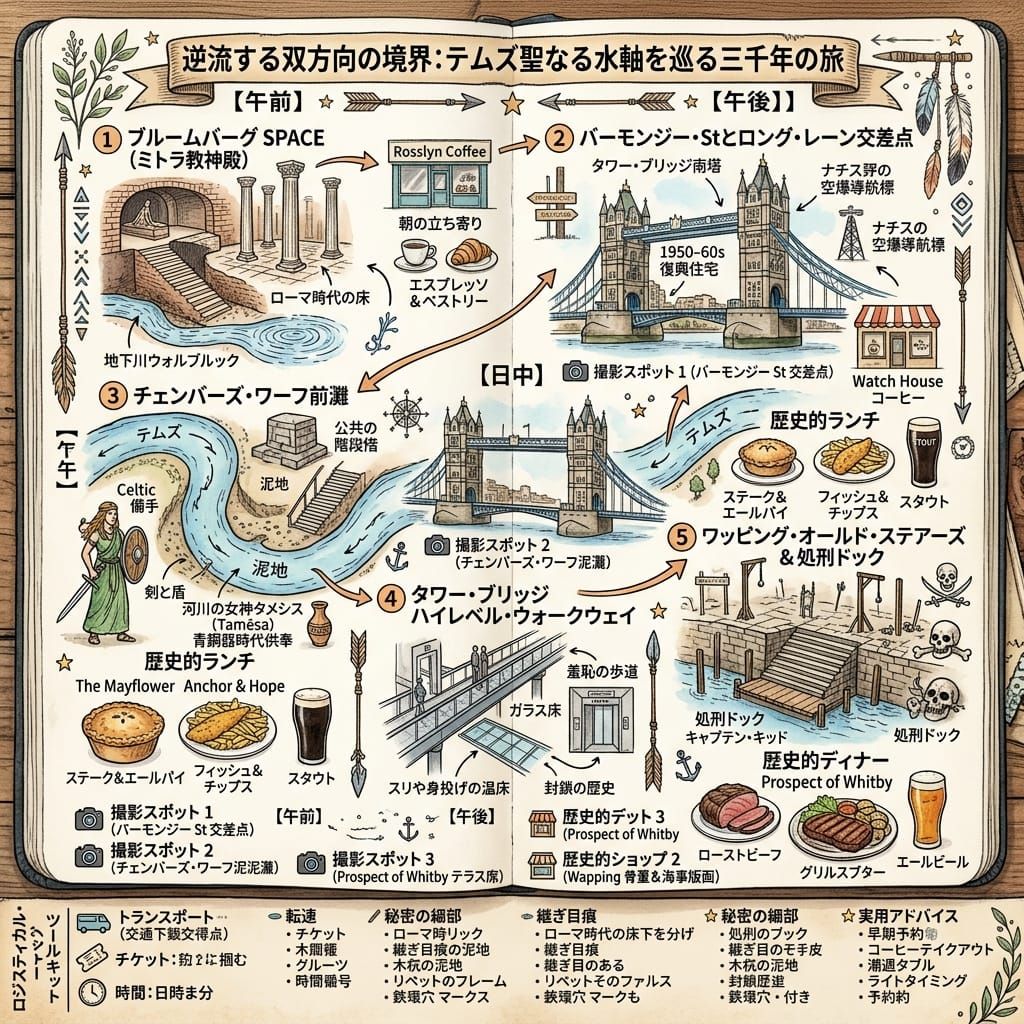
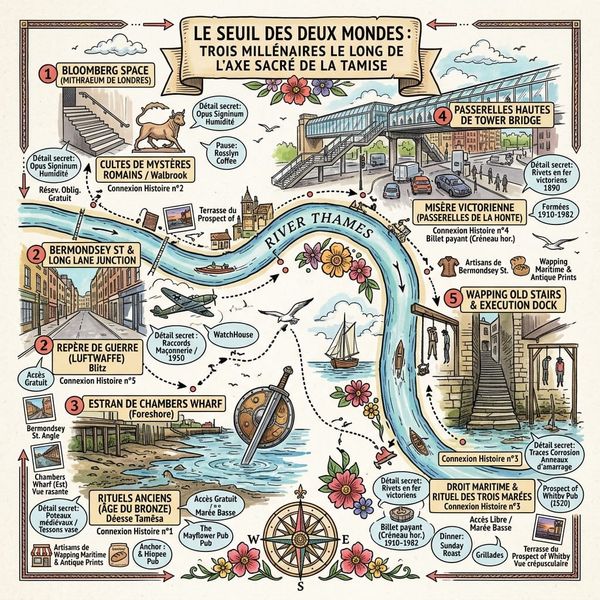
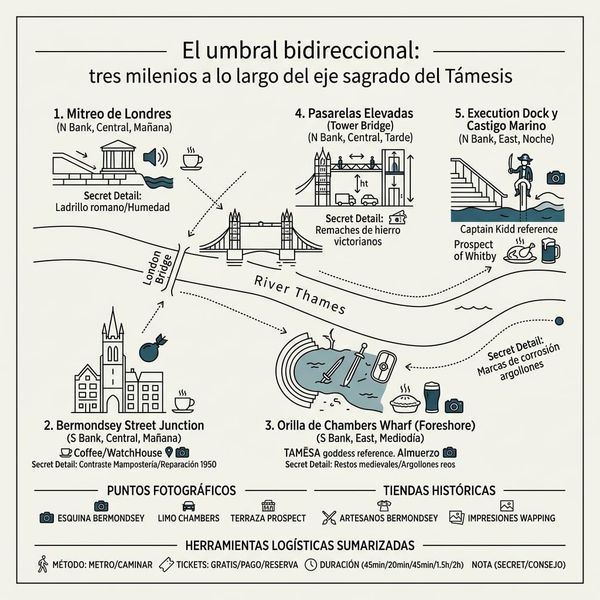
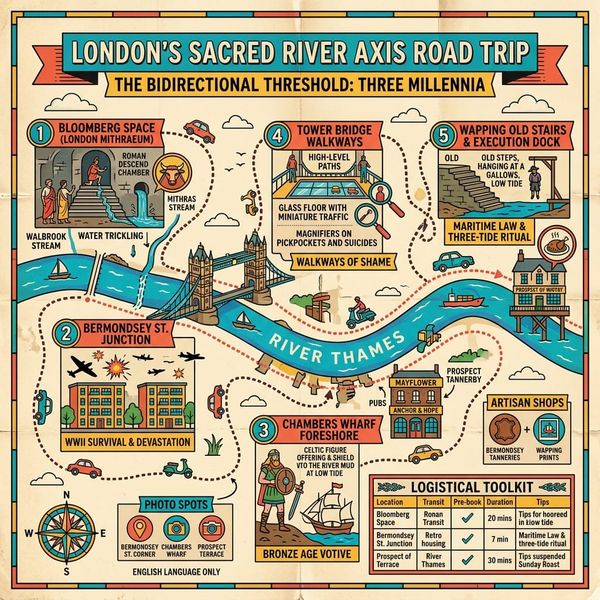
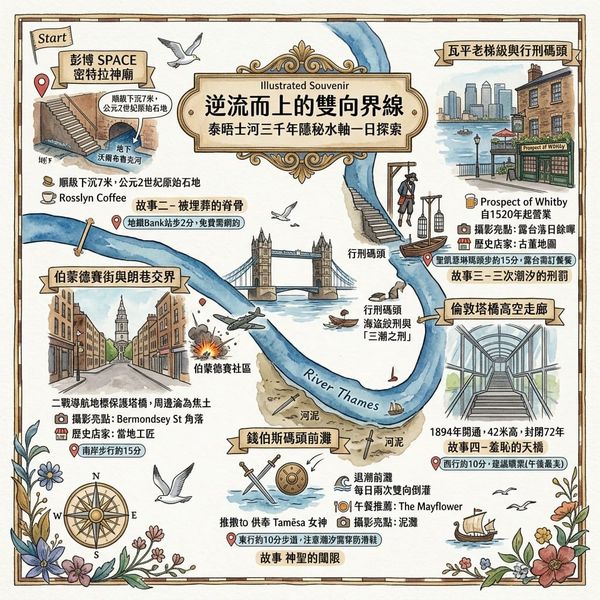
本書は、ロンドンのタワーブリッジとテムズ川沿いの潮干潟(フォアショア)を巡る歴史旅ストーリー&徒歩散策ガイドです。青銅器時代の武器奉納、ローマ時代の密教神殿、海事裁判所による海賊処刑、ヴィクトリア朝の橋梁建設、第二次世界大戦の空襲という5つの秘話を通して、3,000年にわたる川の境界線の歴史を辿ります。読者は詳細な歴史的背景、干潟での五感体験、そしてロンドンの象徴的ランドマークを新たな視点で見つめ直す散策ルートを得ることができます。
 Lawrence
三千年のあいだ、同じ川の湾曲部で、時代ごとに異なる文明が、同じ問いに向き合ってきた。ひとつの世界が終わり、もうひとつの世界が始まる場所を、人はどうやって示すのか。
水底から立ちのぼる重さ
タワーブリッジを撮る角度は、誰もが同じだ。だが、その橋の下で潮の流れが一日に二度向きを変えていることに気づく人は少ない。ここでのテムズ川は潮汐河川であり、海へ向かって押し出された流れは、数時間後には同じ強さで街の方へ押し戻される。そこに神秘めいたものは何もない。月の引力と地球の重力、それだけのことであり、潮の届くあらゆる河口で起きている現象にすぎない。
しかし、潮が引いた時間帯に川床へ降り、二千年もの間、覆われては現れることを繰り返してきた泥の上に立つと、ある型が浮かび上がってくる。青銅器時代の人々は、この川に武具を投げ入れた。ローマ人はすぐ近くに密儀宗教の神殿を築いた。海事法廷はこの岸辺で海賊を絞首刑にし、遺体を埋葬する前に潮が三度満ち引きすることを求めた。ヴィクトリア朝の人々はこの湾曲部にイングランドでもっとも撮影される橋を建て、その十年後には、行き場を失った者たちの吹き溜まりと化した高架通路を目にすることになった。そしてドイツ空軍は、その塔の輪郭を空爆の目印として利用した。
これらの出来事はどれも互いに異なる。だが、まったく無関係というわけでもない。五つの時代が、それぞれの手持ちの語彙を使いながら、同じ川の曲がり角が突きつけてくる同じ問いに答えてきたのである。この文章は、この場所に何らかの霊力があると主張するものではない。実際に記録されていることを丁寧に語り、そのうえで、どこまでが史料であり、どこから先が解釈にすぎないのかを、誠実に線引きしていきたい。
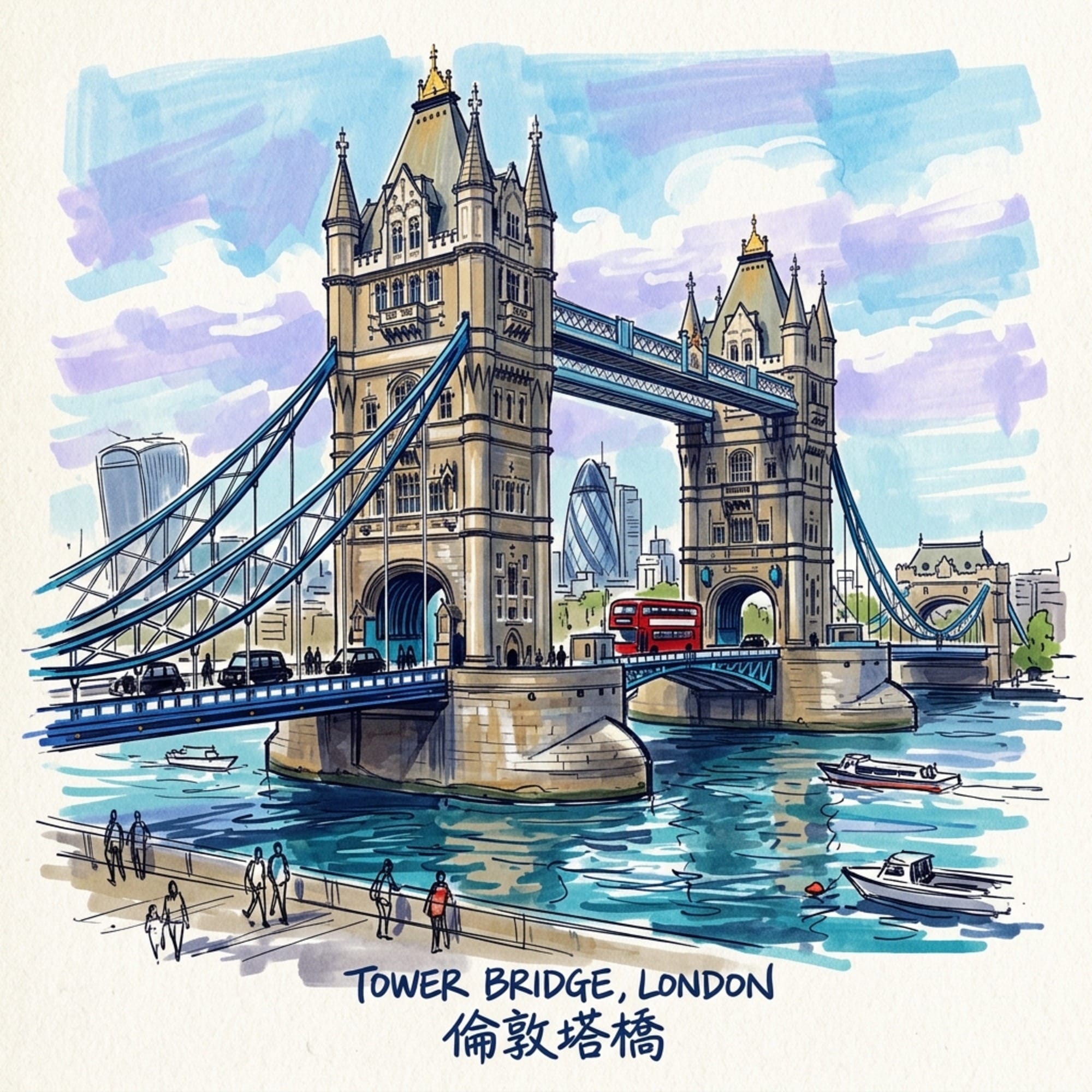
観光の歴史に関する魅力的な物語に注意深く耳を傾けてください3
第一部:記録された人間の歴史
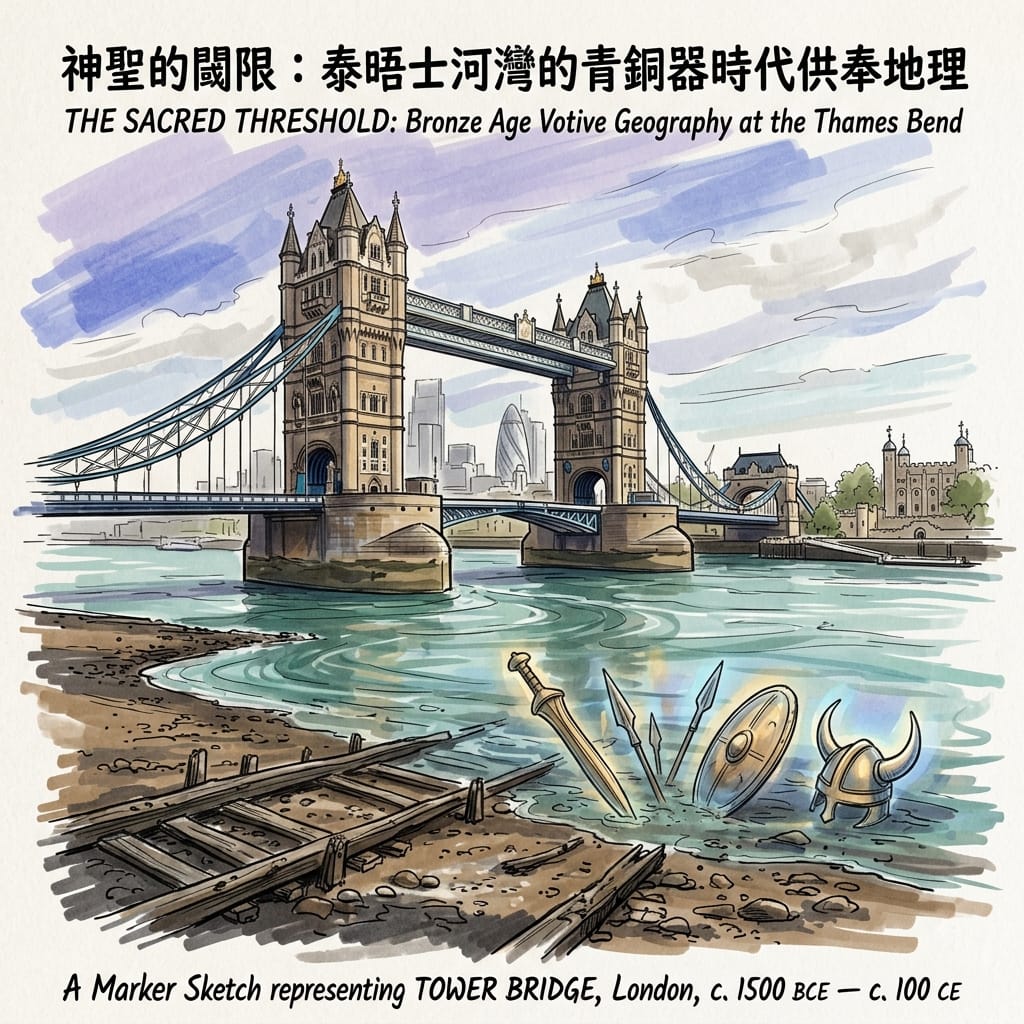
一、青銅器時代 ― 川へ捧げられたもの(紀元前1500年頃 ― 紀元100年頃)
ロンドン・ブリッジからタワーブリッジにかけてのテムズ川流域は、イギリス国内でも青銅器時代・鉄器時代の金属器の出土密度がもっとも高い区間のひとつである。剣、盾、兜、槍の穂先、青銅製の大鍋 ― これらは二世紀にわたる浚渫工事、そして近年はロンドン考古学博物館(MOLA)による河岸の系統的調査や、「携行文化財申告制度」(Portable Antiquities Scheme)への登録記録を通じて発見されてきた。驚くべきは出土数だけではない。保存状態である。高い価値を持つ品々の多くが、ほぼ無傷の状態で見つかっており、単に捨てられた物にみられるはずの摩耗の痕がない。つまり、これらは意図的に水中へ委ねられたものなのだ。
London S Hidden Portal To The Underworld
考古学者リチャード・ブラッドリーは、いまや学界の定説となった見解を、著書『The Passage of Arms』(1990年)のなかで示している。青銅器時代・鉄器時代のブリテン島全域において、貴重な品々は川の湾曲部、支流の合流点、潮汐の限界地点といった特定の場所に、奉納品として捧げられていた、というものである。タワーブリッジが架かる湾曲部、そして南岸のバーモンジー(Bermondsey)一帯にかつて広がっていた湿地は、まさにこの型に合致する。誰がこの儀礼を行ったのかを特定することはできない。もっとも有力な仮説は鉄器時代のドルイド祭司であり、カエサルや大プリニウスといったローマ側の観察者が概略として記録を残しているが、この特定の川の区間に結びつけられる個人は、いかなる史料にも登場しない。
感覚の記録 ― 読むだけでなく、感じ取りたい人のために:潮が引いた川床は、堤防近くでは暗い灰褐色、水際に近づくにつれて銀色を帯びた細かい泥へと変わる。秋であっても、午後の日差しを受けた泥は奇妙なほど温かい。匂いは有機物が酸化する独特の酸っぱさに、川の水そのもの、そして遠くを行く船のディーゼルのかすかな匂いが混じり合う。わずか六時間のうちに、同じ地面が先史時代の川床から水没した水面へ、そして再び川床へと姿を変える。ロンドンでこれほどの速さで時間が圧縮される場所は、他にほとんどない。
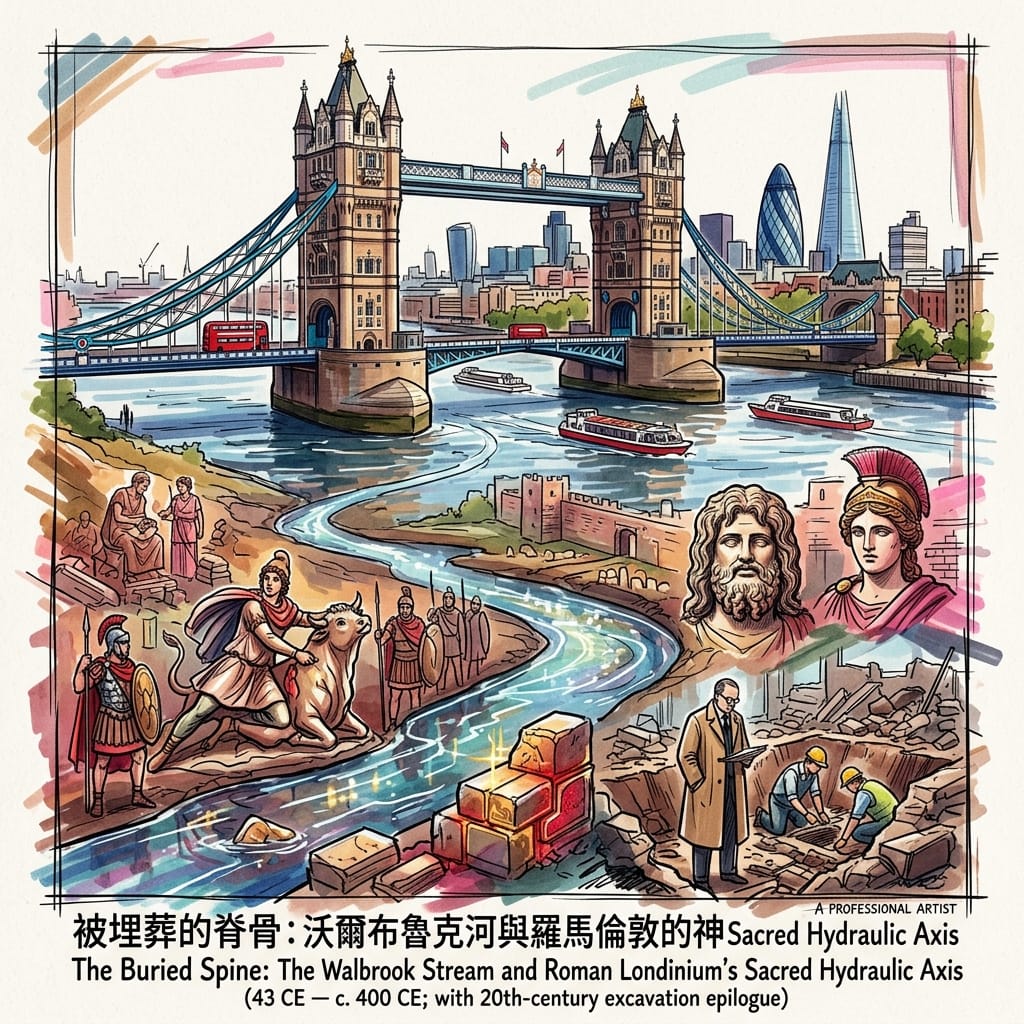
二、ローマ時代 ― 地中に眠るロンディニウムの聖なる背骨(紀元43年 ― 紀元400年頃)
タワーブリッジの西500メートルほどのところには、かつてウォルブルック(Walbrook)と呼ばれる小さな支流が地上を流れ、ローマ時代のロンディニウム(Londinium)の中心部を貫いてテムズ川へと注いでいた。この川は中世以降完全に地下化されているが、ローマ人にとっては都市の宗教的な軸であった。複数の神殿がその岸辺に沿って建てられ、もっとも著名なのが、1954年、バックラーズベリー・ハウスの基礎工事中に偶然発見されたミトラ神殿である。
London S Buried Mystery Temple
発掘を率いたW・F・グライムズ教授は、極めて限られた時間のなかで作業を進め、公開の礼拝のためではなく密儀の入信儀礼のために設計された、後陣を持つ細長い長方形の建物を明らかにした。牡牛を屠るミトラの特徴的な彫像、セラピスの頭部像、ミネルヴァの像などが出土している。この発見そのものと同じくらい注目に値するのは、ロンドン市民の反応であった。ブリッツ(大空襲)の傷跡がまだ生々しく残る1954年のロンドンで、人々は工事が遺跡を覆ってしまう前にと、数週間にわたって数時間もの行列をつくった。『タイムズ』紙は、同年9月から10月にかけて、一日あたり数千人単位の見学者があったと記録している。二千年近い時を経てなお完全な姿で残る聖域が、なかば廃墟と化した現代都市の地下に眠っていたという事実は、当時、破壊のただなかにあってもなお残り続けるものがある、という象徴として受け止められた。神殿はその後(かなり乱暴なやり方で、市民の抗議を押し切って)移設され、数十年にわたりクイーン・ヴィクトリア・ストリートの屋外に晒されていたが、2017年、ブルームバーグ社の資金提供により元の場所に再建され、現在はブルームバーグSPACEとして無料公開されている。
感覚の記録:地下の展示空間に降りると、気温がはっきりと下がる ― これは意図的な演出であり、ローマ時代のミトラ神殿が本来持っていた、洞窟のような涼しさを再現するためのものだ。建物の空調のかすかな唸りの下に、水の流れる音がわずかに聞こえたという来館者の証言もある。ウォルブルックが今なお地下のどこかを流れ続けているのだ、というわけだ。もっとも、これは公式の解説資料では確認されておらず、あくまで個人の印象として受け止めるべきであり、事実として断定すべきではない。それでも、耳を澄ませてみる価値はある。
三、海事法 ― 三度の潮が下す刑罰(1536年頃 ― 1830年頃)
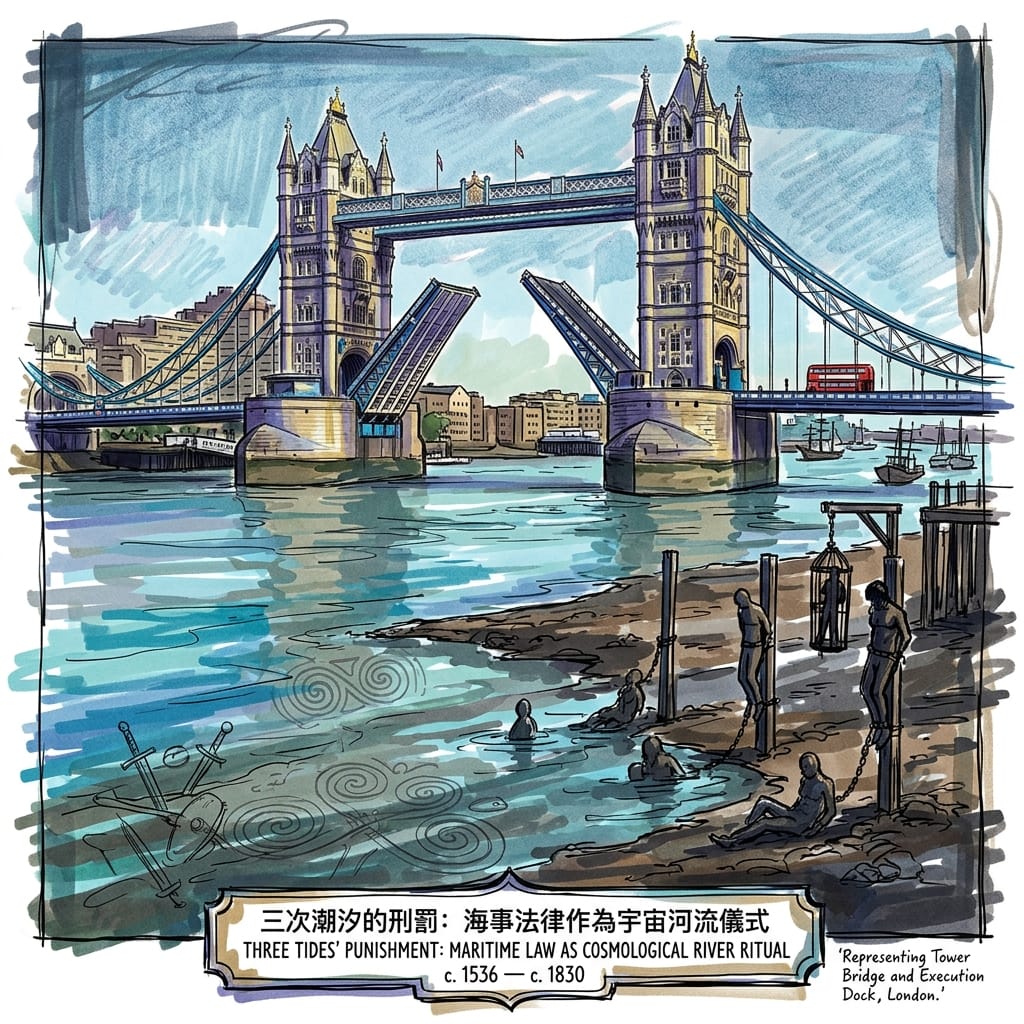
タワーブリッジの東800メートルほどのワッピング(Wapping)には、かつて「処刑埠頭」(Execution Dock)と呼ばれる場所があった。公海上で犯された殺人や海賊行為の罪で有罪となった者を、海事法廷が処刑するために定めた場所である。受刑者は意図的に短くされた縄で絞首刑に処された。これは通常の絞首刑のように頸椎を瞬時に折るのではなく、ゆっくりとした窒息死をもたらす方法であった。そのうえ、海事当局に記録の残る慣習によれば、遺体は潮の境界線に立てられた杭に鎖でつながれたまま、三度の満潮によって水に沈み、また現れることを経たのちでなければ、埋葬が許されなかった。
The River That Executed Pirates
現存するいかなる法文書も、この「三度の潮」という規則の実務的な論理を説明していない。衛生上あるいは手続き上の必要性では到底説明がつかないのである。一方で、18世紀ロンドンの処刑文化を研究した歴史家ピーター・ラインボーの仕事を通じて、はっきりと記録に残っているのは、この光景を見守った人々の顔ぶれである。荷役労働者、船乗り、川辺の地域に暮らす家族たち ― 彼らはこの処刑を、単なる国家の見せしめとしてではなく、酒が振る舞われ、演説がなされ、受刑者を囲むある種の厳粛な行列のような、論争を孕んだ公的な行事として経験していた。海賊船長ウィリアム・キッドは1701年にここで処刑された。最初の試みでは縄が切れてしまったという。その後、彼の遺体はタールを塗られ、鉄の檻に入れられて、ティルベリー・ポイントで何年ものあいだ晒し続けられた ― プール・オブ・ロンドン(ロンドン港の中心水域)へ出入りするあらゆる船が、そこを避けて通ることはできなかった。
四、ヴィクトリア朝 ― みずからが救うはずだった貧困に呑み込まれた高架橋(1894年 ― 1910年頃)
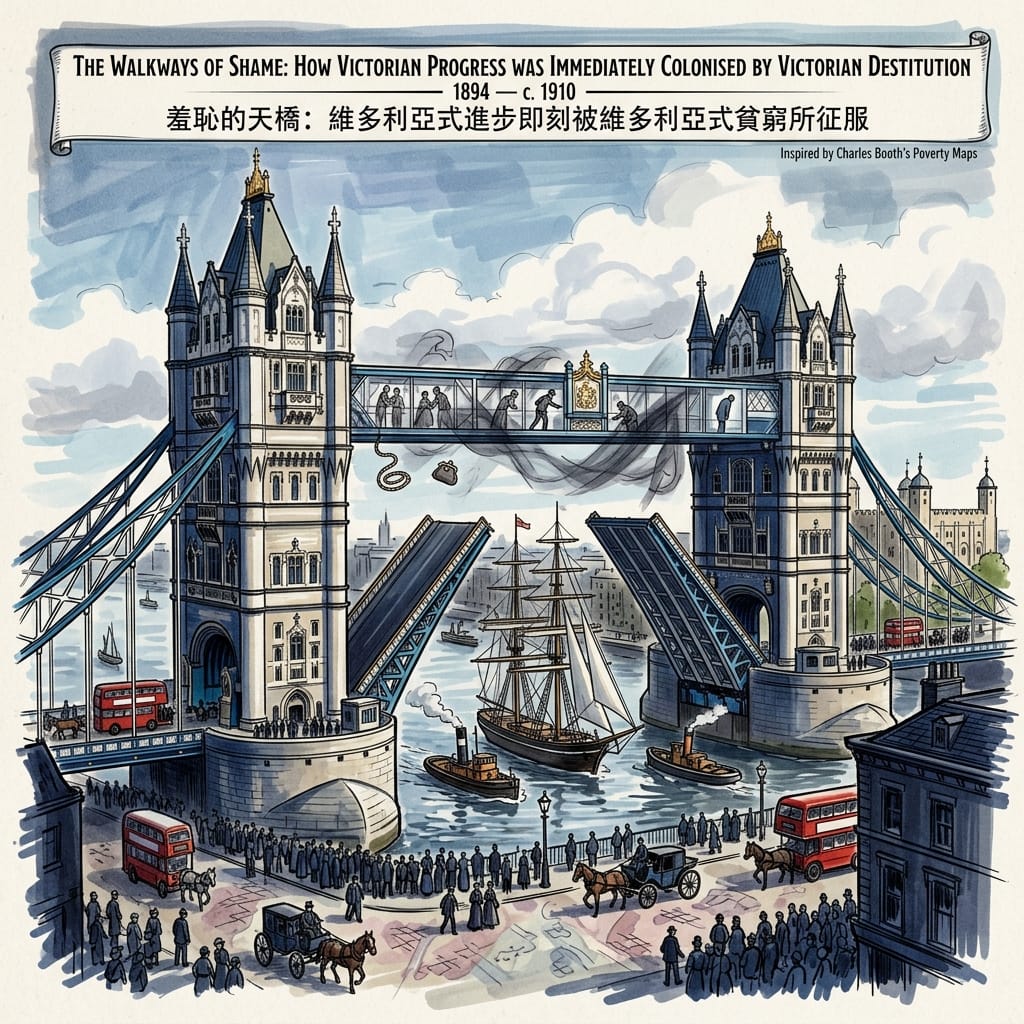
タワーブリッジは1894年6月30日、皇太子(後のエドワード7世)の臨席のもとで開通式を迎えた。水面から42メートルの高さに設けられた二本の高架通路は、跳開橋の桁が背の高い帆船を通すために持ち上げられているあいだも、歩行者が川を渡れるようにと設計されたものだった。しかし実際には、跳開の操作が十分を超えることはほとんどなく、わずかな待ち時間を避けるために206段もの階段を上ろうとする人はほとんどいなかった。高架通路はほとんど使われないまま放置され、その後十数年のあいだに、新聞記事や警察の記録は、窃盗、売春、そして自殺と、この場所を結びつけて語るようになった。
The Dark Secret Of Tower Bridge
橋の両岸にあたるバーモンジー、サザーク(南岸)、そしてタワー・ハムレッツ(北岸)は、チャールズ・ブースが1889年から1903年にかけて実施した貧困地図調査(現在はロンドン・スクール・オブ・エコノミクスによってデジタル化され、booth.lse.ac.ukで公開されている)において、そのほとんどが「濃紺」および「黒」という、もっとも低い階層区分に分類されている。この橋が分けていたのは、豊かさと貧しさではない。貧しさの度合いだったのである。高架通路は1910年頃に一般公開を打ち切られたが、その正確な行政上の決定は、公開されている史料からは特定できていない。以後七十二年にわたって閉鎖されたのち、1982年、観光展示施設として再開された。展示パネルはヴィクトリア朝の技術的達成を称える一方で、この場所が抱えていた社会的な歴史については、ほとんど触れられていない。
五、ブリッツ ― 敵の利用によって生き延びた地標(1940年9月 ― 1941年5月)
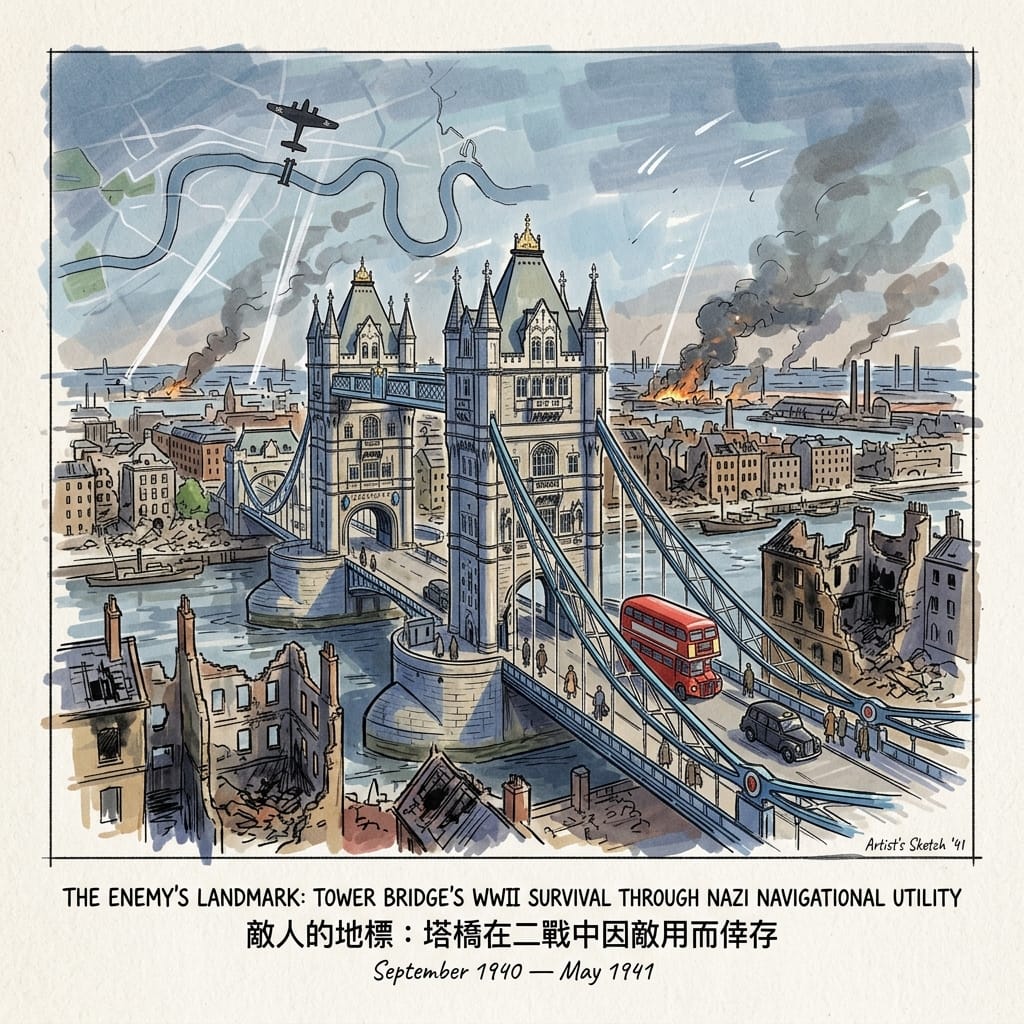
タワーブリッジ両岸の港湾施設は、ロンドン大空襲においてドイツ空軍の主要な標的のひとつであり、バーモンジー、ステップニー、ホワイトチャペル、ポプラーといった周辺地区は壊滅的な被害を受けた。ロンドン塔そのものも複数回、直撃弾を受けている。それに対して、タワーブリッジの構造はほぼ無傷のまま戦禍を生き延びた。
How The Enemy Saved Tower Bridge
記録として確認できるのはここまでである。ロンドン市内を蛇行するテムズ川の流路、そしてタワーブリッジのゴシック様式の塔をはじめとするランドマークは、高高度を飛行するドイツ軍爆撃機の乗員にとって、視覚的な航法の目印として用いられていた。一方で、この橋を「保護すべき航法目標」として正式に指定する命令があったかどうかについては、公には確認されていない。それを確かめるには、フライブルクにあるドイツ連邦公文書館・軍事文書局(Bundesarchiv-Militärarchiv)の作戦記録にあたる必要があるが、公開資料の範囲でそこまで検証した例は、管見の限り存在しない。だが、結果として確かなのはこうだ。ロンドンでもっとも貧しい二つの地区に奉仕するために建てられた橋は、戦争をほぼ無傷で乗り越え、その橋が本来奉仕すべきだった人々は、同じようには生き延びられなかった。
これは本当に「境界」なのか
こうして並べてみると、五つの物語はそれぞれ異なる世紀に属する、一見無関係な出来事に見える。しかし、橋の上に立ち、潮の流れが向きを変える瞬間を見つめていると、同じ川の湾曲部が、繰り返し同じ役割を担わされてきたことに気づかずにはいられない。秩序ある都市が終わり、何か別のものが始まる場所を示す、という役割である。
ここで、この観察が何であり、何でないのかを、はっきりさせておく必要がある。ローマ以前のブリテン島の伝統、より広くはケルト文化の伝統において、川 ― とりわけ潮汐のある川 ― は、生者の世界と死者の世界を分かつ敷居(結界に近い概念)として理解されていた。これは比較考古学とローマ時代の文献によって裏づけられており、この文章がつくり出した空想ではない。しかし、ローマ人、海事法廷、ヴィクトリア朝の人々、あるいはドイツ空軍が、この古い宇宙観を意識的に引き継いでいたと考える根拠は、どこにも存在しない。事実、彼らはそうではなかった。それぞれが独立に、手元にあった語彙を用いて、同じひとつの物理的事実 ― 統制された領域の縁にある、潮の満ち引きする渡し場 ― に応答していただけなのである。その応答の仕方が、構造的に見て驚くほど似通っている、ということだ。この類似は、注目に値する。しかし、それは何ら超自然的なものの証拠ではなく、それをあたかも証明された事実であるかのように語ることは、歴史に対しても、読者に対しても、誠実さを欠く行為だろう。
探す価値のある片隅: ブルームバーグSPACEの展示室の奥、かつて神殿の祭壇があった場所の近くでは、誰に促されるでもなく、来館者は自然と声を落とす。掲示があるからではない。実際にそこの空気は数度低く、照明は実際に暗いからであり、頭で理解するよりも先に、体がそれに反応してしまうのだ。過去がそこで形而上学的に「薄く」なっているわけではない。もとの空間が持っていた物理的な条件が、意図的に保存されており、それが二千年前に果たしていたのと同じ働きを、今日もなお続けているというだけのことである。
本当に記憶する価値のあるもの
橋そのものは、誰の味方もしない。潮は、どの政権が権力を握っているかにも、どの信仰が流行しているかにも関心を示さない。それこそが、この場所がもたらす、もっとも誠実な教訓なのだろう。三千年ものあいだ、目に見えない力がこの川の湾曲部を見守ってきた、ということではない。まったく異なる世紀を生き、まったく異なる信仰体系を持った人間たちが、それでも繰り返し同じ物理的な敷居のもとへとやってきて、驚くほど似た仕方で応じてきた ― 奉納によって、神殿によって、刑罰によって、壮麗な建築によって、そして航法によって。そこに一貫して続いているのは、私たち人間そのものであって、水ではない。
これは、少し立ち止まって考えてみる価値のあることだと思う。もし読者の方も、こうしたことをじっくり考えるのが好きだというのなら、私たちのニュースレターでは、記念のプレートに書かれている以上の重みを持った、ロンドンの他の片隅についても、折にふれてお届けしている。
現地への行き方
橋への行き方: タワー・ヒル駅(District線・Circle線)またはロンドン・ブリッジ駅(Jubilee線・Northern線)から、いずれも徒歩10〜15分ほど。
川岸: バーモンジー側のチェンバーズ・ワーフ付近に、公共の河岸への出入口がある。潮が引いている時間帯にしか利用できないため、事前にポート・オブ・ロンドン・オーソリティのウェブサイトで潮汐表を確認しておきたい。
ミトラ神殿: ブルームバーグSPACE(12 Walbrook, London EC4N 8AA)。入場無料。オンラインで見学時間の予約をしておくとよい。
ワッピング・オールド・ステアーズとパブ「プロスペクト・オブ・ウィットビー」: 57 Wapping Wall。ワッピング駅から徒歩約10分。川に面したテラス席から、上流方向にタワーブリッジを望むことができる。
高架通路: タワーブリッジ・エキシビションの入場券に含まれており、ガラス張りの床の展示区画も見学できる。
宿泊について: バーモンジーやシャド・テムズ周辺のホテルであれば、橋にも川岸にも徒歩圏内であり、夜明けや夕暮れどき、潮が引いている時間に合わせて訪れる計画も立てやすい。
💡タワーブリッジの都市伝説と地縁歴史 FAQ
Q1:タワーブリッジ近くのテムズ川底から大量の古武器が見つかるのは呪い?心霊現象の噂と歴史的真相とは?
回答: テムズ川のタワーブリッジ周辺から無傷の青銅器・鉄器時代の剣や盾が多数発掘され、水底の呪いや怨念とする都市伝説が存在します。しかしロンドン考古学研究所(MOLA)等の調査により、これは邪教の呪いではなく古代ケルトやドルイド神官による「水神への奉納儀式」と判明しています。潮汐の境界域である川の湾曲部は、古代人にとって現世と異界の境界(境界空間)と見なされており、信仰の民俗的痕跡が現代の心霊怪談へと誤解されたものです。
Q2:タワーブリッジ東側のテムズ川に海賊の幽霊が出る噂は本当?「処刑ドック」の歴史的背景とは?
回答: タワーブリッジ東側水域で海賊の呻き声が聞こえるという心霊怪談は、ワッピングに実在した「処刑ドック(Execution Dock)」に由来します。高等海事審判所の管轄下、海賊犯は絞首刑後、引き潮の杭に縛り付けられ、満潮で3回水没するまで放置される「潮汐処決」に処されました。大英帝国の海権律法を誇示する見せしめの歴史と、潮の満ち引きという地縁的記憶が重なり、現代の幽霊伝説へと昇華しました。
Q3:タワーブリッジの高空遊歩道(展望ギャラリー)が1910年に閉鎖されたのは心霊現象や自殺の多発が理由?
回答: タワーブリッジ高空遊歩道が1910年に閉鎖された原因を霊異現象とする噂がありますが、真相はヴィクトリア時代の治安問題と極端な利用率低下です。開通後、暖房のない高所通路はスリや困窮者の溜まり場となり、飛び降り事件も発生しました。また歩行者が階段昇降を嫌い地上で開口を待つことを選んだため利用者が激減。ロンドン市は防犯と維持費削減のため閉鎖を決定したのが実情です。
参考文献とさらに読む
第一層:一次資料と制度的起源
- Museum of London Archaeology (MOLA): Thames Foreshore Survey archives; object records for Bronze Age and Iron Age Thames finds
- Portable Antiquities Scheme (PAS) database (finds.org.uk): registered Thames foreshore finds from the Tower Bridge area
- Historic England: National Record of the Historic Environment (NRHE) records for Bermondsey foreshore
- Grimes, W.F. The Excavation of Roman and Medieval London. London: Routledge & Kegan Paul, 1968. (The primary excavation report for the Temple of Mithras; essential)
- Museum of London: object records for Mithraeum sculptures and associated finds (MOLA accession records)
- Historic England: NRHE record for the Walbrook Mithraeum
- High Court of Admiralty records: HCA series at The National Archives, Kew (HCA 1: Admiralty court criminal proceedings; contains trial and execution records for documented Execution Dock cases)
- Admiralty correspondence and minutes: ADM series at The National Archives, Kew
- The Proceedings of the Old Bailey (Admiralty Sessions transcripts): available digitised at oldbaileyonline.org
- London Metropolitan Archives (LMA): Metropolitan Board of Works and London County Council records relating to Tower Bridge construction and early operation; Metropolitan Police division records for the Tower Bridge area (1894–1915)
- The National Archives, Kew: Board of Trade and Ministry of Transport records relating to bridge operations; Ministry of Works records
- Institution of Civil Engineers (ICE) archives: original Tower Bridge engineering drawings and construction records; John Wolfe Barry papers
- The National Archives, Kew: HO 193 series (bomb census maps, 1939–1945); AIR 40 series (Air Intelligence, Luftwaffe navigation documentation); AIR 27 series (RAF operational records for the Battle of Britain and Blitz period)
- London Metropolitan Archives: London County Council bomb census records; ARP warden records for the Tower Bridge area
- Bundesarchiv-Militärarchiv, Freiburg, Germany: RL 7 series (Luftflotte 3 operational records, 1940–1941) — the critical primary source for verifying whether a formal Luftwaffe navigation landmark order regarding Tower Bridge exists
第2層:二次学術文献
- Bradley, Richard. The Passage of Arms: An Archaeological Analysis of Prehistoric Hoards and Votive Deposits. Cambridge: Cambridge University Press, 1990. (The definitive analytical treatment of Bronze Age votive practices in Britain, including Thames deposits)
- Bradley, Richard. An Archaeology of Natural Places. London: Routledge, 2000. (Extends the analysis to sacred landscape geography)
- Merrifield, Ralph. The Archaeology of Ritual and Magic. London: Batsford, 1987. (Specifically covers Thames ritual deposits and the sacred-river tradition)
- Cowie, Robert, and Lyn Blackmore. Lundenwic: Excavations in Middle Saxon London, 1987–2000. Museum of London Archaeology Service Monograph 63, 2008. (Context for the Thames north bank stratigraphy in this zone)
- Merrifield, Ralph. London: City of the Romans. London: Batsford, 1983. (Standard survey of Roman Londinium's sacred geography; covers the Walbrook and Mithraeum)
- Marsden, Peter. Roman London. London: Thames and Hudson, 1980.
- Perring, Dominic. Roman London. London: Seaby, 1991.
- Beck, Roger. The Religion of the Mithras Cult in the Roman Empire. Oxford: Oxford University Press, 2006. (The best current academic treatment of Mithraism; contextualises the Londinium Mithraeum within the broader cult)
- Turcan, Robert. The Cults of the Roman Empire. Oxford: Blackwell, 1996. (Chapter on Mithraism and its relationship with water and cave settings)
- Linebaugh, Peter. The London Hanged: Crime and Civil Society in the Eighteenth Century. Cambridge: Cambridge University Press, 1992. (The definitive social history of London execution geography; essential for the community context of Execution Dock)
- Cordingly, David. Under the Black Flag: The Romance and Reality of Life Among the Pirates. New York: Random House, 1995. (Documented accounts of Execution Dock executions, including Kidd)
- Ritchie, Robert C. Captain Kidd and the War Against the Pirates. Cambridge, MA: Harvard University Press, 1986. (Primary academic source on Kidd's trial and execution)
- Rediker, Marcus. Between the Devil and the Deep Blue Sea: Merchant Seamen, Pirates and the Anglo-American Maritime World, 1700–1750. Cambridge: Cambridge University Press, 1987. (The social world of maritime execution; Wapping foreshore community context)
- White, Jerry. London in the Nineteenth Century: 'A Human Awful Wonder of God'. London: Jonathan Cape, 2007. (The best current social history of Victorian London; essential context for the Bermondsey and Southwark poverty geography)
- Booth, Charles. Life and Labour of the People in London. 17 vols. London: Macmillan, 1892–1903. (Primary survey source — digitised Booth maps available at booth.lse.ac.uk)
- Weightman, Gavin. London's Thames. London: John Murray, 2004. (History of the Thames urban waterfront including the Tower Bridge period)
- Gardiner, Juliet. The Blitz: The British Under Attack. London: HarperPress, 2010. (The standard recent history of the London Blitz; context for the Port of London targeting strategy)
- Ziegler, Philip. London at War 1939–1945. London: Sinclair-Stevenson, 1995.
- Levine, Joshua. The Secret History of the Blitz. London: Simon & Schuster, 2015. (Covers civilian experience of the Blitz in the East End and south London; relevant community context)
- Probert, Henry. Bomber Harris: His Life and Times. London: Greenhill Books, 2001. (RAF context for understanding Luftwaffe navigation strategy as a reciprocal of Allied bombing doctrine)
第三層:経絡の補修
- No surviving oral tradition specifically documenting the Bronze Age votive practice at this Thames bend. The Celtic tradition was not preserved in textual form; Roman observers' accounts (Caesar, De Bello Gallico; Pliny, Naturalis Historia; Tacitus, Annales) provide general documentation of Druidic sacred practice but do not describe the Thames London bend specifically.
- 1954 newspaper accounts of the public queuing to view the Mithraeum: The Times (London), September–October 1954; Daily Mail; Evening Standard. Available in British Library newspaper archives. (These constitute a primary source for the 1954 public response as a collective-memory event.)
- Contemporary pamphlet literature documenting individual Execution Dock executions: multiple titles held in the British Library (early printed pamphlets, c. 1700–1800) and the National Maritime Museum, Greenwich.
- The Times (London): bridge opening ceremony coverage, June 30, 1894; subsequent walkway-associated incident reports, 1895–1910 (British Library newspaper archive)
- East London Observer: local press coverage of bridge opening and early operations (British Library)
- ARP warden diaries and Mass Observation accounts of the Blitz in the Tower Bridge area: Mass Observation Archive, University of Sussex (file SxMOA1/1, Home Security reports; individual diarist accounts)
歴史記述上の断絶と矛盾:
- The precise find-spots of many Victorian-era Thames dredging objects are unrecoverable — their museum catalogue entries often note only "dredged from the Thames near London" without more precision.
- The specific ritual logic of the Tower Bridge bend as a votive location (as distinct from other Thames bends) has not been subjected to a dedicated spatial analysis study. Such a study, combining PAS data with historical dredging records and MOLA foreshore survey results, would be a significant original contribution. (Further archival verification recommended: Museum of London object records; Thames Valley Archaeological Services records)
- No Bronze Age sacred specialist (Druidic practitioner) associated with the Thames London bend is named in any source; this is a structural gap in the evidentiary tradition, not recoverable from available materials.
- The precise relationship between the Walbrook's pre-Roman sacred character and the Roman decision to place the Mithraeum on its banks has not been definitively established. The hypothesis of interpretatio romana at this site — Roman recognition of an existing indigenous sacred site — is analytically plausible but requires further archaeological investigation of pre-Roman deposits beneath the Mithraeum's floor levels.
- Whether the Walbrook still carries audible or measurable water beneath Bloomberg SPACE has not been publicly confirmed in the academic literature to this researcher's knowledge. (Further archival verification recommended: Thames Water infrastructure records; London Underground / Crossrail archaeological reports covering the Walbrook zone)
- The later history of the Mithraeum — its apparent conversion to multi-deity use in the 3rd–4th centuries — and what community or authorities orchestrated this conversion is insufficiently documented. (Further archival verification recommended)
- The precise legal origin of the three-tide rule — when it was codified, whether it predates Admiralty jurisdiction in its current form, and whether it was applied with genuine ritual consistency or merely as documented convention — has not been the subject of a dedicated legal-historical study to this researcher's knowledge. (Further archival verification recommended: HCA series, National Archives; Admiralty legal treatises, 16th–18th centuries)
- The community memory of Execution Dock among 18th-century Wapping maritime workers — their interpretation of the ritual, its meaning within their own cosmological vocabulary — is documented only inferentially, through Linebaugh's analysis of crowd behaviour. Direct community accounts do not survive.
- The precise date and administrative decision behind the walkway closure (c. 1910) has not been established from primary records by this researcher. The 1910 date appears in multiple secondary sources but the specific Metropolitan Board of Works, London County Council, or City Corporation order that closed them has not been publicly identified. (Further archival verification recommended: London Metropolitan Archives, Tower Bridge administrative files)
- The Metropolitan Police incident records for the walkways during 1894–1910 — which would document specifically what activity was associated with the closure decision — have not been examined in any published secondary source known to this researcher. This is a significant gap. (Further archival verification recommended: LMA, Metropolitan Police records, MEPO series)
- The social composition and motivation of documented walkway suicides and suicide attempts in this period is not publicly analysed in available secondary literature.
- Whether a formal Luftwaffe operational order designated Tower Bridge as a protected navigation marker is the central unresolved question of this story. Without access to Bundesarchiv-Militärarchiv RL 7 records, this cannot be confirmed or denied. The claim exists in secondary and popular literature but its primary-source basis has not been established publicly. (Further archival verification is the critical recommendation here: Bundesarchiv-Militärarchiv, Freiburg; National Archives AIR 40 series)
- The specific bombing raids whose flight paths passed over or near Tower Bridge, and the navigation aids used in each, would be traceable through the Air Intelligence records (AIR 40) if the relevant raid documentation specifies landmark-use. (Further archival verification recommended)
 Lawrence
 Lawrence
 Lawrence
 Lawrence
本稿は、公刊されている考古学的知見、海事裁判所および首都警察の記録、チャールズ・ブースの貧困調査、そして関連する学術研究にもとづいて構成されている。一次資料による確認が取れていない点 ― ブルームバーグSPACEの地下で実際に水の音が聞こえるのかどうか、タワーブリッジを保護する正式なドイツ空軍の命令が存在したのかどうか ― については、本文中でその旨を明示しており、確定した事実としてではなく、いまなお開かれた問いとして受け取っていただきたい。
© Historical Travel Stories — 多維時空の精神錨點