
London 倫敦
The Complete Authority Guide
The River, the Capital, the Empire and the City That Keeps Rebuilding Itself
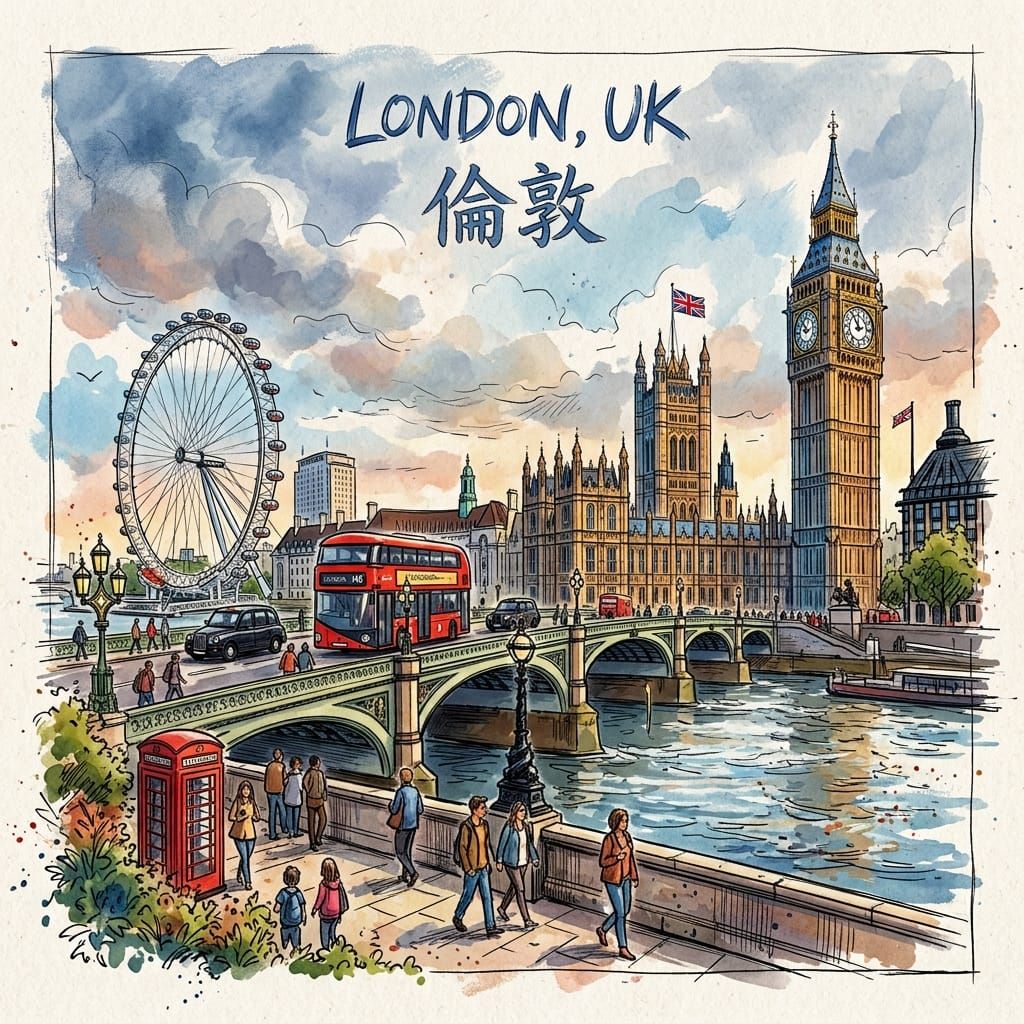
London is one of those cities that becomes harder to understand the more you know about it.
The skyline looks modern.
The streets often look Victorian.
Beneath them are medieval lanes.
Beneath those are Roman remains.
And running through everything is the River Thames.
London is not simply one city built over another.
It is a city in which different Londons continue to occupy the same landscape.
The Roman city became a medieval trading centre.
The medieval capital became the centre of monarchy and Parliament.
The religious landscape was transformed by the Reformation.
The City became a commercial and financial powerhouse.
The Thames became the artery of an imperial trading system.
Industrialization expanded London far beyond its historic core.
The Great Fire forced the rebuilding of much of the City.
Victorian expansion created one of the world's greatest industrial and imperial metropolises.
The Blitz destroyed parts of that metropolis again.
And modern London emerged from reconstruction, migration, infrastructure and economic transformation.
This guide brings these layers together.
Rather than treating London as a collection of landmarks, LONDON — The Complete Authority Guide explores the city as a connected historical system.


London Is Not One City
There is no single historical London.
There is Roman London.
There is medieval London.
There is royal London.
There is sacred London.
There is mercantile London.
There is industrial London.
There is imperial London.
There is the London of the Blitz.
There is the multicultural metropolis of today.
These are not separate cities existing one after another.
They overlap.
A Roman wall can stand beside a modern office tower.
A medieval church can survive inside a financial district.
A Victorian railway can still determine where people live and work.
A former dock can become a cultural quarter.
A bomb site can become a new building.
A medieval market can become a modern visitor destination.
That is the essential character of London:
continuity through transformation.
1. Ancient London — The City Beneath the Streets
 Lawrence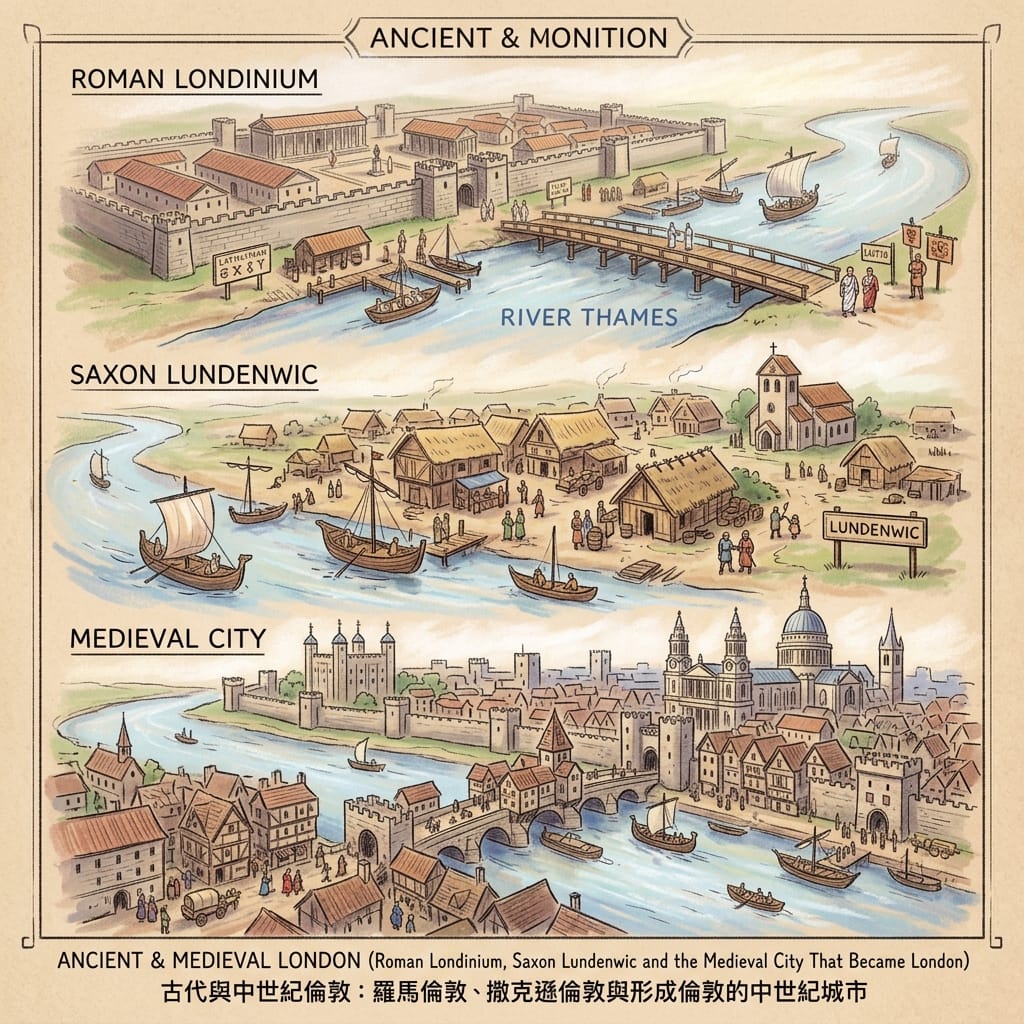
Roman Londinium and the Birth of London
London's story begins long before the modern capital.
The Roman settlement of Londinium developed around the Thames and became an important port and administrative centre of Roman Britain. The London Museum dates Roman London broadly from AD 43–410 and documents surviving remains including walls, baths, temples, an amphitheatre and the Roman fort. (London Museum)
The river mattered.
Roads mattered.
The bridge mattered.
Trade mattered.
And eventually defence mattered.
The Roman city was surrounded by a substantial wall, creating a physical boundary that would influence London's development for centuries.


Roman London was already recognizably urban.
It had administration.
Commerce.
Religion.
Entertainment.
Military power.
And a population drawn into a wider imperial system.
The London Museum's reconstruction of Londinium shows a substantial urban settlement with public buildings, an amphitheatre, temples and defensive infrastructure. (London Museum)
2. Londinium — A City Built Around the River
Why the Thames Made London Possible
The Thames was not simply next to Roman London.
It helped create London.
A major bridge connected routes north and south.
Ships could reach the settlement.
Goods could be unloaded.
The river connected Londinium with wider Roman Britain and the empire.
The Roman city was therefore simultaneously:
port + administrative centre + marketplace + military settlement
Today's City of London occupies essentially the same geographical heart.
Modern offices stand where Roman merchants once traded.
Modern roads cross routes shaped by earlier movement.
The river remains the city's great geographical constant.


3. London Wall — The First Great Boundary
When the City Learned to Define Itself
Roman London eventually acquired substantial defensive walls.
The wall did more than defend the settlement.
It defined the relationship between:
inside and outside
city and countryside
commerce and hinterland
authority and frontier
The Romans built the principal wall around AD 200–230, enclosing a settlement that stretched across much of today's City of London. The wall was repaired and rebuilt many times and remained important into the medieval period. (London Museum)
The gates became important points of passage.
The medieval city later reused the wall.
Parts survived into modern London.


This is a recurring London theme:
later generations rarely begin with an entirely blank landscape.
They inherit boundaries.
Roads.
Buildings.
Property lines.
And memories.
4. Medieval London — The River, the Crown and the Marketplace
The City Re-emerges
London developed again as a major centre of commerce and political power during the medieval period.
The Thames remained the great connector.
London Bridge became a critical crossing.
Markets fed the city.
Guilds organized trades.
Churches dominated neighbourhoods.
Westminster developed increasingly important royal and governmental functions.
The result was a city with multiple centres of gravity.
The City of London became the commercial and civic centre.
Westminster became increasingly royal and political.
The Thames connected them.


5. Royal & Political London — Where Power Built the City
 Lawrence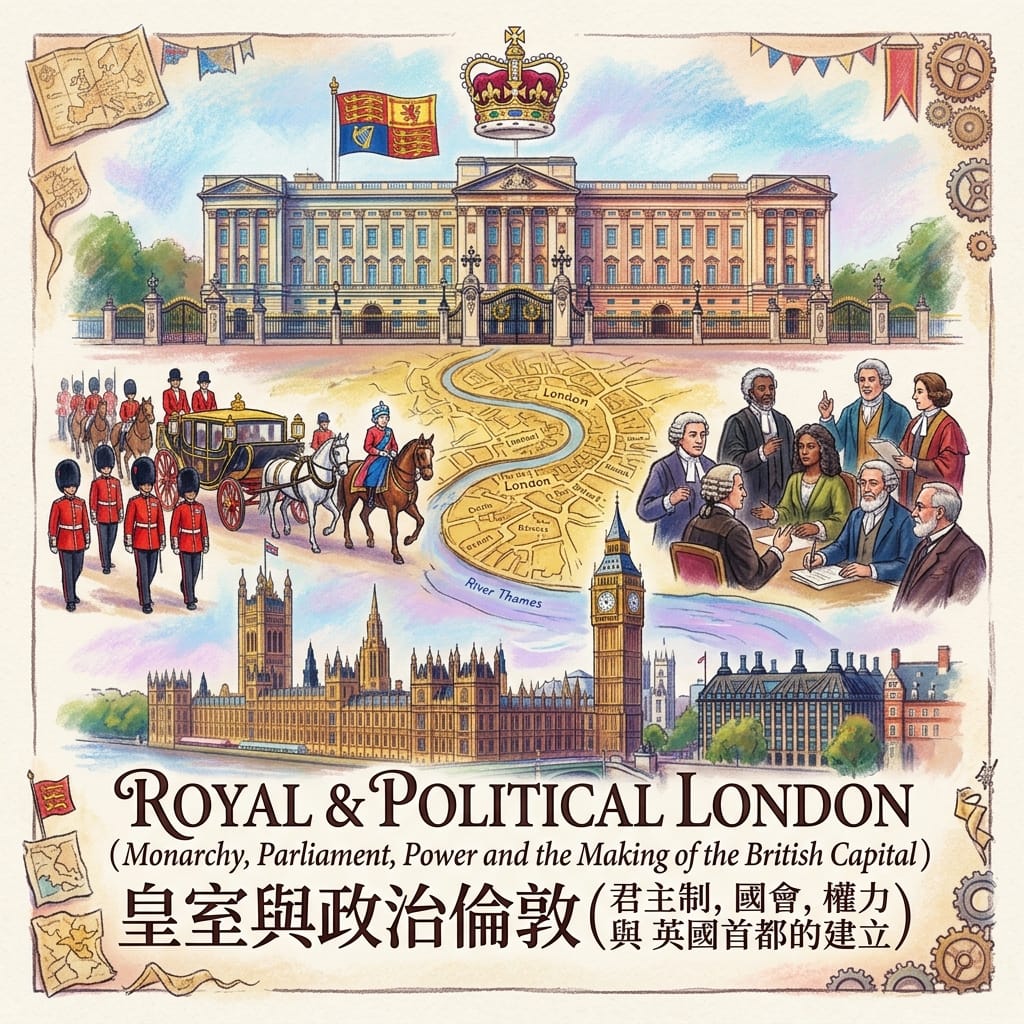
London as the Capital of the Kingdom
London's importance cannot be explained through trade alone.
It became the political centre of England.
Westminster developed into the royal and governmental landscape.
Parliament emerged here.
Westminster Abbey became inseparable from monarchy.
The Tower of London represented military authority, royal residence, imprisonment and state power.


6. Westminster — Monarchy, Parliament and the State
Westminster represents a different London from the City.
The City grew through commerce.
Westminster grew through political power.
The two eventually became physically connected by the expanding metropolis.
Yet the distinction remains useful.
When you stand in Westminster, you are standing in a landscape where England—and later the United Kingdom—developed institutions of:
- Monarchy
- Parliament
- Government
- Law
- Constitutional power


7. Sacred London — The Spiritual City Beneath the Capital
 Lawrence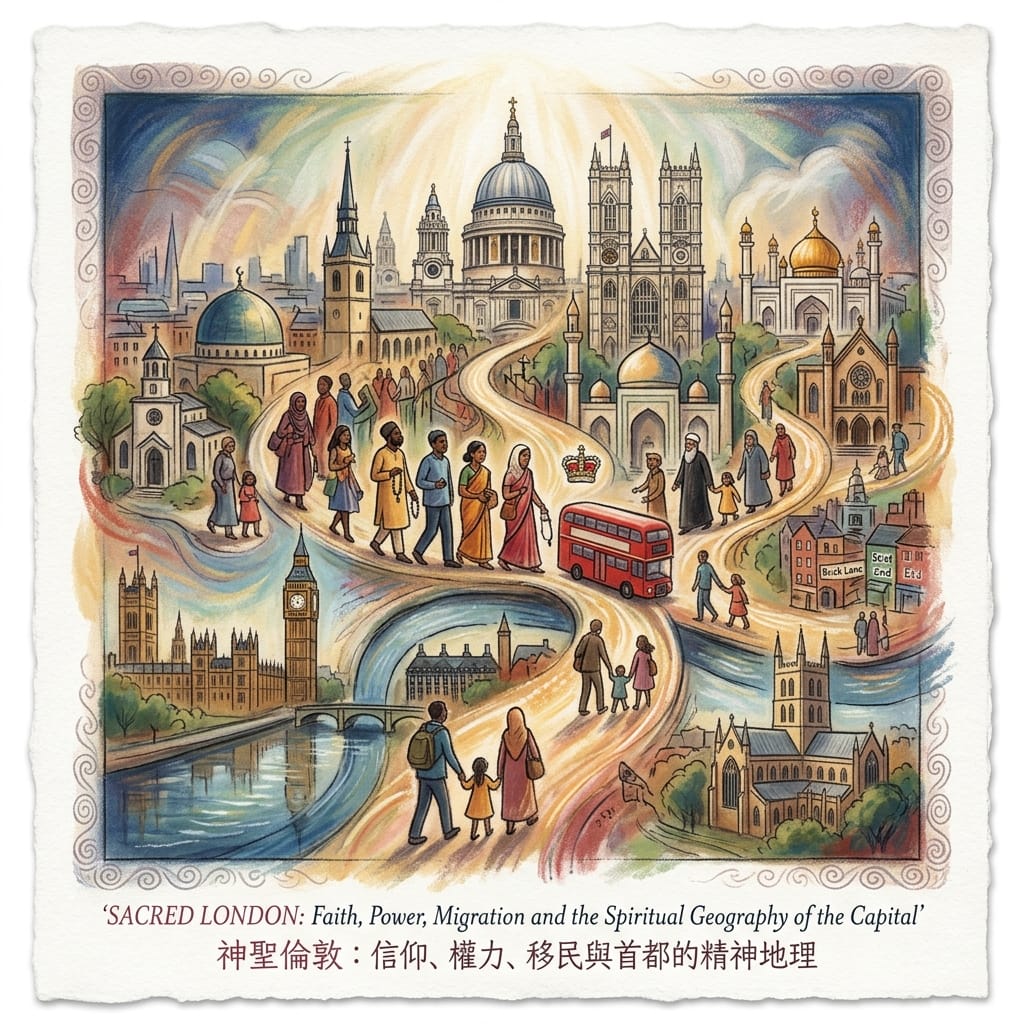
London cannot be understood without religion.
For centuries, churches, monasteries, abbeys and parish institutions structured urban life.
Westminster Abbey connected monarchy and Christianity.
St Paul's Cathedral became a defining symbol of the City.
Parish churches organized neighbourhood communities.
Then the Reformation transformed the relationship between religion and the English state.
Monasteries were dissolved.
Religious wealth was redistributed.
Institutions were destroyed or transformed.
Yet religion never disappeared.
Later migration brought new communities and new faith traditions.
London became one of the world's most religiously diverse cities.


8. The City of London — The Commercial Heart
From Medieval Market to Global Financial Centre
London's commercial power is older than the British Empire.
Markets and merchants shaped the medieval city.
Guilds organized skilled trades.
The Thames connected London to the wider world.
The City developed into a major centre of finance and trade.
Today, skyscrapers occupy much of the historic core.
But the underlying geography remains extraordinary.
Roman London.
Medieval London.
Post-Fire London.
Victorian London.
Modern financial London.
All exist within roughly the same geographical area.
The London Museum describes the City of London as the place where the Romans founded Londinium and the historic city that evolved into today's financial centre. (London Museum)


9. The Thames — London's Longest Historical Institution
 Lawrence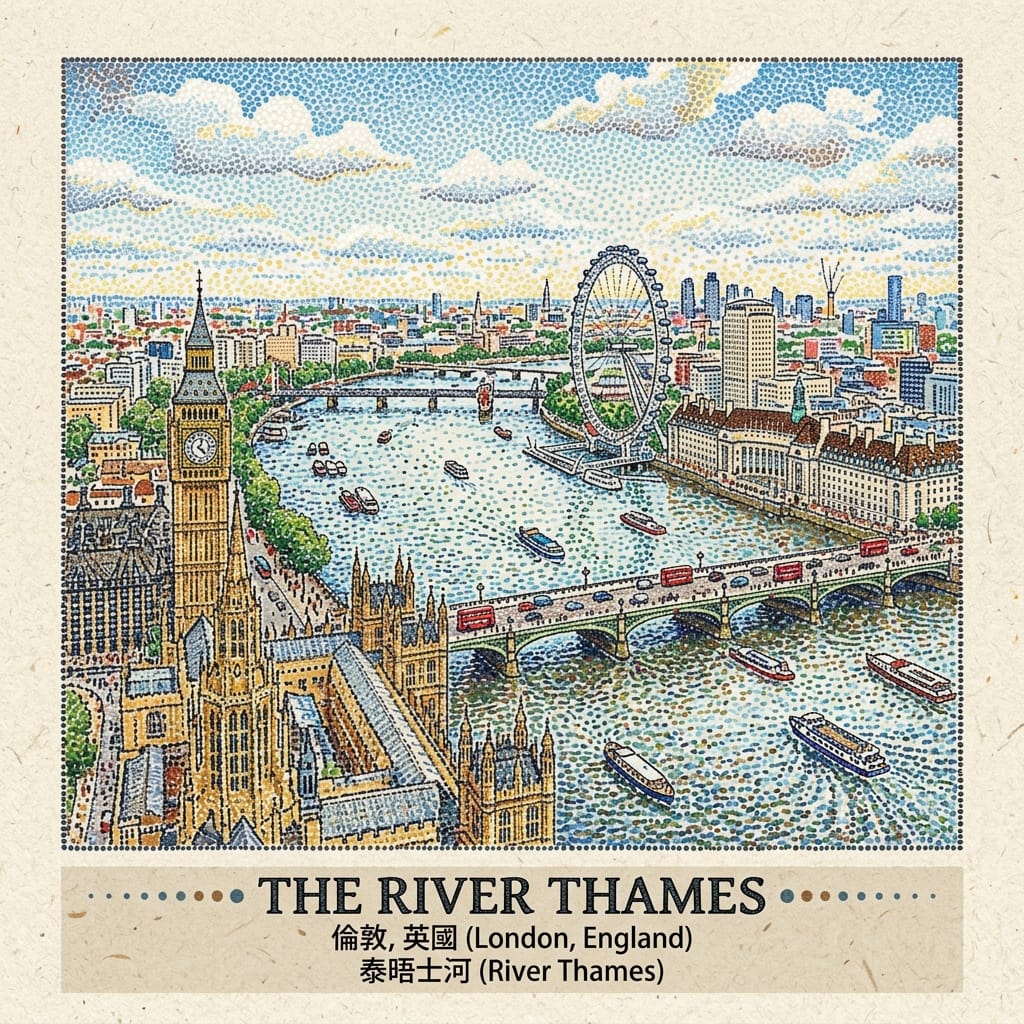
The River That Made the City Possible
If London has one historical thread connecting almost every era, it is the Thames.
The river provided:
- Transport
- Food
- Trade
- Defence
- Industry
- International connectivity
Before modern roads and railways, the river was London's greatest transport artery.
Later, the docks transformed the lower Thames into one of the world's greatest port landscapes.
But the river also carried London's waste.
Victorian pollution became a public-health crisis.
The Thames therefore records both London's extraordinary growth and the environmental cost of that growth.


Historic England's maritime collections provide extensive photographic evidence of London's changing relationship with the Thames and its working waterfront.
10. The Great Fire of 1666 — Destruction Becomes Transformation
When London Burned and Rebuilt Itself
In September 1666, the Great Fire devastated much of the City.
Thousands of buildings disappeared.
The medieval city was transformed.
St Paul's Cathedral had to be rebuilt.
Christopher Wren's reconstruction became one of the defining architectural projects in London's history.
But London did not simply become a fully planned new city.
Property ownership, economic interests and older routes constrained reconstruction.
The city was transformed—but not erased.


11. Victorian London — The City Explodes Outward
From Capital to Industrial Metropolis
The nineteenth century transformed London beyond recognition.
Population expanded dramatically.
Railways connected London to the rest of Britain.
Factories and warehouses multiplied.
Suburbs spread outward.
The docks expanded.
Sewers transformed public health.
Gas and electricity changed the urban environment.
London became one of the world's largest industrial cities.
This was also an age of extraordinary inequality.
Industrial wealth and urban poverty existed side by side.
The Victorian city was simultaneously:
wealthy + crowded + industrial + innovative + unequal


12. Industrial & Working London — The City Behind the Empire
 Lawrence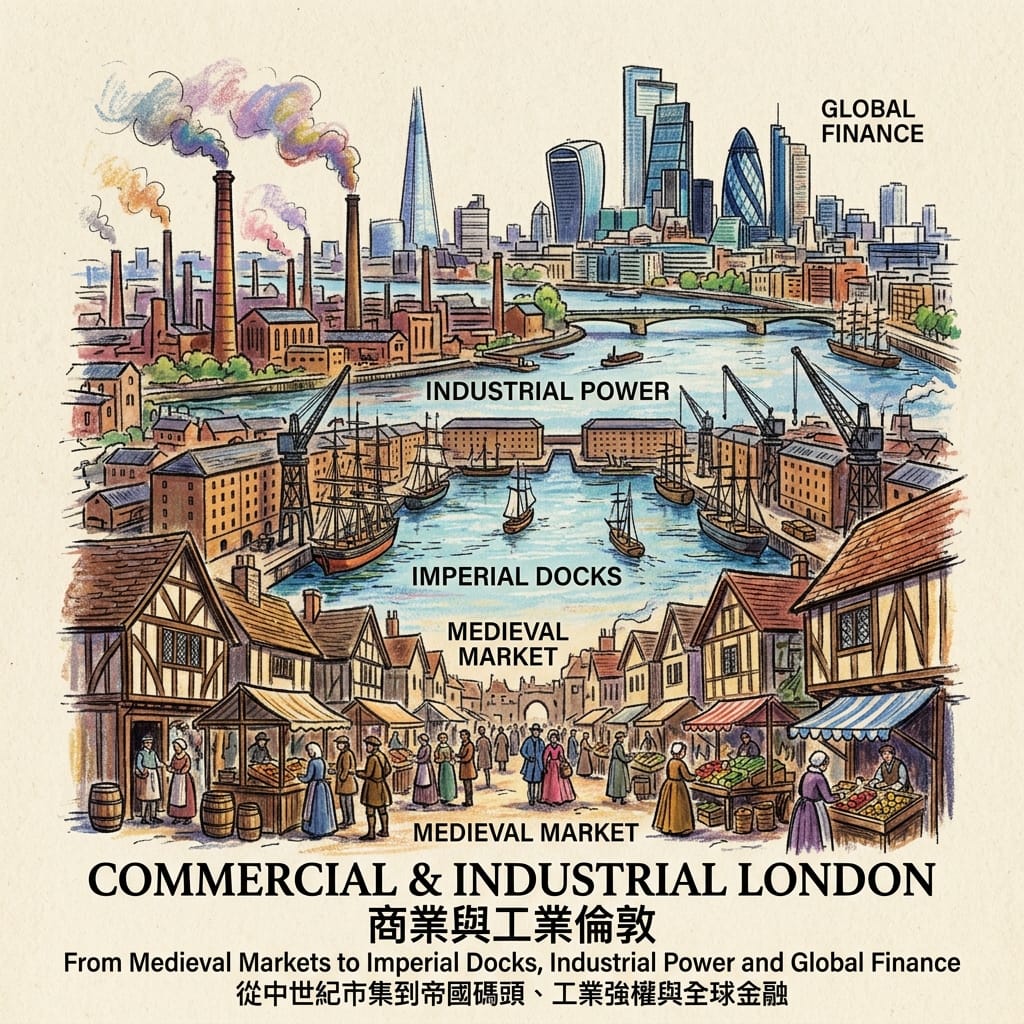
Who Built Victorian London?
London's imperial image can obscure the people who physically built and operated it.
Dock workers.
Railway workers.
Factory workers.
Builders.
Street vendors.
Printers.
Sailors.
Domestic servants.
Shopkeepers.
London's industrial economy depended upon millions of people whose lives rarely appear in grand architectural histories.
Industrial & Working London explores the relationship between:
labour + housing + transport + poverty + public health + economic growth


13. London's Empire — A World City Before the Phrase Existed
The Capital of a Global Network
By the nineteenth century, London sat at the centre of an enormous imperial system.
Goods arrived from across the world.
Capital circulated through London.
Insurance companies managed commercial risk.
Government departments administered imperial territories.
Museums collected objects from around the world.
Migrants arrived from across the empire and eventually reshaped London itself.
This creates one of London's most important historical paradoxes:
the empire changed London as much as London changed the empire.


The imperial history of London is best understood through both power moving outward and people, goods and cultures moving inward.
14. The Underground — When London Invented the Metropolis Beneath Itself
Transport as Urban Transformation
London's Underground changed the meaning of distance.
People could live farther from the centre.
Workers could commute.
Suburbs expanded.
Stations became new commercial centres.
The Underground therefore did more than transport Londoners.
It created new London.


The first underground railway opened in London in 1863, establishing a new type of metropolitan transport that would profoundly influence the city's expansion.
15. Modern London — War, Reconstruction and Reinvention
 Lawrence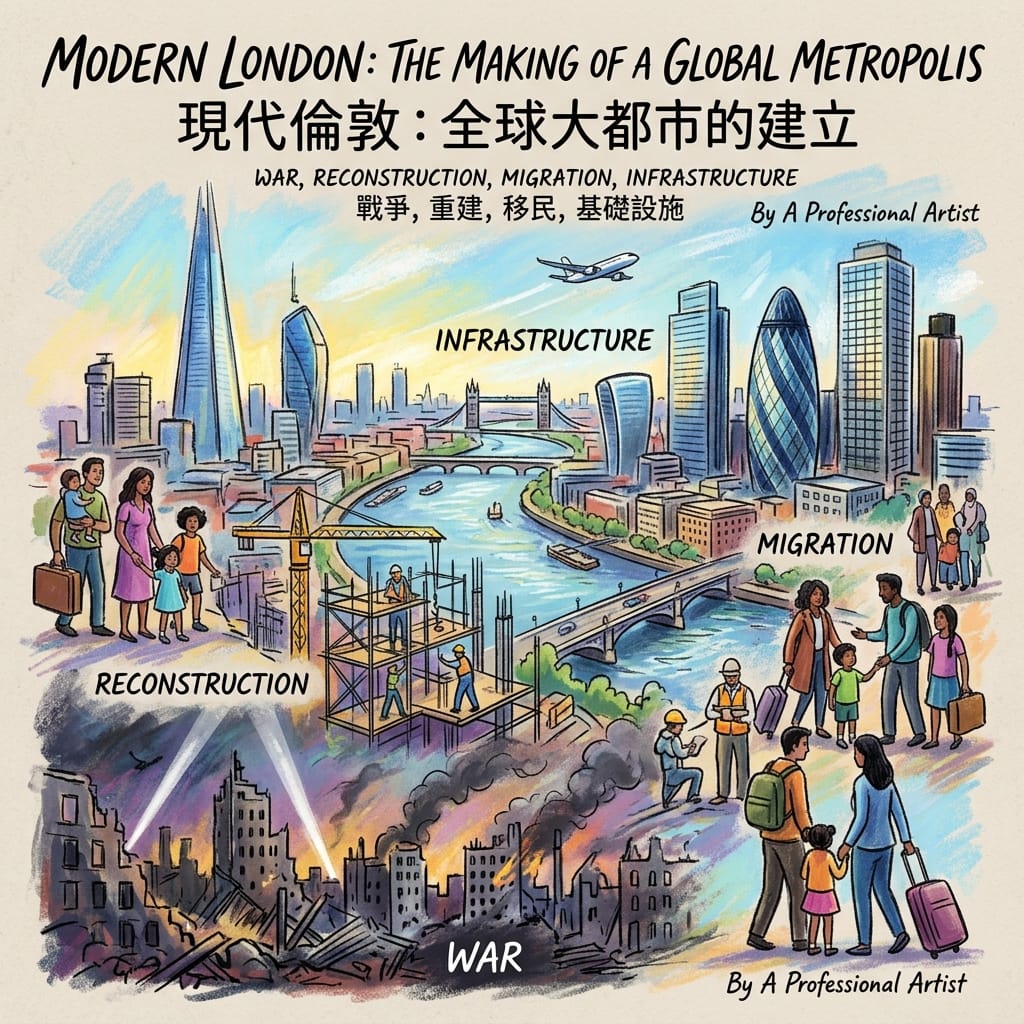
The London That Survived the Twentieth Century
London entered the twentieth century as an imperial capital.
It emerged as a fundamentally different metropolis.
The First World War changed society.
The Blitz transformed the physical landscape.
Postwar reconstruction changed housing and infrastructure.
The docks declined.
Suburbs expanded.
Migration transformed communities.
The City increasingly became a global financial centre.
Docklands became a new commercial district.
Modern London is therefore not a single transition.
It is a series of reinventions.


The visual sequence from early twentieth-century London to the present makes the transformation of the metropolis immediately visible.
16. The Blitz — A City Under Fire
Destruction Without the End of London
The Blitz began in September 1940.
London became the target of sustained bombing.
Historic England records almost 28,000 high-explosive bombs and more than 400 parachute mines recorded in Greater London between October 1940 and June 1941. The raid of 10–11 May 1941 produced more than 2,000 fires across 61 London boroughs. (Historic England)
The destruction transformed the city's physical landscape.
Homes disappeared.
Churches burned.
Factories were destroyed.
The docks were attacked.
Railway infrastructure suffered.
Yet London survived.


The image of St Paul's Cathedral emerging through smoke became one of the most powerful visual representations of London's wartime survival.
17. Postwar London — From Imperial Capital to Multicultural Metropolis
The People Who Changed the City
The end of empire did not end London's global role.
Migration changed the city.
Caribbean communities.
South Asian communities.
African communities.
European communities.
Later migration from every part of the world.
New restaurants appeared.
New markets developed.
New places of worship emerged.
Music scenes changed.
Languages changed.
Neighbourhoods acquired new identities.
Modern London became increasingly multicultural.
This diversity is not simply a recent characteristic.
It is part of the historical transformation of twentieth-century London.


18. Docklands — When the Old Port Became a New City
Industrial Decline Becomes Financial Reinvention
London's docks were once central to imperial trade.
Then containerization, larger ships and changing logistics made many traditional docks obsolete.
Warehouses became empty.
Working communities experienced economic decline.
Then redevelopment began.
Canary Wharf emerged as a new financial centre.
The landscape changed:
dock + warehouse + labour
became
office tower + finance + residential development
But old dock basins and warehouse structures survive.
The past remains inside the new city.


19. Hidden London — The City the Tourist Map Does Not Show
 Lawrence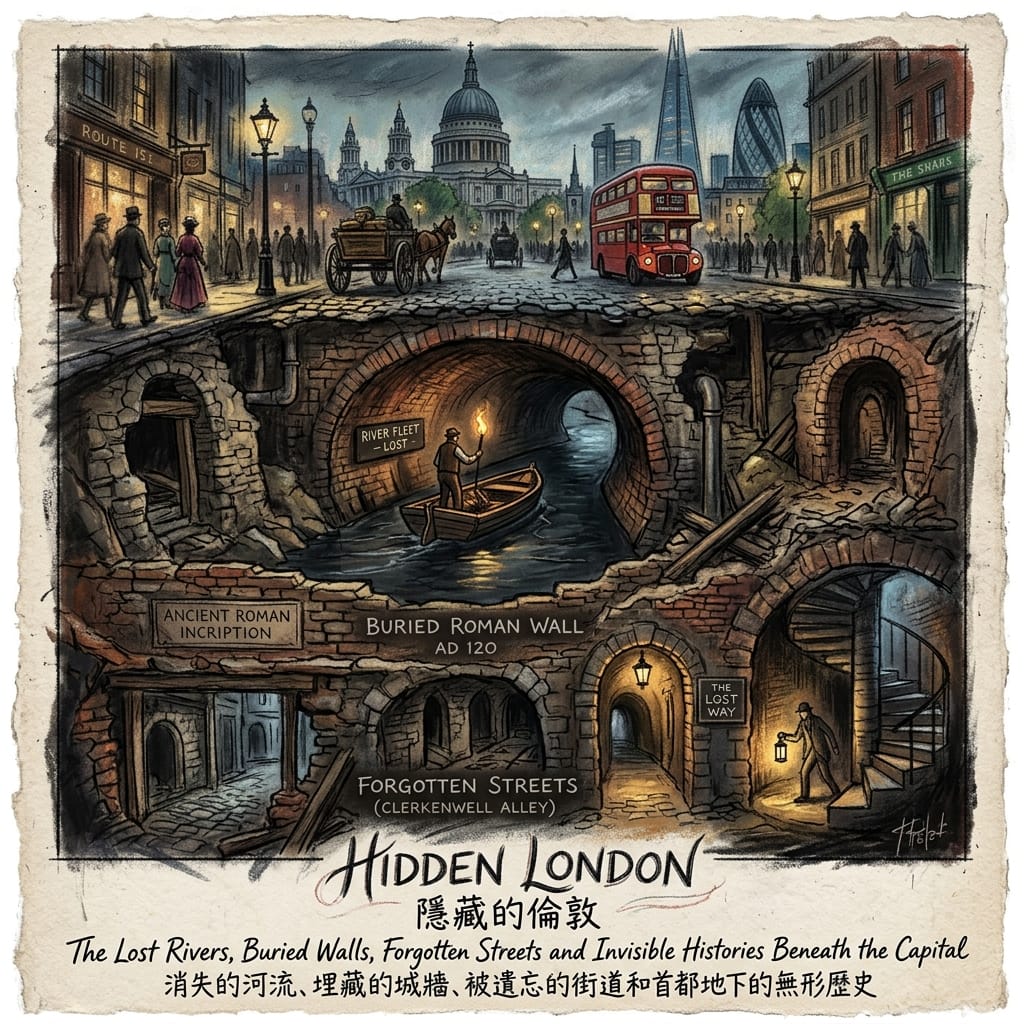
Urban Survival Beneath the Landmark City
London's most revealing histories often survive in places that do not appear on a conventional tourist itinerary.
They are found in:
- Alleyways
- Churchyards
- Railway arches
- Old markets
- Canal networks
- Former factories
- Bomb sites
- Hidden courtyards
- Roman remains
- Medieval street patterns
Historic England emphasizes London's remarkable time-depth, with archaeological, architectural and historical layers continuously interacting within the modern city.


London Through Six Historical Layers
London becomes easier to understand when its history is organized into six interconnected systems.
Ancient & Medieval London
 Lawrence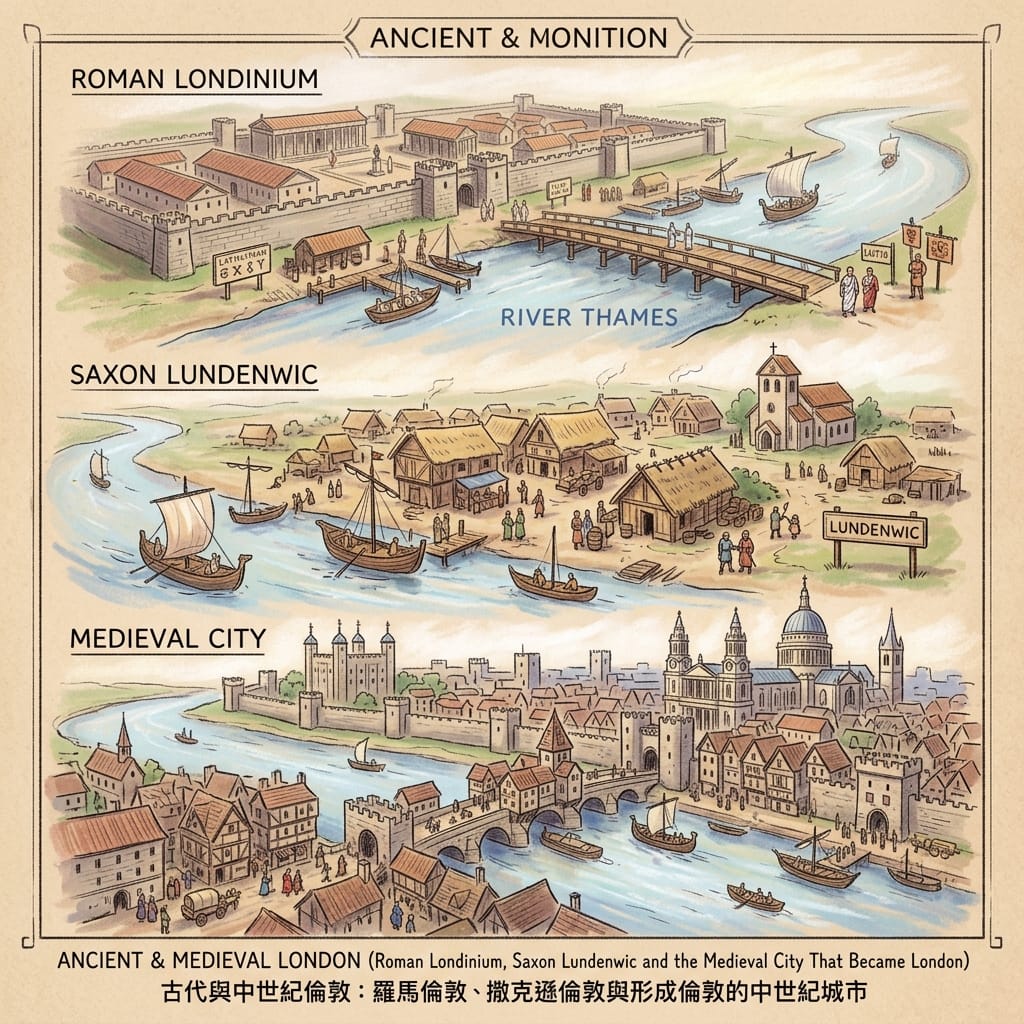
The foundation
Roman Londinium, London Wall, medieval commerce, bridges, markets and guilds.
Royal & Political London
 Lawrence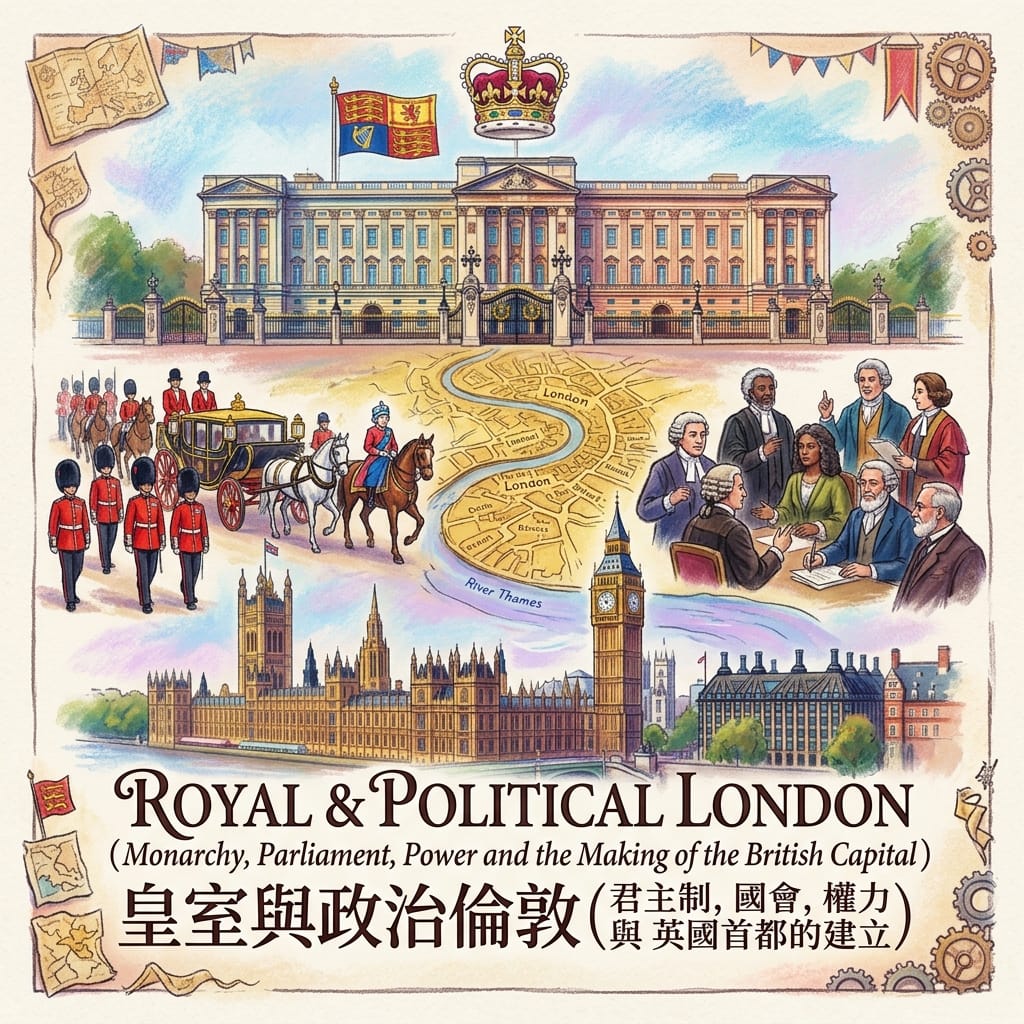
The capital
Monarchy, Parliament, Westminster, government and state power.
Sacred London
 Lawrence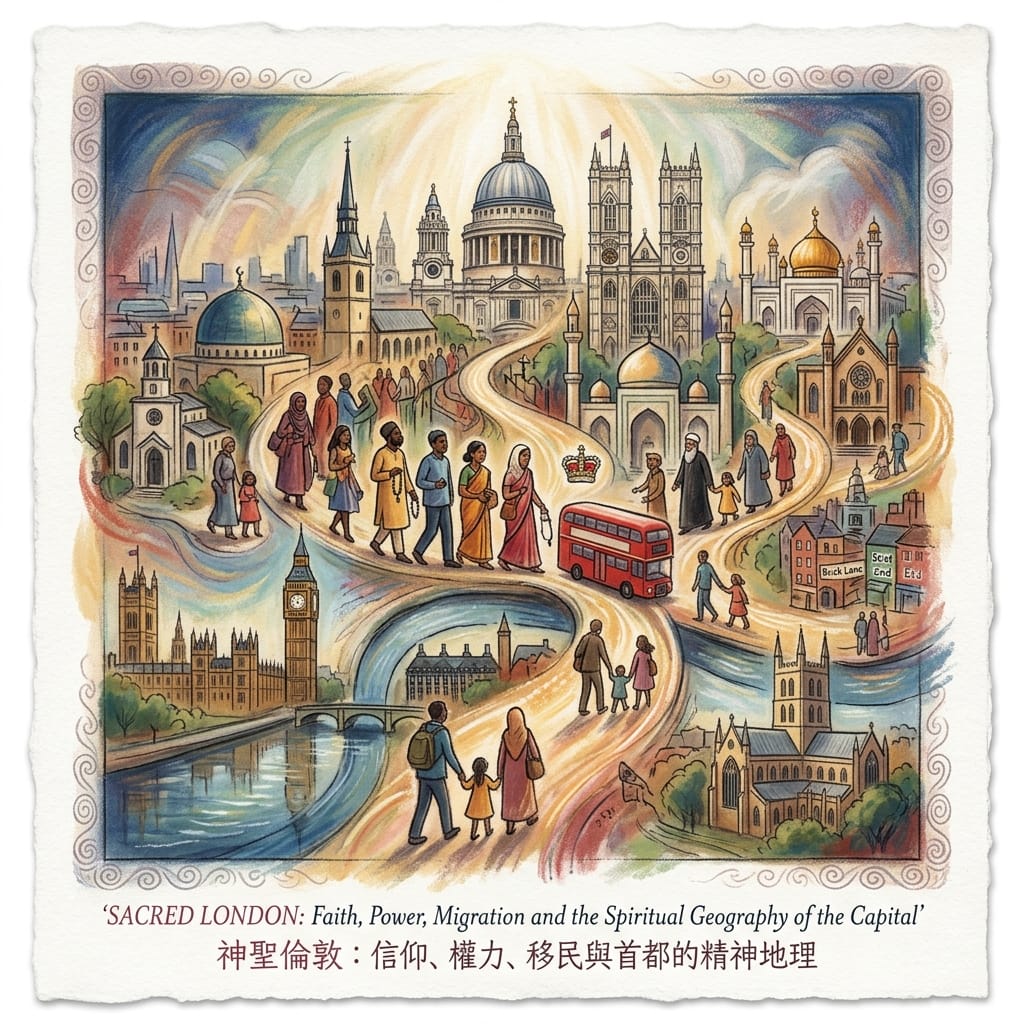
The spiritual city
Cathedrals, abbeys, churches, Reformation and religious diversity.
Commercial & Industrial London
 Lawrence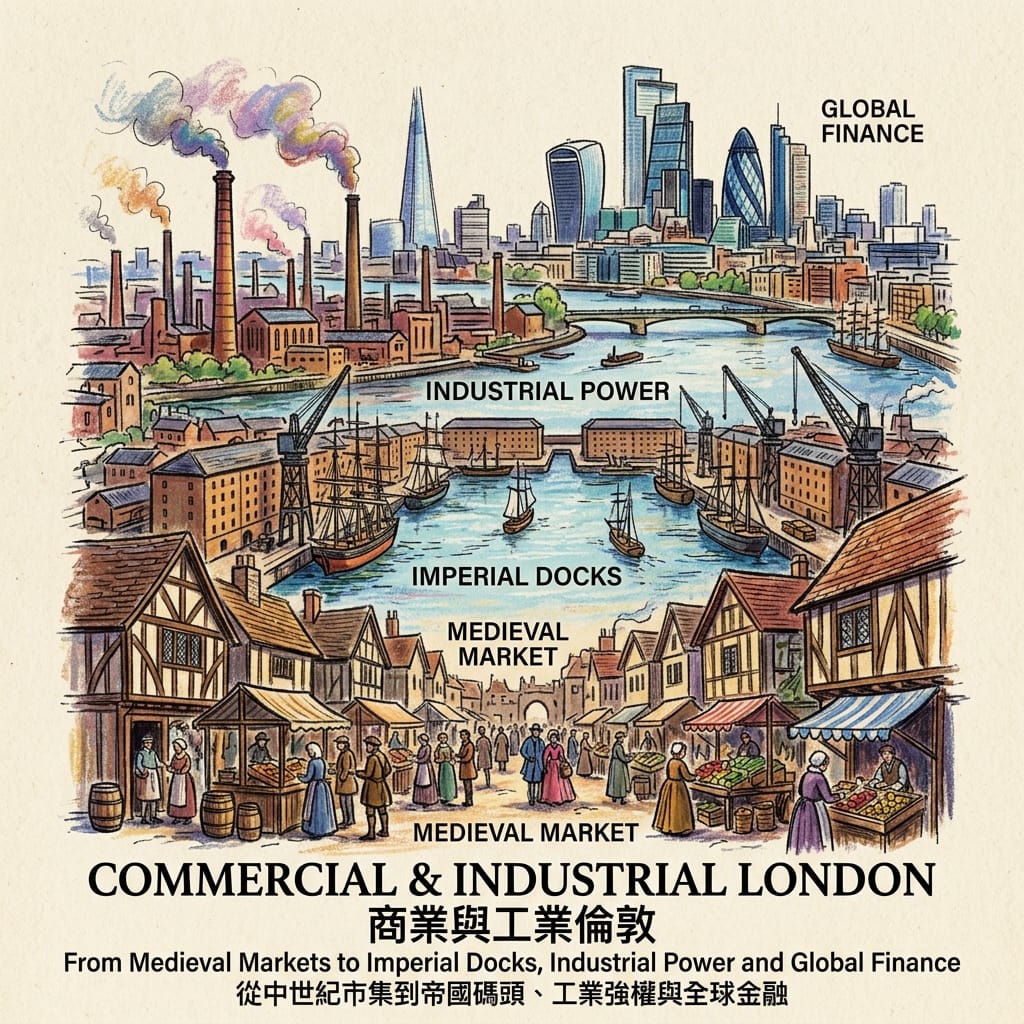
The economic engine
Markets, Thames trade, docks, factories, labour, finance and empire.
Modern London
 Lawrence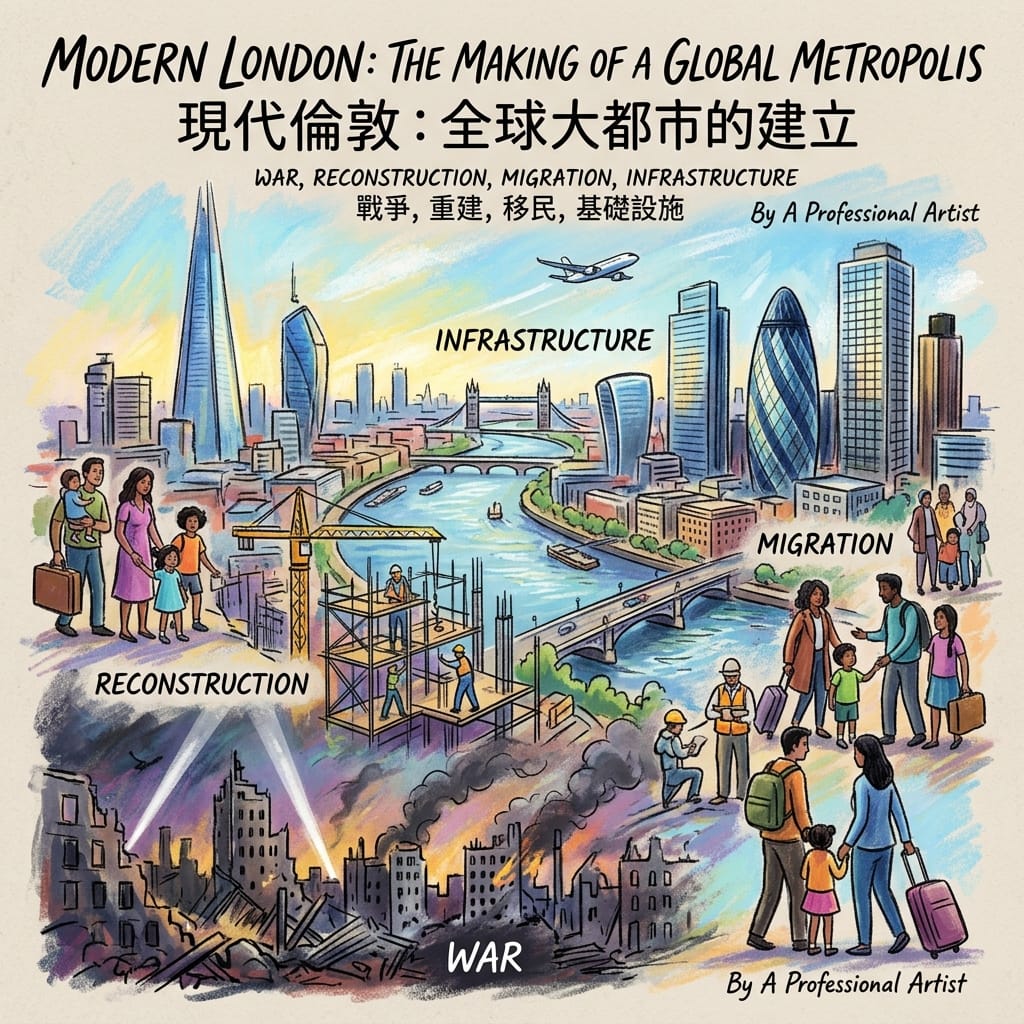
The reinvented metropolis
Railways, suburbs, war, reconstruction, migration, Docklands and global finance.
Hidden London
 Lawrence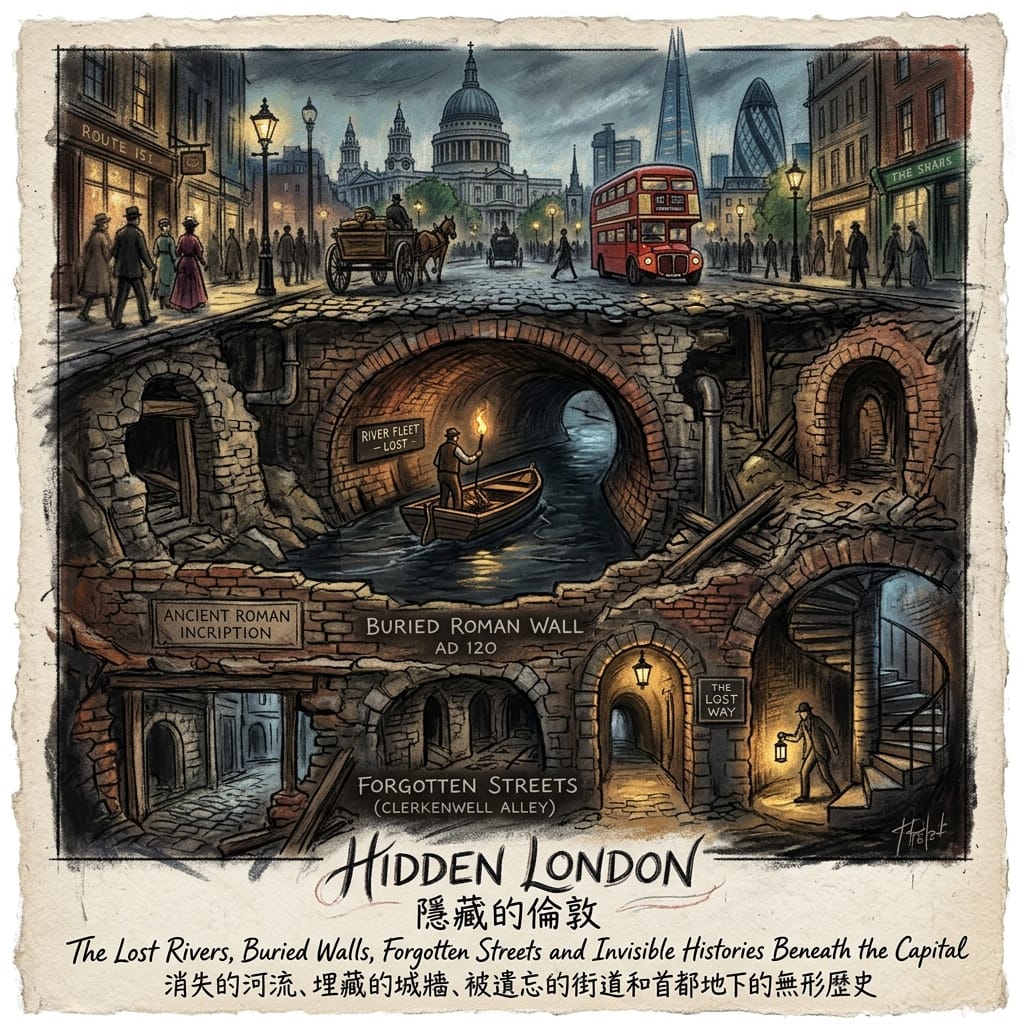
The surviving city
Archaeology, lost landscapes, overlooked communities and memories beneath modern London.


These are not six chapters that ended one after another.
They remain visible simultaneously.
The Thames — London's Master Historical Thread
If there is one physical element connecting nearly every London story, it is the Thames.
Roman London grew around it.
Medieval trade depended on it.
The Crown used it.
Merchants used it.
The docks transformed it.
Industry polluted it.
Wartime attacks targeted its industrial landscape.
Modern London redeveloped its waterfront.
The river has survived every transformation.


The Thames becomes the visual spine of London's history:
Roman → Medieval → Royal → Commercial → Industrial → Imperial → Modern
London as a City of Rebuilding
One pattern appears repeatedly.
London builds.
London burns.
London expands.
London industrializes.
London is bombed.
London reconstructs.
London redevelops.
The Great Fire and the Blitz are separated by centuries.
But they reveal the same deeper characteristic:
London turns catastrophe into urban transformation.


London rarely returns exactly to what existed before.
It absorbs destruction into its next form.
London and the Problem of Empire
A serious historical understanding of London must confront empire.
London became extraordinarily wealthy partly because it sat at the centre of global imperial networks.
Goods flowed toward the capital.
Capital circulated through it.
Government operated through it.
Objects arrived in its museums.
Migrants arrived in its neighbourhoods.
But empire also transformed London itself.
Food.
Music.
Religion.
Language.
Architecture.
Population.
Commercial districts.
Modern London cannot be separated from these global connections.


Why London Is Historically Exceptional
London is not historically exceptional because every building is old.
It is exceptional because so many historical systems remain visible at once.
Roman archaeology.
Medieval street patterns.
Royal institutions.
Parliament.
Churches.
Markets.
Victorian infrastructure.
Industrial docks.
Railways.
Bomb sites.
Postwar housing.
Financial towers.
Creative districts.
The result is not a museum.
It is a living archaeological landscape.
London by Geography
The City of London
Two thousand years of political and commercial continuity
Roman Londinium.
Medieval guilds.
Great Fire.
Financial capital.
Westminster
The political and royal centre
Abbey.
Parliament.
Palaces.
Government.
Southwark
The alternative city across the river
Roman settlement.
Medieval markets.
Theatre.
Industry.
East London
Trade, migration and working London
Docks.
Markets.
Industry.
Migration.
Regeneration.
Docklands
From imperial port to global finance
Warehouses.
Decline.
Canary Wharf.
Waterfront redevelopment.
Outer London
The metropolitan city
Railways.
Suburbs.
Migration.
Housing.
Green space.
Hidden histories.


How to Explore London Through History
A conventional travel guide asks:
What should I see?
A historical guide asks:
What happened here?
Then:
What survived?
And finally:
Why is the city still shaped by it?
Walk beside the Thames and you are following a Roman, medieval, imperial and industrial highway.
Stand in the City and you are walking through two thousand years of commerce.
Stand in Westminster and political history becomes physical.
Enter a church and religious history becomes tangible.
Walk through Docklands and industrial decline becomes visible.
Walk through an ordinary East London neighbourhood and migration history emerges.
Look beneath a modern office district and you may discover Roman or medieval London beneath your feet.
London is best understood as historical layers rather than isolated attractions.
Final Reflection — Learning to Read London
There are two ways to experience London.
You can visit its famous places.
Or you can learn to read the city.
The first shows you Westminster Abbey.
The second shows you the relationship between monarchy, religion and political power.
The first shows you Tower Bridge.
The second reveals the Thames, docks, trade and industrial expansion.
The first shows you St Paul's.
The second reveals the Great Fire, Wren's rebuilding and the resilience of the City.
The first shows you Canary Wharf.
The second reveals the transformation from imperial docklands to global finance.
The first shows you an old railway arch.
The second reveals the infrastructure that created metropolitan London.
And once you learn to read the city, even ordinary streets become historical evidence.
A wall becomes Roman.
A lane becomes medieval.
A market becomes an industrial memory.
A churchyard becomes a record of religion and disease.
A railway becomes an explanation for suburban London.
A tower becomes the latest layer in a city thousands of years in the making.
London is not simply old.
London is layered.
It has survived conquest, fire, plague, industrialization, empire, war and extraordinary economic transformation.
And each time, it rebuilt itself without completely erasing what came before.
That is the essence of London.
A city that continuously changes — while carrying its previous lives within it.
Historical Sources & Further Reading
Historic England
Historic England is particularly valuable for archaeological layers, historic buildings, Roman and medieval London, wartime landscapes and architectural history. Its London research emphasizes the exceptional time-depth of the capital. (Historic England)
London Museum
The London Museum provides extensive material on Roman London, London Wall, the Roman fort, the Temple of Mithras and the everyday life of Londinium. (London Museum)
Other Important Sources
- London Metropolitan Archives
- City of London Corporation
- Historic Royal Palaces
- Westminster Abbey archives
- National Archives
- British Library
- Imperial War Museums
- London Transport Museum
- Port of London Authority
- Greater London Authority
- Museum of London Archaeology
- Local historical societies
- Community archives and oral-history projects
For Lawrence Travel Stories, major historical claims should be supported with contextual citations beside the relevant passages.
Continue Exploring London
Ancient & Medieval London
 Lawrence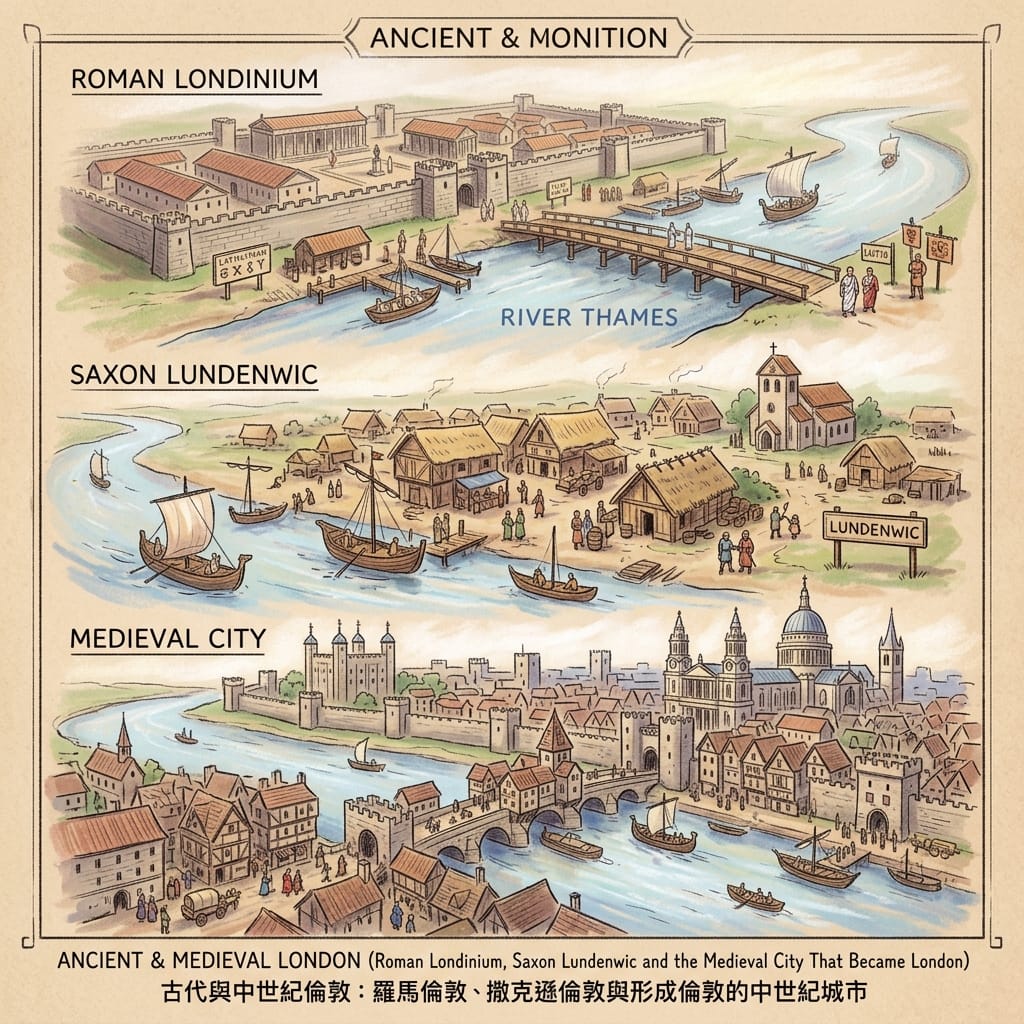
→ Roman Londinium
→ London Wall
→ Medieval London
→ London Bridge
→ Southwark
→ Markets and guilds
Royal & Political London
 Lawrence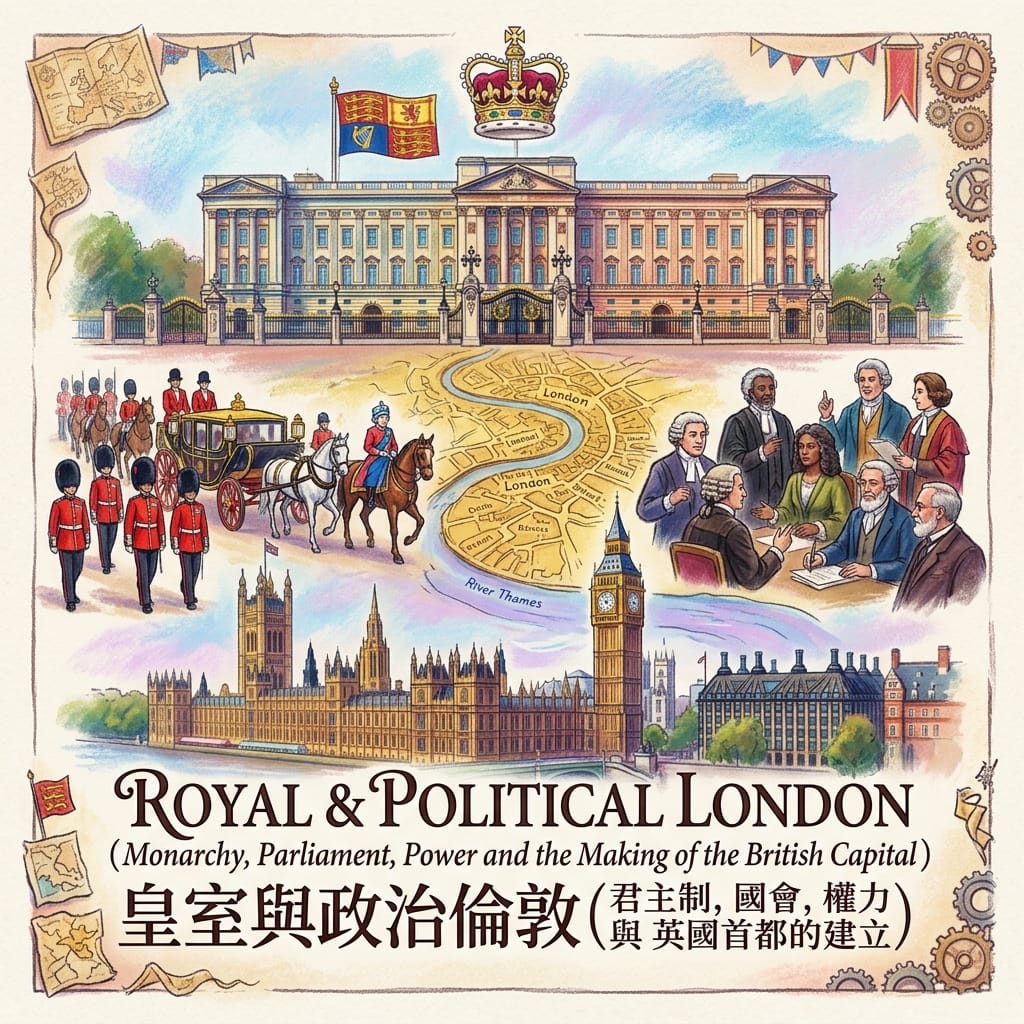
→ Tower of London
→ Westminster Abbey
→ Parliament
→ Whitehall
→ Buckingham Palace
Sacred London
 Lawrence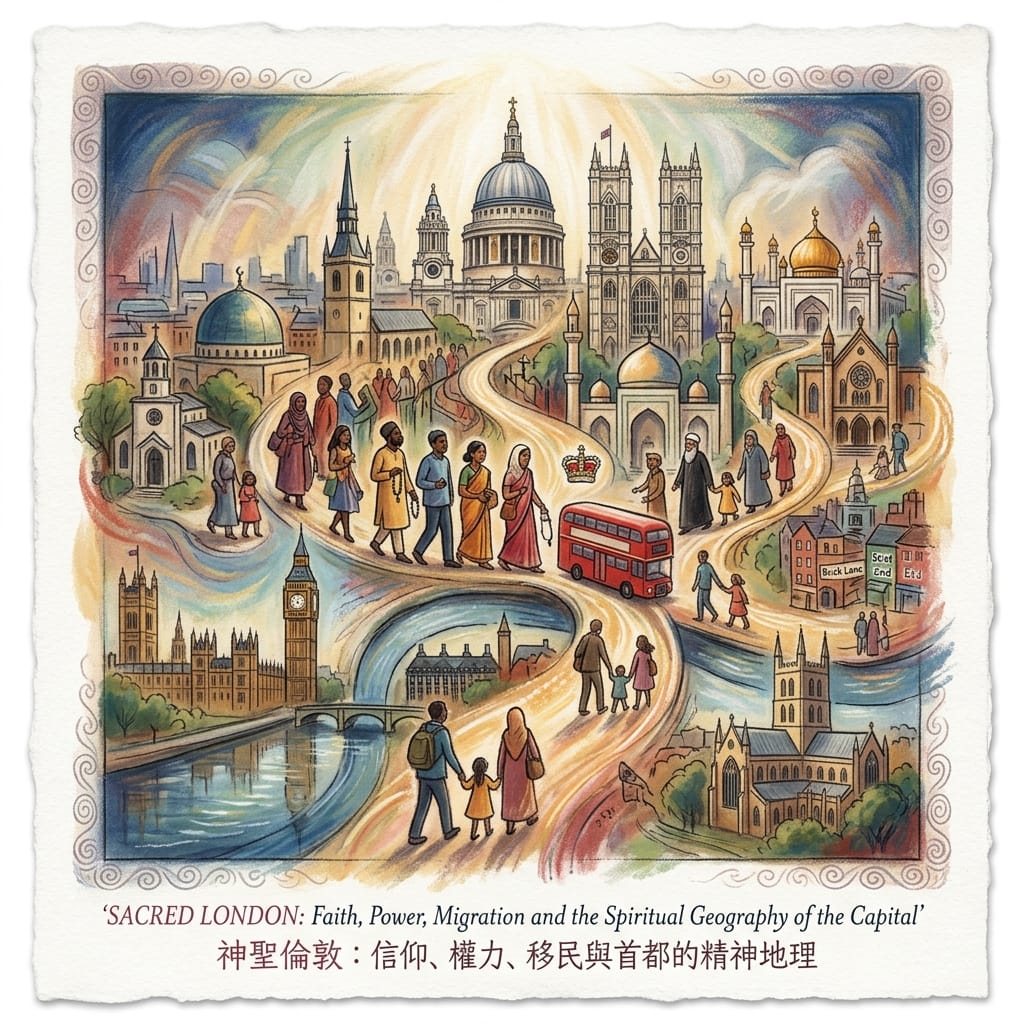
→ St Paul's Cathedral
→ Westminster Abbey
→ Medieval churches
→ Reformation London
→ London's religious diversity
Commercial & Industrial London
 Lawrence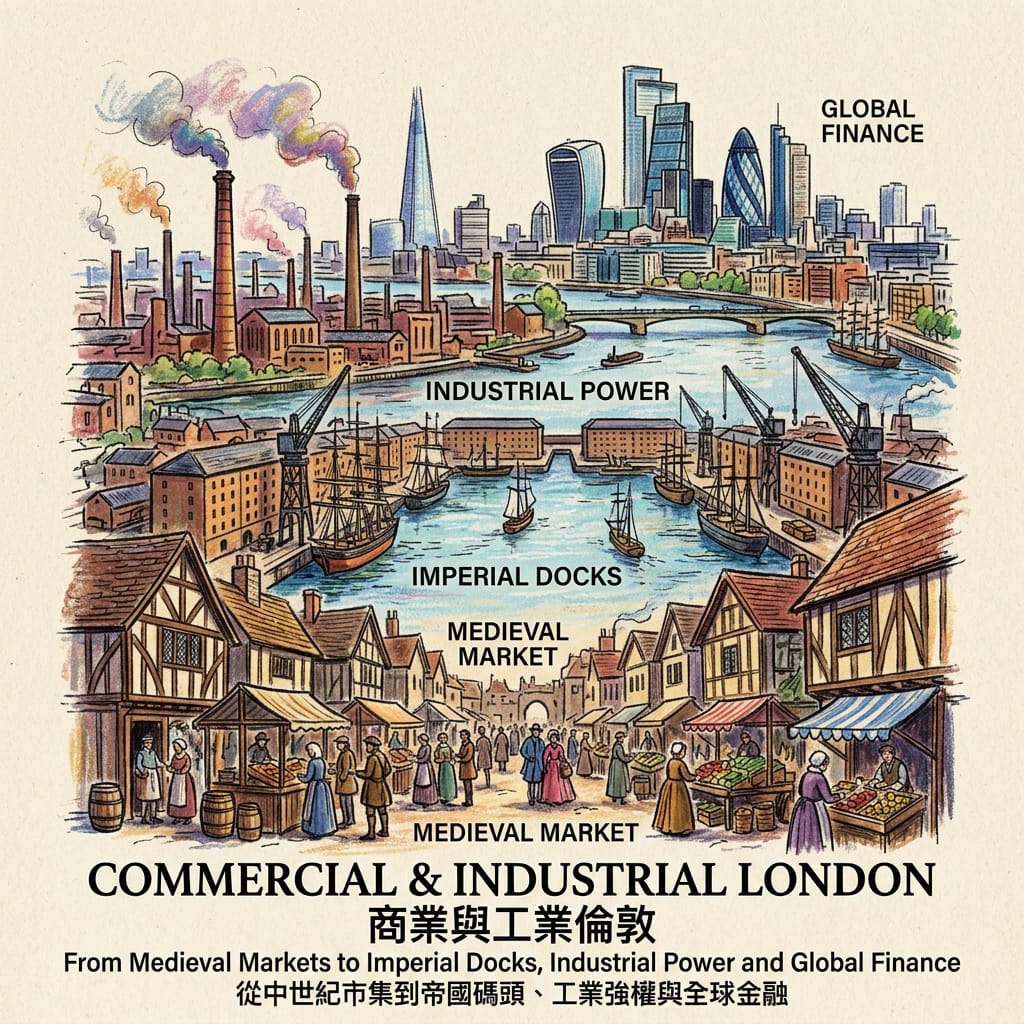
→ City of London
→ Thames trade
→ Markets
→ Docks
→ Victorian industry
→ Finance
Modern London
 Lawrence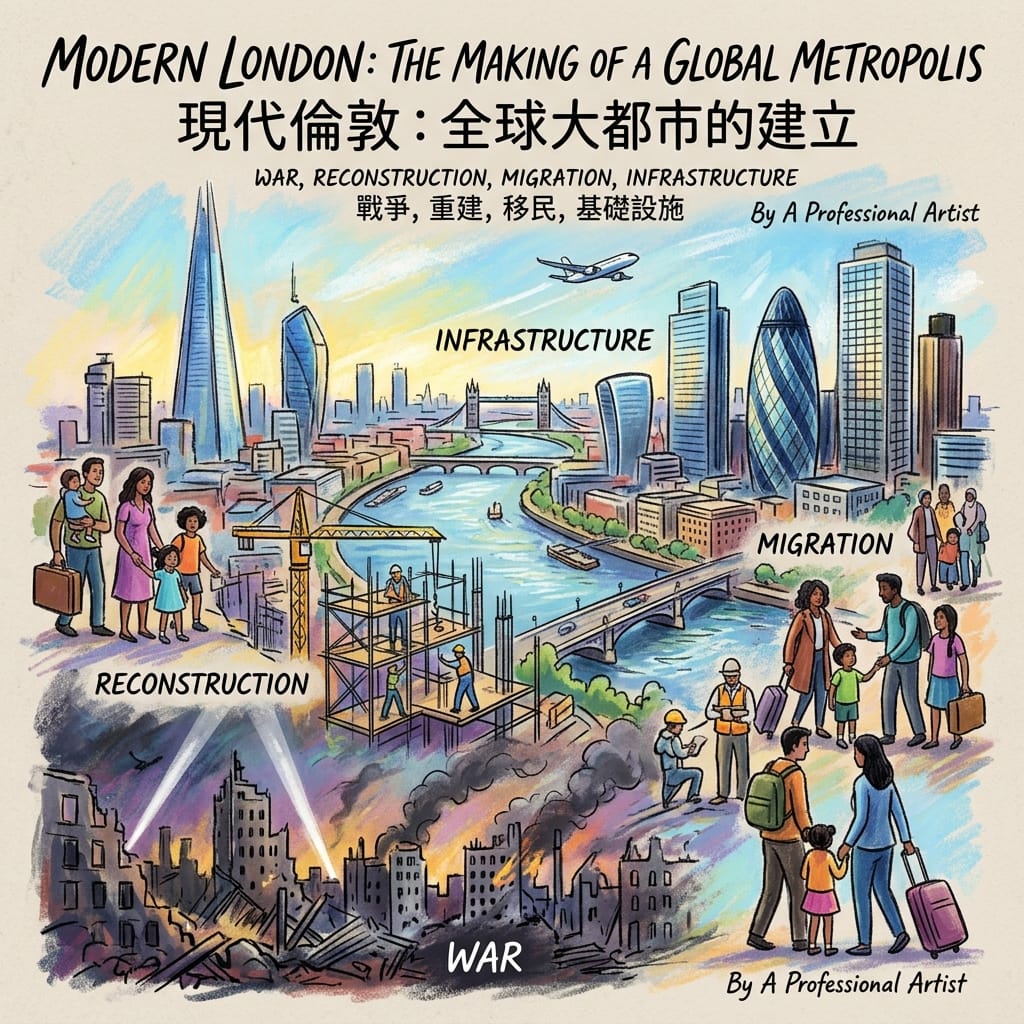
→ Great Fire reconstruction
→ Victorian expansion
→ Underground
→ Blitz
→ Postwar London
→ Migration
→ Docklands
Hidden London
 Lawrence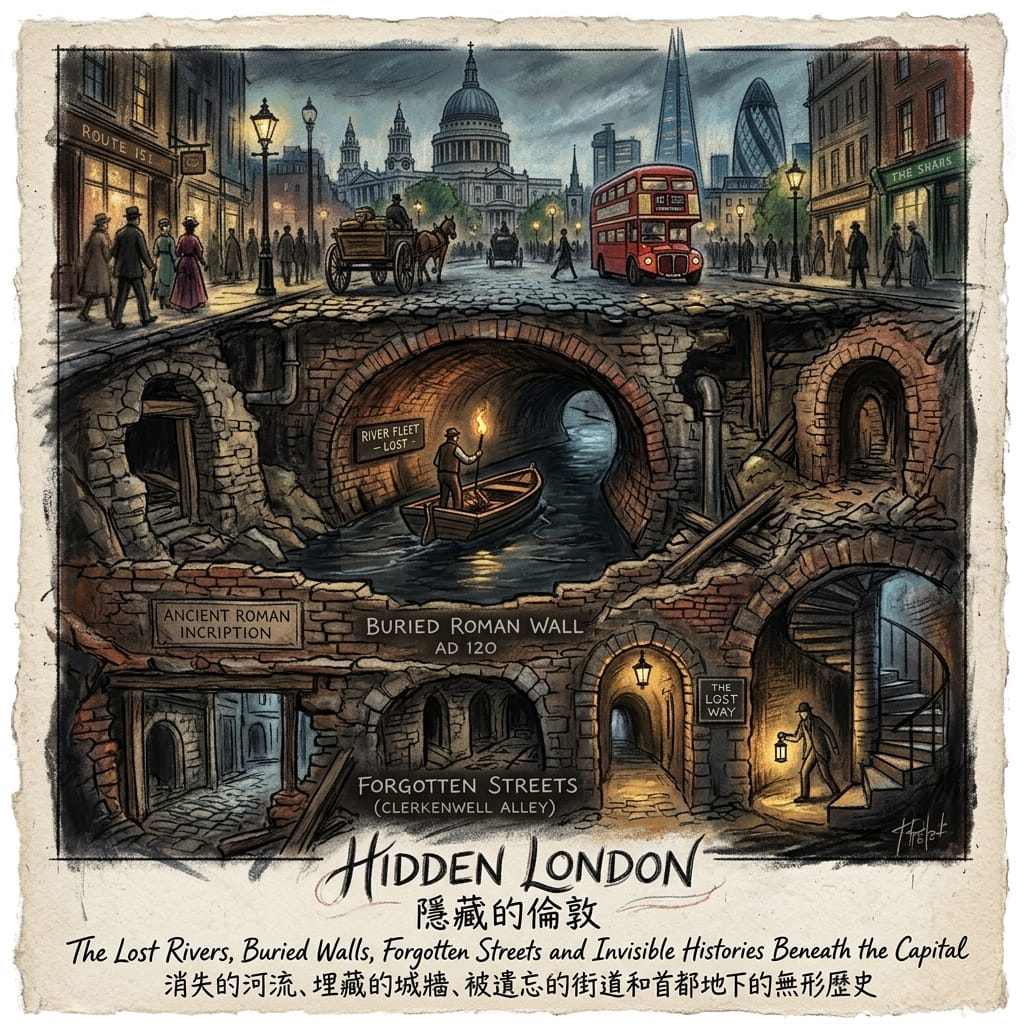
→ Roman remains
→ Lost rivers
→ Forgotten lanes
→ Railway arches
→ Old markets
→ Bomb sites
→ Industrial remnants
LONDON — A City to Read
Start with one London.
Follow one street.
Cross one bridge.
Enter one church.
Stand beside one old wall.
Look down into one archaeological site.
Take one Underground journey.
Then follow the historical connection.
Because London's greatest stories are rarely contained within a single landmark.
They exist in the layers between them.