
COMMERCIAL & INDUSTRIAL LONDON 商業與工業倫敦
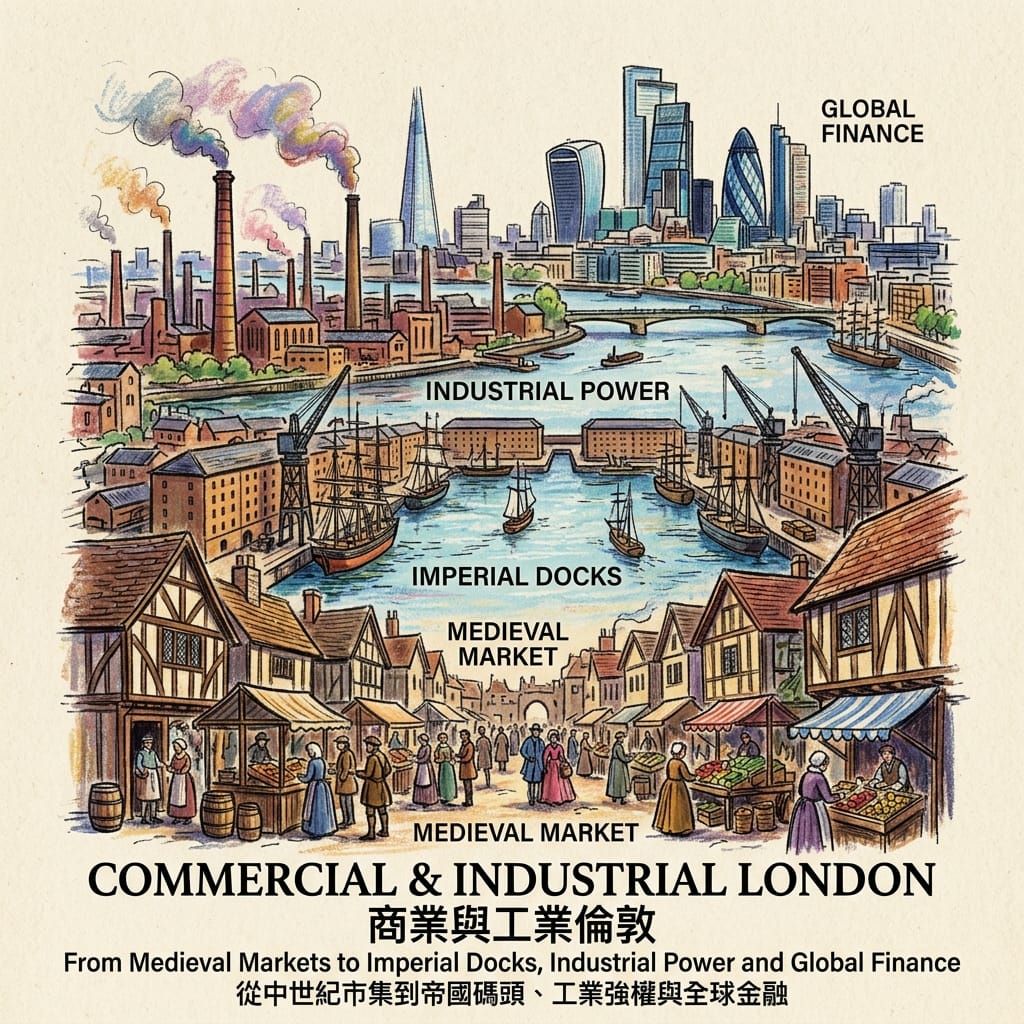
The Complete Authority Guide
From Medieval Markets to Imperial Docks, Industrial Power and Global Finance
London did not become one of the world's great cities simply because it became the capital.
It became powerful because it learned how to move, make, sell, finance and distribute on an extraordinary scale.
The process began in the medieval City.
Markets organized food and trade.
Guilds regulated skilled occupations.
The Thames connected London to Britain and the wider world.
Wharves and warehouses expanded along the river.
The City accumulated financial power.
Then the Industrial Revolution transformed the scale of everything.
Factories expanded.
Railways reorganized movement.
The docks became enormous logistical machines.
Workers arrived in vast numbers.
London became the centre of an imperial trading network.
Later, containerisation undermined the old enclosed docks.
Manufacturing declined.
Finance and professional services expanded.
Old industrial landscapes became redevelopment zones.
Canary Wharf rose where dock workers had once unloaded cargo.
And London's financial district increasingly became a place where capital moved instead of cargo.
This is the story of Commercial & Industrial London.
It is not simply the history of shops, banks and factories.
It is the history of how London organized exchange — of goods, labour, capital, technology and people — and how that exchange physically created the city.
1. The Commercial City Begins in the Middle Ages
London Was a Trading City Before It Was a Financial Capital
Medieval London was already deeply commercial.
The City of London became the centre of trade and commerce, with its own government headed by an elected mayor. The City of London notes that around 80,000 people lived within the medieval walls and that many modern streets still follow medieval layouts. (cityoflondon.gov.uk)
Markets developed around specific trades.
Cheapside.
Leadenhall.
Smithfield.
Billingsgate.
The streets themselves often preserved the memory of what was sold there.
Bread Street.
Milk Street.
Ironmonger Lane.
Wood Street.
The commercial city was therefore highly specialized.
Commerce did not simply happen somewhere in London.
It organized the geography of London.


2. Guilds — The Institutions Behind London's Economy
When Trade Became Organized
Medieval commerce required rules.
Who could trade?
Who could become an apprentice?
What standards should goods meet?
Who could operate a business within the City?
Guilds and livery companies gradually became central to London's commercial system.
The City of London explains that the roots of the livery companies extend back to medieval trade practices and that they regulated crafts, maintained standards and played a significant role in the governance of the City. (cityoflondon.gov.uk)
The medieval concept of the Freedom of the City was particularly important.
From the Middle Ages to the Victorian period, Freedom represented the ability to trade within the City, while guilds and livery companies helped regulate commercial activity. (cityoflondon.gov.uk)
Commerce was therefore tied to:
law + identity + politics + profession
The City was never merely a marketplace.
It was a commercial community with its own institutions.
3. Cheapside — London's Medieval Shopping District
Where Everyday Commerce Became Urban Geography
Cheapside became one of medieval London's great commercial streets.
The name itself reflects its function as a market or marketplace.
Nearby streets specialized in particular trades.
The concentration of businesses created a dense commercial environment where food, clothing, luxury goods and everyday necessities could be obtained within a compact urban area.
This was a precursor to the modern shopping district.
But there was a major difference.
The medieval consumer economy was based on:
- Specialist craftsmen
- Guild regulation
- Local markets
- Face-to-face trade
- Limited distribution networks
The modern shopping street would later replace some of this with standardized retail, branding and mass production.
But the underlying principle remained:
commerce shapes the street.


4. Leadenhall Market — From Medieval Market to Modern Landmark
A Market That Refused to Disappear
Leadenhall has a particularly long commercial history.
A market existed here by the fourteenth century, while the City of London acquired the property in 1411 and subsequently developed it as a major market. By the fifteenth century, it was serving a wide range of food and trading functions. (cityoflondon.gov.uk)
Its commercial role changed over time.
Its architecture changed.
Its customers changed.
Its surrounding district changed.
Yet the market survived.
Today, Victorian architecture surrounds businesses operating in the heart of London's financial district.
That juxtaposition is quintessentially London:
medieval commerce + Victorian architecture + modern finance


5. Smithfield — Feeding the Medieval and Industrial City
The Market That Reveals London's Appetite
Smithfield's history reaches back to the medieval period.
The City of London records the site as a market and gathering place by the twelfth century, with market rights formally granted in 1327. The site evolved into London's major meat market and later received its famous nineteenth-century market buildings. (cityoflondon.gov.uk)
Smithfield reveals something essential about commercial history.
Before London could become a financial centre, it had to feed itself.
That required:
animals → traders → slaughtering → transport → markets → consumers
As London's population exploded during the Industrial Revolution, the logistics of food became increasingly complex.
Markets such as Smithfield were therefore part of the physical infrastructure of the metropolis.
The market also demonstrates a recurring pattern:
necessity creates infrastructure; infrastructure creates urban geography.
6. Billingsgate — The River as Marketplace
When the Thames Became a Commercial Street
Billingsgate developed as a waterfront market whose history reaches back centuries.
The City of London records market rights associated with the site from the medieval period and later development as a major fish market. A 1603 description by John Stow already portrayed Billingsgate as a busy waterfront where ships brought fish and other goods. (cityoflondon.gov.uk)
This is an important distinction.
A medieval market could be a building.
But Billingsgate's real infrastructure was the relationship between river and market.
Ships arrived.
Goods landed.
Merchants bought and sold.
Workers carried cargo inland.
Consumers received the final product.
The Thames was therefore part of the marketplace itself.


7. The Thames — London's First Industrial Highway
Before Railways, the River Did the Heavy Work
The Thames was London's greatest transport system long before the railway.
Coal.
Timber.
Grain.
Wine.
Sugar.
Fish.
Building materials.
Manufactured goods.
Everything could move by water.
The river connected London with Britain and the wider world.
As the city industrialized, its waterfront became increasingly crowded.
The Port of London Authority was created in 1909 partly to bring order to the congestion and competition among docks and river users. Its historical account describes the enormous scale of London's port, including 47 dock basins and more than 36 miles of enclosed dock quaysides at the peak of the system. (pla.co.uk)
The scale is difficult to imagine today.
London's river was not scenery.
It was a machine for moving the economy.


8. The Docks — When London Built a New Kind of Port
From Crowded River to Enclosed Industrial Landscape
As maritime trade expanded, London's open river could no longer handle the increasing volume of cargo efficiently.
The answer was the enclosed dock.
The West India Docks opened in 1802 and created protected spaces for loading, unloading and storing cargo.
The dock system introduced:
- Warehouses
- Security
- Cranes
- Controlled access
- Specialized cargo handling
- Organized logistics
The commercial city was becoming an industrial logistics system.
The West India Docks were particularly important to Britain's trade in sugar and other colonial goods. London Museum records extensive historical photographs of loading, unloading, warehouses and dock workers at the site. (londonmuseum.org.uk)
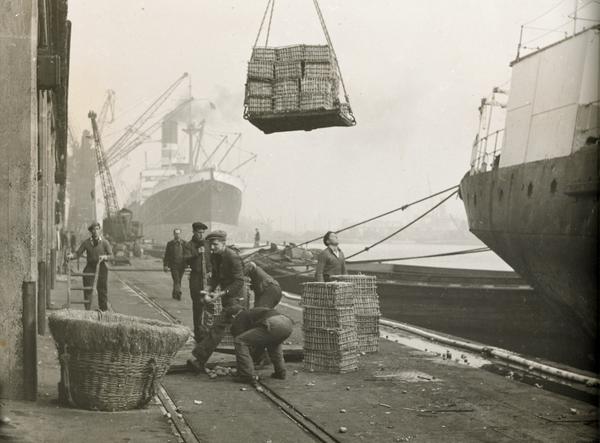
The docks changed the physical geography of East London.
Warehouses appeared.
Workers moved into surrounding districts.
Transport infrastructure expanded.
New communities developed.
The commercial city was literally building itself around the logistics of global trade.
9. Commercial London and Empire
The Goods That Built the Wealth
London's commercial expansion cannot be separated from the British Empire.
Goods arrived from across the world.
Sugar.
Tea.
Coffee.
Tobacco.
Timber.
Spices.
Cotton.
Rubber.
Grain.
Fruit.
The West India Docks, Royal Docks and other port facilities were designed to handle these global flows.
The wealth created through this system supported London's financial institutions, merchants and industries.
But this history also requires a critical perspective.
Many commodities were produced within colonial systems involving coerced labour, dispossession and unequal economic relationships.
The commercial history of London is therefore also a history of imperial power.


The London Museum's West India Docks archive explicitly identifies connections between the site, British trade in enslaved Africans and the commodities handled there. (londonmuseum.org.uk)
10. The Royal Docks — Industrial London on an Extraordinary Scale
The City Builds Its Largest Port
The nineteenth century demanded even more dock capacity.
The Royal Docks were created farther east.
Victoria Dock opened in 1855.
Albert Dock followed in 1880.
King George V Dock opened in 1921.
The Royal Docks were designed to accommodate increasingly large steamships and the expanding volume of international cargo.
The Royal Docks' official history describes the creation of Victoria Dock as a major engineering response to the congestion of London's existing river facilities. It also records the arrival of factories around the docks and the district's role in trade and manufacturing. (royaldocks.london)
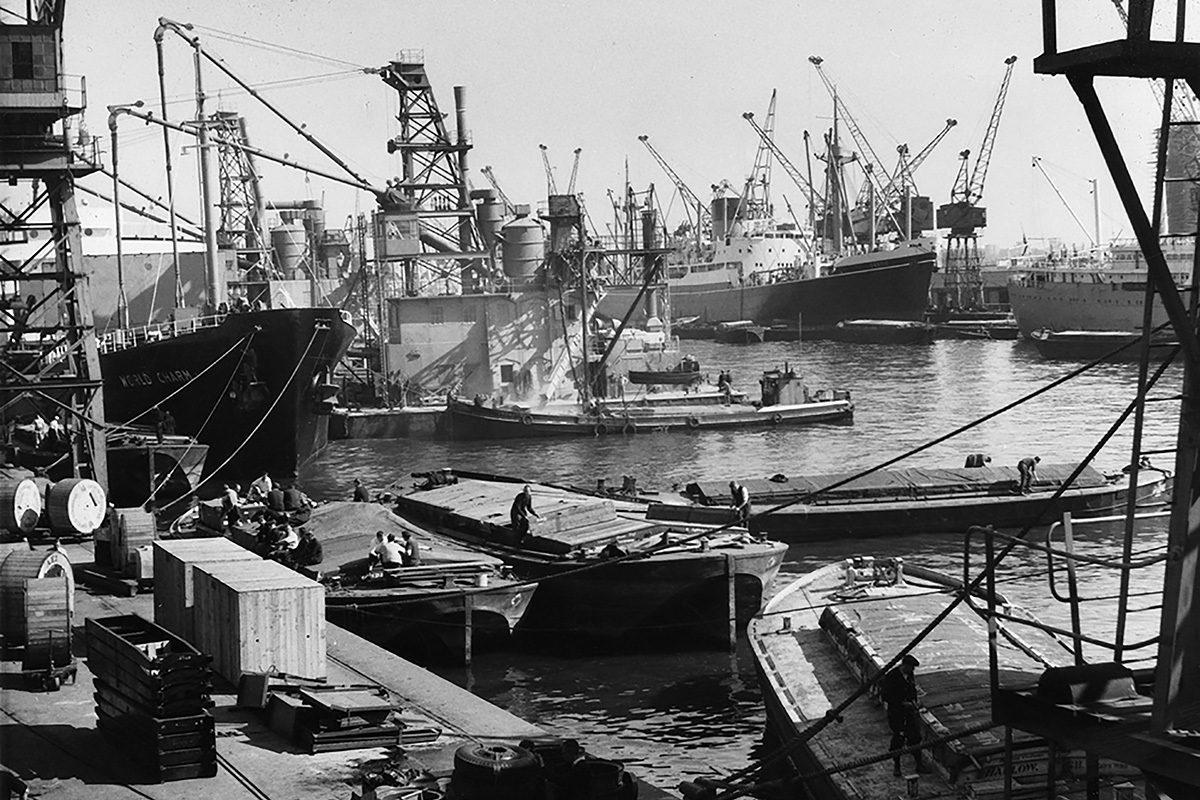
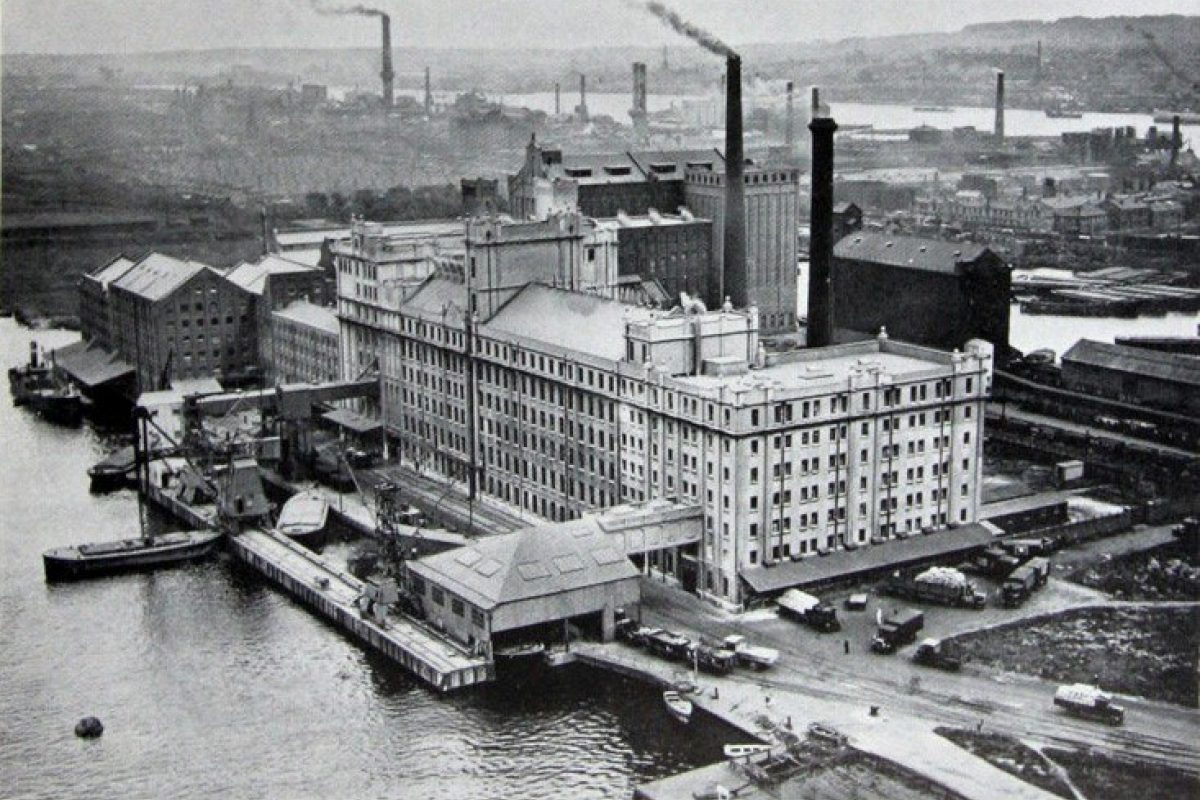
The landscape became enormous.
Ships.
Cranes.
Warehouses.
Factories.
Railway sidings.
Workers' communities.
The Royal Docks represented London at the height of industrial globalization.
11. Silvertown — When Industry Created a Community
Factories Change the Map
The industrial landscape of East London developed around the docks.
Silvertown is an especially important example.
Royal Docks historical material records the arrival of Samuel Silver's waterproof clothing factory in 1852, which helped give the area its name. By the late nineteenth century, shipbuilding, oil, soap, rubber and other industries had established themselves in the surrounding landscape. (royaldocks.london)
Industry did more than create factories.
It created neighbourhoods.
Workers needed housing.
Families needed schools.
Pubs appeared.
Shops developed.
Transport expanded.
Communities formed.
This is the hidden logic of industrial London:
factory → workers → housing → community → district identity
12. Industrial London Was a World of Labour
The People Behind the Goods
Commercial history often focuses on merchants and companies.
Industrial history forces us to look at workers.
Dockers.
Stevedores.
Crane operators.
Warehouse workers.
Factory workers.
Railway labourers.
Engineers.
Shipbuilders.
Porters.
Market traders.
Their labour made London's commercial infrastructure function.
The history of the 1889 London Dock Strike is particularly important.
London Museum's archive preserves photographs of dockers and supporters during the strike, documenting the growing organization of London's working population. (londonmuseum.org.uk)


The dock strike helped make the dock worker a symbol of the wider labour movement.
Commercial London was therefore also working London.
13. Victorian Industry — Factories Inside the Metropolis
London Was More Than a Port
Industrialization transformed London far beyond the docks.
Factories, workshops and warehouses appeared throughout the metropolitan area.
Food processing.
Printing.
Engineering.
Textiles.
Chemicals.
Brewing.
Furniture.
Clothing.
Manufacturing was often concentrated where transport and labour were available.
The East End became particularly industrial.
The Thames provided transport.
Railways extended the distribution network.
Canals connected factories to markets.
The city's expanding population provided workers and consumers.
London was becoming an integrated industrial ecosystem.


14. Railways — The Infrastructure That Reorganized Commerce
When London Learned to Move at a New Speed
The railway transformed commercial London.
The first Underground railway opened in 1863.
Railways increasingly connected the docks, industrial areas, markets and suburbs.
Goods no longer depended entirely on the Thames.
Workers could commute.
Factories could access larger labour markets.
Markets could receive products from farther away.
Suburbs could expand rapidly.
The London Transport Museum's archival collections preserve visual evidence of the early Metropolitan Railway and its stations. (ltmuseum.co.uk)
The railway therefore did something fundamental:
it transformed distance into an economic variable that London could increasingly overcome.
15. Smithfield, Billingsgate and the Logistics of Feeding Millions
Commercial Infrastructure Beneath Everyday Life
As London's population expanded, feeding the city became an industrial problem.
Markets such as Smithfield and Billingsgate were part of a larger network involving:
- Producers
- wholesalers
- transport
- warehouses
- market traders
- retailers
- consumers
Smithfield specialized in livestock and meat.
Billingsgate became London's principal fish market.
Other markets handled vegetables, fruit and other commodities.
The City of London describes medieval wholesale markets as hubs of bulk trade that contributed directly to the growth of urban centres. (cityoflondon.gov.uk)
This is one of the most overlooked aspects of urban history.
Before a city can become a financial centre, it must first learn how to feed itself.
16. London's Financial Revolution
When Commerce Became Capital
London's commercial development eventually moved beyond physical goods.
Finance became increasingly important.
The Bank of England was established in 1694.
The Royal Exchange became a centre of commercial activity.
Insurance developed around the City.
Stock trading expanded.
The City gradually became one of the world's most important financial centres.
The Bank of England's historical analysis explains that London's financial prominence was closely connected to Britain's growing economic power, world trade, port activity and expanding railway network. By the early nineteenth century London had emerged as a leading global financial centre. (bankofengland.co.uk)
This creates an important transition:
London moved from handling goods to increasingly coordinating capital.


17. The Royal Exchange — Commerce Becomes Institutional
A Marketplace for Global Business
The Royal Exchange emerged as an important centre of commercial activity in the City.
Merchants could meet.
Information circulated.
Transactions were negotiated.
International commerce was coordinated.
Over time, the physical marketplace became part of a broader financial ecosystem.
Banks.
Insurance.
Brokerage.
Shipping.
Legal services.
The City was becoming more than a place where products were exchanged.
It was becoming a place where risk, credit and capital were organized.
18. Lloyd's — Managing the Risks of Global Trade
Empire Required Insurance
Global trade involves risk.
Ships sink.
Cargo is damaged.
Wars interrupt routes.
Markets collapse.
London's commercial expansion therefore generated demand for insurance.
Lloyd's became closely associated with the insurance of ships and cargoes, helping turn London into a centre for managing global commercial risk.
This is another reason commercial London cannot be understood simply through docks.
Behind physical trade existed a vast infrastructure of:
finance + insurance + law + information
The modern financial district grew out of this ecosystem.
19. The City and the Docks — Two Halves of One Economy
Capital and Cargo Were Connected
The City of London and the Docklands may look like separate worlds today.
Historically, they were deeply connected.
The docks handled physical goods.
The City handled:
- Finance
- Insurance
- Legal services
- Commercial contracts
- Shipping finance
- Credit
- Information
One moved cargo.
The other moved capital.
Together they created the commercial machine that made London a global city.
This relationship explains why London's financial centre developed where it did.
20. Global Trade and London's Food Culture
The Empire Arrived on the Plate
Commercial networks changed what Londoners ate.
Sugar.
Tea.
Coffee.
Bananas.
Spices.
Rice.
Tropical fruit.
Fish.
Meat.
The Royal Docks' historical material documents cargoes including grain, tobacco, meat, fruit and vegetables arriving through the docks to feed London's growing population. (royaldocks.london)
Food therefore provides an accessible way to understand global commerce.
The history of London's kitchen is also the history of its port.
21. The Decline of the Old Docks
When Technology Changed London's Geography
The dock system reached its peak in the mid-twentieth century.
The Port of London Authority records that enclosed dock traffic peaked at around 61 million tons in 1964. After that, larger ships and containerisation rapidly undermined the old up-river docks, which progressively closed between 1967 and 1981. (pla.co.uk)
This was not simply an economic decline.
It was a geographical transformation.
The docks had shaped entire neighbourhoods.
When the docks closed:
- Jobs disappeared
- Warehouses became redundant
- Local businesses suffered
- Communities were disrupted
- Land values changed
The industrial city had lost one of its central engines.
22. Containerisation — The Technology That Moved the Port
When the Box Changed the City
Containerisation transformed maritime logistics.
Standardized containers made cargo handling dramatically more efficient.
But the new system required deeper water and enormous specialized terminals.
The old enclosed docks were increasingly unsuitable.
Cargo activity moved farther down the Thames.
The traditional Docklands declined.
This is a crucial historical principle:
technology changes geography.
The container did not merely change shipping.
It helped change London.
23. Docklands — From Industrial Decline to Urban Reinvention
The Old Port Becomes a New City
The closure of the docks created one of Britain's most ambitious urban redevelopment opportunities.
Former warehouses and dock basins were gradually incorporated into a new metropolitan landscape.
The most dramatic transformation occurred around Canary Wharf.
Old docklands became:
- Offices
- Financial institutions
- Apartments
- Restaurants
- Retail
- Cultural spaces
The new economy occupied the physical remains of the old one.


The contrast is one of London's great urban stories:
dock worker → office worker
warehouse → financial tower
cargo → capital
24. Royal Docks — From Global Trade to Regeneration
The Industrial Waterfront Reinvents Itself
The Royal Docks closed to commercial traffic in 1981.
But the area did not disappear.
The Docklands Light Railway, London City Airport, ExCeL London and later commercial and cultural investment reconnected the area to the metropolitan economy. (royaldocks.london)
The Royal Docks today describes itself as both an important regeneration project and a growing commercial and cultural centre. (royaldocks.london)
Yet the water remains.
Warehouses survive.
Old industrial structures remain.
The landscape still reveals its former purpose.
This makes the Royal Docks one of the strongest places to experience Industrial + Modern + Hidden London simultaneously.
25. Working London — Commerce Is Also Labour
The Economy Was Built by People
The great commercial buildings of London can make economic history appear abstract.
But every commercial system depends on labour.
The medieval merchant needed apprentices.
The dock needed stevedores.
The factory needed workers.
The railway needed engineers.
The market needed porters and traders.
The financial district needed clerks, accountants and typists before it needed computers.
The history of commercial London is therefore also the history of working London.
The 1889 Dock Strike provides one of the clearest examples of how workers became a political force in their own right. (londonmuseum.org.uk)
Industrial London was not built by machines alone.
It was built by people.
26. The Working-Class City Around the Commercial City
Housing, Markets and Industry
Industrial workers had to live somewhere.
Housing developed around factories, railway corridors, docks and markets.
Neighbourhoods such as the East End became densely populated.
Markets supplied food.
Pubs became social institutions.
Religious organizations provided support.
Trade unions developed.
The result was a distinctive working-class urban culture.
Commercial London therefore produced social geography.
Where industries went, communities followed.
When industries disappeared, communities were often disrupted.
27. Markets and the Everyday Commercial City
Commerce Outside the Financial District
London's commercial history is often associated with the City.
But markets remain one of the best ways to experience its everyday economy.
Spitalfields began as a market in the thirteenth century and received a royal charter in 1682. By the nineteenth century it had developed into a major market for produce, eventually moving into a purpose-built building completed in 1893. (cityoflondon.gov.uk)


Markets reveal commerce at human scale.
You see products.
Vendors.
Customers.
Negotiation.
Food.
Movement.
They show what the commercial city actually feels like.
28. Commercial London and Migration
New People Create New Markets
Migration has always influenced London's commercial geography.
New arrivals bring:
- Skills
- Languages
- Food
- Capital
- Businesses
- Consumer demand
The East End provides numerous examples.
Jewish migration changed local commerce.
Later South Asian migration transformed shops and food businesses.
Caribbean communities influenced London's music and cultural economy.
Today's commercial districts reflect the accumulated effects of these migrations.
Commerce is therefore also a history of people moving and creating new economic networks.
29. Commercial London and Empire
London Consumed the World
The imperial economy changed London's consumption.
Products from across the world entered the city.
But this relationship was not neutral.
Colonial economies often relied upon coercion, unequal trade and exploitation.
The wealth generated by imperial commerce was distributed unevenly.
Understanding commercial London therefore requires both sides of the story:
the creation of wealth
and
the structures through which that wealth was produced.
This is particularly important for Lawrence Travel Stories because it moves the article beyond romantic nostalgia for Victorian commerce.
30. The Modern Financial City
From Merchants to Markets to Global Capital
The City of London gradually evolved into a financial centre of global significance.
The Bank of England.
Insurance.
Stock exchanges.
Merchant banks.
Foreign exchange.
Shipping finance.
Professional services.
The Bank of England's research describes how Britain's commercial dominance and London's central role in trade contributed to the capital becoming a leading financial centre, with London's position strengthened by the combination of port, capital-city and railway-network functions. (bankofengland.co.uk)
This is a remarkable transformation.
The city that once concentrated markets for physical goods eventually became a centre for trading:
money + credit + securities + insurance + information
31. From Industrial London to Service London
The Economic Landscape Changes Again
By the late twentieth century, manufacturing had declined significantly.
The economy became increasingly dominated by:
- Finance
- Professional services
- Media
- Technology
- Tourism
- Property
- Logistics
Former factories became apartments.
Warehouses became offices.
Old markets became cultural destinations.
Industrial land became residential development.
The commercial city was continuously adapting.
But the physical evidence of the industrial era did not completely disappear.
32. Smithfield and Billingsgate Today — The Next Transformation
When Historic Markets Become Heritage
The story is still unfolding.
In December 2025, the City of London announced Albert Island in the Royal Docks as the preferred new site to co-locate Smithfield and Billingsgate Markets, subject to parliamentary approval. The proposal would allow the historic markets' trading functions to continue in a new environment while their existing sites undergo major redevelopment. (cityoflondon.gov.uk)
This is historically significant.
The story is not simply:
old market closes → heritage preserved
It is more complicated:
historic institution → relocation → redevelopment → economic continuity
Smithfield and Billingsgate demonstrate that Commercial London is still evolving.
The modern city continues to negotiate between heritage and economic efficiency.
33. Commercial & Industrial London as a History of Movement
The entire story can be understood through movement.
Medieval London
Goods move through markets.
Early Modern London
Merchants connect national and international trade.
Industrial London
Raw materials and manufactured goods move through docks and railways.
Imperial London
Global commodities enter the capital.
Financial London
Capital and information move through institutions.
Contemporary London
Goods, money, data and people circulate through global networks.
The technology changes.
The buildings change.
The workforce changes.
But London's commercial identity remains fundamentally connected to movement.
34. Commercial & Industrial London Walking Routes
Route 1 — Medieval Commerce
Cheapside → Guildhall → Leadenhall Market → Cornhill
Historical focus:
markets, guilds, civic government and medieval trade.


Route 2 — River Commerce
Billingsgate → Thames waterfront → Tower Bridge → St Katharine Docks
Historical focus:
river trade, markets, warehouses, shipping and port infrastructure.
Route 3 — Industrial East London
West India Docks → Canary Wharf → Limehouse → Royal Docks
Historical focus:
imperial trade, warehouses, dock labour, industrial decline and redevelopment.


Route 4 — Working London
Whitechapel → Spitalfields → Brick Lane → East India Dock Road
Historical focus:
markets, migration, factories, workers and community commerce.
Route 5 — Financial London
Royal Exchange → Bank of England → Lombard Street → Threadneedle Street → modern City
Historical focus:
merchant capitalism, banking, insurance and global finance.


35. Commercial & Industrial London Across the Authority Graph
Commercial + Ancient & Medieval London
Markets, guilds, river trade and medieval streets created the foundation of London's commercial geography.
 Lawrence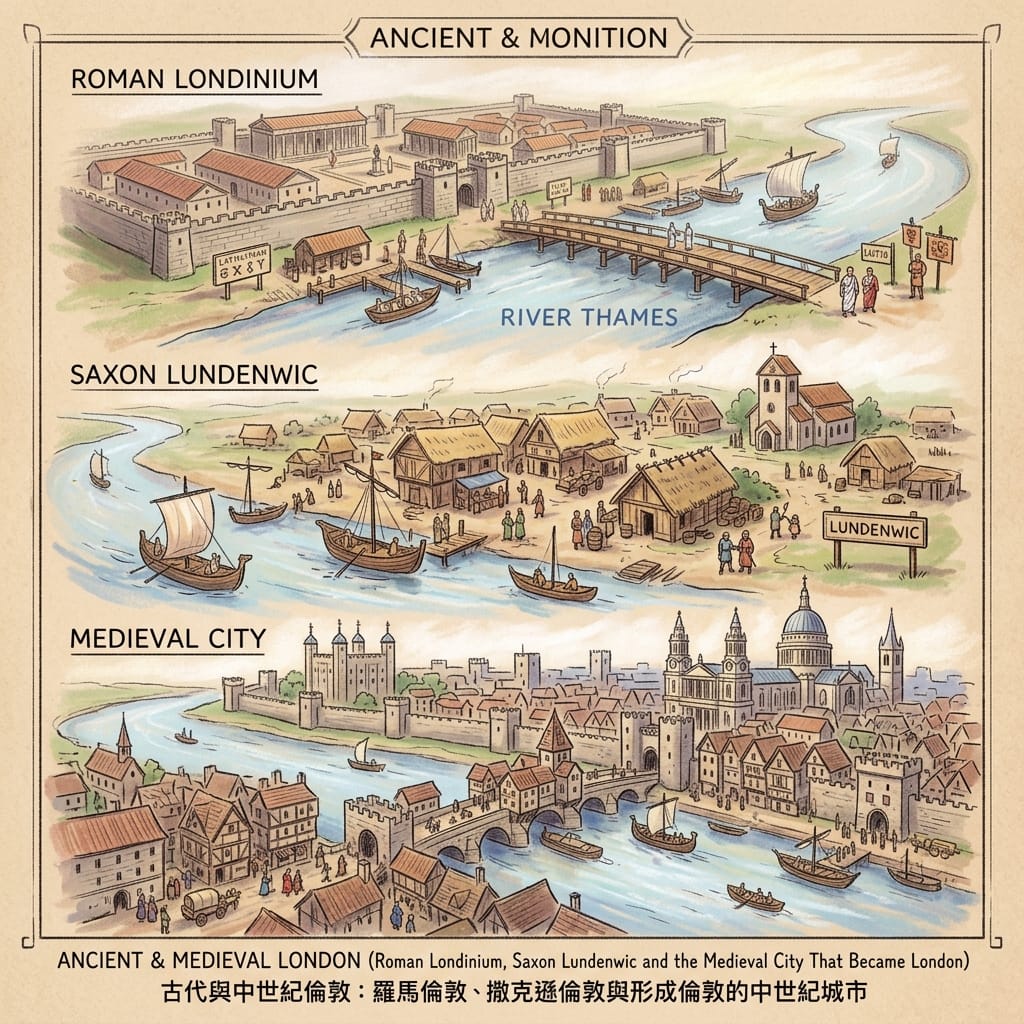
Commercial + Royal & Political London
The monarchy depended upon London's wealth, while the state created legal and institutional frameworks for commerce.
 Lawrence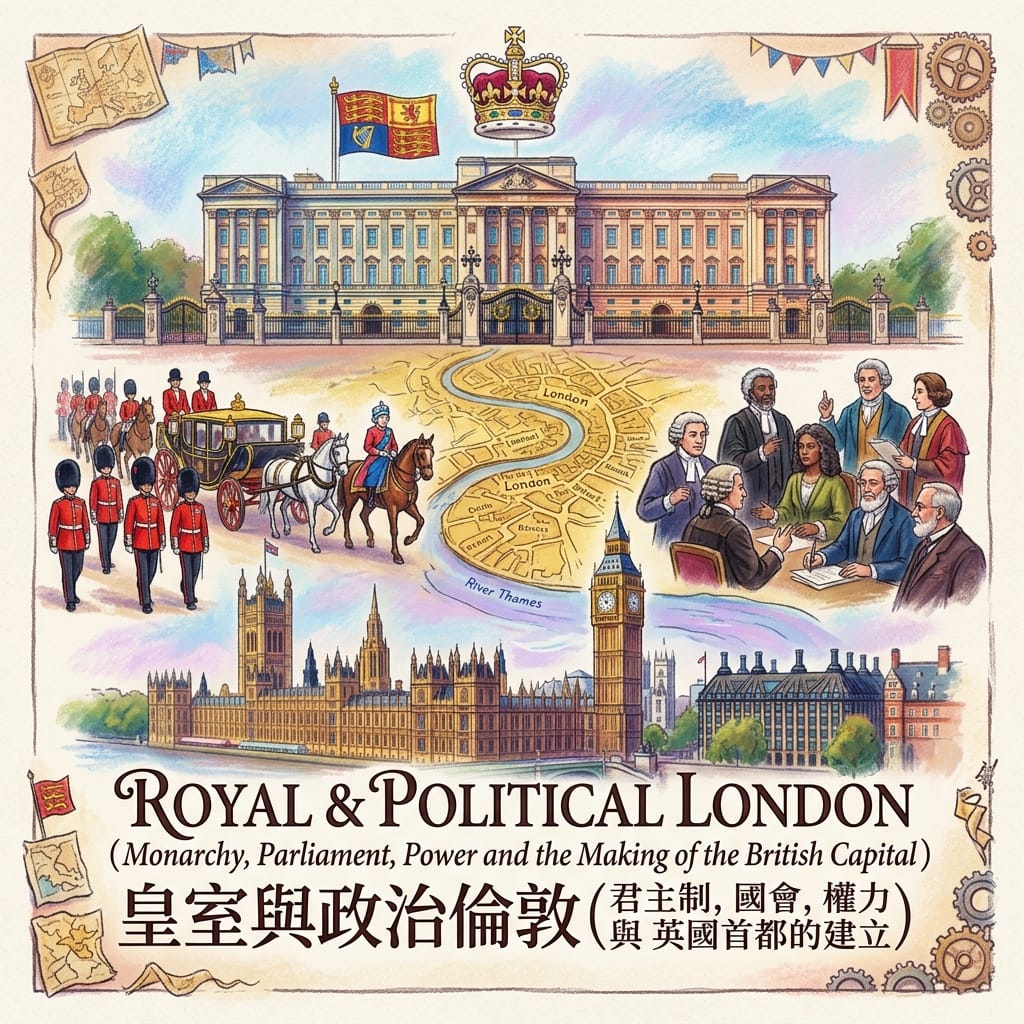
Commercial + Sacred London
Churches, synagogues, mosques and other religious institutions developed within London's commercial and working communities.
 Lawrence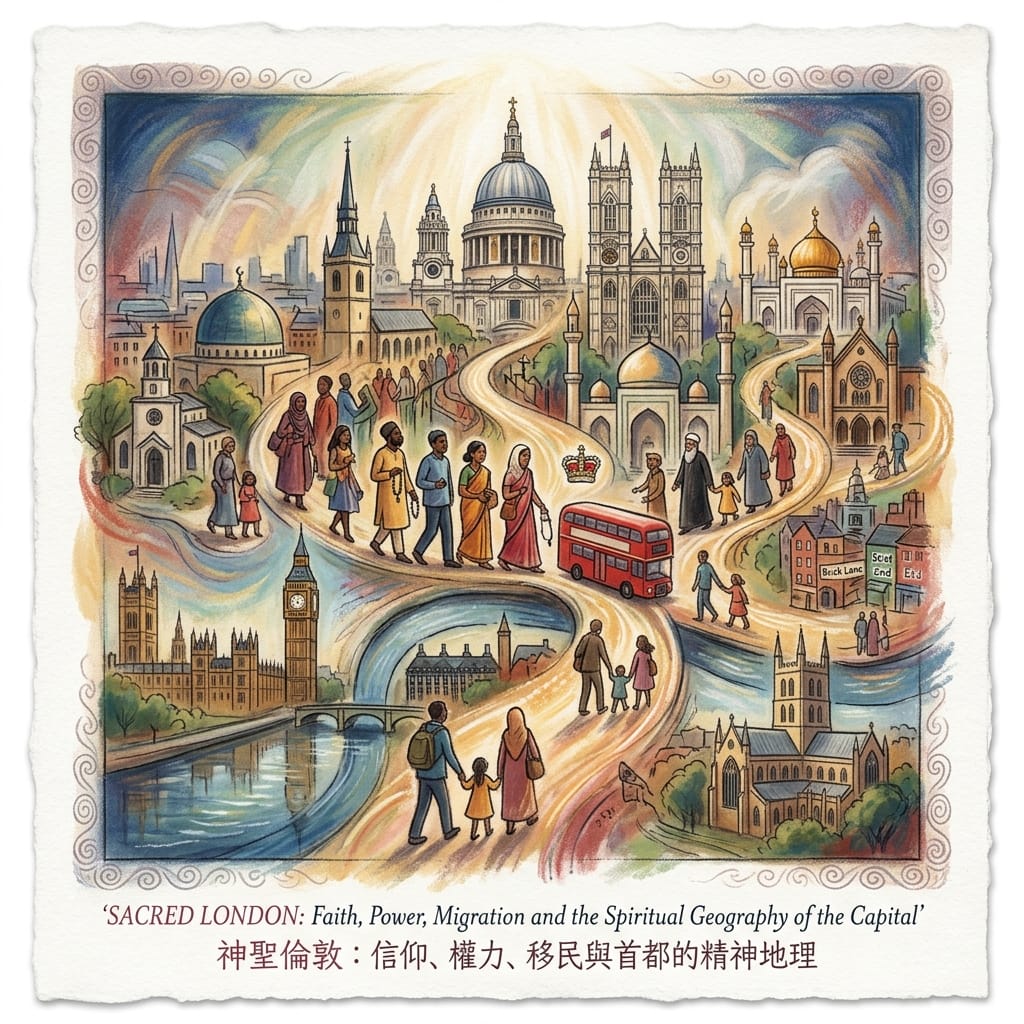
Commercial + Modern London
Industrial decline, containerisation, financialization, transport and redevelopment transformed the economic city.
 Lawrence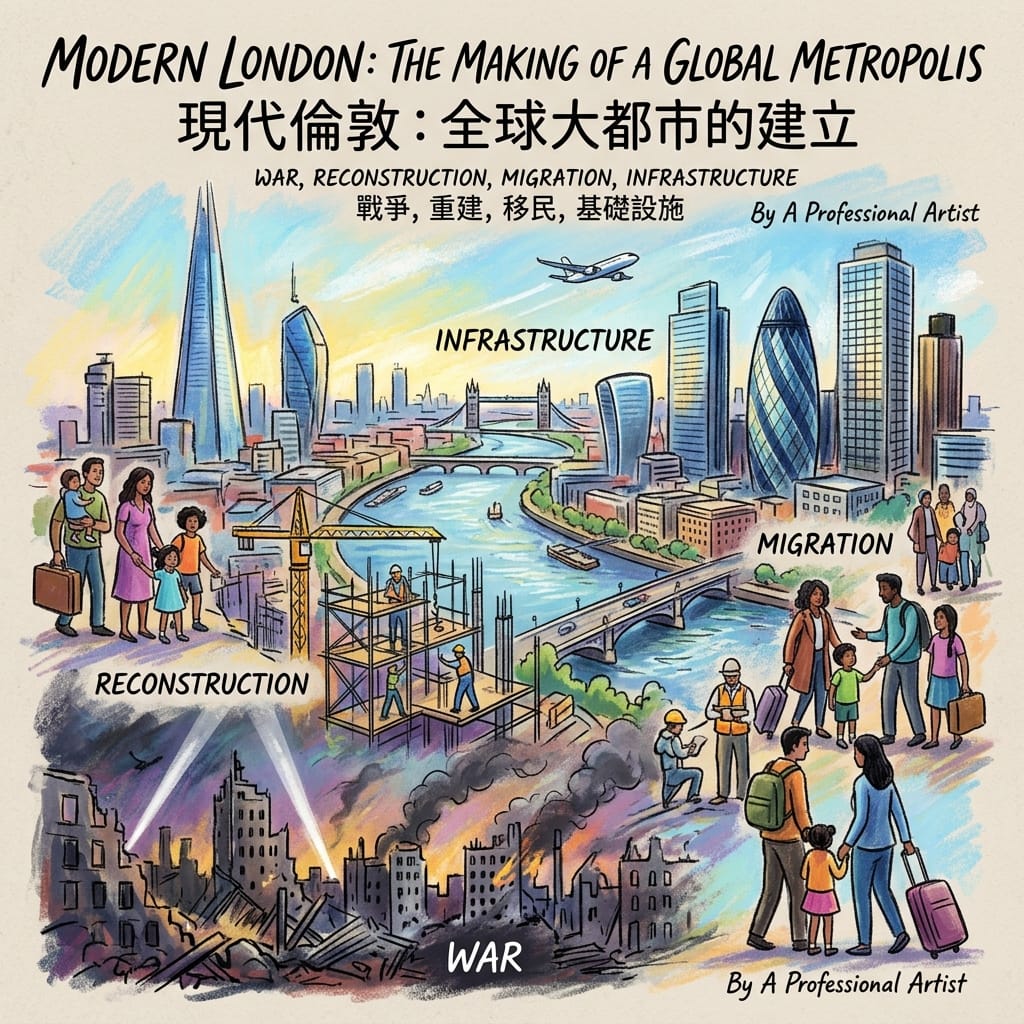
Commercial + Hidden London
Old factories, warehouses, market streets, workers' neighbourhoods and forgotten docks preserve the less visible history of London's economy.
 Lawrence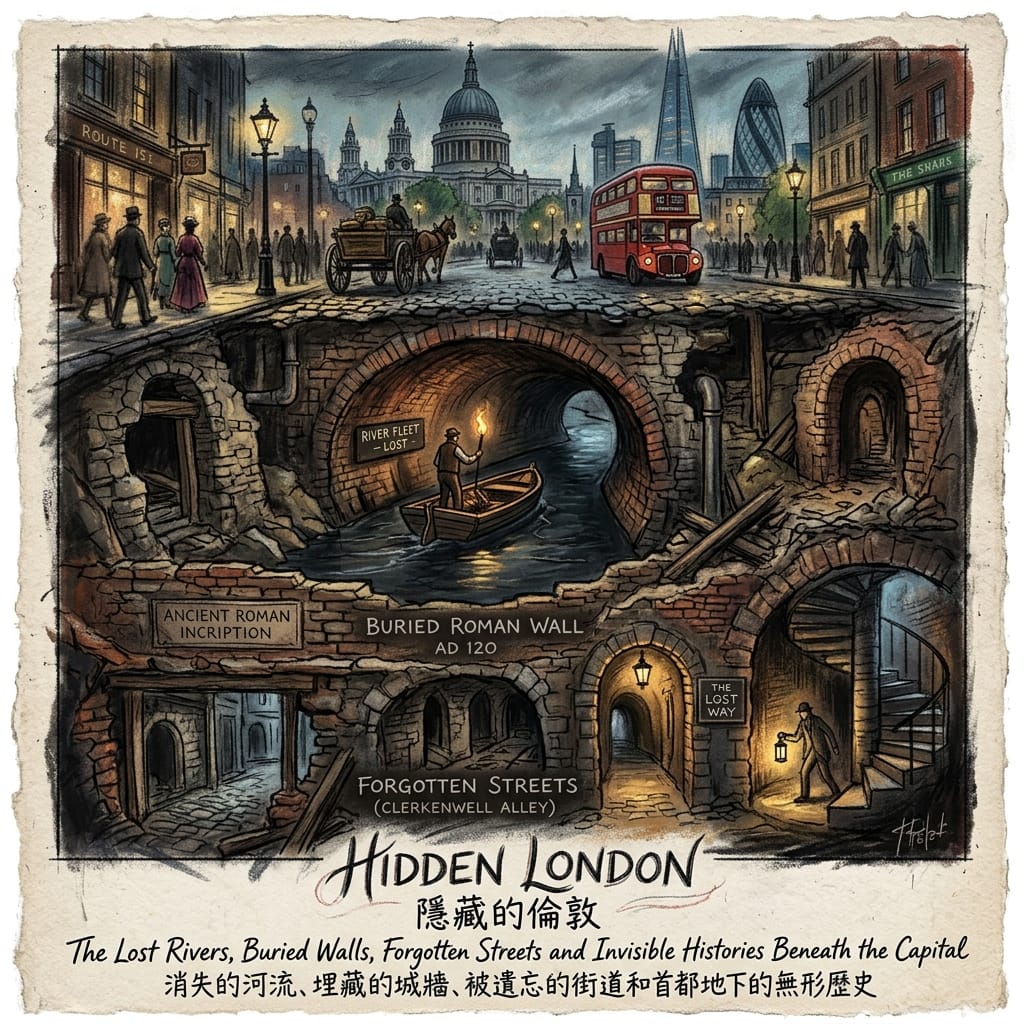
36. The Commercial Geography of London
The history becomes particularly clear when London is divided into economic landscapes.
The City
Capital and finance
Roman marketplace.
Medieval commerce.
Banking.
Insurance.
Global finance.
The Thames
Movement and logistics
Wharves.
Warehouses.
Ships.
Docks.
Industrial transport.
East London
Labour and industry
Factories.
Dock workers.
Markets.
Migration.
Working-class communities.
Docklands
Industrial transformation
Imperial port.
Containerisation.
Decline.
Regeneration.
Royal Docks
Global trade and reinvention
Industrial logistics.
Manufacturing.
War.
Closure.
Regeneration.
Canary Wharf
The new financial city
Offices.
Capital.
Global corporations.
Redevelopment.
Together these areas tell one continuous story.
37. What Commercial & Industrial London Reveals About the City
Study London's economic history and many apparently unrelated features become connected.
The financial district exists partly because the medieval City created a long tradition of commerce.
The docks expanded because global trade increased.
The railways grew because goods and people needed to move faster.
Working-class neighbourhoods expanded because factories and docks needed labour.
The Underground grew because workers and consumers needed to travel.
East London's decline followed changes in global logistics.
Canary Wharf emerged because the economy changed again.
The current redevelopment of historic markets shows that the process has not ended.
Commercial London is therefore not a static category.
It is a continuous process of economic reinvention.
38. Why Commercial & Industrial London Matters
London's history is often told through kings, churches and famous buildings.
But the city's economic history explains why those political and cultural institutions became so powerful.
Commerce created wealth.
Industry created employment.
The docks created global connections.
Railways created metropolitan mobility.
Markets fed millions.
Finance turned commerce into capital.
Workers transformed infrastructure into functioning systems.
Migration continuously expanded the economic and cultural network.
Without this commercial history, modern London becomes difficult to explain.
Final Reflection — The City That Learned to Move the World
London's commercial history began with markets.
Then came merchants.
Guilds.
Wharves.
Warehouses.
Docks.
Factories.
Railways.
Banks.
Insurance.
Container ships.
Financial markets.
Today, London moves something even less visible:
capital, information, services and ideas.
The physical city changed dramatically along the way.
Medieval markets became modern streets.
Wharves became towers.
Factories became apartments.
Docks became cultural and financial districts.
Railway arches became restaurants and studios.
Old markets became heritage destinations.
But the underlying principle remained.
London grew by connecting things that previously had to remain apart.
People and markets.
River and road.
Factory and consumer.
Empire and capital.
Labour and industry.
Goods and finance.
Local neighbourhoods and global networks.
That is why the Thames, the City, the markets, the docks and the factories belong to the same story.
Commercial & Industrial London is ultimately the history of movement.
Goods moved through the river.
Workers moved through the streets.
Capital moved through the City.
Industry moved outward.
Markets moved location.
And when one economic system became obsolete, London built another on top of its remains.
The city changed its economy without ever losing its instinct to trade, connect and reinvent.
Historical Sources & Further Reading
City of London Corporation
Particularly valuable for medieval commerce, guilds, markets, civic government and the economic history of the Square Mile. The City explains that medieval London was the centre of commerce and trade and that its livery companies grew from medieval trade practices. (cityoflondon.gov.uk)
The City's market histories provide detailed institutional evidence for Smithfield, Billingsgate and Spitalfields. (cityoflondon.gov.uk; cityoflondon.gov.uk)
London Museum
London Museum's Docklands collections provide particularly strong visual and documentary evidence for West India Docks, dock workers, cargo handling, imported commodities and the industrial communities of East London. (londonmuseum.org.uk)
Port of London Authority
The Port of London Authority's institutional history is essential for understanding the scale of the Thames port, the creation of the Authority in 1909, the modernization of the docks, wartime activity, the 1964 peak and the subsequent closure of the enclosed docks. (pla.co.uk)
Royal Docks
The Royal Docks archive provides particularly useful material on the development of Victoria, Albert and King George V Docks, the expansion of industrial East London, global food supply chains, the role of factories and the docks' post-1981 regeneration. (royaldocks.london)
Bank of England
The Bank of England's research on London's financial history provides a strong foundation for explaining how trade, Britain's industrial economy, port activity and the railway network contributed to London's emergence as a leading global financial centre. (bankofengland.co.uk)
London Transport Museum
The London Transport Museum's collections are valuable for tracing the relationship between railways, the Underground, labour mobility and the expansion of metropolitan London. (ltmuseum.co.uk)
Current Market Transformation
For the contemporary chapter, the City of London announced in December 2025 that Albert Island in the Royal Docks had become the preferred site for relocating Smithfield and Billingsgate, subject to parliamentary approval. The proposal would preserve the trading businesses while enabling major redevelopment of the existing sites. (cityoflondon.gov.uk)
Continue Exploring London
Ancient & Medieval London
 Lawrence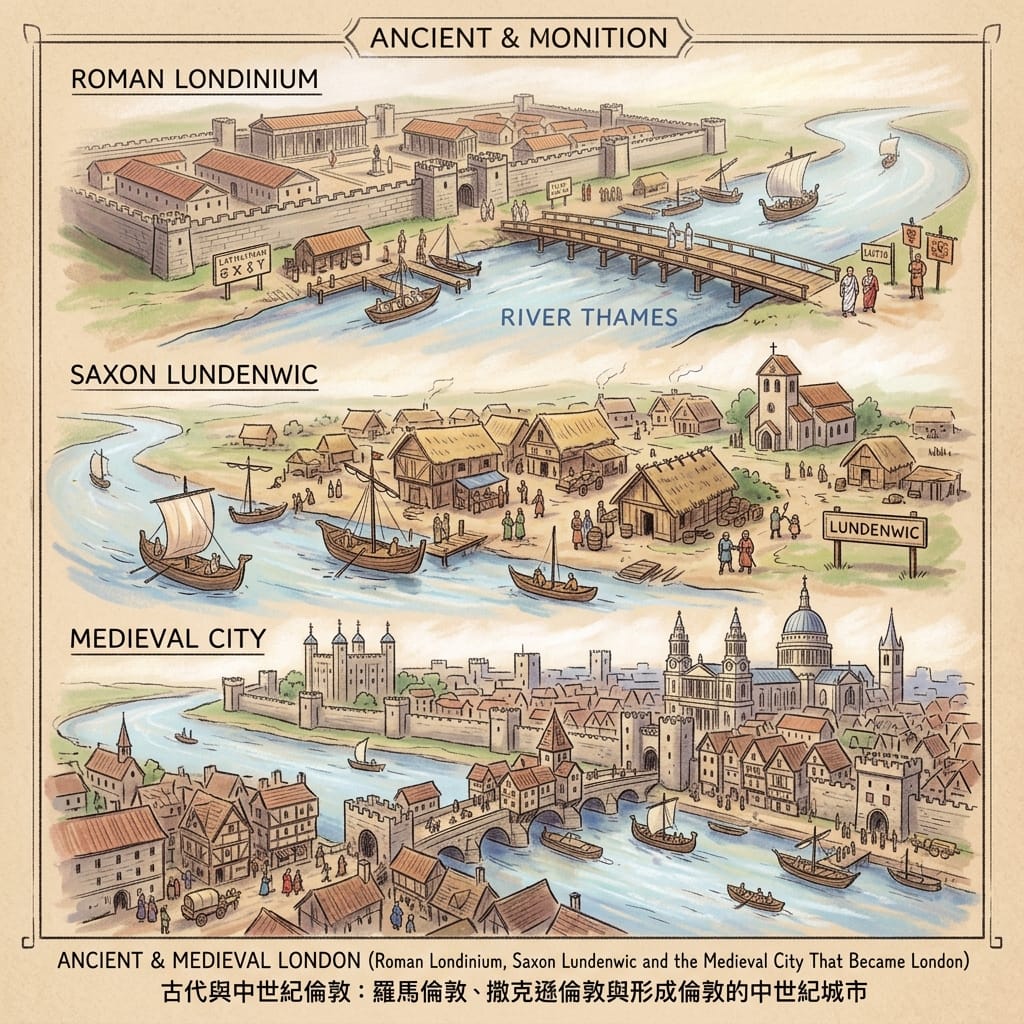
→ Roman Londinium
→ London Wall
→ Medieval London
→ London Bridge
→ Medieval markets
→ Guilds and commerce
Royal & Political London
 Lawrence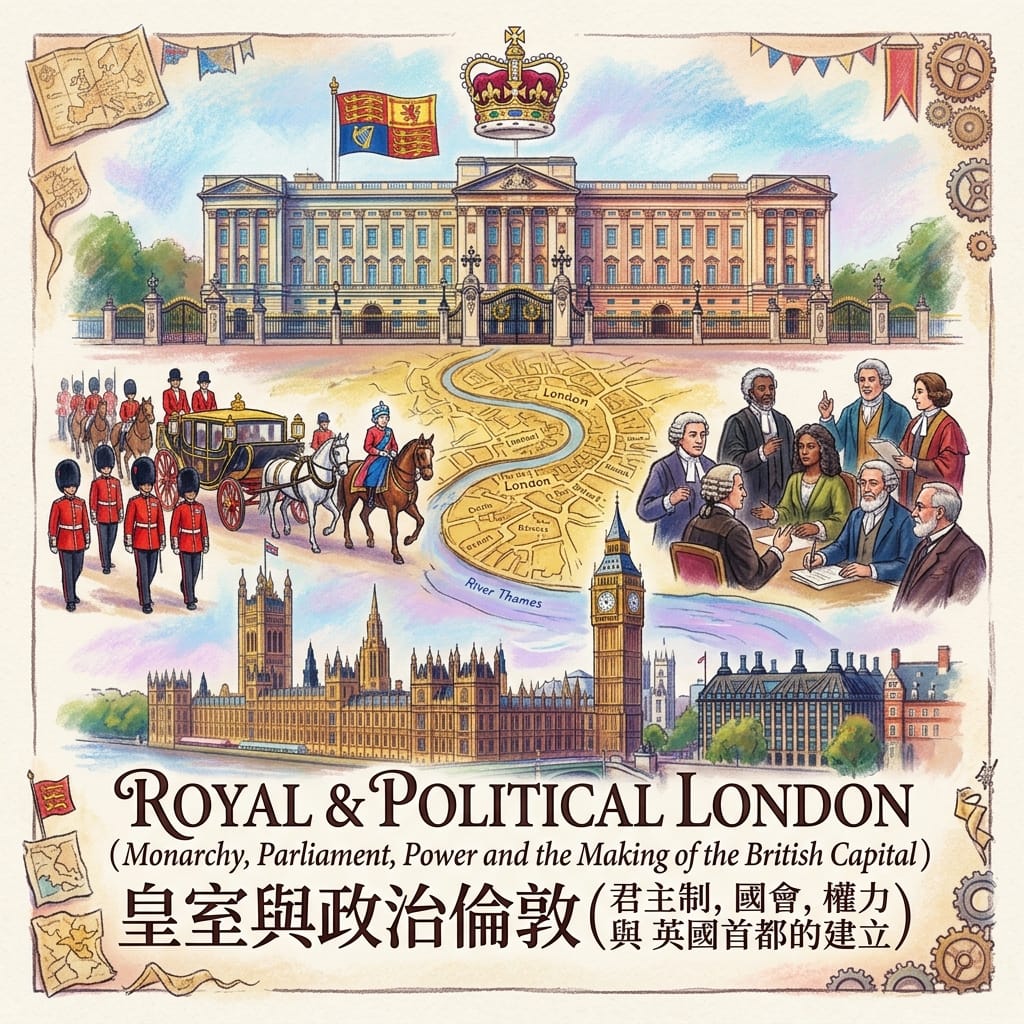
→ Tower of London
→ Westminster
→ Whitehall
→ Parliament
→ The Crown and the City
Sacred London
 Lawrence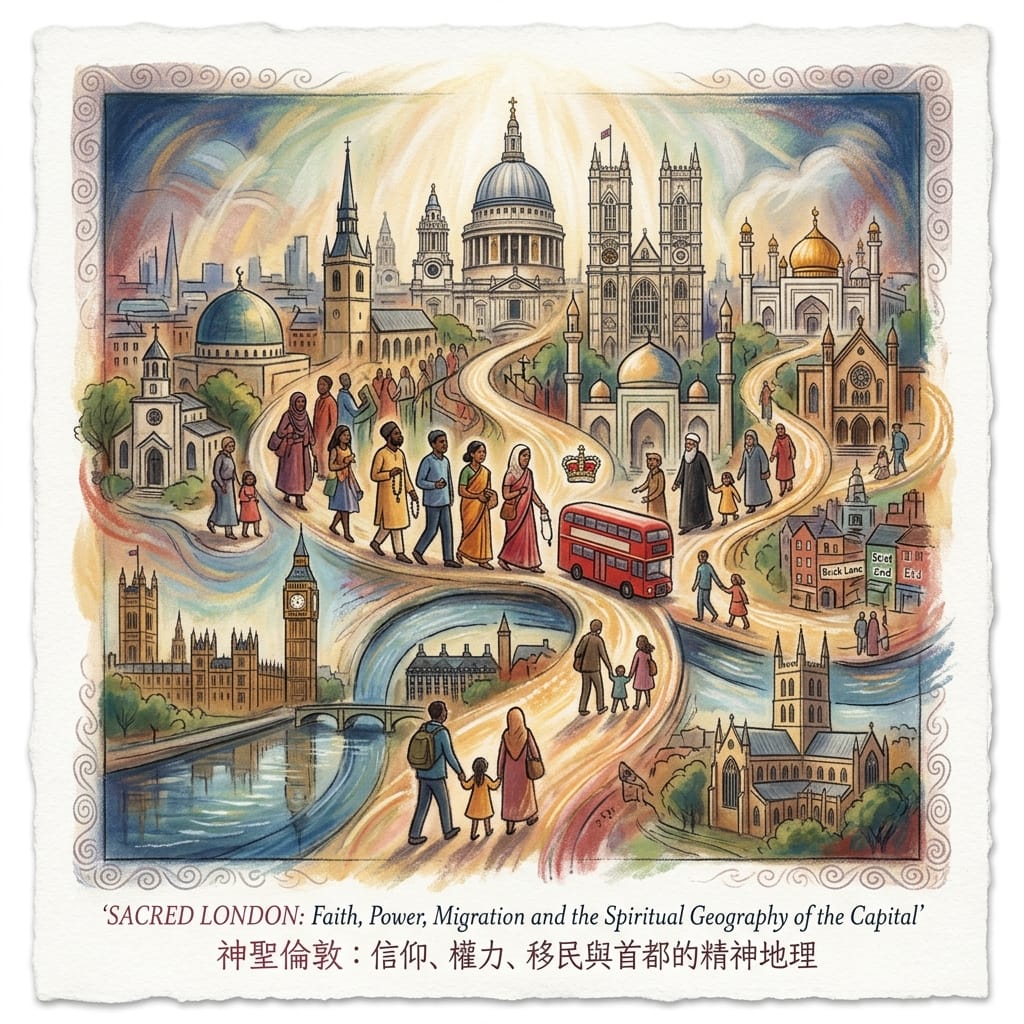
→ St Paul's Cathedral
→ Westminster Abbey
→ Wren's churches
→ Jewish London
→ Muslim London
→ Hindu and Sikh London
Commercial & Industrial London
 Lawrence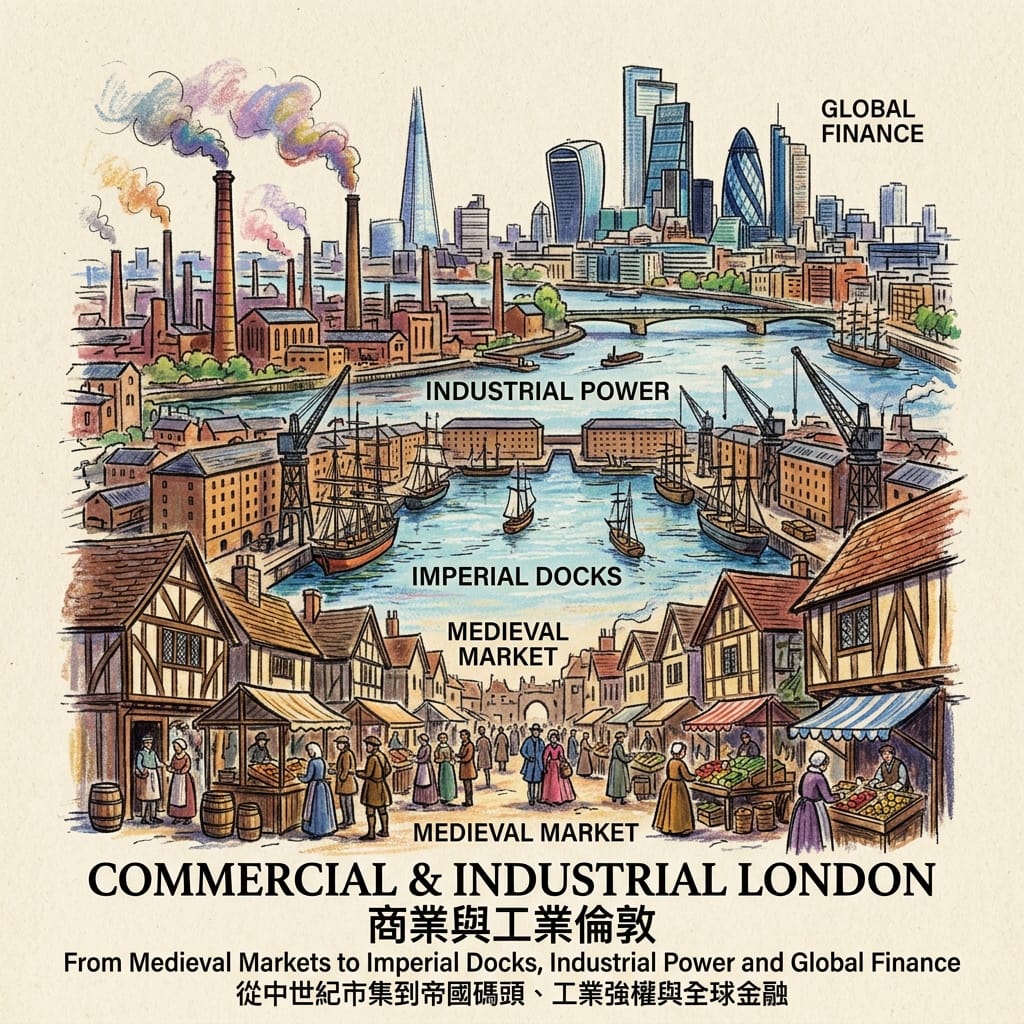
→ Medieval markets
→ City of London
→ Thames trade
→ West India Docks
→ Royal Docks
→ Industrial East London
→ Smithfield
→ Billingsgate
→ Victorian industry
→ Finance
→ Canary Wharf
Modern London
 Lawrence
→ Railways
→ Underground
→ Industrial decline
→ Containerisation
→ Docklands regeneration
→ Global finance
→ Contemporary London
Hidden London
 Lawrence
→ Lost warehouses
→ Industrial remnants
→ Forgotten markets
→ Railway arches
→ Old dock communities
→ Working-class neighbourhoods
COMMERCIAL & INDUSTRIAL LONDON
A medieval market.
A river wharf.
A merchant house.
A warehouse.
A factory.
A railway.
A dock.
A bank.
A financial tower.
They may look like separate histories.
They are not.
They are successive forms of the same London instinct: to connect people, goods, money and ideas.
And when one commercial London disappears, another is already being built on top of it.