
MODERN LONDON 現代倫敦
The Complete Authority Guide
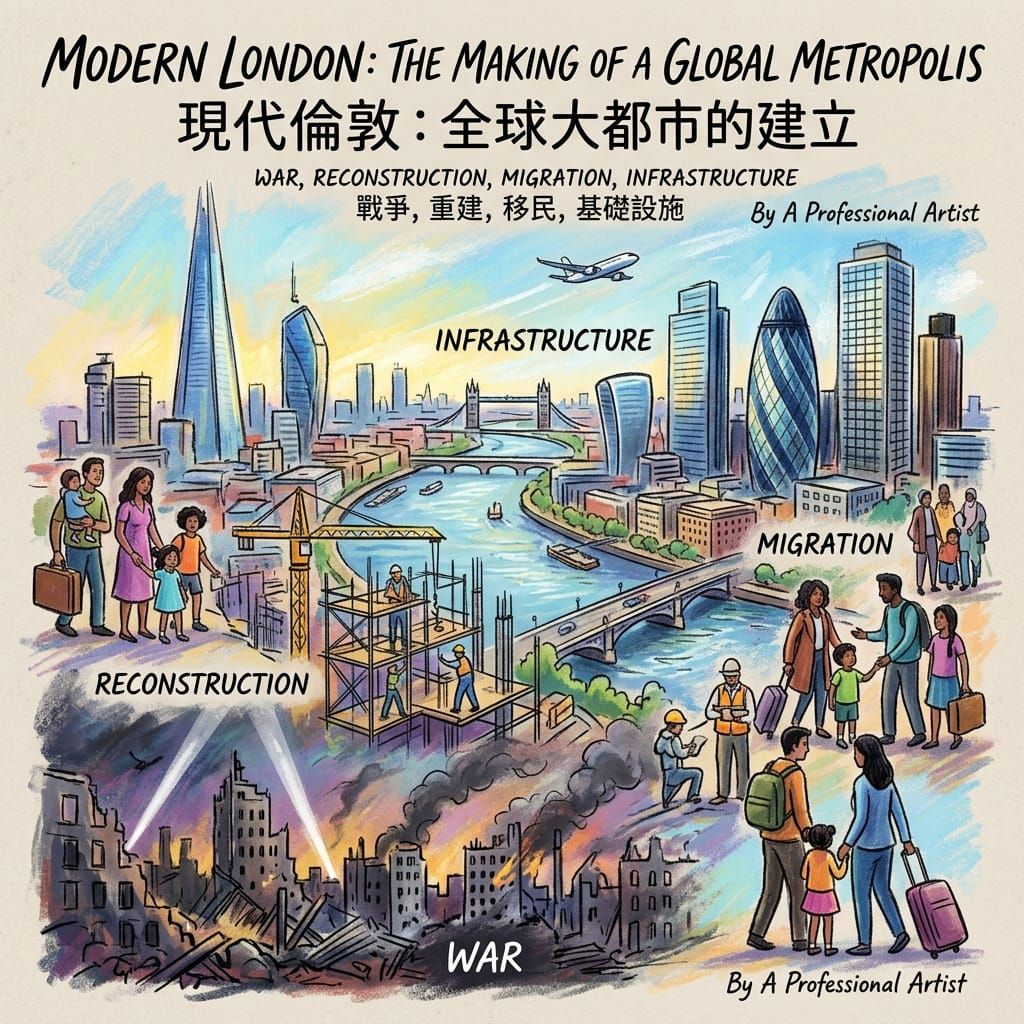
War, Reconstruction, Migration, Infrastructure and the Making of the Global Metropolis
Modern London did not appear when the twentieth century began.
It was built through a succession of disruptions.
A world war changed the social structure.
The Blitz destroyed neighbourhoods.
Postwar planners rebuilt the capital.
Council estates replaced bomb sites and overcrowded housing.
Railways and the Underground reorganized metropolitan life.
New towns pushed London's population outward.
The docks declined.
Manufacturing contracted.
Migration transformed neighbourhoods.
The financial sector expanded.
Docklands became a new city of offices and apartments.
And London increasingly reinvented itself as a global cultural, financial and creative metropolis.
Modern London is therefore not simply the story of tall buildings.
It is the story of how a historic capital adapted when the economic, social, political and technological conditions that had created Victorian London began to disappear.
The London of today emerged through several enormous transitions:
imperial capital → wartime city → welfare-state metropolis → industrial city in decline → global service economy → multicultural world city
Yet each transformation left physical traces.
A council estate.
A railway line.
A bomb site.
A former factory.
A closed dock.
A new town.
A financial tower.
A regenerated waterfront.
Modern London is therefore best understood as a city continually rebuilding its relationship with itself.
1. London Entered the Twentieth Century as an Imperial Metropolis
At the beginning of the twentieth century, London was already one of the world's great cities.
The metropolis was enormous.
Railways connected the suburbs.
The Underground penetrated the inner city.
The docks handled global trade.
Factories employed large populations.
Financial institutions dominated the City.
Westminster concentrated political power.
And the British Empire connected London with almost every continent.
Yet beneath this apparent confidence were serious problems.
Housing was inadequate.
Industrial pollution remained severe.
Working-class districts were overcrowded.
Transport was increasingly congested.
Social inequality was substantial.
The first decades of the twentieth century would therefore expose both the strength and vulnerability of London's Victorian urban system.
2. The First World War — The Beginning of a Different London
War Changes Society Before It Changes the Skyline
The First World War transformed London even before the physical devastation of the Second World War.
The conflict disrupted global trade.
Men left workplaces for military service.
Women entered occupations previously dominated by men.
Government expanded.
Industrial production was reorganized.
Air raids introduced a new kind of threat to the capital.
London was beginning to experience a transformation from nineteenth-century imperial metropolis into a modern mass society.
The political and social changes of the war would influence everything that followed.
3. London Between the Wars
The Metropolis Learns to Live With Modernity
The interwar decades produced a contradictory London.
New technologies and modern lifestyles spread rapidly.
Cinema.
Radio.
Cars.
Electricity.
Modern architecture.
Mass advertising.
Consumer culture.
But poverty remained severe in many districts.
The old industrial city did not simply disappear.
Instead, modern London developed on top of Victorian London.
Suburbs expanded.
Council housing increased.
Roads widened.
The Underground continued to transform commuting patterns.
London was becoming more dispersed while remaining intensely centralized.
This tension between centrality and expansion would define the twentieth-century metropolis.
4. The Underground and the Metropolitan City
Transport Creates a New London
The Underground was one of the most important forces shaping modern London.
It allowed people to live farther from central employment.
Suburban development accelerated.
Commercial centres appeared around stations.
Industrial areas became increasingly connected.
The Underground was therefore more than transportation.
It was a mechanism for metropolitan expansion.
A railway station could change land values.
A new line could create a suburb.
A suburb could create demand for shops and schools.
The resulting network gradually transformed London from a dense central city into a vast metropolitan system.


5. The Blitz — London Under Attack
The City Becomes a Battlefield
On 7 September 1940, sustained German bombing of London began.
The Blitz would transform the capital.
Historic England records that between 7 October 1940 and 6 June 1941, almost 28,000 high-explosive bombs and more than 400 parachute mines were recorded as landing on Greater London. On the night of 10–11 May 1941 alone, more than 2,000 fires were started across 61 London boroughs. (historicengland.org.uk)
The destruction was not confined to monumental buildings.
Homes disappeared.
Factories burned.
Railway infrastructure was damaged.
Churches collapsed.
The docks were targeted.
Commercial districts were hit.
Entire streets were transformed into rubble.
The Blitz changed London's physical geography.
But it also created the conditions for another historical transformation:
reconstruction.
6. The Bomb Sites — Destruction Becomes Opportunity
When the Ruins Became the Blueprint for a New City
The end of the Blitz did not mean the end of London's wartime destruction.
Later raids and V-weapons caused further damage between 1944 and 1945.
Historic England records that bomb sites subsequently became spaces for rebuilding and regeneration. Its research notes that heavily damaged buildings were often demolished, leaving cleared areas that planners could eventually incorporate into new development. (historicengland.org.uk)
This created an extraordinary historical situation.
Some planners saw destruction as tragedy.
Others also saw opportunity.
The old street pattern could be altered.
Roads could be widened.
Housing could be reorganized.
New public buildings could be constructed.
Modern London would emerge partly from the spaces where older London had disappeared.


7. Postwar Reconstruction — Designing the Future City
London Tries to Plan Itself
The Second World War created an opportunity for more comprehensive thinking about the future of London.
The County of London Plan of 1943, associated with Patrick Abercrombie and John Henry Forshaw, became one of the most influential planning documents in twentieth-century London.
Its vision included:
- Decentralization
- New housing
- Green belts
- New towns
- Improved road systems
- Redistribution of employment
- Reconstruction of damaged areas
The ambition was enormous.
London was no longer simply being repaired.
It was being reconsidered as an urban system.
The Greater London Authority's historical material notes that the Abercrombie plans helped shape London's postwar reconstruction and development. (london.gov.uk)
The important point is that the plan was never implemented perfectly.
London's real development resulted from negotiation between planning, politics, economics and private investment.
Nevertheless, its ideas profoundly influenced the shape of modern London.
8. Council Housing — Building a Different Social City
When the State Became a Major Builder
Postwar London faced an extraordinary housing problem.
Bombing had destroyed homes.
The population remained large.
Older housing stock was frequently overcrowded or in poor condition.
The solution included a massive expansion of council housing.
Estates were constructed across London.
Low-rise terraces.
Courtyard blocks.
High-rise towers.
New neighbourhoods.
Community centres.
Schools.
Open spaces.


The architecture of these estates reflected changing ideas about modern living.
Light.
Air.
Green space.
Functional design.
Separation of pedestrians and cars.
Higher-density housing.
The Loughborough Estate example illustrates this transformation: postwar estates were designed not simply as buildings but as neighbourhood environments with open space and community infrastructure. (layersoflondon.org)
Council housing therefore became one of the defining forms of modern London.
9. The New Towns — London Expands Beyond London
The Metropolis Learns to Decentralize
Postwar planners increasingly recognized that rebuilding the inner city alone would not solve London's housing and congestion problems.
The answer was partly decentralization.
New towns were established beyond the traditional urban core.
Stevenage.
Harlow.
Basildon.
Crawley.
Milton Keynes.
These developments absorbed population and employment that might otherwise have remained concentrated within London.
The concept transformed the meaning of the capital.
London was no longer simply a dense central metropolis.
It became a regional urban system extending deeply into southeast England.
This relationship between London and its wider metropolitan region remains fundamental today.
10. The Welfare-State City
London Becomes More Than a Commercial Capital
Modern London was also shaped by the expansion of the welfare state.
Hospitals.
Schools.
Public housing.
Parks.
Libraries.
Community centres.
Public transport.
Planning authorities.
The postwar state became much more involved in the physical city.
This represented a significant departure from the nineteenth-century model.
Victorian London had relied heavily on private enterprise, charities and local institutions.
Postwar London increasingly expected government to provide basic urban infrastructure.
The city was therefore being reconstructed not only physically but socially.
11. The Festival of Britain — Designing a Modern National Identity
London Turns Modernity Into an Experience
The Festival of Britain in 1951 became one of the clearest cultural expressions of postwar optimism.
Held primarily on the South Bank, it presented science, design, architecture and technology as symbols of a modern national future.
The South Bank landscape became a laboratory for modern architecture and public culture.


The festival mattered because Britain was emerging from wartime austerity.
Modernity was being presented not merely as reconstruction.
It was presented as a future worth building.
12. The 1960s — The New London
Britain Looks Forward
By the 1960s, London was becoming visibly different.
Television.
Cars.
Mass consumption.
Modern architecture.
Popular music.
Youth culture.
New shopping centres.
High-rise housing.
The city was increasingly associated with cultural experimentation.
London's global reputation was changing.
It was no longer only the imperial capital.
It was becoming a centre of:
fashion + music + design + advertising + popular culture
The transformation was especially visible in districts such as Soho, Chelsea, Carnaby Street and later King's Road.
Modern London was developing a cultural economy capable of competing with its financial one.
13. Immigration — London Becomes a World City in a New Way
The End of Empire Changes the Capital
The decline of empire did not make London less international.
It changed the direction of international movement.
People from former British colonies and elsewhere settled in London.
Caribbean communities became deeply embedded in neighbourhoods such as Brixton and Notting Hill.
South Asian communities transformed parts of West and East London.
African communities created new cultural and commercial networks.
Later migration diversified the city even further.
The Greater London Authority notes that migration over many centuries has contributed to the city's extraordinary cultural diversity and that contemporary London contains communities representing cultures from around the world. (london.gov.uk)
Modern London therefore became international in a different way.
Empire had once connected London to the world through political control and trade.
Postwar migration increasingly connected London through people.


14. Notting Hill — Migration Becomes Visible
From Working-Class District to Global Cultural Identity
Notting Hill provides an especially revealing case study.
Caribbean migration transformed the neighbourhood during the postwar decades.
Shops changed.
Restaurants changed.
Music changed.
Religion changed.
Community politics changed.
The Notting Hill Carnival, which developed from Caribbean cultural traditions and became a major annual event, eventually transformed the district's cultural identity.
What was once a local expression of community became one of London's most internationally recognized cultural events.
This illustrates an important principle:
modern London is continually recreated by the communities that settle in it.
15. Brixton — Migration, Commerce and Urban Identity
A Neighbourhood Rewritten by Community
Brixton provides another example.
Caribbean migration transformed the area.
Markets developed new identities.
Restaurants introduced new food traditions.
Music scenes expanded.
Political activism became deeply associated with the district.
Brixton therefore demonstrates the relationship between:
migration + commerce + culture + politics
It belongs simultaneously within Modern London, Commercial & Industrial London, Sacred London and Hidden London.
16. Modern London and the Underground
Transport Becomes Metropolitan Infrastructure
Postwar London continued expanding its transport system.
The Underground became increasingly interconnected with suburban rail services.
Bus routes expanded.
Major roads were constructed.
The motor car became increasingly important.
Later, the Docklands Light Railway transformed East London.
Then the Jubilee Line extension reshaped connections to Docklands.
Crossrail—now Elizabeth line—created another east-west metropolitan connection.
Modern transport continually redistributes London's economic geography.
A station can create a development centre.
A new line can change property values.
A fast connection can bring a formerly peripheral district into the centre's economic orbit.
The history of Modern London is therefore partly a history of changing travel time.
17. The Motor Car and the London That Was Never Fully Built
Highways, Traffic and the Limits of Modern Planning
Postwar planners initially imagined a more car-oriented London.
Major road proposals were developed.
Some were built.
Others were abandoned after strong public opposition.
The most famous example was the proposed London Ringways system.
Had it been completed, large sections of London would have been radically altered.
Instead, public resistance, changing planning priorities and political opposition led to the cancellation of many elements.
This is an important reminder:
the modern London we see is partly the result of plans that were never built.
18. The Environmental Awakening
When Growth Creates New Problems
Postwar modernization brought major environmental costs.
Traffic increased.
Air pollution became severe.
The River Thames remained heavily polluted.
Industrial areas produced waste and emissions.
The 1952 Great Smog became a defining public-health event, causing thousands of excess deaths and contributing to major changes in air-quality policy.
The modern city therefore learned a new lesson:
urban growth must also be managed environmentally.
Cleaner fuels.
Regulation.
Public transport.
Environmental planning.
River restoration.
These became increasingly important components of London's later development.
19. The Thames Reborn
From Industrial Sewer to Urban Amenity
The Thames has undergone one of London's most dramatic modern transformations.
Victorian London used the river as industrial infrastructure.
Modern London increasingly treats it as:
- Public space
- Cultural landscape
- Recreational environment
- Ecological resource
- Waterfront development opportunity
The relationship between London and the river therefore changed again.
The river remained physically the same.
Its economic and cultural meaning changed.
This is a recurring Modern London theme:
the city does not simply replace infrastructure; it frequently changes what infrastructure means.


20. The Decline of the Docks
The Industrial City Loses Its Historic Economic Engine
The Port of London had once been central to London's economy.
But containerization required deeper water, larger terminals and new logistics systems.
Traditional enclosed docks became increasingly obsolete.
The old system declined rapidly.
The Port of London Authority records that enclosed-dock traffic peaked at around 61 million tons in 1964, after which containerisation and changing shipping patterns contributed to the closure of the up-river docks between 1967 and 1981. (pla.co.uk)
The consequences were enormous.
Employment disappeared.
Warehouses became redundant.
Communities lost their economic base.
East London's geography was transformed.
But the closure also created one of the greatest redevelopment opportunities in postwar Britain.
21. Docklands — The Most Dramatic Urban Reinvention
From Docks to Canary Wharf
The transformation of Docklands became one of the defining stories of modern London.
Former industrial land was gradually converted into:
- Offices
- Housing
- Retail
- Transport infrastructure
- Cultural venues
- Public spaces
Canary Wharf became the most visible symbol of the new economy.
A place once dominated by ships and cargo became dominated by finance and corporate services.
The transformation was extraordinary.
cargo → capital
warehouse → office
dock worker → financial worker
industrial waterfront → global business district


Historic England's research on post-modern Docklands architecture also identifies projects such as China Wharf as evidence of the experimental architecture produced during the regeneration era. (historicengland.org.uk)
22. The 1980s — London Changes Political Direction
Privatization, Finance and Urban Development
The 1980s brought a major ideological transformation.
Central government promoted:
- Privatization
- Deregulation
- Property development
- Financial liberalization
London's financial sector expanded rapidly.
The 1986 Big Bang transformed the structure of London's financial markets.
The City became increasingly international.
Property markets intensified.
Former industrial land became commercially valuable.
The resulting economic growth helped transform London into a global financial centre.
But it also contributed to rising inequality and housing pressure.
Modern London therefore contains another contradiction:
wealth creation + uneven distribution
23. The City Becomes a Global Financial Centre
London's Economic Reinvention
The commercial city that had once been based on medieval markets, docks and industrial production became increasingly dominated by:
- Banking
- Finance
- Insurance
- Law
- Accountancy
- Consulting
- Media
- Technology
The City remained the historical core.
Canary Wharf created a second financial centre.
Westminster continued to concentrate government.
West London became increasingly important to global aviation and business.
London's economic geography became more polycentric.
Modern London's commercial power was therefore no longer based primarily on the river.
It increasingly depended upon networks of information and capital.
24. London 2012 — Regeneration Through an International Event
The Olympics as Urban Strategy
The 2012 Olympic Games provided another major opportunity to transform East London.
Former industrial land around Stratford was redeveloped.
New transport infrastructure was constructed.
The Olympic Park was created.
Housing and commercial development followed.
Stratford became one of the most important new metropolitan centres in East London.
The Olympics demonstrated a recurring principle in London's history:
major events can become instruments of urban transformation.
The same logic appeared earlier with the Festival of Britain and the 1951 South Bank.


25. Stratford — Industrial Land Becomes Metropolitan Centre
East London Rewrites Its Economic Geography
Stratford had long been associated with railway infrastructure, industry and working-class communities.
The Olympic redevelopment accelerated its transformation.
New rail connections.
Shopping.
Housing.
Parks.
Institutions.
Offices.
Cultural venues.
The area became a major transport interchange connecting different parts of London and the wider southeast.
Stratford demonstrates how modern London repeatedly changes the economic meaning of land.
26. Canary Wharf and Stratford — Two Generations of Regeneration
From Docklands to Olympic East London
Canary Wharf and Stratford represent two different stages of modern regeneration.
Canary Wharf
1980s–1990s
Industrial waterfront → financial district.
Stratford
2000s–2010s
Industrial and railway landscape → Olympic and metropolitan centre.
Both demonstrate the same principle:
London repeatedly converts underused land into new economic geography.
But the social consequences are more complicated.
Regeneration creates investment.
It creates jobs.
It improves infrastructure.
It can also increase land values and put pressure on existing communities.
27. Postwar Architecture Becomes Heritage
When Modern London Becomes History
For decades, many postwar buildings were considered unattractive or disposable.
That attitude has changed.
Historic England now recognizes examples of postwar and even post-modern architecture as heritage.
Its listing of buildings such as China Wharf reflects a growing recognition that late twentieth-century architecture is itself part of London's history. (historicengland.org.uk)
This is an important cultural shift.
London's idea of heritage continues to move forward.
Victorian buildings became heritage.
Then industrial buildings.
Now postwar architecture.
Eventually, today's buildings will become tomorrow's historical evidence.
28. Modern London and the Housing Crisis
The Problem That Never Disappeared
London's housing problem did not end with postwar reconstruction.
Housing demand continued.
Population grew.
Property values increased.
Social housing declined as a proportion of the housing system.
Private rents rose.
Redevelopment intensified.
New housing developments appeared throughout the capital.
Yet affordability remains one of the defining tensions of contemporary London.
The historical continuity is striking.
Victorian London faced overcrowding.
Postwar London faced housing shortages.
Modern London faces affordability and supply pressures.
The physical form changes.
The underlying problem remains:
How does a global city house the people who make it function?
29. Modern London and Migration
The Capital Becomes More Global With Every Generation
Migration has become one of the defining characteristics of modern London.
Different communities have reshaped:
- Brixton
- Notting Hill
- Southall
- Wembley
- Whitechapel
- Spitalfields
- Hackney
- Tottenham
- Newham
- Haringey
The cultural geography of London is therefore constantly evolving.
New restaurants.
Religious institutions.
Markets.
Music.
Schools.
Businesses.
Community organizations.
Migration does not simply add diversity.
It changes the physical and economic identity of neighbourhoods.


30. London as a 24-Hour Metropolis
From Working City to Experience Economy
Modern London increasingly operates through multiple overlapping economies.
Finance during the working day.
Retail throughout the week.
Restaurants and nightlife after dark.
Tourism throughout the year.
Creative industries across neighbourhoods.
Technology companies operating globally.
Cultural institutions attracting international audiences.
The city has therefore developed a powerful experience economy.
The modern commercial city sells not simply products.
It sells:
culture + entertainment + food + design + identity + place
31. The Digital City
When London's Economy Becomes Less Visible
Another major transformation is increasingly difficult to see physically.
Digital services.
Fintech.
Media.
Technology.
Data.
Online commerce.
Remote work.
These sectors do not require the same physical infrastructure as Victorian industry.
A modern company may occupy an office, but its economic network extends globally.
London therefore increasingly functions through systems that are partly invisible.
The city has moved from:
goods moving through docks
to
information moving through networks
Yet physical infrastructure remains essential.
Data centres.
Telecommunications.
Railways.
Airports.
Offices.
Housing.
The digital city still depends upon the physical city.
32. Heathrow and London's Global Connectivity
The Airport Becomes Part of the Metropolis
Air travel transformed London's relationship with the world.
Heathrow developed into one of the world's major international aviation hubs.
The airport connected London directly with increasingly global flows of:
- People
- Capital
- Tourism
- Business
- Goods
The twentieth-century capital therefore became a city whose economic reach was no longer primarily determined by the Thames.
The global city had acquired a new gateway.
33. Modern London and the Thames Estuary
The Metropolis Moves East
London's eastward expansion continues.
The Thames Estuary has become an area of infrastructure, logistics, environmental planning and regeneration.
Large-scale projects seek to integrate housing, industry, transport and ecological management.
The historical movement is remarkable.
Roman London grew beside the river.
Victorian London built docks.
Twentieth-century London industrialized the estuary.
Twenty-first-century London increasingly seeks to balance development with environmental resilience.
The river continues to determine the city's future.
34. Modern London Walking Routes
Route 1 — Rebuilding After the Blitz
St Paul's → Barbican → Smithfield → South Bank
Historical focus:
wartime destruction, postwar architecture, planning and reconstruction.


Route 2 — The Welfare-State City
Loughborough Junction → postwar estates → Brixton
Historical focus:
council housing, social planning, migration and community transformation.
Route 3 — Industrial Decline and Reinvention
West India Docks → Canary Wharf → Isle of Dogs
Historical focus:
imperial commerce, dock closure, regeneration and finance.


Route 4 — Modern East London
Stratford → Olympic Park → East Village → Royal Docks
Historical focus:
industrial decline, Olympics, regeneration, new housing and metropolitan infrastructure.
Route 5 — Migration and Modern London
Brixton → Notting Hill → Southall
Historical focus:
postwar migration, cultural transformation, markets, religion and community identity.
35. Modern London Across the Authority Graph
Modern + Ancient & Medieval London
Modern London inherited the ancient street network, medieval institutions and historic geography.
 Lawrence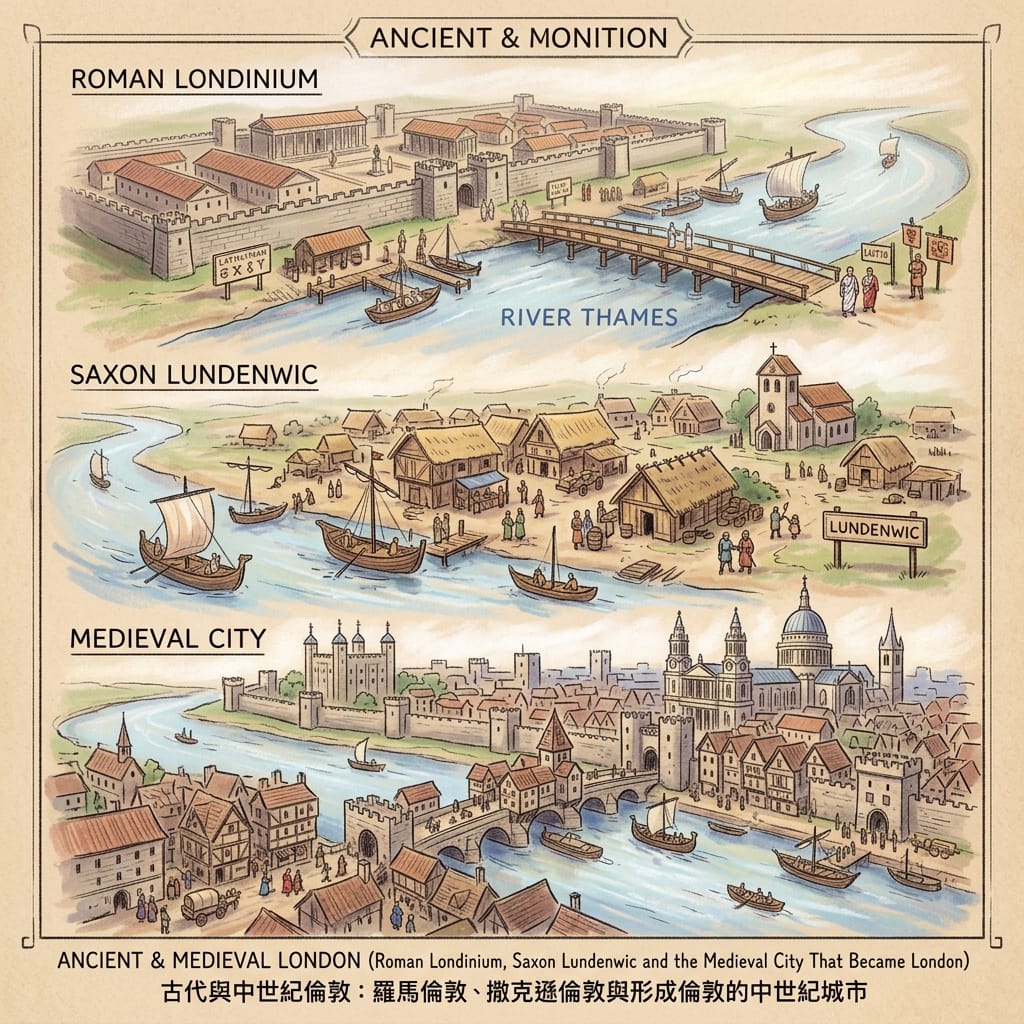
Modern + Royal & Political London
The twentieth century transformed the capital from imperial centre into modern constitutional and democratic metropolis.
 Lawrence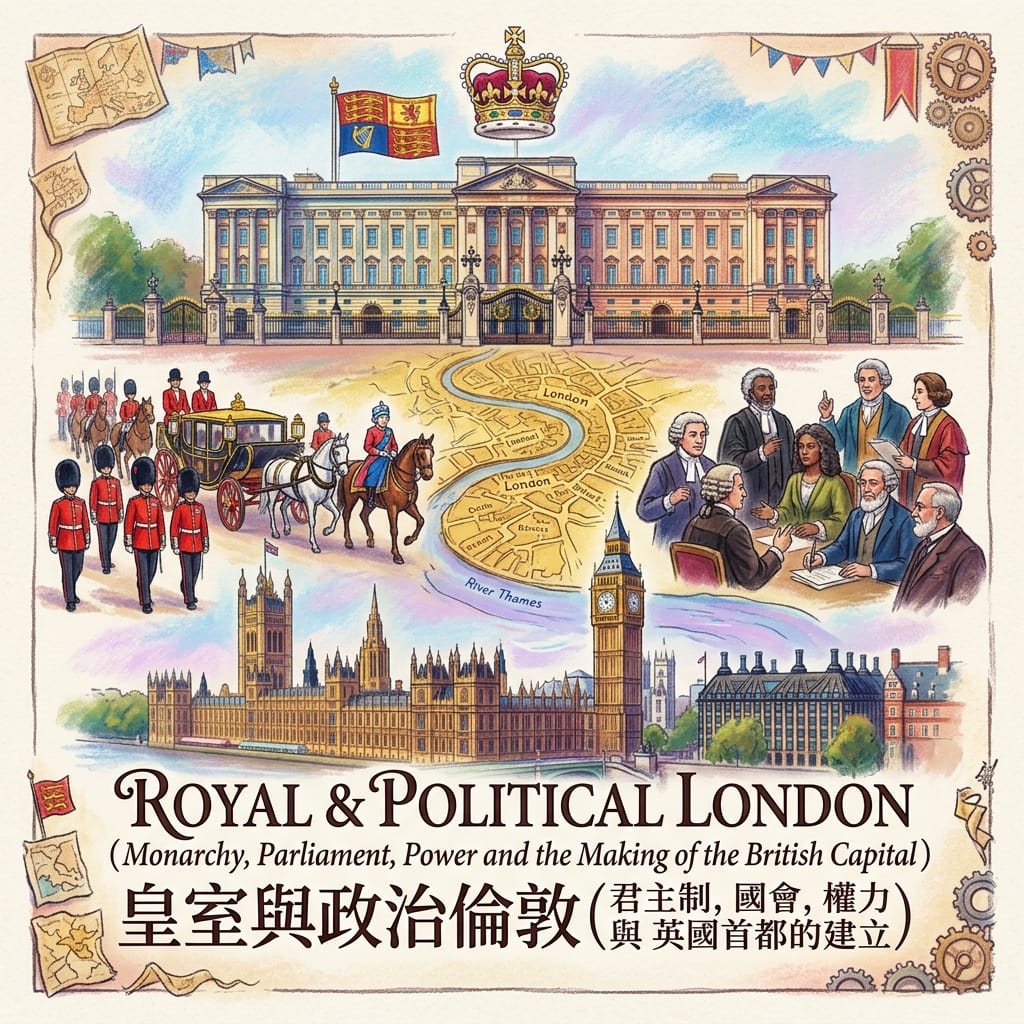
Modern + Sacred London
Migration and social change transformed London's religious geography.
 Lawrence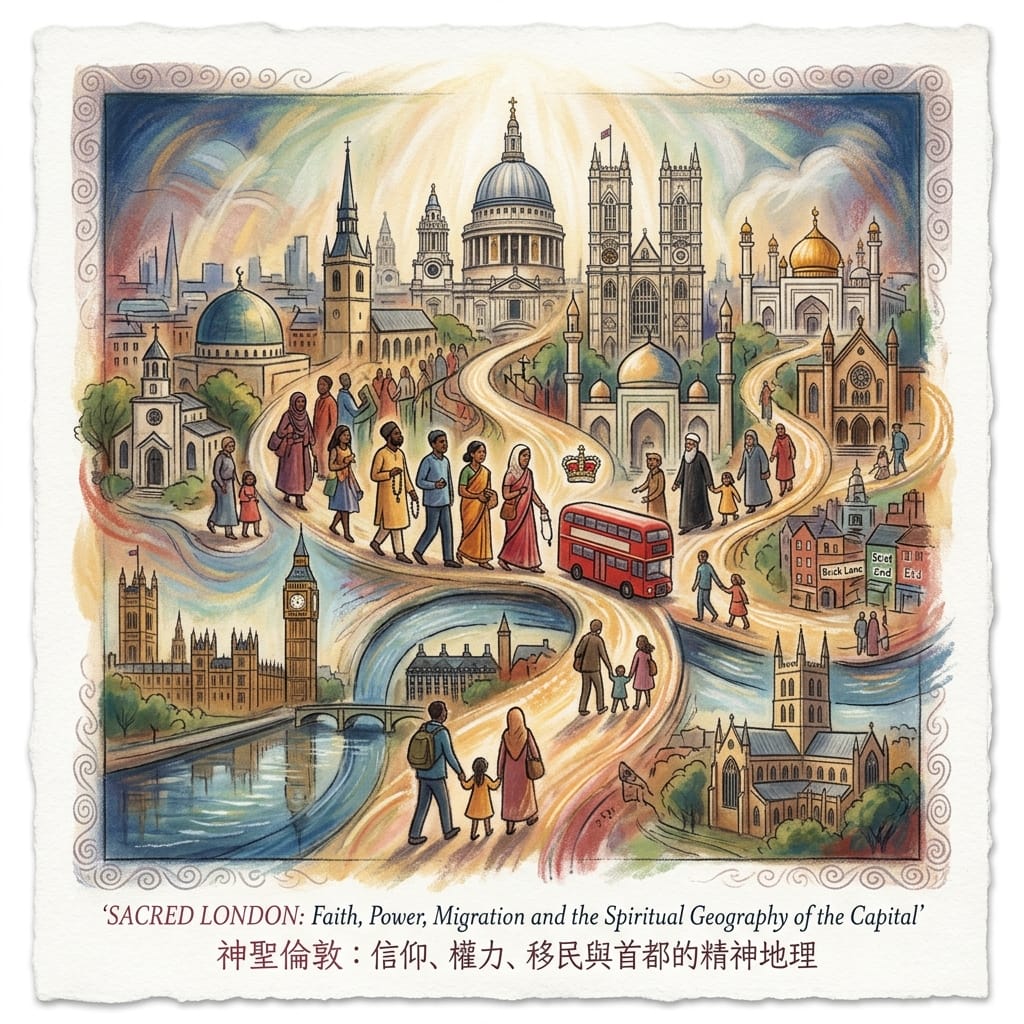
Modern + Commercial & Industrial London
Industrial decline, financialization, containerisation and new commercial districts reshaped the economy.
 Lawrence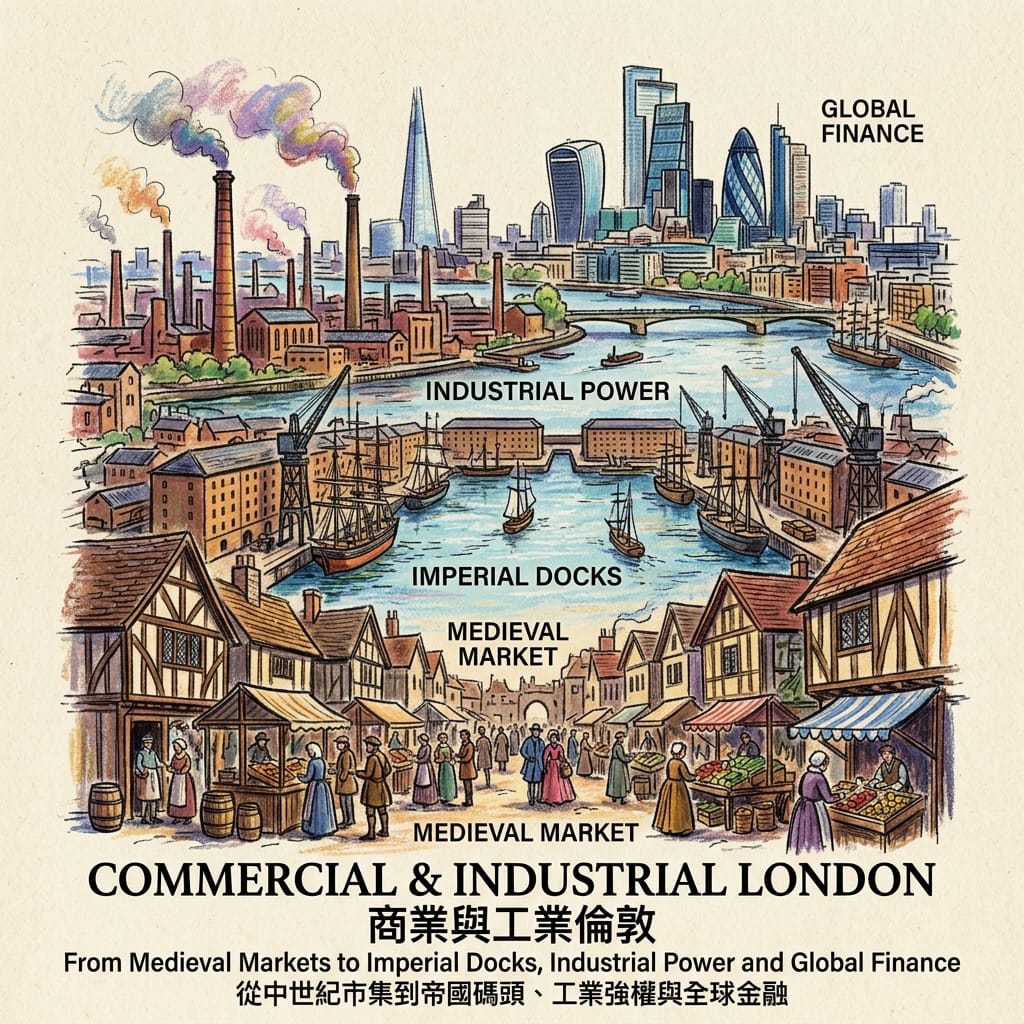
Modern + Hidden London
Bomb sites, estates, industrial remnants, forgotten infrastructure and former communities preserve the evidence of twentieth-century transformation.
 Lawrence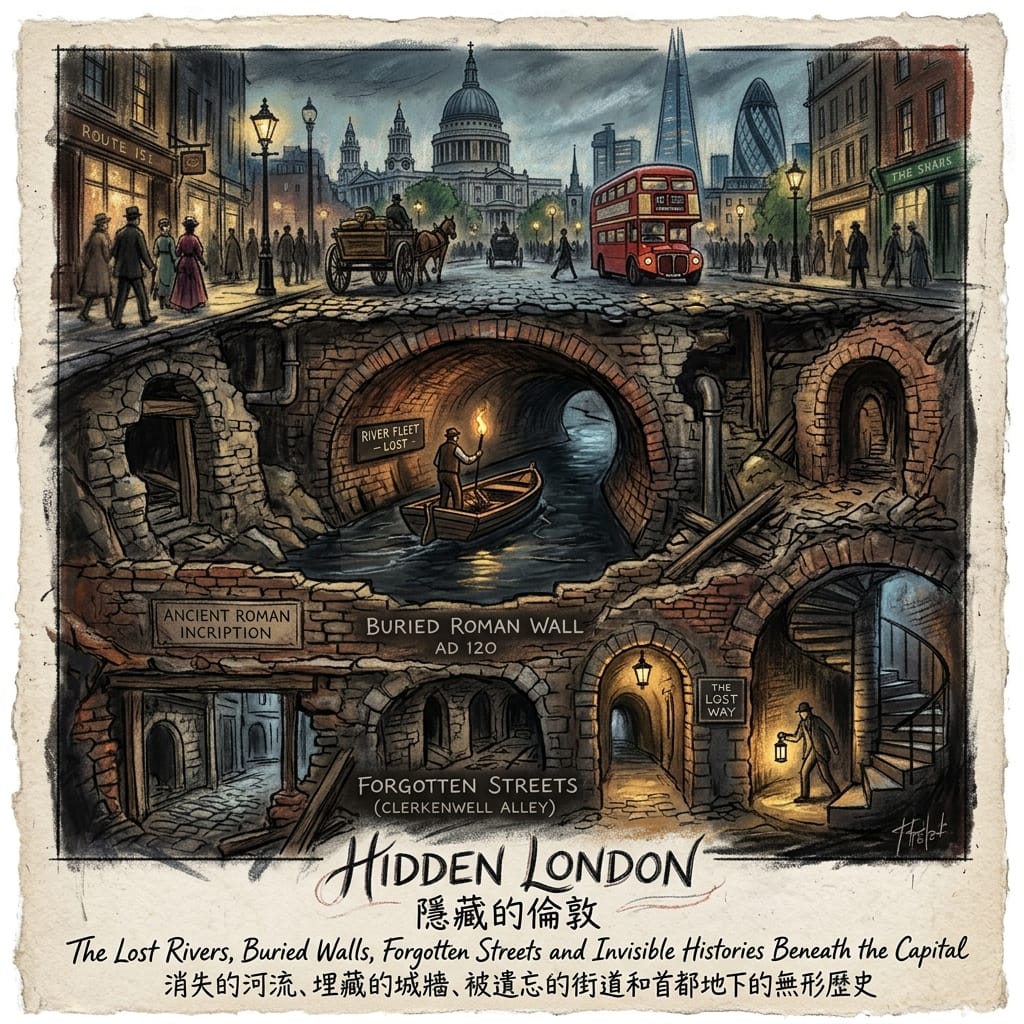
Modern London therefore becomes the bridge between the historic London inherited from previous centuries and the metropolis experienced today.
36. The Five Transformations That Created Modern London
Modern London can be understood through five major transitions.
1. Physical Transformation
Industrial city → reconstructed city → regenerated city
2. Economic Transformation
Empire and manufacturing → services and finance → global knowledge economy
3. Social Transformation
Imperial population → postwar migration → multicultural metropolis
4. Spatial Transformation
Central metropolis → suburban city → polycentric metropolitan region
5. Infrastructural Transformation
Railways → roads and Underground → integrated metropolitan network → digital connectivity
These transformations overlap.
None replaced the previous system completely.
That is why London remains historically layered.
37. What Modern London Reveals About the City
Study modern London carefully and today's city becomes easier to explain.
The council estate reveals the postwar housing crisis.
The railway reveals metropolitan expansion.
The bomb site reveals wartime destruction.
The Barbican reveals postwar architectural ambition.
Canary Wharf reveals industrial decline and financial reinvention.
Stratford reveals event-led regeneration.
Brixton reveals migration and community identity.
The Thames reveals changing environmental priorities.
A former factory reveals the transformation from manufacturing to services.
Modern London is therefore not simply contemporary.
It is the physical record of twentieth- and twenty-first-century decisions.
38. Why Modern London Matters
The modern city is often the least understood part of a historical city.
People know the Romans.
They know medieval churches.
They know Victorian architecture.
But modern London is where many of the decisions that shape everyday life were made.
Where people live.
How they commute.
Where businesses locate.
How former industrial land is redeveloped.
How communities respond to migration.
How heritage is defined.
How the river is used.
How London competes globally.
These are modern historical questions.
And they are still unfolding.
Final Reflection — The London That Refused to Stand Still
Modern London is often described as a city that survived the twentieth century.
That is true.
But survival is not enough to explain it.
London did more than survive.
It reinvented itself.
War destroyed neighbourhoods.
Planners redesigned them.
Housing policy created new communities.
Railways expanded the metropolis.
Migration transformed its culture.
Factories disappeared.
Finance expanded.
Docks closed.
Canary Wharf rose.
The Olympic Games transformed East London.
Historic buildings became heritage.
Postwar buildings became heritage.
The Thames changed from industrial infrastructure into a public and environmental landscape.
And the city continues to change.
This is the central paradox of modern London:
the city is constantly replacing itself, yet it never completely escapes its previous forms.
A council estate can become heritage.
A factory can become a creative workspace.
A warehouse can become an apartment.
A dock can become a financial district.
A railway can become a cultural corridor.
A bomb site can become a public square.
The past does not disappear.
It changes function.
That is why modern London is not the end of London's historical story.
It is another layer.
A city rebuilt by war, reshaped by migration, connected by infrastructure and reinvented by economic change.
Modern London is the London that learned that survival alone was not enough—it had to keep becoming something new.
Historical Sources & Further Reading
Historic England
Historic England provides particularly valuable research on the Blitz, postwar reconstruction, modern architecture and the heritage status of twentieth-century buildings. Its Blitz research documents the scale of bombing and the subsequent transformation of bomb sites into spaces for rebuilding. (historicengland.org.uk)
Its work on post-modern buildings demonstrates the expanding definition of London's architectural heritage, including early Docklands redevelopment projects such as China Wharf. (historicengland.org.uk)
Greater London Authority
The Greater London Authority's historical material provides useful context for the Abercrombie plans, the evolution of London as a world city, migration and the transformation of the capital during the late twentieth century. (london.gov.uk)
London Museum
London Museum provides extensive material on London's communities, migration, Docklands, wartime history and twentieth-century urban life.
Port of London Authority
The Port of London Authority's historical archive provides essential evidence for the decline of the enclosed docks, the impact of containerisation and the transformation of the river economy. (pla.co.uk)
Other Important Sources
- London Metropolitan Archives
- London Transport Museum
- Imperial War Museums
- National Archives
- Greater London Authority
- Museum of London Archaeology
- City of London Corporation
- Royal Docks London
- Historic Royal Palaces
- Local borough archives
- Community oral-history projects
Key Research Themes
For future Modern London articles, particularly valuable subjects include:
- Abercrombie Plan
- Blitz and bomb sites
- Postwar reconstruction
- Council housing
- Loughborough Estate
- Barbican
- Festival of Britain
- New Towns
- London Underground
- Great Smog
- Postwar migration
- Brixton
- Notting Hill
- Docklands
- Canary Wharf
- Containerisation
- 1986 Big Bang
- 2012 Olympics
- Stratford regeneration
- London's housing crisis
- Contemporary London architecture
- Digital London
- Thames regeneration
Continue Exploring London
Ancient & Medieval London
 Lawrence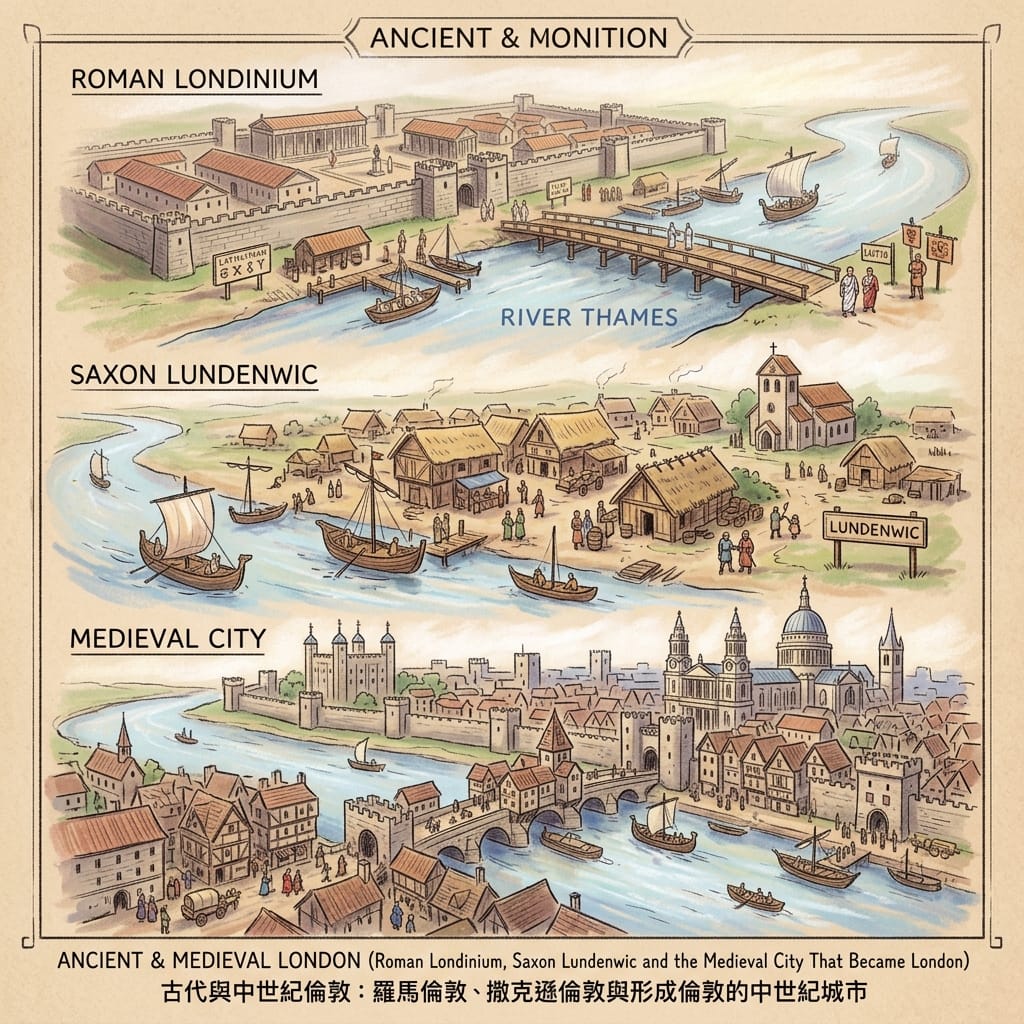
→ Roman Londinium
→ London Wall
→ Medieval London
→ London Bridge
→ Westminster
→ Medieval markets and guilds
Royal & Political London
 Lawrence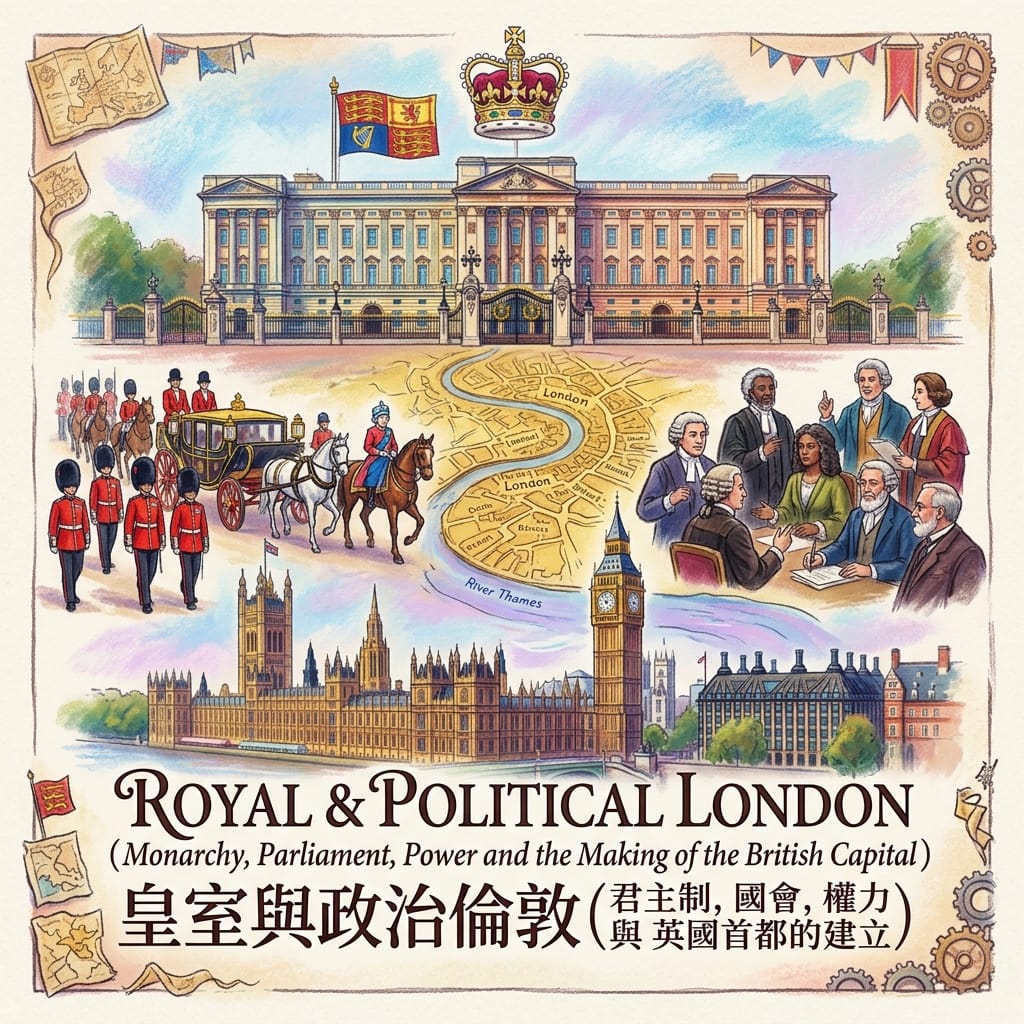
→ Tower of London
→ Westminster Abbey
→ Parliament
→ Whitehall
→ Buckingham Palace
Sacred London
 Lawrence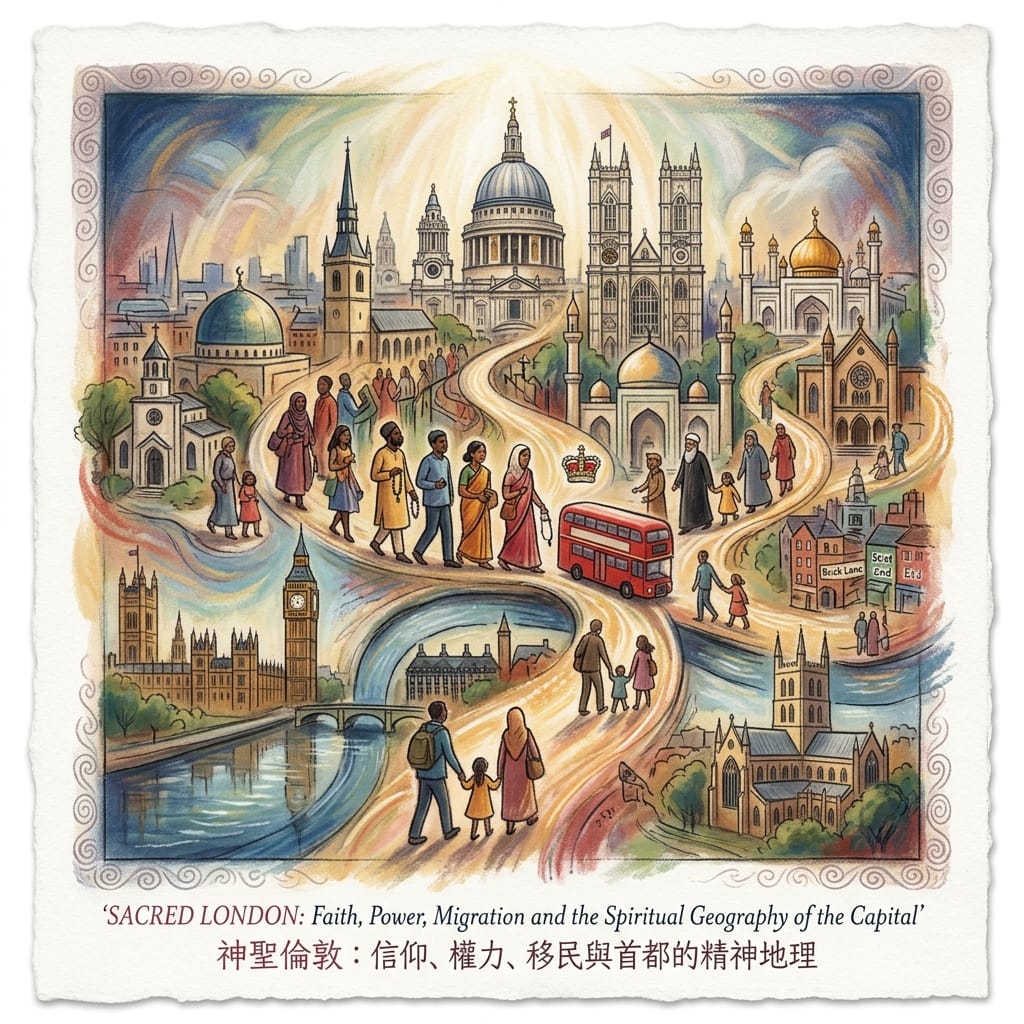
→ St Paul's Cathedral
→ Westminster Abbey
→ Wren's churches
→ Jewish London
→ Muslim London
→ Hindu and Sikh London
Commercial & Industrial London
 Lawrence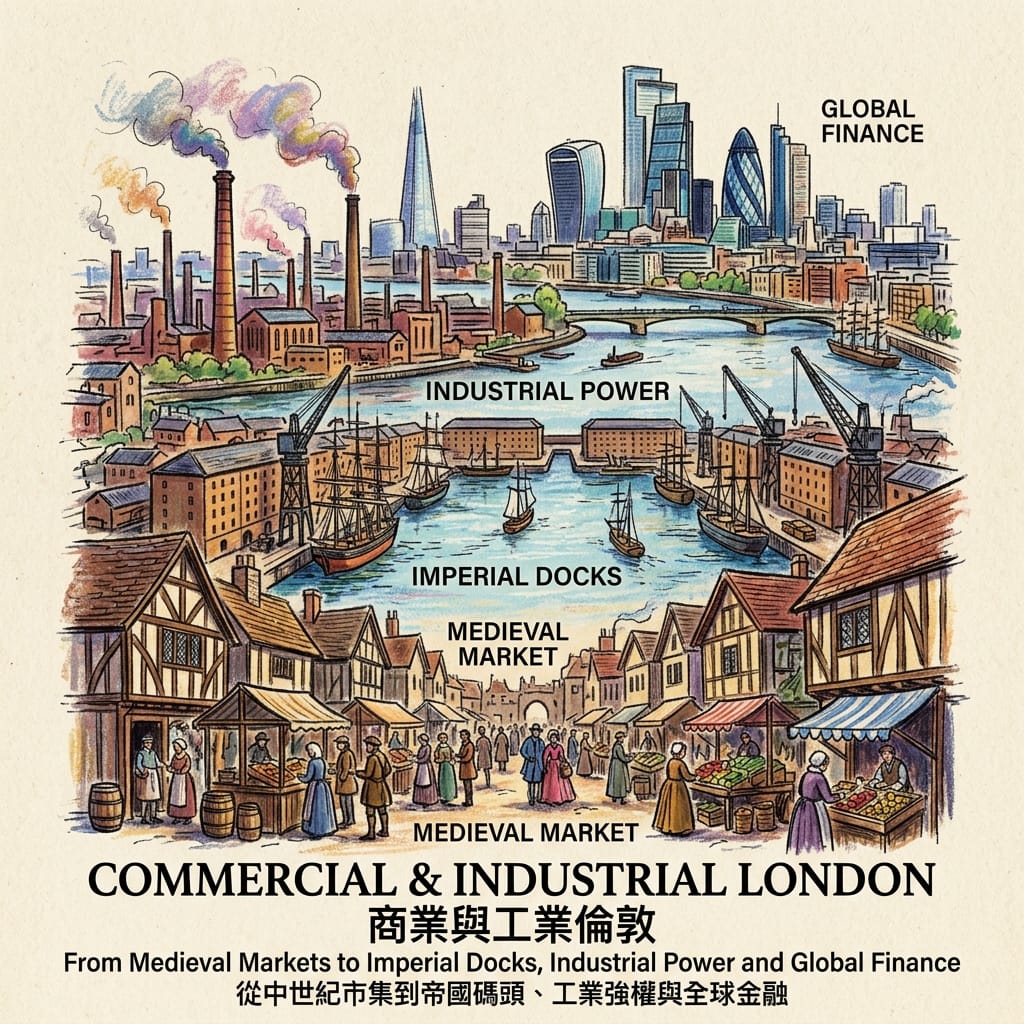
→ City of London
→ Thames trade
→ Markets
→ Docks
→ Victorian industry
→ Finance
→ Canary Wharf
Modern London
 Lawrence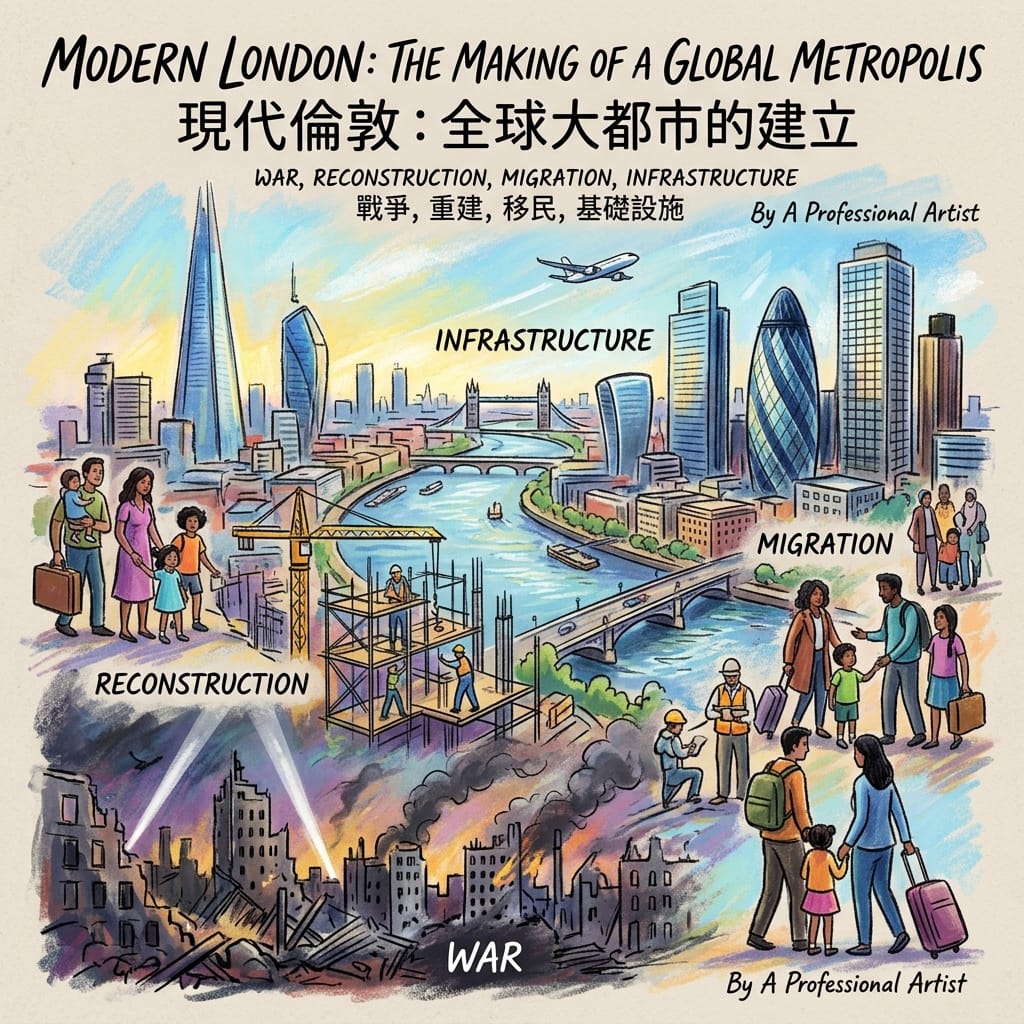
→ Blitz
→ Postwar reconstruction
→ Council housing
→ New Towns
→ Underground
→ Migration
→ Docklands
→ Stratford
→ Contemporary London
Hidden London
 Lawrence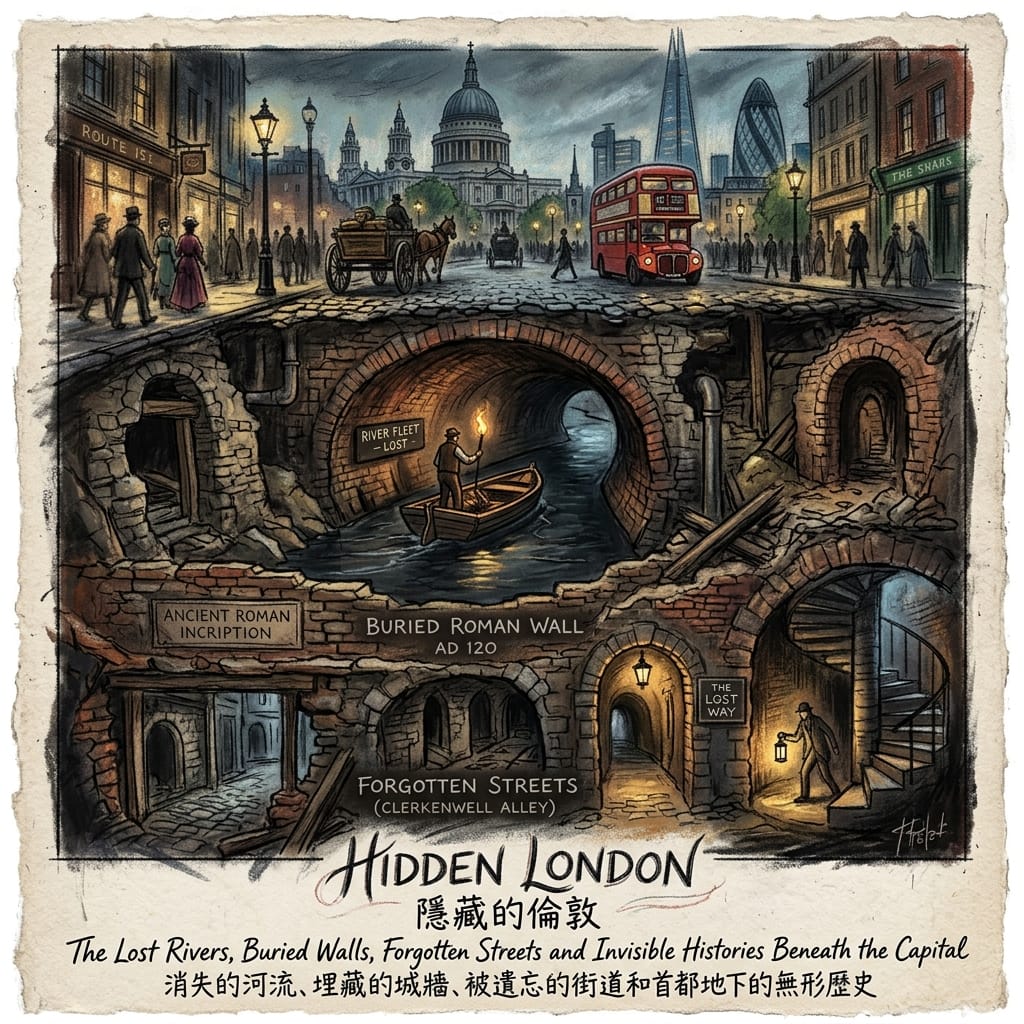
→ Bomb sites
→ Postwar estates
→ Lost industrial landscapes
→ Railway infrastructure
→ Forgotten communities
→ Disappeared docks
MODERN LONDON
A bomb site.
A council estate.
A railway.
A new town.
A factory.
A migrant neighbourhood.
A closed dock.
A financial tower.
An Olympic park.
A regenerated waterfront.
Each looks like a different story.
Together, they explain the city.
Modern London is not simply the London that exists today.
It is the accumulated result of how London responded to war, housing, migration, technology, economic change and the relentless pressure to reinvent itself.