
ANCIENT & MEDIEVAL LONDON 古代與中世紀倫敦
The Complete Historical Foundation
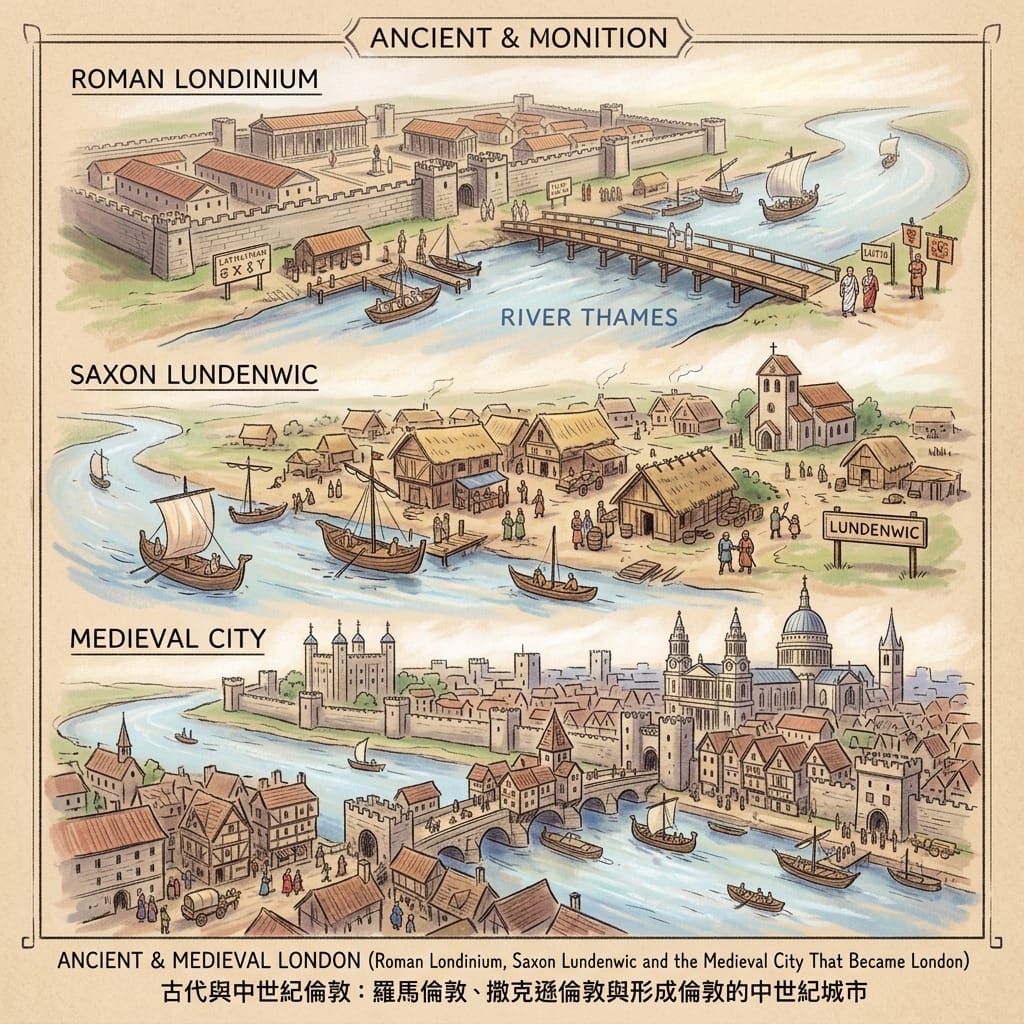
Roman Londinium, Saxon Lundenwic and the Medieval City That Became London
Before London became the capital of Britain, it was already an international city.
Before Westminster became the centre of monarchy and Parliament, the Thames was already carrying people and goods through the landscape.
Before the modern City of London became a global financial district, Roman merchants, medieval traders and craftsmen were already using the same narrow geographical space.
London's ancient and medieval history is therefore not simply a sequence of old buildings.
It is the story of how a place beside a river became a city, how that city collapsed and moved, how it was rebuilt, and how medieval institutions created the foundations of the London that followed.
Roman Londinium became an important port and administrative centre.
When Roman rule disappeared, urban life changed dramatically.
A new trading settlement, Lundenwic, developed farther west around present-day Covent Garden and the Strand.
Viking attacks disrupted that settlement.
King Alfred re-established a fortified town within the old Roman walls in 886.
Norman kings transformed the city again.
Westminster developed into a royal and ecclesiastical centre.
The Tower of London imposed royal authority.
London Bridge connected the City with Southwark and became a commercial world in itself.
Markets, guilds, churches and river trade created an increasingly sophisticated medieval metropolis.
And much of modern London still follows the geography established during these centuries.
Ancient and Medieval London is therefore not a distant prelude to the modern capital.
It is the foundation beneath it.
1. Why London Was Built Here
The Thames Created the Opportunity
London's geographical advantage begins with the River Thames.
The river provided access to the North Sea while also connecting the coast with the interior of Britain.
The site that became Londinium offered higher ground on the northern bank and a location where a bridge could connect the settlement with the southern side of the river.
The London Museum's reconstruction of early Londinium emphasizes its combination of river access, roads, port facilities and connection across the Thames. (londonmuseum.org.uk)
London therefore began with a geographical equation:
river + crossing + roads + trade = city
That equation would remain relevant for the next two thousand years.


2. Londinium — Rome Builds a City
The First London
The Romans established Londinium in the first century CE.
The London Museum dates the Roman settlement broadly from around AD 47–410 and describes it as an important port and the centre for governing Roman Britain. (londonmuseum.org.uk)
The location rapidly became valuable.
Roads connected Londinium with the rest of Roman Britain.
The river connected it with the wider Roman world.
Warehouses and commercial facilities served the port.
Public buildings established the institutions of an urban centre.
Temples reflected a diverse religious environment.
An amphitheatre provided entertainment.
The city became a place where people, goods, languages and religions met.
Roman Londinium was therefore already recognizably cosmopolitan.


The London Museum's reconstruction of Londinium around AD 200 shows the forum, basilica, fort, river and street system within a much more extensive settlement than the surviving archaeological remains might suggest. (londonmuseum.org.uk)
3. Boudica — The First Great Destruction of London
A City Burned Before It Became Permanent
Roman London did not develop peacefully.
Around AD 60–61, the revolt led by Boudica, queen of the Iceni, reached Londinium.
The settlement was burned.
The population suffered enormous disruption.
The Romans eventually regained control and rebuilt.
The episode is historically important because it establishes a pattern that would repeatedly appear in London's later history:
destruction did not necessarily end the city.
Instead, destruction could produce another stage of urban growth.
After the revolt, the Romans strengthened the settlement's infrastructure and expanded its commercial and administrative role. (londonmuseum.org.uk)
London would experience this cycle again in 1666.
And again during the Second World War.
Its history is therefore partly a history of rebuilding after catastrophe.
4. The Roman Port — London's First Global Connection
A City Built on Movement
Londinium was not important only because Romans lived there.
It was important because goods moved through it.
The port connected Roman Britain with the wider empire.
Imports arrived.
Exports left.
Military supplies moved.
People travelled.
Enslaved people were also forcibly transported through Roman commercial and imperial networks. The London Museum's account of Londinium explicitly notes the movement of enslaved people into and out of Roman Britain. (londonmuseum.org.uk)
This complicates the familiar image of Roman London as simply a prosperous trading town.
It was also part of an imperial system based on power, taxation, military occupation and unequal exchange.
That complexity should remain visible when interpreting London's earliest international connections.


5. The Forum, Basilica and Amphitheatre
When London Became a Real City
By the second century, Londinium had developed the institutions expected of an important Roman urban centre.
The forum served as a commercial and civic space.
The basilica provided a centre for administration and law.
Public baths served social and practical functions.
The amphitheatre provided mass entertainment.
The Roman fort housed soldiers.
The Temple of Mithras reveals another dimension of urban life: private religious communities existed alongside the more public institutions of the city.
The London Museum's archaeological research has identified Roman public buildings and entertainment spaces throughout the City of London, including the amphitheatre beneath Guildhall. (londonmuseum.org.uk)


The modern City therefore occupies an area where London's first major civic institutions already existed nearly two thousand years ago.
6. London Wall — The Boundary That Shaped the Future City
Rome Builds the Framework of Medieval London
Around the early third century, the Romans constructed a major defensive wall around Londinium.
Historic England dates the construction of London Wall to approximately AD 190–225 and emphasizes that it remained important far into the medieval period and helped determine the shape and development of both Roman and medieval London. (historicengland.org.uk)
The wall enclosed roughly 133 hectares on the north side of the Thames.
Major gates connected the city with external roads:
- Aldgate
- Bishopsgate
- Cripplegate
- Aldersgate
- Newgate
- Ludgate
A seventh major gate, Moorgate, developed later.
The wall was repeatedly repaired and strengthened.
Its significance therefore lasted far beyond Roman military history.
Medieval London inherited the boundaries of Roman London.


The extraordinary feature of London Wall is not simply that fragments survive.
It is that today's City still follows the ancient city's geographical logic.
7. The End of Roman London
When the City Became Quiet
By the fourth century, Londinium was changing.
Political authority was shifting.
The economy was changing.
The Roman Empire itself faced increasing instability.
The city became less densely populated.
Public buildings were no longer maintained at their earlier scale.
Eventually, Roman administration disappeared.
By the early fifth century, the old urban system had largely collapsed.
The London Museum's chronology places the end of Roman Londinium around AD 410. (londonmuseum.org.uk)
The important point is that London did not simply continue uninterrupted.
There was a genuine break.
For a time, the old walled city was no longer the main centre of settlement.
And the next London developed somewhere else.
8. Lundenwic — The Other Medieval London
The City Moves West
In the sixth and seventh centuries, urban life developed in a new location west of the Roman walls.
This settlement became known as Lundenwic.
The London Museum identifies Lundenwic as an international trading town flourishing from around AD 600 in the area of present-day Covent Garden, the Strand and nearby districts. (londonmuseum.org.uk)
This is one of the most important discoveries for understanding London's history.
The medieval city was not simply a continuation of Roman Londinium.
People moved.
The centre of economic life moved.
The old Roman city became relatively quiet.
A new trading settlement emerged beyond its walls.
Lundenwic had:
- Timber buildings
- Workshops
- Streets
- Livestock
- Imported goods
- International trade
Archaeology reveals evidence of weaving, metalworking, bone-working and foreign trade. (londonmuseum.org.uk)


This gives London one of its most fascinating historical characteristics:
the city can move without ceasing to be London.
9. Anglo-Saxon London — Trade Returns to the River
Lundenwic as an International Marketplace
Lundenwic was not simply a village.
It was a trading town connected to a much wider northern European world.
Archaeologists have found imported goods from continental Europe, evidence of specialist production and coins associated with powerful Anglo-Saxon kingdoms. (londonmuseum.org.uk)
This was an important period in London's commercial identity.
The city's geographical advantage remained.
The Thames still provided access.
Markets still required concentration.
Craft production developed alongside trade.
And London's position between inland England and the sea remained valuable.
In other words:
the Roman city disappeared, but London's geographical advantages did not.
10. Vikings and the Return to the Roman Walls
London Moves Back
Lundenwic's prosperity did not last indefinitely.
Viking raids disrupted trade and settlement.
The London Museum records major Viking attacks beginning in the ninth century and notes that Lundenwic was abandoned by the 880s. (londonmuseum.org.uk)
A new London emerged inside the old Roman walls.
In 886, King Alfred re-established London as a fortified town, Lundenburgh. (londonmuseum.org.uk)
This was a crucial turning point.
The old Roman boundary became useful again.
The abandoned walls became defensive infrastructure.
The City of London was effectively reborn inside the footprint of Londinium.
And the basic geography of the medieval City was established.


11. London Bridge — The City and Southwark Become One System
The Crossing That Controlled the River
A bridge across the Thames existed from very early in London's history.
The medieval bridge became something much more significant.
The stone bridge begun in 1176 by Peter de Colechurch took more than thirty years to complete and lasted for more than six centuries. English Heritage describes it as the longest inhabited bridge in Europe, with houses and shops lining the roadway. (english-heritage.org.uk)
This transformed the bridge into much more than infrastructure.
It became:
- A market
- A residential street
- A commercial corridor
- A defensive structure
- A symbolic gateway
Across the river, Southwark developed its own commercial and social identity.
London was becoming a two-sided city.


12. Southwark — London's Other Medieval City
The Settlement Across the River
Southwark was never simply an extension of the City.
It developed its own identity.
The river crossing attracted commerce.
Markets flourished.
Religious institutions grew.
Inns and entertainment venues developed.
Its position outside the City walls allowed activities that were more restricted within the City itself.
Southwark later became associated with the theatre world, including Shakespeare's Globe, but its deeper history reaches much further back.
Roman Southwark.
Medieval market town.
Bridge settlement.
Religious centre.
Entertainment district.
Industrial neighbourhood.
Modern cultural quarter.
Southwark demonstrates London's capacity to accumulate functions without completely abandoning its earlier identity.
13. Westminster — A Different Medieval London
The Royal and Sacred Counterweight to the City
While the City of London developed around commerce, Westminster developed around monarchy and religion.
The Benedictine monastery at Westminster grew into an extraordinary institutional centre.
The present Gothic abbey was largely rebuilt beginning in 1245 under Henry III. Westminster Abbey describes the existing building as an architectural masterpiece of the thirteenth to sixteenth centuries and notes its continuous role in royal coronations since 1066. (westminster-abbey.org)
Westminster therefore represented a different form of urban power.
The City had merchants.
Westminster had kings.
The City had guilds.
Westminster had the Crown.
The City had markets.
Westminster had the monastery and royal institutions.
Between them stood the Thames and the growing metropolis.
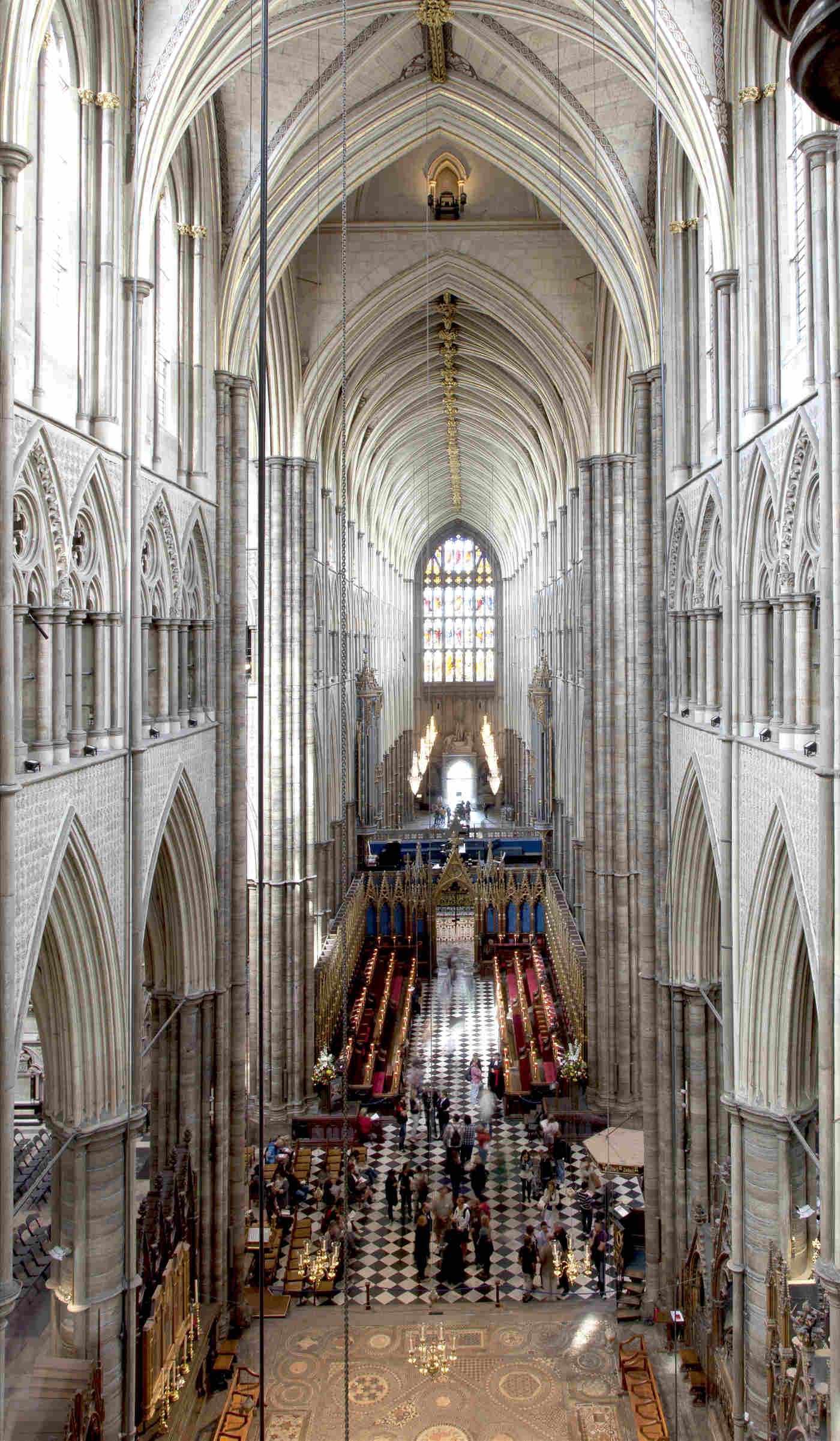

The medieval Westminster landscape was considerably more complex than the modern parliamentary district suggests. The abbey precinct included religious buildings, gardens, houses, walls and waterways.
14. Westminster Abbey — Religion Becomes Political Geography
Where Spiritual and Royal Power Meet
Westminster Abbey was never simply a church.
Its location and history connected:
religion + monarchy + ceremony + memory
The abbey became the setting for royal coronations from 1066 onward, a tradition that continues today. (westminster-abbey.org)
It became a place where political legitimacy could be performed in sacred space.
Kings were crowned.
Queens were crowned.
Royal burials took place.
National memory accumulated.
The building itself became a record of English and British history.

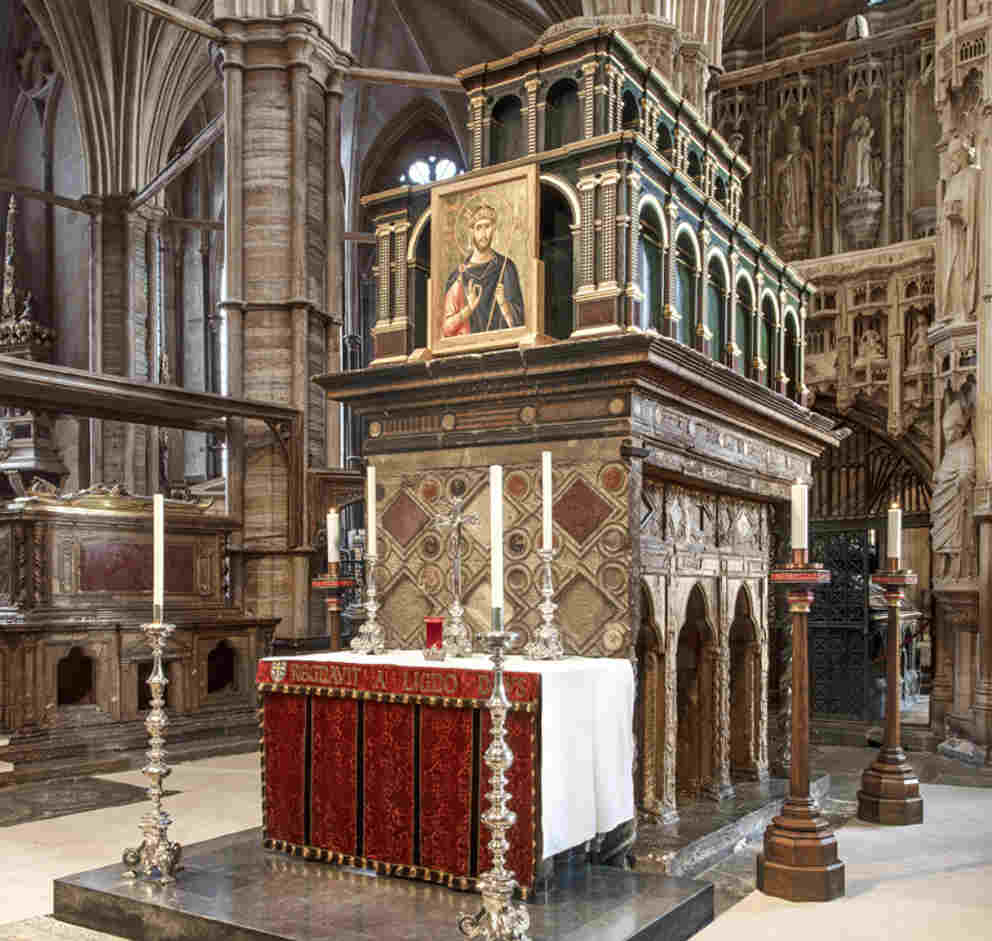
Westminster is therefore essential to understanding why London became more than a commercial centre.
It became the political and symbolic heart of the kingdom.
15. Medieval London Was a City of Markets
Commerce Before the Financial District
The medieval City was fundamentally commercial.
The City of London notes that Cheapside became a major trading focus, while medieval markets operated throughout the city. (cityoflondon.gov.uk)
Leadenhall Market is a particularly revealing example.
The City of London dates a market on the site to the fourteenth century and notes its importance for poultry, foodstuffs and grain. (cityoflondon.gov.uk)
Smithfield developed as a livestock market from the twelfth century.
Billingsgate became associated with fish.
Cheapside specialized in different forms of retail and trade.
The medieval City was therefore not simply a place where merchants operated.
The entire urban landscape was organized around exchange.


16. Guilds — The Institutions Behind Medieval Commerce
Trade Became Organized
Medieval commerce required regulation.
Craftsmen and merchants organized themselves into guilds and livery companies.
These associations controlled:
- Training
- Standards
- Apprenticeships
- Membership
- Commercial privileges
- Professional identity
The City of London's educational materials explain that medieval guilds regulated skilled trades and gradually acquired rights and privileges through royal charters. (cityoflondon.gov.uk)
Guilds were therefore economic institutions.
But they were also political institutions.
Many became involved in the governance of the City.
The relationship between commerce and government was already deeply embedded in medieval London.
17. The Medieval Street Pattern — London You Can Still Walk
The Past Survives in the Map
One of the most remarkable aspects of medieval London is that some of its street structure remains visible.
The City of London notes that many present-day streets and passageways follow layouts established during the medieval period. (cityoflondon.gov.uk)
This means a modern walk through the City can become a historical exercise.
A narrow lane may preserve a medieval alignment.
A street name may preserve an old trade.
An unexpected curve may follow a former boundary.
A church may remain where a medieval parish stood.
London therefore contains a remarkable form of continuity:
the modern map still carries traces of the medieval city.
This is one of the most valuable ideas for Lawrence Travel Stories:
the reader can physically walk through the evidence.
18. Medieval Religion — The Parish as the Neighbourhood
Churches Were Part of Everyday Urban Life
Medieval London was filled with churches.
A parish church was not simply a place of worship.
It could organize:
- Community identity
- Burial
- Charity
- Festivals
- Social relationships
- Local administration
Historic England's research into Greater London notes the large number of medieval parish churches and the importance of their locations to the structure of historic settlements. (historicengland.org.uk)
The density of London's churches therefore reveals the density of its medieval communities.
The Great Fire and later nineteenth-century redevelopment destroyed many.
But some survived.
Others survive archaeologically.
And churchyards often preserve the shape of lost neighbourhoods.
19. London and the River — Medieval Trade at Metropolitan Scale
Everything Came Through the Thames
Medieval London depended heavily on the river.
Food came by water.
Fuel came by water.
Construction materials came by water.
Wine, grain, fish and other commodities arrived through the port.
Passengers travelled by boat.
The river was also a social and political boundary.
This made the Thames the great commercial infrastructure of medieval London.
The City grew because it could connect inland England with international trade through the river.
The relationship between London and the Thames was therefore established long before the British Empire.
The imperial port grew from a much older medieval commercial geography.


20. The Black Death — The Medieval City Under Pressure
When Disease Changed London
The fourteenth century brought one of the most devastating events in London's history.
The Black Death reached England in 1348 and radically affected London's population and economy.
Death reshaped labour.
Property changed hands.
Religious institutions were affected.
Burial practices changed.
The disease also revealed the vulnerability of an increasingly connected city.
London's expanding trade networks brought wealth.
They also created pathways through which disease could travel.
This is an important reminder that urban connectivity has always produced both opportunity and risk.
21. Medieval London and the Growth of the State
Commerce, Law and Political Authority
The medieval city developed increasingly sophisticated institutions.
The City Corporation represented civic government.
Guilds regulated commerce.
Royal courts operated within the wider capital.
The monarchy depended upon London economically.
London depended upon royal charters and privileges.
The relationship was not always harmonious.
The City fiercely defended its freedoms and privileges.
The Crown needed London's financial resources.
Merchants wanted political influence.
The resulting negotiation helped create a distinctive urban political culture.
Modern London's relationship between financial power and political authority has extremely deep roots.
22. Ancient & Medieval London Walking Routes
Route 1 — Roman London
Tower Hill → London Wall → Roman Fort → Guildhall → London Mithraeum
Historical focus:
Londinium, military power, commerce, religion and Roman urbanism.
Route 2 — Medieval City
London Wall → Cheapside → Guildhall → Leadenhall → St Paul's
Historical focus:
markets, guilds, civic government, churches and medieval street patterns.


Route 3 — The River and the Bridge
London Bridge → Southwark Cathedral → Borough Market → Thames waterfront
Historical focus:
river trade, markets, religion and the relationship between the City and Southwark.
Route 4 — Royal Medieval London
Westminster Abbey → Westminster Hall → Thames waterfront
Historical focus:
monarchy, religion, Parliament and royal power.
Route 5 — The Lost London
Covent Garden → Strand → Aldwych → Westminster
Historical focus:
Lundenwic, medieval urban expansion and the movement of London's centre over time.
23. Ancient & Medieval London Across the Authority Graph
Ancient & Medieval + Royal & Political London
The medieval capital established the political geography later inherited by Westminster and the monarchy.
 Lawrence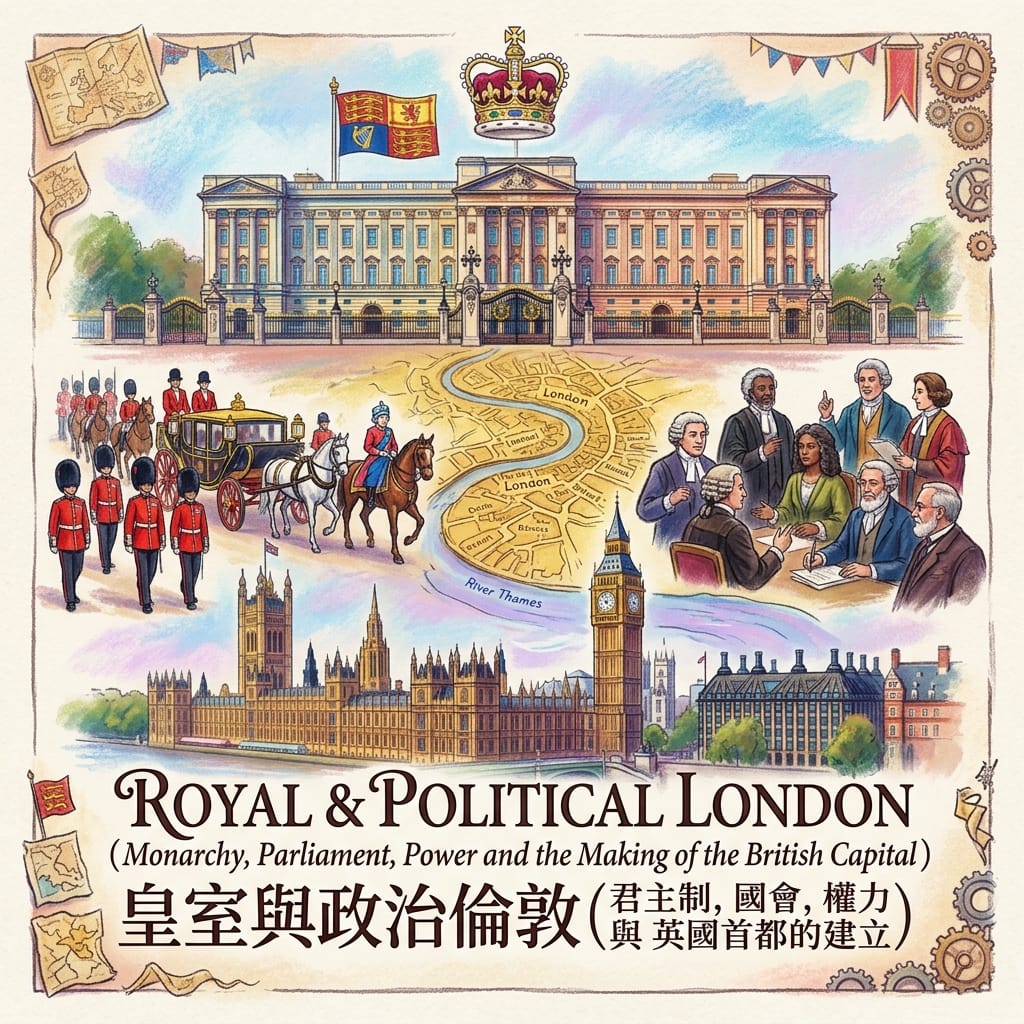
Ancient & Medieval + Sacred London
Churches, abbeys, monasteries and parish institutions were fundamental to the structure of medieval London.
 Lawrence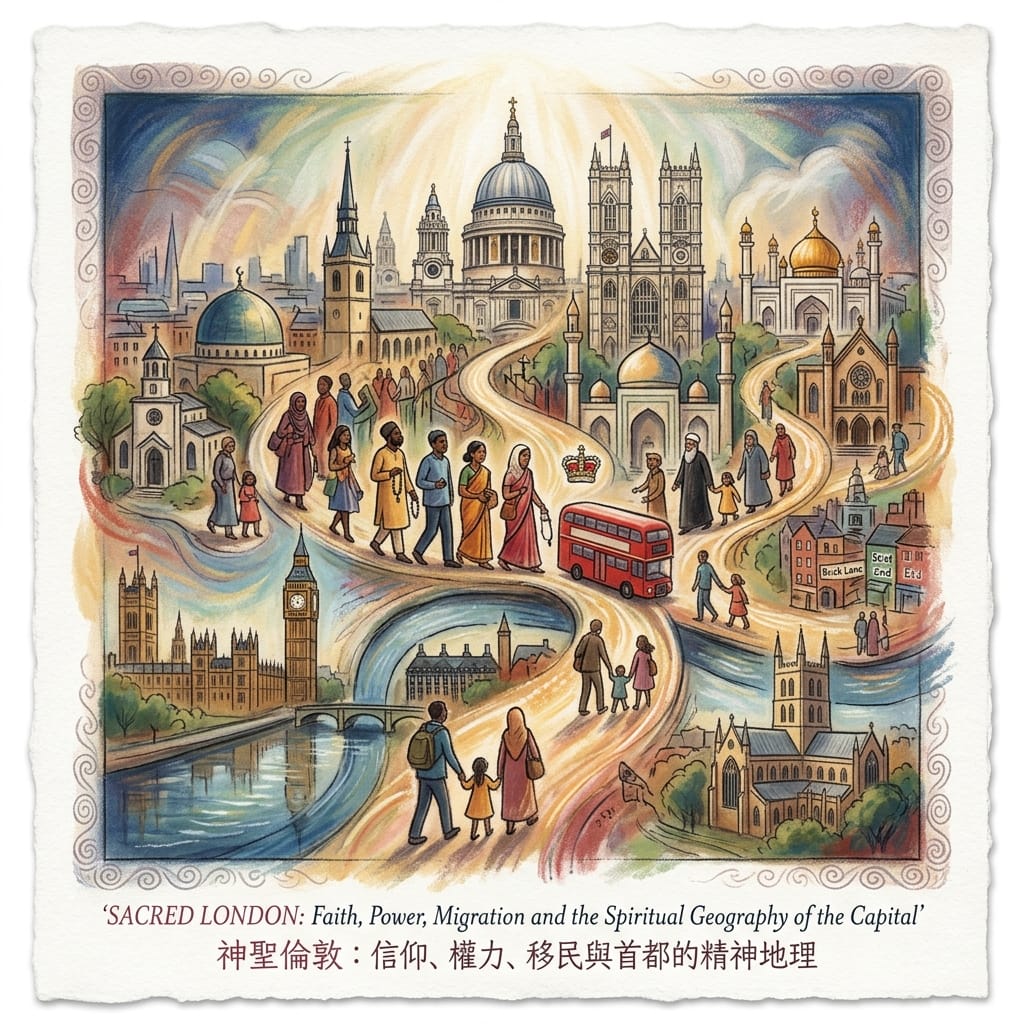
Ancient & Medieval + Commercial & Industrial London
Markets, guilds, river trade and the City established the commercial foundations of later London.
 Lawrence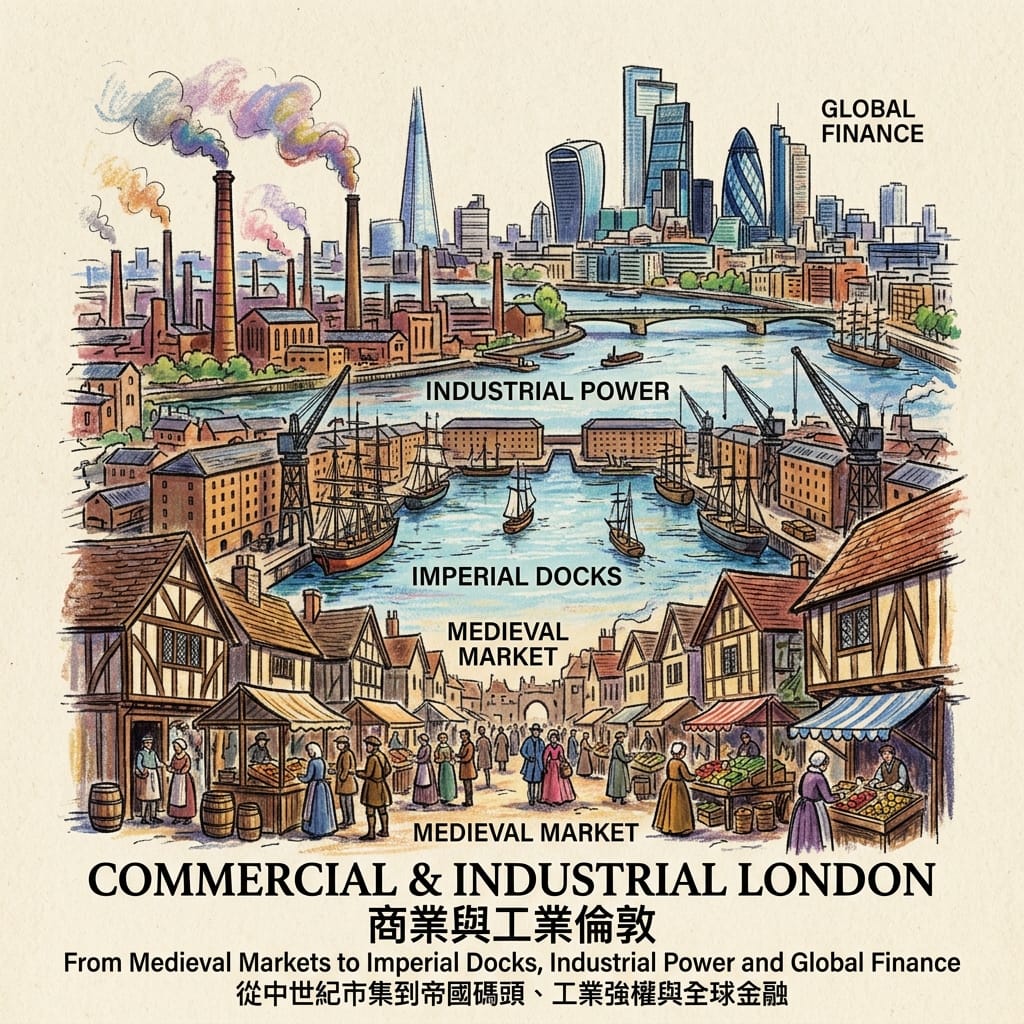
Ancient & Medieval + Modern London
Roman walls, medieval roads, parish boundaries and historic institutions still influence the modern metropolitan landscape.
 Lawrence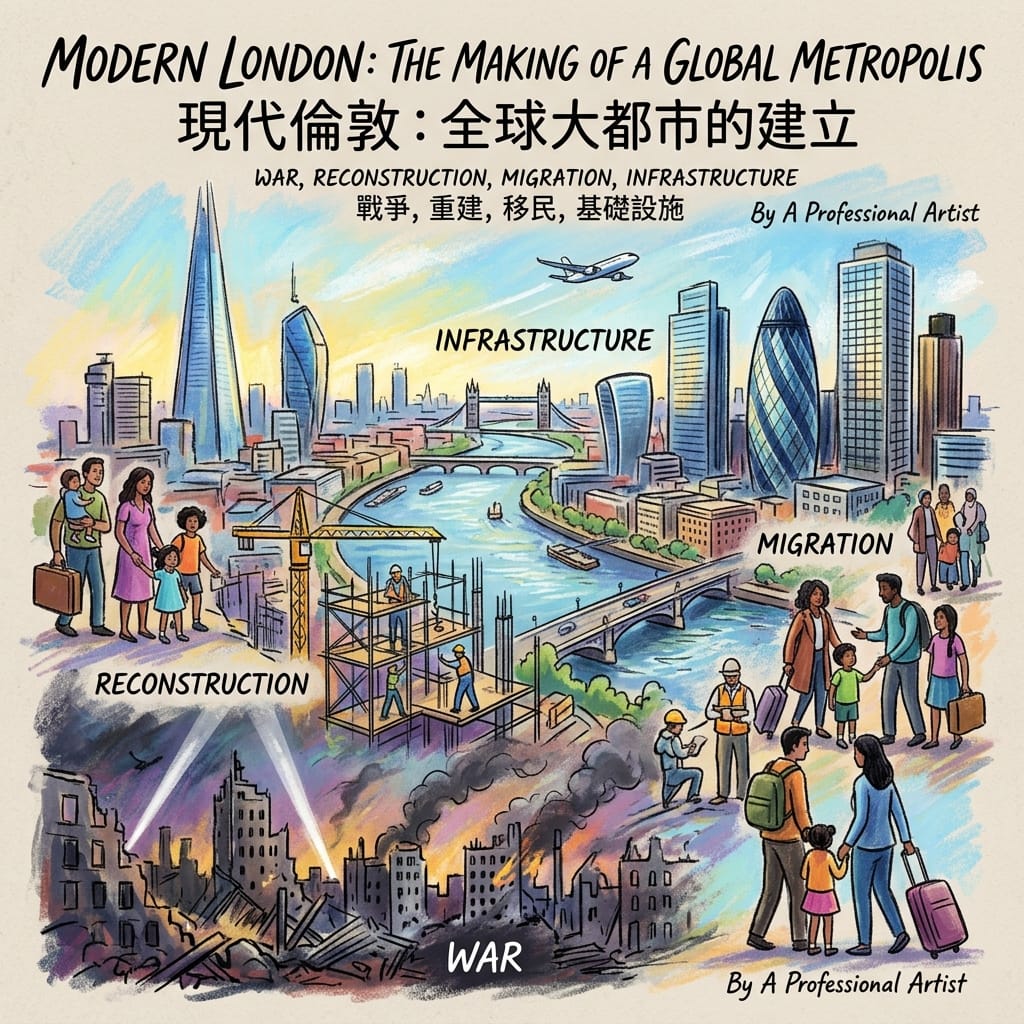
Ancient & Medieval + Hidden London
Archaeological remains, lost streets and surviving medieval patterns reveal a London beneath the visible city.
 Lawrence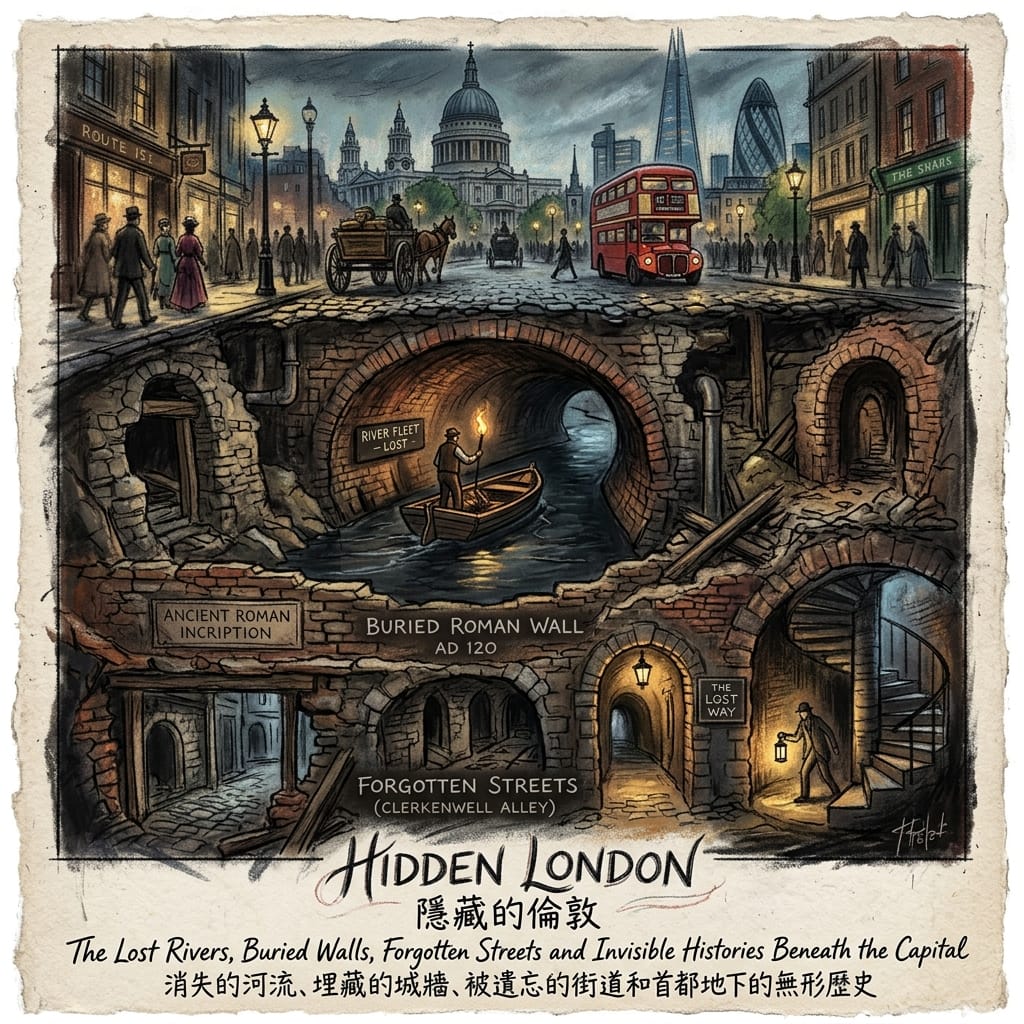
This makes Ancient & Medieval London the deepest chronological foundation of your London Topical Authority Graph.
24. What Ancient & Medieval London Explains About the Modern City
Study ancient and medieval London and many modern features begin to make sense.
Why is the City of London where it is?
Because Roman Londinium was there.
Why does the City have such irregular streets?
Because medieval streets inherited older routes and property patterns.
Why does Westminster have such political importance?
Because the medieval monarchy developed its institutions there.
Why is London Bridge so historically important?
Because the crossing connected the City with Southwark and the wider southern road network.
Why did markets become so important?
Because the medieval city needed to feed a concentrated population.
Why do so many churches occupy apparently strange locations?
Because they belong to an older parish geography.
Why does the Thames remain central to London's identity?
Because the river created the city's earliest commercial advantage.
The modern city becomes easier to read once its ancient and medieval foundations are visible.
Final Reflection — The London That Refused to Disappear
London has been rebuilt many times.
But beneath every new London lies another one.
Roman roads lie beneath modern streets.
Roman walls survive among office towers.
The old settlement disappeared, only for Lundenwic to emerge elsewhere.
Lundenwic disappeared, and London returned to the Roman walls.
The medieval city expanded.
London Bridge became a marketplace.
Westminster became the centre of royal power.
Markets became institutions.
Guilds became political forces.
Churches became neighbourhood anchors.
The Thames remained the great connector.
And the modern capital eventually grew around all of it.
This is why London's ancient and medieval history matters.
It is not simply about ruins.
It is about the origins of the city's geography, institutions and identity.
The modern Londoner walks along streets that may follow medieval routes.
Works in a district whose economic importance began with Roman trade.
Crosses a river where boats have carried goods for thousands of years.
Passes a church whose parish existed centuries before the skyscraper beside it.
Stands in Westminster where medieval kings transformed political geography.
The past is therefore not behind London.
It is under London's feet.
Ancient & Medieval London is the foundation beneath the capital—and once you learn to see it, modern London becomes a much more intelligible city.
Historical Sources & Further Reading
London Museum
The London Museum is essential for research into Roman London, Londinium's chronology, Lundenwic, Viking London, Roman archaeology and everyday life. (londonmuseum.org.uk)
Historic England
Historic England provides authoritative records for London Wall and surviving Roman and medieval structures. Its records specifically identify London Wall as a major factor shaping both Roman and medieval London's development. (historicengland.org.uk)
City of London Corporation
The City of London provides valuable material on medieval streets, guilds, markets and the historic urban structure. Its Medieval City programme notes that many modern streets and passageways still follow medieval layouts. (cityoflondon.gov.uk)
Westminster Abbey
Westminster Abbey's own historical archive is particularly valuable for medieval Westminster, royal history, architecture and coronations. The present Gothic abbey was principally rebuilt from 1245 and has hosted every English coronation since 1066. (westminster-abbey.org)
Other Important Sources
- London Metropolitan Archives
- National Archives
- British Library
- Museum of London Archaeology
- City of London Corporation
- Historic Royal Palaces
- Westminster Abbey archives
- Local archaeological societies
- Community historical archives
Continue Exploring London
LONDON — The Complete Authority Guide
→ Ancient & Medieval London — Roman Londinium, medieval commerce and the foundations of the city
→ Royal & Political London — Monarchy, Parliament and the architecture of power
→ Sacred London — Churches, abbeys, belief and religious transformation
→ Commercial & Industrial London — Markets, Thames trade, docks, factories and finance
→ Modern London — Fire, railways, war, reconstruction, migration and reinvention
→ Hidden London — Archaeology, lost landscapes and forgotten urban histories
ANCIENT & MEDIEVAL LONDON
Roman city.
Saxon trading town.
Viking frontier.
Norman capital.
Medieval marketplace.
Royal centre.
Sacred landscape.
Port.
Fortress.
Guild city.
All became foundations of the same place.
London did not begin once.
It was built, abandoned, moved, rebuilt and reinvented—again and again.