
SACRED LONDON 神聖倫敦
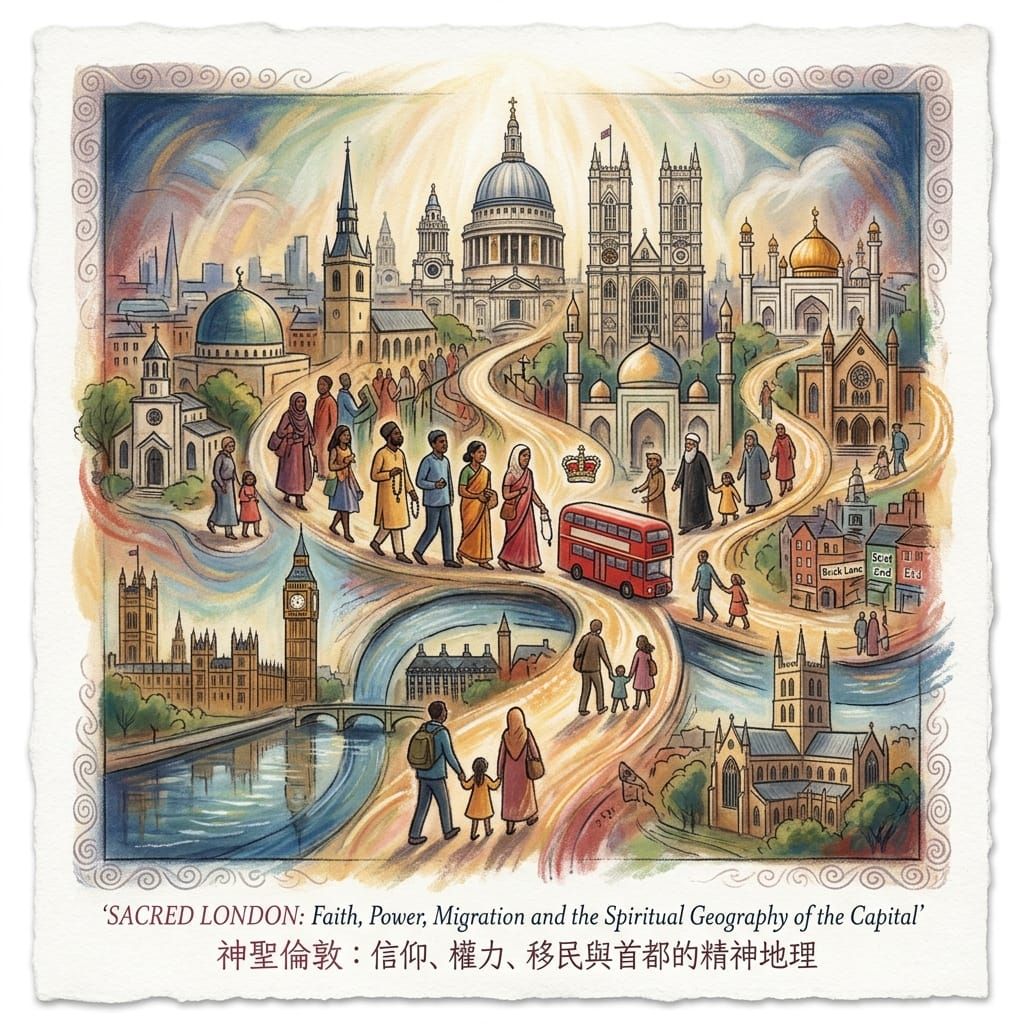
The Complete Authority Guide
Faith, Power, Migration and the Spiritual Geography of the Capital
London is often described through its politics, commerce and architecture.
But for much of its history, London was equally shaped by something less tangible:
belief.
Churches marked neighbourhoods.
Monasteries controlled land and wealth.
Westminster Abbey connected monarchy with Christianity.
St Paul's became a symbol of the City.
Parish churches organized everyday communities.
The Reformation dismantled centuries of religious institutions.
New forms of Protestant worship emerged.
Jewish communities established synagogues.
Later migration brought mosques, Hindu temples, Sikh gurdwaras, Buddhist centres and new Christian traditions.
Today, London contains an extraordinary religious landscape.
But Sacred London is not simply a guide to beautiful churches and places of worship.
It is the story of how faith shaped the geography, politics, communities, architecture and identity of London.
Religion helped determine where people lived.
It influenced who held land.
It supported charity and education.
It created networks of migration.
It became entangled with monarchy and state power.
And when new communities arrived, they created new sacred geographies inside the old city.
London's religious history is therefore also a history of power, belonging, migration and urban change.
1. Sacred London Before the Medieval City
Religion Was Already Part of London's Landscape
The religious history of London does not begin with Westminster Abbey.
Roman Londinium contained temples and religious spaces associated with the diverse beliefs of the Roman world.
The London Mithraeum, beneath the modern City, provides particularly powerful evidence.
The temple was dedicated to Mithras, a deity whose worship spread through parts of the Roman Empire, especially among some military and commercial communities.
Its existence tells us something important about Roman London.
The city was not religiously uniform.
People arrived with different traditions.
Different gods could be worshipped within the same urban environment.
Religion was already one expression of London's role as a place where people, cultures and institutions met.
The Roman temple survives far below the modern financial district.
That physical relationship captures the essence of Sacred London:
the sacred city is often still there, beneath the visible one.
2. Christianity Comes to London
From Roman Religion to Christian City
Christianity gradually became increasingly important within Roman Britain.
By the late Roman period, Christian communities existed in Britain, although the archaeological evidence for early Christianity in London is limited and must be interpreted carefully.
After the collapse of Roman authority, London's urban population declined and the old city changed dramatically.
Christianity nevertheless continued to develop within Anglo-Saxon England.
Religious houses became centres of:
- Worship
- Learning
- Landholding
- Charity
- Political influence
The history of Westminster is particularly important.
Historic England records a long religious history on the site, including St Dunstan's Benedictine foundation in 959 and Edward the Confessor's rebuilding of the abbey in the eleventh century. (historicengland.org.uk)
The sacred landscape was becoming inseparable from political London.
3. Westminster Abbey — Where Faith and Monarchy Meet
The Sacred Centre of Royal London
Westminster Abbey is one of the clearest examples of the relationship between religion and political authority.
Edward the Confessor rebuilt the abbey on a grand scale in the eleventh century.
Henry III began the rebuilding of the present Gothic church in 1245.
The abbey became deeply associated with the monarchy.
Royal coronations have taken place here since 1066.
The building also became a place of burial, commemoration and national memory.
Historic England describes the abbey as having developed through successive rebuilding by monarchs and architects, while Westminster Abbey itself records its continuous coronation tradition. (historicengland.org.uk; westminster-abbey.org)
Westminster Abbey therefore represents:
religion + monarchy + ceremony + national memory
It is not simply a medieval church.
It is one of the places where the political and spiritual history of Britain became physically intertwined.
4. Monasteries — The Religious Institutions That Owned Much of London
Faith Was Also an Economic System
Medieval religion was not confined to worship.
Monasteries were substantial landowners.
They controlled estates.
They employed people.
They provided charity.
They supported education.
They managed agricultural resources.
They possessed political influence.
Historic England notes that more than 700 religious houses were founded across England during the medieval period and emphasizes that monasteries functioned as centres of worship, learning, charity, wealth and political influence. (historicengland.org.uk)
London's religious geography therefore cannot be separated from its economic geography.
A monastery was simultaneously:
sacred institution + landowner + employer + charitable centre + political power
This is why the dissolution of the monasteries during the Reformation transformed much more than religion.
It transformed the ownership and use of London's physical landscape.
5. The Medieval Parish — Religion at Street Level
The Church That Defined the Neighbourhood
Cathedrals and abbeys tell only part of London's religious history.
Most medieval Londoners encountered religion through their local parish church.
A parish church was embedded in everyday life.
It provided:
- Worship
- Baptisms
- Marriages
- Funerals
- Charity
- Community identity
- Local gatherings
The churchyard was often equally important.
It could contain graves, paths, trees and public space within a densely occupied city.
Historic England's research into the City identifies a remarkable concentration of surviving and lost churches, illustrating how deeply Christian institutions were embedded in the historic urban structure. (historicengland.org.uk)


Many of these churches survived the centuries.
Many did not.
The pattern of their survival and disappearance is itself a history of London.
6. St Paul's Cathedral — Religion and Civic Identity
The Cathedral at the Heart of the City
St Paul's occupies one of London's most powerful historical positions.
A cathedral has stood on or near the site for centuries.
The medieval cathedral dominated the City until the Great Fire of 1666 destroyed it.
Sir Christopher Wren's replacement became one of the defining monuments of post-Fire London.
The new cathedral was not merely a religious building.
It became a symbol of:
- The City of London
- Anglican Christianity
- National resilience
- Architectural ambition
- Civic identity
The cathedral's huge dome became part of the modern image of London.
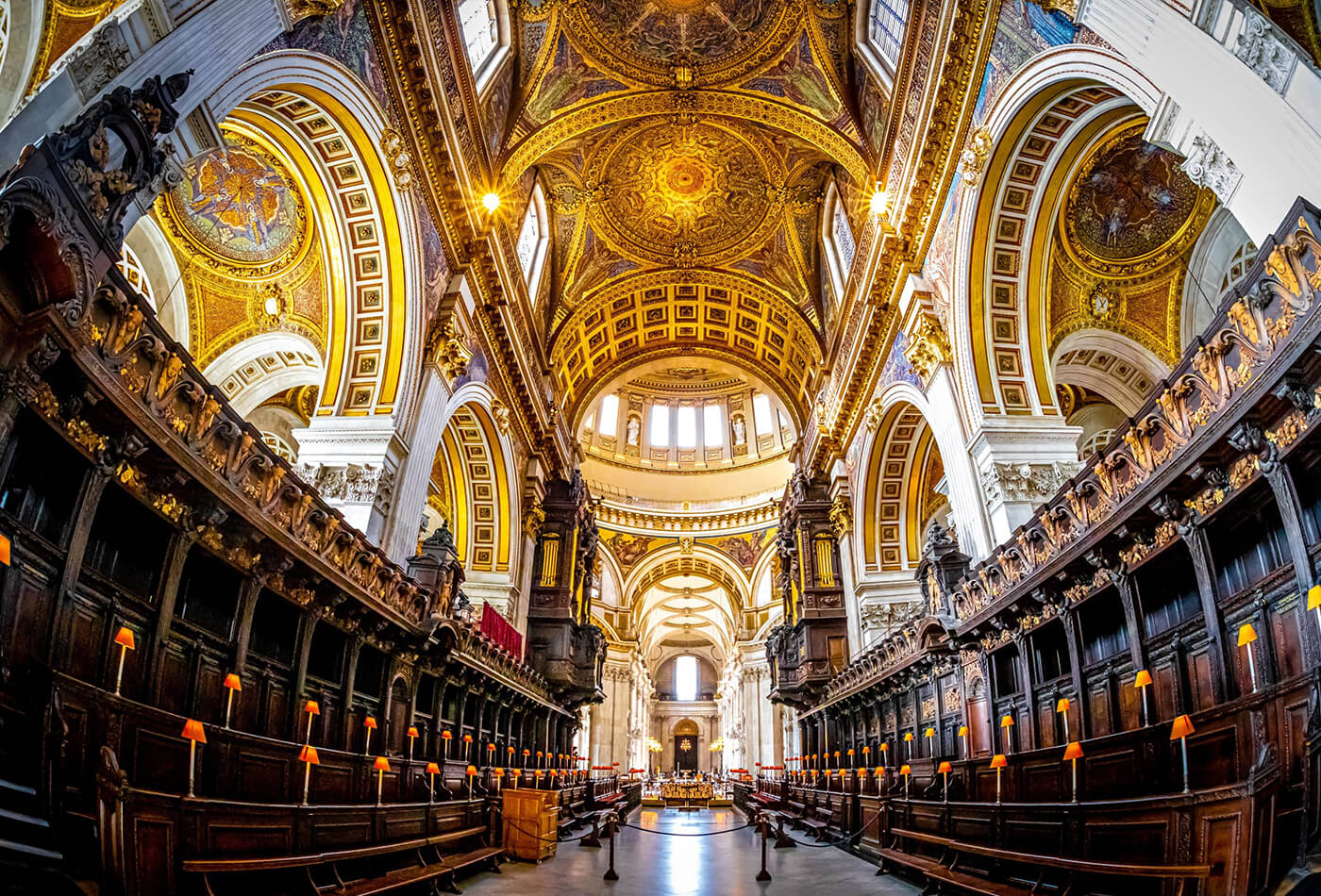

St Paul's therefore connects several historical layers:
medieval religion → Great Fire → Wren's rebuilding → modern London
7. The Great Fire and the Rebuilding of Sacred London
Catastrophe Changes the Religious Landscape
The Great Fire of 1666 destroyed most of the medieval City.
Churches were among the greatest losses.
St Paul's Cathedral was destroyed.
Dozens of parish churches disappeared.
Sir Christopher Wren and his office rebuilt many churches and created a new architectural landscape in the City.
This was not simply a replacement programme.
The rebuilding changed the relationship between religion and the urban environment.
Church towers became landmarks.
New streets opened around them.
The skyline became visually more coherent.
The churches became symbols of a city rebuilding itself.
Historic England's current research on the City identifies 46 surviving faith buildings and emphasizes the historical importance of their architecture and collective memory. (historicengland.org.uk)


8. Wren's Churches — A New Sacred Skyline
The City Rebuilt Through Faith
After the Great Fire, Wren's office designed numerous churches for the rebuilt City.
These churches were smaller than St Paul's.
But collectively they had enormous urban importance.
Their towers acted as visual markers.
Their interiors created spaces for worship and community.
Their positions helped structure the rebuilt City.
They also created a distinctive architectural language:
classical architecture + Anglican worship + commercial city
The result was a sacred landscape adapted to a new commercial London.
This is one reason the City remains such an extraordinary place for historical walking.
A modern office tower can stand immediately beside a church whose origins are medieval or whose present building dates from the decades after the Great Fire.
9. The Reformation — When London Changed Its Religious Identity
The Most Dramatic Religious Transformation in London's History
The English Reformation transformed London's sacred landscape.
Under Henry VIII, England broke with papal authority.
The dissolution of the monasteries followed.
Religious houses were closed.
Land and wealth changed hands.
Buildings were demolished, adapted or incorporated into new uses.
Westminster Abbey itself was dissolved in 1540, when Historic England records it as one of the wealthiest monasteries in England. Henry VIII transformed it into a cathedral, and Elizabeth I later restored it as the Collegiate Church of St Peter. (historicengland.org.uk)
The physical consequences were enormous.
London lost monasteries.
Land changed ownership.
Religious communities disappeared.
New Protestant institutions emerged.
The skyline changed.
The Reformation was therefore not simply a theological argument.
It was an urban revolution.
10. The Sacred City Becomes a Protestant City
New Forms of Worship, New Political Relationships
The Reformation changed the religious character of London's official institutions.
The Crown became supreme governor of the Church of England.
Parish churches remained central to daily life.
Catholic religious houses largely disappeared.
Protestant worship became institutionalized.
Yet religious change was never completely settled.
Catholics remained.
Puritans challenged the established church.
Nonconformists developed their own institutions.
Religious disagreements became political disagreements.
London therefore became a place where:
faith + politics + identity
were increasingly intertwined.
This connection would become particularly important during the seventeenth century.
11. The Civil War and Religion
Faith Becomes Political
Religious disagreements contributed to the political conflicts that culminated in the English Civil War.
Puritan and Protestant reformers challenged aspects of the established Church.
Royal authority was often associated with different religious visions.
Parliamentary politics became deeply entangled with questions of church governance.
London became a major centre of parliamentary opposition to Charles I.
Religion therefore helped shape the political geography explored in your Royal & Political London pillar.
The two themes should always be connected.
Explore Further
→ Royal & Political London Theme Pillar
12. Nonconformist London — Religion Outside the Established Church
The City Beyond the Parish System
After the Reformation and into the seventeenth and eighteenth centuries, London became home to religious communities outside the established Church of England.
Baptists.
Quakers.
Congregationalists.
Methodists.
Other Protestant groups.
These communities established meeting houses and chapels.
Their growth was part of a broader transformation in religious life.
The sacred geography of London was no longer controlled entirely by parish churches.
Religious diversity was becoming structurally visible.
This was an early form of the plural religious city that London would become.
13. Jewish London — A New Sacred Geography
From Refuge to Community
London's Jewish history has deep roots.
The Jewish community changed dramatically from the late nineteenth century as large numbers of Jewish refugees arrived from Eastern Europe.
The London Museum records that approximately 150,000 Eastern European and Russian Jewish refugees arrived in Britain between 1880 and 1914, with up to 70% settling in London's East End. (londonmuseum.org.uk)
Whitechapel and Spitalfields became important Jewish neighbourhoods.
Synagogues were established.
Schools developed.
Markets and businesses reflected Jewish culture.
Yiddish became part of the soundscape.
Religious identity became part of London's wider urban identity.
This is a crucial transition in Sacred London.
Religion was no longer simply inherited from medieval England.
It was increasingly shaped by migration.
14. Bevis Marks — Jewish Worship in the Historic City
One of Britain's Oldest Continuous Religious Communities
Bevis Marks Synagogue opened in 1701 and remains an active place of Jewish worship.
The London Museum describes it as the oldest synagogue in the UK with continuous worship, while its history is associated with the Sephardi community. (londonmuseum.org.uk)
Its location is historically significant.
The synagogue stands within the City of London, surrounded by modern financial institutions.
A Sephardi synagogue dating from the early eighteenth century therefore exists within one of the world's most modern financial districts.
The juxtaposition captures the essence of Sacred London:
old faith within new commerce
15. Whitechapel — Where Religious Landscapes Overlap
Synagogue, Mosque and Community
Whitechapel provides one of the most revealing religious landscapes in London.
The area was home to a major Jewish community from the late nineteenth century.
Over time, demographic change transformed the district.
Today, large South Asian Muslim communities live and worship there.
The East London Mosque began in 1940 in three houses on Commercial Road before moving to a purpose-built mosque on Whitechapel Road in 1985. The London Museum documents this history as part of the wider story of migration and religious change in the East End. (londonmuseum.org.uk)
An extraordinary example of this layered religious geography is provided by Brick Lane.
The building that became Jamme Masjid began as a synagogue in 1898 and later became a mosque in 1976, reflecting successive waves of migration and religious change. (londonmuseum.org.uk)


Few places demonstrate more clearly that London's religious geography is layered rather than static.
16. London's Mosques — Religion and Postwar Migration
Islam Becomes Part of Modern London
Large-scale Muslim migration accelerated after the Second World War.
Communities arrived from South Asia, the Middle East, Africa and elsewhere.
Mosques developed alongside residential and commercial communities.
The East London Mosque is a particularly important example.
Established in 1940 and later rebuilt on Whitechapel Road, it became a major institution serving the Muslim population of the East End. (londonmuseum.org.uk)
The history of London's mosques therefore belongs within the wider history of:
decolonization + migration + community building + modern London
The mosque is not an isolated religious building.
It is a marker of demographic transformation.
17. Hindu and Sikh London
Religion Travels With Migration
Postwar migration from South Asia transformed London's religious landscape further.
Hindu and Sikh communities established temples and gurdwaras.
These institutions served more than strictly religious functions.
They became places for:
- Worship
- Community gatherings
- Education
- Charity
- Food
- Cultural transmission
- Festivals
London's modern religious landscape therefore reflects the same principle seen throughout its history:
new communities create institutions that make them visible within the city.


The movement from medieval parish church to modern temple and gurdwara reveals the enormous geographical expansion of London's spiritual world.
18. Buddhist London — A Different Sacred Tradition Enters the Capital
The London Buddhist Vihara
London's Buddhist history adds another layer.
The London Buddhist Vihara developed as an important centre of Buddhist practice and is housed in a listed building in Chiswick. Historic England records the building as a Grade II listed structure. (historicengland.org.uk)
Its presence illustrates an increasingly important feature of modern London:
religious institutions do not simply reflect British historical traditions.
They also reflect global migration and cultural exchange.


19. Religion and Migration — London as a Sacred World City
Every New Community Creates a New Sacred Geography
The development of London's religious diversity cannot be separated from migration.
People bring more than labour and language when they move.
They bring:
- Beliefs
- Rituals
- Religious institutions
- Food traditions
- Festivals
- Burial practices
- Community structures
These gradually become embedded in London's neighbourhoods.
This is why East London, Southall, Wembley, Brixton, Golders Green and other areas contain distinctive religious landscapes.
The religious geography of London is therefore also a map of migration.
20. Sacred Space and the Working City
Religion Was Never Separate From Everyday Life
The history of religion is often presented as something apart from economic history.
London demonstrates otherwise.
Churches stood beside markets.
Synagogues developed among clothing workshops.
Mosques grew alongside shops and restaurants.
Temples became community centres.
Gurdwaras provided food and social support.
Religious institutions often developed because communities lived and worked nearby.
The sacred and commercial cities therefore overlap.
This makes Sacred London directly connected to your Commercial & Industrial London pillar.
21. Sacred London and Charity
Religion as Social Infrastructure
Religious communities repeatedly provided support beyond worship.
Medieval monasteries distributed charity.
Parish churches assisted the poor.
Jewish community institutions supported newly arrived refugees.
Mosques and temples developed community services.
Gurdwaras became important centres of communal food and support.
This continuity reveals an important historical principle:
religious institutions often filled social needs that governments and markets could not fully meet.
Sacred London is therefore partly a history of how communities cared for their own members.
22. Sacred Landscapes and Death
London's Churches Are Also Archives of the Dead
Churchyards and cemeteries preserve another dimension of religious history.
They contain:
- Tombs
- Memorials
- Burial traditions
- Family histories
- Records of disease
- Social divisions
Some cemeteries became associated with particular migrant or religious communities.
Others preserve elite memorial culture.
The dead therefore remain part of London's geography.
A churchyard is not simply a green space.
It is a historical archive.


23. Sacred London and the Great Fire
Destruction, Rebuilding and Memory
The Great Fire destroyed dozens of churches.
For many Londoners, this meant the disappearance of familiar religious landmarks.
Wren's rebuilding created a new Anglican skyline.
The new churches were not simply replacements.
They became symbols of the city's recovery.
This creates another connection between:
Sacred London + Modern London
Disaster destroyed the old sacred city.
Rebuilding created another.
24. Sacred London and the Blitz
When Churches Became Symbols of Survival
The Second World War brought another wave of destruction.
Churches were damaged or destroyed.
St Paul's Cathedral famously survived despite bombing around it.
Its image became associated with London's wartime resilience.
Other churches were less fortunate.
Some were rebuilt.
Some disappeared permanently.
This means London's religious landscape contains a hidden map of wartime destruction.


The survival of religious buildings therefore belongs to the wider history of London's resilience.
25. Sacred London Today
The Spiritual City Has Not Disappeared
Modern London is intensely secular in many aspects of public life.
Yet religious institutions remain everywhere.
Church bells still sound.
Congregations meet.
Mosques fill at Friday prayer.
Synagogues continue worship.
Hindu temples hold festivals.
Gurdwaras serve communities.
Buddhist centres maintain traditions.
New churches continue to appear.
The important point is not that London has preserved a fixed religious identity.
It has not.
The city has repeatedly absorbed new beliefs and communities.
Sacred London is therefore an evolving landscape.
26. Sacred London by Geography
Westminster
Monarchy + Christianity + national memory
Westminster Abbey.
St Margaret's Church.
Royal ceremonies.
Political Christianity.
The City of London
Medieval churches + commerce + post-Fire reconstruction
St Paul's.
Wren churches.
Historic churchyards.
East London
Migration + Judaism + Islam + working communities
Whitechapel.
Spitalfields.
Brick Lane.
Bevis Marks.
East London Mosque.
Southall
South Asian religious landscape
Hindu temples.
Sikh gurdwaras.
Mosques.
Community commerce.
Chiswick
Modern Buddhist London
London Buddhist Vihara.
Together, these districts reveal how religion changes as London's communities change.
27. Sacred London Walking Routes
Route 1 — The Sacred Capital
Westminster Abbey → St Margaret's → Parliament Square → St James's
Historical focus:
monarchy, Christianity, national memory and political power.
Route 2 — Wren's Sacred City
St Paul's → St Mary-le-Bow → St Stephen Walbrook → St Mary Woolnoth
Historical focus:
Great Fire, reconstruction, Anglican worship and the commercial City.


Route 3 — Jewish London
Bevis Marks → Spitalfields → Brick Lane → Whitechapel
Historical focus:
Sephardi settlement, Eastern European migration, Jewish commerce and religious continuity.
Route 4 — The Changing East End
Brick Lane → Jamme Masjid → East London Mosque → Whitechapel
Historical focus:
Jewish London, South Asian migration, Islam and overlapping religious landscapes.
Route 5 — South Asian London
Southall Broadway → Sikh gurdwara → Hindu temple → community markets
Historical focus:
postwar migration, religion, food, commerce and community identity.
28. Sacred London Across the Authority Graph
Sacred + Ancient & Medieval London
Roman religion, medieval Christianity, monasteries, parish churches and the development of Westminster created London's earliest sacred geography.
 Lawrence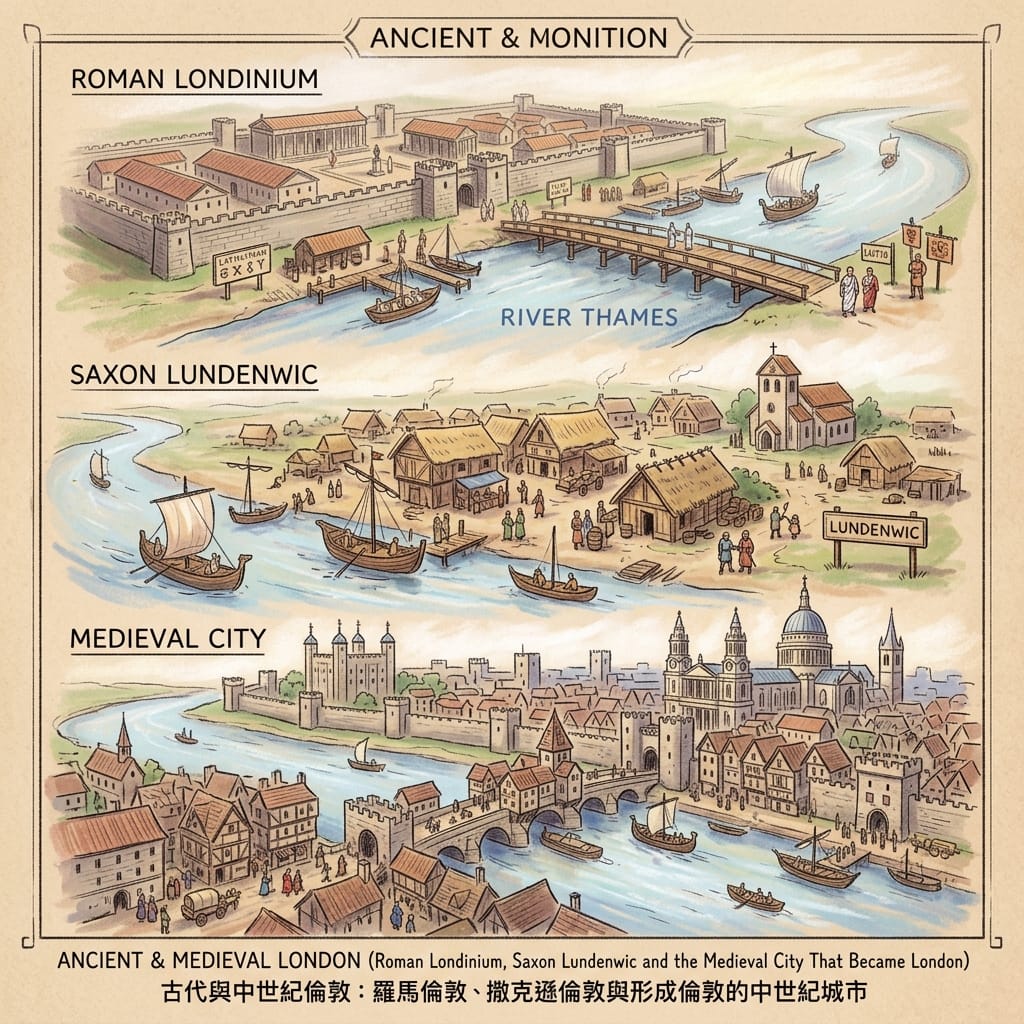
Sacred + Royal & Political London
Westminster Abbey, coronations, monarchy and the Reformation demonstrate how religion and political power became intertwined.
 Lawrence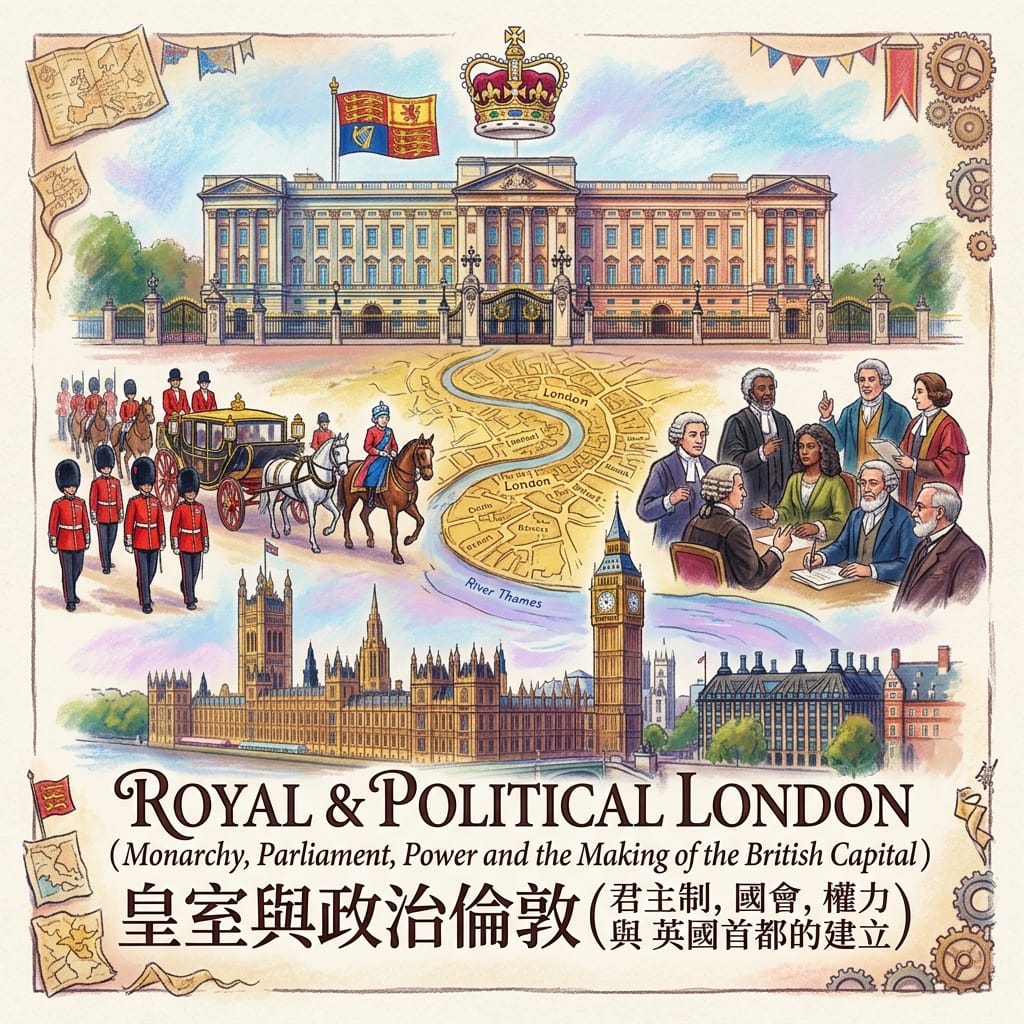
Sacred + Commercial & Industrial London
Churches, synagogues, mosques and temples developed within markets, workshops, ports and commercial districts.
 Lawrence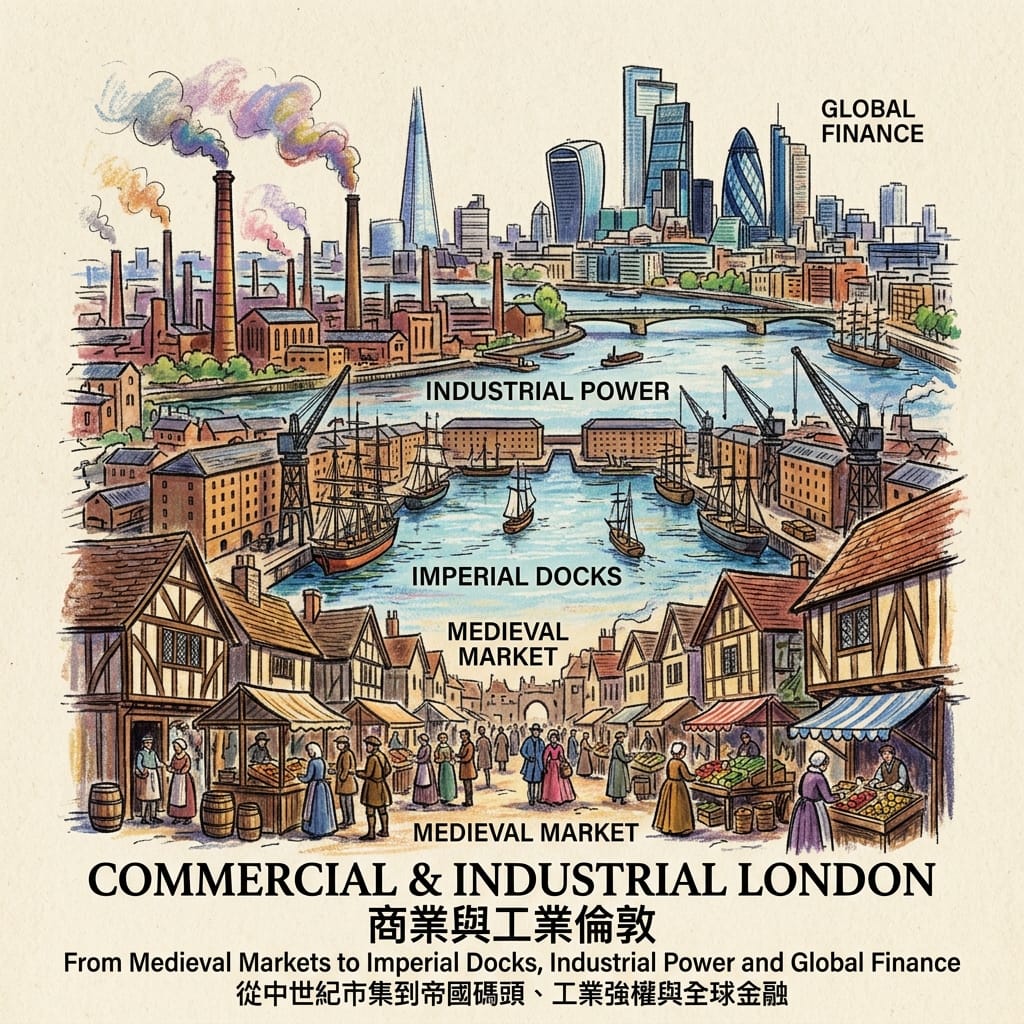
Sacred + Modern London
Migration, urbanization, war and redevelopment transformed London's religious communities.
 Lawrence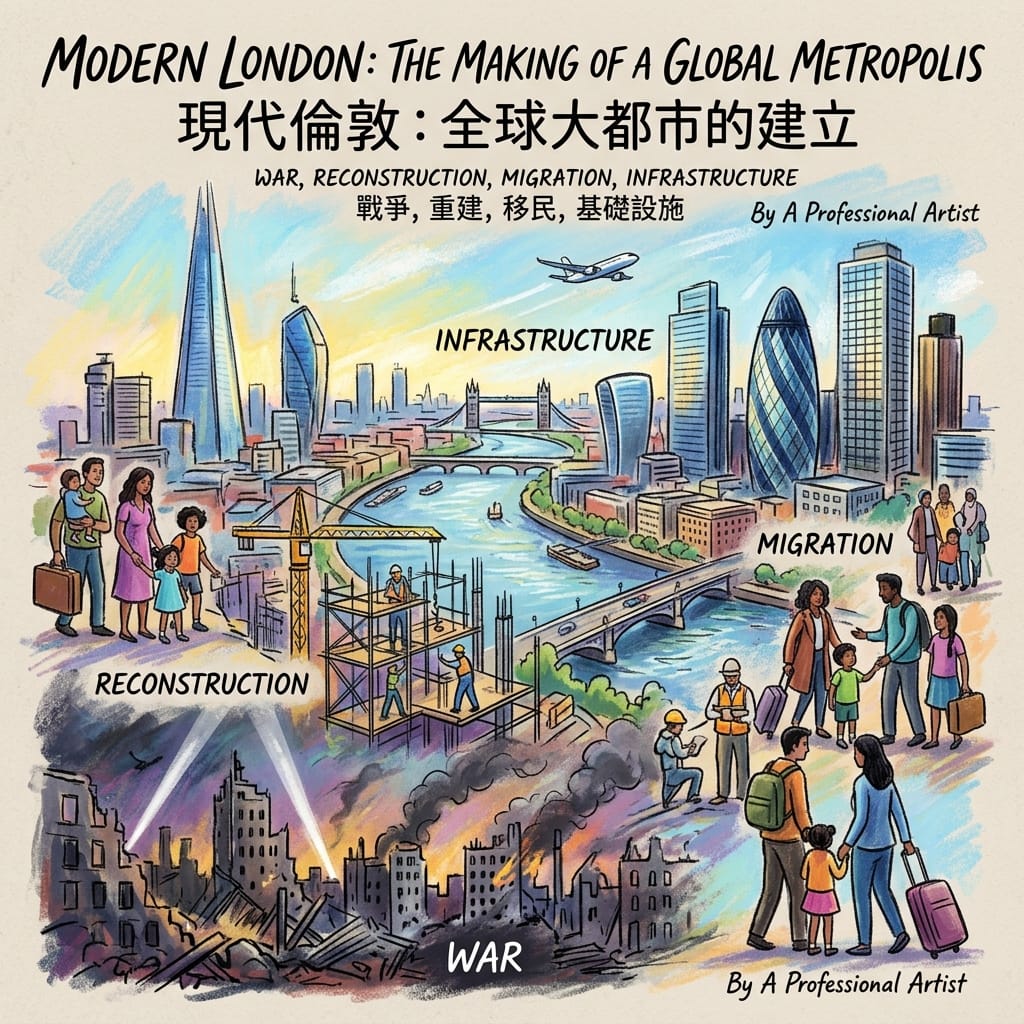
Sacred + Hidden London
Lost monasteries, surviving parish churches, old cemeteries, converted religious buildings and overlooked sacred spaces reveal layers of London that the tourist map often misses.
 Lawrence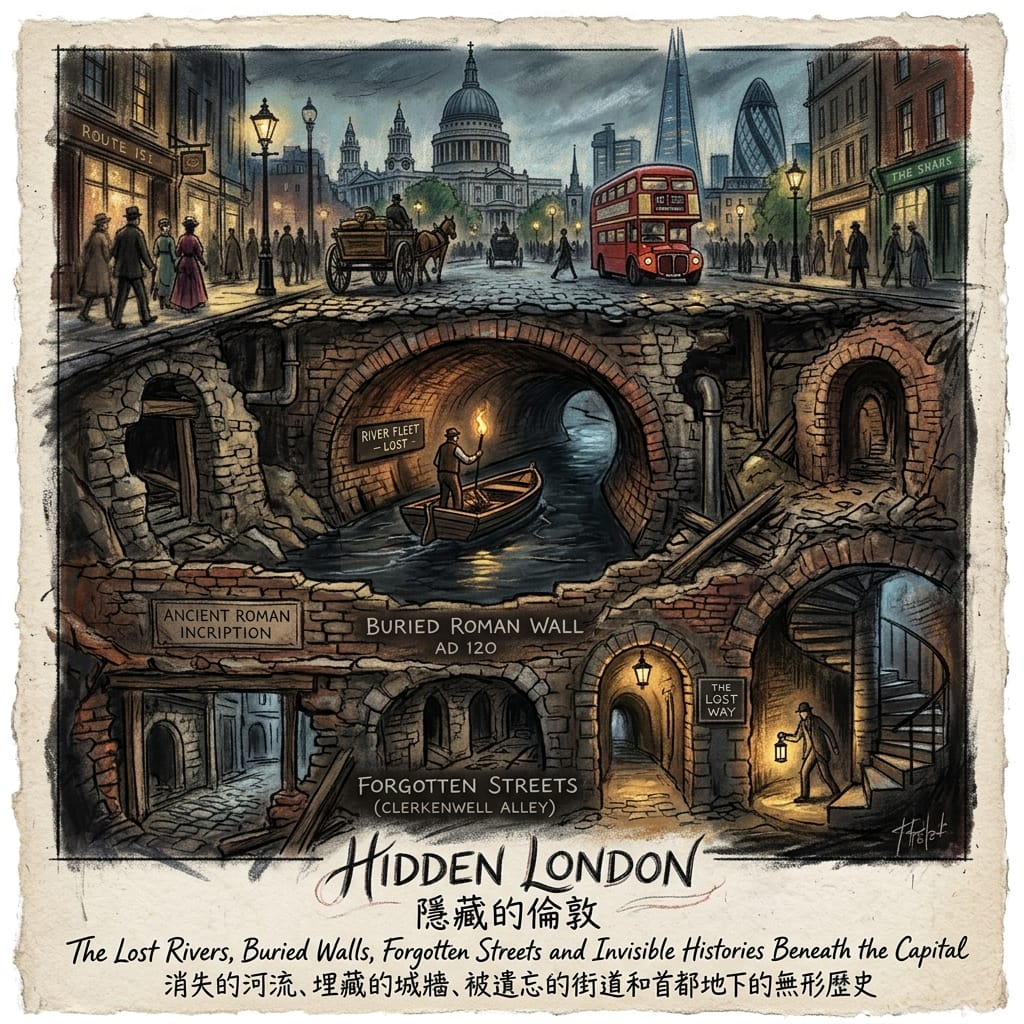
29. What Sacred London Reveals About the City
Study London's religious buildings and they reveal much more than faith.
They reveal:
- Political authority
- Migration
- Wealth
- Poverty
- Land ownership
- Community organization
- Charity
- Education
- Conflict
- Urban redevelopment
- National identity
A cathedral tells one story.
A small parish church tells another.
A synagogue tells a migration story.
A mosque reveals another generation of settlement.
A gurdwara reveals another.
The sacred geography therefore becomes a map of London's changing population.
30. Why Sacred London Matters
London's modern identity is often associated with commerce, government and multiculturalism.
Religion connects all three.
Monarchy used sacred ceremony.
Merchants funded religious institutions.
Migrants built new places of worship.
Communities used religious organizations to support one another.
Political conflicts were shaped by religious beliefs.
Architecture preserved religious memory.
Sacred London is therefore not a side story.
It is one of the systems through which London became London.
Final Reflection — The City That Keeps Changing What It Believes
London has never had just one sacred identity.
Roman gods once shared the city.
Christianity gradually became dominant.
Medieval monasteries accumulated enormous influence.
The Reformation dismantled the old religious order.
Protestant institutions transformed the city.
Nonconformists created new communities.
Jewish migrants built synagogues.
Muslim migrants established mosques.
Hindu and Sikh communities created temples and gurdwaras.
Buddhist communities established new centres.
The city changed.
Its faith changed.
Its population changed.
Its institutions changed.
Yet the sacred remained embedded within the physical landscape.
A medieval abbey still crowns Westminster.
Wren's churches still rise among financial towers.
A synagogue opened in 1701 remains active in the City.
A mosque stands within a neighbourhood once dominated by another immigrant community.
A converted synagogue became a mosque.
A Buddhist vihara occupies a historic building.
These are not contradictions.
They are the historical character of London.
Sacred London is the story of a city that never stopped changing what it believed, while never losing its need for places in which belief could become community.
Historical Sources & Further Reading
Historic England
Historic England provides particularly valuable research on London's medieval churches, monasteries, Westminster Abbey, faith buildings and surviving religious architecture. Its 2025 study of the City of London identifies 46 faith buildings within the Square Mile and examines their architectural and social histories. (historicengland.org.uk)
Its Westminster research documents the abbey's development from medieval monastery through Reformation and later restoration. (historicengland.org.uk)
London Museum
The London Museum is particularly useful for London's religious diversity, including the Jewish East End, the history of London's mosques and the changing religious landscape of migration. (londonmuseum.org.uk)
The Museum's research into Whitechapel also provides an unusually clear example of religious succession: a synagogue opened in 1898 later became Jamme Masjid in 1976. (londonmuseum.org.uk)
Westminster Abbey
Westminster Abbey provides primary institutional material on its medieval history, coronations, royal connections and religious development. (westminster-abbey.org)
Other Important Sources
- London Metropolitan Archives
- National Archives
- British Library
- Jewish Museum London
- Historic Royal Palaces
- St Paul's Cathedral
- London Buddhist Vihara
- East London Mosque
- City of London Corporation
- Local synagogue, mosque, temple and gurdwara archives
- Community oral-history collections
Continue Exploring London
Ancient & Medieval London
 Lawrence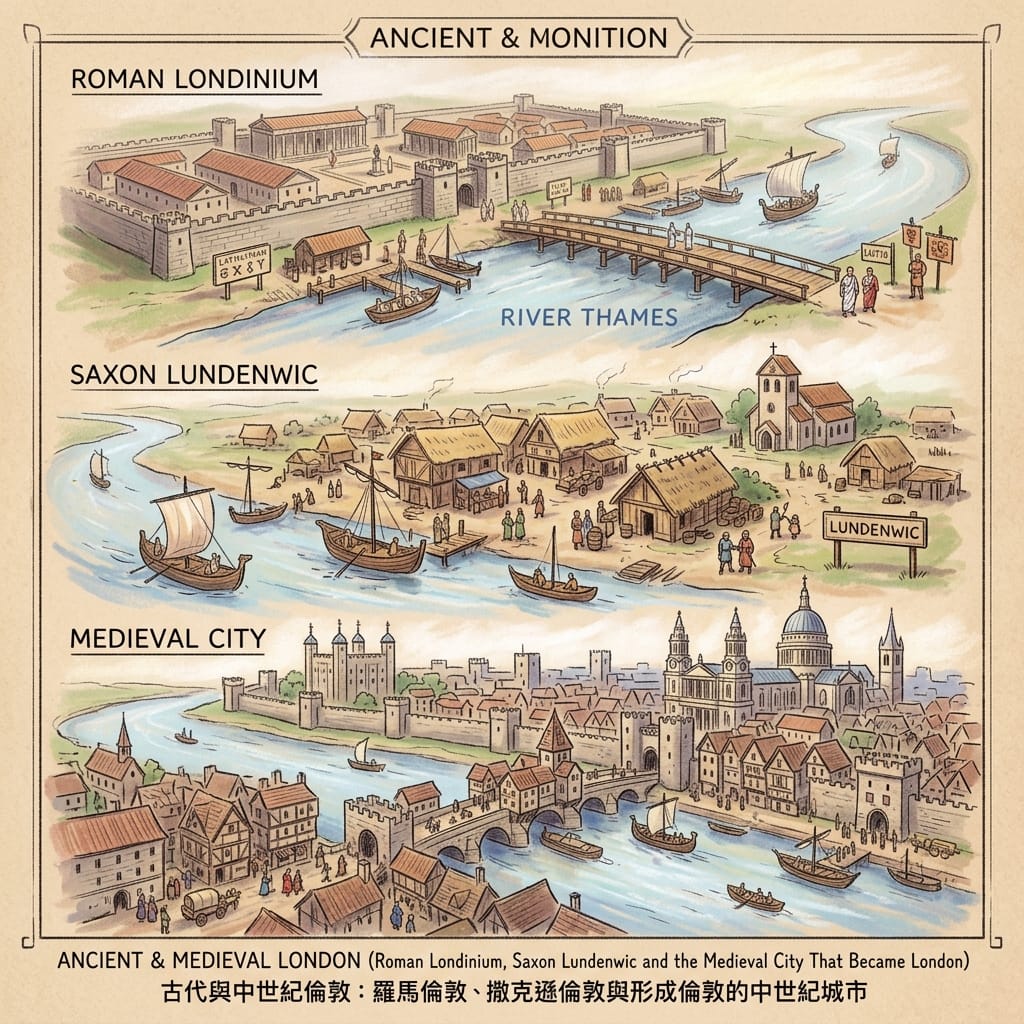
→ Roman Londinium
→ London Wall
→ Medieval London
→ Westminster
→ Medieval markets and guilds
Royal & Political London
 Lawrence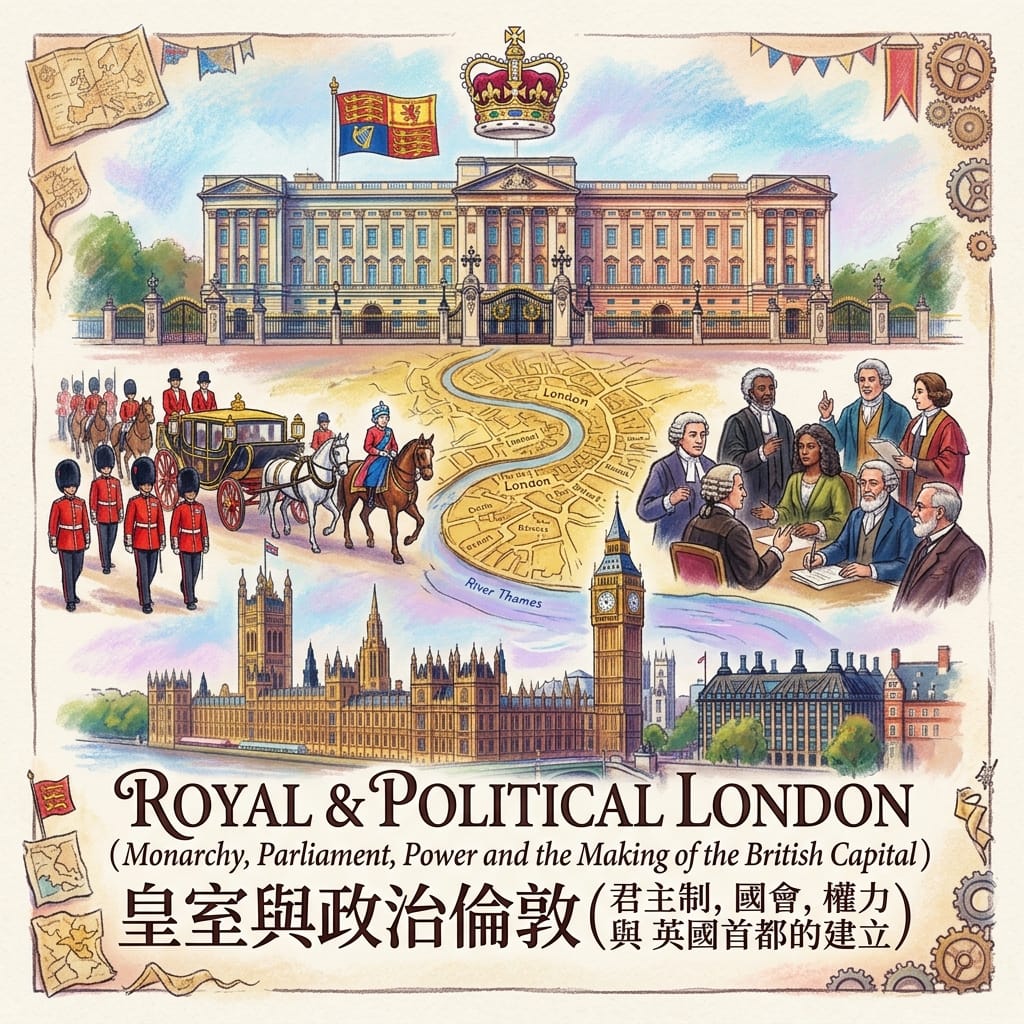
→ Tower of London
→ Westminster Abbey
→ Parliament
→ Whitehall
→ Buckingham Palace
Sacred London
 Lawrence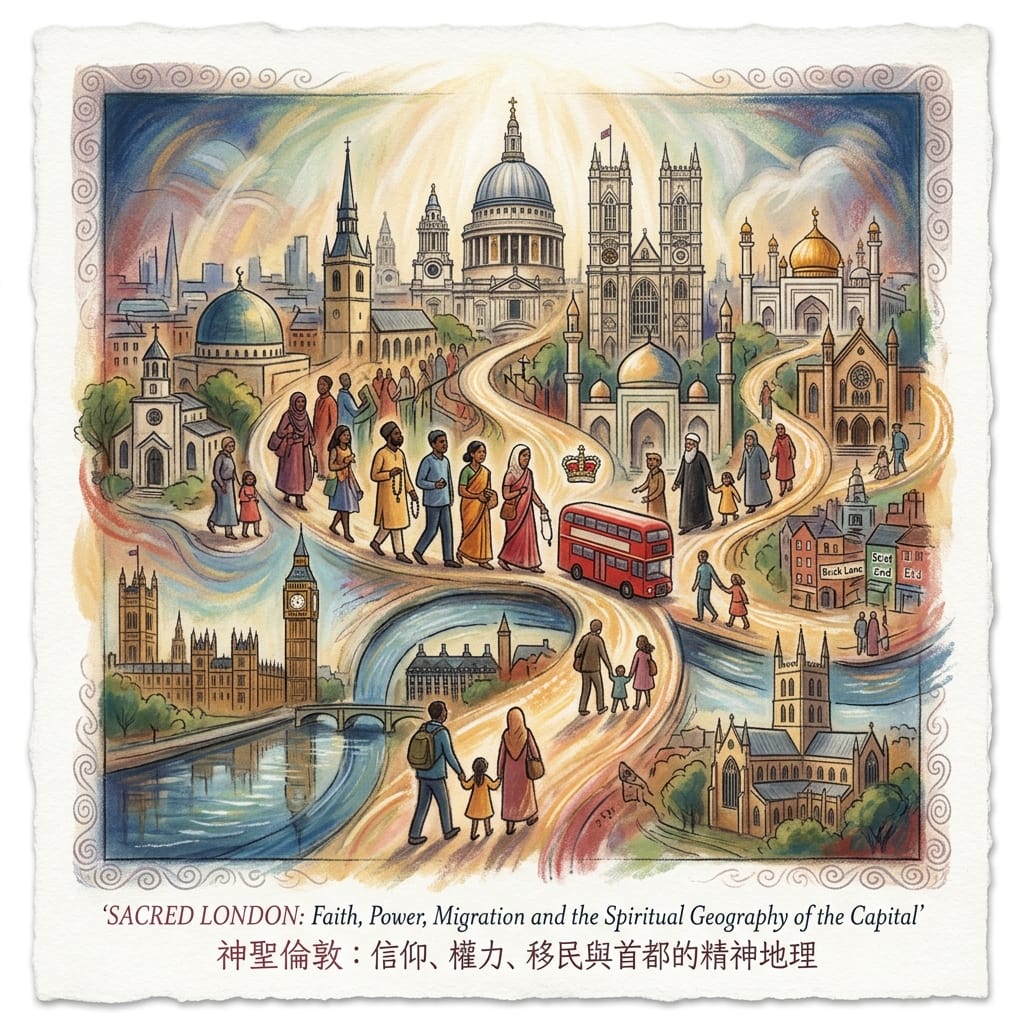
→ St Paul's Cathedral
→ Westminster Abbey
→ Wren's churches
→ Reformation London
→ Jewish London
→ Muslim London
→ Hindu and Sikh London
→ Buddhist London
Commercial & Industrial London
 Lawrence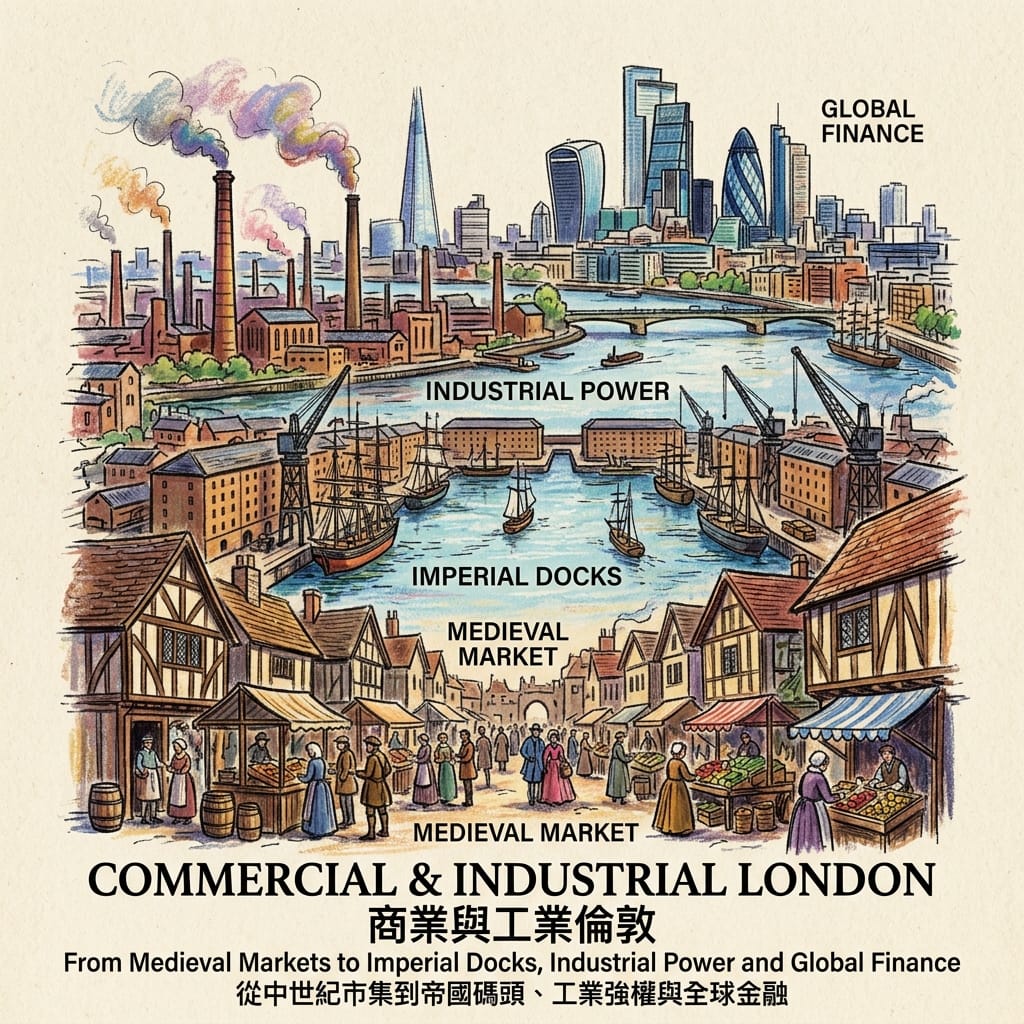
→ City of London
→ Thames trade
→ Markets
→ Docks
→ Victorian industry
→ Finance
Modern London
 Lawrence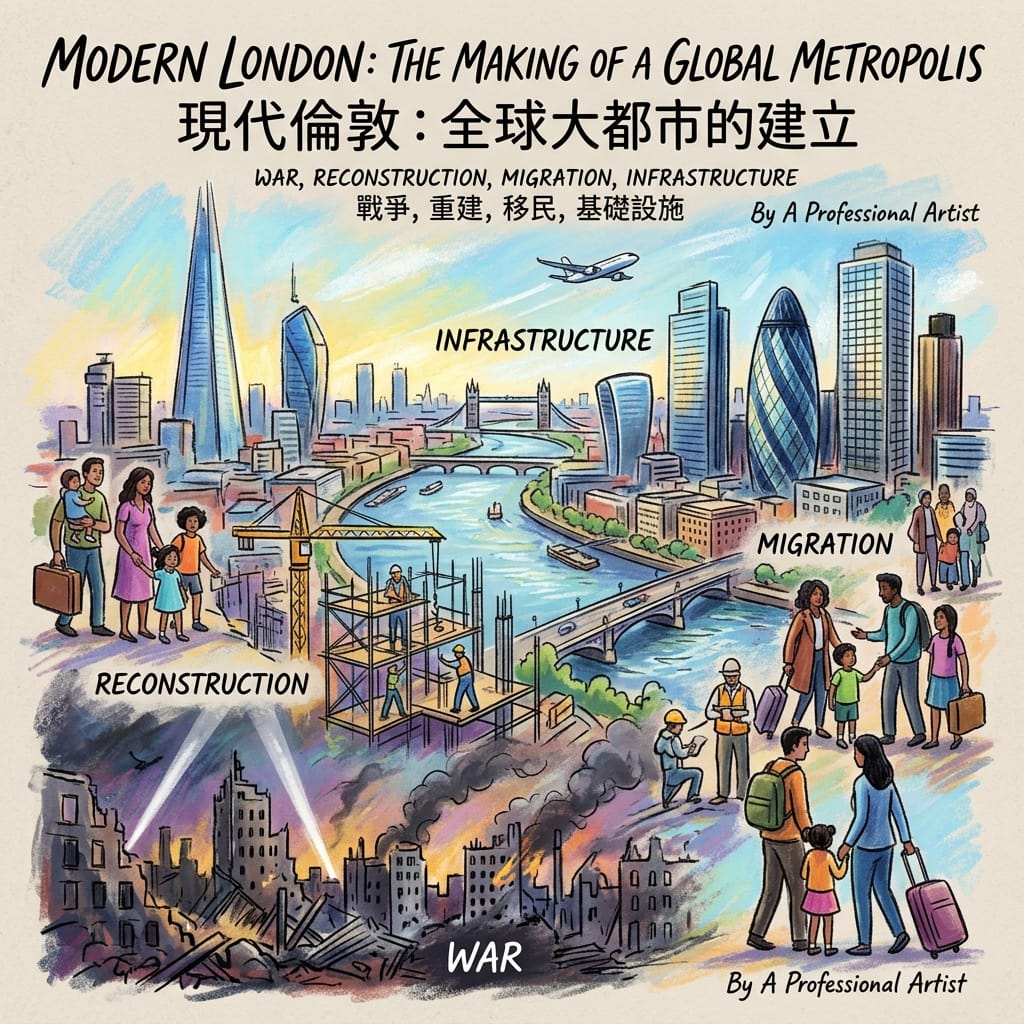
→ Great Fire reconstruction
→ Victorian expansion
→ Underground
→ Blitz
→ Postwar London
→ Migration
→ Docklands
Hidden London
 Lawrence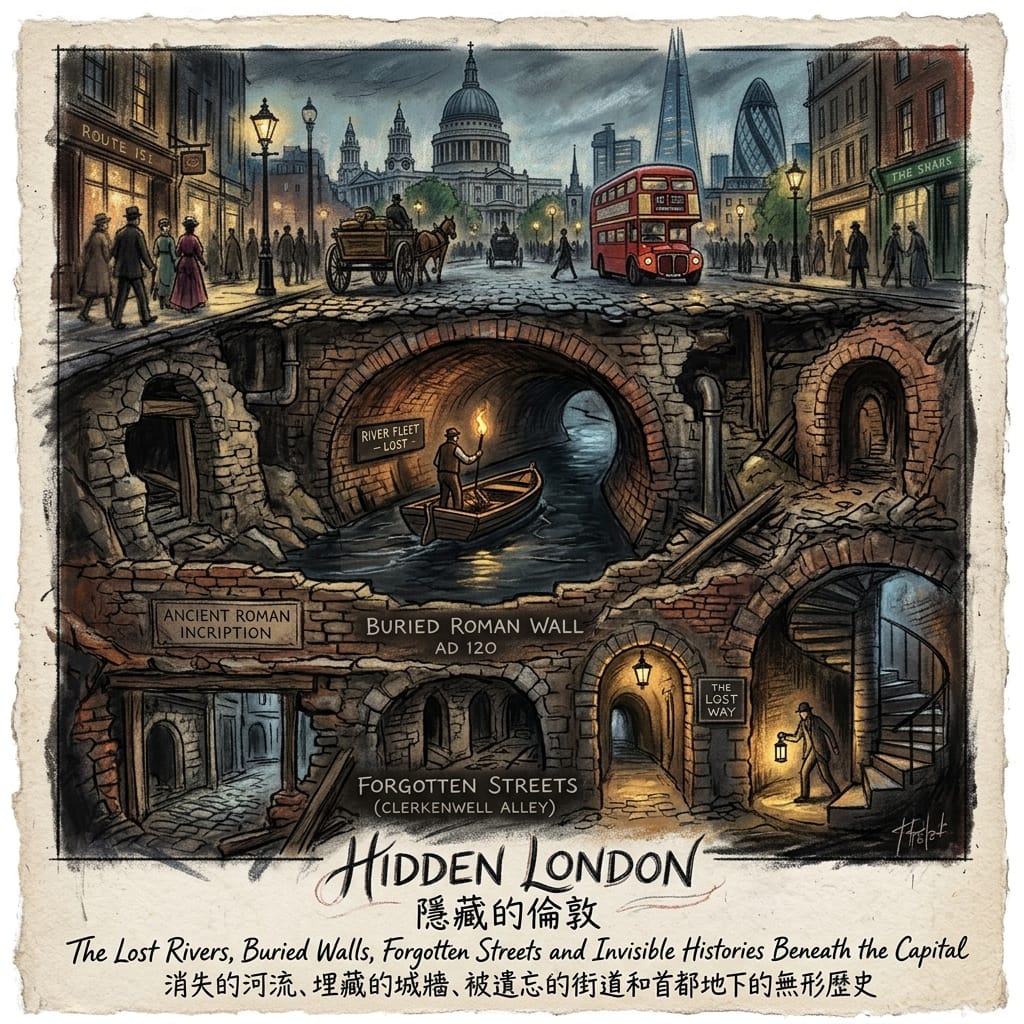
→ Lost monasteries
→ Forgotten churches
→ Old churchyards
→ Converted religious buildings
→ Archaeological sacred sites
→ Overlooked communities
SACRED LONDON
A Roman temple beneath a financial district.
A medieval abbey beside Parliament.
A Baroque cathedral rebuilt after fire.
A synagogue surrounded by skyscrapers.
A mosque inside the East End.
A former synagogue now serving a Muslim community.
A Buddhist vihara in Chiswick.
A Sikh gurdwara in Southall.
Each belongs to a different chapter.
Together they tell one story.
London is not a city with one sacred identity.
It is a city where generations of belief have accumulated on the same streets.